Firefly Boom

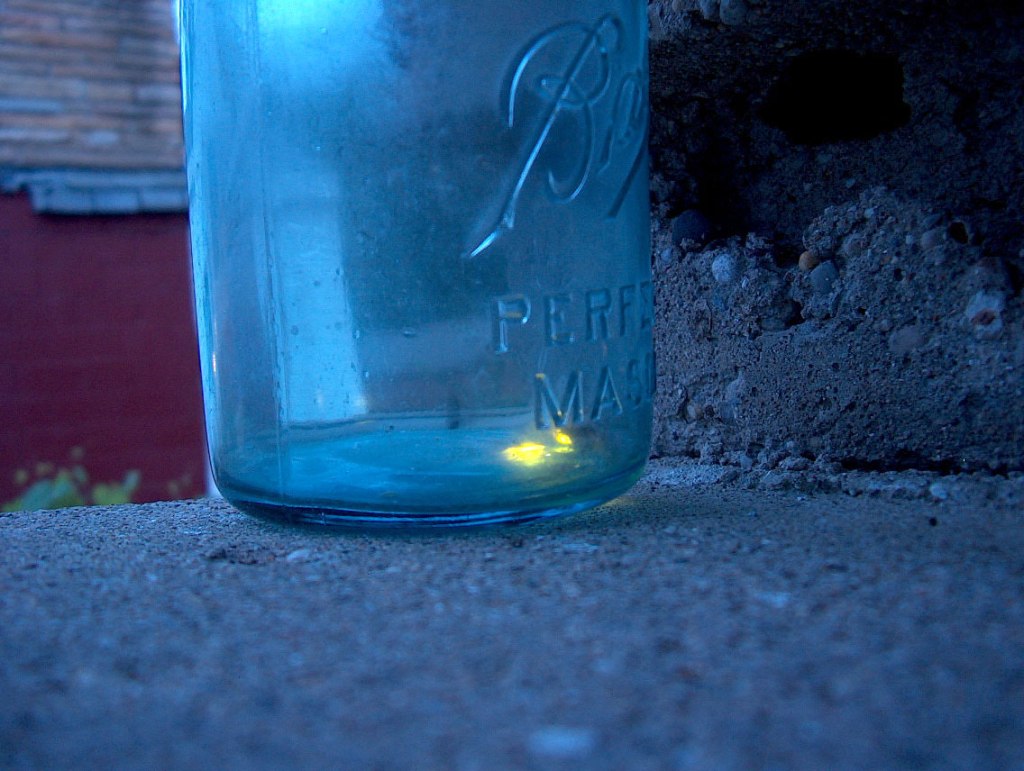
Fireflies in a Jar by Jamelah E

Bridge Michigan shares that Michigan is seeing more fireflies than usual this year, thanks to an early spring followed by drought-like conditions:

Michigan families should enjoy them while they can, says Ben Pfeiffer, founder of the nonprofit organization Firefly Conservation & Research, who projects a continued decline in the bugs. The numbers seen in Michigan skies this summer, Pfeiffer warns, are “likely the best that it’s ever going to be.”

This summer’s lightning bug explosion is a result of drought-like weather preceded by warmer Spring conditions. This matured larvae into adult fireflies earlier. It’s during the adult stage, which lasts about two months, that fireflies show off their distinctive bioluminescence.

The long-term decrease in the firefly population is caused by an increase in light pollution and pesticide use. Fireflies mate through glow patterns and require a dark environment. Bright white LED light interrupts the fireflies’ ability to see each other. Pesticides used outside, especially in soil, to kill insects like spiders or beetles can harm fireflies as well.

Read more in Bridge.

Jamelah shared this photo waaaaay back in 2005 & I thought it a great one to bring back. She wrote “I think deep down I’m still 5, because last night I had an incredible amount of fun catching fireflies,” and honestly SAME every time I do it!! See more in her Summer gallery on Flickr & read/see her work at Jamelah.net.

PS: Michigan in Pictures has some cool features on bioluminescent animals & plants including flying squirrels!!

Support Michigan in Pictures with Patreon

Faerie Lights: Bioluminescent Oyster Mushrooms

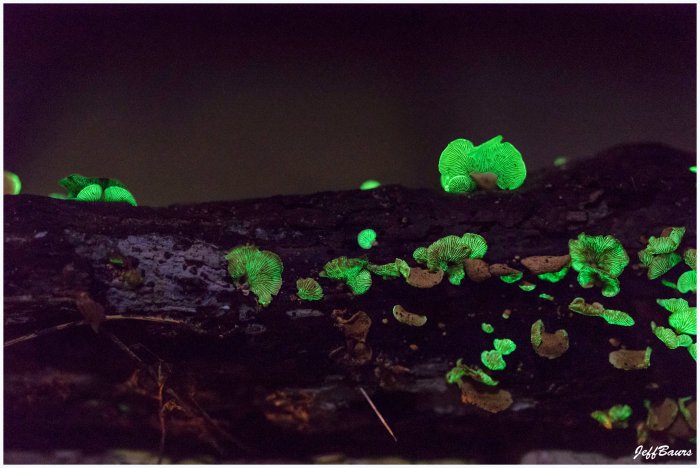
Bioluminscent Oyster Mushrooms by Jeff Baurs

Bioluminescent Oyster Mushrooms by Jeff Baurs

It’s not every day that I learn something new about Michigan, but the fact that Michigan has mushrooms that produce their own illumination is a new one to me!! PlantSnap explains that Bitter Oyster Mushrooms (Panellus stipticus) are one of over 80 species of bioluminescent mushrooms:

The mushrooms use a class of molecules called luciferins, which paired with an enzyme and oxygen, release light. Panellus stipticus (also known as the bitter oyster) is one of the brightest-glowing examples of bioluminescent fungi. It is found throughout Asia, Australia, Europe, and North America. These flat mushrooms grow on tree branches creating a mesmerizing effect as soon as the sun goes down. Foragers are able to find this variety growing around birch, oak, and beech trees.

The luciferins found in bioluminescent mushrooms are the same compound found in fireflies and underwater creatures.

They recommend that the best way to find them is by identifying them in the daytime, and you can head over to It’s Nature for a look at the bitter oyster mushroom.

Jeff took this photo a couple nights ago in southwest Michigan (Barry County). You can follow him on Twitter, Facebook & Instagram for more great pics!

Support Michigan in Pictures with Patreon

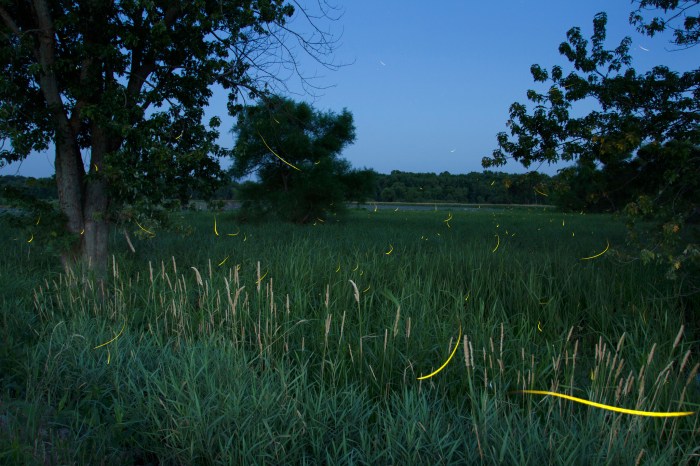
The Firefly Boom of 2018

Faerie by Brian Laskowski

The Great Lakes Echo shared a feature from Great Lakes Today entitled Ideal Conditions for Firefly Boom. It says (in part):

Whether you call it a lightning bug or a firefly or perhaps by its scientific name, Lampyridae, chances are you’ve had some experience with the tiny flying insect that flashes and blinks its way through summer evenings.

And if you’ve been noticing more fireflies in your backyard this summer, you’re not alone.

“A lot of people are enjoying it and I’m thrilled that people are enjoying it,” says Sara Lewis, an evolutionary biologist at Tufts University in Boston, and writer of the book “Silent Sparks: The Wondrous World of Fireflies.”

“As firefly scientists, we’re just trying to understand it.”

Lewis says the first thing you have to know about fireflies is that they live underground for two years before they hatch into the blinking bugs we associate with this season. And, she says, they love wet conditions, like those in the spring of 2017.

“Those were great conditions for baby fireflies, called larvae, because they live underground and they feed on earthworms and snails and slugs so those wet conditions mean that more are surviving.”

That wet soil also makes it easier for eggs to hatch, larva to metamorphose, and adults to lay eggs for future generations — which could explain why the population seems to be booming.

Read on for more including the fact that fireflies remain threatened and how you can help reduce the threat!

Brian took this in the Maple River State Game Area. Check it out background bigtacular and see more in his Michiganscape album on Flickr!

Lots more summer wallpaper for your computer background!