Portraits Of The Artist As An Awestruck, Foul-Mouthed, Middle-Aged Child

Portraits Of The Artist As An Awestruck, Foul-Mouthed, Middle-Aged Child

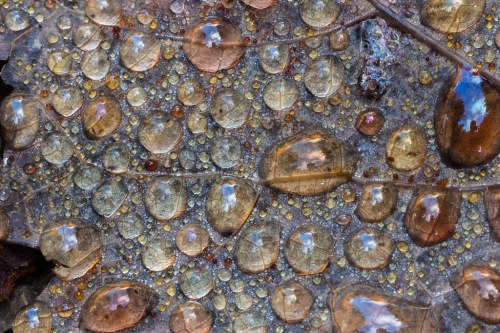
Portraits Of The Artist As An Awestruck, Foul-Mouthed, Middle-Aged Child, photo by Liz Glass

Fall is buried under about 70 feet of snow in northern Michigan right now, but at least the pictures remain. Liz explains the title of her photo:

Because you should have heard me when I got down there and confirmed that yes, not only was that aspen leaf covered in droplets of every size, but apparently each one had a mind of its own when it came to choosing what color to be. If anyone can explain this, please speak up. I’ll be the one sprawled out in my driveway saying things like “No f**king way” and “oh my god, get the f**k out of here.”

View her photo bigger and see more in her Autumn slideshow.

PS: If you’re in Boyne City, be sure to stop into her store, the Lake Street Market!

Chasing Fall

Aubrieta at Cloud Peak

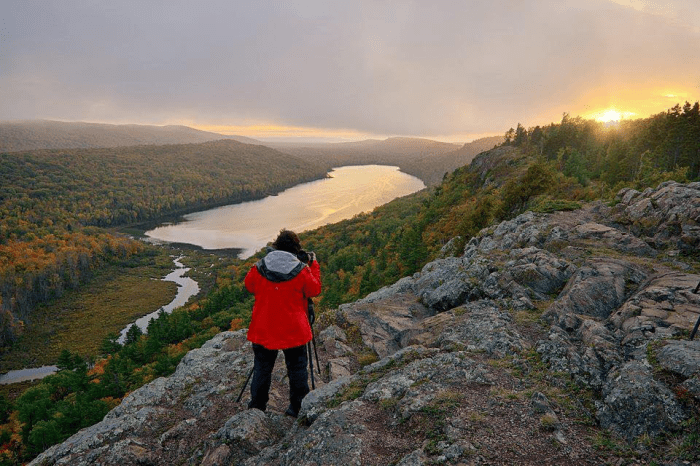
Aubrieta Hope at Cloud Peak, photo by Michigan Nut Photography

Aubrieta Hope shared this feature from the Pure Michigan blog about six photographers chasing UP fall color that includes three Michigan in Pictures regulars – Neil Weaver, Craig Sterkin & John McCormick. It begins:

Once upon a time, six shooters ventured north to the Tripod Forest, a fabled land of brilliant fall color in Michigan’s Upper Peninsula. All were packing: most brought Nikon’s, but two carried Canons. They loaded up minivans, SUV’s and 4×4′s, bringing filters and flashlights, bug spray, raingear, ice scrapers, and backpacks. About half of them planned to find a campsite someplace and the others made hotel reservations. Some had never met, but were destined to. A few of them hoped to cross paths up there somewhere.

It was late September and their only plan was to find and follow the color. Frost was in the forecast. The time was now. The 2014 Michigan Fall Foliage Convention had begun!

Click for more including photos of these folks in action!

View Aubrieta’s photo bigger at the Pure Michigan Blog and see her photography at michiganscenery.com. You can also check out the other photographers at Neil Weaver Photography, John McCormick’s Michigan Nut PhotographyCraig Sterken Photography, Phil Stagg’s MI Falls and Kenneth Keifer Photography.

Fall at Bond Falls

Bond Falls

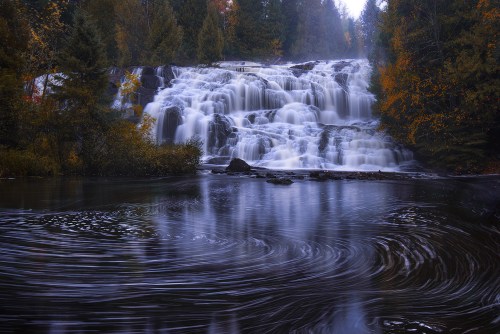
Bond Falls, photo by Yanbing Shi

Some mornings you just want to look out the window at what Michigan weather is up to, stick your fingers in your ears and say “I’M NOT LISTENING TO YOU.”

View Yanbing Shi’s photo background bigtacular and see more of his fall photos.

Lots more from Bond Falls on Michigan in Pictures!

Eastbound from Autumn

Eastbound Tracks along Huron River Drive by Lawrence Lazare

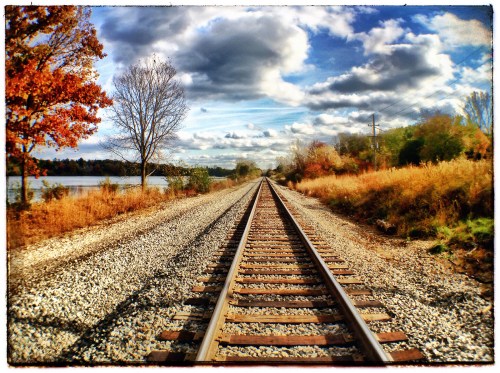
Eastbound Tracks along Huron River Drive, photo by Lawrence Lazare

It’s hard to leave fall behind…

Lawrence took this with an iPhone 4s using VividHDR. View it background bigtacular and see more in his Autumn 2013 slideshow.

There’s more fall wallpaper and more trains on Michigan in Pictures.

Bikes pumping up Michigan’s economy

Kalamazoo River Valley Trail

Kalamazoo River Valley Trail, photo by Bill Dolak

This pic reminded me of an article I read a couple weeks ago in the Detroit News on the economic impact of bicycles in Michigan:

Bicycling pumps an estimated $668 million per year into Michigan’s economy, according to a recent report from the Michigan Department of Transportation. That figure factors in the nearly 800 people employed in bicycle-related jobs, along with retail revenue, tourism expenses, lower health care costs and a boost in productivity.

The study, “Community and Economic Benefits of Bicycling in Michigan,” put the spotlight on five communities to gauge how the sport affects their bottom line.

Michigan’s second-largest city, Grand Rapids, benefited most from cycling. It earned $39.1 million, nearly double the $20.7 million Detroit brings in. Ann Arbor easily grabbed second place with a $25.4 million boost.

…Grand Rapids began adding bike lanes on city streets in 2010 and now has 55 miles of bike lanes with more planned. It has a cycle track, hundreds of bike racks and an extensive trail network in the suburbs, said Suzanne Schulz, Grand Rapids’ managing director of design, development and community engagement.

“We are really trying to take a more holistic view of transportation infrastructure for the entire community because a lot of people don’t have cars,” Schulz said.

Read on for more or dig into the full study from MDOT.

Bill took this shot on the Kalamazoo River Valley Trail. View it background bigtacular and see more in his Michigan: Kalamazoo County slideshow.

More bikes and bicycles and more fall wallpaper on Michigan in Pictures!

Sandhill Liftoff

10-8 HDR 1e_Fotor

10-8 HDR 1e_Fotor, photo by Gregg Mulholland

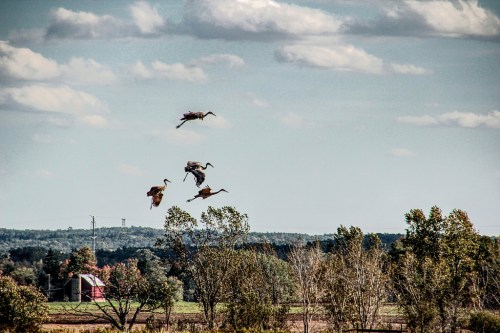
Apparently the control tower likes to get those birds airborne.

Definitely check Gregg’s shot out big as the sky and roll through his Sandhill Cranes slideshow for more.

Wooly Weatherman

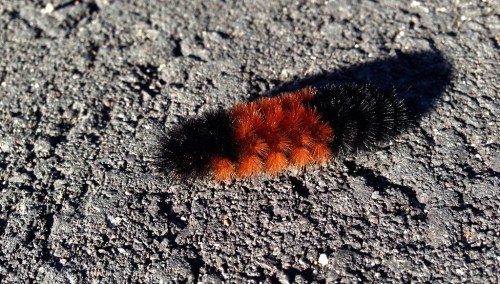
Hmmm...thick or thin? And what does it mean anyways?

Hmmm…thick or thin? And what does it mean anyways?, photo by dan bruell

Predicting Winter Weather: Woolly Bear Caterpillars at the Farmer’s Almanac says that in 1948, Dr. C. H. Curran, curator of insects at the American Museum of Natural History in New York City sought to determine the average number of reddish-brown segments and use that to forecast the coming winter weather. For eight years, he continued to try and prove scientifically a weather rule of thumb that the wider that middle brown section is (and the more brown segments there are) the milder the coming winter will be, while a narrow brown band means a harsh winter.

Between 1948 and 1956, Dr. Curran’s average brown-segment counts ranged from 5.3 to 5.6 out of the 13-segment total, meaning that the brown band took up more than a third of the woolly bear’s body. As those relatively high numbers suggested, the corresponding winters were milder than average. But Curran was under no scientific illusion: He knew that his data samples were small. Although the experiments popularized and, to some people, legitimized folklore, they were simply an excuse for having fun. Curran, his wife, and their group of friends escaped the city to see the foliage each fall, calling themselves The Original Society of the Friends of the Woolly Bear.

…Mike Peters, an entomologist at the University of Massachusetts, doesn’t disagree, but he says there could, in fact, be a link between winter severity and the brown band of a woolly bear caterpillar. “There’s evidence,” he says, “that the number of brown hairs has to do with the age of the caterpillar—in other words, how late it got going in the spring. The [band] does say something about a heavy winter or an early spring. The only thing is . . . it’s telling you about the previous year.”

Read on for more!

View Dan’s photo background bigtacular and see more in his Fall 2014 slideshow.

More weather on Michigan in Pictures!

Fall Morning

Fall Morning

Fall Morning, photo by Steve

I bet your day starts out pretty well with a view like this.

View Steve’s photo bigger and see more in his LX7 slideshow.

Fall Chickadee

Fall Chickadee

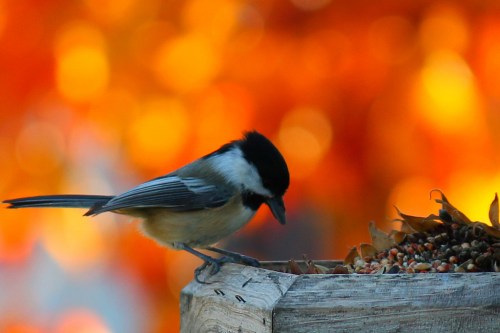
Fall Chickadee, photo by kdclarkfarm1

The UM Animal Diversity Web’s entry for Parus atricapillus (black-capped chickadee) says in part:

Black-capped chickadees prefer deciduous woodlands, open woods and parks, cottonwood groves, and willow thickets. They are most commonly seen near edges of wooded areas. They are a frequent visitor to backyard feeders. Black-capped chickadees nest in cavities, usually in dead trees or stumps, and are attracted to habitats with suitable nesting locations. During the winter, small flocks of black-capped chickadees can be found in dense conifer forests.

…Black-capped chickadees hop on trees (occasionally on the ground), rather than “walking.” These birds are very active during the day, and can often be seen foraging upside-down. Black-capped chickadees form monogamous pairs which usually stay together for several years. The black-capped chickadee social system has two extremes, one shown by territorial pairs during the breeding season, and the other consisting of non-breeding flocks. These are often mixed species flocks including nuthatches, woodpeckers, kinglets, brown creepers, warblers, and vireos. Black-capped chickadees perform short-distance migrations, but remain in the same general region throughout the year.

Read on for lots more including photos and chickadee calls.

View Diane’s photo background big and see lots more autumn goodness in her Fall slideshow.

More birds and more Fall wallpaper on Michigan in Pictures.

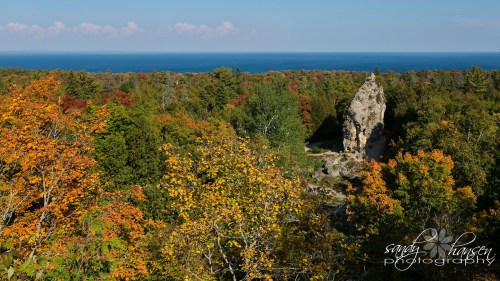
Fall at Sugar Loaf Rock on Mackinac Island

Sugar Loaf Rock Mackinac Island

The Rock, photo by Sandy Hansen Photography

Here’s a color check-in from last week on Mackinac Island. The Mackinac Island State Park Commission says the following about Sugar Loaf rock romation:

Sugar Loaf, a 75 foot tall limestone stack, is the largest rock formation on Mackinac Island. When glacial Lake Algonquin covered much of the Island 11,000 years ago, Sugar Loaf was connected to the nearby bluff face (today called Point Lookout). Wave action slowly washed away the softer limestone between the stack and the bluff, leaving Sugar Loaf as a stand-alone feature. High water levels during the Lake Algonquin period left only the top of Sugar Loaf exposed, as evidenced by the small cave cut into the north face of the formation by wave action. This cave was originally on the shoreline of the lake.

As with other geological features on the Island, numerous Native American legends have been passed down relating to the origin of Sugar Loaf. One story relates that a young man asked the spirits for eternal life. In response, they turned him to stone, creating Sugar Loaf.

View Sandy’s photo bigger and see more of her Mackinac Island photos.

Also check out Arch Rock and the Devil’s Kitchen on Michigan in Pictures.