Saving whitefish in the Great Lakes

Fishing in Michigan by Abigail Lynch

Fishing in Michigan by Abigail Lynch

“Since first arriving in the Great Lakes in the 1980s, invasive mussels have spread to all five lakes, and altered the ecosystem in profound ways. Today we understand that zebra and quagga mussels are an existential threat to the Great Lakes and without a coordinated response, they will continue to inflict harm on the environment, infrastructure, and critical species such as lake whitefish. Just as invasive sea lamprey require a coordinated, binational response for effective control, we must partner with national, state, provincial, Indigenous, regional, and local partners to find a solution to the mussel invasion. This bill makes that happen.”Great Lakes Fishery Commission Chair Ethan Baker

Bridge Michigan shares that two Michigan lawmakers are set to unveil legislation to dramatically increase funding to prevent invasive mussels from wiping out whitefish in the lower Great Lakes:

US Reps. Debbie Dingell, D-Ann Arbor, and Tim Walberg, R-Tipton, want to increase funding for mussel control research more than fiftyfold to $500 million over the next 10 years. (EDITOR: They released it on Tuesday)

Otherwise, the “fish that we take for granted are going to just disappear,” Dingell told Bridge Michigan.

The damage wrought by invasive mussels is among the biggest threats to the Great Lakes in history. Yet Bridge found that while the US government has spent mightily to combat other threats, the fight against mussels has received a comparative pittance.

The main funding program for Great Lakes science has devoted an average of less than $1 million annually to the cause since 2010, according to spending records analyzed by Bridge. The federal government spends about 20 times that amount to keep sea lamprey out of the Great Lakes and has promised 90 times as much to build a barrier against invasive carp.

Read on for much more & kudos to these two Representatives for working together to protect the livelihoods and meals of Michiganders!

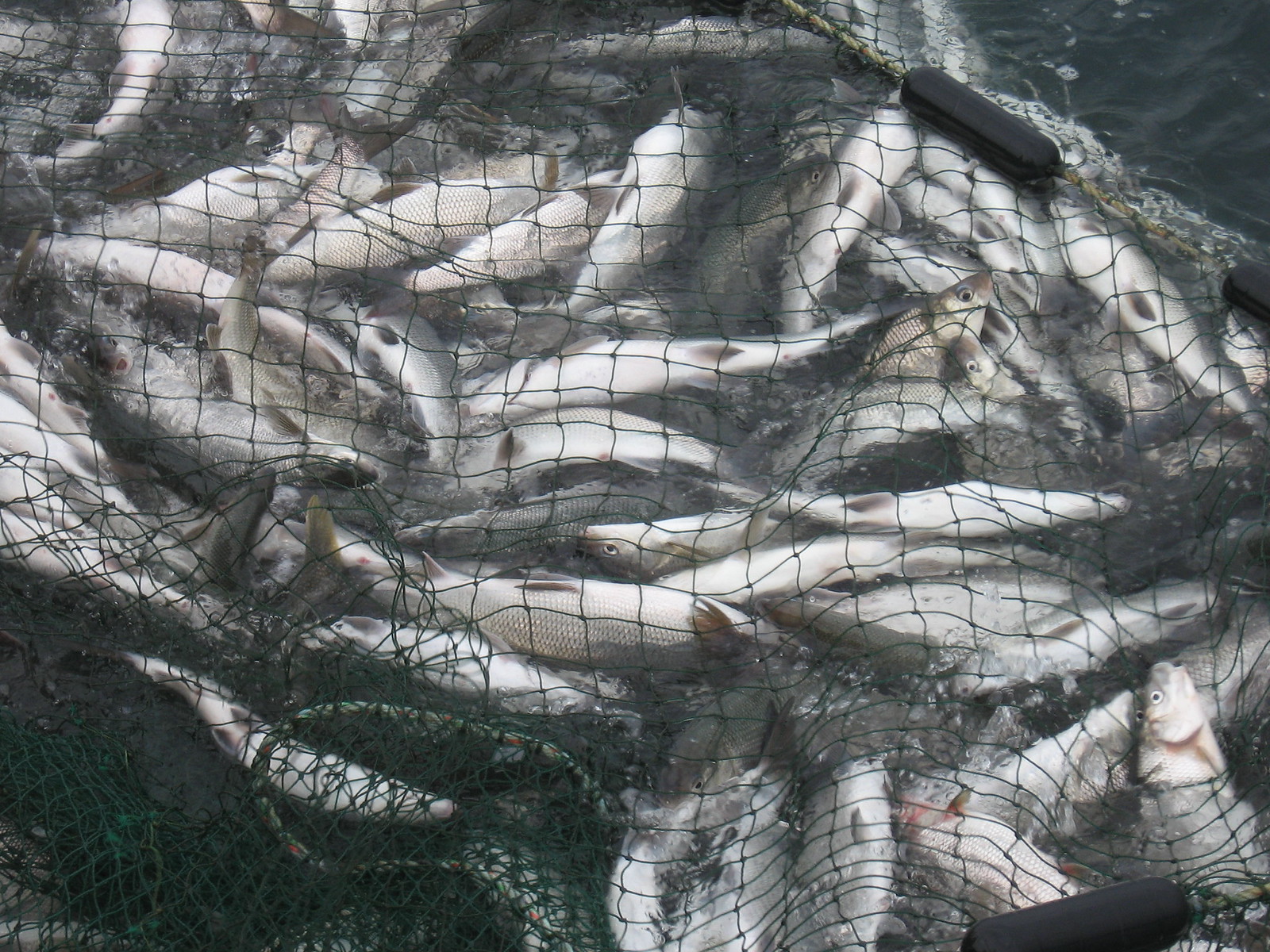
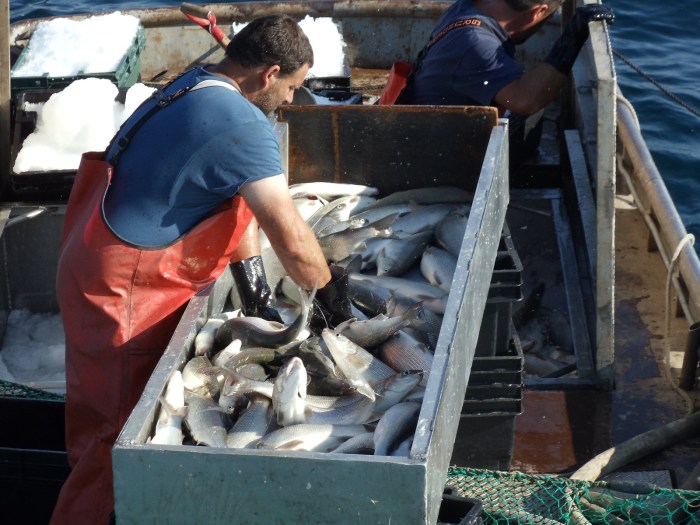
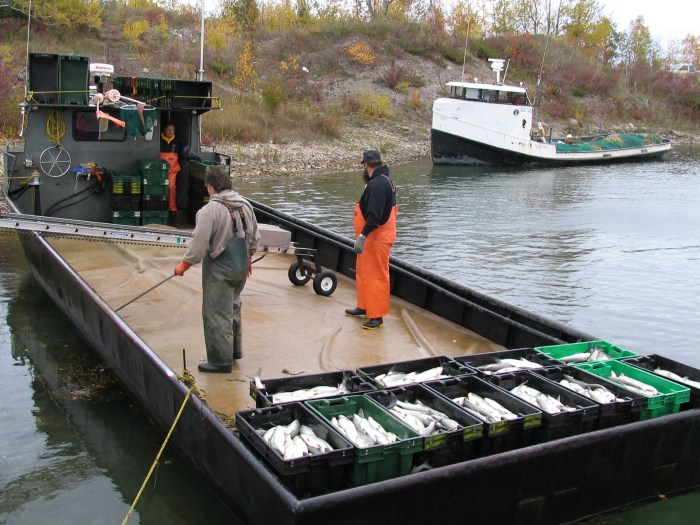
The photos are from Michigan Sea Grant and the one of the boat moored was taken by Brandon Schroeder. Sea Grant is an excellent organization that works hard for Michigan waters and the Great Lakes as a whole!
Support Michigan in Pictures with Patreon

Restoring Sturgeon to Michigan Waters

2024 Boardman-Ottaway River Sturgeon Release Ceremony

via Leelanau.com

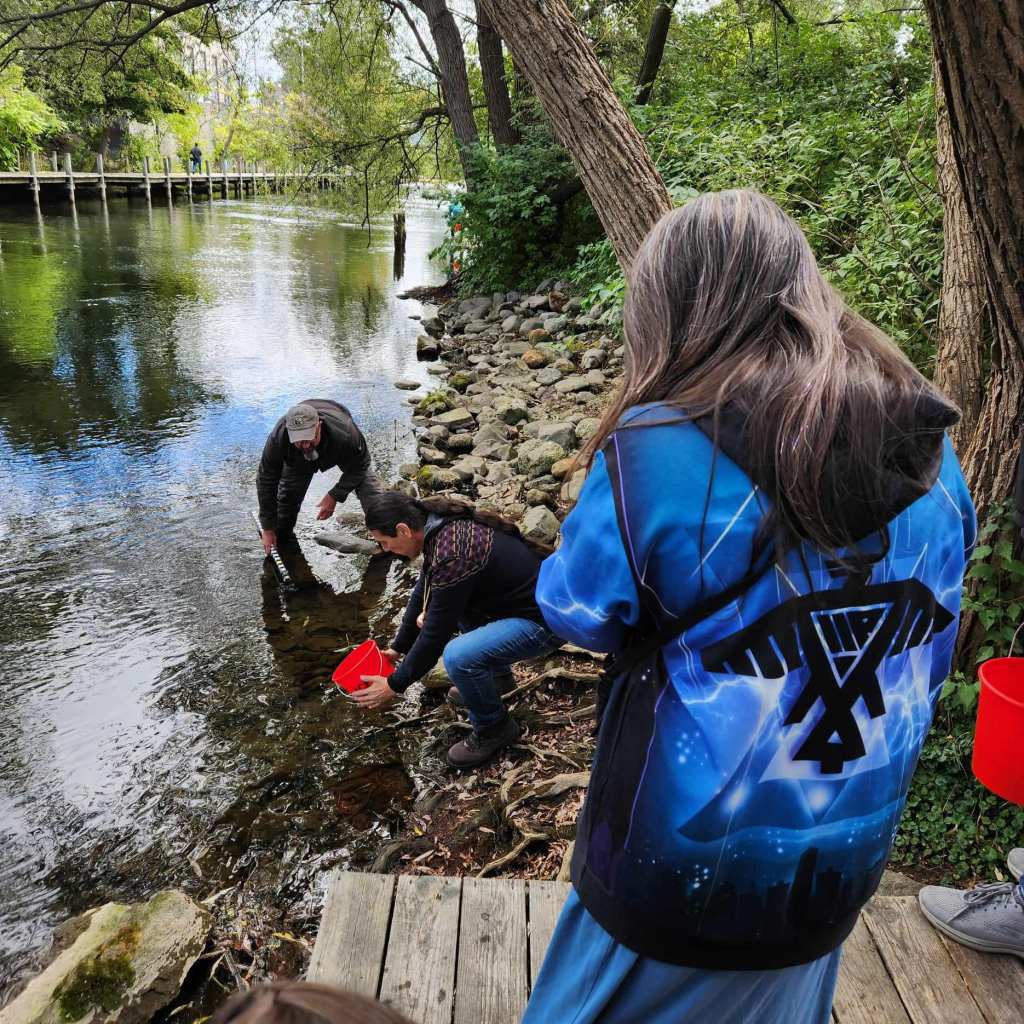
On Saturday the Grand Traverse Band of Ottawa and Chippewa Indians held their first annual Sturgeon Release Ceremony to return Nmé (Lake Sturgeon) into the Boardman-Ottaway River. The event included a ceremony, prayers, food, drinks, and a community release of hundreds of juvenile Nmé. The photo shows Percy Bird releasing a young sturgeon into the Boardman-Ottaway.

Michigan Sea Grant shares that lake sturgeon live longer than any other fish species in Michigan with males living an average of 55 years and females 80-150 years. Despite their long lives, sturgeon are very slow to mature. It takes about 15 years for male lake sturgeon to reach reproductive maturity and 20-25 years for females. In early spring, adult sturgeon enter fast-flowing rivers to spawn. Female lake sturgeon spawn once every four years, each depositing million of eggs on gravel bars. It is estimated that only about 10-20 percent of adult lake sturgeon within a population spawn during a given year.

Thank you to the GTB Natural Resources Department & Grand Traverse Band members and all who were part of restoring balance to Michigan’s waters. Also thank you to my friend Holly T. Bird who shared this photo with me. She doesn’t have a photography website, but she is the co-executive director of the amazing organization Title Track that uses creative practice to build resilient social-ecological systems supporting clean water, racial equity, and youth empowerment.

Support Michigan in Pictures with Patreon

Appreciating the Michigan Mayfly (Ephemeroptera)

Mayfly (Ephemeroptera)

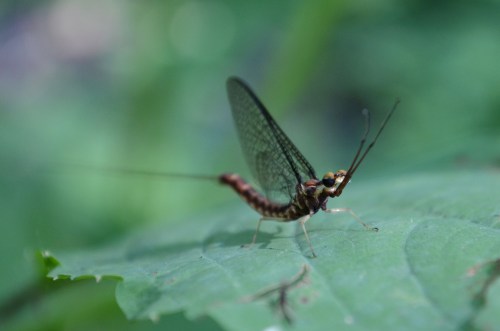
Mayfly (Ephemeroptera), photo by Todd Marsee, Michigan Sea Grant

Last year Steve Stewart of Michigan State University Extension shared The Mayflies are coming – time to celebrate!:

It’s summer, so it’s time for the mayfly hatch! There are hundreds of species of mayflies (also commonly referred to as fish flies) in North America, representing a number of Families in the Order Ephemeroptera. Ephemeroptera comes from the Greek word for “short-lived” (as in “ephemeral”), and it’s a good name because as winged adults, mayflies only live a few days. The most widespread burrowing mayfly species in the Great Lakes is Hexagenia limbata, the Giant Mayfly.

Mayflies have a very interesting life cycle. They are the only insect to have two “adult” molts, and begin life as eggs laid on the surface of the water that sink to the bottom. The aquatic nymphs of mayflies are called naiads, and creep around rocks and vegetation. After months or years (depending on the species), they float to the surface and molt to a winged, but sexually immature, sub-adult. Often within hours, another molt occurs and the final stage emerges—the winged, reproductive adults, which possess only vestigial mouth parts and cannot eat or drink and, depending on the species, live for only days or, in some cases, mere hours.

One of the most obvious characteristics of the adults is their large numbers. They can emerge in huge numbers from a body of water. So huge, in fact, that their swarms can be seen on Doppler radar! This image is from June 14 showing a mayfly swarm over western Lake Erie, pushed ashore in Monroe County by an easterly breeze. Once ashore, mayflies tend to sit on upright objects and can completely cover the surfaces of posts, sheds, and light poles. At night, they are attracted to lights.

Some people think of mayfly hatches as a nuisance, and they can be a bit annoying when they are swarming. But mayflies are a good thing. Some people think of mayfly hatches as a nuisance, and they can be a bit annoying when they are swarming. But mayflies are a good thing. They are rarely found in degraded bodies of water because their external gills in the nymph stage are very vulnerable to silting and pollution. Mayflies are, therefore, used as an indicator species when testing for environmental quality, and their presence reflects the good quality of the habitat from which they hatched.

Read on for more including photos and school lessons on the Mayfly.

View this photo from the Michigan Sea Grant background bigtacular and see more of their mayfly photos on Flickr.

PS: Thanks to Absolute Michigan pool member Steve Brown for posting the first Mayfly of the season and alerting me.