Michigan Fall Color: Double Rainbow Edition

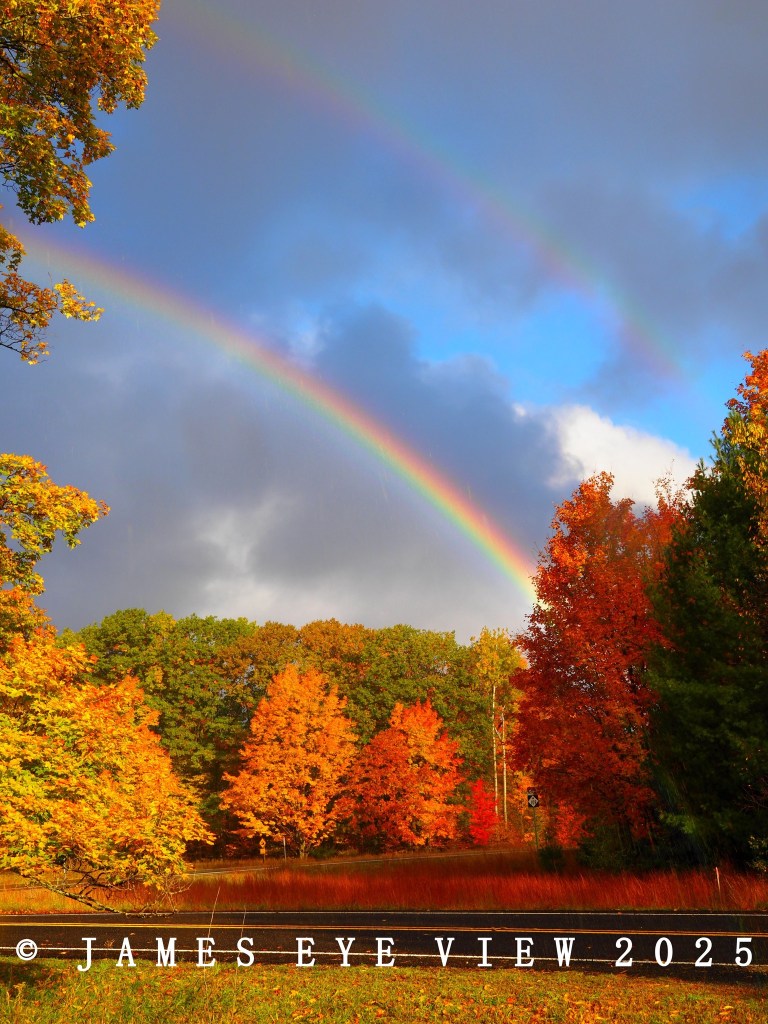
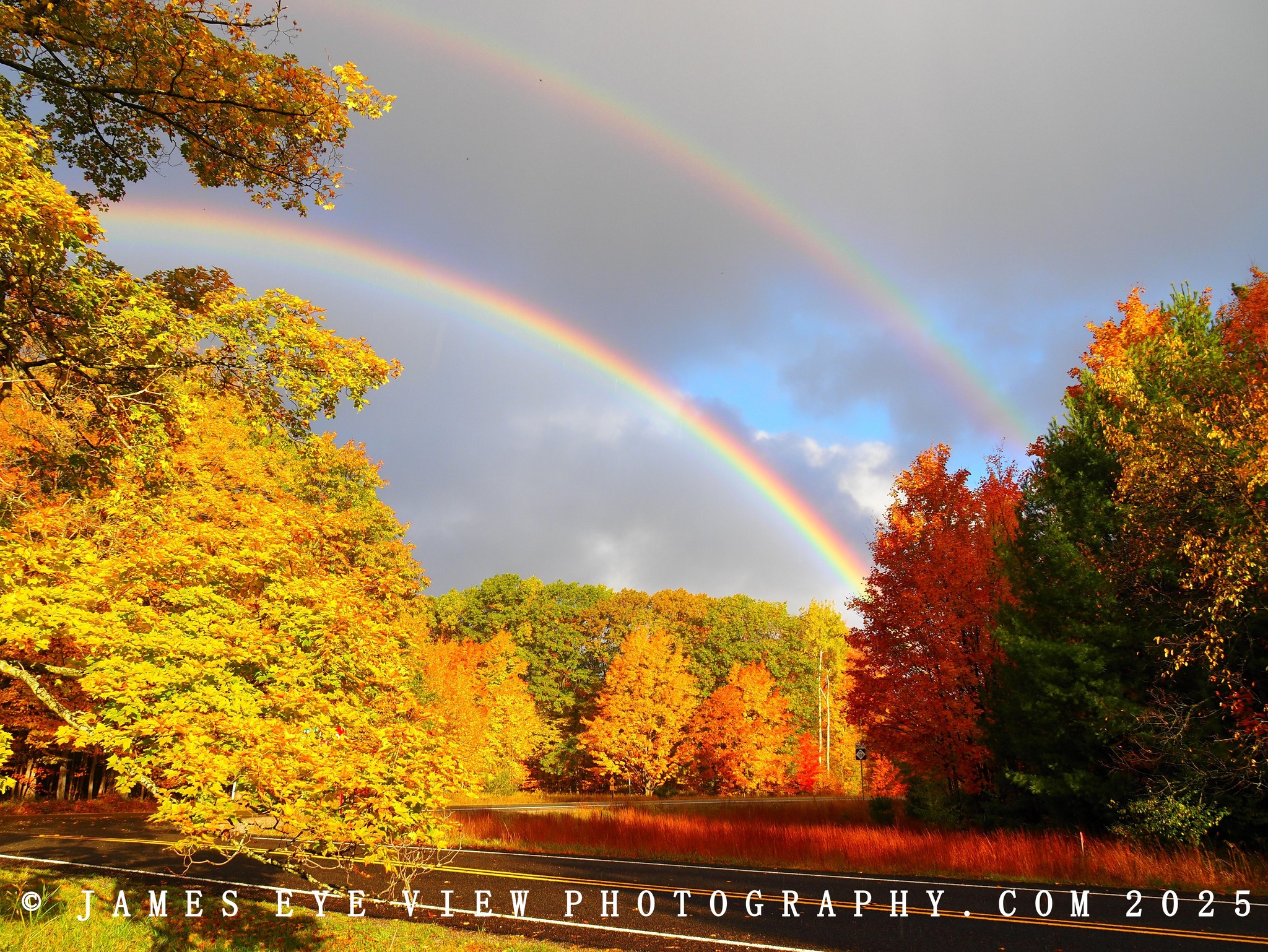
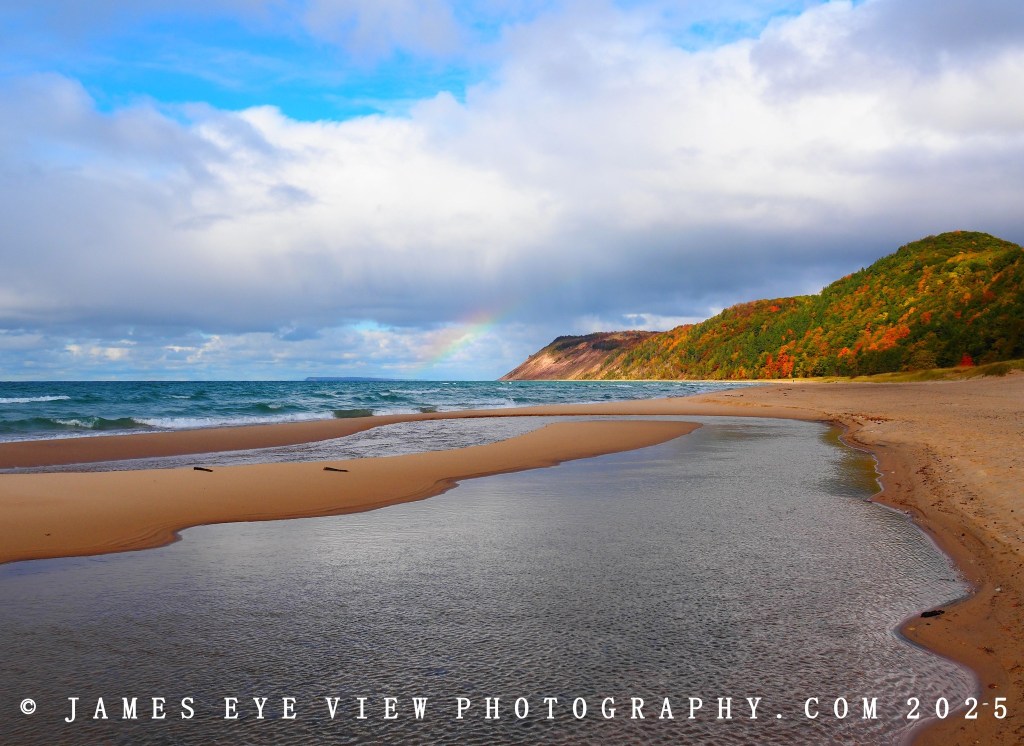
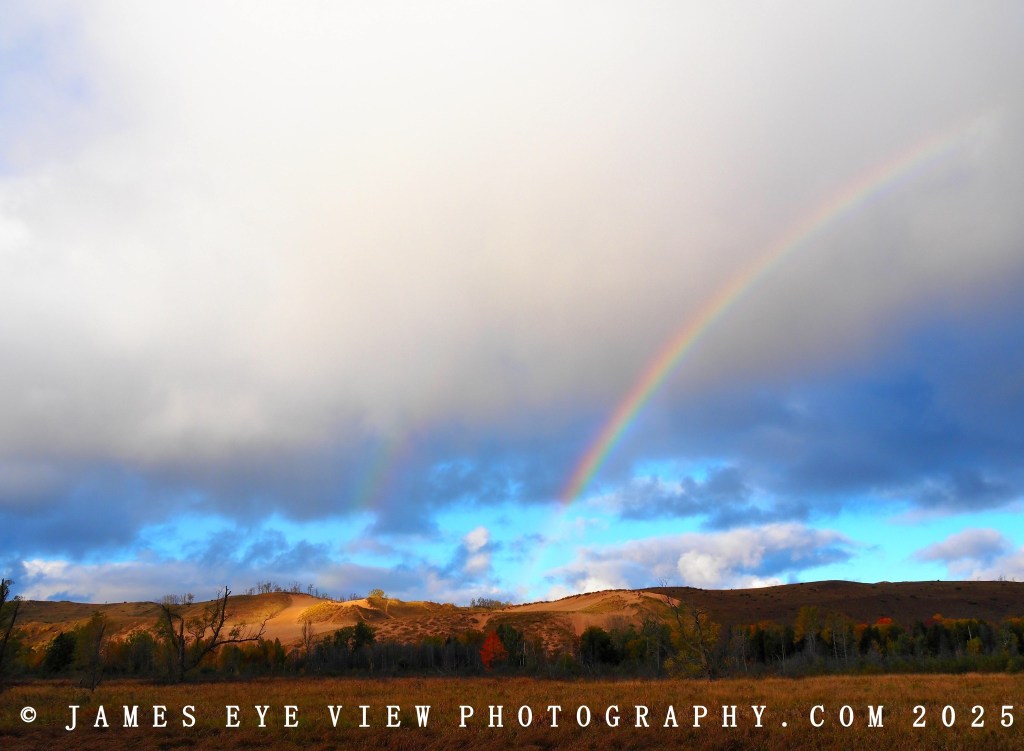
Fall Color Tour in Northern Michigan Rainbow edition by James Eye View Photography

Fall Color Tour in Northern Michigan Rainbow edition by James Eye View Photography

mLive’s Mark Torregrossa shares that if you think there’s more rainbows out there than usual, you are correct! He explains the science behind Michigan’s rainbow bonanza:

To have rainbows, we need rain and sun at the same time. What weather pattern is classic for rain and sun at the same time? The current lake-effect rain shower situation is perfect for rainbows. The rain showers are small, maybe only five miles wide. There is a lot of clear sky around the rain showers.

…So we know why we have had and currently have a lot of rainbows in Michigan in the past few days- the spotty lake-effect showers combined with sunshine. But why have there been numerous double rainbows? It has to do with the angle of the sun, combined with the daily weather pattern.

For a double rainbow, the sun has to be fairly low on the horizon, lower than 40 degrees above the horizon. It just so happens the lake-effect showers reach their peak intensity and coverage during the late afternoon heating of the day, when the sun is low on the horizon.

James took these last Friday on the Sleeping Bear Dunes National Lakeshore. You can follow him on Facebook & Instagram. For sure visit his website to view & purchase his work including 2025 Photo Calendars.

Wildly enough, I featured Double Rainbow Sunrise from James last year – he clearly has a next level knack for rainbows!!
Support Michigan in Pictures with Patreon

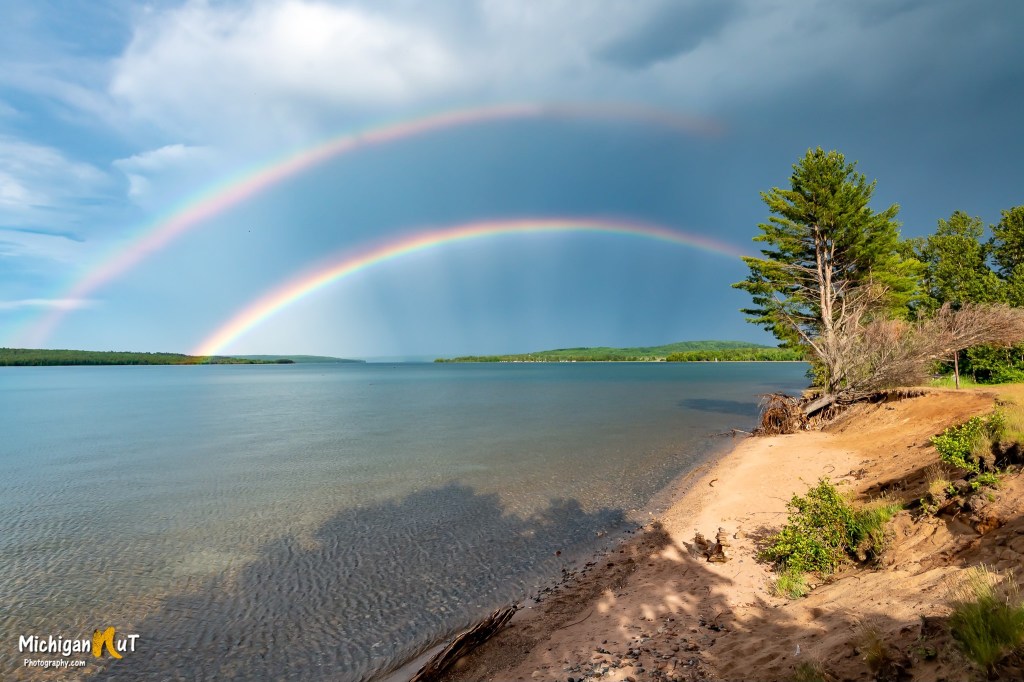
Double Rainbow over Munising Bay

Double Rainbow over Munising Bay by Michigan Nut Photography

Double Rainbow over Munising Bay by Michigan Nut Photography

The unrelenting flooding across Michigan and the country has a lot of us looking for the rainbow, and thankfully Michigan Nut found two for us! The National Weather Service shares how double rainbows are formed:

Sometimes we see two rainbows at once. Not all of the energy of the ray escapes the raindrop after it is reflected once. A part of the ray is reflected again, and travels along a different path inside the drop to emerge from the drop at a different angle. The rainbow we normally see is called the primary rainbow and is produced from one internal reflection. The secondary rainbow arises from two internal reflections and the rays exit the drop the second time at an angle of around 50 degrees, rather than the 42 degrees for the primary rainbow. This effect produces the secondary rainbow, with the colors reversed from the primary rainbow. It is possible for light to be reflected more than twice within a raindrop, but these additional rainbows are typically never seen under normal circumstances.

Atmospheric Optics (the OG rainbow site) adds that secondary rainbows appear broader than the primary rainbow, measuring approximately 1.8 times its width so the top rainbow is the copy!

John shared this photo of a doble rainbow over Lake Superior’s Munising Bay on his Facebook. For sure follow him there and view & purchase his work at michigannutphotography.com.

Support Michigan in Pictures with Patreon

Pls send rainbows 🙏

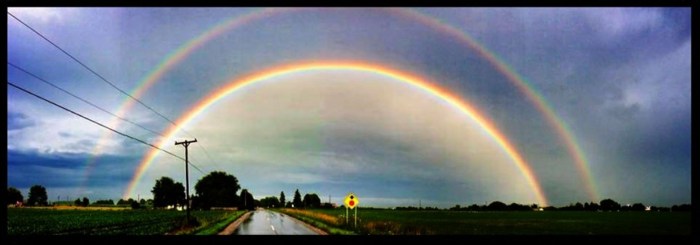
Double rainbow! by Tom

Double rainbow! by Tom

Michigan is drowning right now in some of the worst rains on record. Every day for the last two weeks, from Midland to Grand Rapids to Traverse City, my feed has been full of images of people losing everything to flooding. PLEASE send rainbows.

Just so this post isn’t a totally depressing send-off for your weekend, let me call in one of my favorite websites, Atmospheric Optics. Regarding secondary rainbows or “double rainbows” they say that the secondary is nearly always fainter than the primary, with colors reversed and more widely separated:

Light can be reflected more than once inside a raindrop. Rays escaping after two reflections make a secondary bow.

The secondary has a radius of 51º and lies some 9º outside the primary bow. It is broader, 1.8X the width of the primary, and its colours are reversed so that the reds of the two bows always face one another. The secondary has 43% of the total brightness of the primary but its surface brightness is lower than that because its light is spread over its greater angular extent. The primary and secondary are are concentric, sharing the antisolar point for a center.

Tom took this near Alma back in 2014. See his latest on Flickr & check out more Michigan rainbows on Michigan in Pictures!

Support Michigan in Pictures with Patreon

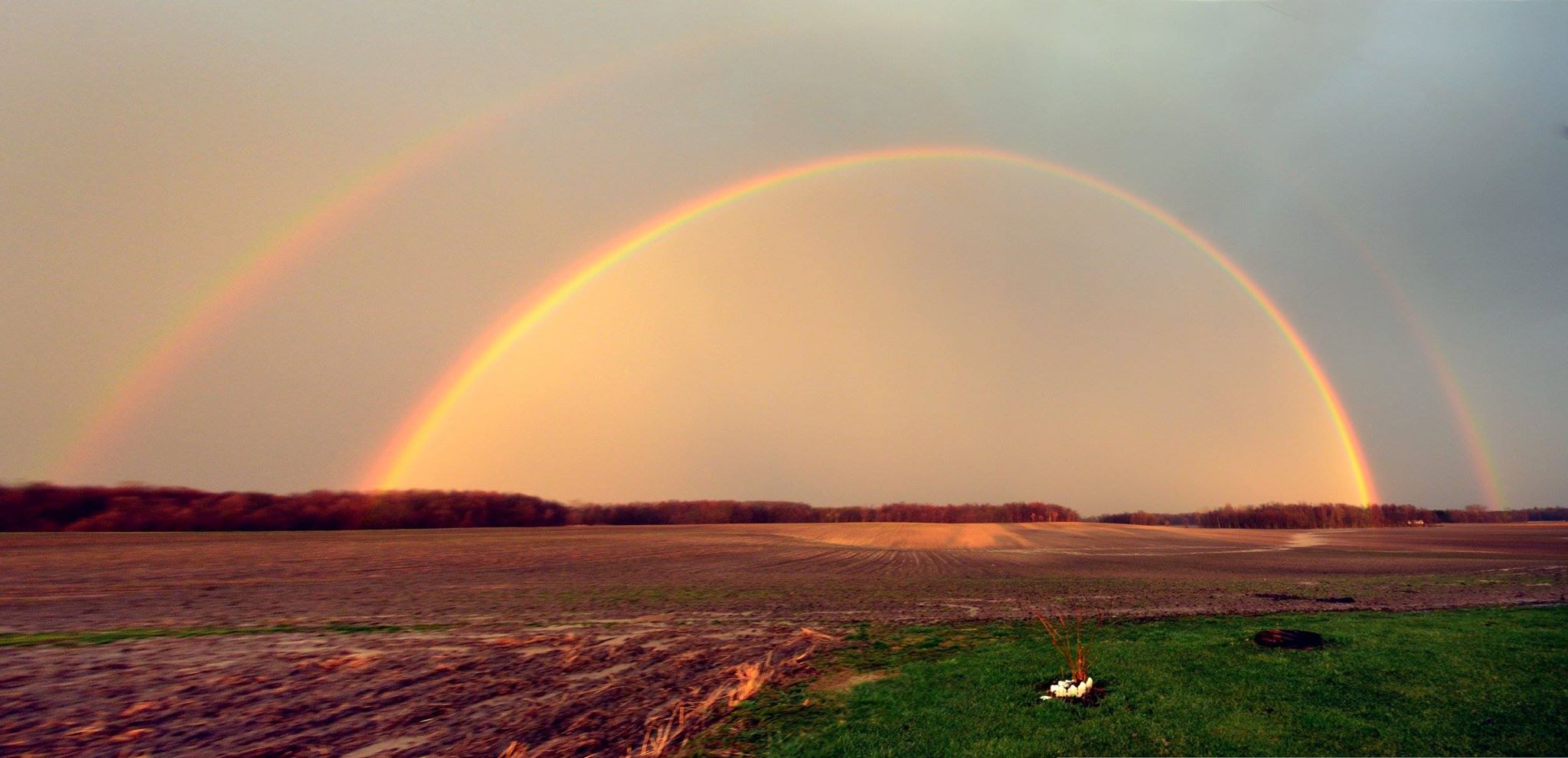
Double Rainbow

Double Rainbow

Double Rainbow, photo by Your Hometown Photography 

I simply love Atmospheric Optics for nearly everything about lights in the sky. Regarding secondary rainbows or “double rainbows” they say that the secondary is nearly always fainter than the primary, with colors reversed and more widely separated:

Light can be reflected more than once inside a raindrop. Rays escaping after two reflections make a secondary bow.

The secondary has a radius of 51º and lies some 9º outside the primary bow. It is broader, 1.8X the width of the primary, and its colours are reversed so that the reds of the two bows always face one another. The secondary has 43% of the total brightness of the primary but its surface brightness is lower than that because its light is spread over its greater angular extent. The primary and secondary are are concentric, sharing the antisolar point for a center.

About this particular rainbow from April 2, 2016, Gerry writes: “Double rainbow from the other night after the storms. The weather in Michigan can change quickly, from rainbows to snow. Yep, that’s Michigan.” 

Indeed. View her photo bigger and follow Your Hometown Photography on Facebook for more.

More rainbows on Michigan in Pictures.

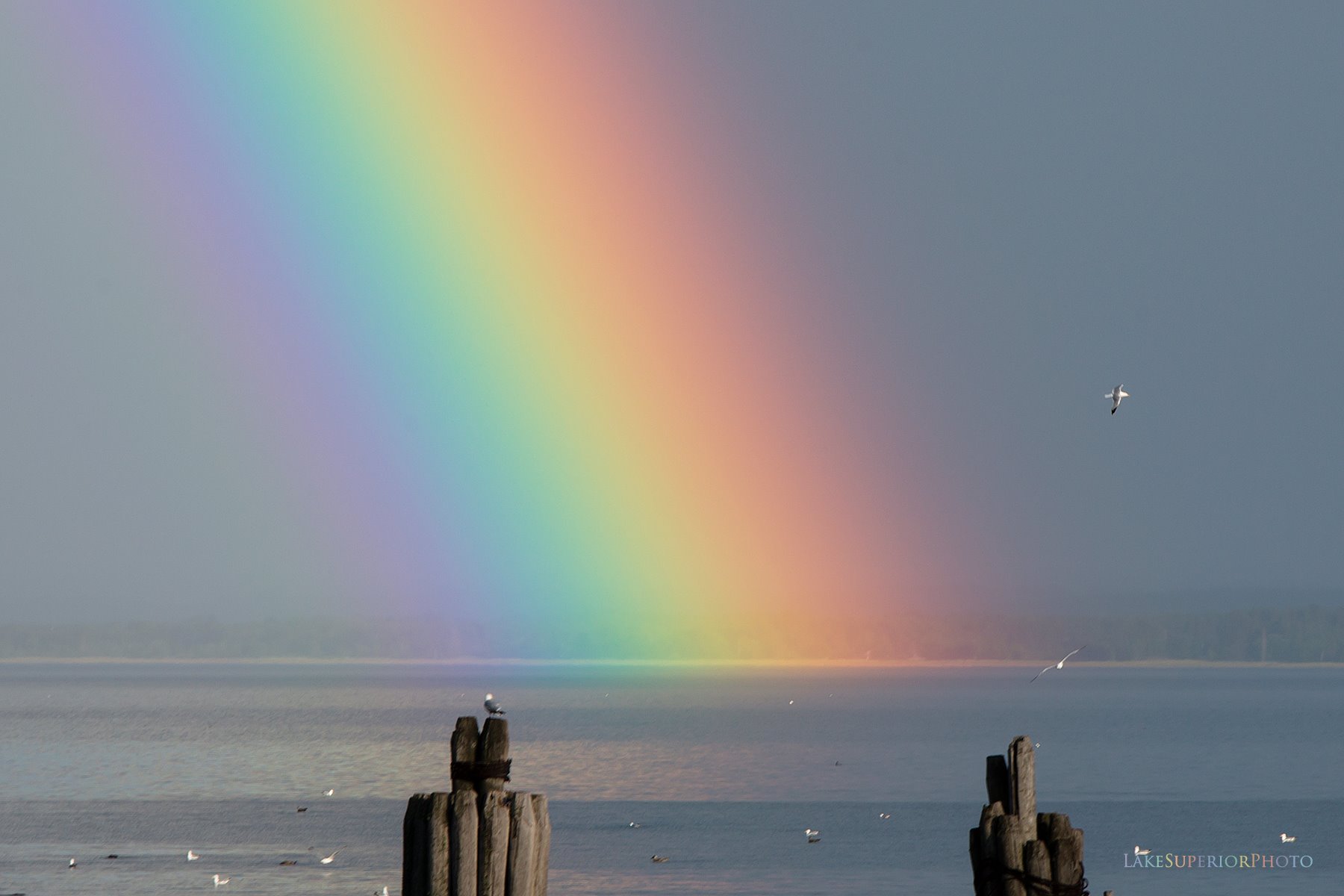
Prismatic

Lower Harbor Massive Rainbow

lower harbor massive rainbow, photo by Lake Superior Photo

I’ve featured a photo of a rainbow and one of Marquette’s harbor in the last couple of days, but I haven’t featured a photo of both! Have a great weekend folks.

Shawn writes: prismatic is on the mind right now, recalling one of the most brilliant rainbows I’ve ever witnessed. View the photo background bigtacular and head over to Lake Superior Photo to view and purchase photos (including a stunning double rainbow) in her Lake Superior Landscapes gallery.

More rainbows & rainbow science on Michigan in Pictures.