Adventurer

Sleeping Bear Dunes National Lakeshore

Sleeping Bear Dunes National Lakeshore, photo by teddy eduardo iglesias

I’ve stood in this spot, and it felt almost as amazing as this picture.

View Teddy’s photo background bigtacular and see more in his Michigan Outdoors slideshow.

Lots more from the Sleeping Bear Dunes National Lakeshore on Michigan in Pictures!

Monarch & Sunflower

IMG_3378 (3) Monarch on sunflower
Monarch on sunflower, photo by jgagnon63@yahoo.com

The Michigan DNR page on Monarch Butterfly (Danaus plexippus) says:

Often called the Milkweed Butterfly, this large black veined orange winged butterfly can be observed feeding on milkweed. During its mating behavior, the adult male monarch will display a “courtship dance.” Perching on the tips of the milkweed, it will fly to other large butterflies to see if one is a female monarch; if it is, they will fly together in a fast, darting flight, lasting up to a minute and covering many yards and to a height of 100 feet.

As fall approaches, the monarchs can be seen in large numbers migrating along the Great Lakes shorelines enroute to Mexico and Central America.

Monarch butterfly populations have been declining in Michigan for the last decade, and it appears that last winter was another tough blow for this beleaguered beauty. You can learn a lot more about Monarch butterflies and how to help protect them at Monarch Watch.

View jgagnon’s photo background bigalicious and see more in his slideshow.

Closing out the Summer

Untitled, photo by Jim Sorbie

Summer 2014 – get it before it’s gone!

View Jim’s photo of a sunset paddleboarder on Lake Michigan near Empire background bigtacular and see more in his Leelanau Scenes slideshow!

More sunsets and more summer wallpaper on Michigan in Pictures!

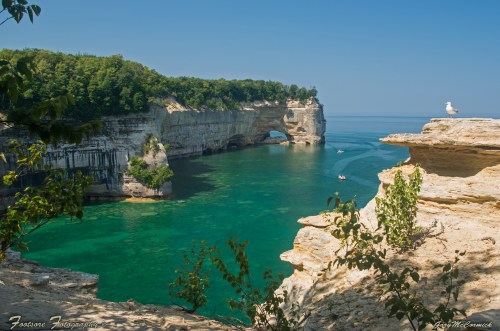
Grand Portal Point: You have to see it to believe it

Grand Portal Point

Grand Portal Point, photo by Gary McCormick

I get a lot of comments saying “No way is that Michigan” on photos, particularly on those from the Pictured Rocks National Lakeshore. To those people I say, “Believe it, and go there.”

View Gary’s photo background bigtacular and see more in his massive Pictured Rocks National Lakeshore slideshow.

More summer wallpaper and more Pictured Rocks on Michigan in Pictures!

Headed Out with the Cason J Callaway

Cason J Calloway

headed out, photo by Susan H

The Cason J. Callaway made an appearance this winter when she was locked in the ice on Lake Huron. Boatnerd’s page on the Callaway says that the 767′ ship took her maiden voyage on September 16, 1952, draws 36′ and is able to haul over 250,00 tons:

The Cason J. Callaway was one of the eight “AAA” class vessels which entered service during 1952 and 1953. She was the last of the trio of vessels in this class (the Philip R. Clarke and Arthur M. Anderson were the first two) built for Pittsburgh Steamship Company, who originally developed the blueprints used for all eight members of this class.

…Initially, the Callaway was used almost exclusively in the iron ore trade. In the early 1960s, the Callaway occasionally visited the St. Lawrence Seaway, often hauling grain from Toledo to ports on the St. Lawrence River and returning with iron ore. By the end of the 1960s, the Callaway returned to the traditional U.S. Steel iron ore trade route. She remained on this route regularly until her conversion to a self-unloader. After the conversion, the vessel began loading a wider variety of cargoes and visiting an even greater variety of ports. Ports such as Ashland and Green Bay, Wisconsin and Ontonagon and Dollar Bay, Michigan would occasionally become part of the Callaway’s trade route. By the late 1980s, the Callaway fell into a somewhat regular trade route, including a trip from either Duluth or Two Harbors with iron ore to a Lower Lakes port, often Lorain; one or two intermediate trips between ports on Lakes Huron, Michigan, and Erie; and a limestone load from quarries at Rogers City (Calcite) and Cedarville (Port Dolomite), Michigan back up to Duluth. An occasional odd cargo or port remains a possibility.

Susan had a great view of the Callaway as the ship headed out to the open water near Cedarville. Check it out background bigtacular and see more in her slideshow.

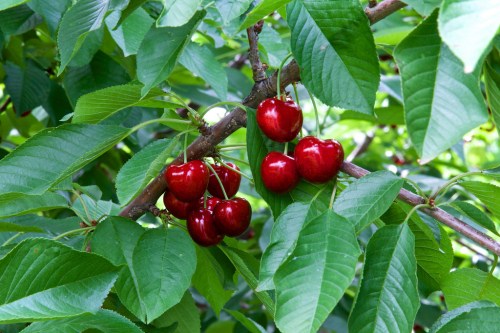
Cherry Time in Michigan

Ready to Pick

Ready to Pick, photo by Bruce

While much of the state is still waiting on cherries to ripen, the National Cherry Festival is heading into the final weekend for their 88th annual event. Their history page says (in part):

French colonists from Normandy brought pits that they planted along the Saint Lawrence River and on down into the Great Lakes area. Cherry trees were part of the gardens of French settlers as they established such cities as Detroit, Vincennes, and other midwestern settlements.

Modern day cherry production began in the mid-1800s. Peter Dougherty was a Presbyterian missionary living in northern Michigan. In 1852, he planted cherry trees on Old Mission Peninsula (near Traverse City, Michigan). Much to the surprise of the other farmers and Indians who lived in the area, Dougherty’s cherry trees flourished and soon other residents of the area planted trees. The area proved to be ideal for growing cherries because Lake Michigan tempers Arctic winds in winter and cools the orchards in summer.

The first commercial tart cherry orchards in Michigan were planted in 1893 on Ridgewood Farm near the site of Dougherty’s original plantings. By the early 1900s, the tart cherry industry was firmly established in the state with orchards not only in the Traverse City area, but all along Lake Michigan from Benton Harbor to Elk Rapids. Soon production surpassed other major crops. The first cherry processing facility, Traverse City Canning Company, was built just south of Traverse City, and the ruby-red fruit was soon shipped to Chicago, Detroit and Milwaukee.

…The most famous sweet cherry variety is the Bing cherry; this cherry variety got its name from one of Lewelling’s Chinese workmen. Another sweet cherry variety is the Lambert, which also got its start on Lewelling Farms. The Rainier cherry, a light sweet variety, originated from the cross breeding of the Bing and Van varieties by Dr. Harold W. Fogle at the Washington State University Research Station in Prosser, Washington. The Bing, Lambert and Rainier varieties together account for more than 95 percent of the Northwest sweet cherry production.

Today, the U. S. cherry industry produces more than 650 million pounds of tart and sweet cherries each year. Much of the cherry production is concentrated in Michigan and the Northwest. Michigan grows about 75 percent of the tart cherry crop. Oregon and Washington harvest about 60 percent of the sweet cherry crop. Other states with commercial cherry crops are Utah, Wisconsin, New York, Pennsylvania and California.

Read on for more, and if you want to read about how some cherry farmers think that Federal cherry policy is leaving dollars in the orchards, head over to this Bridge Magazine article on how USDA cherry policy impacts Michigan cherry farmers.

Bruce photographed these beauties last week at at Lemon Creek Winery near Baroda. View his pic background bigtacular and see more in his slideshow.

More cherries and more summer wallpaper on Michigan in Pictures!

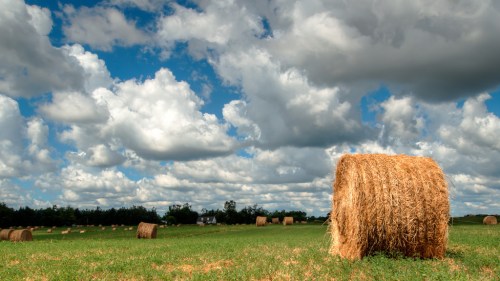
Mid Michigan on the 4th of July

Mid Michigan on the 4th of July - Imlay City

Mid Michigan on the 4th of July – Imlay City, photo by Mike Boening

View Mike’s photo background big, see more in his slideshow and if you want to want to purchase prints, visit his website.

More summer wallpaper on Michigan in Pictures!

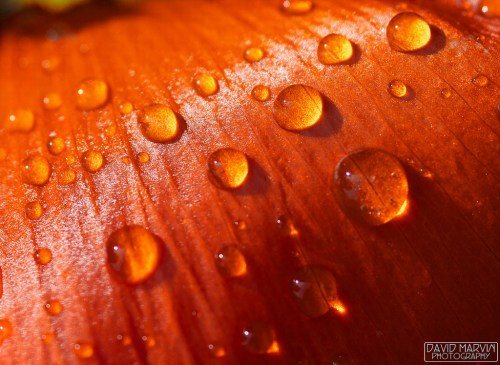
Spring Showers on Spring Flowers

Spring Showers on Spring Flowers

Spring Showers on Spring Flowers, photo by David Marvin

View David’s photo background big and see more rainy, tulipy, irisy goodness in his slideshow.

More Spring wallpaper on Michigan in Pictures.