Michigan’s Ultimate Snow Day: The Blizzard of ’78

The Blizzard of '78 by John Russell

The Blizzard of ’78 by John Russell

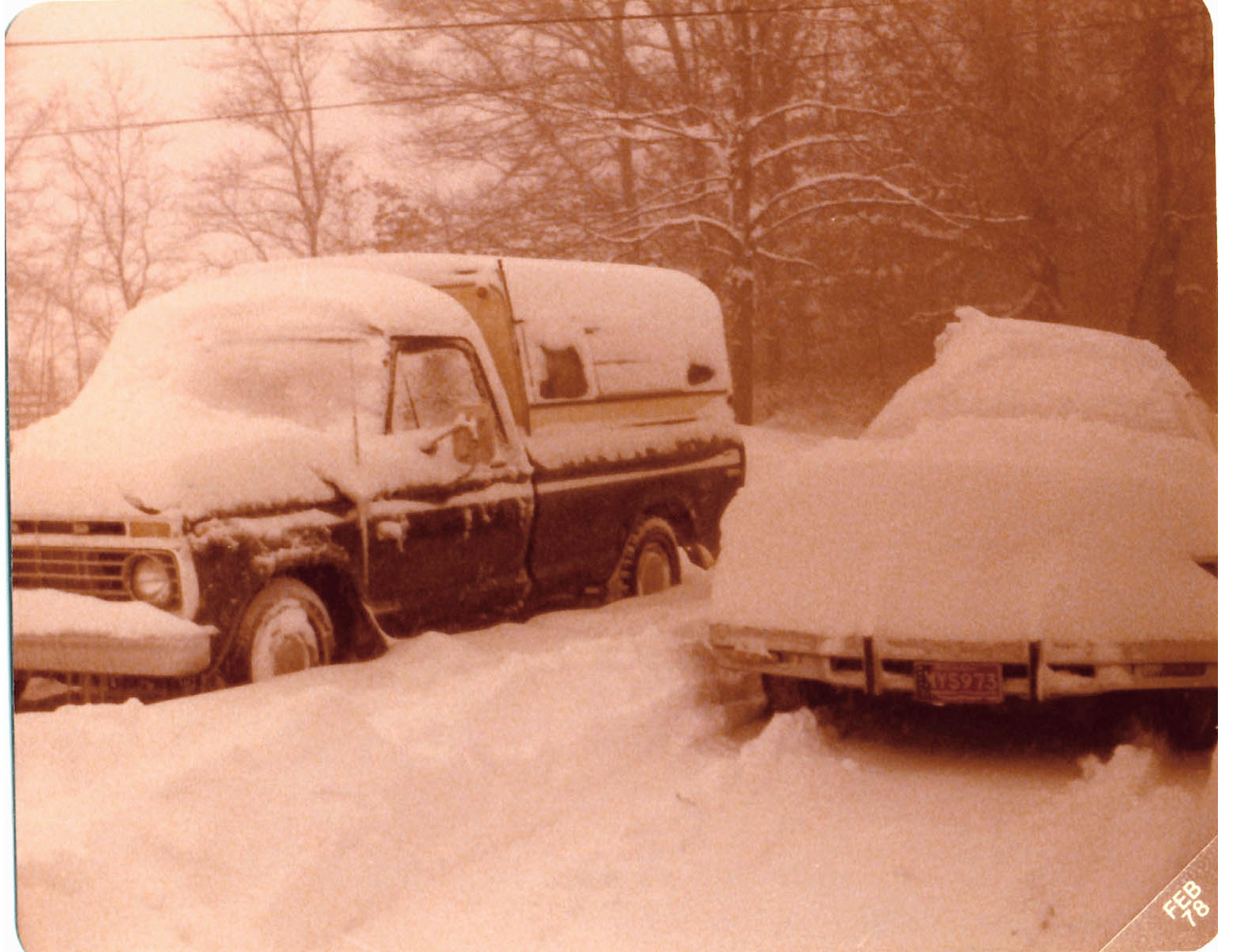
“The most extensive and very nearly the most severe blizzard in Michigan history raged throughout Thursday January 26, 1978 and into part of Friday January 27. About 20 people died as a direct or indirect result of the storm, most due to heart attacks or traffic accidents. At least one person died of exposure in a stranded automobile. Many were hospitalized for exposure, mostly from homes that lost power and heat. About 100,000 cars were abandoned on Michigan highways, most of them in the southeast part of the state.” -National Weather Service Ann Arbor Meteorologist in Charge, C.R. Snider on January 30th, 1978

48 years ago one of the most powerful blizzards in Michigan history brought the state to a standstill. In her feature on historical Michigan snow days in the now defunct Seeking Michigan,  Jessica Miller of the Archives of Michigan related:

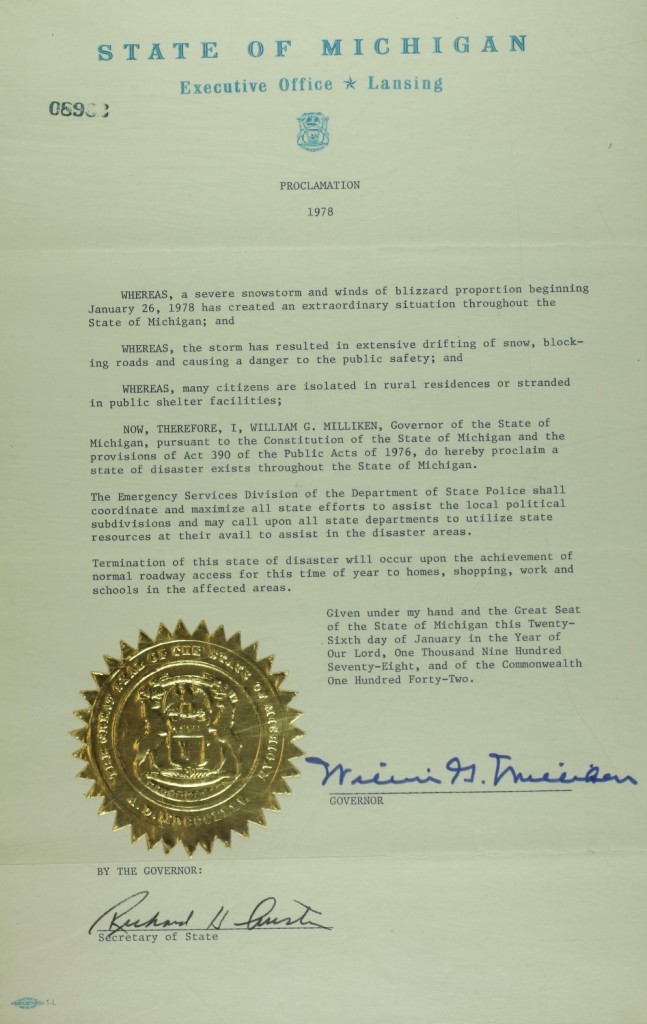
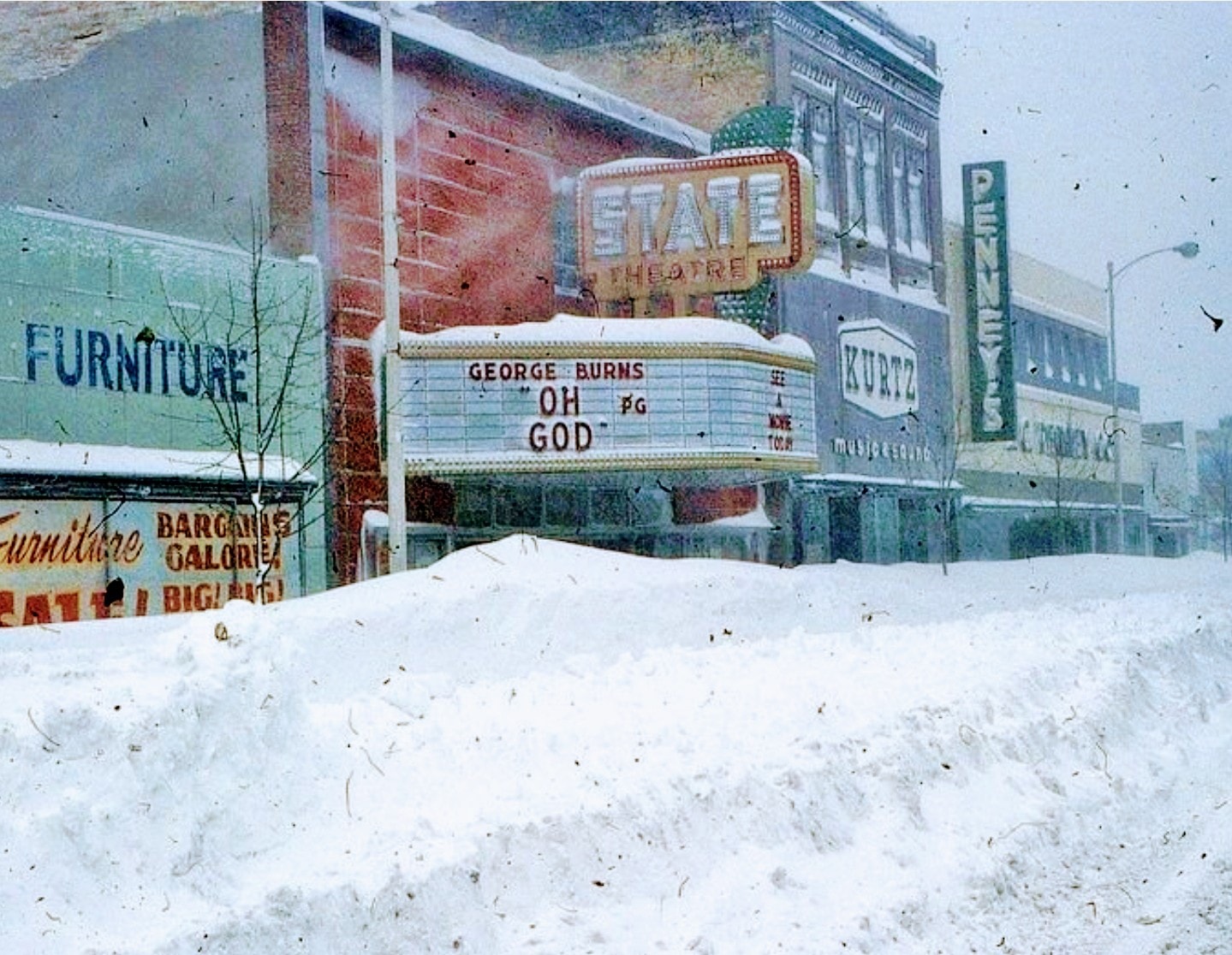
On January 26-27, 1978, snowstorms with fifty-to-seventy-mile per hour winds pummeled much of Michigan. Snowfall totals ranged from eighteen inches in Lansing to an incredible fifty-one inches in Traverse City. More than 100,000 cars were abandoned on roads and highways, and travel was impossible for days. Governor William G. Milliken declared a state of emergency on January 26 (See the image below.) and activated the National Guard to assist with the cleanup. The governor also requested financial assistance from the federal government and estimated damage totals to be more than $25 million, not including lost productivity from workers who were unable to get to their jobs.

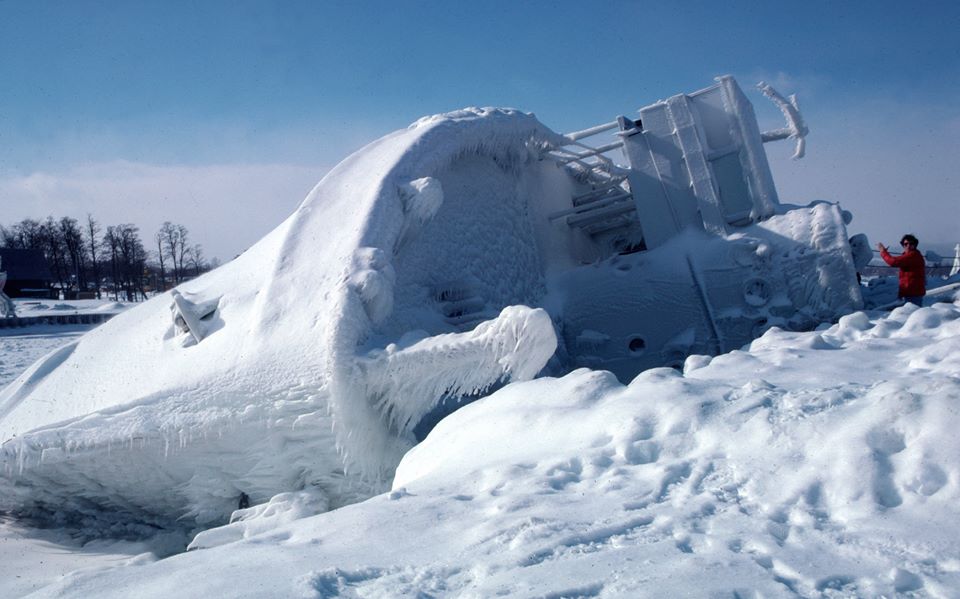
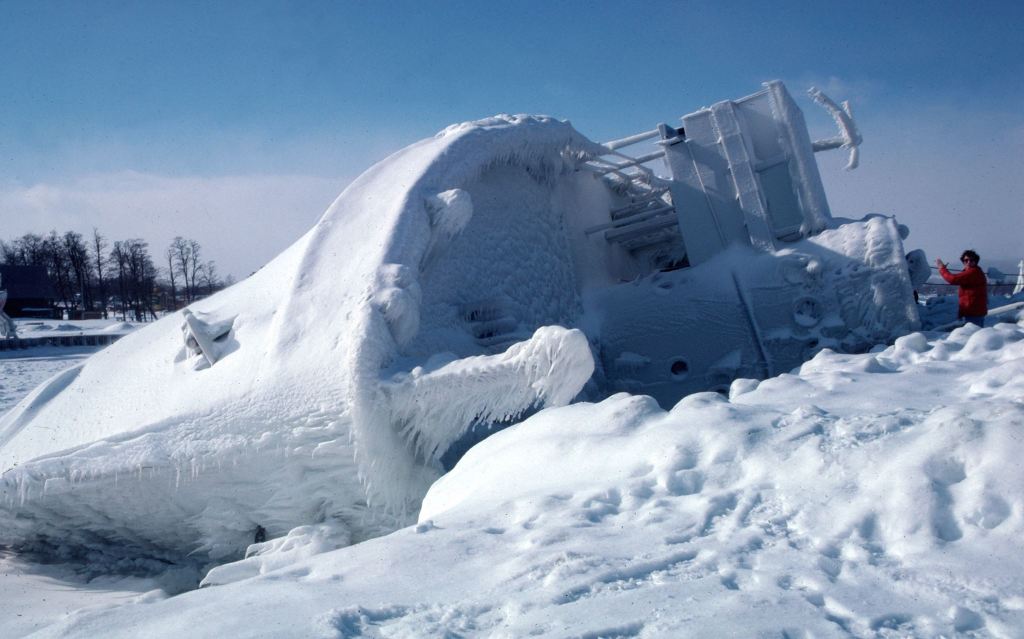
Regarding the photo, John wrote: Marty Lagina stands on the frozen pier at the Great Lakes Maritime Academy on January 29, 1978, viewing the capsized training vessel Allegheny, which capsized from ice buildup during the Blizzard of ’78. This image was on assignment for TIME magazine, who had seen my b&w image on the UPI wire and wanted a color image. Marty and I were lucky – the sky cleared and the wind stopped for about 20 minutes, then the storm began again. I wondered at the time who TIME knew to make that happen…

See the latest from John on his TC Photo Facebook page & stay warm folks!!
Support Michigan in Pictures with Patreon

Winter in the shade, winter in da Yoop!

winter, upper tahquamenon falls, michigan by twurdemann

It was one of those March days when the sun shines hot and the wind blows cold: when it is summer in the light, and winter in the shade.

-Charles Dickens

…and it is also winter in the UP! While rains are expected to wash much of the snow from Michigan today, mLive Chief Meteorologist Mark Torregrossa shares that the National Weather Service is predicting 10-15″ of snow for areas of the Upper Peninsula including as much as TWO FEET of snow for the western UP!

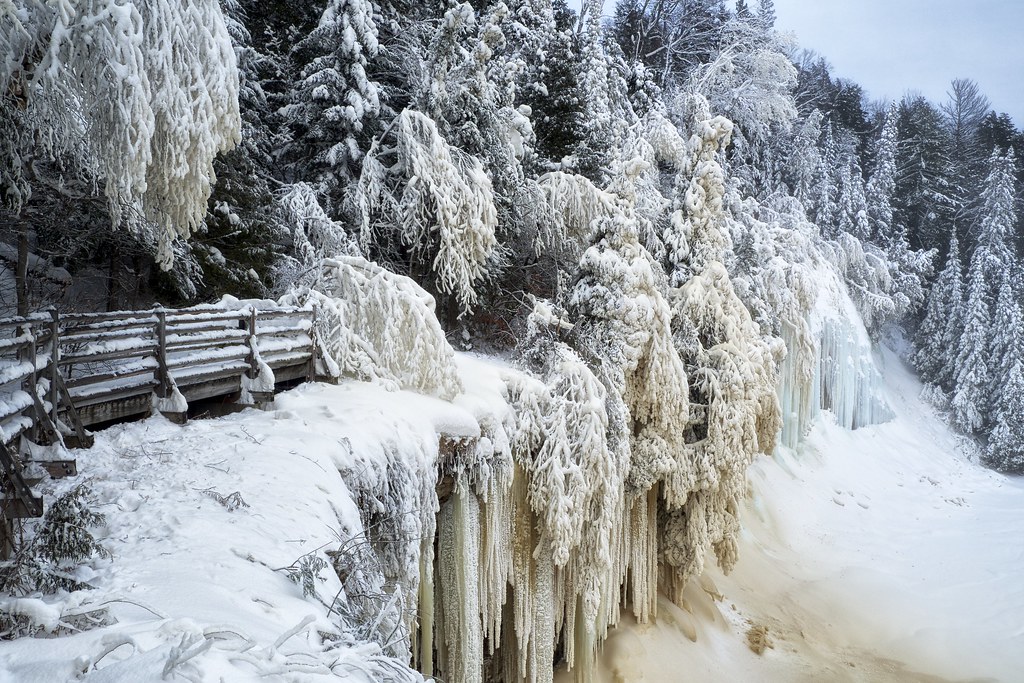
twurdemann shares that this incredible winter wonderland is created by freezing spray/mist from the waterfall at Michigan’s Tahquamenon Falls State Park & the brown tannins in the water. Check out more in their Winter gallery on Flickr that includes some KNOCKOUT ice cave photos from the Canadian shore of Lake Superior!

Support Michigan in Pictures with Patreon

Watching the snow in Michigan

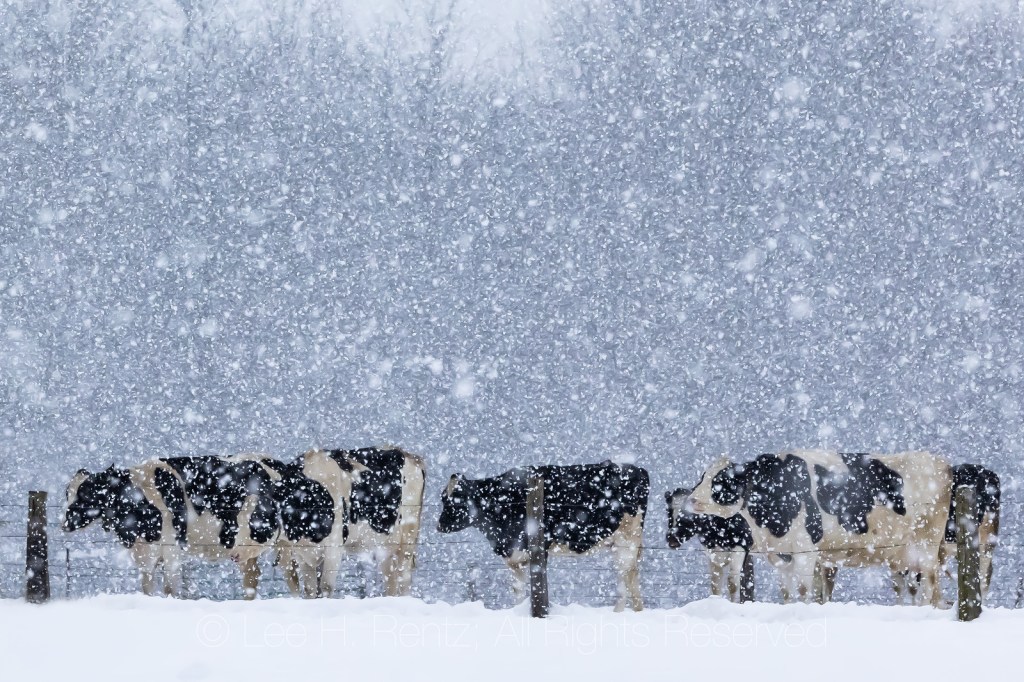
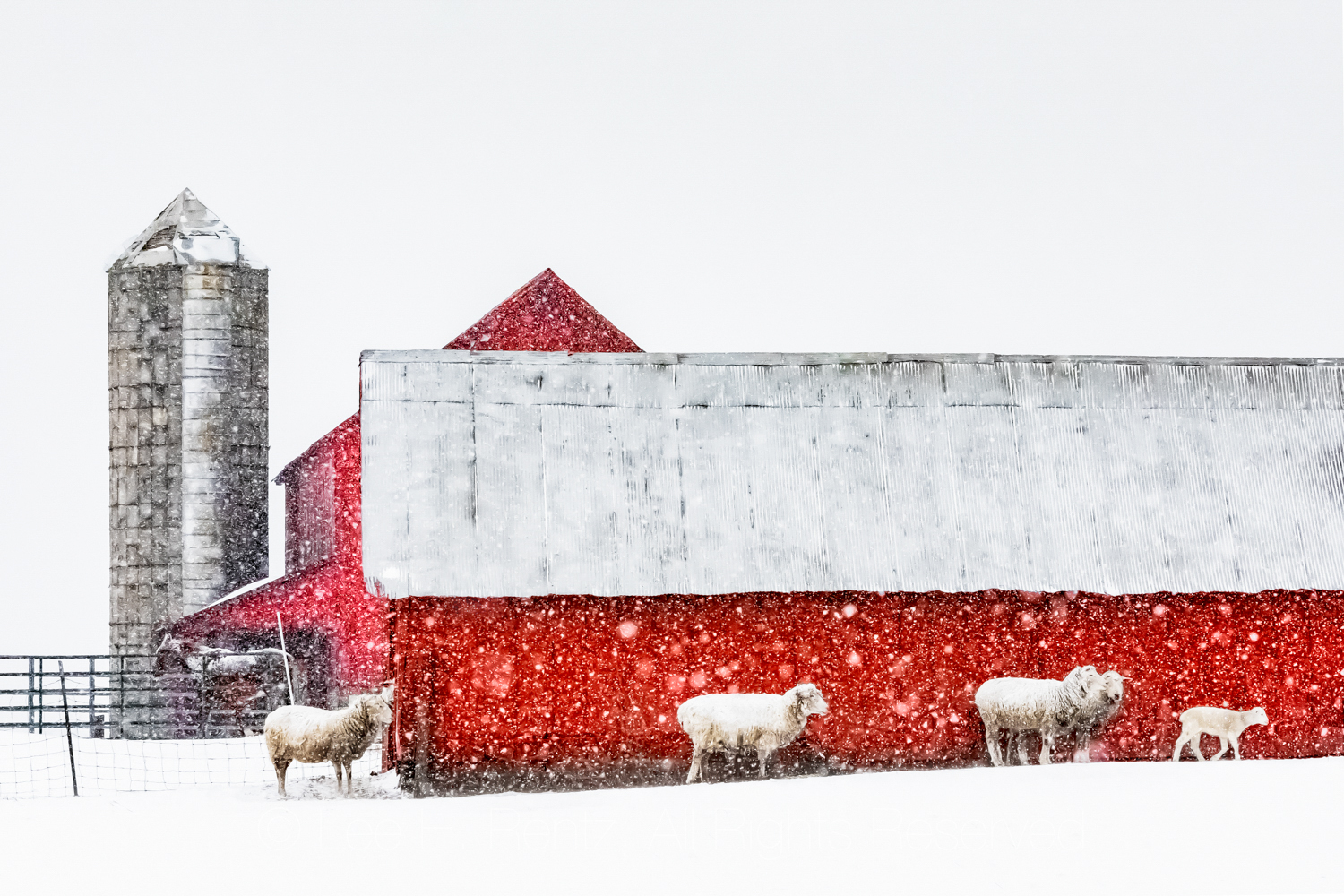
Holstein Cattle in Michigan by Lee Rentz

Holstein Cattle in Michigan by Lee Rentz

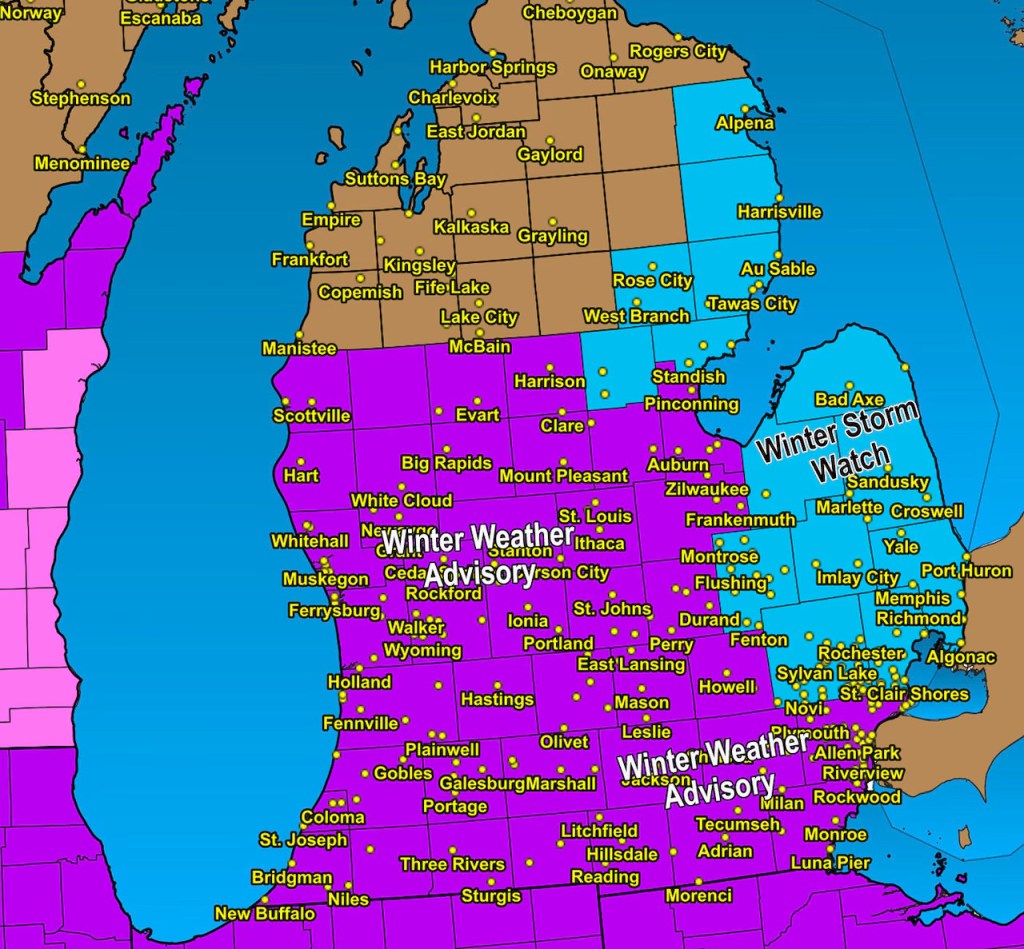
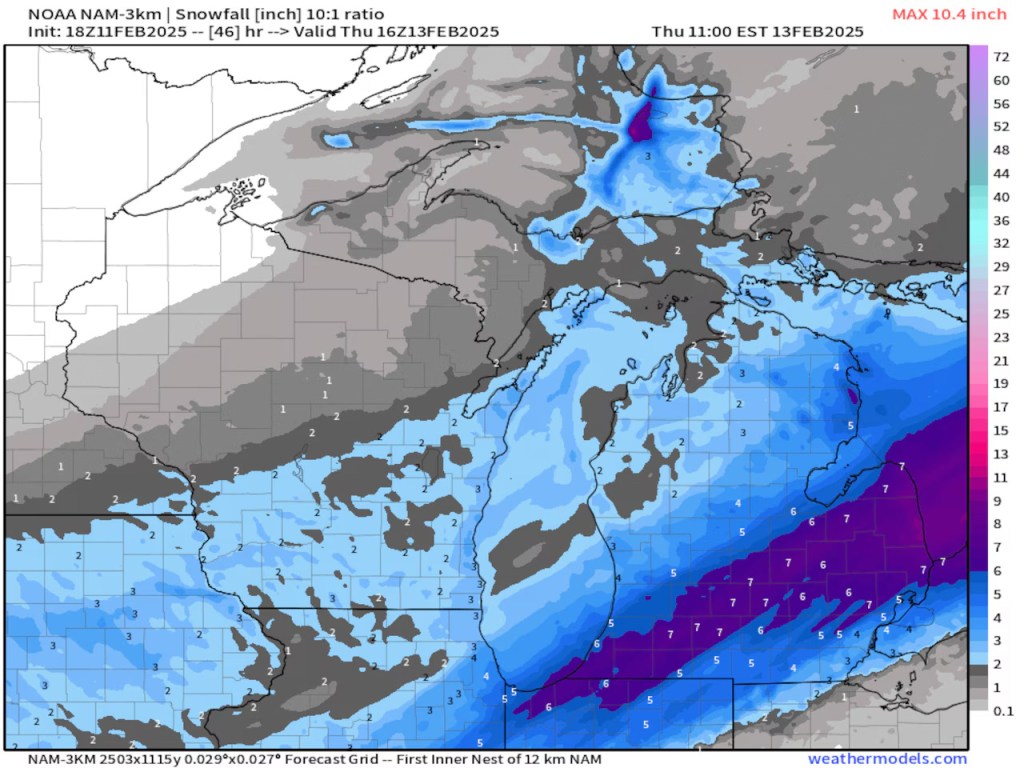
mLive’s Mark Torregrossa shares that there is a winter weather advisory for 4-6″ of snow covering most of the southern two-thirds of the Lower Peninsula. He notes that the far southeast corner, including Ann Arbor, Detroit, and Monroe are expected to get some freezing rain as well that will reduce snowfall to 2-4″ in that area. He also shared a little bit about how a storm watch evolves over time:

A winter storm watch is usually issued when a storm system is one to two days from starting. This long lead time is used to help you get ready if you have to make travel or work changes. Eventually as the storm gets closer, the winter storm watch either turns to a winter storm warning or a winter weather advisory.

The map above shows how the large winter storm watch area earlier today has been fine-tuned to mostly winter weather advisories. A winter storm watch still exists for the Thumb and northeast shoreline until the next round of data shows which way to go on the watch. There should be some lake enhancement of the snow totals in the Thumb and northeast shoreline, possibly putting those areas over the six inch winter storm warning criteria.

Latest revision (3:26 p.m. Tuesday) of the winter storm watch to mostly winter weather advisories in purple. There still is a waiting game with the winter storm watch in blue for the Thumb, Oakland county, Macomb County and the northeast shoreline. image by NOAA
Total snow forecast from the North American Model (NAM) through Thursday afternoon.NOAA

Lee shared this photo of Holstein cattle on an Amish farm riding out a winter snowstorm in Mecosta County to the Absolute Michigan group on Flickr last January. When I did a quick Google search because I had forgotten if Lee was a he or a she, I realized that he had a lot more photos in excellent essay entitled FALLING SNOW: A Landscape Transformed on his blog:

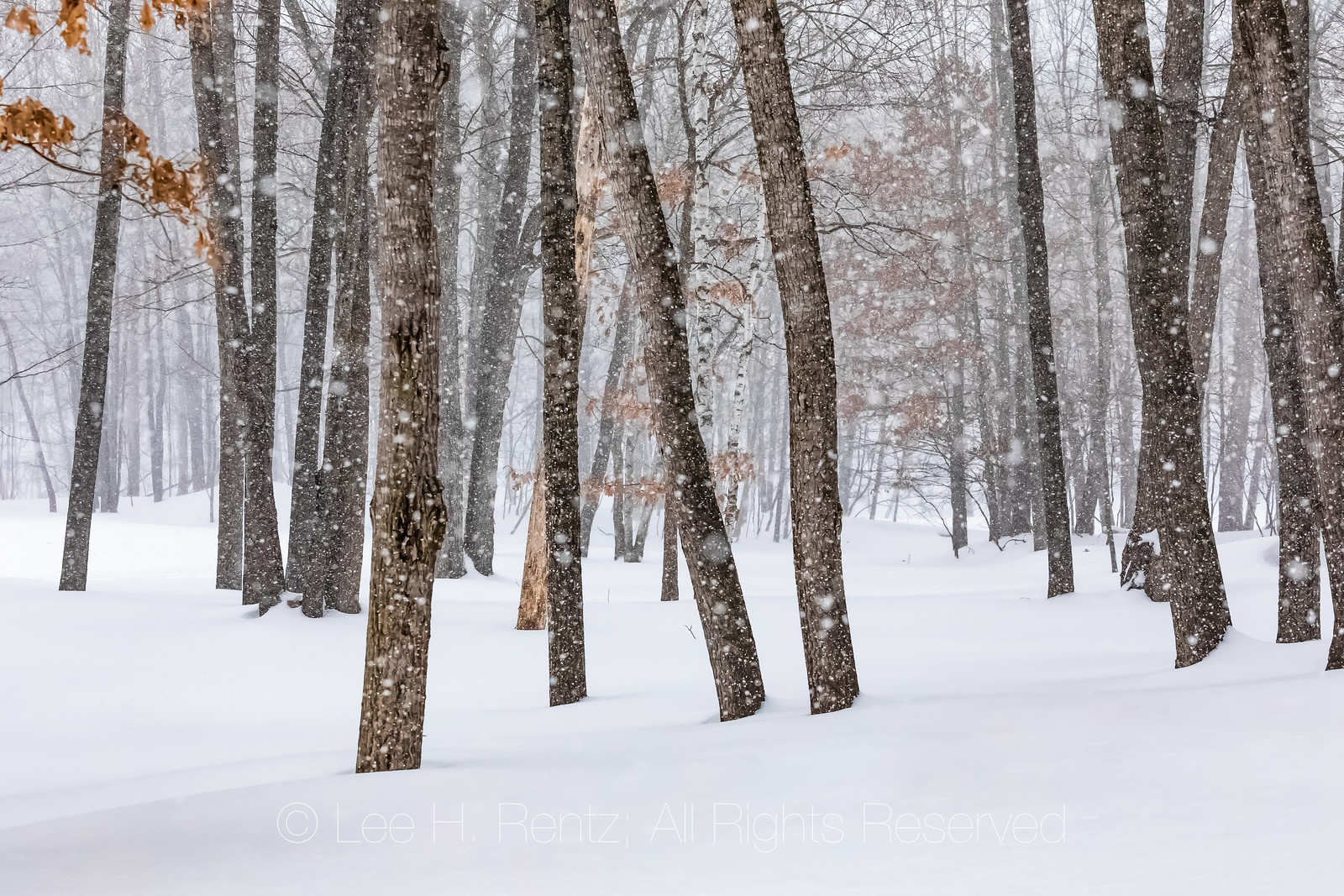
When I see snow falling, dissolving the landscape into a place entirely different, I am enthralled by the veiled look of the land. Every surface is softened and sounds are muffled and most people have retreated indoors. The familiar is transformed.

The pictures in this photographic essay were taken near my Michigan home, where I love to venture into the heaviest snow squalls, finding barns and forests transformed by the falling snow. I am fortunate to live near an Amish community, where their barns and buggies and homes are often featured in my winter photography. Enjoy the photographs, and find a new appreciation for winter.

Head over to the Lee Rentz Photography Journal for lots more!

Support Michigan in Pictures with Patreon

W-w-w-whiteout on US-2!

Whiteout on US-2 by Gustafsons Smoked Fish

Whiteout on US-2 by Gustafsons Smoked Fish

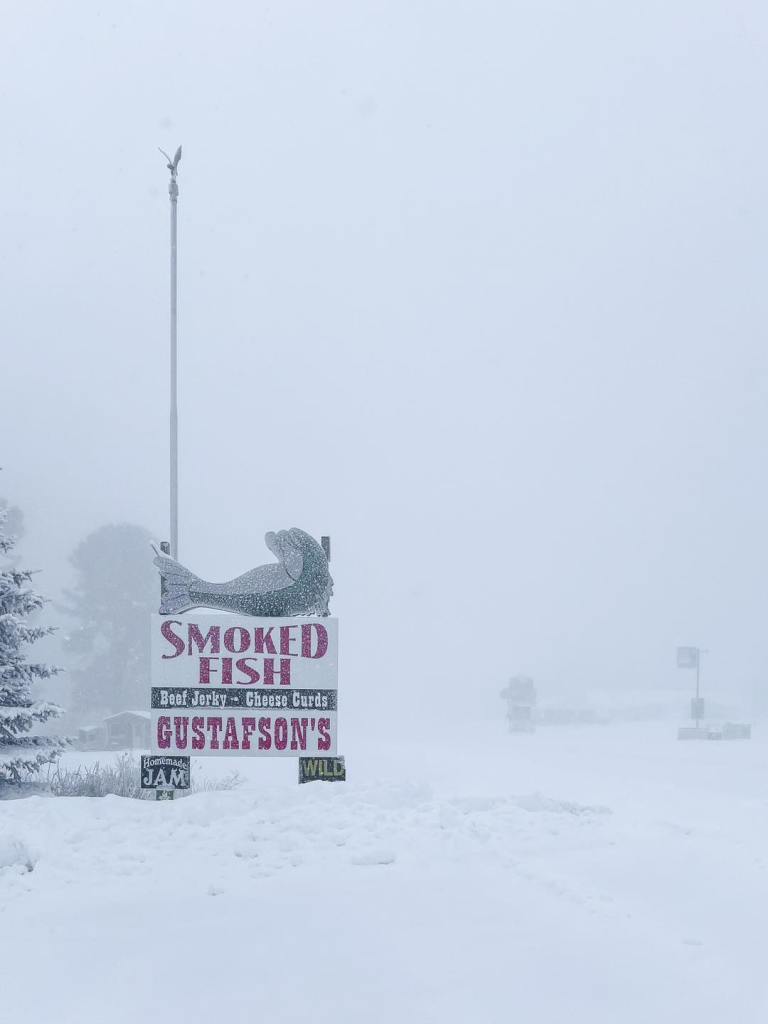
Gustafson’s Smoked Fish shared this photo yesterday from their Facebook as they closed due to generally horrible conditions. They are open again today & located about a half hour west of the Mackinac Bridge on US-2 along the northern shore of Lake Michigan. The family has been making and selling smoked fish, jerky & cheese curds for nearly 50 years, and they have always been one of my favorite post-Bridge stops!

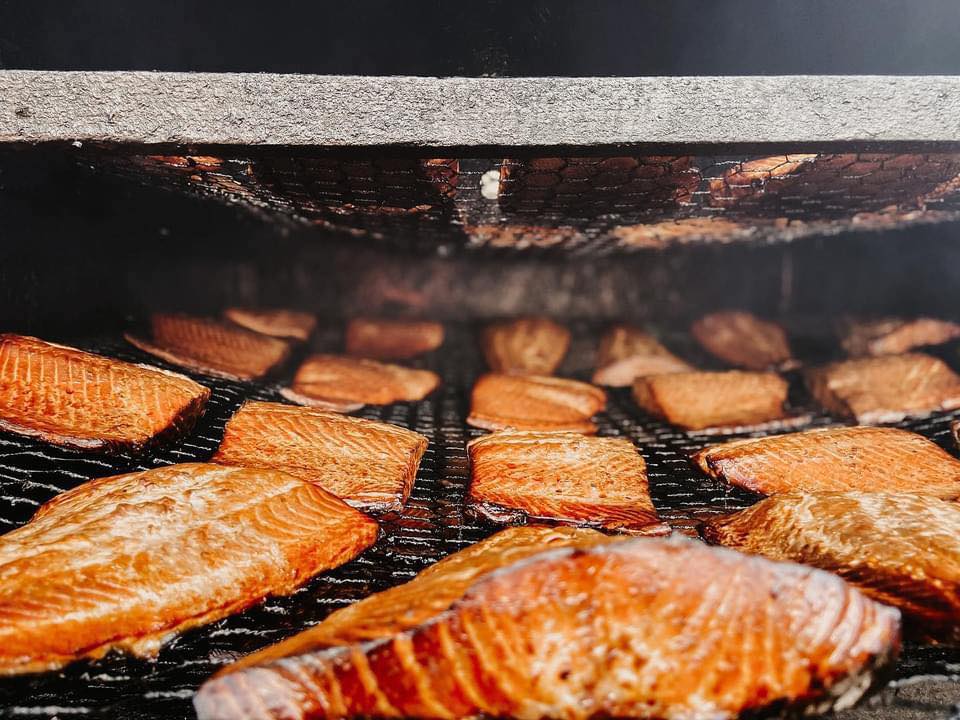
Now here’s a shot of their delicious salmon. If anyone is driving past do you mind picking up a couple pounds for me?

Fish in the smoker by Gustafson's Smoked Fish

Fish in the smoker by Gustafson’s Smoked Fish

Support Michigan in Pictures with Patreon

After the Blizzard of 1967 on Kalamazoo’s March Street Hill

march-street-hill-kalamazoo-january-blizzard

March Street Hill, Kalamazoo, photo by Joel Dinda

Joel shared these 50-year-old photographs from Michigan’s January 1967 blizzard. They were taken by his father after the snow stopped falling on January 27th. Seeking Michigan has a feature that looks back on two late January blizzards in 1967 & 1978:

The 1967 blizzard fell on January 26 and 27, and dumped twenty-four inches of snow on Lansing. Lansing State Journal articles from the days after the storm tell stories of stranded bus passengers, a mother who picked her children up on horseback, and neighbors who built a human-sized Snoopy snow sculpture. Rachel Clark, an education specialist at the Michigan Historical Center, remembers growing up and hearing stories about the time her father got a ride to work from the National Guard, because he had to abandon his car during the storm. He was a reporter for the WJIM television station in 1967, and the station needed him to read the news and help keep Lansing residents informed about the storm.

Read on for more. Also see this mLive series of photos from the Blizzard of ’67 and scroll down for a video from MSU’s Brody Hall taken during the blizzard.

View Joel’s photo background bigilicious and see more great old photos in his Roger’s slides slideshow.

More history, more Kalamazoo, and more blizzards on Michigan in Pictures!

Remembering the Michigan Blizzard of 1978

Michigan Blizzard 1978

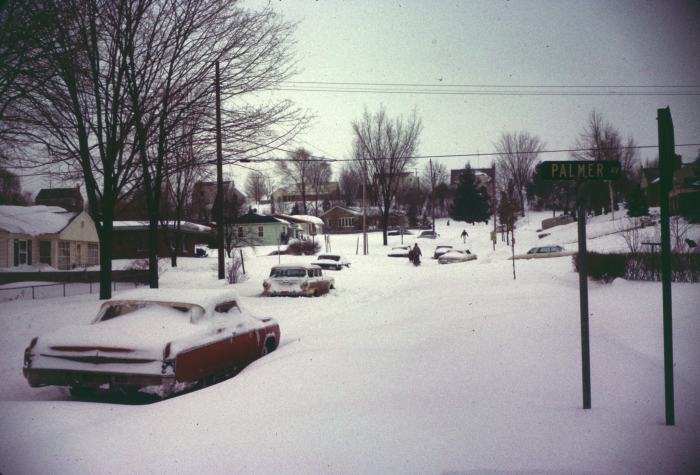
Blizzard of ’78 – Somerset, MI, photo by Bill

The most extensive and very nearly the most severe blizzard in Michigan history raged January 26, 1978 and into part of Friday January 27. About 20 people died as a direct or indirect result of the storm, most due to heart attacks or traffic accidents. At least one person died of exposure in a stranded automobile. Many were hospitalized for exposure, mostly from homes that lost power and heat. About 100,000 cars were abandoned on Michigan highways, most of them in the southeast part of the state.
~C. R. Snider, National Weather Service Meteorologist in Ann Arbor, Michigan

Today is Michigan’s 179th birthday, but it’s also the anniversary of one of the most significant storms to ever hit the state, the Great Blizzard of 1978. William Deedler’s article A Great Storm is Upon Michigan says in part:

While there are several contenders for the worst blizzard ever to hit the Great Lakes in relatively modern times (since 1870 when records began in Detroit), the immense and intense Blizzard of January 26-27th 1978 must rank at or near the top along with the Great White Hurricane of 1913 (my link) with its similar track and powerfulness.

…As the Arctic air circulated throughout the storm while it made its way over Lake Huron, the lowest pressure was reached around 950 millibars or a hurricane-like 28.05 inches! “A Great Storm is Upon Michigan” read the headline of the 800 AM EST Special Weather Statement issued by the National Weather Service Forecast Office in Ann Arbor that Thursday /26th/ morning. Heavy snow and blizzard conditions were extensive as wind gusts in excess of 35 mph whipped the snow into huge drifts across much of Southeast Lower Michigan. Other areas of Eastern Michigan, Indiana and Ohio reported near hurricane-force winds, heavy snow and temperatures hovering between zero and 10 above, resulting in extreme blizzard conditions. These conditions later expanded further east into Pennsylvania and West Virginia and prevailed into the night (26-27th) across much of the Eastern Great Lakes, Southern Ontario and the Upper Ohio Valley. With the storm generating copious amounts of snow and very strong winds, whiteout conditions were widespread. All land and air traffic came to a stand still in the affected regions. Several major roads were closed for at least two to three days, if not longer, while clean up got underway. Numerous NWS employees were stranded at work, home, or on the road somewhere between the two. Several employees worked double shifts into at least Friday (some longer) because of the impassable roads with others simply unable to get to work.

The Blizzard Warnings were allowed to die across Michigan during the forenoon hours of Friday, the 27th. Record 24 hour snowfall totals from the storm included, 16.1 inches at Grand Rapids, 15.4 inches at Houghton Lake and 12.2 at Dayton, OH. Snowfalls for the entire storm (25-27th) included a whopping 30.0 inches at Muskegon (some of which was Lake Michigan enhanced), 19.3 inches at Lansing and 19.2 at Grand Rapids. Snowfalls were less over Southeast Lower Michigan (mainly because of the rain that fell for a period) and included 9.9 inches at Flint and 8.2 inches at Detroit.

Read on for more about the storm.

View Bill’s photo background big and see more in his Kelso: The Wonder Years slideshow.

Support Michigan in Pictures with Patreon


Blizzard beats boat: The Blizzard of ’78

Capsized and Ice Locked

Blizzard beats boat, photo by John Russell

Oh ice, I can’t stay mad at you, even when you misbehave like this.

Associated Press photographer John Russell shared this photo from January 29, 1978. He writes:

My office 37 years ago: Marty Lagina stands on the frozen pier at the Great Lakes Maritime Academy on January 29, 1978, viewing the capsized training vessel Allegheny, which capsized from ice buildup during the Blizzard of ’78. This image was on assignment for TIME magazine, who had seen my b&w image on the UPI wire and wanted a color image.

Marty and I were lucky – the sky cleared and the wind stopped for about 20 minutes, then the storm began again. I wondered at the time who TIME knew to make that happen….

The photo was taken in Traverse City, ground zero for the blizzard Seeking Michigan shared info about one of Michigan’s most significant winter storms:

On January 26-27, 1978, snowstorms with fifty-to-seventy-mile per hour winds pummeled much of Michigan. Snowfall totals ranged from eighteen inches in Lansing to an incredible fifty-one inches in Traverse City. More than 100,000 cars were abandoned on roads and highways, and travel was impossible for days. Governor William G. Milliken declared a state of emergency on January 26 and activated the National Guard to assist with the cleanup. The governor also requested financial assistance from the federal government and estimated damage totals to be more than $25 million, not including lost productivity from workers who were unable to get to their jobs.

Click through to view his photo bigger and friend John on Facebook – his “My Office” series is a great look at what’s happening all over Michigan.

PS: Sorry for all the pics from Leelanau/Traverse City lately. Sometimes it just works out that way…

Armistice Day Blizzards, yesterday & today

Super Storm on Superior

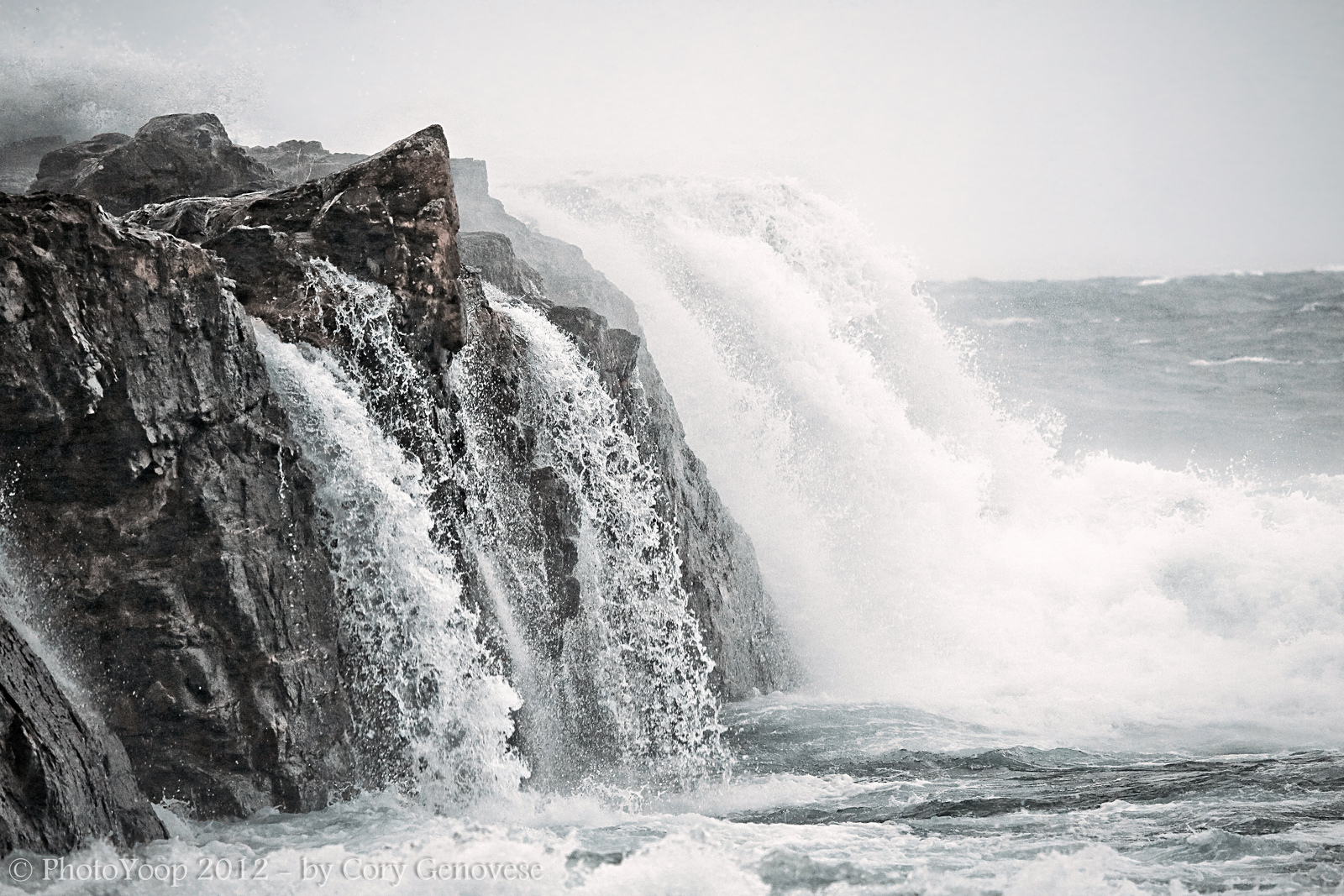
Super Storm on Superior, photo by Cory Genovese

74 years ago today on November 11, 1940, Michigan got blasted by one of the most severe November storms on record, the Armistice Day Blizzard. The Michigan Historical Marker in Ludington regarding the Armistice Day Blizzard says:

On November 11, 1940, a severe storm swept the Great Lakes area. As it crossed Lake Michigan, ships and seamen fought to reach safety away from its blinding winds and towering seas. Between Big and Little Points Sable the freighters William B. Davock and Anna C. Minch foundered with the loss of all hands. The crew of the Novadoc, driven aground south of Pentwater, battled icy winds and water for two days before being rescued by local fishermen. At Ludington the car-ferry City of Flint 32 was driven ashore, her holds flooded to prevent further damage. Elsewhere lives were lost and ships damaged in one of Lake Michigan’s greatest storms.

Also see the entry on the Armistice Day Blizzard at carferries.com. Wikipedia’s entry for the Armistice Day Blizzard adds that 66 people lost their lives on Lake Michigan on three freighters, the SS Anna C. Minch, the SS Novadoc, and the SS William B. Davock, as well as two smaller boats that sank and (at least) another 4 perished on land. There was one positive outcome though:

Prior to this event, all of the weather forecasts for the region originated in Chicago. After the failure to provide an accurate forecast for this blizzard, forecasting responsibilities were expanded to include 24-hour coverage and more forecasting offices were created, yielding more accurate local forecasts.

While it’s nothing like what happened in 1940, the Upper Peninsula is currently under a winter storm warning and looking at 8-16″ of snow today as an early season blizzard barrels through.

Cory took this shot on Lake Superior during the most severe late fall storm in recent times, Superstorm Sandy. View it bigger and see a lot more in his U.P. Winter ’12 & ’13 Gallery on his PhotoYoop page at Facebook.

More wild Michigan weather on Michigan in Pictures!

Buried by the Polar Vortex in Michigan

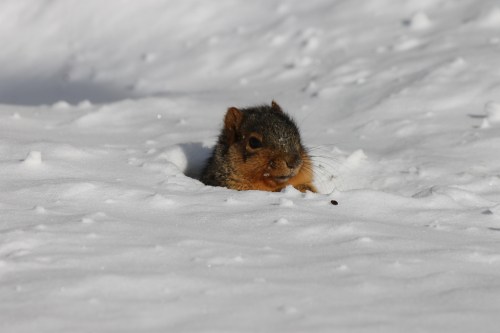
Squirrels and other pictures at the University of Michigan on an awful cold wintry day (January 6, 2014)

Squirrels and other pictures at the University of Michigan on an awful cold wintry day (January 6, 2014), photo by cseeman

If yesterday’s Michigan temps seemed chilly, today’s are worse! Ironwood is still the coldest, but they are up a few degrees at -20 (before the -33 windchill of course). Most of the rest of the state is joining them below zero this morning. Detroit and Lansing are at -11, Marquette is at -15 and Grand Rapids is at a balmy 1.6 degrees!

Dr. Jeff Masters blog on the Extreme Cold Blast at Weather Underground, the site he founded and runs in Michigan says:

The most extreme cold air outbreak since 1994 is in store for much of the U.S. on Monday and Tuesday, as Arctic air behind a major winter storm invades the Midwest. The powerful 989 mb storm blasted the Upper Midwest on Sunday, bringing snows in excess of a foot over portions of Illinois, Michigan, Indiana, Missouri, and Ohio. The 11.4″ that fell on Sunday in Indianapolis, Indiana made it that city’s second snowiest day on record (the all-time record: 12.1″ on March 19, 1906); Flint, Michigan also recorded its second snowiest day on record: 14.5″ (the all time record: 15.0″ on November 28, 1937.) … The high temperature in Detroit on Tuesday is expected to remain below zero; the city’s list of days with a high temperature below zero is a short one, with only three such days in recorded history. The frigid air is being propelled by strong Arctic winds of 15 – 25 mph, which will generate dangerously low wind chill readings in the -30° to -60°F range from Michigan to Minnesota on Monday and Tuesday.

In the winter, the 24-hour darkness over the snow and ice-covered polar regions allows a huge dome of cold air to form. This cold air increases the difference in temperature between the pole and the Equator, and leads to an intensification of the strong upper-level winds of the jet stream. The strong jet stream winds act to isolate the polar regions from intrusions of warmer air, creating a “polar vortex” of frigid counter-clockwise swirling air over the Arctic. The chaotic flow of the air in the polar vortex sometimes allows a large dip (a sharp trough of low pressure) to form in the jet stream over North America, allowing the Arctic air that had been steadily cooling in the northern reaches of Canada in areas with 24-hour darkness to spill southwards deep into the United States. In theory, the 1.5°F increase in global surface temperatures that Earth has experienced since 1880 due to global warming should reduce the frequency of 1-in-20 year extreme cold weather events like the current one. However, it is possible that climate change could alter jet stream circulation patterns in a way that could increase the incidence of unusual jet stream “kinks” that allow cold air to spill southwards over the Eastern U.S., a topic I have blogged about extensively, and plan to say more about later this week.

Read on for more and to see a shot of Jeff shoveling 14″ off his metro Detroit roof!

Corey took this shot on the campus of the University of Michigan. View it background big and see more in his massive Squirrels of the Univ. of Michigan slideshow.

PS: Curiously enough, there’s a Campus Squirrels photo group on Flickr.

Earth Wind … and Snow

Earth Wind and Snow

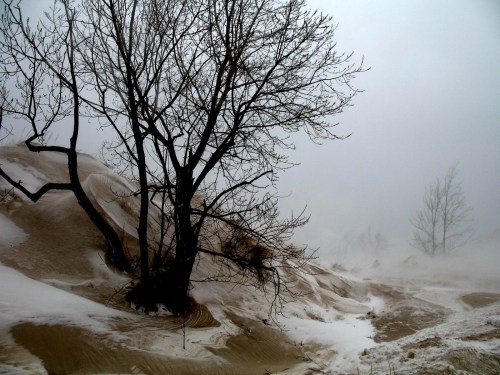
Earth Wind and Snow, photo by Beth

One of the lesser known bands of the 70s…

View Beth’s photo from the beach at Holland background bigtacular and see more in her Winter slideshow.

More winter wallpaper on Michigan in Pictures!