Know Your Michigan Birds: Baltimore Oriole (Icterus galbula)

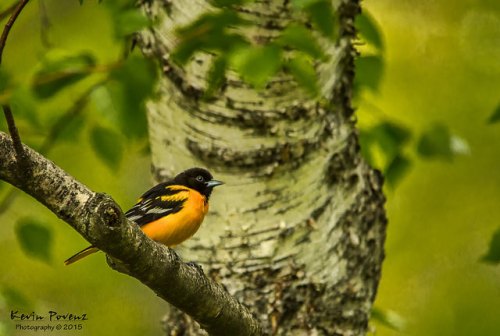
baltimore oriole

Baltimore Oriole, photo by Kevin Povenz

The Baltimore Oriole (Icterus galbula) entry from All About Birds says (in part):

The rich, whistling song of the Baltimore Oriole, echoing from treetops near homes and parks, is a sweet herald of spring in eastern North America. Look way up to find these singers: the male’s brilliant orange plumage blazes from high branches like a torch. Nearby, you might spot the female weaving her remarkable hanging nest from slender fibers. Fond of fruit and nectar as well as insects, Baltimore Orioles are easily lured to backyard feeders.

…Baltimore Orioles are more often heard than seen as they feed high in trees, searching leaves and small branches for insects, flowers, and fruit. You may also spot them lower down, plucking fruit from vines and bushes or sipping from hummingbird feeders. Watch for the male’s slow, fluttering flights between tree tops and listen for their characteristic wink or chatter calls. Look for Baltimore Orioles high in leafy deciduous trees, but not in deep forests: they’re found in open woodland, forest edge, orchards, and stands of trees along rivers, in parks, and in backyards.

Baltimore Orioles seek out ripe fruit. Cut oranges in half and hang them from trees to invite orioles into your yard. Special oriole feeders filled with sugar water supplement the flower nectar that Baltimore Orioles gather. You can even put out small amounts of jelly to attract these nectar-eaters (just don’t put out so much that it risks soiling their feathers). Planting bright fruits and nectar-bearing flowers, such as raspberries, crab apples, and trumpet vines, can attract Baltimore Orioles year after year.

Read on for more and to see pictures and hear the distinctive song of the oriole.

View Kevin’s photo bigger and see more in his Birds slideshow.

Many (many) more Michigan birds on Michigan in Pictures.
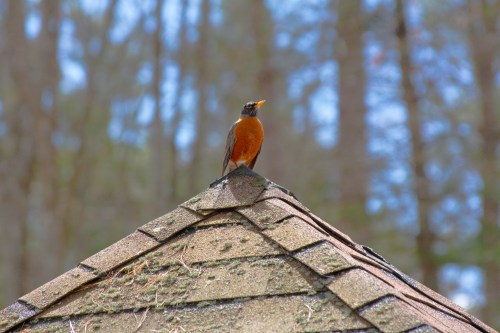
Perched Robin

Perched Robin

Perched Robin, photo by matt.swope

Top of the morning to you from Michigan’s state bird, the American robin!

View Matt’s photo background big and see more in his Northern Michigan slideshow.

More Michigan birds and more spring wallpaper on Michigan in Pictures.

Birds of Michigan: Osprey

Osprey Building a Nest

Osprey Building a Nest, photo by Rodney Campbell

All About Birds from the Cornell Lab of Ornithology is the internet’s best resource for bird information. Their entry for Osprey (Pandion haliaetus) says that osprey are one of the largest birds of prey in North America and one of the most widespread birds in the world, found on all continents except Antarctica. More about osprey at Wikipedia and at Pandion haliaetus (Osprey) from the UM Animal Diversity web.

The Michigan DNR’s Osprey page begins:

The “fish hawk” is brown above and white below, and files with a distinct bend in its wing at the “wrist.” Their feet are equipped with spiny scales and long talons that give them a firm grip on slippery fish, their only prey. Ospreys usually select tall trees in marshes along streams, lakes or man made floodings. They will adapt to artificial nesting platforms. This “help” from humans, along with the restriction of certain harmful pesticides, has helped ospreys recover from the drastic population reductions seen in the 1950s and ’60s. The Nongame Wildlife Fund located 166 pairs in 1988, up from the 81 counted in 1975.

They ask for help in reporting osprey sightings in southern Michigan. Also check out Osprey Watch of Southeast Michigan.

Rodney took this photo of an osprey building its nest in Milford.

MichiganOsprey.com is a great local resource and adds:

Like Bald Eagles, Ospreys often reuse old nests, adding new material to them each season. Ospreys prefer nests near water, especially in large trees, but will also nest on artificial platforms. Ospreys three years or older usually mate for life, and their spring courtship begins a five-month period when they raise their young.

View it background bigtacular and see more in his Birds slideshow.

Michigan in Pictures has lots more Michigan Bird photos!!

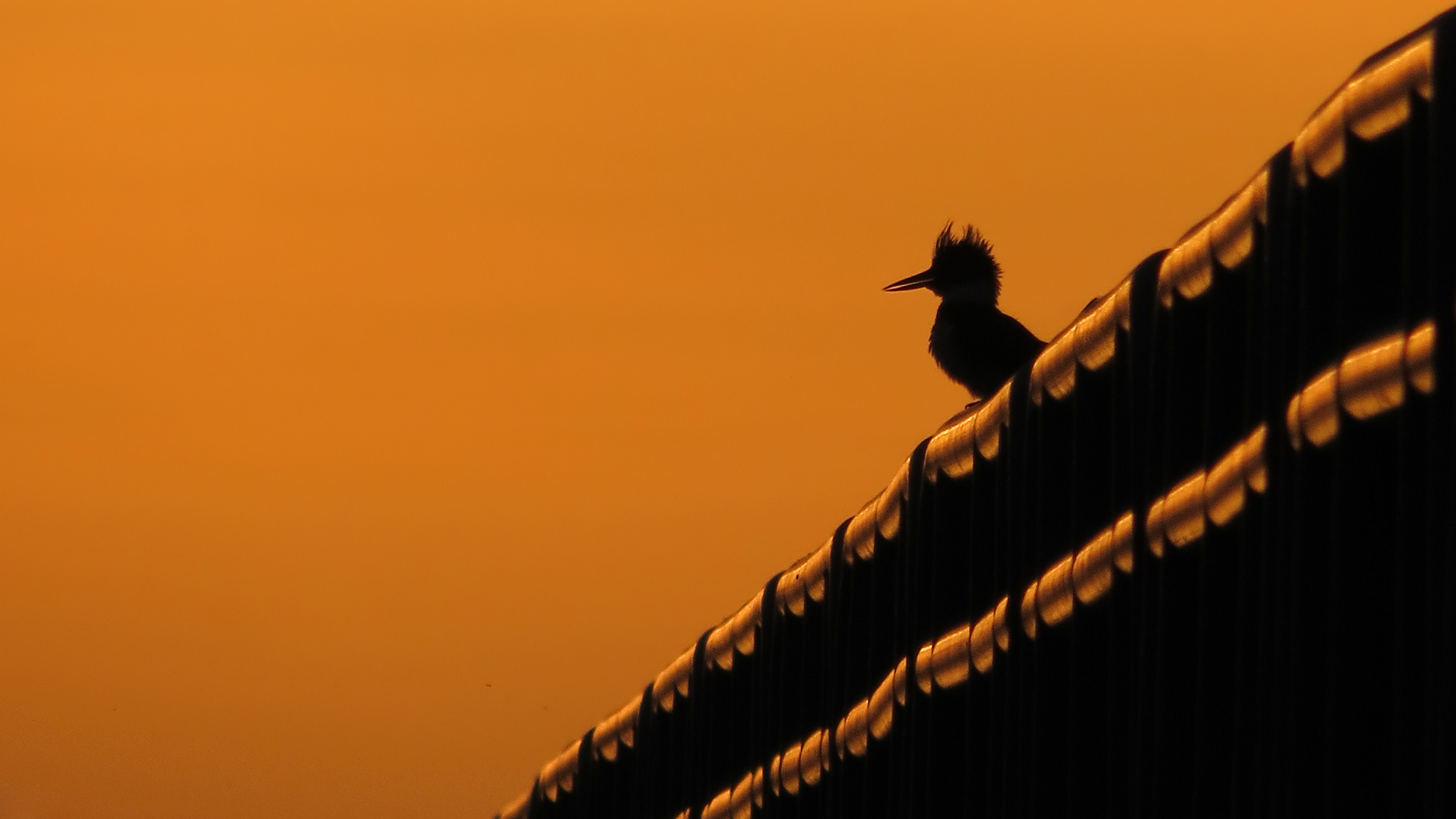
Kingfisher Friday: The Belted Kingfisher

Kingfisher HD Friday

Kingfisher Silhouette HD Wallpaper, photo by John Britt

All about Birds says that the Belted Kingfisher is:

A common waterside resident throughout North America, the Belted Kingfisher is often seen hovering before it plunges headfirst into water to catch a fish. It frequently announces its presence by its loud rattling cry.

It breeds along streams, rivers, lakes, and estuaries with banks for nest holes. The breeding distribution of the Belted Kingfisher is limited in some areas by the availability of suitable nesting sites. Human activity, such as road building and digging gravel pits, has created banks where kingfishers can nest and allowed the expansion of the breeding range.

View John’s photo background big and see more in his Northern Michigan – Seasons, Sunrises, Beaches, Waterfalls, Mountains slideshow.

More Michigan Birds from Michigan in Pictures.

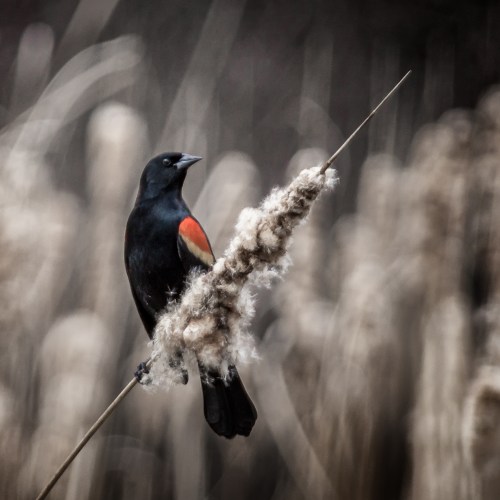
Signs of Spring #56: Chevrons

Chevrons

Chevrons, photo by MichaelinA2.PortrayingLife.com

Spring officially arrives today at 6:45 PM, and we are starting to see signs that winter is running out of steam. One of them is the return of Red-winged blackbirds Agelaius phoeniceus about which University of Michigan BioKids says (in part):

These birds are some of the first springtime birds to return from their wintering sites. Once males arrive, they devote their time to defending their territory. The most successful defenders are not necessarily the most aggressive birds. Males that spend more time in, as well as foraging on, their territory are more likely to retain ownership of that territory.

Males with darker colored shoulders do not tend to keep their territories. Typically in the spring, male red-winged blackbirds display in a “song spread.” They fluff their plumage, raise their shoulders, and spread their tail as they sing. As the display becomes more intense, the wings are more arched with the shoulders showing more prominently. Males use this same body display as a threat to other male birds that enter into the male’s territory.

Females will also engage in a “song spread” display directed at each other early in the breeding season. One possibility is that a female will defend a sub-territory within the male’s territory. The female will engage in a “wing flip” display when a disturbance prevents her from returning to her nest full of young.

Red-winged blackbirds are active during the day and migrate between their summer breeding grounds and winter feeding areas. During the winter, red-winged blackbirds aggregate in huge flocks and tend to stay in or near areas where grains and seeds are available to eat.

Read on for more including their ability to help control insect pests.

View Michael’s photo background big and see more in his soon to grow Birds 2015 slideshow.

Many more Michigan birds on Michigan in Pictures.
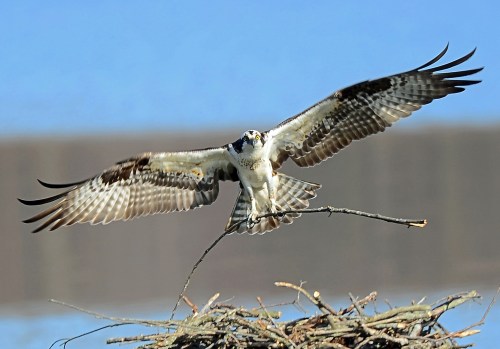
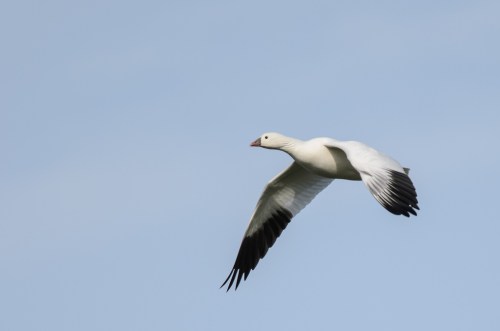
Ross’s Goose

Ross's Goose

Ross’s Goose, photo by jsommer2

A few weeks ago there was a bit of a question as to the duckishness of a sleeping duck I posted, so I spent a lot of time looking at ducks & duck-like birds. One of them showed up in the photo group so without further delay…

The All About Birds entry for Ross’s Goose (Chen rossii) says:

A tiny white goose with black wingtips, the Ross’s Goose is like a miniature version of the more abundant Snow Goose. It breeds in the central Arctic and winters primarily in central California, but it is becoming more frequent farther east.

Prior to the 1950s the Ross’s Goose was confined to well-defined breeding and wintering areas, with few seen as strays. Since that time the species has been expanding eastward, both on the breeding and wintering grounds. The change in breeding distribution has resulted in more contact and subsequent hybridization with the Snow Goose.

The female Ross’s Goose does all of the incubation of the eggs. The male stays nearby and guards her the whole time. The female covers the eggs with down when she leaves the nest. The down keeps the eggs warm while she is away and may help hide them from predators.

More including photos and identification tips at All About Birds.

Check jsommer’s photo out background big and view the slideshow for more photos including a shot of this goose with some much bigger Canadian geese!

Many more Michigan birds on Michigan in Pictures!

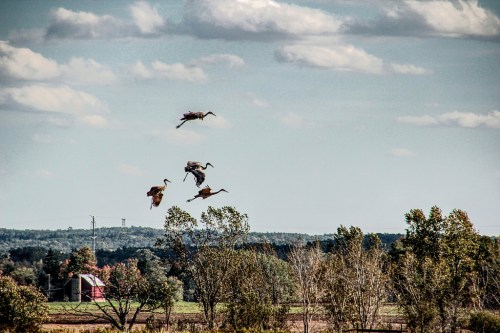
Sandhill Liftoff

10-8 HDR 1e_Fotor

10-8 HDR 1e_Fotor, photo by Gregg Mulholland

Apparently the control tower likes to get those birds airborne.

Definitely check Gregg’s shot out big as the sky and roll through his Sandhill Cranes slideshow for more.

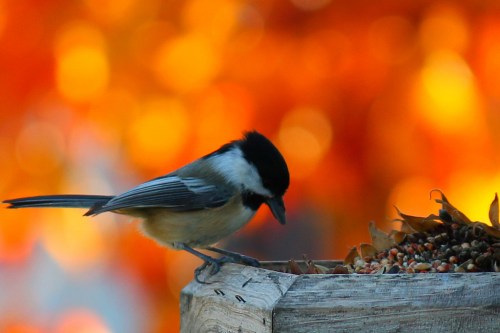
Fall Chickadee

Fall Chickadee

Fall Chickadee, photo by kdclarkfarm1

The UM Animal Diversity Web’s entry for Parus atricapillus (black-capped chickadee) says in part:

Black-capped chickadees prefer deciduous woodlands, open woods and parks, cottonwood groves, and willow thickets. They are most commonly seen near edges of wooded areas. They are a frequent visitor to backyard feeders. Black-capped chickadees nest in cavities, usually in dead trees or stumps, and are attracted to habitats with suitable nesting locations. During the winter, small flocks of black-capped chickadees can be found in dense conifer forests.

…Black-capped chickadees hop on trees (occasionally on the ground), rather than “walking.” These birds are very active during the day, and can often be seen foraging upside-down. Black-capped chickadees form monogamous pairs which usually stay together for several years. The black-capped chickadee social system has two extremes, one shown by territorial pairs during the breeding season, and the other consisting of non-breeding flocks. These are often mixed species flocks including nuthatches, woodpeckers, kinglets, brown creepers, warblers, and vireos. Black-capped chickadees perform short-distance migrations, but remain in the same general region throughout the year.

Read on for lots more including photos and chickadee calls.

View Diane’s photo background big and see lots more autumn goodness in her Fall slideshow.

More birds and more Fall wallpaper on Michigan in Pictures.

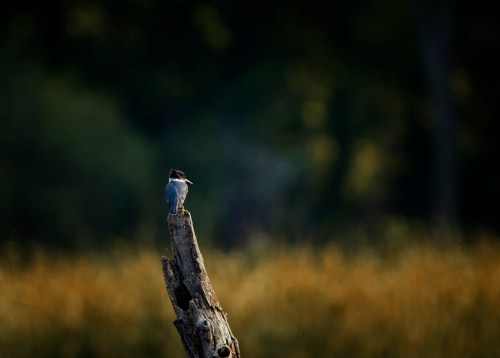
watercolor

watercolor by paulh192 (kingfisher)

watercolor, by paulh192

You really ought to view Paul’s photo of a kingfisher contemplating its next meal bigger. More in his slideshow.

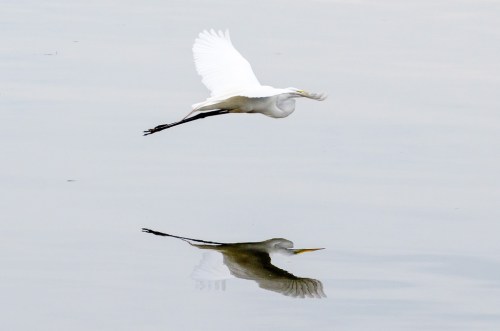
Reflection

Reflection by Bill VanderMolen

Reflection, photo by Bill VanderMolen

Bill took this photo in the Lake Erie Metropark (aka Brownstown Park). View his photo bigger and see more in his Birds slideshow.

More about Great Egrets on Michigan in Pictures.