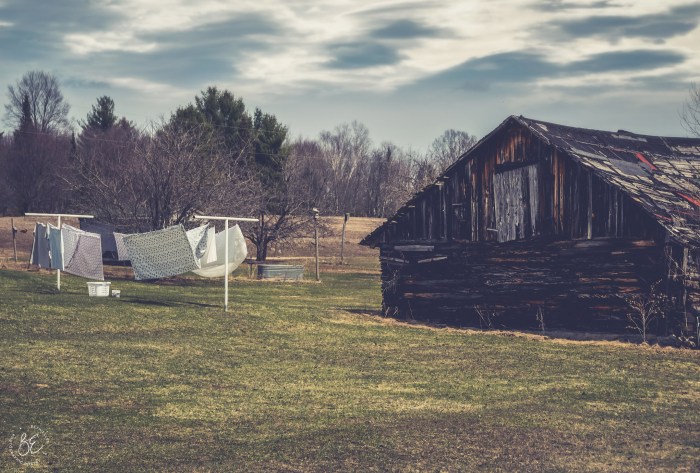
Forgiveness lives alone and far off down the road, but bitterness and art are close, gossipy neighbors, sharing the same clothesline, hanging out their things, getting their laundry confused. – Lorrie Moore
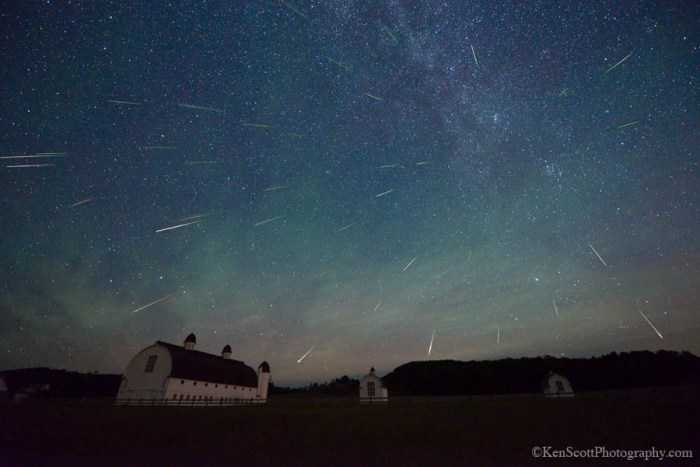
I’ve shared this before, but Space.com has an interesting story about how the upcoming Perseid Meteor shower (peak August 11-13) came to be known as “The Tears of St. Lawrence” and also some of the science behind this annual August sky show:
Laurentius, a Christian deacon, is said to have been martyred by the Romans in 258 AD on an iron outdoor stove. It was in the midst of this torture that Laurentius cried out: “I am already roasted on one side and, if thou wouldst have me well cooked, it is time to turn me on the other.”
The saint’s death was commemorated on his feast day, Aug. 10. King Phillip II of Spain built his monastery place the “Escorial,” on the plan of the holy gridiron. And the abundance of shooting stars seen annually between approximately Aug. 8 and 14 have come to be known as St. Lawrence’s “fiery tears.”
…We know today that these meteors are actually the dross of the Swift-Tuttle comet. Discovered back in 1862, this comet takes approximately 130 years to circle the Sun. With each pass, it leaves fresh debris — mostly the size of sand grains with a few peas and marbles tossed in.
Every year during mid-August, when the Earth passes close to the orbit of Swift-Tuttle, the bits and pieces ram into our atmosphere at approximately 37 miles per second (60 kps) and create bright streaks of light.
Read on for more including diagrams and viewing tips.
Ken Scott captured these Perseid meteors last August over a 2 1/2 hour period at the D.H. Day Farm in the Sleeping Bear Dunes National Lakeshore. He says that the barn is lit by rogue lightning and that this is a composite of many meteor images, where each photo is rotated around the north star so that the ‘point of origin’ of the shower can be seen better. He understands it visually but not scientifically – anyone have a simple explanation for him?
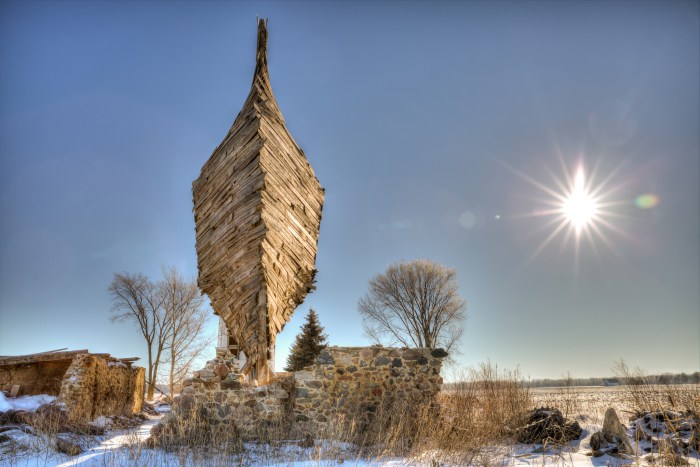
The Celestial Ship of the North (Emergency Ark), aka the Barnboat, is a site-specific installation and permanent sculpture in Port Austin, Michigan created by Scott Hocking. He wrote to me:
I was asked by Detroiter Jim Boyle, whose family is still in Port Austin, if I’d ever had any ideas of working with old barns. He’s been trying to get a Detroit / Port Austin connection going by bringing artists up there to do projects. I basically told him I’d had some fleeting thoughts about how much certain barns look like overturned ship hulls, and that if I had an old barn to work with, I’d probably turn it into a boat.
So, that was the beginning.
Like all of my work, I try to let the materials and site dictate what I make, and as I worked on the barnboat the shape became what it is now – mostly influenced by the intense winds of Michigan’s thumb. It took about 3 months total, but I’m not quite done yet: I’m still planning to fill in the base with mounded sand this spring for a little extra stability, and so that it can once again overgrow like that ivy covered barn it was made from.
Awesome. Check out lots more of Scott’s engaging work on his website.
I’ve never found a better website for information about rainbows and other optical phenomena than Atmospheric Optics. They have information about all flavors of rainbows including the primary rainbow, and explain that rainbows are disks of light rather than sets of coloured rings:
Early morning and late afternoon are the best times to see them because the sun must not be too high. Rainbows are always opposite the sun and their centres are below the horizon at the the antisolar point. The lower the sun the higher is the bow.
Red is always outermost in the primary bow with orange, yellow, green and blue within. Occasionally, when the raindrops are small, fainter supernumerary arcs of electric greens, pinks and purples lie just inside the main bow.
A rainbow is not just a set of coloured rings. The sky inside is bright because raindrops direct light there too. The primary bow is a shining disk brightening very strongly towards its rim.
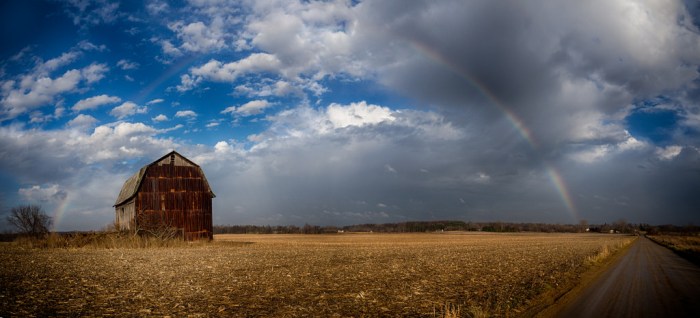
About this particular rainbow, Jamie writes:
This is the first time I have ever seen part of a rainbow in open skies. Look to the sky above the barn and you can just make out the missing portion of the rainbow.


 Michigan in Pictures