Why last night’s northern lights were underwhelming

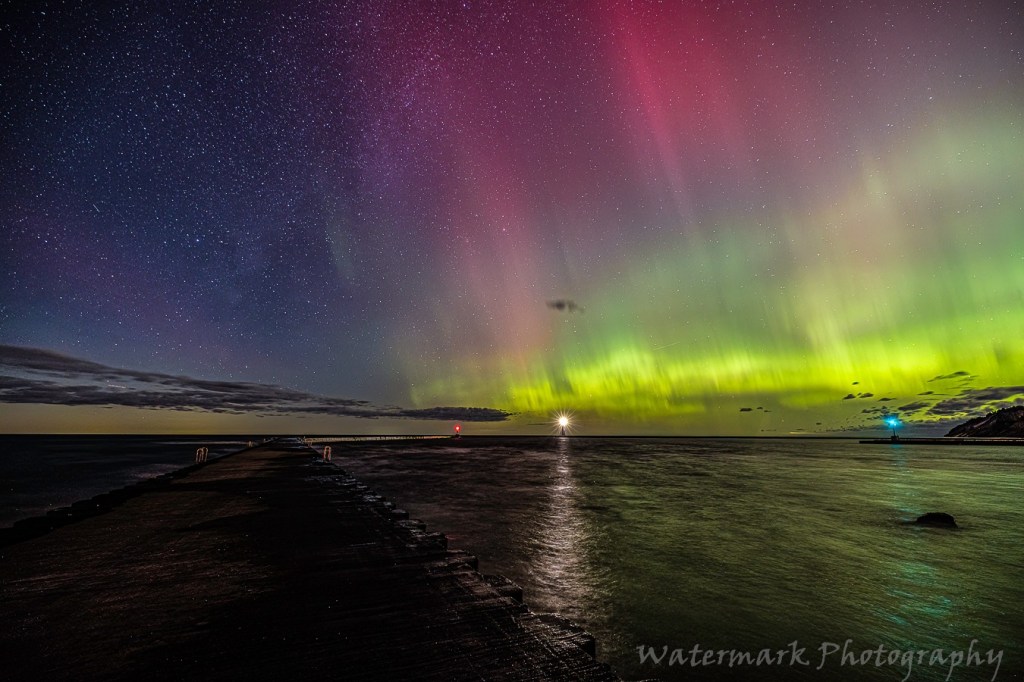
Throwback to Nov 12 2025 by Watermark Photography

Throwback to Nov 12 2025 by Watermark Photography

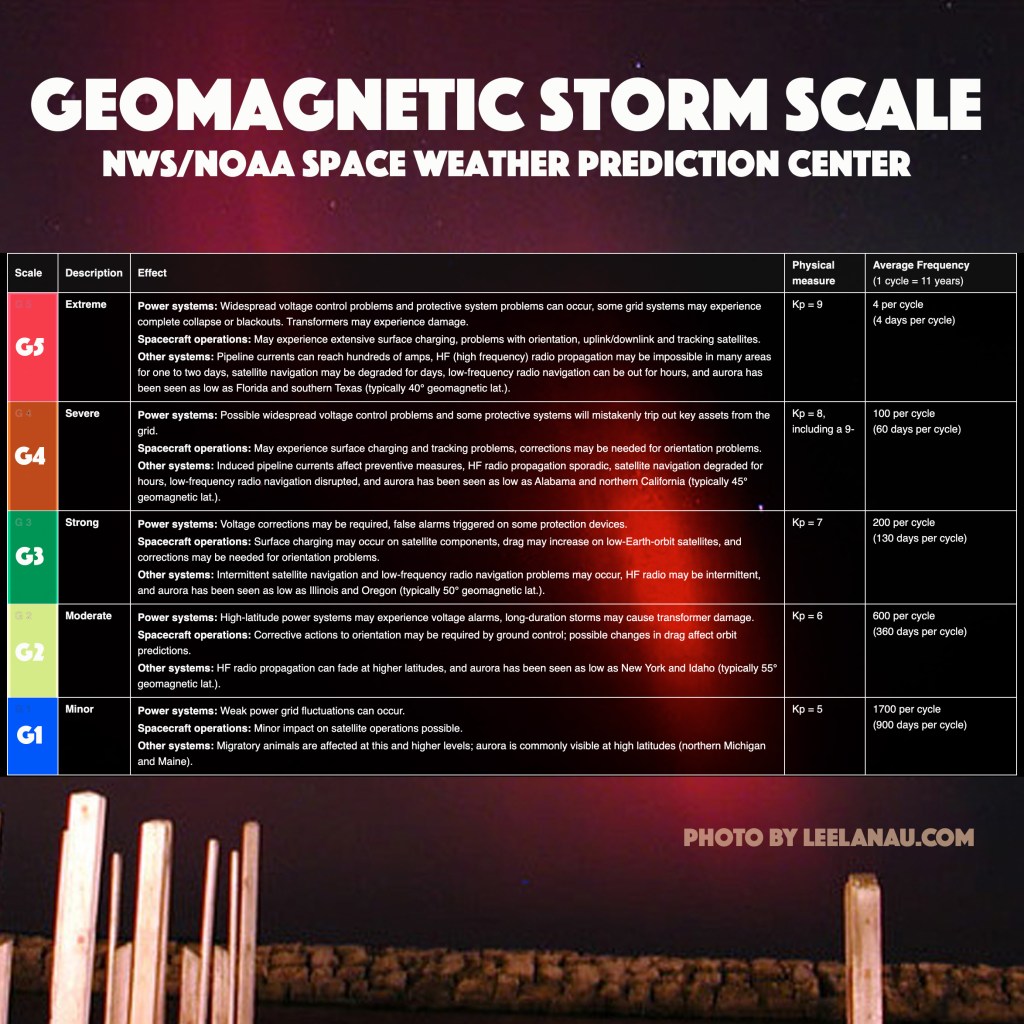
It’s very rare that we have aurora alerts at the G4 storm level and rarer still that they disappoint so northern lights aficionados were pretty excited about the kP8/G4 Aurora Alert was issued for last night. While hopes were high & some good shots were taken, the actual output was surprisingly muted & short-lived. Our friends at EarthSky explain that this was due to the arrangement of the CME’s magnetic field limiting how much energy actually reached Earth’s atmosphere & shaping which regions saw auroras and which did not.

During the CME’s initial impact phase, the Bz briefly dipped strongly southward. So that allowed solar wind energy to flow efficiently into Earth’s magnetic field. This short-lived interaction quickly caused G4 (severe) geomagnetic storm levels, with Kp (another measure of Earth’s magnetic disturbance) exceeding 8.

Soon after the initial impact, the character of the severe geomagnetic storm changed dramatically. As Earth moved deeper into the core of the CME, the Bz – again, the orientation of the sun’s magnetic field – turned strongly northward. This sustained northward orientation sharply limited the transfer of transfer into Earth’s magnetosphere. And that was what restricted the auroras, despite the overall strength of the storm.

Jeff took this photo from Elberta Pier back in November of 2025 on a night the lights definitely did not disappoint! Follow Watermark Photography on Facebook and see more great shots in the A Little Night Music gallery on his website.

Support Michigan in Pictures with Patreon

Auroras in the Mist … and in the Dark

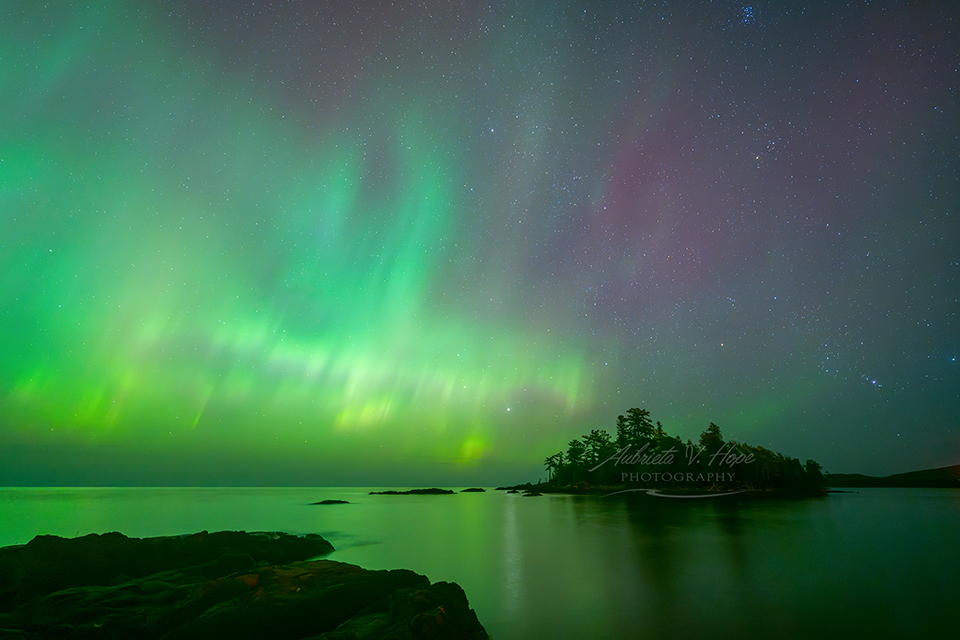
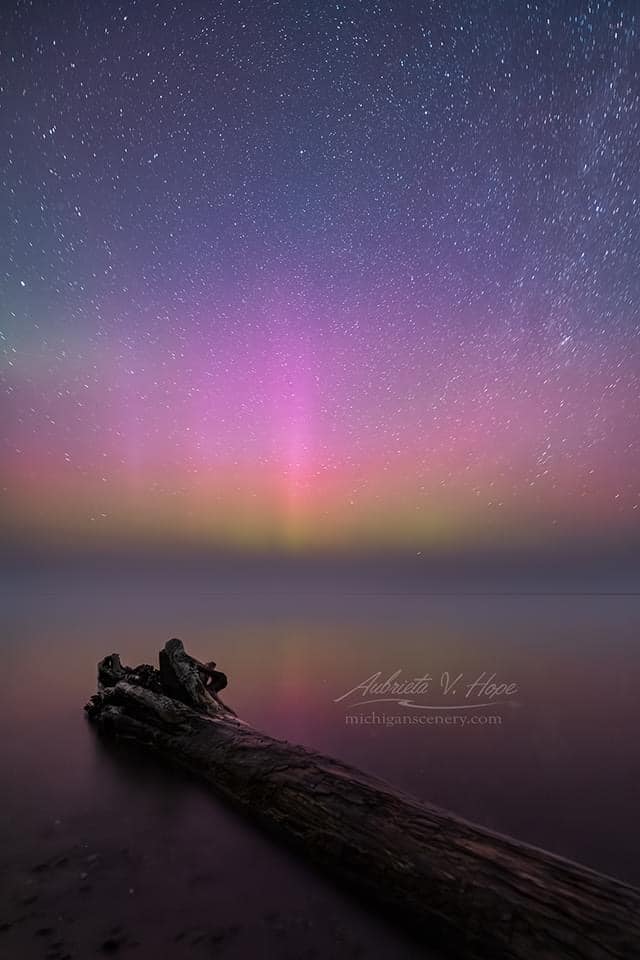
Aurora in the Mist by Aubrieta Hope

Michigan has been awash in Northern Lights for the last several days, and this morning’s NOAA/NWS Space Weather Alert Email says there’s a good chance much of Michigan can see them tonight as well!

I encourage you to click to subscribe to that email, and also to check out our post about how to see the Northern Lights in Michigan. You will also want to join the Michigan Aurora Chasers group on Facebook where I first saw the photo above from last June at Little Girl’s Point on Lake Superior and where Aubrieta is one of the resident aurora experts. View more of her work on Facebook and on her website. She also shared the photo below yesterday. While I can’t link to it, I wanted to what she wrote as a cautionary tale to remind you to double check your gear before you are go outside in the dark!

On September 30 at 2:00 a.m., I made a once-in-a-lifetime mistake. I set out on a hike to the end of the Hunters Point Trail in Copper Harbor, hoping to shoot the Aurora over Porter’s Island. I was fried from shooting the Aurora three nights in a row, so I packed light: a small camera bag, a headlamp, a flashlight and a fanny pack. Having shot for hours, the battery in the camera and the headlamp were nearly done, but I knew I had a spare camera battery and my Fenix flashlight as backup. Unfortunately, I soon discovered that the battery in my Fenix flashlight was dead. I got exactly one shot of the scene before my camera battery died. This one. I plugged in my spare camera battery but it was dead, too. So, I headed back up the trail in near-darkness with just the stars and Aurora to light my way. Those of you who know about my life-long obsession with flashlights, will think this is a tall tale. But it’s a true story! As is the fact that all my batteries are re-charging now, including the one that operates my brain. How I love these Keweenaw nights!

Aurora over Porter’s Island by Aubrieta Hope

Support Michigan in Pictures with Patreon

Under the Sign of the Lion

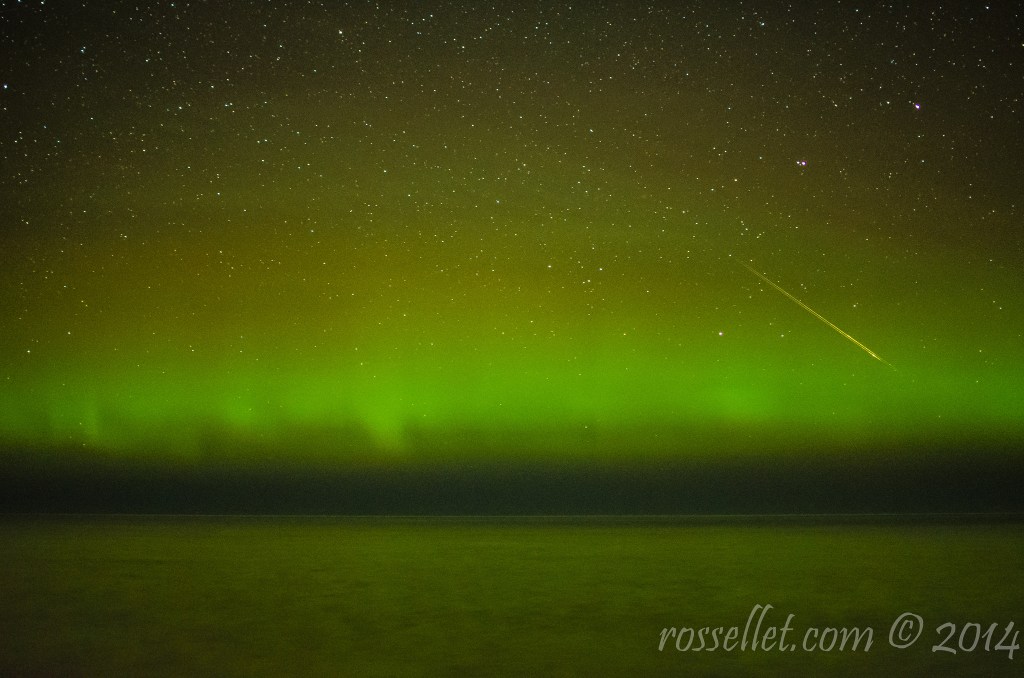
Aurora Fireball by Ross Ellet

I featured this photo 8 years again, but with the incredible run of northern lights we’ve been having and the massive spike in interest in getting out under the night sky coupled with the rise of the Detroit Lions as an NFL superpower, it’s a great time to bring back this feature from Space.com on How to Watch the Leonids Meteor Shower:

The Leonid meteor shower will be active from Nov. 3 to Dec. 2 this year and will peak overnight from Nov. 17 to 18. The Leonids are produced when Earth passes through the debris left behind by comet 55P/Tempel-Tuttle during its highly elliptical orbit around the sun every 33 years. The Leonids are considered some of the fastest meteors, zipping through the sky at 44 miles (71 kilometers) per second, according to NASA. They can also result in impressive fireballs producing long, bright and colorful meteor streaks.

The Leonids’ radiant is located in the sickle-shaped head of the constellation Leo, the lion. Leonid meteor hunting can be incredible, or a total bust. It all depends on where its parent body, Comet 55P/Tempel-Tuttle, will be in its orbit and the kind of debris clumps that will be around when our planet passes through this comet’s orbit. The Leonids put on big shows in 1966, 1999 and 2001, according to AMS, when the comet was making its closest approach to the sun. It will be several years until observers get a big show from the Leonids.

Ross took this photo ten years ago in late September of 2014 and shared:

The sky was cloudy most of the night, but at 3:30am there wasn’t a cloud in the sky. We made our way to the lakeshore and sure enough the northern lights were dim on the northern horizon. At one point you could hear the howl of a distant wolf pack while the northern lights were out. Then moments later a slow move fireball flashed across the sky. It lasted a couple seconds and the brightness pulsed as it moved through the atmosphere. After that the aurora faded, but several more meteors (some very bright) streaked above us.

Ssee more in his Porcupine Mtns gallery on Flickr, and definitely check out Ross Ellet’s Picturesque Adventures for much more!!

Support Michigan in Pictures with Patreon

Moonset under Aurora

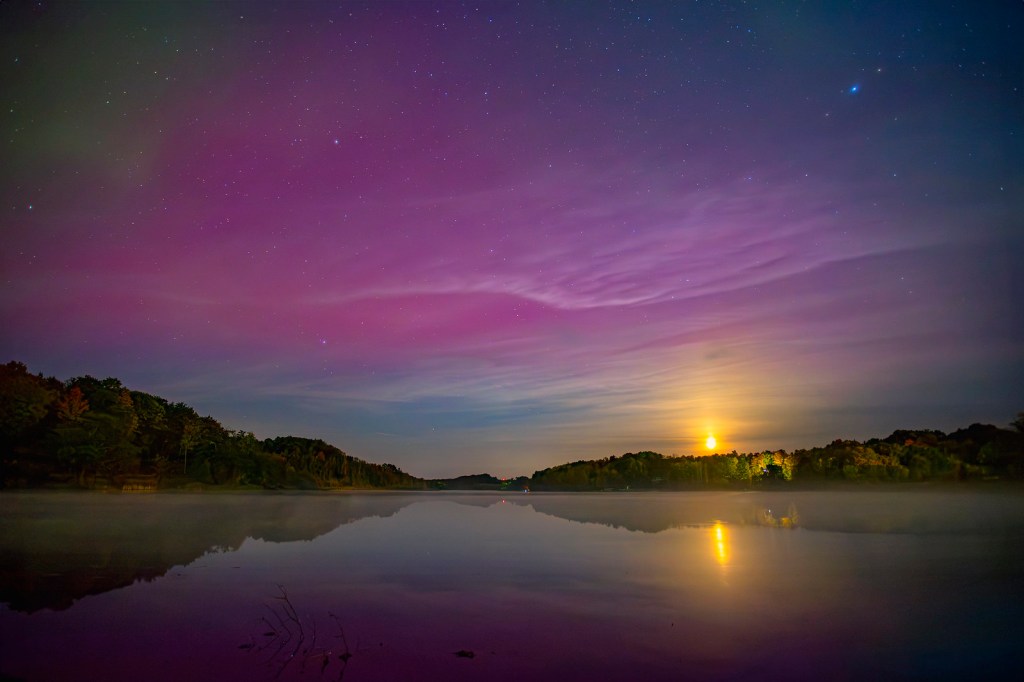
Moon set under Aurora by Thomas Mann

Moon set under Aurora by TP Mann

Thomas shares, “The northern lights and the moon filled the sky above Ellsworth Lake. It was a gorgeous night to be out along the Breezeway.” The Breezeway is his passion which is totally understandable if you take a look:

The Breezeway” is a rural ride along C-48 from Atwood (U.S. 31) through Ellsworth & East Jordan, and ending in Boyne Falls (U.S. 131) – boasts scenic overlooks, great motorcycle & bicycle rides, recreational amenities galore, working farms & orchards, artist galleries & studios, resale shops, lodging facilities (cottages, campgrounds, B&Bs, motels, and a resort), retail and service businesses with superb customer service, and an epicurean’s selection of dining choices along the route.

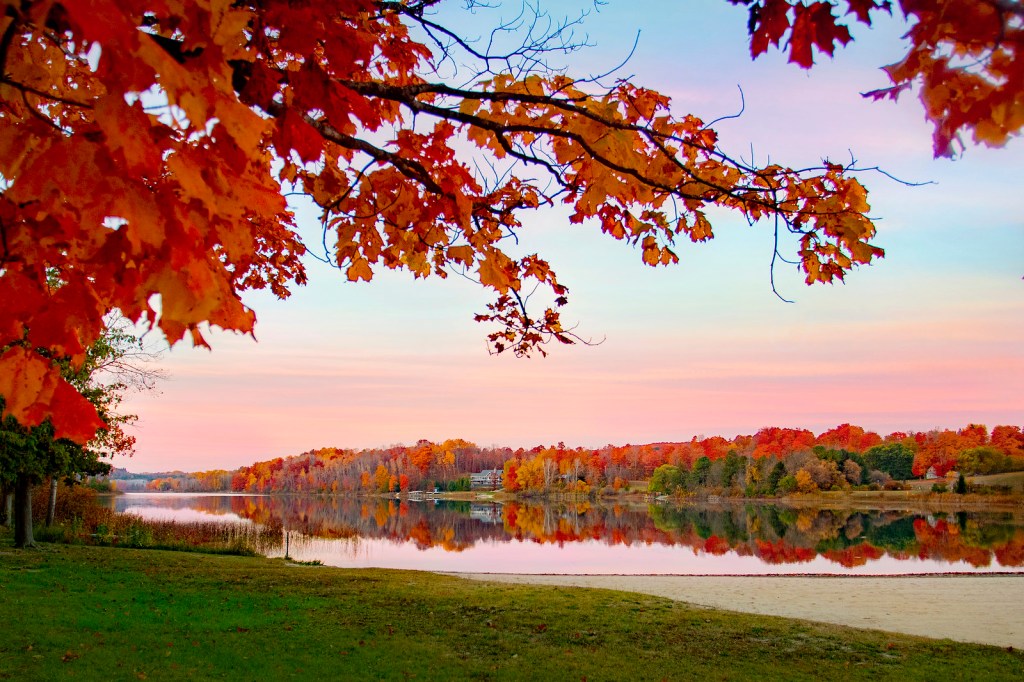
Thomas took this photo on October 10th. Head over to his Flickr for his latest photos from this beautiful little corner of Michigan & here’s a daytime photo of the fall color on Ellsworth Lake from yesterday!

Autumn Morning on the Breezeway by Thomas Mann

Autumn Morning on the Breezeway by Thomas Mann

Support Michigan in Pictures with Patreon

Aurora outbreak on tap for this weekend!!

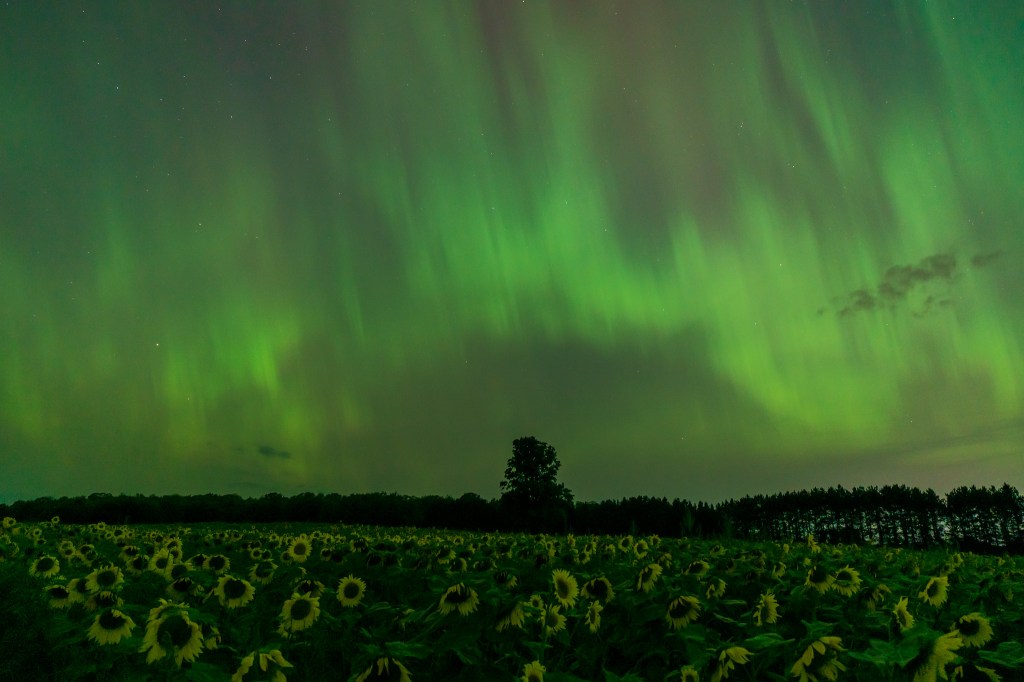
Sunflower Auroras – August 2024-23 by Nathan Miller

The NOAA/NWS Space Weather Prediction Center has issued a G3 (Strong) Geomagnetic Storm Watch for today through Sunday due to a pair of coronal mass ejections that are anticipated to arrive over the course of the next three days. This means that Northern Lights are VERY possible over the weekend!!

Nathan took this in August up on the Keweenaw Peninsula. See more in his Sunflower Auroras gallery on Flickr and for sure check out his photography & writing at Nathan Invincible.

Much (much) more Northern Lights on Michigan in Pictures!

Support Michigan in Pictures with Patreon

Chasing the Perseid meteor shower

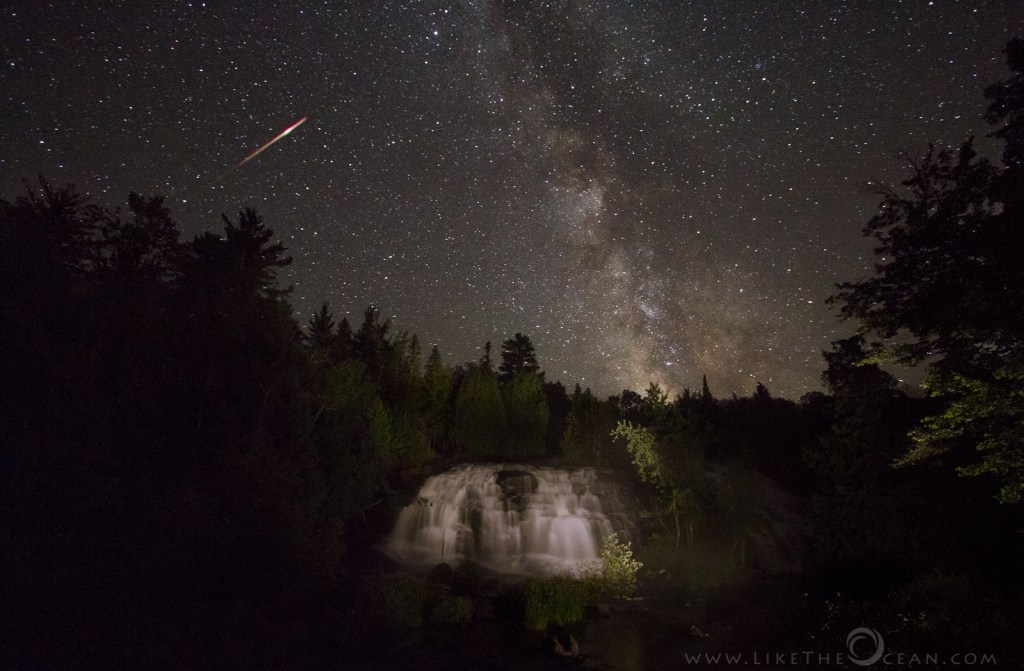
Milky Way over Milky Bond Falls with a dash of Perseids by Sathya

The Perseid meteor shower is a summer staple & fast approaching the peak!! Our friends at EarthSky say that the early mornings of August 11-13, 2024 are your best bet for meteor action, but you can usually see them between midnight – 6am. That’s perfect because there’s an excellent chance of Northern Lights for the next couple of days & they are usually strongest between midnight – 3am.

EarthSky writes that the August Perseid meteor shower is rich and steady, from early August through the peak. The meteors are colorful. And they frequently leave persistent trains. All of these factors make the Perseid shower perhaps the most beloved meteor shower for the Northern Hemisphere.

Head over to EarthSky for everything you need to know about the Perseids, our most reliable meteor shower!

This photo of a Perseid meteor over Bond Falls that I shared back in 2013 remains one of my favorite michpics ever! Sathya wrote on their blog:

The deafening sound of 500 gallons of water / second from 50 feet
The tranquil silence of the dark night
Milky way adorning the skies
A (Perseids) meteor fireball streaking across the horizon
Definitely a moment of serenity and one I would cherish!

For sure check out Like the Ocean to view & purchase prints and a whole lot of amazing photos & amazing thoughts about some of the most beautiful places on this planet.

Support Michigan in Pictures with Patreon

An Aurora for the Ages

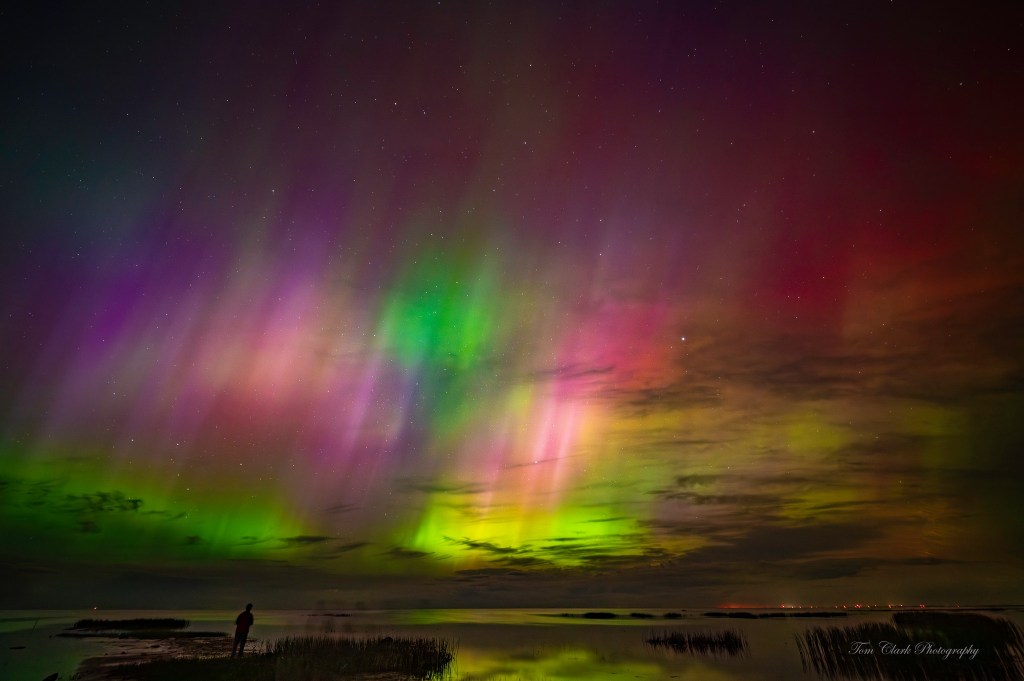
Aurora Borealis over Saginaw Bay by Tom Clark Photography

Last weekend saw a truly historic outburst of the aurora borealis, with the intensity scale reaching G5 three times, something that normally happens only 3 or 4 times every decade!! So many photographers featured in our Northern Lights category have great photos shared on their social media, but I wanted to get a pic from a place that’s normally left out of the cosmic fun!

Tom got this shot looking over Saginaw Bay on Friday night saying “I kid you not – these brilliant colors are in the Aurora as it first appeared. Minimal and normal editing of the raw files is all I did (except maybe the first image which i may have increased yellow and green saturation). As the night wore on the reds, pinks, disappeared and it was brilliant green.” See a bunch more on his Facebook!!

Support Michigan in Pictures with Patreon

Solar Storm could bring northern lights to all of Michigan tonight!

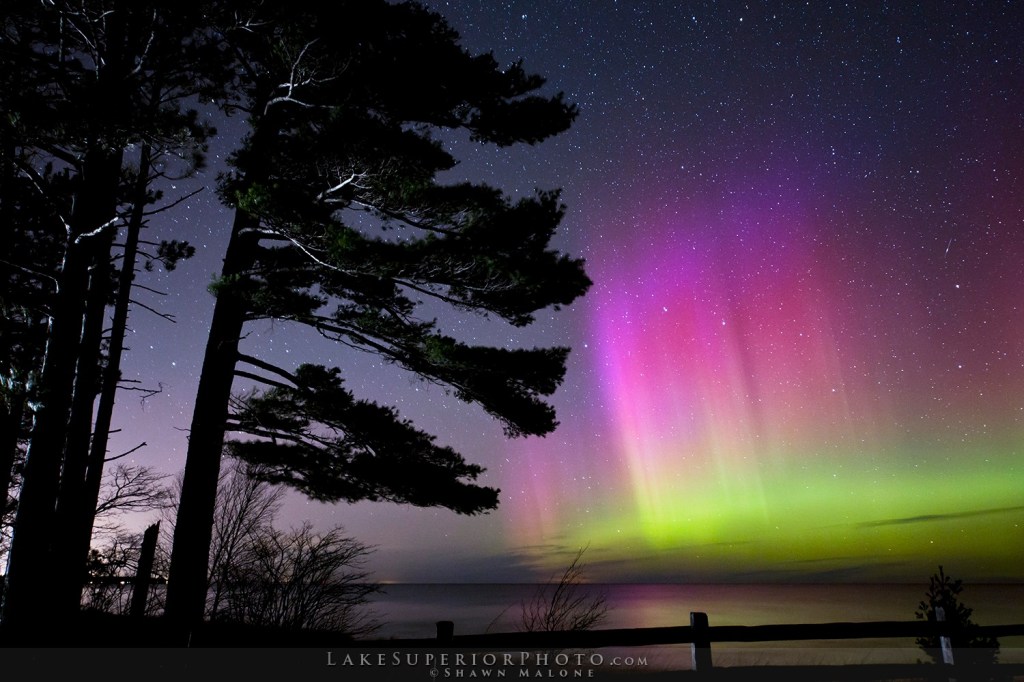
Aurora Borealis over Lake Superior by Lake Superior Photo

Shawn Malone shared this photo yesterday saying: Incredible. There are now 4 CME’s earthward directed headed our way in the next few days. Levels of up to G4 storming are now forecast for auroras (see below for chart). Two of the CME’s merging late the 10th into the 11th are responsible for the G4 forecast for that time. I can’t ever remember this many earthward CME’s in such a short period of time from one region (3664 in this case).

This is pretty amazing. Region 3664 is HUGE. Looks like that region alone has released 5 CMEs now, the last one tbd if it is earthward, but the rest appear to be with G4 storming in the forecast for Fri into Sat and very possibly beyond. This is the weekend to make a trip if you can, however we have cloud cover tomorrow night (aka tonight), MN looks better in that respect

FYI a G4 level solar storm can make it possible to see the aurora as far south as Detroit!!! She took this near Marquette. Follow her on Facebook or Instagram and FOR SURE view & purchase her work at LakeSuperiorPhoto.com where she has a massive northern lights gallery!

Support Michigan in Pictures with Patreon

Scientists now know what causes the northern lights!

Thanks by Julie

Thanks by Julie

NPR reports that scientists have finally confirmed the source of the Northern Lights:

An article published in the journal Nature Communications this week suggests that the natural light show starts when disturbances on the sun pull on Earth’s magnetic field. That creates cosmic undulations known as Alfvén waves that launch electrons at high speeds into Earth’s atmosphere where they create the aurora.

“It was sort of theorized that that’s where the energy exchange is occurring,” said Gregory Howes, associate professor of physics and astronomy at the University of Iowa. “But no one had ever come up with a definitive demonstration that the Alfvén waves actually accelerate these electrons under the appropriate conditions that you have in space above the aurora.”

The sun is volatile, and violent events there such as geomagnetic storms can echo out into the universe. In some cases, the sun’s disturbances are so strong that they yank on the Earth’s magnetic field like a rubber band, pulling it away from our planet.

But, like a taut rubber band when it’s released, the magnetic field snaps back, and the force of that recoil creates powerful ripples known as Alfvén waves about 80,000 miles from the ground. As those waves get closer to Earth, they move even faster thanks to the planet’s magnetic pull.

…”Think about surfing,” said Jim Schroeder, an assistant physics professor at Wheaton College and the article’s lead author. “In order to surf, you need to paddle up to the right speed for an ocean wave to pick you up and accelerate you, and we found that electrons were surfing. If they were moving with the right speed relative to the wave, they would get picked up and accelerated.”

When the electrons reach Earth’s thin upper atmosphere, they collide with nitrogen and oxygen molecules, sending them into an excited state. The excited electrons eventually calm down and release light, which is what we see as the aurora.

More at NPR.

Julie took this celebratory photo back in March. See more in her massive Michigan gallery on Flickr & keep your eyes on the skies!!

More Northern Lights on Michigan in Pictures.

Support Michigan in Pictures with Patreon

STEVE: Strong Thermal Emission Velocity Enhancement

Five Minutes with STEVE by Shelbydiamondstar Photography

Five Minutes with STEVE by Shelbydiamondstar Photography

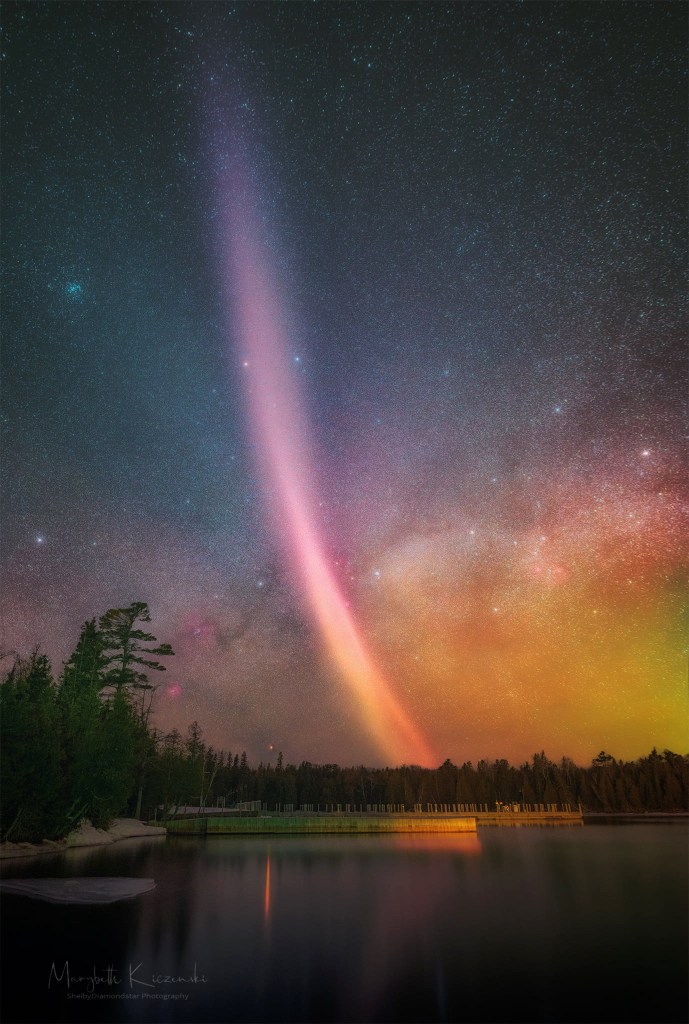
This spring has been big for fans of the aurora borealis. Shelby took created this photo of five, 1-min tracked shots blended with an untracked foreground shot the night of March 13/14th in Copper Harbor. It shows a phenomenon I’d never heard of, a Strong Thermal Emission Velocity Enhancement aka STEVE about which Space.com says (in part):

A typical aurora — sometimes called the northern lights or the southern lights, depending on the hemisphere in which it’s located — occurs when charged particles from the sun interact with Earth’s oxygen and nitrogen molecules. This interaction excites the molecules and causes them to glow.

But STEVE, formally known as Strong Thermal Emission Velocity Enhancement, is different. In the Northern Hemisphere, the phenomenon is visible from areas farther south than a typical aurora, and it looks like a ribbon of pink or mauve light. Sometimes, STEVE even has a “picket fence” appearance, with green columns of light passing through the ribbon. Auroras, by contrast, usually are shimmering green ribbons.

…The new study examined satellite data gathered above STEVE events in April 2008 and May 2016. The measurements included information about Earth’s magnetic and electrical fields in the magnetosphere, the region of Earth’s atmosphere where the planet’s magnetic field is stronger than any influence coming from the sun. Then, scientists compared the satellites’ findings with amateur photos of STEVE taken from the ground at the same time.

When STEVE was on display, the study authors realized, energetic electrons were pouring into Earth’s ionosphere, the layer of the planet’s atmosphere where atoms lose electrons due to solar and cosmic radiation. The friction that flood creates heats particles, which creates the pinkish glow, almost like an incandescent light bulb.

Satellite information further revealed how the “picket fence” aspect of STEVE develops. The data revealed waves moving from Earth’s magnetosphere to the ionosphere. In this region, the waves can both energize electrons and move them out of the magnetosphere, creating the picket-fence appearance, which happens simultaneously in the Northern and Southern hemispheres.

Lots more at Space.com.

You can comment on Shelby’s photo right here. For sure follow her on Facebook and view & purchase her work at shelbydiamondstar.com.

Lots more northern lights on Michigan in Pictures!

Support Michigan in Pictures with Patreon