What the heck is Honolulu Blue?

Detroit Lions by Healthier Michigan

Detroit Lions by A Healthier Michigan

Yesterday as it often does, my curiosity got the better of me and I had to find the answer as to why the Detroit Lions official blue is called “Honolulu Blue”. Fortunately,  The Evolution of the Detroit Lions’ Uniform by Bill Dow has the answer:

When WJR owner G.A. Richards purchased the Portsmouth (Ohio) Spartans in 1934 and moved the team to Detroit, the newly renamed Lions unveiled a striking uniform consisting of a blue jersey, silver pants, blue socks, and a silver helmet.

According to a 1950 Lion media guide, “the blue, a distinctive shade was especially developed for G.A. Richards.” According to team lore, their first owner came up with the color after admiring the hue of the Pacific Ocean on a trip to Hawaii and the shade was named “Honolulu blue.”

In 1999, Glenn Presnell, the then lone surviving member of the first Lion’s team and the league’ oldest alumnus, described his role in selecting the first uniform in an interview with me.

“When we met with Mr. Richards, my wife and I also helped select the Lions’ colors, “ Presnell said. “He had asked us to look at the different jerseys in the next room. There were all different colors, orange and black, red and white, you name it. We saw that Honolulu blue and silver and said we liked it best. So Richards chose that.”

You can read on for more including the Lions brief & doomed flirtation with Hoosier colors.

See more in A Healthier Michigan’s Lions Thanksgiving Day 2014 album!

Support Michigan in Pictures with Patreon

Love your community & sing your hearts out with the Kalamazoo Bach Festival

Kalamazoo Bach Festival

Kalamazoo Bach Festival by Kalamazoo Bach Festival

In these uncertain & chaotic times, it can really lift your spirit to share the joy of music and art This week the Kalamazoo Bach Festival has you covered with live, online events tonight & Thursday night:

The Bach Festival Society was founded in 1946 by Henry Overley, Professor of Music at Kalamazoo College, who wanted to bring “town and gown” together to experience the joy of making music and to create something sublime — in particular, to recreate the choral and instrumental music of J. S. Bach and his contemporaries.

Since 1947, the Festival has grown and expanded, due to the active involvement of the community: now year-long, it includes “Bach-to-School” educational programs, Bach Legacy Lectures, a “Bach-Around-the-Block” organ crawl, a Young Artist Competition and Concert, a High School Choral Festival, master classes for young singers, and performances with the Kalamazoo Symphony,

June 2 will feature Dede Alder and her magical marimba and beautiful voice with song and stories in collaboration with the Kalamazoo Public Library. On June 4, live-streaming from our Facebook page, Jordan Hamilton will spread his love and message with his cello and thought provoking vocals. Join us at 7 pm on Monday, Tuesday, and Thursday for these amazing programs brought to you buy some very talented local artists!

EDITOR’S NOTE: Both Dede & Jordan are friends and they are INCREDIBLE! More about the Bach Festival on their website & check out the details on their Facebook event!

Support Michigan in Pictures with Patreon

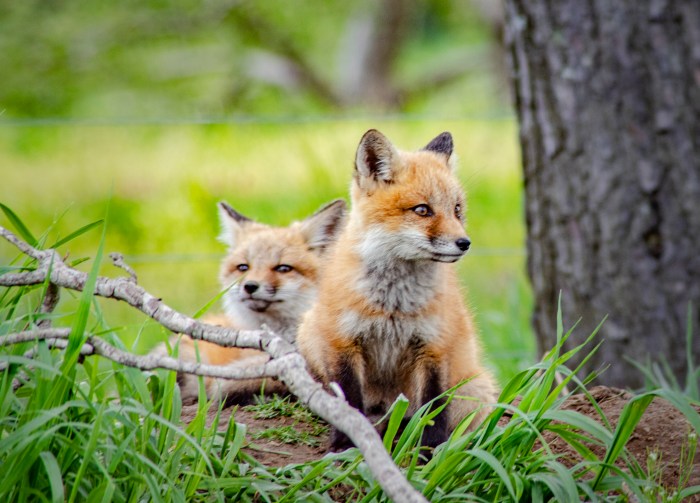
At Home with the Fox Twins

Taking in the Surroundings by TP Mann

Taking in the Surroundings by TP Mann

I know I’m running the risk of becoming an adorable animals photo blog, but darn are these little foxes cute! Here’s a little about baby foxes and what to do if you encounter one from Friends of Wildlife in Ann Arbor:

There are two species of fox in Michigan, the Red and the Gray. The Red prefer meadow areas and the Gray favor woods.

As with most wildlife, the kits are born in early spring. The vixen (female fox) chooses a hollow log, an empty woodchuck hole or a roadside culvert for the nursery. This nest site provides her young protection from predators, especially coyotes. The male fox helps with the rearing by bringing the vixen food while she nurses their young and keeps the kits warm. Then later in the kits development both parents teach them how to forage for food.

The foxes diet consists mainly of small rodents, moles and bugs. The benefits that foxes afford farmland, orchards and the general public is their consumption of these invasive pests. It is an absolute miss conception that fox eat cats, dogs or small children.They are very curious creatures but avoid contact with domestic animals and humans.

When fox kits are first born, their eyes and ears are closed, they remain secluded in their den with their mother. As they develop, at about one month, they start venturing out to play, attacking twigs, leaves and their siblings, but never far from the protection of the den.

If you do find an infant fox, please contact them for further instructions and see their website for information about other species!

See more in TP’s Sites Along the Breezeway photo album.

Support Michigan in Pictures with Patreon

Electric & Perfectly Hectic

Electric & Perfectly Hectic by Snap Happy Gal

Electric & Perfectly Hectic by Snap Happy Gal

Heather says it was electric, and perfectly hectic which seems to me to be an apt description for Michigan’s wild 2020 ride.

See it bigger on her Facebook and definitely follow Snap Happy Gal Photography on Facebook and Instagram for more!

Support Michigan in Pictures with Patreon

Pls send rainbows 🙏

Double rainbow! by Tom

Double rainbow! by Tom

Michigan is drowning right now in some of the worst rains on record. Every day for the last two weeks, from Midland to Grand Rapids to Traverse City, my feed has been full of images of people losing everything to flooding. PLEASE send rainbows.

Just so this post isn’t a totally depressing send-off for your weekend, let me call in one of my favorite websites, Atmospheric Optics. Regarding secondary rainbows or “double rainbows” they say that the secondary is nearly always fainter than the primary, with colors reversed and more widely separated:

Light can be reflected more than once inside a raindrop. Rays escaping after two reflections make a secondary bow.

The secondary has a radius of 51º and lies some 9º outside the primary bow. It is broader, 1.8X the width of the primary, and its colours are reversed so that the reds of the two bows always face one another. The secondary has 43% of the total brightness of the primary but its surface brightness is lower than that because its light is spread over its greater angular extent. The primary and secondary are are concentric, sharing the antisolar point for a center.

Tom took this near Alma back in 2014. See his latest on Flickr & check out more Michigan rainbows on Michigan in Pictures!

Support Michigan in Pictures with Patreon

Dam Shame: Michigan’s aging dams put thousands at risk

Rusty Dam and Spillway on the Huron River by Ann

Rusty Dam and Spillway on the Huron River by Ann

The New York Times notes that although no one died in last week’s flooding of Midland due to dam failures, thousands were evacuated, homes and businesses were inundated, and floodwaters spilled into a chemical plant and Superfund site. They continue that little has been done to address the looming national hazard of aging dams like those that failed in Michigan.

In November 2019, The Associated Press reported that 19 dams in Michigan, including the first of the dams to breach, were in unsatisfactory condition and presented high hazards, meaning their failure can cause loss of life. The events of last week should not have come as a surprise, and it is only a matter of time before a catastrophic dam collapse will occur somewhere in the United States. The combination of aging and poorly maintained dams and extreme, climate-caused flooding presents potentially deadly risks for people downstream.

…In Michigan, Gov. Gretchen Whitmer said experts characterized the flooding that led to the recent dam failures as a 500-year event — something that would have a one in 500 chance of occurring in any given year. If we consider dams in the eight-state Great Lakes region older than 60 years (most have a design life of 50 years) that are in counties with a population larger than 500,000, 317 dams are classified as having a high potential for hazard in a failure. The chances of one or more of these dams experiencing a 500- or 1,000-year flooding event in a year would be 47 percent and 27 percent — which strikes us as pretty high.

The Great Lakes region exhibits approximately 10-year cycles of rainfall and is currently near record high levels. Extreme rainfalls are happening much more frequently in the region than in the past 100 years. What is being done to prepare for potential flooding and dam failures?

The state and the federal government have multiple offices that assess dam safety. What we lack is an overall strategy to fix the problem and the requisite financial resources. Rehabilitating dams with high hazard potential will cost an estimated $3 billion for federal impoundments and another $19 billion for nonfederal ones — a cost that vastly exceeds current spending.

We need a real plan and real money, and we need them soon.

Read on for more in the NYT & head over to Bridge Magazine for an in-depth exploration of the 2020 Midland flooding.

Ann took this back in 2011. View more in her Flickr.

Support Michigan in Pictures with Patreon

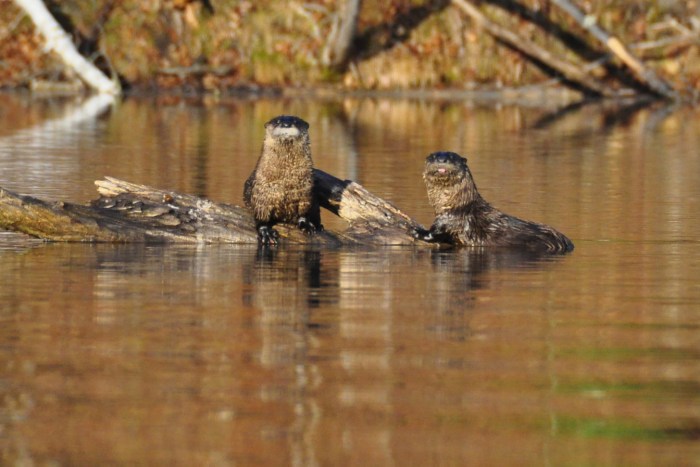
Say hello to North American river otters on World Otter Day!

Otters by Brent West

Otters by Brent West

Today (May 27) is International Otter Day, created by the International Otter Survival Fund to raise awareness of their work protecting, conserving, and caring for otters everywhere. Environment Michigan shares five great things about Michigan native otter, the North American River Otter:

1. They’re good fishers
Otters spend most of their life around water, and fish typically make up the majority of their diet. These members of the weasel family travel vast distances along waterways and over land to fish other areas. They’re good explorers, often setting up multiple dens away from their homes to find the best fishing spots.

2. They’re good swimmers
River otters’ sinuous, streamlined bodies and long tails propel them through water with ease. They can turn on a dime while swimming, and hold their breath underwater for up to eight minutes. With populations in nearly every state in the U.S., their thick, warm and waterproof coats allow them to swim in very cold environments.

3. They have fun
River otters are playful animals, and as far as we can tell, they’re often having a good time — swimming, fishing, sliding, wrestling, chasing each other, and just generally having a blast. We hope to be so lucky this summer!

4. They play a key role in aquatic ecosystems
River otters need clean, watery habitat with plenty of prey, so they are a key indicator of the health of a waterway. River otters are not found in highly-polluted watersheds.

5. When we appreciate river otters, we also appreciate clean water
In the face of pollution and uncontrolled development, river otters were once eradicated from many portions of the country. Conservation, re-introduction efforts, and national legislation like the Clean Water Act have helped bring them back from the brink.

Though river otters have returned to much of their historic range, their overall population today is estimated at only 100,000. To protect the river otter, we must protect our rivers, lakes, and streams from pollution and destruction. River otters give us just one more reason – a very cute reason – to stand up for our waterways.

Brett took this way back in 2010. See more in his Random photo album.

Support Michigan in Pictures with Patreon

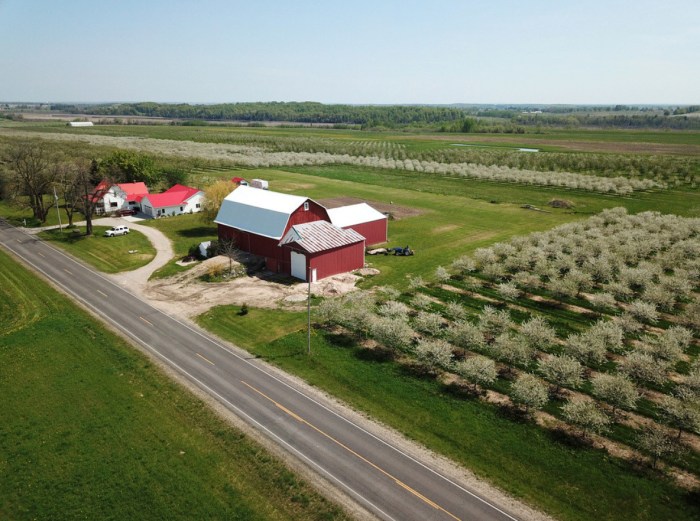
Looking over Elk Rapids cherry blossoms

Elk Rapids Cherry Orchards

Drone shot by Julie

Here’s a great drone photo that Julie took this weekend near Elk Rapids. She says that blossoms are just breaking out up there. See more great photos on her Flickr.

Support Michigan in Pictures with Patreon

Reflections on World Turtle Day!

Reflections (Turtles) by Glen Suszko

Reflections (turtles) by Glen Suszko

I know I said I was taking the weekend off, but May 23rd is World Turtle Day, one of my favorite days! It was created by the good people at American Tortoise Rescue to help people celebrate and protect turtles and tortoises and their disappearing habitats around the world.

Every year I’m happy to report that one of the most popular features on Michigan in Pictures remains Know Your Michigan Turtles that I wrote back in 2013 and have added to through the years with photos and articles about every one of Michigan’s 10 native turtle species including our most common one, the painted turtle.

The UM Animal Diversity web has pictures and information about Chrysemys picta (the painted turtle) and says that:

Painted turtles prefer living in freshwater that is quiet, shallow, and has a thick layer of mud.

Painted turtles are brightly marked. They have a smooth shell about 90 to 250 mm long. Their shell acts as protection, but since the ribs are fused to the shell, the turtle cannot expand its chest to breathe but must force air in and out of the lungs by alternately contracting the flank and shoulder muscles. The painted turtle has a relatively flat upper shell with red and yellow markings on a black or greenish brown background.

Painted turtles may live as long as 35 to 40 years, but most will not survive for this long

Glen took this photo last month at Stony Creek Metropark. Visit his Flickr for lots more photos!

Support Michigan in Pictures with Patreon

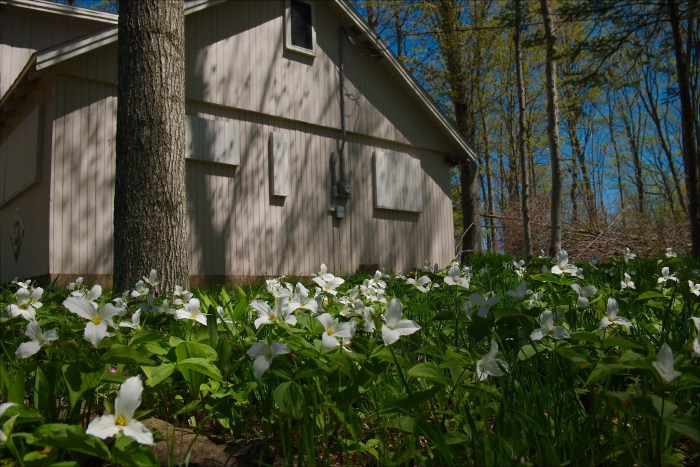
Trilliums Gone Wild

Trilliums Gone Wild by Kent Babb

Trilliums Gone Wild by Kent Babb

Michigan in Pictures is going to take a break for Memorial Day Weekend. I hope you all have a safe & enjoyable weekend!

See more of Kent’s photos on his Flickr & learn more about trillium on Michigan in Pictures.

Support Michigan in Pictures with Patreon