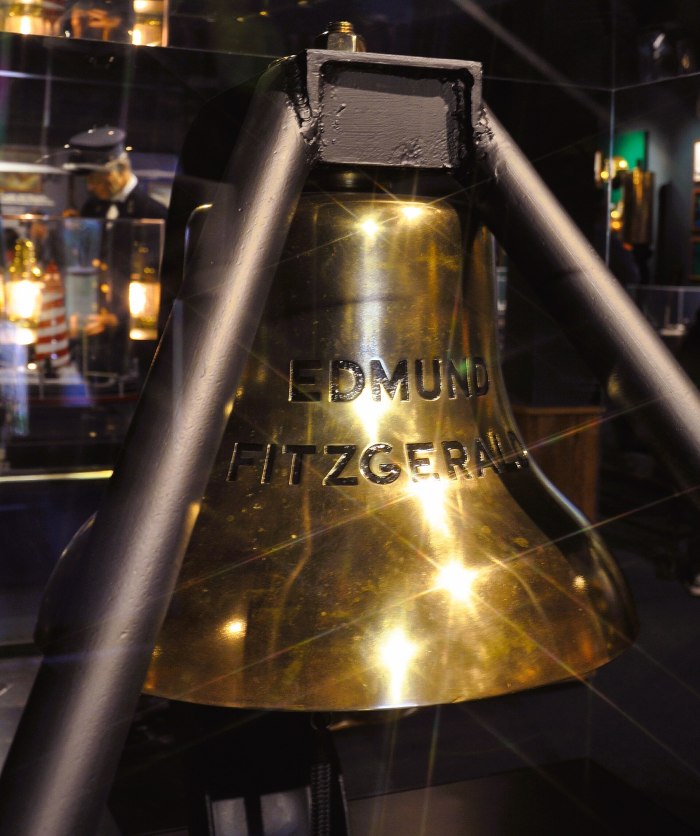
50 years on November 10, 1975, the mighty SS Edmund Fitzgerald was lost with all hands in a powerful storm on Lake Superior. At 729-feet long, it was the largest ship on the Lakes at the time and the largest vessel to ever sink in the Great Lakes.
While Gordon Lightfoot’s classic song The Wreck of Edmund Fitzgerald undoubtedly contributed to the legend of the Fitz, the documentary Backstory: The Edmund Fitzgerald from Click on Detroit/Local 4 on the sinking of the Edmund Fitzgerald explores the myriad ways the ship in woven into Michigan’s culture & consciousness. I really encourage you to make some time to watch this excellent documentary. In addition to exploring the mystery of the wreck and the impact of Lightfoot’s iconic song, it features anecdotes like the fact many of the furnishings were from Hudson’s and a truly beautiful recounting of the stories of the sailors lost. Seriously excellent work!
“And the iron boats go as the mariners all know, with the gales of November remembered” – Gordon Lightfoot
Every Michigander knows that the winds of November are to be respected and even feared on the Great Lakes. The State of Michigan says that an estimated 6,000 vessels were lost on the Great Lakes with about a quarter of these canoes, sailing ships, ferries, steamers, and modern ore boats like the mighty SS Edmnd Fitzgerald still remain on Michigan’s 38,000 square miles of the Great Lakes bottomlands.
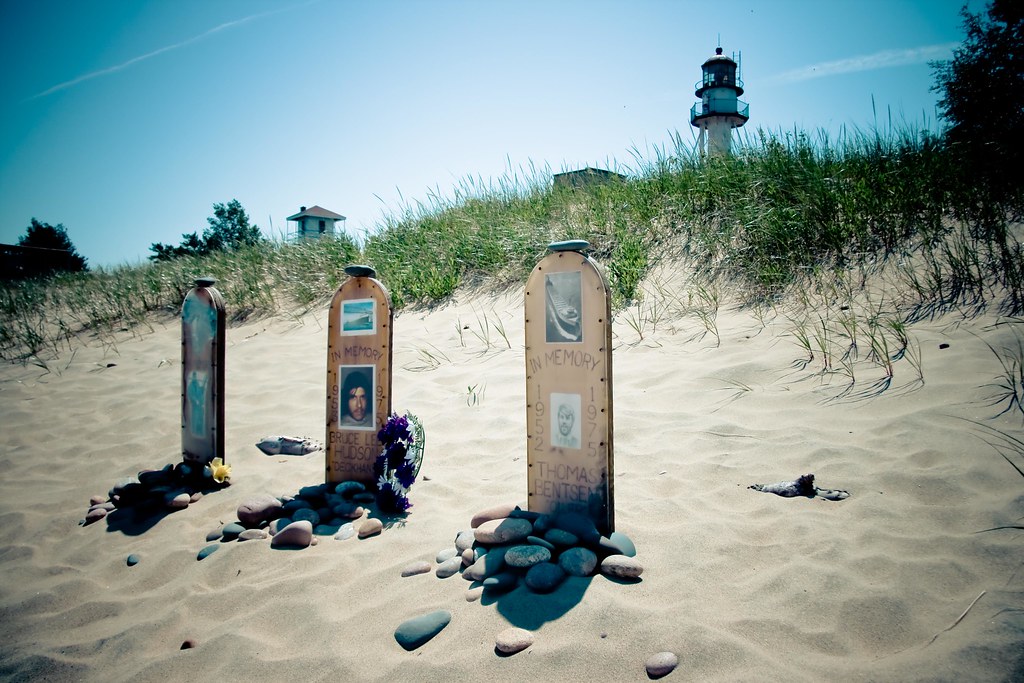
Yolanda took this photo a memorial at Whitefish Point Lighthouse to few of those lost aboard the S. S. Edmund Fitzgerald. More in her excellent Somewhere in Michigan gallery.
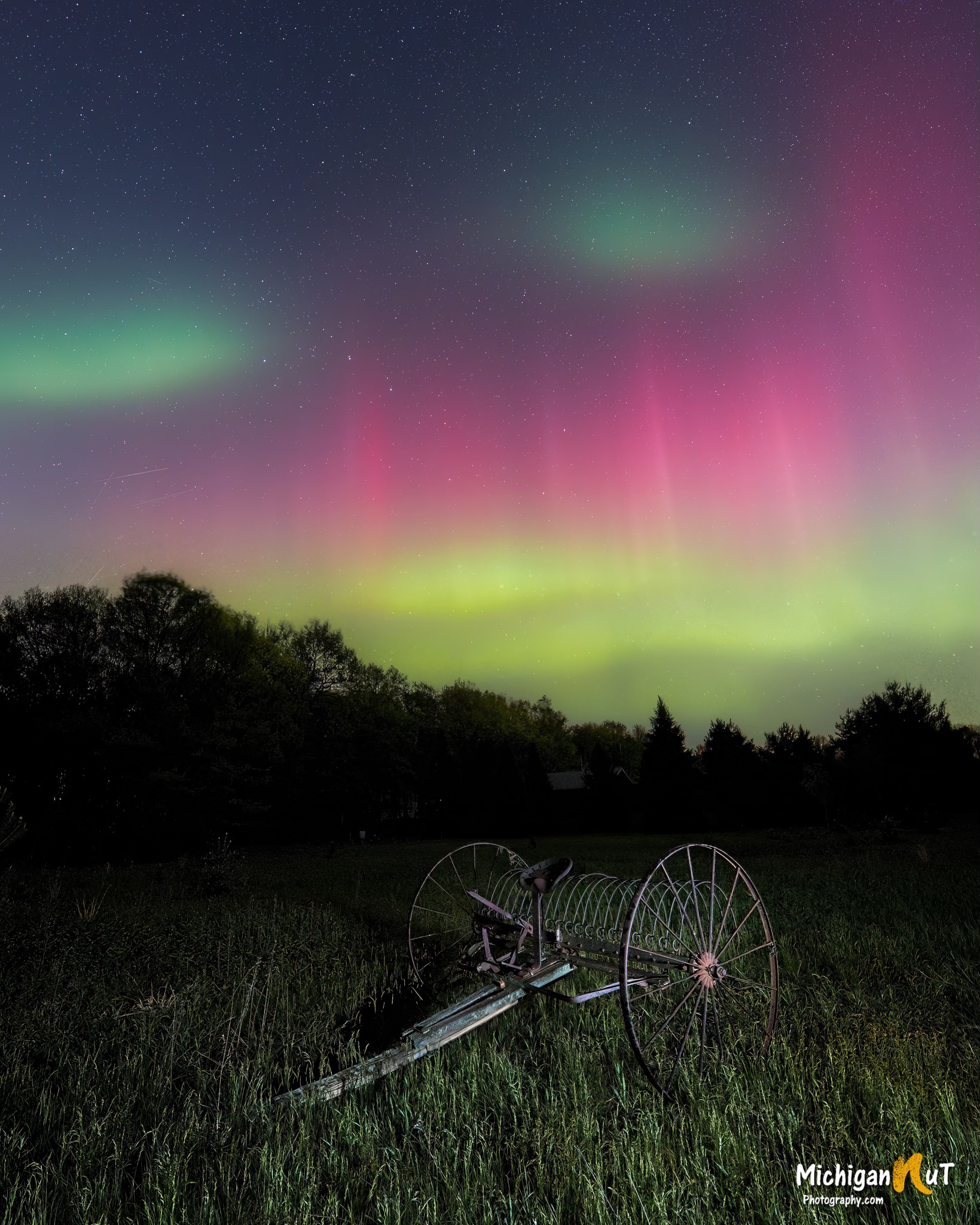
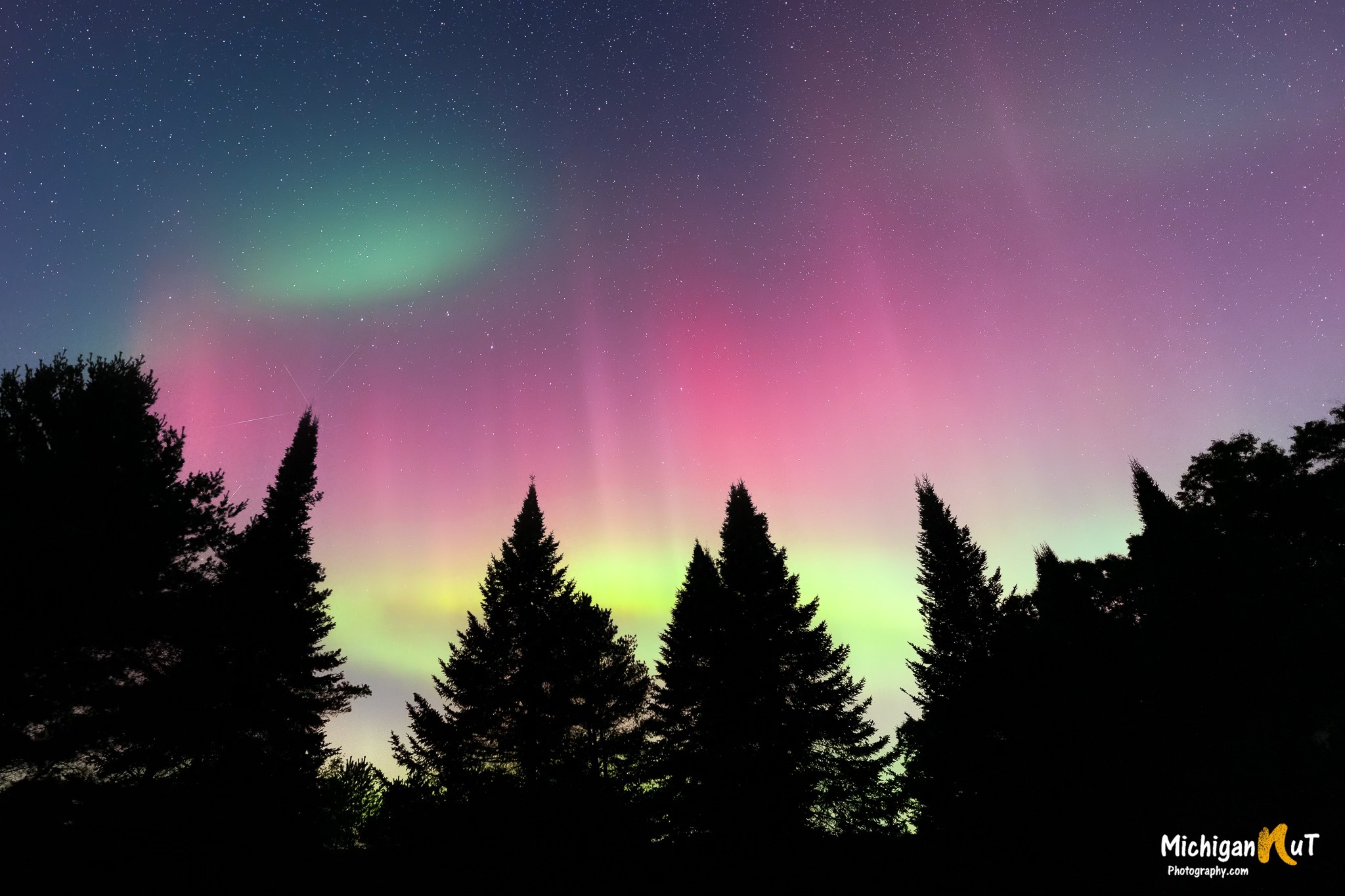
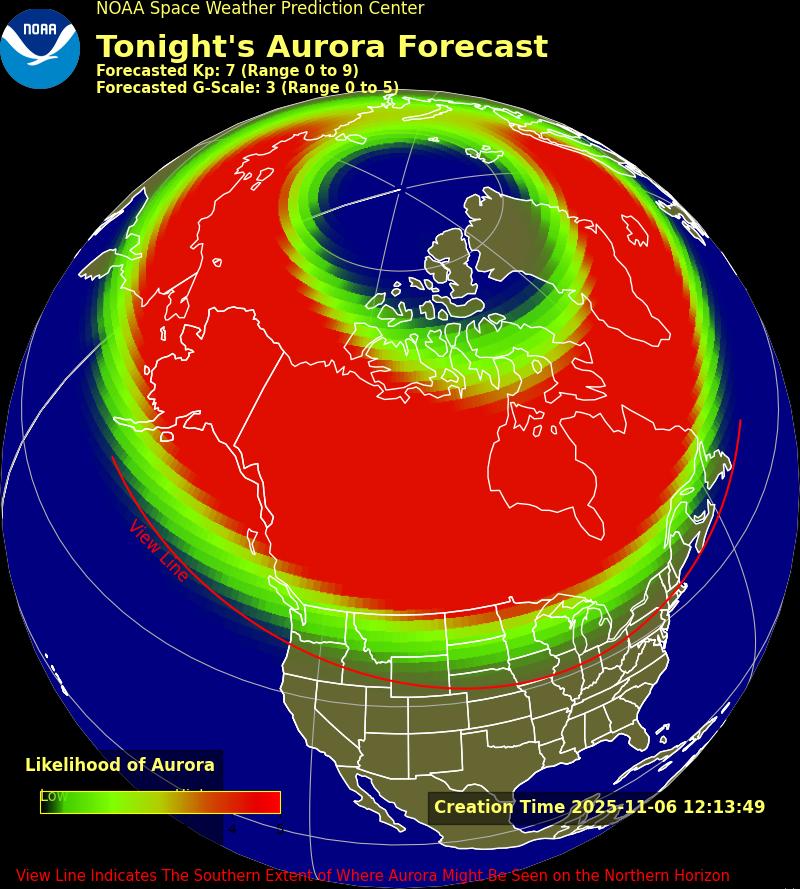
We’re going to keep our eyes on the skies today, because in addition to the waning but nearly full Super Hunter’s Moon & Taurid Meteors from yesterday, the NOAA NWS National Space Weather Prediction Center is calling for G3 level aurora activity to continue tonight, which means that Northern Lights are more likely, and they could be seen all the way to the southern state line if conditions are right! They have also launched an experimental Auroral Viewline graphic that shows where you are likely to be able to see northern lights, but to be clear, this is an inexact science AT BEST and hunting for the northern lights is very often unrewarding … unless you think being out under the stars is its own reward.
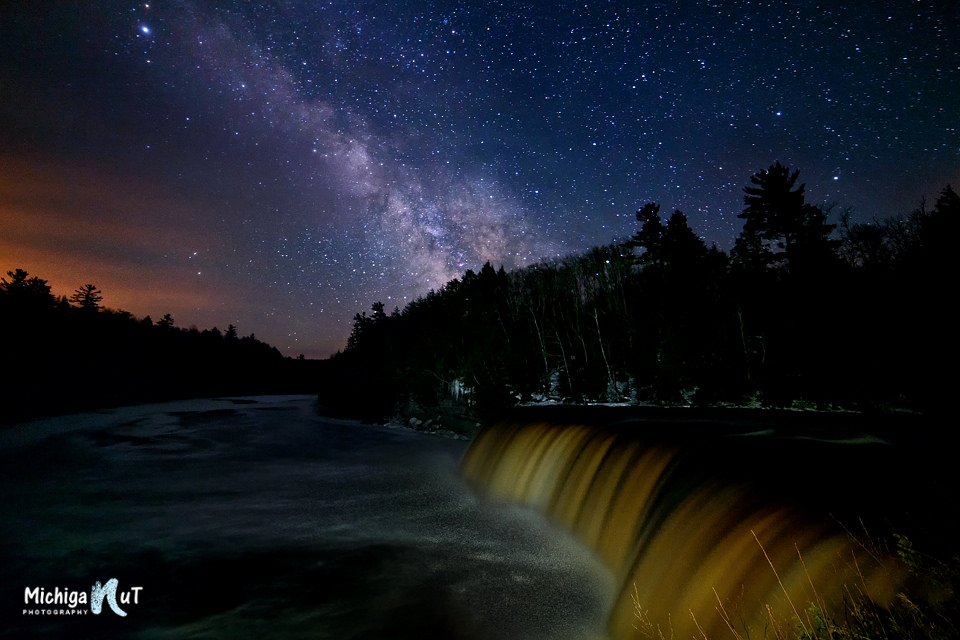
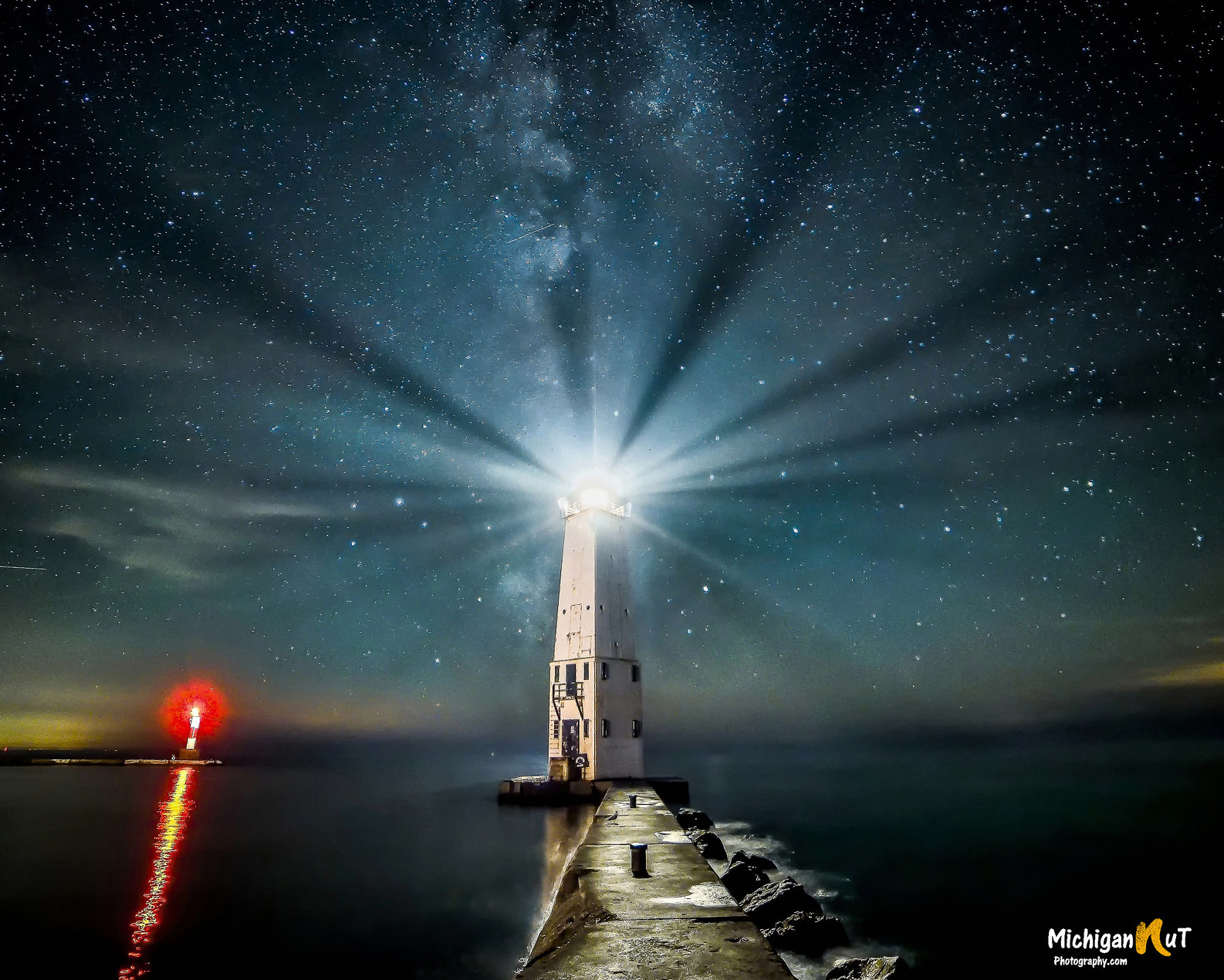
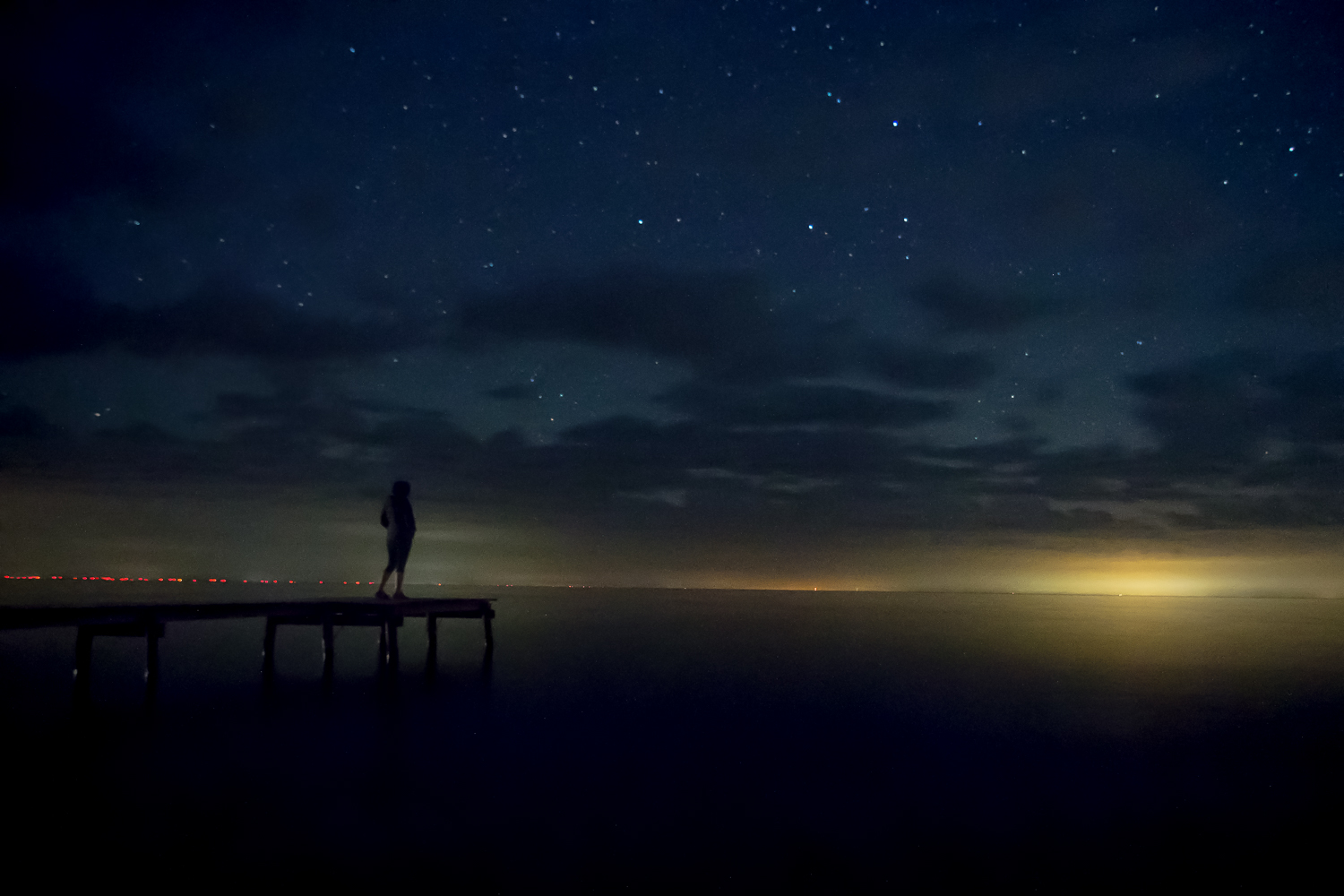
I have featured dozens of photos from John McCormick aka Michigan Nut Photography since the first pic I blogged in 2011. In all that time & even though he’s taken TONS of northern lights shots over the years, I’ve never shared one of them!! 😲 Here are a pair from John plus a couple of his night shots that I am particularly fond of. See many (many) more on his Facebook and for sure view & purchase his work at michigannutphotography.com!
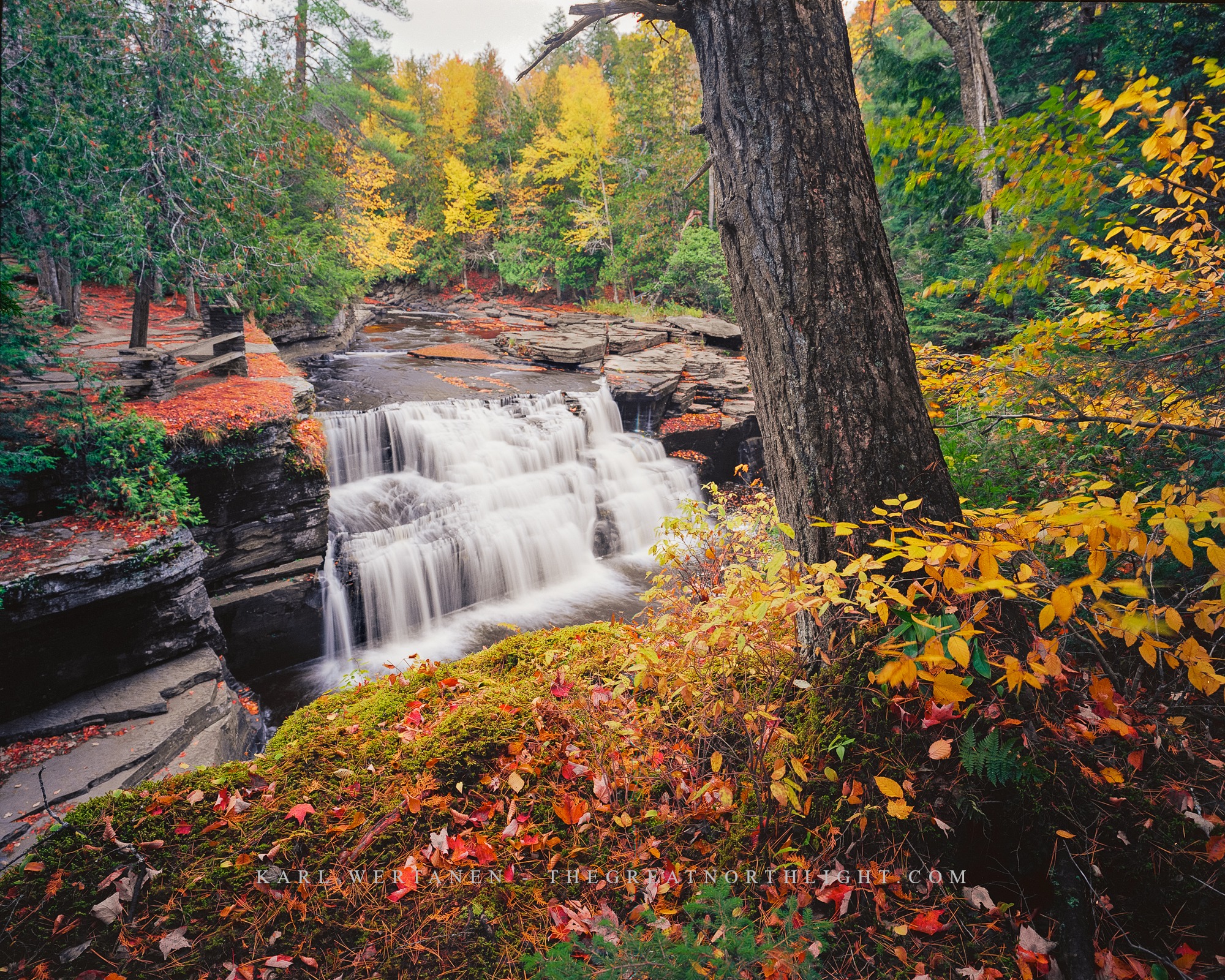
Karl shared this photo the other day saying “I always ask myself… Which trip is going to cost more..? The one I take or the one I don’t take. Then I know for sure.”
Pure Michigan says that Canyon Falls aka the “Grand Canyon of the UP” is an easy to visit falls with a gorge that is quite impressive, at least by Michigan standards. A scenic trail along the Sturgeon River leads to a series of rapids and small waterfalls before you reach Canyon Falls where the river slides nearly 30′ over a large chute of smooth black rock into a box canyon.
I got a lot of enjoyment from walking around the house yesterday saying “Super Beaver Moon” so it is with sadness & regret I share that EarthSky’s Deborah Byrd explains that if a full moon of November falls after November 7, it’s the Beaver Moon but if it’s before the 7th, it’s the Hunter’s Moon. Deborah writes:
Nature is particularly cooperative around the time of the autumnal equinox to make the fall full moonrises special. On average, the moon rises about 50 minutes later each day. But when a full moon happens close to the autumnal equinox – either a Harvest or a Hunter’s Moon – the moon (at mid-northern latitudes) rises about 30 minutes later daily for several days before and after the full moon … The result is that there’s a short-than-usual lag time between successive moonrises around the Hunter’s Moon adding to the brightness of evening twilight.
The moon has for sure been looking huge when it’s risen the last couple of nights! To add to the fun, EarthSky shares that the South Taurid & North Taurid meteor showers are both happening right now! While they aren’t a very active shower with just 5-10 meteors per hour, they can produce really intense fireballs like this one from Monday night over Glen Lake in the Sleeping Bear Dunes National Lakeshore.
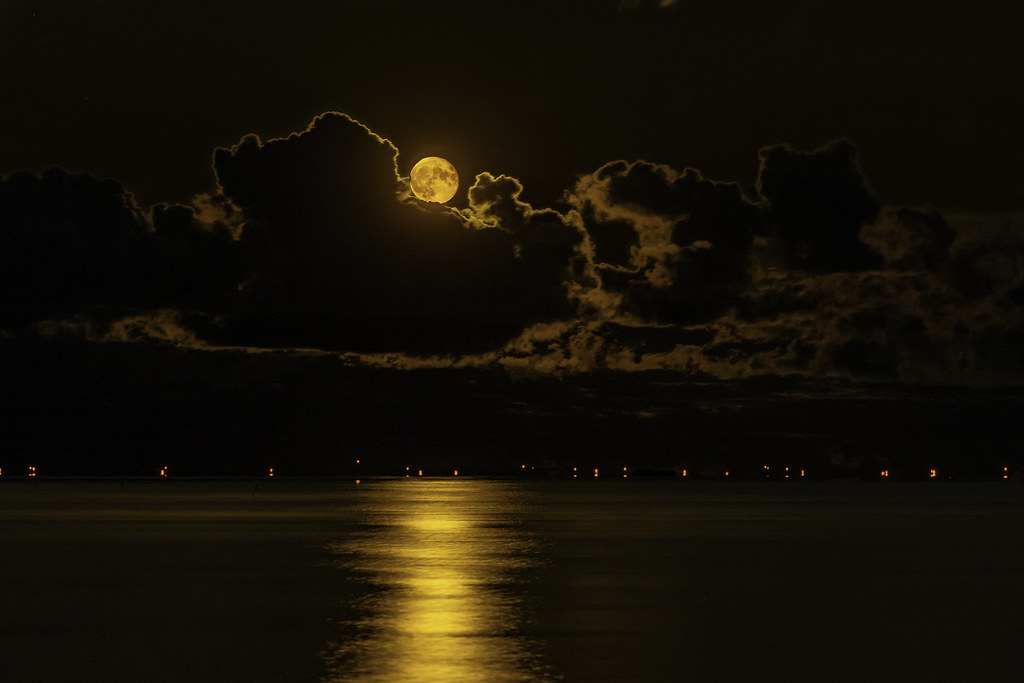
This moon is neither Hunter nor Beaver: it’s the August 2020 Sturgeon Moon as seen over Lake Huron. See more in kare hav’s Point Lookout / Au Gres gallery on Flickr including the first pic I ever shared from this awesome photographer on Night and Light.
“In times like these, we have to look out to help one another. We have to have compassion for one another to see how can I help my brother.” – Reverend Aaron Hicks
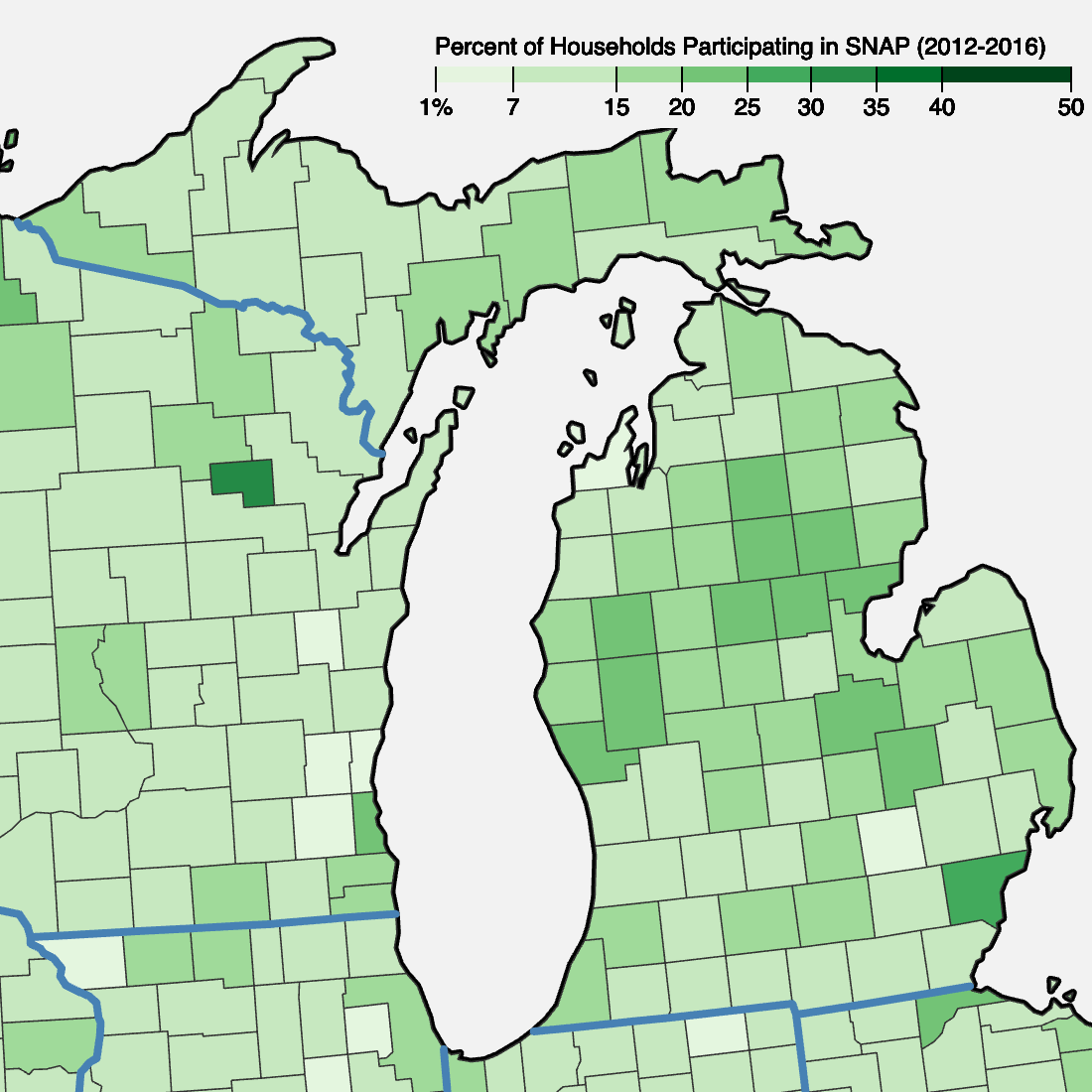
The National SNAP participation map breaks things down at the conty level. In Michigan average of 14.2% of small town households, 16.1% of urban households, and 16.8% of rural households receive SNAP benefits, and Michigan spends $3 billion a year on food assistance for our 1.4 million SNAP recipients.
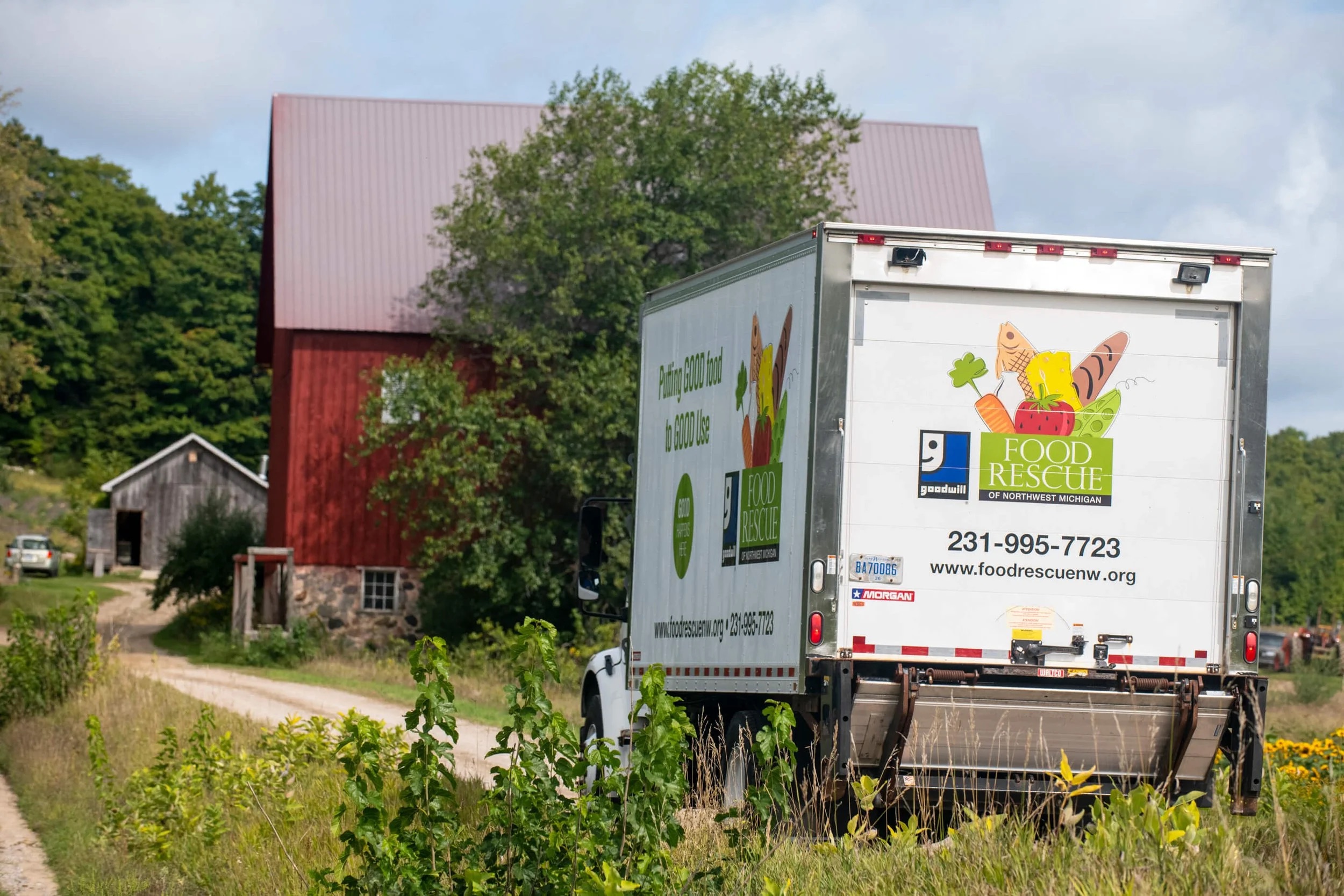
One of the many Michigan organizations working hard to keep food in the hands of hungry Michiganders is Food Rescue of Northwest Michigan who rescue, repack, and distribute over 2 million pounds of food every year to add to food pantry stores. Due to uncertainty with SNAP (food stamp) benefits, they are holding additional repacks – get all the details right here & feel welcome to share options you know of in the comments!!
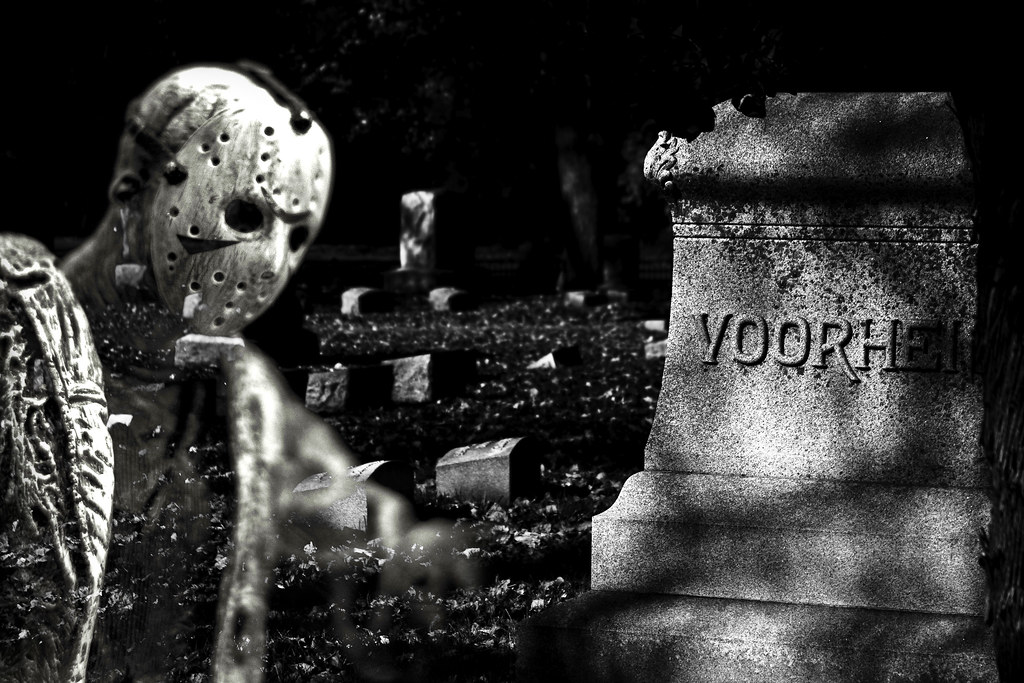
Here’s hoping that everyone has a wonderful & safe Halloween … maybe not Jason tho ;)
Chris is a very creative photographer who took this at the the Voorhees grave marker in Belleville Cemetery way back in 2009. See more of his excellently spooky work in his Halloween Horror gallery on Flickr.
10 years ago today, I shared this story from Legends of Le Détroit by Marie Caroline Watson Hamlin with illustrations by Miss Isabella Stewart. If I were you, I would click over to the book right now on the Internet Archive and read it there!
In the spring of 1712, the English sent a war party of Fox & Macoutin to try and take Fort Pontchartrain in Detroit from the French. Over 1000 were massacred by tribes loyal to the French near Windmill Point at the mouth of the Detroit River on Lake St. Clair, effectively destroying the Fox nation. We join the story…
Years after the dreadful massacre which converted the beautiful spot called Presque Isle into the grave of the Fox nation, a stone mill was built there by a French settler, who came to reside with his sister Josette, undaunted by the ourrent traditions which peopled it with the spirits of the departed warriors. Jean was a quiet, morose man, different from the laughing, careless, pleasure-loving Canadian, — for rare were his visits, to the fort, and it was noticed that he never lingered over his cidre, nor spoke to the smiling, piquante daughters of the habitants.
…Josette was much older than her brother, and by dint of thrift and economy had saved enough to become a half owner in the mill. … Naught disturbed the monotony of their lives ; each day was but a repetition. The river flowed calmly on, the birds sang their songs – for nature has no moods, they belong to man alone.
At last Josette fell sick. Jean attended her as carefully as he could, and like a prudent man, would frequently ask her to whom she would leave her interest in the mill. Irritable from suffering, she became annoyed at his importunities, accused him of taking care of her for the sake of obtaining her money, and told him ‘she would leave it to the devil.” Jean tried in his clumsy fashion, to soothe her. He sent for some of his kindred to reason with her, but they only infuriated her the more, and she solemnly declared that not one of them should have her share in the mill, but “she would sooner leave it to the devil.”
Josette recovered, however, and with that perversity born of stubbornness, would not relent. A few months afterwards she was found dead in her bed, having died suddenly. That same night, whilst the candles threw their dim shadowy light in the room of the dead, a furious storm arose, lashing the waves against the shore, the winds howling fiercely around the point, the black clouds chasing each other across the lowering skies, as lurid gleams of lightning and deafening reverberations of thunder, made all the habitants shudder while they crossed themselves and told their beads. All at once there came so tremendous a shock that it seemed to swallow the island. The old stone mill was rent in twain. A pungent smell of sulphur filled the air, and a fiendish, laugh was heard loud above the raging storm from the shattered ruins. The arch fiend had come to claim his share.
For years afterwards when a northeast storm blew from the lake, making night hideous by its echoing peals of thunder, it was said that a hairy figure, with a horned head and forked tail tipped with fire, his mouth and eyes darting forth ruddy flame, could be seen in the mill, trying to put together the ruined machinery to grind the devil’s grist. And the lonely wayfarer to Grosse Pointe would see the marshes around Presque Isle all illuminated by flames, called by the hab- itants feu-follet (Will-o’-the-Wisp), which would try to inveigle the unhappy traveler and bring him to help grind the devil’s grist.
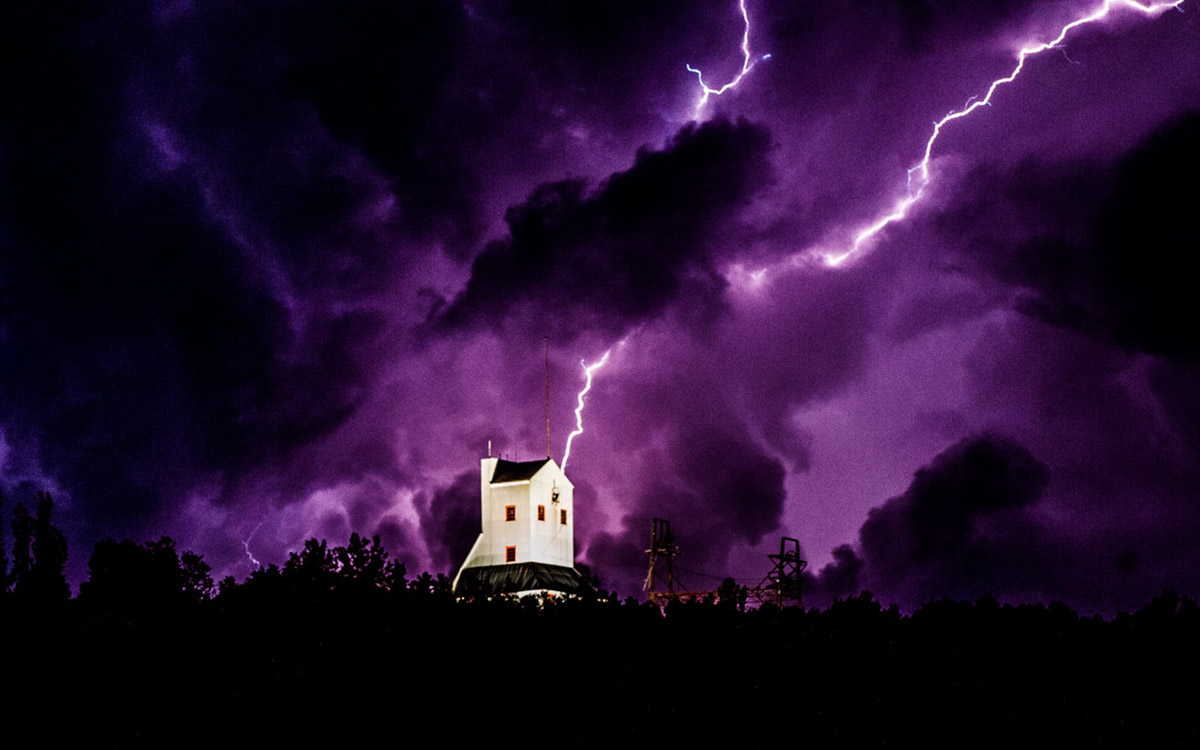
Christopher took this photo of the Quincy Mine way up in Houghton being struck by lightning way back in 2014. Felt perfect to me! See more in his awesome Keweenaw Lightning gallery on Flickr.
If you are interested in learning more about Quincy Mine, Michigan in Pictures has you covered!
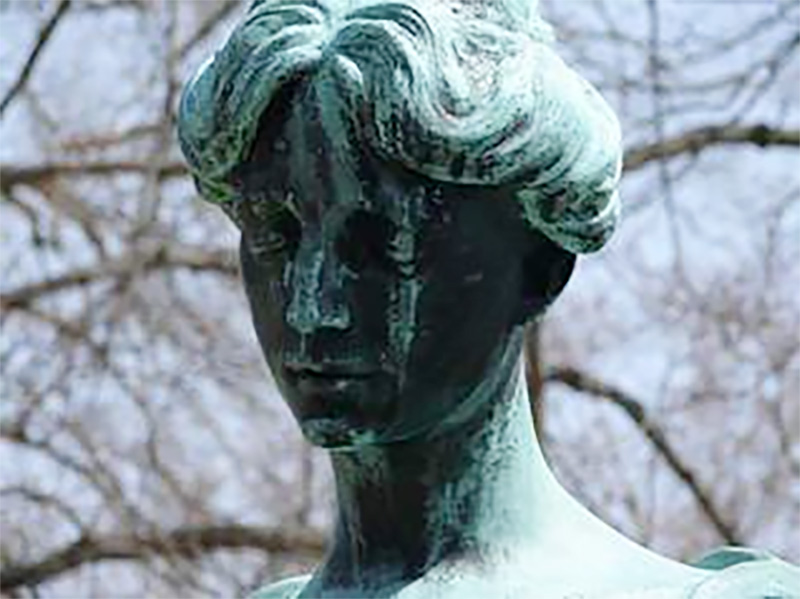
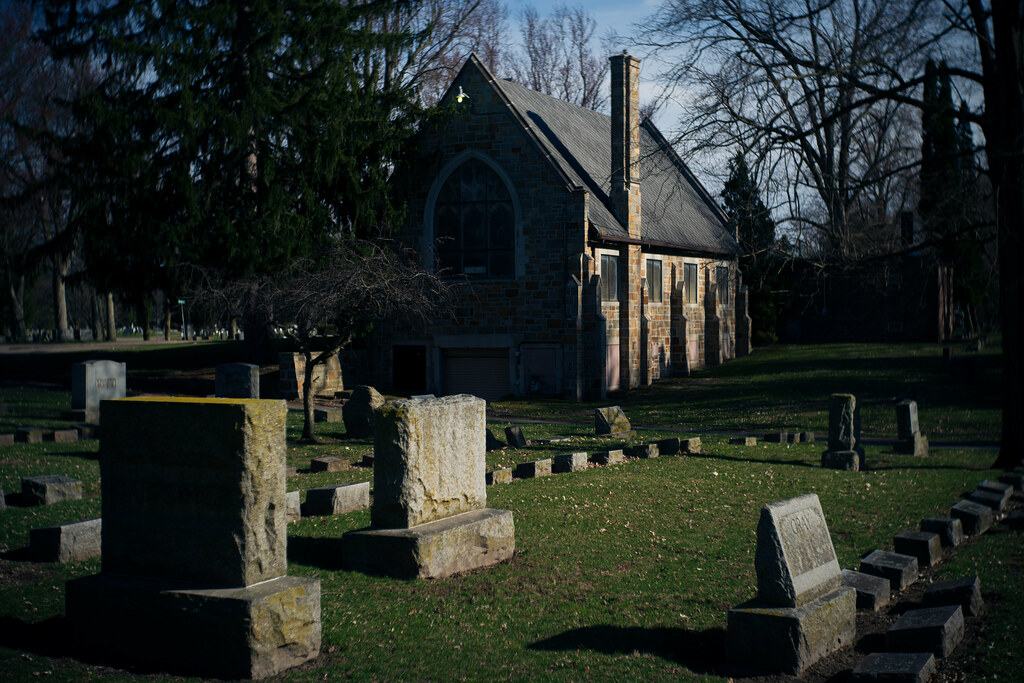
When I was looking through the many haunted tales on Michigan in Pictures the other day, I realized that one of the many things I enjoy about Halloween is how it draws you into history since so many of our spooky tales are rooted in the long ago. A number that I’ve shared are from our friends at Mysterious Michigan including the brief tale of Crying Mary of Oak Hill Cemetery:
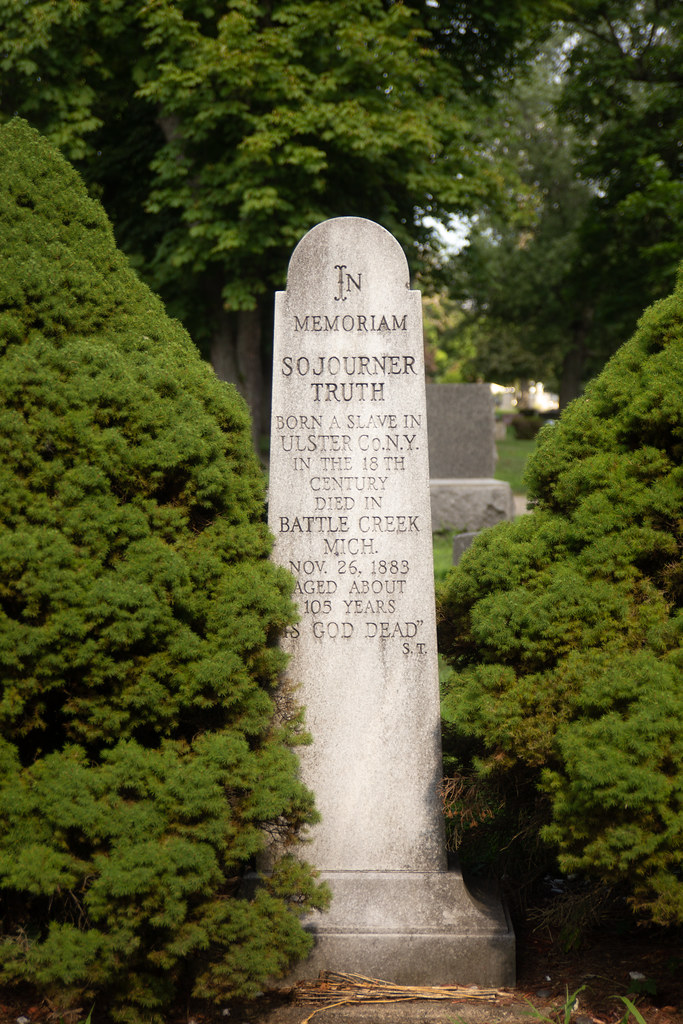
Established in 1844 and over 160 years old, Oak Hill Cemetery in Battle Creek, Michigan has a lot of history. It’s the final resting place of famous people such as Sojourner Truth, C.W. Post, W.K. Kellogg, his brother John Harvey Kellogg, Bill Knapp, Ellen & James White, founders of the Seventh Day Adventist Church and others. Among the many famous people slumbering within the grounds of Oak Hill, another famous person exists above ground. While Crying Mary may not be a living, breathing person, she does happen to be a beautiful statue of a Greek goddess at the grave site of Johannes Decker and is well known by the residents of Battle Creek.
The legend of Crying Mary says that at the stroke of midnight every Sunday, the statue cries. People have claimed to have seen and felt her tears. Some say she only cries at night and never during the day.
Crying Mary of Oak Hill Cemetery
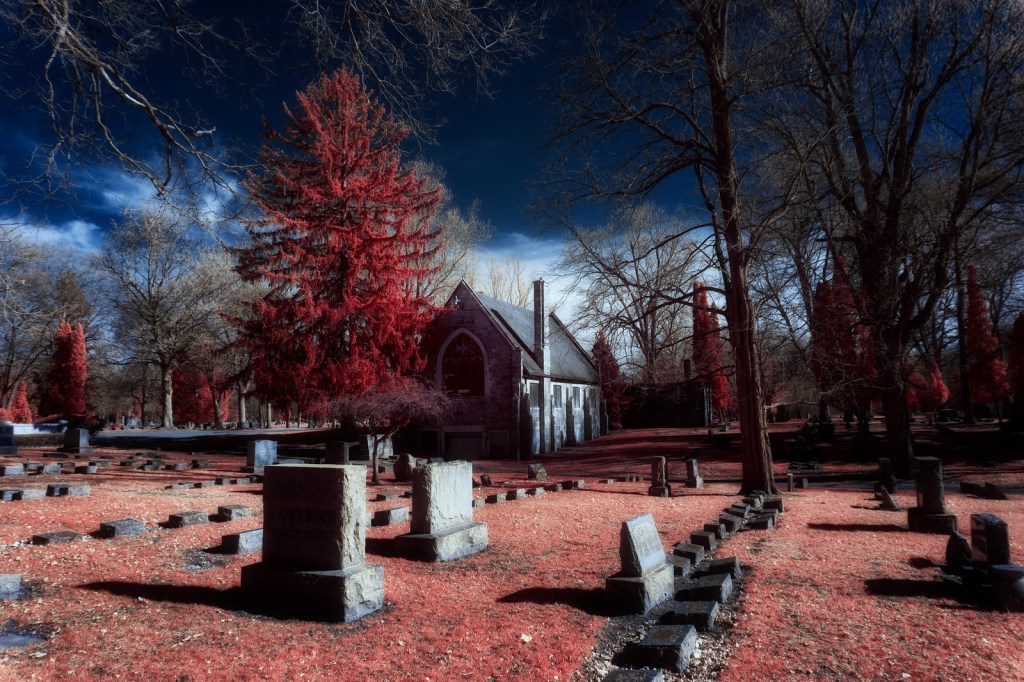
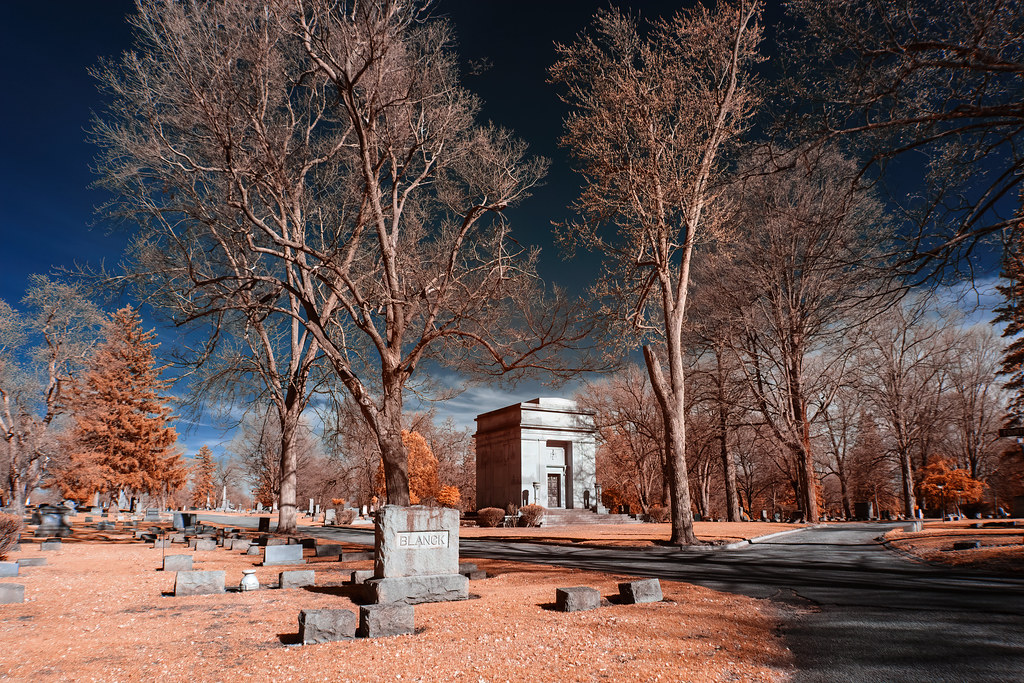
The photo makes it appear to be a natural effect of water on the greening bronze, but whatever the cause, I doubt she’s crying about the view – what a gorgeous little cemetery.
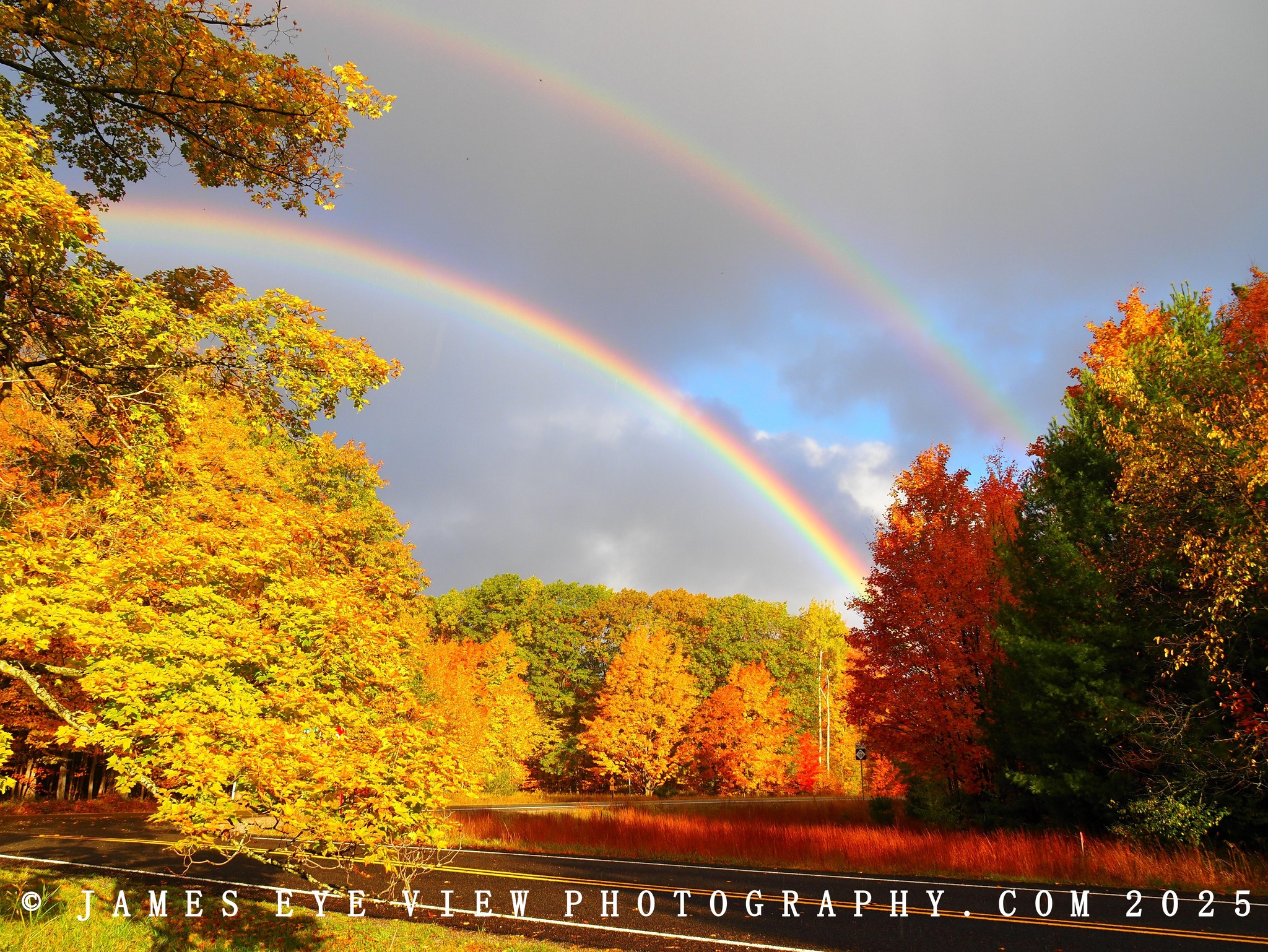
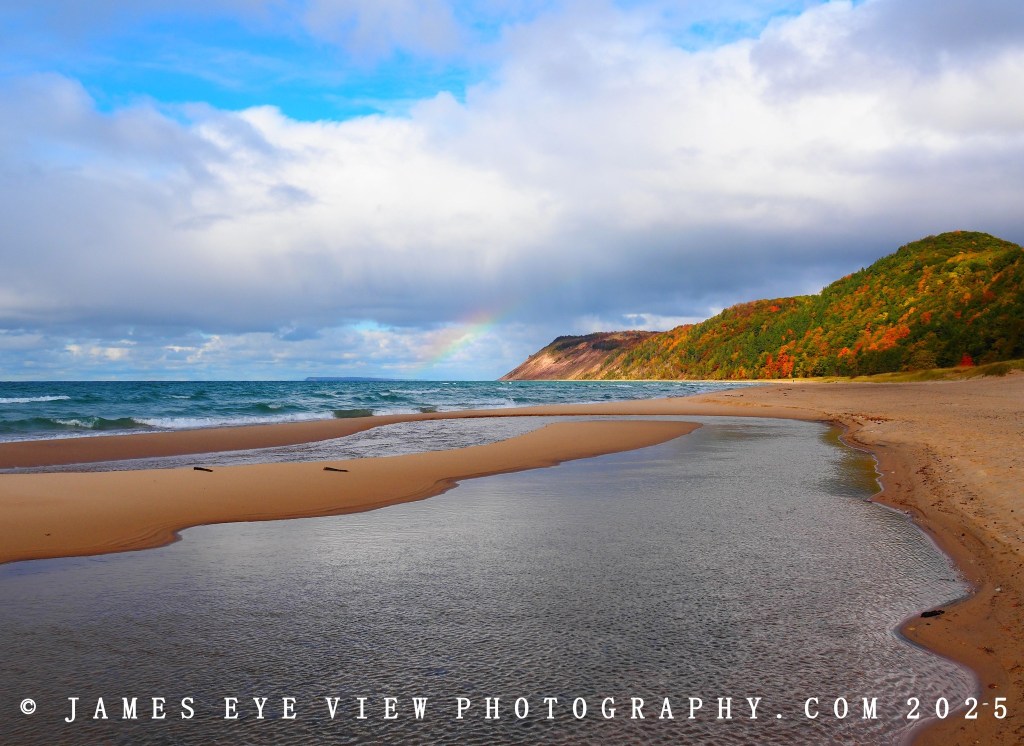
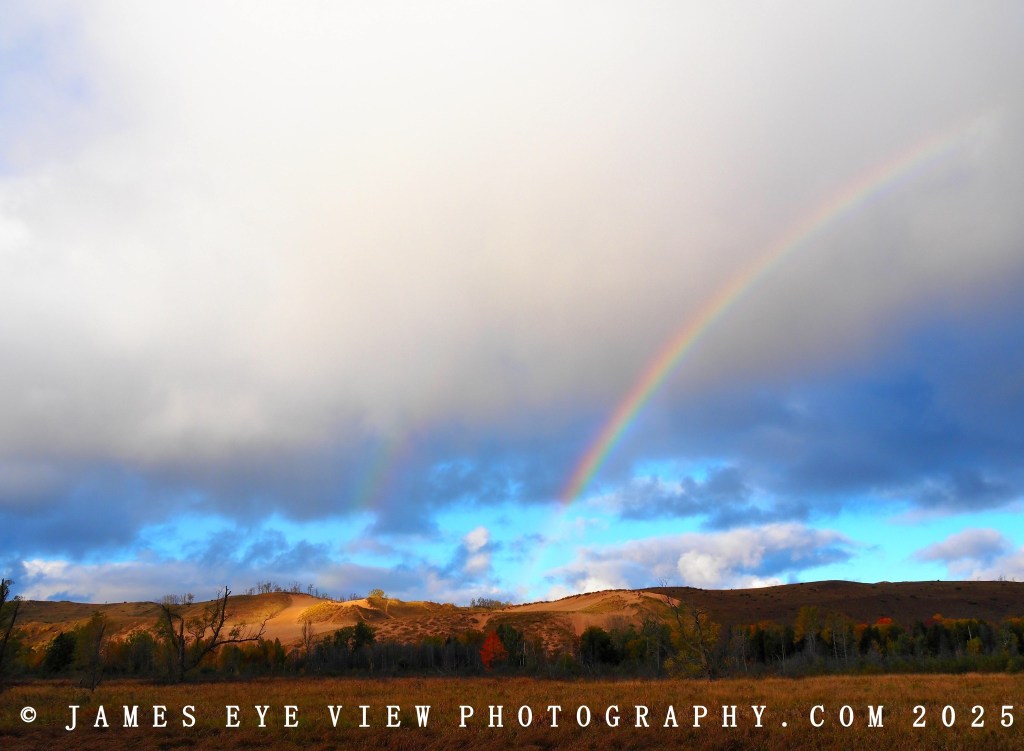
To have rainbows, we need rain and sun at the same time. What weather pattern is classic for rain and sun at the same time? The current lake-effect rain shower situation is perfect for rainbows. The rain showers are small, maybe only five miles wide. There is a lot of clear sky around the rain showers.
…So we know why we have had and currently have a lot of rainbows in Michigan in the past few days- the spotty lake-effect showers combined with sunshine. But why have there been numerous double rainbows? It has to do with the angle of the sun, combined with the daily weather pattern.
For a double rainbow, the sun has to be fairly low on the horizon, lower than 40 degrees above the horizon. It just so happens the lake-effect showers reach their peak intensity and coverage during the late afternoon heating of the day, when the sun is low on the horizon.

#/media/File:Edmund_Fitzgerald,_1971,_4_of_4.JPG)







 Michigan in Pictures
#/media/File:Fall_777.jpg)