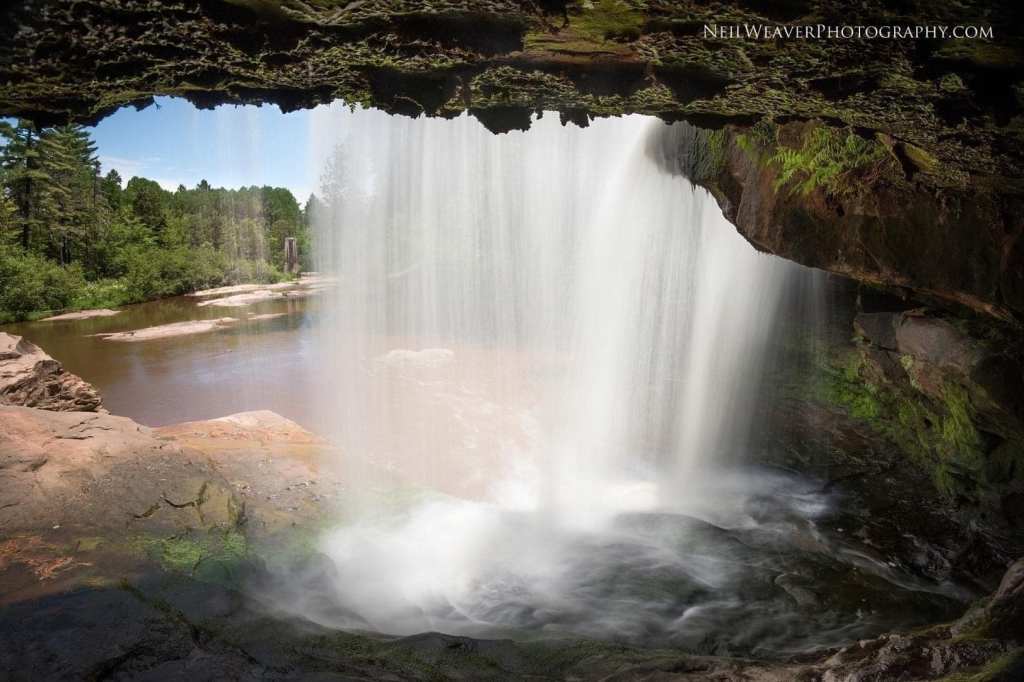
Ontonogon County in Michigan’s Upper Peninsula is full of waterfalls. Pasty.com shared: The name “Ontonagon” is derived from the Ojibway word “nontounagon,” which means “I lost my bowl.” Local legend surrounding the name stems from the story that a member of Chief O-Kun-De-Kun’s band was washing bowls near the mouth of the river when she was startled by an unkempt stranger in a canoe. The woman inadvertently dropped one of the bowls into the river and exclaimed “nontounagon”. The white man took her declaration to be a reply to his question about the name of the area.
I have also heard that it refers to the bowl shaped harbor – maybe a reader will have the answer, and if you want to explore Waterfalls of the Keweenaw has a whole list – collect them all!! ;)
I don’t know what else I have to say on the matter except that it’s good to see Detroit restore another piece of Michigan’s heritage & hope that you have a chance to see the renovations live in person or on TV tomorrow! From their release:
The sold-out, ticketed 90-minute outdoor concert will bring to life the spirit and soul of Detroit through an incredible lineup of musical performances, short films, appearances by local leaders, and creators telling stories of innovation and culture from around the city and the region. The star-studded program features iconic musicians and cultural legends, including Michigan natives Diana Ross, Big Sean, Illa J, Jack White, Kierra Sheard, Theo Parrish, Slum Village, the Clark Sisters, Sky Jetta and the Detroit Symphony Orchestra. They will be joined by presenters including Detroit Lions legend Barry Sanders and stars Jared Goff and Amon-Ra St. Brown. These Detroit entertainment stars will be joined by other performers, including Common, Fantasia, Melissa Etheridge and Jelly Roll, along with presenters Mike Epps and Sophia Bush.
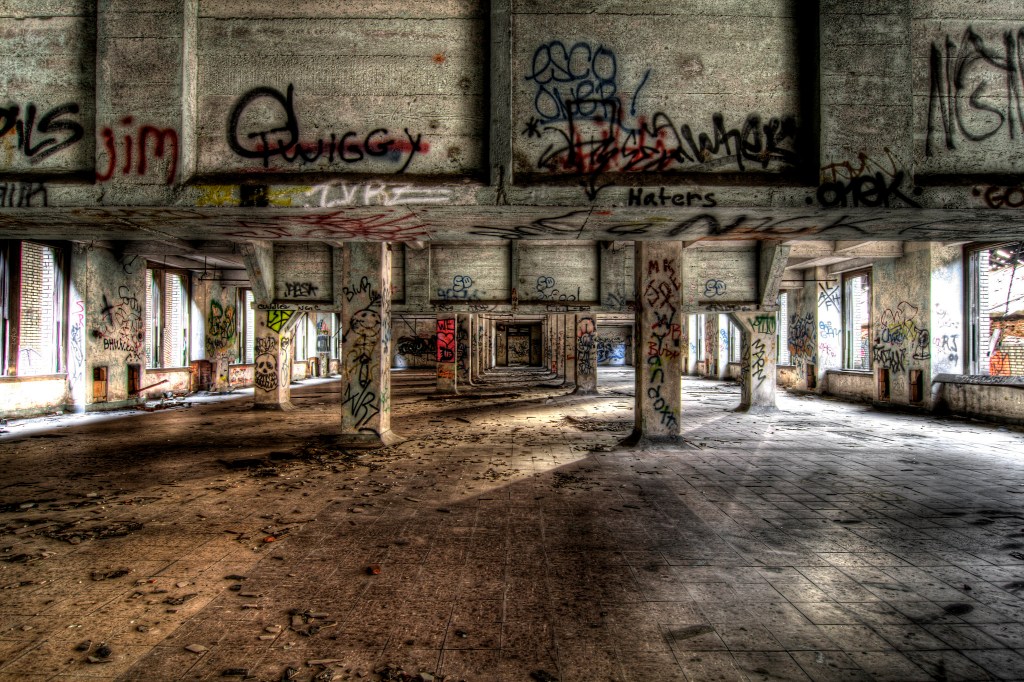
Chris took this photo at Michigan Central way back in 2009. See more in his Abandoned Detroit album.
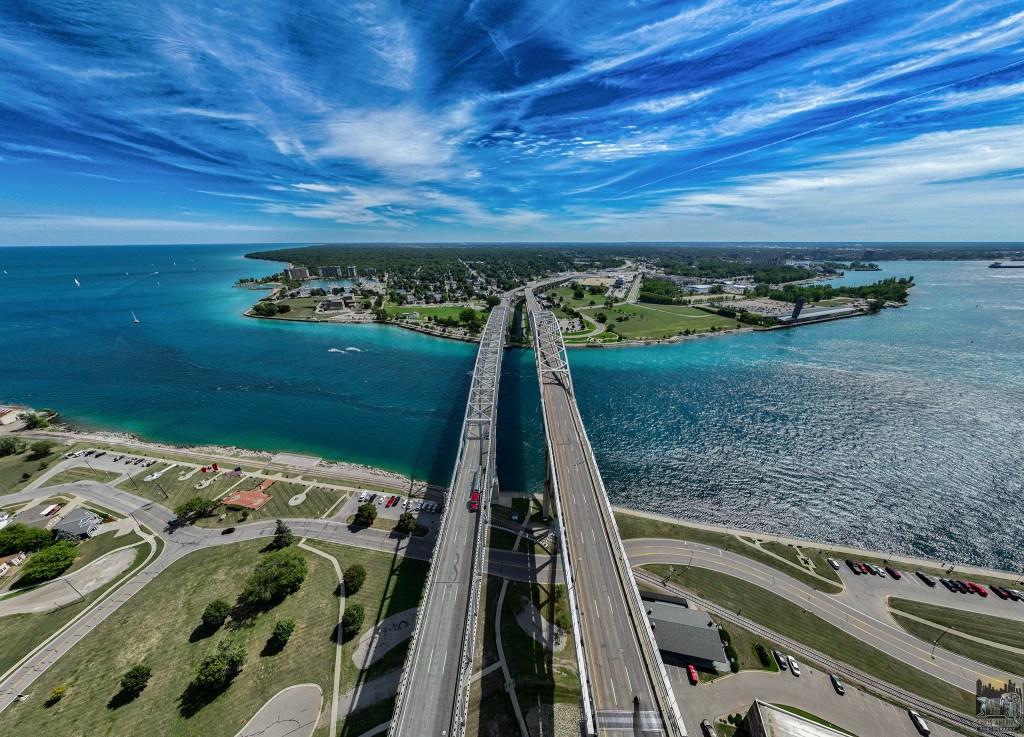
The Gordie Howe Bridge is (rightfully) getting a lot of attention these days, but another beautiful span connwcting Michigan with Canada is the Blue Water Bridge across the St. Clair River at the southern end of Lake Huron from Port Huron to Sarnia, Ontario. The Blue Water Bridge Authority shares:
The first bridge was opened to traffic on October 10, 1938. The lead engineer was Ralph Modjeski. This bridge originally had two lanes for vehicles as well as sidewalks; the latter were removed in the 1980s to make room for a third lane for automobiles. The third lane for each direction started from the apex of the bridge in order to accommodate long lineups entering each sides’ respective border crossings.
…In the early 1990s, bridge authorities decided to add a second arch in order to accommodate the high traffic. During the debate over the form of the second span, five possible designs were purposed from 1994-95. Over half of public opinion had mostly favored a duplicate of the first bridge, while the cable-stayed bridge came in second with around 21%. The Blue Water Bridge Authority had rejected both designs, due to the duplicate creating a false sense of history, while the cable-stayed option was feared to overshadow the existing bridge. Another cost-effective but unpopular design was the parallel truss. The continuous-tied arch design, which was a distant third place in polls, was chosen for two reasons. One was that it blends in with the original span yet stands out on its own, and the other is lower maintenance costs because fewer spans are involved.
Chris Ahern is a professional photographer & licensed commercial drone pilot who works in and around Detroit. Follow him on Facebook or Instagram & for sure check out his website.
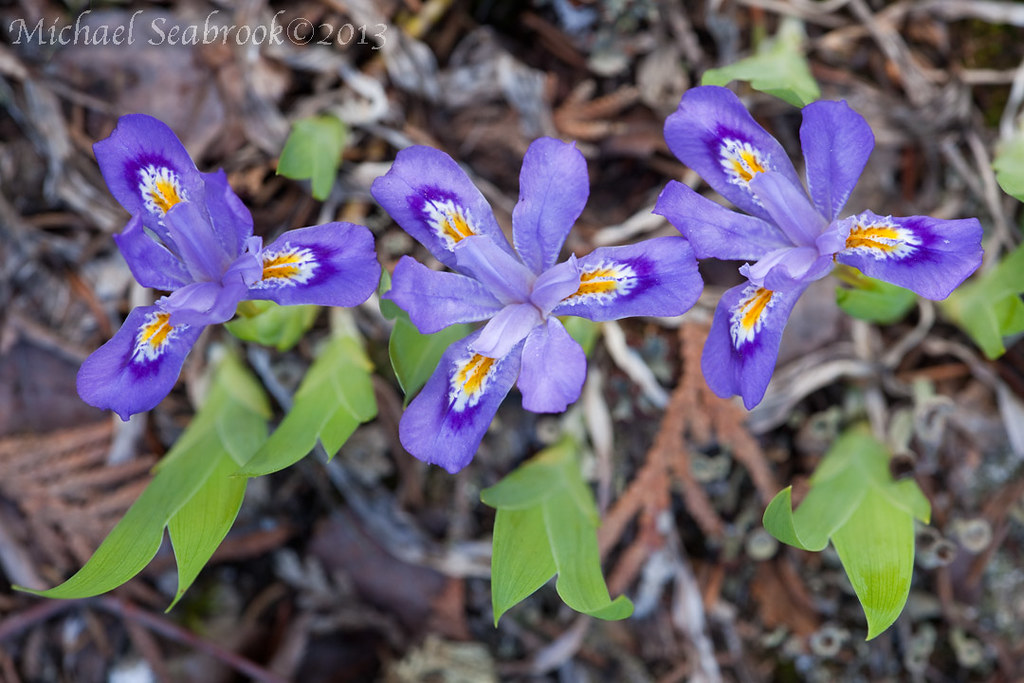
The National Forest Service shares that Michigan’s state wildflower, the Dwarf Lake Iris (Iris lacustris), grows nowhere else but in the Great Lakes region & mostly within Michigan:
The vivid blue, showy flowers (about two inches in height) of Dwarf lake iris are truly exquisite. This miniature iris, honored as the state flower of Michigan, blooms from mid May to early June.
Dwarf lake iris is called a Great Lakes endemic due to its very limited range. It inhabits the northern shores of Lakes Huron and Michigan within Michigan, Wisconsin (Door Co.), and Ontario, Canada (Manitoulin Island, and the Bruce Peninsula). Dwarf lake iris formerly ranged as far south as Milwaukee, Wisconsin, but has never collected on Lake Superior shoreline.
The Latin species name lacustris translates to “of lakes”, which does not speak to the immense size of these two huge inland “seas”. Confined almost exclusively to thin soil over limestone, rich gravel or bedrock, or moist sands and gravels, it can persist in full sunlight on moist sites. This miniature iris is most successful, however, under the light, dappled shade of white cedar. It flowers best in semi-open habitats such as the long and narrow strips of land bordering the high-water line, or large flat expanses behind open dunes. It may also inhabitant old beach ridges of the former shores of these two Great Lakes. The changing water levels of lakes Michigan and Huron serve to create new habitat.
Thomas Nuttall, renowned naturalist and explorer, first found this species in 1810. The type locality, or location where he first found Dwarf lake iris, was Mackinac Island in northern Lake Michigan.
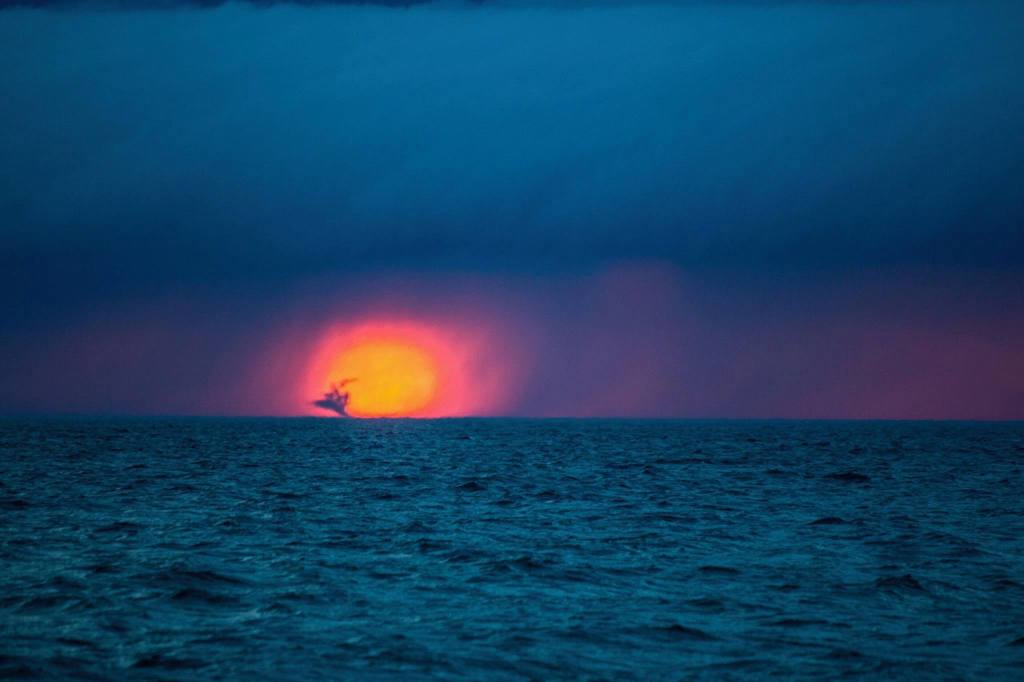
Dr. Joseph Golden, a distinguished waterspout authority with the National Oceanic and Atmospheric Administration (NOAA), defines the waterspout as a “funnel which contains an intense vortex, sometimes destructive, of small horizontal extent and which occurs over a body of water.” The belief that a waterspout is nothing more than a tornado over water is only partially true. The fact is, depending on how they form, waterspouts come in two types: tornadic and fair weather.
Tornadic waterspouts generally begin as true tornadoes over land in association with a thunderstorm, and then move out over the water. They can be large and are capable of considerable destruction. Fair weather waterspouts, on the other hand, form only over open water. They develop at the surface of the water and climb skyward in association with warm water temperatures and high humidity in the lowest several thousand feet of the atmosphere. They are usually small, relatively brief, and less dangerous. The fair weather variety of waterspout is much more common than the tornadic.
Waterspouts occur most frequently in northern Michigan during the months of August, September, and October, when the waters of the Great Lakes are near their warmest levels of the year. Waterspout formation typically occurs when cold air moves across the Great Lakes and results in large temperature differences between the warm water and the overriding cold air. They tend to last from about two to twenty minutes, and move along at speeds of 10 to 15 knots.
Kyler caught this spout when checking out a storm front as it rolled across Lake Michigan on May 31, 2017. His old Instagram is gone but I’m betting you can find him @kylerjphillips on the Gram!
Scott shared this photo on Monday writing “Bet you can’t guess where we were visiting. At one point these guys were outselling The Beatles! One of the true Michigan iconic bands. Glad to see that this homage to them is still there.”
If you guessed “Flint” you are correct! The band Grand Funk Railroad was one of the biggest bands to come out of Michigan in the seventies, scoring Grand Funk six platinum and seven gold-certified albums between their 1969 debut and first breakup in 1976. The power trio of Mark Farner (vocals, guitar, keyboards, harmonica), Don Brewer (drums, vocals) & Mel Schacher (bass) originally came together in 1969 as “Grand Trunk Railroad”. The Grand Trunk Western Railroad objected, and the band (fortunately) had to change the name to Grand Funk Railroad.
Two of the three original members – Brewer & Schacher – are currently on tour as Grand Funk Railroad while lead singer & primary songwriter Farner tours as Mark Farner’s American Band.
The Detroit Grand Prix takes place May 31-June 2 in downtown Detroit where it began in 1982:
Again in 2024, the Grand Prix will provide unprecedented access with more than half of the event’s footprint along Jefferson Avenue and the beautiful Detroit Riverfront open to the public, free of charge. Grand Prix visitors will be able to enjoy complimentary access to the main fan activation areas at the event, including Spirit Plaza, Hart Plaza as well as the Riverwalk. Fans will be welcomed in these key areas that will feature live music, food, games and displays all weekend long, without the purchase of a Grand Prix ticket.
Memorial Weekend 2024 is upon us. I’m wishing a great time for everyone, safe travels lucky enough to be traveling for pleasure, and for all of us, I wish patience. If you look around you will see Help Wanted signs everywhere you look, particularly in hot tourist destinations. Give those working an extra dose of kindness & have a blast!
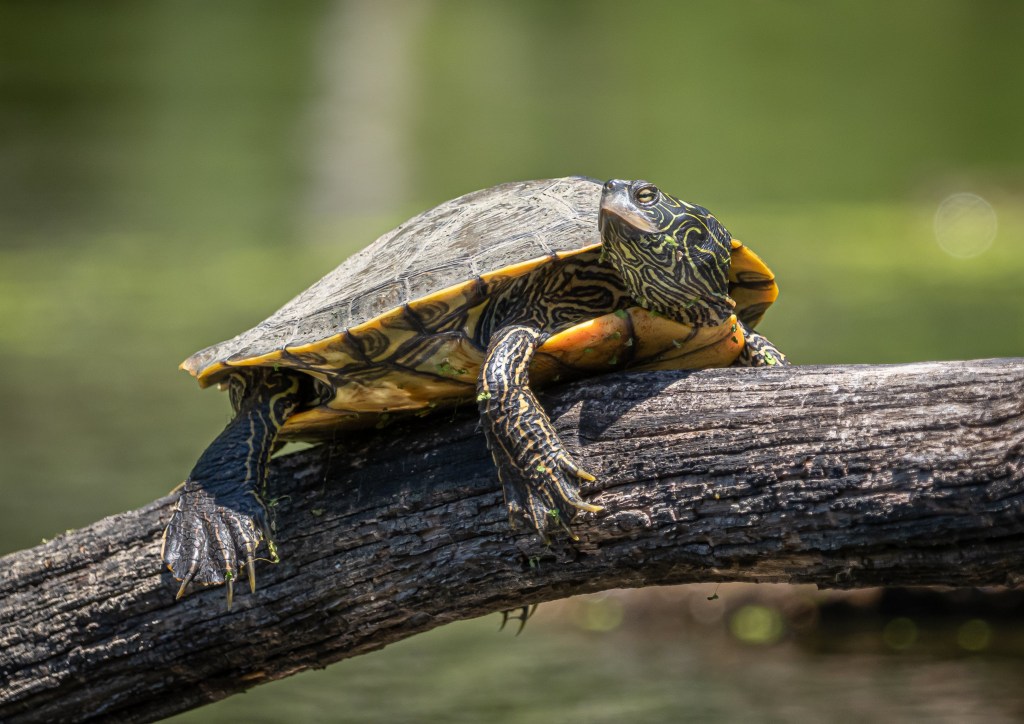
The Michpics entry on the Map turtle says that they are avid baskers, often basking in groups. They are diurnal, active both in the day and at night and also a very wary animal, slipping into the water to hide at the slightest hint of danger. During courtship the male initiates by tapping his long claws on the front of the female but few details are known. Well I guess those claws demand attention!! 👀
David took this photo a couple years ago while kayaking on the Grand River. See the latest on his Flickr!
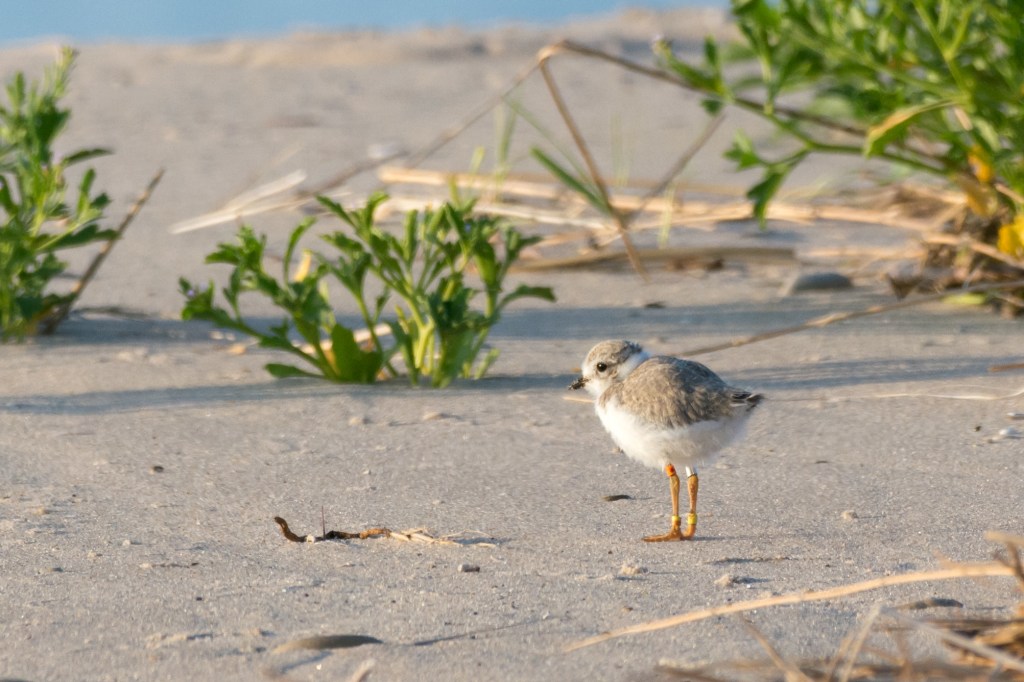
The Piping Plover (Charadrius melodus) is an endangered shorebird. They are sand-colored on the back and white below. During the breeding season adults have a black forehead band between the eyes and a single black band around the neck. (Its larger relative the Killdeer is commonly seen at parks, playgrounds, and golf courses, and has two dark bands around the neck.) Piping Plovers nest only on beaches and prefer beaches with cobble. There are three small populations: one in the Great Plains, one on the Atlantic Coast, and the one here in the Great Lakes. They winter together on the Gulf Coast but travel to the separate areas during the breeding season.
…The greatest concentration of piping plovers in the Great Lakes occurs at Sleeping Bear Dunes National Lakeshore. The areas around the nests are roped off during the breeding season to protect the birds from disturbances that would cause them to abandon their nests. Also, plover eggs and small chicks are very well camouflaged. Well-meaning plover watchers could easily step on them if allowed in the nesting area.
…As part of the piping plover monitoring and recovery efforts, each bird is banded with colored bands that identify it. Color bands allow researchers and park staff to keep track of longevity, faithfulness to nest sites and mates, and genetics, among other things.




 Michigan in Pictures