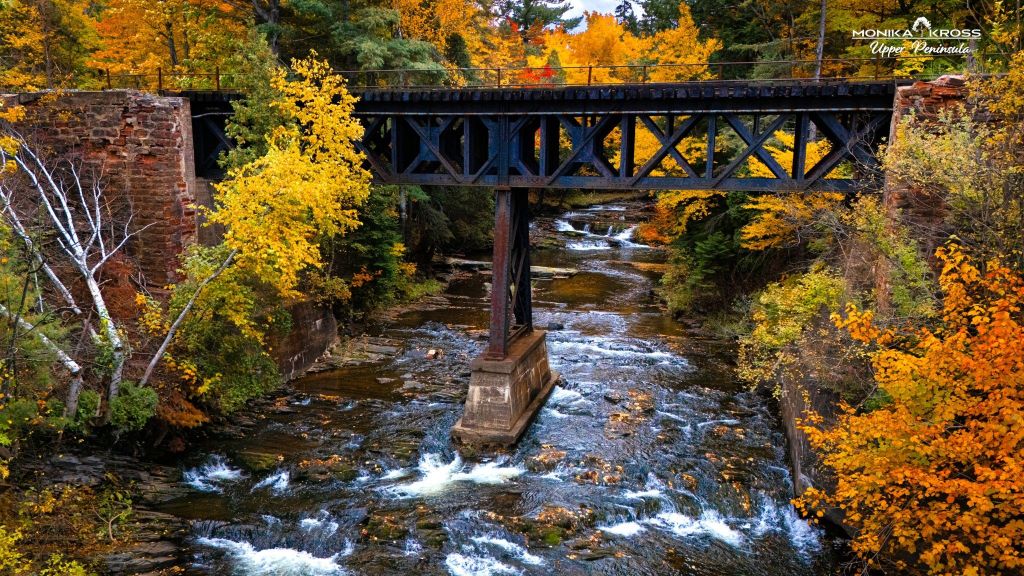
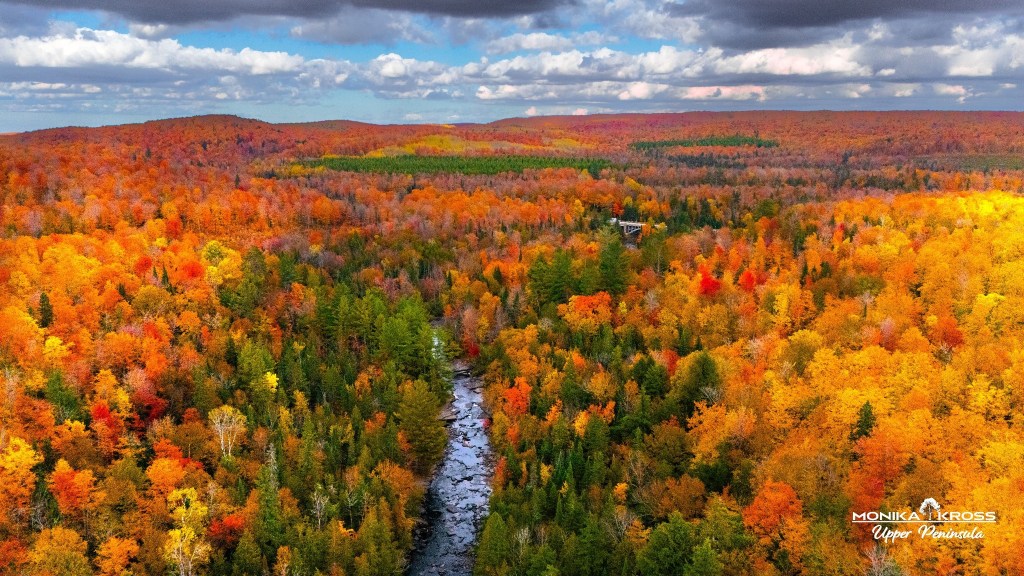
Monika regularly shares photos in our Facebook group but in case you haven’t visited, I wanted to share a couple here. About the photo above she writes:
I saw this out of the corner of my eye last August and gasped! Since then, I’ve been determined to get the shot but being 3 hours from home, I chose to wait until my autumn color tour. I’m as pleased as punch about it as it was a sketchy, tree filled drone flight in but I HAD to get the waterfalls in back and in front of the train trestle.
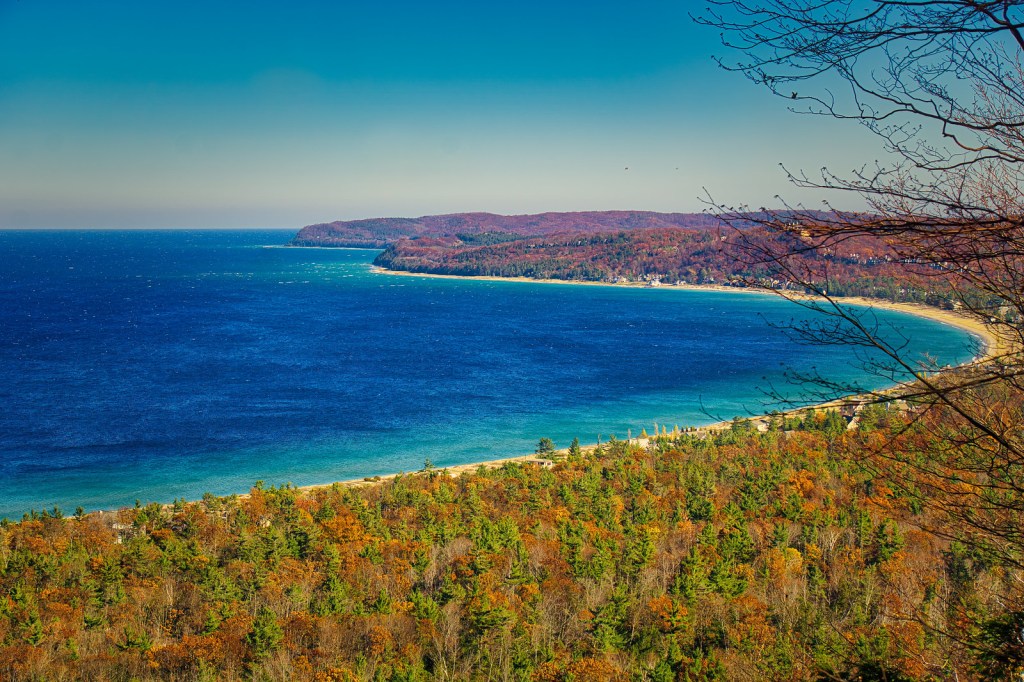
Every time I see this view of the Sleeping Bear shoreline, I think about what might have happened if Senator Phillip Hart & countless others hadn’t fought as hard and as long to protect this globally unique treasure. Almost anywhere else in Michigan or America with this mix of clear water & sandy shoreline is lined with the homes of the wealthy. Although the same trend was overtaking Sleeping Bear’s Lake Michigan shoreline, 54 years ago today preservation was victorious and the Sleeping Bear Dunes National Lakeshore became the third US National Lakeshore:
Beginning in 1919 a small portion of what is now the national lakeshore was set aside as a state park. The idea of a national park in northwestern Michigan did not surface until the National Park Service’s Great Lakes Shoreline Survey visited the area in 1958. Between 1959 and 1970 there was a continuous and controversial effort in Congress to create a park unit around the Sleeping Bear Dune. The legislative leader of the Sleeping Bear park proposal was United States. The senator’s persistence and patience in the end led to the creation of Sleeping Bear Dunes National Lakeshore on October 21, 1970.
There were hopes that Comet C/2023 A3 Tsuchinshan–ATLAS aka Comet A3 would be the comet of the century. While it is not quite that, it does appear that it will be visible for the next couple of weeks just after sunset, even to the naked eye! The good folks at EarthSky offer a helpful checklist to spot Comet A3:
Be sure you’re looking at the correct direction and time. Comet A3 will be visible low in the west after sunset beginning around October 14.
You need a dark, unobstructed sky. Start looking when the sky is dark, but close to sunrise or sunset. Make sure there aren’t hills, trees or buildings blocking your view.
If you can’t see the comet with your eye, try your phone. Most cell phone cameras provide a night or low-light mode. But capturing an image of the comet will require that you hold the camera firmly – or lean against a fixed object like a tree – to avoid shaky or blurred image.
AFTER you’ve located the comet, use binoculars or your eyes to sweep in that area in the sky.
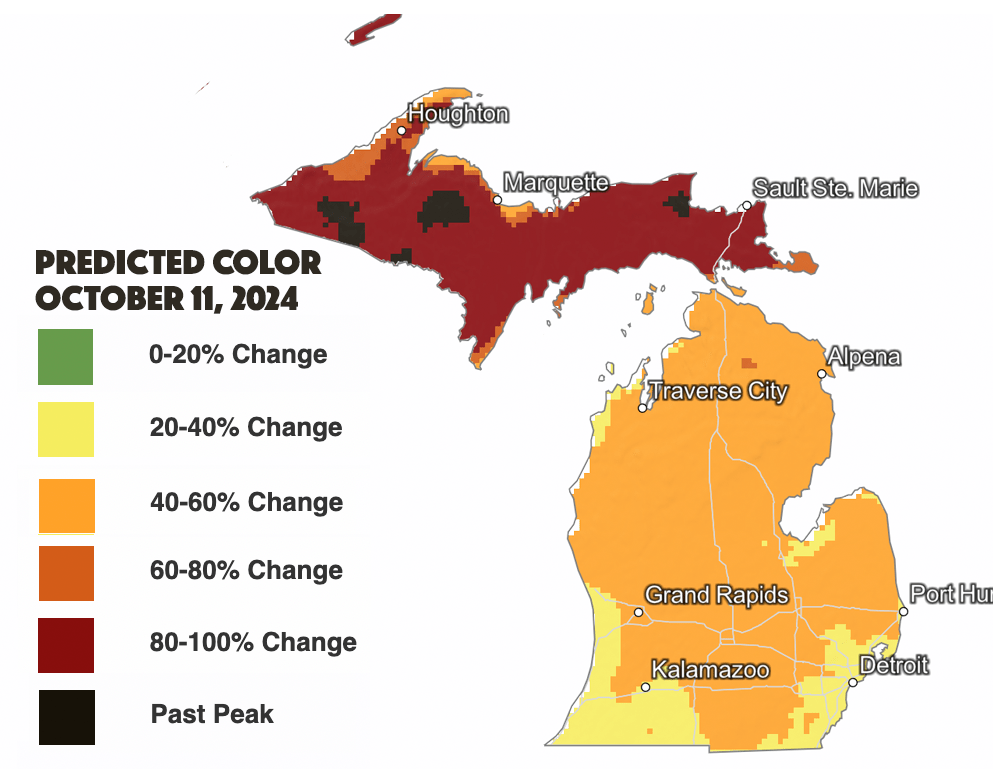
Pure Michigan’s Fall Color Forecast for October 11 (see below) shows that the Upper Peninsula will be at or passing peak this weekend while most of the Lower Peninsula will be in the 20-60% range. Remember that leaf color can vary significantly even locally, and in addition to producing different colors when they turn, trees change at different times. Typical patterns have more color change the further you are from the Great Lakes. You can see this in the graphic below where much of the UP’s Lake Superior shore hasn’t hit peak yet.
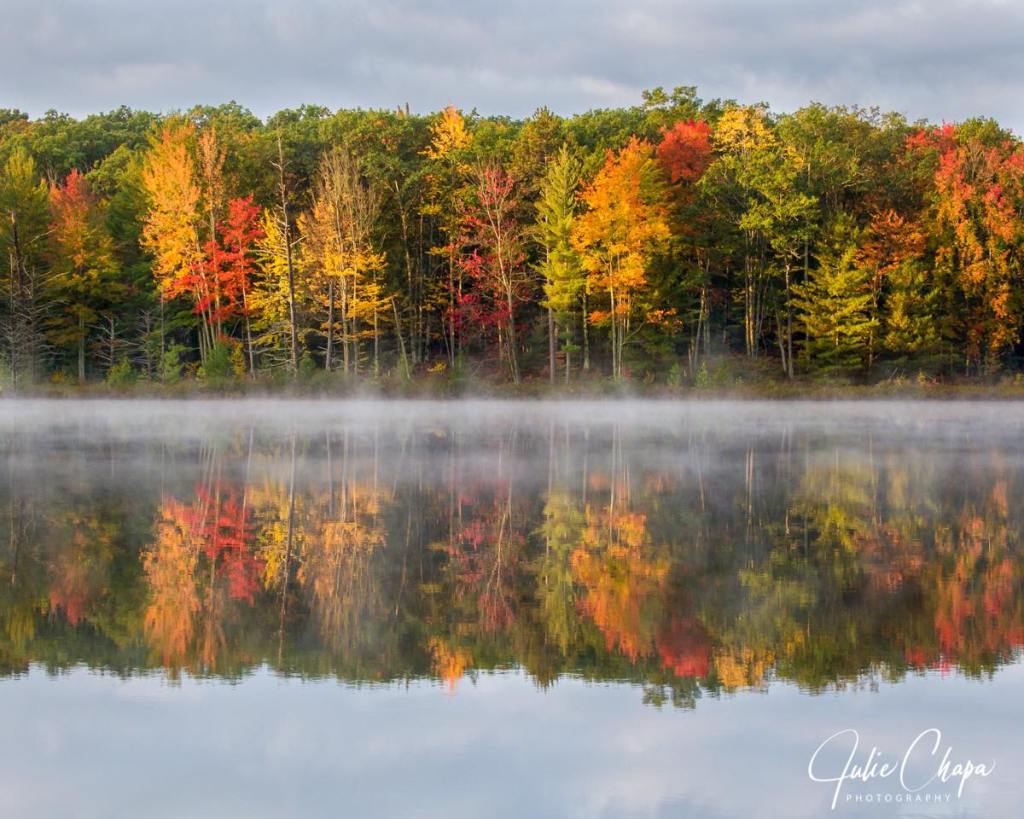
Julie shares the story behind this gorgeous shot: Luckily I got up early this particular morning and the water was like glass! I was able to catch this awesome autumn reflection shot at Mirror Lake in the village of Fife Lake, Michigan. The nice mist coming off the water was definitely a bonus making it a truly serene and beautiful experience.
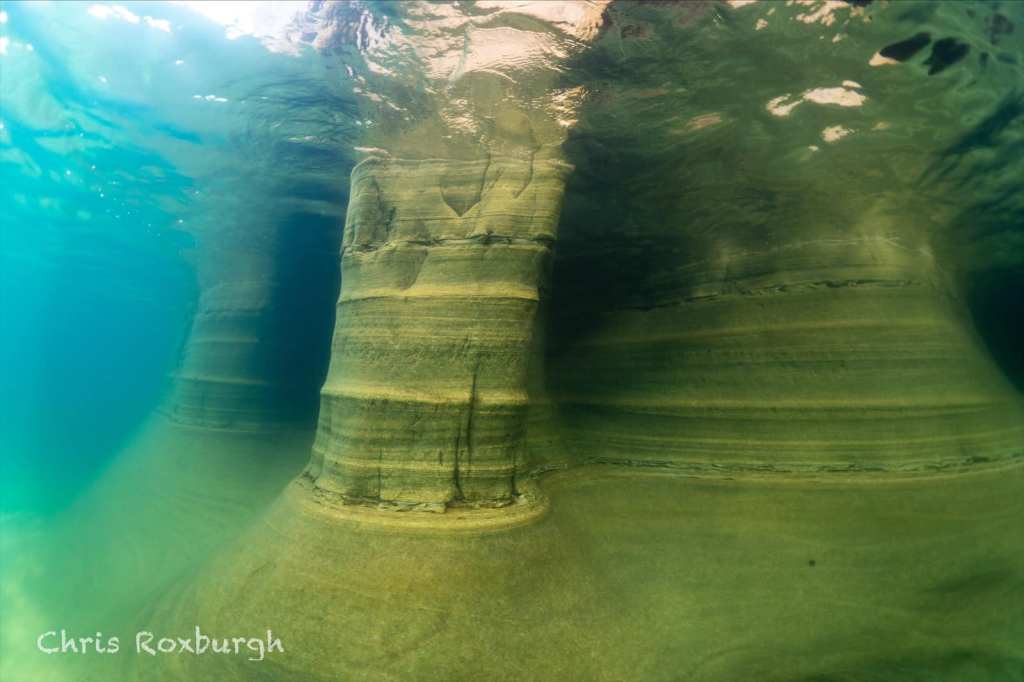
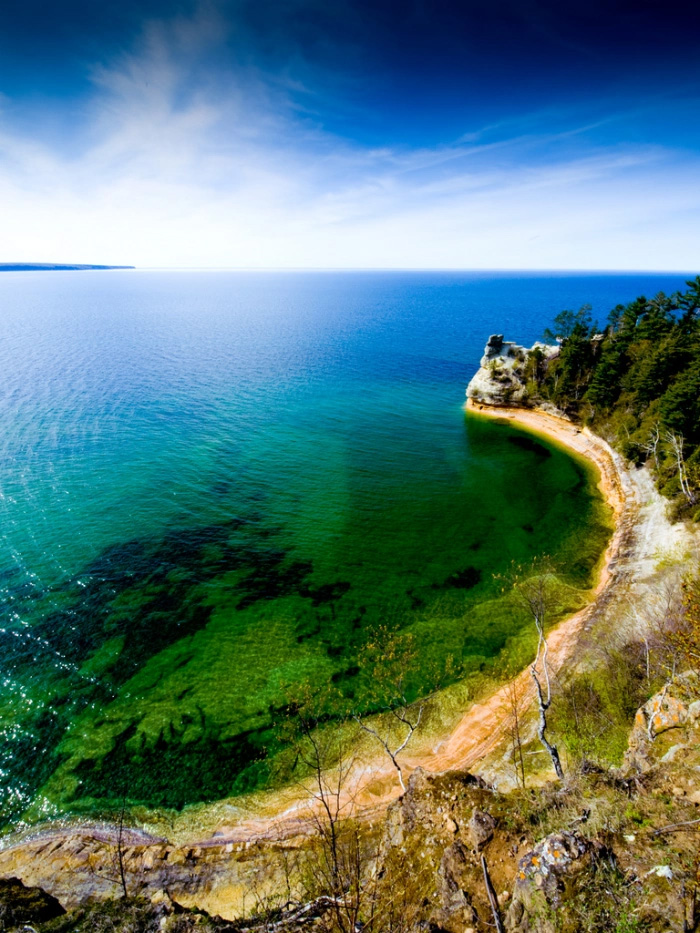
Michigan in Pictures regular Chris Roxburgh is one of my absolute favorite follows on Facebook. It seems like every week all year round he’s under the water showing me something I’ve never seen or a new look at an old friend. Miner’s Castle in the Pictured Rocks National Lakeshore is for sure one of those old friends. What I didn’t realize until today is that the millions of years old sandstone underneath the surface of Lake Superior may be even cooler than what’s above the water!!
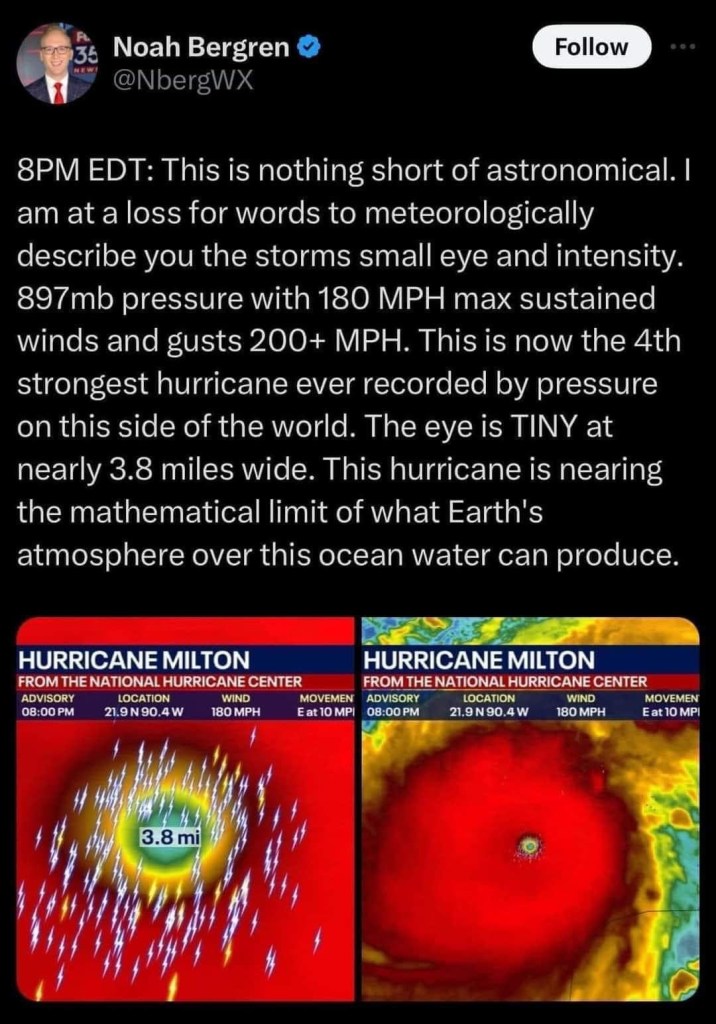
8PM EDT: This is nothing short of astronomical. I am at a loss for words to meteorologically describe you the storms small eye and intensity. 897mb pressure with 180 MPH max sustained winds and gusts 200+ MPH. This is now the 4th strongest hurricane ever recorded by pressure on this side of the world. The eye is TINY at nearly 3.8 miles wide. This hurricane is nearing the mathematical limit of what Earth’s atmosphere over this ocean water can produce.-Orlando Meteorologist Noah Bergren
The phrase “nearing the mathematical limit of what Earth’s atmosphere over this ocean water can produce” is one of the most terrifying I have ever read, especially when it directly follows Hurricane Helene that killed over 200 people and wrought devastation even in the mountains. Could this be the hurricane cycle that wakes people up to the reality of a changed climate or will we keep acting like it’s normal for hurricanes to wipe mountain towns off the map? Time will certainly tell.
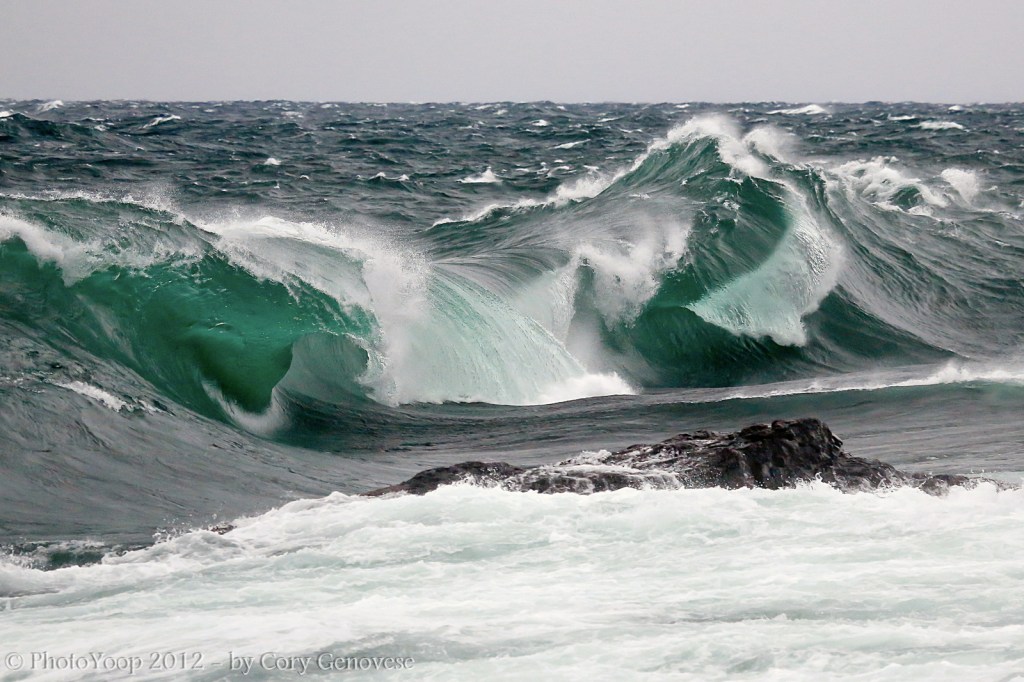
While it’s too early to forecast the impact of Milton on Michigan, Hurricane Sandy in 2012 produced the second highest wave height ever on Lake Michigan of 21.7 feet – click for all kinds of Lake Michigan Hurricane Sandy weather data from the NWS. Cory took this at Sugar Loaf just outside of Marquette way back in November of 2012 in the aftermath of Hurricane Sandy. See more in his Portfolio gallery on Flickr.
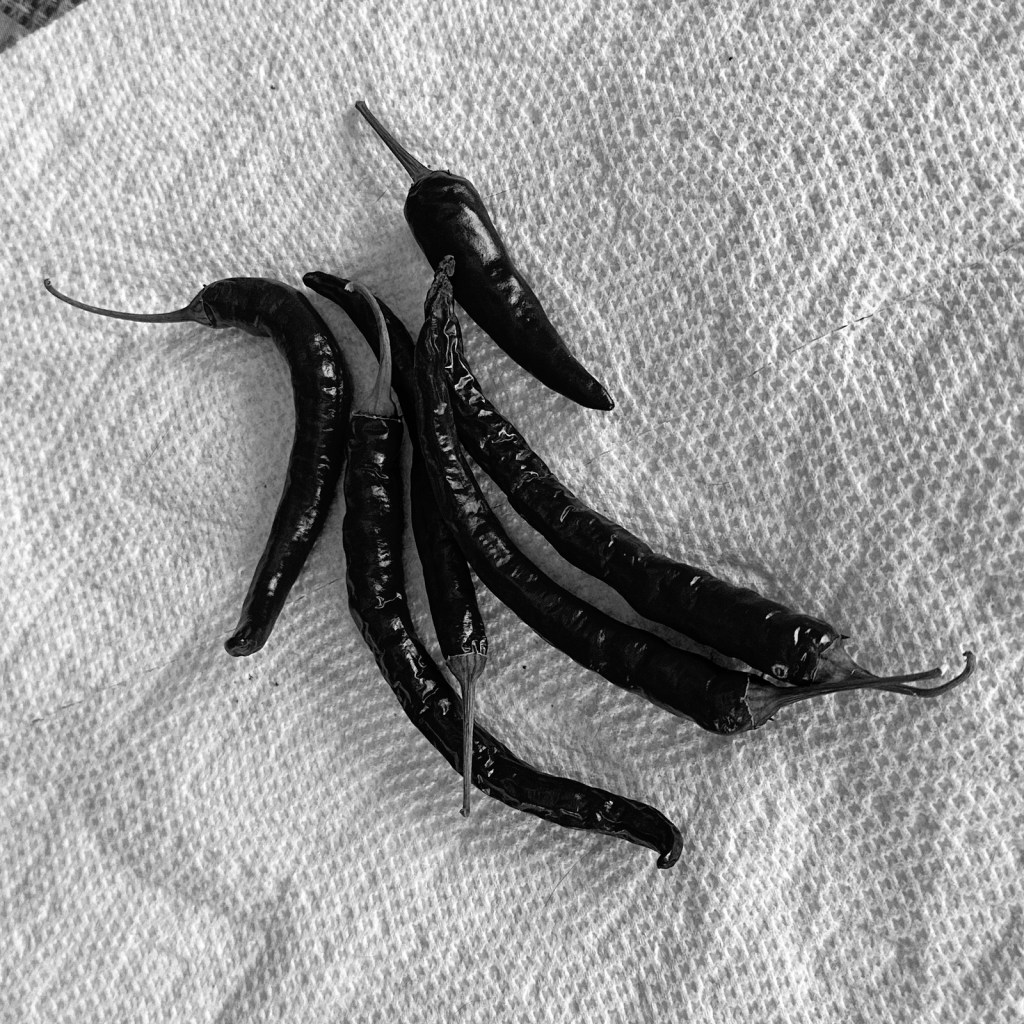
MSU shares that Michigan has over 1500 commercial farms growing peppers, which are packed with Vitamins A & C! Head over to MSU Extension for tips on storing & cooking peppers and down to your local farm market to buy them!
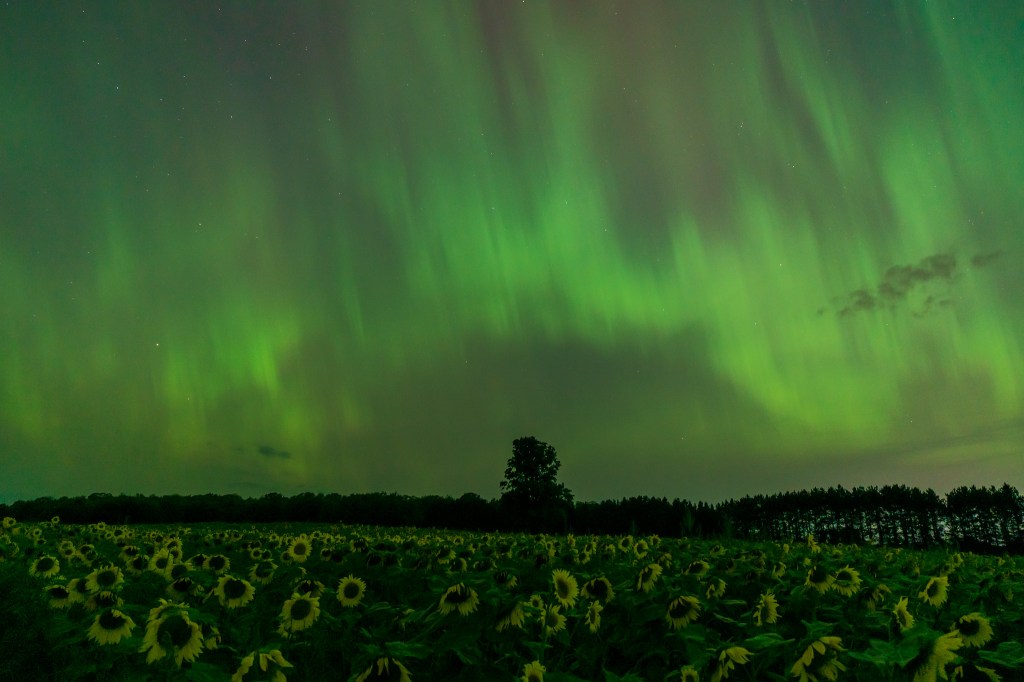
The NOAA/NWS Space Weather Prediction Center has issued a G3 (Strong) Geomagnetic Storm Watch for today through Sunday due to a pair of coronal mass ejections that are anticipated to arrive over the course of the next three days. This means that Northern Lights are VERY possible over the weekend!!
… “the comet of the century.” They say it will outshine everything but the Moon in the night sky and that it will stretch its tail over a huge portion of the sky. In that case, people around the world would be able to see the comet without trying at all. On the other hand, some people, like astronomer Dr. Zdeněk Sekanina, have predicted that the comet will break apart around the closest point in its orbit to the Sun, or “perihelion.” Comet Tsuchinshan-Atlas shows no clear signs of fragmenting right now, but that could always change.
…During late September and the first few days of October, you can find Comet Tsuchinshan-Atlas in the constellation Sextans. Look to the east, where the comet will rise about an hour before the Sun if you’re in the Northern Hemisphere. If you’re in a Southern Hemisphere, the comet will rise a bit earlier and be easier to see.
For most of early October, Tsuchinshan-Atlas will be too close to the Sun to be easily visible. Then, starting around Oct. 10 — if all goes well — the comet should be visible after sunset near the horizon in the west. With every passing day, Tsuchinshan-Atlas will start the evening higher in the sky and be easier to spot, unless it gets too dim.
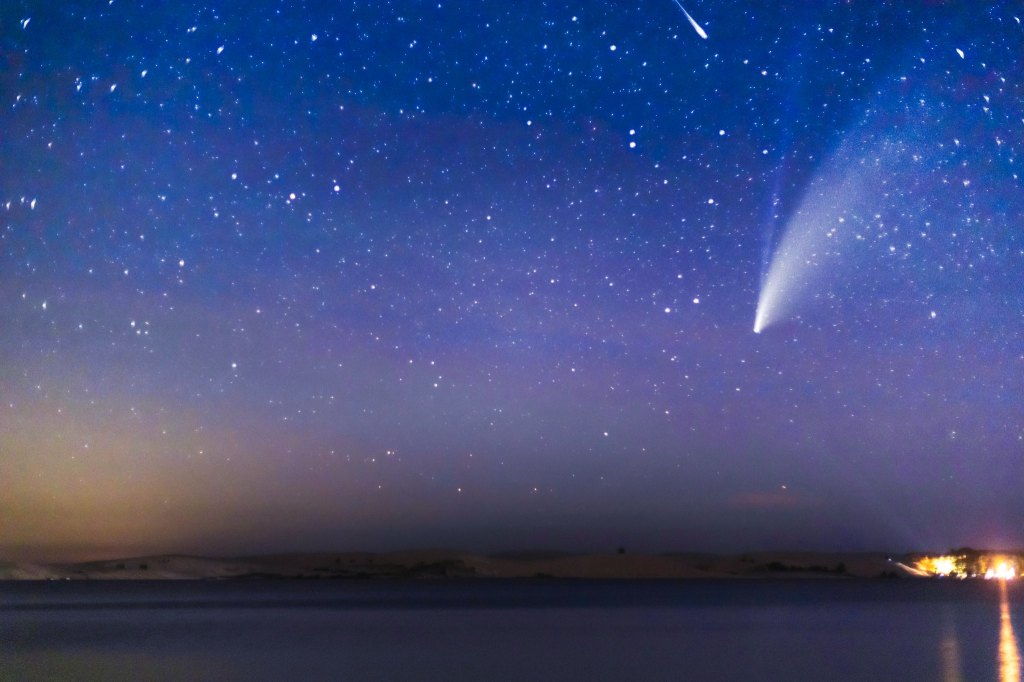
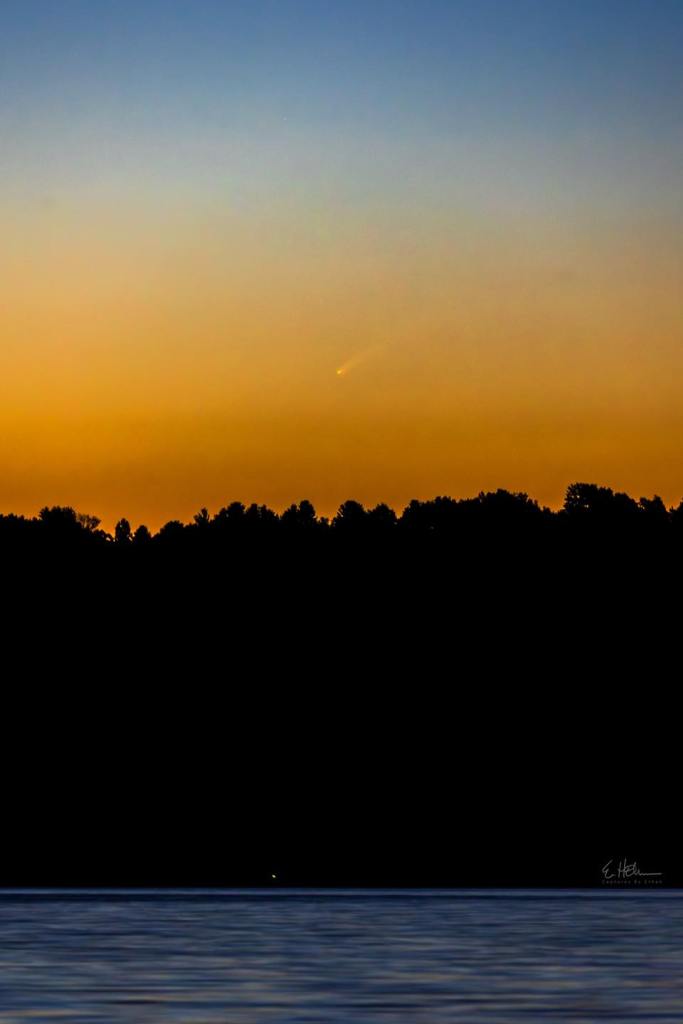
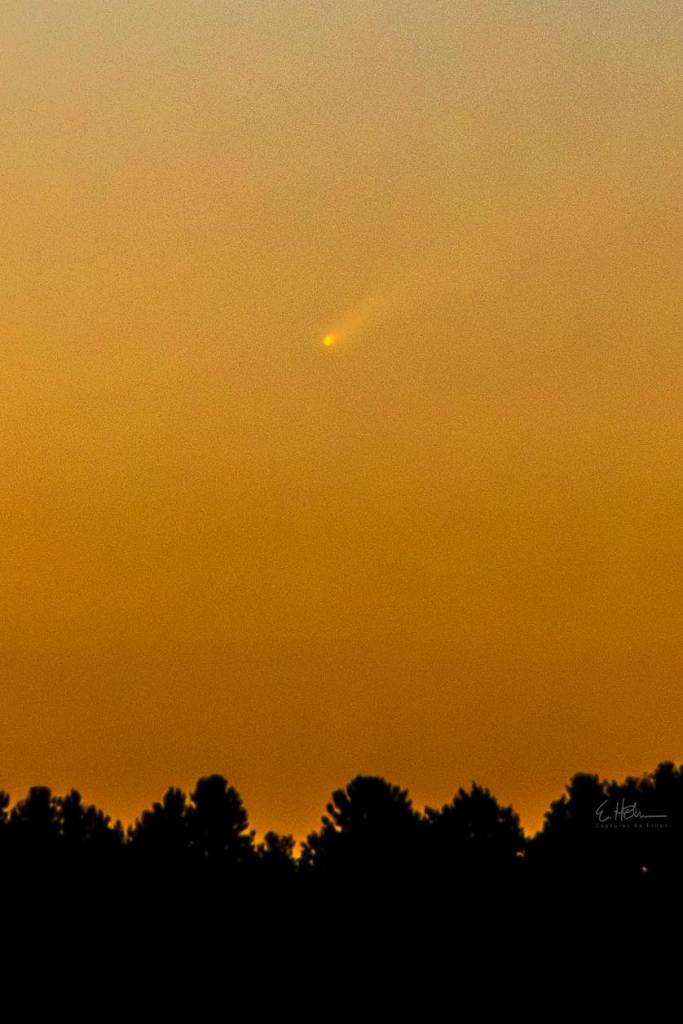
Ethan shares that he captures this sweet shot of Comet Tsuchinshan-ATLAS rising over Lake Leelanau early morning on Sunday. For more follow him on Facebook. View & purchase his work at capturesbyethan.com.



 Michigan in Pictures