Pothole Proposal

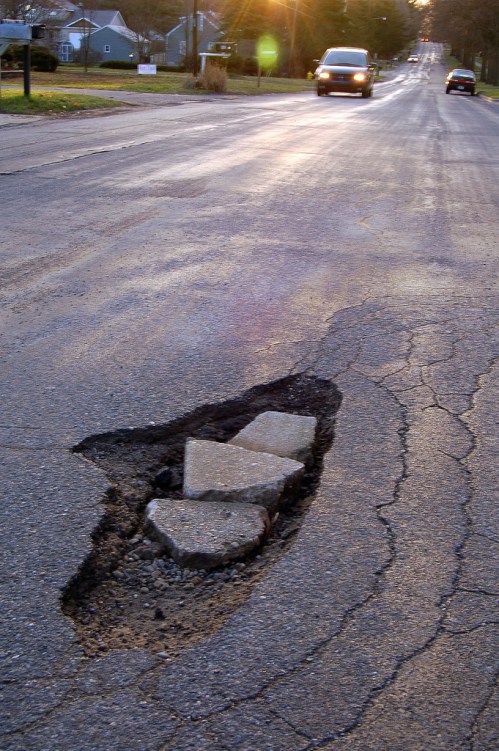
Beyotch

Beyotch, photo by Daniel E. Johnson

Ah Spring, when a young Michigander’s fancy turns to … potholes. They are on the ballot across the state today, but if you’re anything like me, whether or not Michigan’s Proposal 1 will help fix our crumbling roads is anything but clear.

One of my favorite sites is Ballotopedia, a nonpartisan website that provides accurate and objective information about politics at the local, state, and federal level. Their entry for the Michigan Sales Tax Increase for Transportation Amendment (Proposal 1) summarizes the numbers:

Proposal 1 is estimated to cost households, on average, between $477 and $545 in additional taxes per year. Households eligible for the Earned Income Tax Credit would save between $24 and $69 in taxes per year. The costs to households is contingent upon household incomes, future fuel prices and consumer choices, with those driving more or owning more cars paying more. The condition of Michigan’s transportation infrastructure costs motorists, on average, $539 to $686 per year and, according to TRIP, upwards of $1,600 in metro areas.

Read on for a whole lot more including the pro and con arguments, supporters and detractors and assessments of the truth in ad claims about the measure. A couple more resources are Bridge Magazine’s summary of Proposal 1 and Jack Lessenberry’s take on the issue from Michigan Radio that says that although voters he spoke with believe that our roads are horrible and we need to spend more:

They just do not trust their government. Several people asked, “If we vote for this, how do we know they won’t just steal the money and use it for something else?’

Many of them remember, or have heard about the promises made when the original Michigan lottery was passed in the early 1970s. The voters were told that the profits would go for education. That was a key factor in getting voters to approve legalized gambling.

But while the lottery proceeds did indeed go to education, the lawmakers took away the money they had been spending on education and used it for other things. That still rankles people, some of whom weren’t even alive at the time.

View Daniel’s photo bigger and click for lots more of his Grand Rapids photos.
The Great Michigan Earthquake of 2015

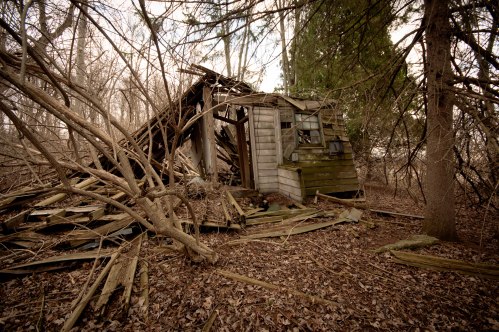
Its the Strt of the Breakdown

It’s the Start of the Breakdown, photo by Cherie

If I had a photo of the aftermath of Saturday’s 4.2 magnitude earthquake centered near Kalamazoo available to me,  I’d post it here. Since I don’t, here’s the kind of damage you wouldn’t see. mLive offered some facts about Michigan earthquakes, saying (in part):

When a 4.2 earthquake struck Michigan on Saturday, May 2, the common reaction was: Earthquake? In Michigan? Seriously?

The surprise was not misplaced. Earthquakes in Michigan are rare and tend to be minor. In fact, Saturday’s quake was the state’s most powerful earthquake since 1947.

The quake occurred about 12:20 p.m., with an epicenter about five miles south of Galesburg in Kalamazoo County.

Michigan has “very small probability of experiencing damaging earth­quake effects,” the Federal Emergency Management Agency says.

In fact, most tremors felt in Michigan originate elsewhere.

Michigan normally does not have earthquakes, the state’s emergency preparedness web page says. “However, we can suffer effects from earthquakes in neighboring states that have a higher likelihood of them.”

Michigan’s strongest earthquake on record occurred on Aug. 9, 1947, about 35 miles from the epicenter of Saturday’s quake.

The 1947 had a magnitude of 4.6 and was centered near Coldwater. It damaged chimneys and cracked plaster over a large area of south-central Michigan and was felt as far away as Muskegon and Saginaw and parts of Illinois, Indiana, and Wisconsin.

Read on for some more facts about Michigan earthquakes.

View Cherie’s photo background big and see more in her slideshow.

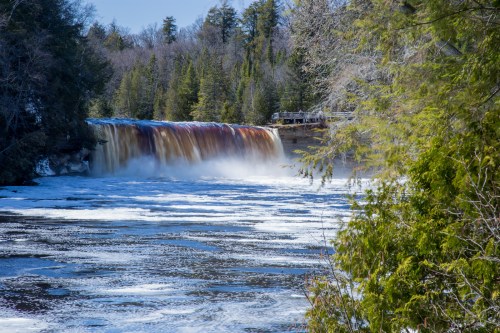
Spring at Tahquamenon Falls

Tahquamenon Falls

Tahquamenon Falls, photo by ptrefftz

Hey beautiful!

View the photo background bigtacular and see more including some beautiful night sky photos in ptrefftz’s slideshow.

More Spring wallpaper on Michigan in Pictures.

Welcome to May

Untitled

Untitled, photo by Amy Holley

Hope your May brings you promise and new growth.

Amy took this photo on May 1st last year. View it background big and see more wide-ranging goodness in her Outdoors slideshow.

Tulips, Tulips, Tulips

Tulips, Tulips, Tulips

Tulips, Tulips, Tulips, photo by Dawn Williams

Holland’s annual Tulip Time starts this Saturday (May 2) and continues through May 9th. The annual celebration features parades, music, displays of Dutch Heritage and of course tulips, 4.5 million of them!

Dawn took this photo last year. See it background bigtacular on Flickr and check out more of her Tulip Time photos.

More tulips & Tulip Time and more spring wallpaper on Michigan in Pictures.

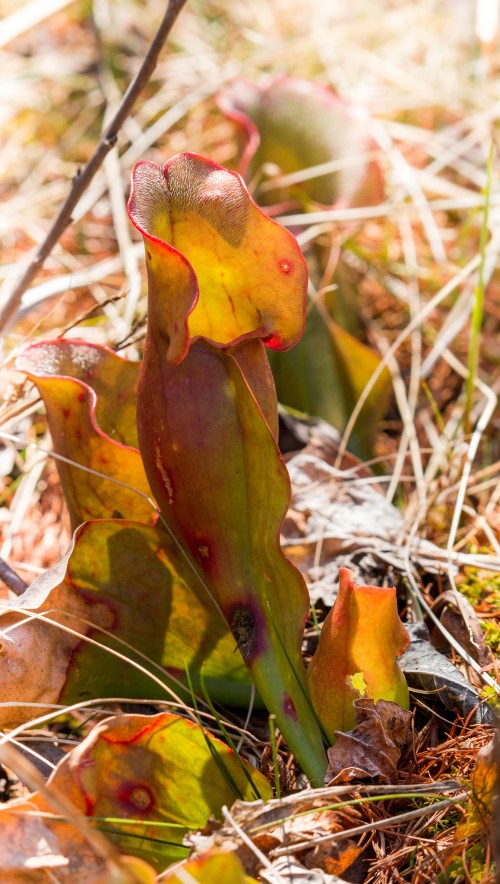
Perils of Michigan: The Pitcher Plant

Pitcher Plant

Pitcher Plant, photo by Bill Dolak

With the ice now gone from the Great Lakes, Michigan was at Terror Level Burnt Orange until Bill Dolak went and took today’s photo. We’ll take the level back up to Hot Pink (at least for insects). The Michigan DNR page on the Pitcher Plant (Sarracenia purpurea) explains that:

This unusual plant, usually found in bogs, is carnivorous, feeding on insects that are trapped in its bulbous pitcher like leaves. Although this carnivorous plant is a common inhabitant of acidic bogs, it also is found in fens. The highly modified leaves are covered with downwardpointing hairs on the inside which keep insects from escaping. Insects that enter the leaf eventually drown, providing the pitcher plants with important nutrients. The tiny sundews also shown in this poster are also carnivorous and trap insects on the surface of their sticky leaves.

Read more about Michigan’s carnivorous plants from the North Oakland Headwaters Land Conservancy.

Bill took this photo in southwest Michigan’s Barry County. View it bigger on Flickr and see more in his Flowers slideshow.

More perils of Michigan on Michigan in Pictures!

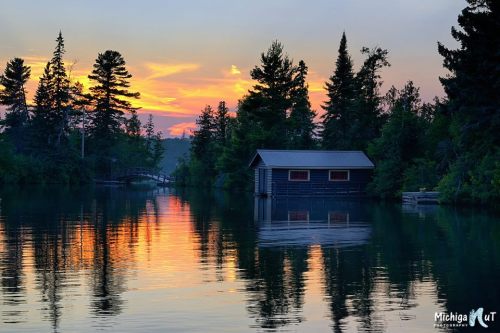
Copper Harbor Sunset

Copper Harbor Sunset by John McCormick

Copper Harbor Sunset, photo by John McCormick

John says this is one of his favorite shots from last year. Click to view it bigger, follow him on Facebook and visit MichiganNutPhotography.com to view and purchase this and other pics.

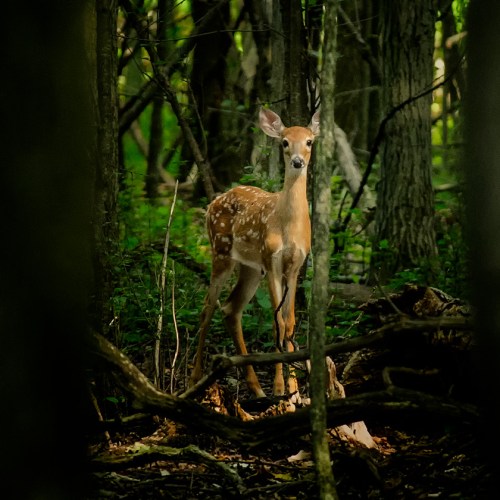
Almost Too Curious: Fawn Facts

Almost Too Curious

Almost Too Curious, photo by MichaelinA2

In honor of this great shot of a curious Whitetail fawn, here are some fawn facts gathered from the the UM Animal Diversity Web and the Michigan DNR and two hunting sites, The Whitetail Deer and Tinks.

  • The whitetail fawn loses its spots by the end of October of the same year it was born, or within 3 to 4 months after birth.
  • As the spots disappear, the fawn’s coat also changes from its reddish color to a grayish winter coat. The buck fawn’s face grows a bit darker in color but the belly remains white.
  • Deer tend to live in female-led family groups of up to 25 deer and may live to ten years or more.
  • When playing together, fawn games are suggestive of children’s games like tag. Mock fighting, aggressive postures, and scent marking helps fawns refine social behaviors.
  • Young males leave their mother after one year, but young females usually stay with their mother for two years.
  • The area where the fawn is born normally becomes its adult habitat.
  • Male fawns grow pedicles (the attachment point for antlers) that are typically about one inch in length.
  • Fawns that live past the first week have a good chance of surviving to adulthood.

Check it out bigger and see more in Michael’s 2013 Animals slideshow.

More nature on Michigan in Pictures.

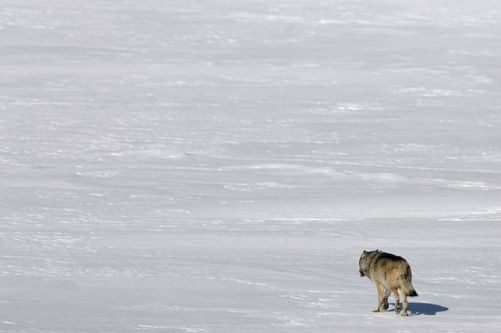
Wolves almost gone from Isle Royale

Isle Royale Wolf

The Urge, photo by isleroyalewolf.org

Last weekend the Freep reported that the delicate biosphere that characterized Isle Royale National Park is about to fall apart. The wolf count is down from nine last year to only three, and Michigan Tech ecologist John Vucetich says he wouldn’t be surprised if none remain next winter.

“What’s really important here is not the presence of wolves, per se,” Vucetich said. “But the wolves need to be able to perform their ecological function — predation. Predation has been essentially nil for the past four years now.”

That’s led to a 22% increase in the moose population for each of the past four years, he said, taking the island population from 500 to 1,200 moose. An individual moose consumes up to 40 pounds of vegetation a day.

“One of the most basic lessons we know in ecology, wherever creatures like moose live, you have to have a top predator,” he said. “If you don’t, the herbivore can cause a great deal of harm to the vegetation.”

… Vucetich and his colleague at Michigan Tech, Rolf Peterson, both support a “genetic rescue” of the island’s wolf population — bringing in wolves from elsewhere to bolster island wolves and help facilitate breeding. The U.S. Forest Service is studying the concept, but that process may take years. If the remaining wolf population doesn’t survive, and the Forest Service ultimately approves of the plan, it may mean creating a whole new pack on the island.

I think that this poses very interesting questions about our role in the ecosystems we seek to preserve. Are we to watch what happens and not interfere like a kid watching an ant farm or a Star Fleet team, or do we accept the responsibility of our decision to preserve and seek to maintain the natural balances and populations? As our climate changes, we will no doubt be called to make these decisions more and more frequently as flora and fauna lose the ability to survive in the places we have set aside for them.

This photo was the first in a series of 40 shared last fall in “Thinking Like an Island” from the Wolves & Moose of Isle Royale. They wrote:

THE URGE. Walk 40 miles in two days searching for a lover that may not even exist. Return home to parents and siblings the next day. The life of a dispersing wolf, unsatisfied.

It’s a great series featuring images by George Desort, Rolf Peterson, John Vucetich, and Brian Rajdl along with text by John Vucetich and Michael Paul Nelson. Click to see this photo bigger on Facebook and then use your left arrow to page through them.

Definitely visit isleroyalewolf.org for lots more about the predator/prey balance of one of Michigan’s most fascinating places.

Testament of a Fisherman

Testament of a Fisherman by Aaron Peterson

Testament of a Fisherman, photo by Aaron Peterson Photography

My friend Aaron Peterson shared this on Facebook last night. It’s built around the words of one my very favorite writers, Michigander John Voelker (aka Robert Traver). I hope you enjoy it – Aaron writes:

Please enjoy this new video I did for Travel Marquette.

In 1964 Ishpeming native John Voelker published his essay “Testament of a Fisherman” summarizing in just 200 words the power of rivers and the solace one finds in trout fishing. When I came to Marquette in 2001 I didn’t have much, but I had a fly rod and a library card. In the library I found the words of John Voelker, and on the rivers of the Upper Peninsula I found a purpose. To be able to do this project and adapt Voelker’s words, with permission from his family, was very important to me on many different levels.

A lot has changed in the 50 years since he wrote this, but the health of our water, wild fish and time spent away from phones and crowds is more important than ever. Enjoy, share, then get the hell off your computer and get in the woods. Maybe to Marquette, because they paid the bill for this inspiration smile emoticon Thanks to Fly Fishing Michigan’s U.P. Nick from Ore Dock Brewing Company and all those who fight for the sanctity of our water. –AP

(the video is beautiful – view it full screen if you can!)

View Aaron’s photo bigger on Facebook and follow his page for the latest. Definitely check out his website too. He has some crazy photos of the U.P.’s incredible adventure offerings!