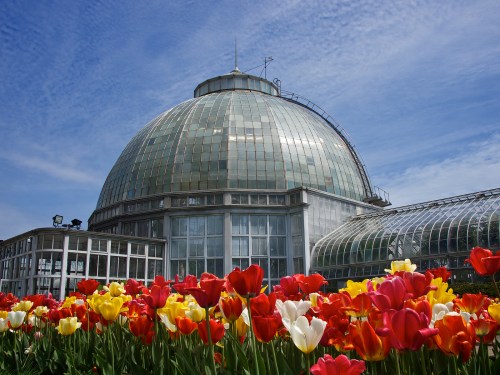
May Tulips at Belle Isle Conservatory

Belle Isle Conservatory - Detroit, Michigan

Belle Isle Conservatory – Detroit, Michigan, photo by David Marvin

Dan Austin of Historic Detroit has an excellent article on the Anna Scripps Whitcomb Conservatory on Belle Isle that begins:

If Belle Isle is Detroit’s crown, then the Anna Scripps Whitcomb Conservatory is its brightest emerald, full of brilliant green ferns, palms and cacti and plant life from all over the world.

The conservatory, opened in the center of the island on Aug. 18, 1904, the same day as its next door neighbor, the Belle Isle Aquarium. Both were designed by Albert Kahn, who for the conservatory turned to Thomas Jefferson’s Monticello for inspiration. It sits on 13 acres and features a lily pond on its north side and is fronted by formal perennial gardens on the west. These gardens are home to theLevi L. Barbour Memorial Fountain. For the first 51 years of its existence, the building was known as simply the Conservatory or the Horticulture Building. Today, the Anna Scripps Whitcomb Conservatory is the oldest, continually operating conservatory in the United States.

The building covers about an acre and has five areas, each housing a different climate, and features a north wing and a south wing and a 100,600 cubic feet dome 85 feet high to accommodate soaring palms and other tropical plants. The north wing houses hundreds of cacti and desert plants, and just beyond that is a room packed with ferns from floor to ceiling. The south is home to hundreds of tropical plants and the Children’s Christian Temperance Fountain. The collection also includes perennial gardens and displays of annuals. The show house, remodeled in 1980, features a continuous display of blooming plants.

Definitely read on at Historic Detroit on for how the Conservatory got its name and became home to the largest municipally owned orchid collection in the country. There’s also a great historic photo gallery.

Here’s the official site for Belle Isle Conservatory. The hours are Wednesday-Sunday, 10 AM – 5 PM and the Belle Isle Aquarium is open Saturdays and Sundays as well.

View David’s photo background bigtacular and see more in his slideshow.

More spring wallpaper on Michigan in Pictures.
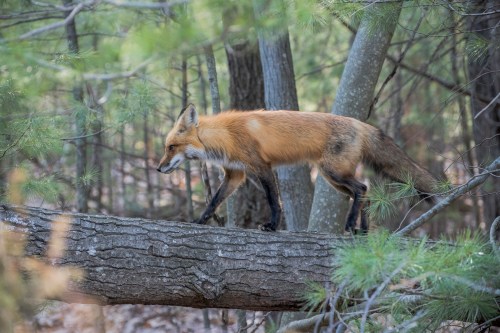
 

Foxy Friday

Fox Crossing

Fox Crossing, photo by Mark Miller

What an incredible catch by Mark!

View his photo bigger and see more of this little lady in his slideshow.

PS: More about red fox in Michigan from Michigan in Pictures.

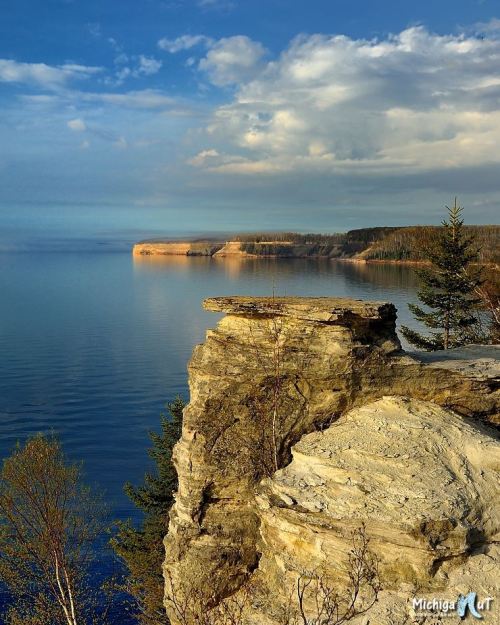
Tranquility at Pictured Rocks

Tranquility at Pictured Rocks

Tranquility, photo by Michigan Nut Photography

John McCormick aka Michigan Nut shared this gorgeous shot from the Pictured Rocks National Lakeshore showing Lake Superior at its calmest.

View John’s photo bigger on Facebook, view & purchase photos at michigannutphotography.com and definitely follow him on Facebook for many more photos of the Great Lakes State.

PS: John’s Pictured Rocks gallery will knock your socks off!

Old Mission Orchard in Bloom

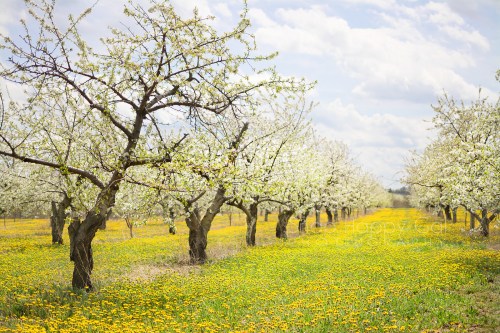
Old Mission Orchard

Old Mission Orchard, photo by Heather Higham

The cherry blossoms are out on northwest Michigan’s Old Mission Peninsula. A little over 100 years ago, this annual occurrence gave birth to Traverse City’s National Cherry Festival. The Cherry Festival’s history page shares that sometime around 1910, cherry growers in the Grand Traverse area began to hold informal “blessing of the blossoms” ceremonies each year at blossom time in May. The TC Record-Eagle picks up the story:

Something had to be done to attract tourists to the Grand Traverse area, local resident and community leader Jay P. Smith declared in 1925.

Henry Ford had introduced a new automobile that allowed people to travel long distances with ease, and Hannah, Lay & Co. spurred a growing business atmosphere here, but tourism still lagged. So Smith created the Blessing of the Blossoms festival.

For one day in May area residents and visitors traveled out to the Old Mission Peninsula to view fields of cherry blossoms from the vantage point of two towers, then flocked to a downtown parade that moved east on Front Street from Elmwood Avenue to Railroad Avenue.

“This was kind of a big deal,” said Gary Kaberle, a former National Cherry Festival president. “People really liked this.”

But Smith and his committee quickly realized that a May festival meant children weren’t out of school and tourists were less likely to have time off work, so they moved the festival to July to coincide with the cherry harvest.

You can read on for more about the evolution of the Cherry Festival and if you want to attend, the dates are July 4-11, 2015 and you can get all the details at cherryfestival.org.

Heather writes that she was looking into an orchard from the edges, surrounded by flowers and bees when she took this picture. View her photo bigger on Flickr, see more in her Old Mission Peninsula slideshow and definitely follow her at Snap Happy Gal Photography on Facebook.

PS: If you want to learn about the early days of the Old Mission Peninsula, check out Rev. Peter Dougherty House on Old Mission having one heck of a yard sale from May 2007 on Michigan in Pictures.

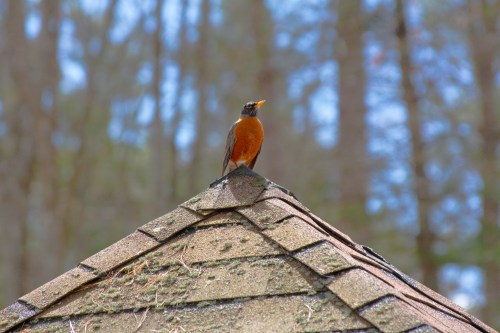
Perched Robin

Perched Robin

Perched Robin, photo by matt.swope

Top of the morning to you from Michigan’s state bird, the American robin!

View Matt’s photo background big and see more in his Northern Michigan slideshow.

More Michigan birds and more spring wallpaper on Michigan in Pictures.
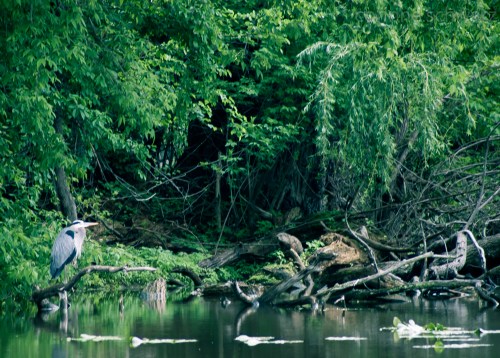
Best Friends in Nature: Heron & Beaver Edition

Heron & Beaver

Heron & Beaver, photo by Corinne Schwarz

Here’s a cool photo from May of 20111 that I never featured for some reason. That reason might have been so I could link to this article from the Birdwatchers General Store in Cape Cod about the symbiotic relationship between beavers & blue herons. It says in part:

It is thought that the Bay State’s famed naturalist, Henry David Thoreau, never saw a Great Blue Heron nest in Massachusetts. Why? It’s partly because there were no beavers living in MA during Hank’s lifetime. Way back in the 1700s, unregulated cutting eliminated the trees beavers needed for survival.

…Today, beavers are once again thriving in MA. That’s not only great news for anyone who enjoys seeing beavers, but it’s great news for Great Blue Herons as well.

I think we all know how beavers operate. They find a secluded stream, cut down a few trees and dam it up. The area behind the dam becomes flooded and turns into a beaver pond. Why do beavers need to go through all the work to build their very own pond? The beavers create a pond so they can have underwater access to their lodge, even when everything is frozen in the winter. However, the newly built pond often entraps large trees, which eventually drown and die. Dead trees growing out of the center of a pond may look eerie to us, but they are magnets to herons. The dead trees provide excellent platforms for the birds to build their nests on. In addition, the water prevents terrestrial predators from munching on the eggs and babies. Between the swampy setting, the dead trees, the bulky stick nests and the gangly herons, the whole scene looks a Gothic nursery, but the birds love it.

Read on for lots more, and for more about these two species, see Know Your Michigan Birds: Great Blue Heron and Castor canadensis, the American beaver on Michigan in Pictures.

View Corrine’s photo background bigtacular and see more in her Water Wheel slideshow.

More spring wallpaper and more “Best Friends in Nature” on Michigan in Pictures.

Happy Mother’s Day, Michigan Mommas

Mother and her ducklings

Mother and her ducklings, photo by Brent Looyenga

A very happy Mother’s Day to all the hardworking Michigan mommas out there!

View Brent’s photo background bigtacular and see more in his Misc slideshow.

PS: I guess this qualifies as another entry in the ever-expanding Michigan in Pictures Duckie Project.

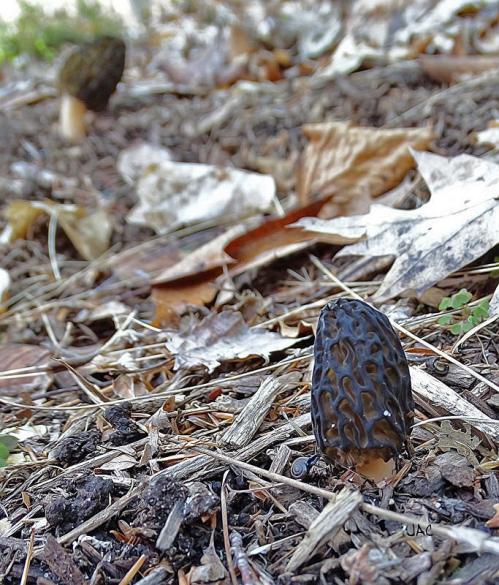
Finally Friday: Michigan Morel Edition

Finally Morels in Michigan

Finally, photo by Julie

Reports of morels are coming in from all across the state. They’ll be celebrating our delicious woodland friends this weekend (May 8-10) at the Mesick Mushroom Festival and next weekend (May 14-17) at the National Morel Mushroom Festival in Boyne City.

If you’re looking for Michigan morel photos and features, click that link for a ton from Michigan in Pictures. Happy hunting!!

Julie says these plus a few others will make a great topping for a ribeye! View the photo bigger and see more in her Spring/Summer slideshow.

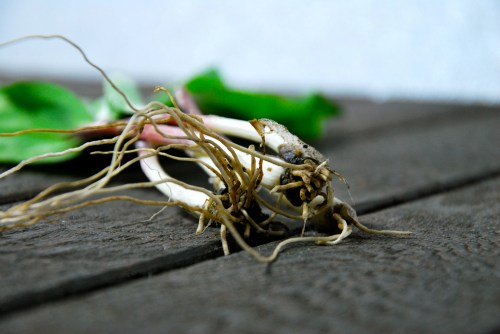
Ramps, Wild Leeks, Spring Onion, Allium tricoccum

Wild Leeks

Wild Leeks, photo by CherryCapitalFoods

Here’s some of a Wild Food Wednesday on Wild Leeks I wrote for eatdrinkTC.com. You often find these oniony treasures when you’re morel hunting. Leeks are in the woodse now, and more than one little bird has told me of morels popping around the state as well! 

Whether you know them as ramps, wild leeks, spring onions or by their scientific name of Allium tricoccum, ramps are a wild onion with a delicious & pungent garlicky flavor. Wild leeks are found from as far south as Alabama all the way up into Canada. To the south, they are more commonly known as ramps while in the north, wild leek is more common. Wikipedia’s page on Allium tricoccum says that “ramps” comes from the English word ramson, a common name of the European bear leek (Allium ursinum) that is related to our American species.

Regarding harvesting, Ramp-age at the Earthy Delights blog says:

Good ramps or wild leeks should have two or three whole bright green leaves with the small white bulb attached by a purplish stem. The leaves are generally about 6 inches long, although ramps tend to be harvested at a somewhat earlier stage than are wild leeks. Depending on where you get them, ramps or wild leeks may be still muddy from the field or all cleaned and trimmed. The key is that they be fresh. Yellowing or withering in the leaves is a sign that they have gone too long.

A papery wrapper leaf (and some dirt) may surround the bulb and should be pulled off as you would with scallions. Trim away any roots along with their little button attachment. The entire plant is now ready for eating.

Once ramps / wild leeks have been cleaned, store them in the refrigerator tightly wrapped to keep them from drying out (and to protect the rest of the contents of the fridge from the heady aroma). They should keep for a week or more, but use them as soon as possible after harvest.

Some wild leek facts & lore:

  • Leeks were prized by the ancient Greeks and Romans and were especially revered for their beneficial effect upon the throat. The Greek philosopher Aristotle credited the clear voice of the partridge to a diet of leeks, while the Roman emperor Nero supposedly ate leeks everyday to make his voice stronger. (World’s Healthiest Foods)
  • The name of Chicago originates from “Checagou” (Chick-Ah-Goo-Ah)means “wild onions” in the Potawatomi language. The area was so named because of the smell of rotting marshland and wild leeks that covered it. (Earthy Delights)
  • Wild leeks are high in Vitamins C and A, and are full of healthful minerals. And they have the same cholesterol-reducing capacity found in garlic and other members of this family. (Earthy Delights)
  • The entire plant is edible and leaves, especially when young, are delicious when sauteed. (my kitchen)

View this photo background bigtacular and see more in Cherry Capital Foods’ Spring Hollow Farms slideshow.

I’m especially happy to feature today’s photo because we buy incredible lettuce, greens and duck & quail eggs from Richard & Diana of Spring Hollow Farms of Buckley. If you see them at the Traverse City Farmer’s Market, be sure to buy a bag or two of their spring mix!

More Michigan food and more spring wallpaper on Michigan in Pictures.
Waterfall Wednesday: Lower Hungarian Falls

Lower Falls

Lower Falls, photo by eahackne

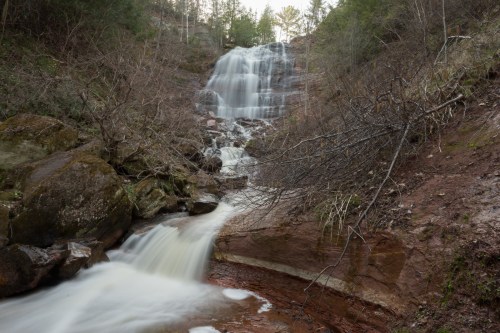
It’s Wednesday so let’s make friends with one of Michigan’s 200+ named waterfalls. GoWaterfalling.com’s page on Hungarian Falls says:

Just downstream of the middle falls is the lower falls. This is a 50 foot drop over sheer cliff face. This is a frustrating waterfall. In low water conditions, the water is spread so thinly across the cliff that it is not especially scenic. It is also hard to get a clear view of the falls. You can get to the top of the falls fairly easily, but cannot see a whole lot. Getting into the gorge for a better view is difficult, especially when the water is flowing, as the ground is likely to be wet and snow and ice may still be present. But when the water is high, this is one of the most impressive waterfalls in Michigan.

Just downstream of the lower falls a side stream falls into the gorge. This stream carries even less water than Dover Creek and probably only has a significant amount of water during the spring melt.

The falls are easy to reach. From Route 26 in Hubbel turn west onto 6th street. A dirt road forks off of 6th street to the left. Take this road. It climbs up pretty steeply. Take the first left that you can, and this will lead you to a small parking area. A trail follows the gorge upstream to the falls. The middle falls is the easiest to reach. There are trails on both sides of the gorge, and a bridge crosses the creek between the middle and upper falls. Another bridge crosses the creek well downstream of all the falls. There is no real trail to the lower falls.

View Eric’s photo bigger on Flickr and see more views of Hungarian Falls right here!

Lots more Michigan waterfalls on Michigan in Pictures.