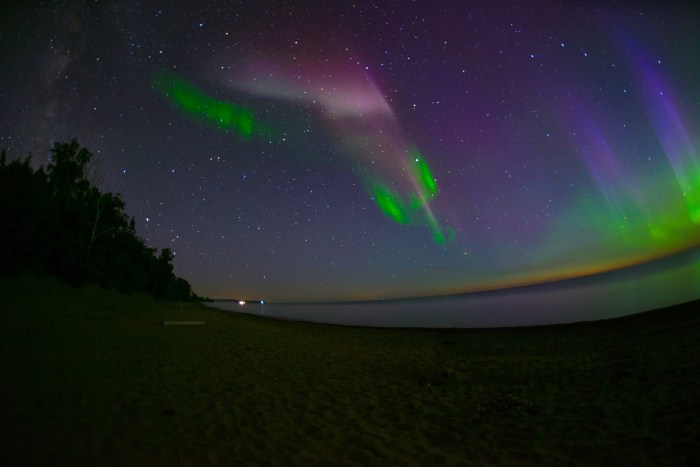
Northern Lights and a Proton Arc!

Milky Way, A Proton Arc, and the Northern Lights

The Milky Way, A Proton Arc, and the Northern Lights!, photo by Eric Hackney

Last night I got a couple of texts that the northern lights were out. By the time I got to the beach here in northern lower Michigan, they had died back to a soft arc on the horizon. Up on the Keweenaw however, they were pretty spectacular!

In addition to being spectacular, Eric’s photos introduced me to a new northern lights term, the mysterious proton arc or proton aurora. which NASA’s Astronomy Picture of the Day explains in this link filled post (picture is below):

What are auroras made out of? Triggered by solar activity, normal auroras are caused by collisions between fast-moving electrons and the oxygen and nitrogen in Earth’s upper atmosphere. The electrons come from the magnetosphere, the region of space controlled by Earth’s magnetic field. As the excited oxygen and nitrogen molecules return to their low energy state, they emit light, seen as the auroral glow.

Sometimes, however, auroras can be caused by collisions with heavier protons, causing a more energetic display with strong ultraviolet emission. In addition, protons can temporarily capture an electron and emit light for themselves. Such a proton aurora is seen above, recorded by the IMAGE satellite. A special feature is the bright spot near picture center, embedded in a ring of auroral emission around the north magnetic pole of planet Earth.

Most solar wind protons never reach the Earth to cause auroras because they are completely deflected away at a great distance by the Earth’s magnetic field. The bright spot in the auroral ring indicates a particularly deep crack in the Earth’s magnetic field where protons were able to flow along a temporarily connected region between the Sun and the Earth, relatively undeflected, until they impacted the Earth’s ionosphere.

Read on for lots more. The good news? It looks like the wide coronal hole that was responsible for last night’s aurora will continue to kick out the celestial jams for a couple of days, meaning this weekend offers a great chance to see the northern lights in Michigan!

View Eric’s photo bigger and see more in his 9-1-16: Northern Lights IX slideshow.

Much more about the northern lights / aurora borealis on Michigan in Pictures!

Photo courtesy NASA:
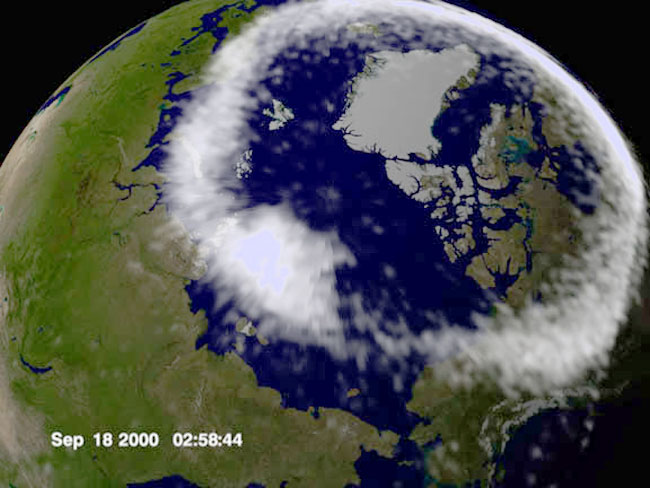
Proton Arc Nasa

#TBT Tawas Point US Lighthouse Service Crew Training

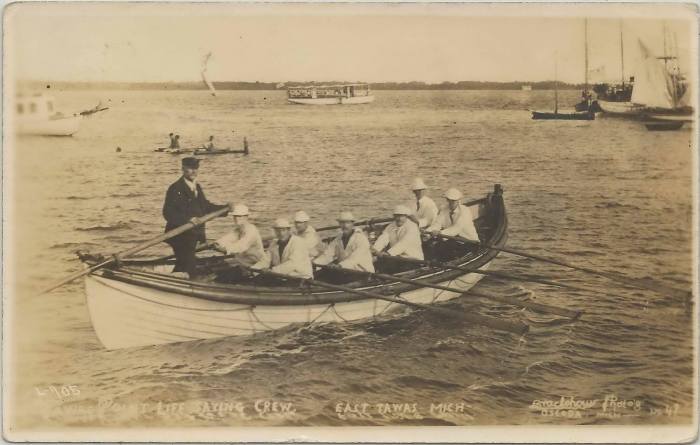
Tawas Point Lighthouse USLSS Life Saving Service Crew Training on Tawas Bay

Tawas Point Lighthouse Crew Training, photo by UpNorth Memories

The U.S. Life-Saving Service Heritage Association has an excellent history of the U.S. Life-Saving Service that says in part:

In 1878 the growing network of lifesaving stations was finally organized as a separate agency of the Treasury Department and named the U.S. Life-Saving Service. Sumner I. Kimball was chosen as the General Superintendent of the Service. Kimball held tight reign over the Service and, in fact, remained the only General Superintendent of the organization. The law which created the U.S. Coast Guard in 1915, also provided for the retirement of Kimball. The Service’s reputation for honest, efficient, and non-partisan administration, plus performance of duty, can be largely attributed to the efforts of this one man.

The stations of the Service fell into three broad categories: lifesaving, lifeboat, and houses of refuge. Lifesaving stations were manned by full-time crews during the period when wrecks were most likely to occur. On the East Coast this was usually from November to April, and was called the “active season.” By the turn of the century, the active season was year-round. Most stations were in isolated areas and crewmen had to be able to perform open beach launchings. That is, they were required to launch their boats from the beach into the surf. Before the turn of the century, there were very few recreational boaters and most assistance cases came from ships engaged in commerce.

Lifeboat stations were located at or near port cities. Here, deep water, combined with piers and other waterfront structures, allowed the launching of heavy lifeboats directly into the water by marine railways on inclined ramps. In general, lifeboat stations were located on the Great Lakes, but some lifesaving stations were situated in the more isolated areas of the lakes. The active season on the Great Lakes stretched from April to December.

…The U.S. Life-Saving Service had two means of rescuing people on board ships stranded near shore: by boat and by a strong line stretched from the beach to the wrecked vessel. The Service’s boats were either a 700 to 1,000 pound, self-bailing, self-righting surfboat pulled by six surfmen with twelve to eighteen foot oars, or a two to four ton lifeboat. The surfboat could be pulled on a cart by crewmen, or horses, to a site near a wreck and then launched into the surf. The lifeboat, following a design originated in England, could be fitted with sails for work further offshore and was used in very heavy weather. Some crews, at first, viewed the lifeboat with skepticism because of its great weight and bulk. The skepticism soon changed and crews began to regard it as “something almost supernatural,” for it enabled them to provide assistance “when the most powerful tugs and steam-craft refused to go out of the harbor. …”

Terry Pepper’s Seeing the Light has a bunch of information and photos of the Tawas Point Lighthouse.

This photo shows the crew of the Tawas Point Lighthouse participating in USLSS crew training on Tawas Bay. Check it out bigger and join the Northern Michigan Photo Postcards – Our History and Heritage group for more great old photos from Don and others.

More history from Michigan in Pictures.

Only Getting Hotter

Eye in the Sky by Noah Sorensen

Eye in the Sky, photo by Noah Sorensen

“The heat is rising and only getting hotter, ready to blow
I think I’ll pour myself a glass of water, let it flow
She’ll show you what she’s made of
Yeah she’s comin’ for ya
She’s gonna try to break ya
Yeah she’s comin’ for ya
No, she don’t mess around”
-Cage The Elephant, Mess Around

You know that when I pull out Cage the Elephant lyrics, I’m probably going to say something that will anger a slice of Michigan in Pictures readers, so be warned! Longtime readers will also know that I am pretty committed to saying what I want to say, so it’s probably good keep that in mind as well.

Speaking of warnings, the National Aeronautics and Space Administration (NASA) spends a lot of time looking at the Earth and crunching data from an extensive satellite and – in conjunction with the National Oceanic and Atmospheric Administration (NOAA). Anyway, these folks – literally rocket scientists – have reported (based on science and data) that the Earth is warming at an unprecedented rate:

The planet is warming at a pace not experienced within the past 1,000 years, at least, making it “very unlikely” that the world will stay within a crucial temperature limit agreed by nations just last year, according to Nasa’s top climate scientist.

This year has already seen scorching heat around the world, with the average global temperature peaking at 1.38C above levels experienced in the 19th century, perilously close to the 1.5C limit agreed in the landmark Paris climate accord. July was the warmest month since modern record keeping began in 1880, with each month since October 2015 setting a new high mark for heat.

But Nasa said that records of temperature that go back far further, taken via analysis of ice cores and sediments, suggest that the warming of recent decades is out of step with any period over the past millennium.

“In the last 30 years we’ve really moved into exceptional territory,” Gavin Schmidt, director of Nasa’s Goddard Institute for Space Studies, said. “It’s unprecedented in 1,000 years. There’s no period that has the trend seen in the 20th century in terms of the inclination (of temperatures).”

Read on for more. I’d like to go on record as a parent and member of the human race that I’m really alarmed by this, and also the fact that what appears to be a serious emergency is being ignored.

View Noah’s photo background bigtacular and see more in his slideshow.

I would really like to share the video of Mess Around from Cage the Elephant because I really like the band. In the interests of responsibility however, here’s a 30-second video showing the temperature rise of the last 145 years:

50 Shades of Blue

50 Shades of Blue

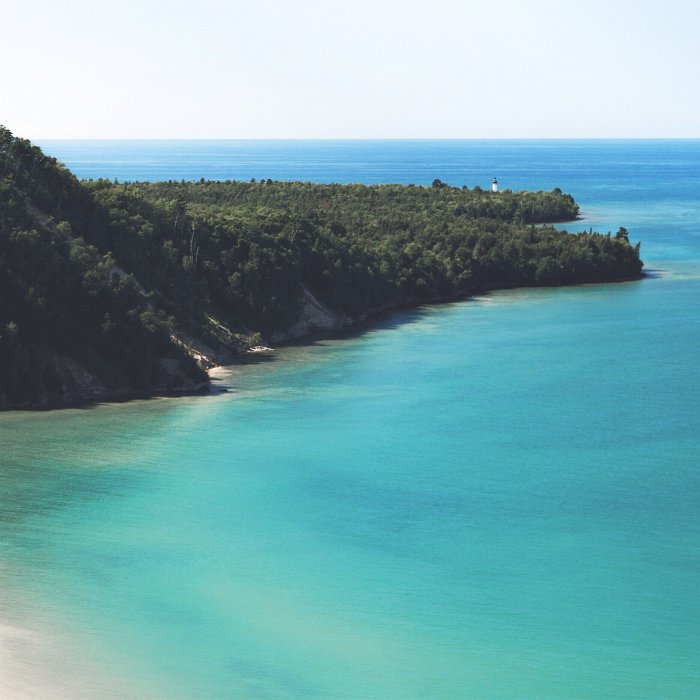
50 Shades of Blue, photo by John Hill Photography

A simply gorgeous shot of Au Sable Point and the Au Sable Light Station in the Pictured Rocks National Lakeshore.

View this photo background big on Twitter and definitely follow John on Instagram!

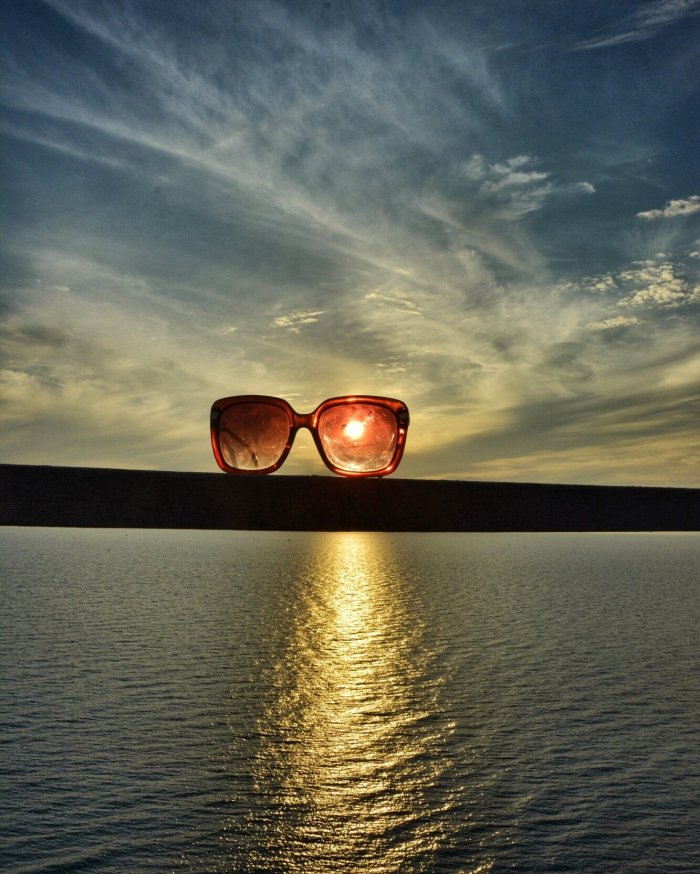
Against the Daylight

Some fish for fun others fish for food

Some fish for fun; While others fish for food, photo by Luther Roseman Dease, II

The term “contre-jour” is French for “against the daylight”, a photographic technique in which the camera is pointing directly toward a source of light.  In Shooting into the light: mastering the contre-jour technique, Jeremy Walker writes:

One of the first pieces of advice I was given was: ‘Don’t shoot into the light – always have the sun over your left shoulder.’ At the time I was young and naïve, and it seemed like good advice – but it wasn’t. In landscape photography you will often be looking for cross lighting to bring out the texture and character of the countryside. This is fine, but I would also advise trying your hand at contre-jour technique, or to put it more simply, shooting into the light. This technique creates a striking backlight behind your subject and will help to emphasise lines, shapes and silhouettes.

Read on for a bunch of tips and tricks.

View Luther’s photo bigger,  see more in his Contre-jour slideshow, and visit his website to view more work

Summer of ’16

Black Rocks Summer of 16

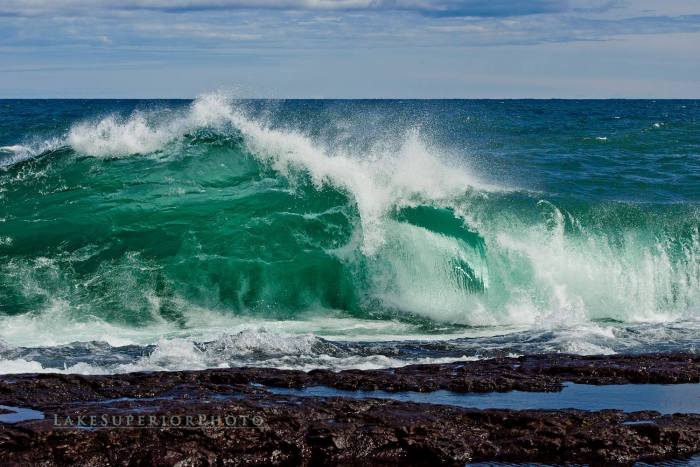
Black Rocks, #1, Summer of ’16, photo by Lake Superior Photo

I don’t want to alarm anyone, but Labor Day Weekend is next weekend so if you haven’t gotten everything you want from the Summer of 2016, this might be a good time to work on that!

Shawn took this on Thursday at Black Rocks in Marquette. View her photo background bigtacular and definitely get yourself over to the Lake Superior Photo Facebook page for all kinds of Upper Peninsula goodness including this video of the Northern Lights from earlier this week!

PS: I feel I should link to Blackrocks Brewery as well so you don’t get confused and also because they brew some really wonderful beer!

PPS: Sorry this went out late – failed to mash the buttons in the proper order!!

PPPS: More waves, Marquette, summer wallpaper, and Lake Superior on Michigan in Pictures!


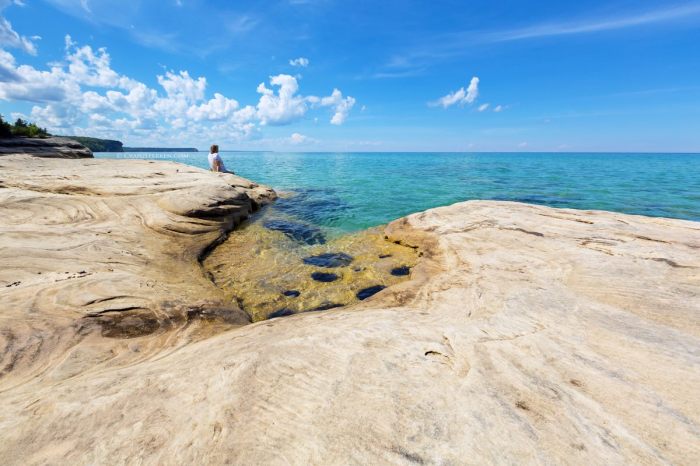
Scenic vista at Pictured Rocks National Lakeshore

Scenic vista at Pictured Rocks National Lakeshore

Scenic vista at Pictured Rocks National Lakeshore, photo by Craig Sterken Photography

Craig writes “My wife and I hiked in the Beaver Basin area for the first time and discovered our new favorite hike. What a great place to swim after walking through the woods in 87 degree weather!

Can’t see how it could get much better!! View Craig’s photo bigger on Facebook and view & purchase his work at craigsterken.com.

High above Houghton, Michigan

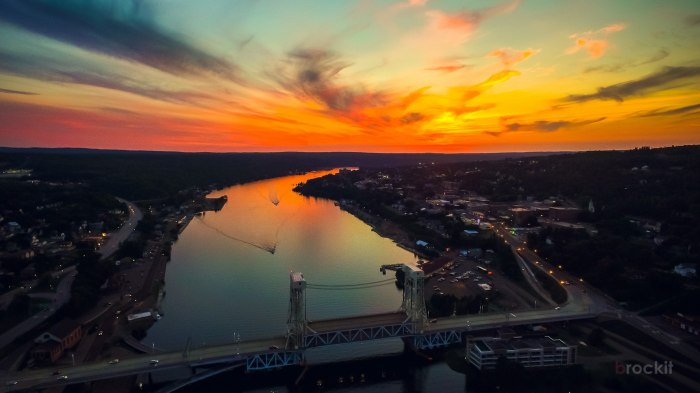
Houghton Michigan

goodnight, pretty little town, photo by brockit, inc.

This wonderful photo made me want to know more about Houghton, Michigan, so here’s an edited profile of Houghton via Wikipedia:

Houghton is located on the south shore of Portage Lake, across from Hancock. (see map) Native Americans mined copper in and around what would later be Houghton thousands of years before European settlement. French explorers had noted its existence in the area as early as the seventeenth century, and in 1772 Alexander Henry had prospected for copper on the Ontonagon River near Victoria. When Horace Greeley said, “Go West, young man” he wasn’t referring to gold, but rather the copper rush in Michigan’s western Upper Peninsula.

The city is named after Douglass Houghton, physician-naturalist on Henry Rowe Schoolcraft’s Lake Superior expedition whose 1841 report on the quantity and superior qualities of UP copper earned him the title of “father of copper mining in the United States.” The news brought many Cornish and Finnish immigrants to the area, along with smaller numbers of French-Canadian immigrants arrived in Houghton (or Copper Island as they called it) to work in the copper mines. These groups have had and continue to have a great influence on the area’s culture and cuisine.

In Houghton’s first days it was said that “only thieves, crooks, murderers and Indians” lived there. The post Civil War boom and increasing demand for copper wiring fueled the development of Houghton in the 1860s and 1870s. The Keweenaw Waterway, a dredging and extension of the Portage Lake, the Portage Shipping Canal and Lily Pond that turned the northern part of the Keweenaw Peninsula into “Copper Island” was completed in 1873. By 1880 Houghton had become “a burgeoning city” and in 1883, the railroad was extended from Marquette.

The last nearby mines closed in the late 1960s, but in 1885 the Michigan State Legislature foundedthe Michigan College of Mines to teach metallurgy and mining engineering. The school continues today as Michigan Technological University – the primary employer in the city.

Houghton has the distinction of being the birthplace of professional ice hockey in the United States when the Portage Lakers were formed in 1903, and Houghton’s Dee Stadium (formerly the Amphidrome) is the home of the Portage Lake Pioneers Senior Hockey Team.

Click for more from Wikipedia and please feel free to share tidbits in the comments.

View Adam’s photo background bigilicious on Facebook and definitely follow brockit for tons more cool photos!

More Houghton on Michigan in Pictures.

Rainbow Falls and the Waterfalls of the Black River

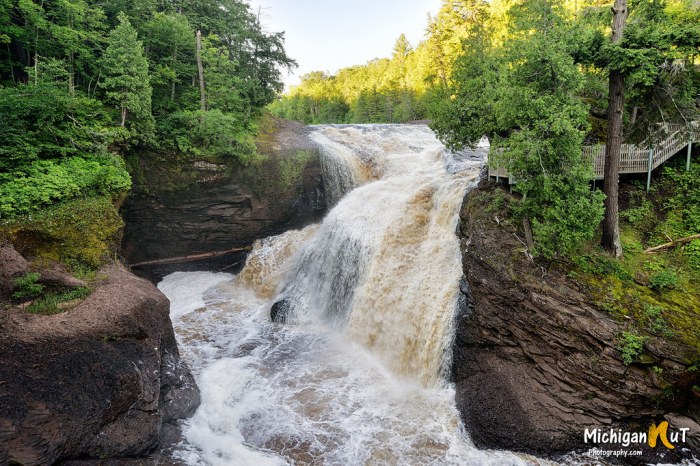
Rainbow Falls Ottawa National Forest

Rainbow Falls, Ottawa National Forest, photo by John McCormick

GoWaterfalling’s page on the Waterfalls of the Black River Scenic Byway explains that this section of the river is Michigan’s waterfall alley:

The Black River Scenic Byway is located in the western corner of Michigan’s Upper Peninsula. Dedicated in 1992 as a National Forest Scenic Byway, it starts just north of Bessemer Michigan and ends at the Black River Harbor in the Ottawa National Forest, following the Black River on its way towards Lake Superior.

Along the way it passes five main waterfalls, as well as some minor ones. The five main waterfalls are all located on the last three miles of the river before it reaches Lake Superior.

The waterfalls are Great Conglomerate Falls (profiled last week), Potawatomi, Gorge, Sandstone, and Rainbow Falls which is:

the last of the main falls on the Black River before it enters Lake Superior…The waterfall has carved out a large pothole. Most of the river falls into the pothole, but some of the water, depending on how high the river is, goes around or jumps clear over this hole.

Head over to GoWaterfalling for more pics, directions, and info about the falls in the area.

Check out John’s photo bigger, see more in his Michigan Waterfalls slideshow, and definitely follow John’s Michigan Nut Photography on Facebook for lots more like this shot of nearby Gabbro Falls, also on the Black River!

Many more Michigan waterfalls on Michigan in Pictures!

Happy Internaut Day, Michigan!

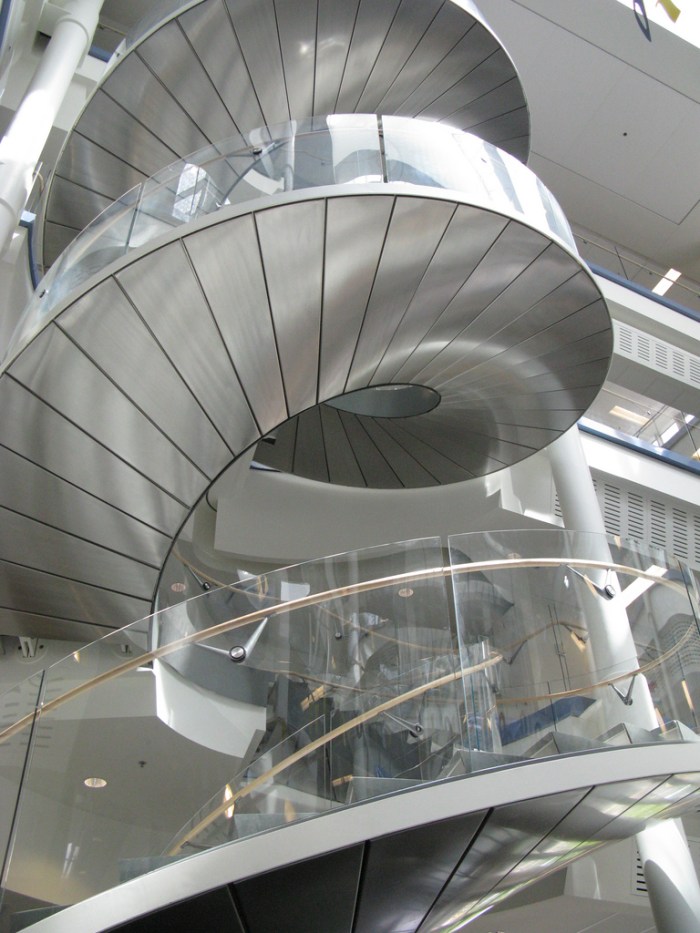
Lets Dance Audaciously by Ryan Munson

Let’s Dance Audaciously, photo by Ryan Munson

Today (August 23, 2016) is, Internaut Day, the 25th anniversary of the official launch of the the World Wide Web. Some fun facts and some not so fun ones:

  • At least 40 percent of the world has access to the internet
  • Detroit has the worst rate of Internet access of any big American city, with four in 10 of its 689,000 residents lacking broadband (NYT)
  • There are 3.4 billion internauts as of 1 July 2016, half of these are on Facebook.
  • The Michigan Infrastructure Commission is looking for input on citizen hopes for Michigan’s future connectivity.
  • There are at least 1 billion websites on the WWW
  • At least 48.5 percent of internet traffic in 2015 was generated only by bots
  • We search for 56,000 items per second on Google
  • We send 2.5 million emails per second
  • Lolcats is worth $2 million

Ryan took this photo at the University of Michigan Computer Science & Engineering building. View it background big and see more in his slideshow.