All Star, Cy Young, MVP, Tiger

PITCH!

PITCH!, photo by robmelody

“Obviously pitchers are not just written off all of a sudden because they’re pitchers.”
~Tiger Pitcher Justin Verlander

Our feature on Absolute Michigan on Verlander’s MVP victory explains that Verlander is only the second player in baseball history to capture a Rookie of the Year, Cy Young and Most Valuable Player award over his career and finished this season with pitching’s Triple Crown.

Check it out background big!

Pere Marquette Beach, Muskegon

Pere Marquette 4

Pere Marquette 4, photo by kmoyerus.

Here’s one of a fantastic series of black & white photos from Pere Marquette Beach in Muskegon taken after it had been swept smooth by the surf.

In 2011, Pere Marquette Beach was named one of the nation’s Blue Wave Beaches by the Clean Beach Coalition along with Esch Beach & South Manitou Island in the Sleeping Bear Dunes National Lakeshore and Sand Point Beach in Pictured Rocks National Lakeshore. Of course there’s no doubt that Michigan has miles and miles more pristine beaches, but this is still something to shout about.

Check it out background big, in kmoyerus’ peremarquette slideshow or on their map.

More great beaches on Michigan in Pictures.

frose

Taken today 11/17/2011 This Rose just started to open in my backyard 2 days ago, must like cold weather. Boyne City, Michigan

Taken today 11/17/2011 This Rose just started to open in my backyard 2 days ago, must like cold weather. Boyne City, Michigan, photo by rickrjw.

Couldn’t resist. Stay warm!

Check it out background big and in Rick’s Flowers slideshow.


Wild UP Cranberries

Wild UP cranberries

Wild UP cranberries, photo by Blondieyooper.

We’re gearing up for Thanksgiving on Absolute Michigan today with two features. One will help you make it a Michigan Thanksgiving and the other has a bowlful of information about Michigan cranberries.

A few years ago Waterland Living wrote about wild cranberries. It’s packed with great advice about finding and harvesting cranberries so check it out!

See April’s photo background bigtastic and in her tasty cups of things slideshow.

Remembering the Carl D. Bradley

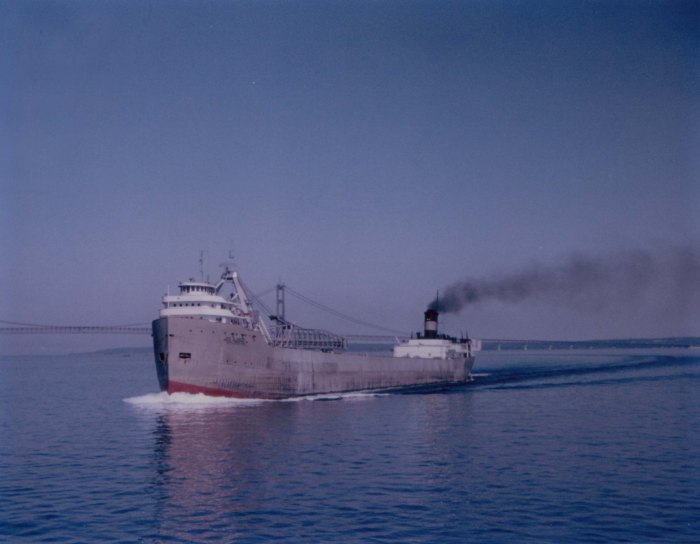
Carl D Bradley on the Great Lakes

Bradley – Color – 300 dpi, photo by Presque Isle County Historical Museum.

23 women became widows in that instant and 53 children lost their fathers.
~Rogers City resident on the sinking of the Bradley

The Edmund Fitzgerald gets the majority of the attention when Michigan shipwrecks are discussed, but it can be argued (very convincingly) that the wreck of the Carl D Bradley on November 18, 1958 was the greatest of Great Lakes tragedies. 33 of 35 crewmen – most from her home port of Rogers City – perished, leaving the small city in northeastern lower Michigan stunned by grief.

Over on Absolute Michigan today we have an excellent feature from the Archives of Michigan on the Wreck of the Carl D. Bradley that includes a riveting video from the documentary November Requiem. An article by Warren J. Toussaint about the sinking begins:

Tuesday, Nov. 18, 1958, at 5:31 p.m., the limestone carrier, Carl D. Bradley, was up bound on Lake Michigan, having delivered her last limestone cargo of the year to Indiana on November 17,1958. She stayed close to the Illinois and Wisconsin shores because of reports of severe weather conditions rapidly developing from the west. As it reached the area of Sturgeon Bay, Wis., it had to turn to the northeast in order to cross the upper area of Lake Michigan on its way to the homeport of Rogers City, Mich., on Lake Huron. Suddenly, the Bradley’s steering wheel went slack, as if the gears had suddenly disconnected. On the course it was on, the winds and waves were striking the ship on the aft quarter of the port side causing the ship to rock severely. First Mate, Elmer Fleming, knew the ship was in trouble. He jerked the radio telephone from its cradle and shouted a desperate call “Mayday, Mayday, – Mayday. This is the Carl D. Bradley. Mayday Mayday Mayday.”

Read on and see much more at carldbradley.org!

The photo is one of the last known photos of the Steamer Carl D. Bradley, taken after she passed under the Mackinac Bridge and was making the turn to the southeast to set a course for Rogers City. Check it out background big and in their great Bradley Transportation Fleet slideshow. Definitely have a look at the Presque Isle County Historical Museum website for more on the Bradley and the history of the region and to order the Bradley DVD!

Turn it up to Eleven Eleven Eleven

Two Pines

Two Pines, photo by Coniferous Mariner.

In addition to being Veteran’s Day, today we roll the calendrical odometer to the 11s.

11/11/11 is causing all manner of fun across the globe – they’re closing the pyramids in Egypt, hoping for good luck and getting married in the East and even playing a basketball game aboard an aircraft carrier (MSU meets North Carolina in the Carrier Classic tonight at 7 PM).

Today at 11:11:11, the time and date will be a perfect same-numbered palindrome, reading the same backwards as forwards, an event which can only happen on one day every 100 years. Read on for more. They note that:

The reason we ascribe significance to 11.11.11 is apophenia – the urge to find patterns in seemingly random data. It is this that explains why we see clouds forming certain shapes, and why we often hear of people finding ‘faces’ in things like potato crisps.

Here’s hoping you have luck & happiness today and faces in your potato chips. ;)

Check this out background big and in Coniferous Mariner’s beautiful A Peopleless Luzerne slideshow. (and isn’t “Coniferous Mariner” just about the coolest user name ever?)

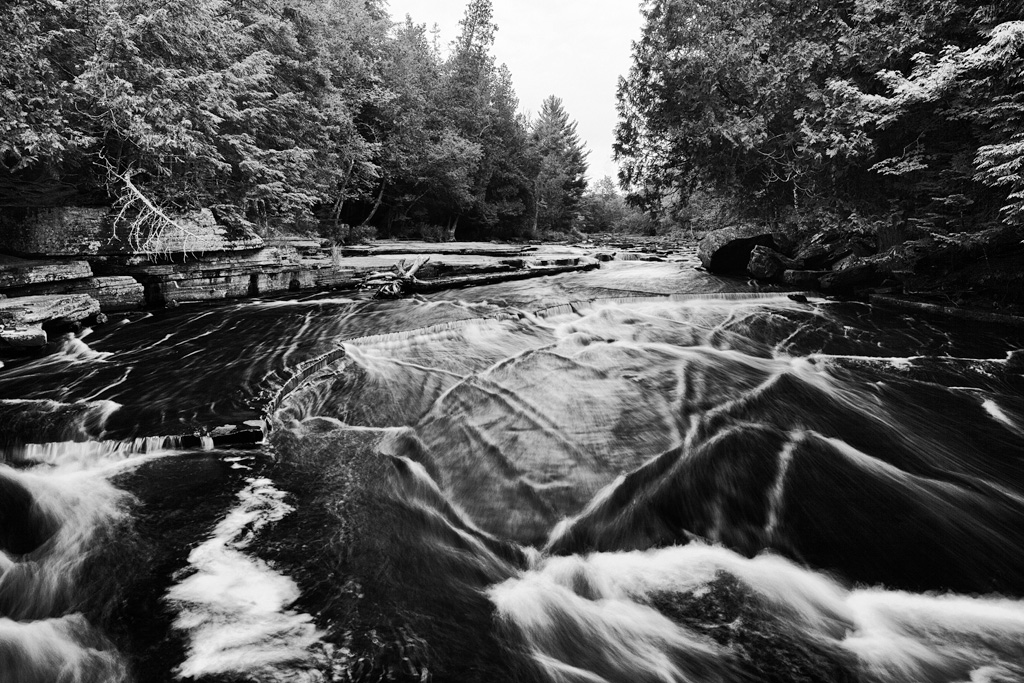
Michigan Wild & Scenic Rivers: Sturgeon River

Along the Sturgeon River by Coder

Along the Sturgeon River by Coder

It is hereby declared to be the policy of the United States that certain selected rivers of the Nation which, with their immediate environments, possess outstandingly remarkable scenic, recreational, geologic, fish and wildlife, historic, cultural or other similar values, shall be preserved in free-flowing condition, and that they and their immediate environments shall be protected for the benefit and enjoyment of present and future generations.
~Wild & Scenic Rivers Act, October 2, 1968

Michigan has 16 nationally designated Wild & Scenic Rivers (management plan pdf) and tw of them are called the Sturgeon River: this one in the Ottawa National Forest in the eastern UP and the Sturgeon River in the Hiawatha National Forest in the western UP. This Sturgeon River is even the photo on the main page at rivers.gov, so it’s clear that they really liked it!! (note it’s now the Ontonagon River but still in the UP!)

Also note that Field & Stream tapped Michigan #1 for flyfishing in the USA in 2011. One of the reasons is the portion of the Sturgeon River within the Ottawa National Forest is classified as a Blue Ribbon Trout Stream!

Coder shot this in 2010 along the Sturgeon River on the way to Canyon Falls. Click to his map to see where the photo was taken. See more in his ‘Scapes gallery on Flickr.

More Wild & Scenic Rivers on Michigan in Pictures.

Support Michigan in Pictures with Patreon

Flint Corn, Calico Corn, Indian Corn

Nottawa Fruit Farm 016

Nottawa Fruit Farm 016, photo by bill.d.

Wikipedia’s entry for flint corn says that Flint corn (Zea mays indurata) is commonly known as Indian corn or sometimes calico corn. Its extremely low water content makes it much more resistant to freezing than other vegetables. Slow Food USA’s page on flint corn has some cool info and notes that this corn was the only to survive the infamous Year Without a Summer (1816), when snow fell in June and killing frosts struck in every summer month.

I found a Wisconsin Ojibway legend of the Father of Indian Corn that is very similar to one I heard from Michigan. It tells how a young man went out into the wilderness to seek another way of sustenance for his family.

For the first few days, he amused himself walking in the woods and over the mountain trails. He examined trees, plants, and flowers. This kind of physical effort in the outdoors prepared him for a night of sound sleep. His observations of the day filled his mind with pleasant ideas and dreams.

More and more he desired to know how the trees, plants, flowers, and berries grew. Seemingly they grew wild without much help from the Indians. He wondered why some species were good to eat, while others contained poisonous juices. These thoughts came back to him many times as he retreated to his lodge at night. He secretly wished for a dream that would reveal what he could do to benefit his family and his tribe.

“I believe the Chief of Sky Spirits guides all things and it is to him I owe all things,” he thought to himself. “I wonder if Chief Sky Spirit can make it easier for all Indians to acquire enough food without hunting animals every day to eat.”

“I must try to find a way in my dreams,” he pondered. He stayed on his bed the third day of fasting, because he felt weak and faint. Sometimes he thought that he was going to die. He dreamed that he saw a strong, handsome young man coming down from the sky, advancing toward him. He was richly dressed in green and yellow colours. He wore a plume of waving feathers on his head. His every movement was graceful.

“I have been sent to you,” said the sky-visitor. “The Sky Chief who made all things in the sky and upon the earth intends for me to be your Guardian Spirit and I have come to test you…

Read on to learn how corn was brought to the earth. Check the photo out background bigilicious and in Bill’s Nottawa Fruit Farm slideshow.

The Haunting of White River Light Station

White River Light Station

White River Light Station, photo by CJSmithChicago.

It’s Halloween week on Michigan in Pictures and we’ll try and feature as much Michigan spookyness as possible. Today’s story appears courtesy Still on Duty at White River Light on Absolute Michigan:

When Karen McDonnell is alone she sometimes hears footsteps on the stairway of the former White River Light. But she isn’t afraid. She says, “I like the comfort it gives me. It’s like a watchman, just making sure everything is okay before it’s too late at night.”

McDonnell is the curator of an old lighthouse that has been turned into a museum. She takes care of the light and gives tours to visitors. Sometimes early in the morning or late at night she hears what sounds like somebody climbing the stairs and walking around on the upper level. She wonders if it might be the spirit of the light’s first keeper.

When the White River Light opened in the mid-1870s, William Robinson and his wife Sarah moved in. Over the years, the English couple raised their family at Whitehall. Sarah died at a young age, but William remained the lightkeeper for 47 years. When the government forced the 87-year-old keeper to retire in 1915, William’s grandson became the next lightkeeper at White River. William helped his grandson run the light, but the rules said that only the lightkeeper and his “immediate” family could live at the lighthouse. William would have to leave. But he refused, telling his grandson, “I am not going to leave this building.” He was right. The day before he had to move out, he died. His grandson buried him in a small nearby cemetery…

Read more over on Absolute Michigan and learn more about the lighthouse at White River Light on Terry Pepper’s Seeing the Light.

Check this out background bigtacular and in Chris’s slideshow.

Shaggy Mane Mushroom

DSC09529_tonemapped

DSC09529_tonemapped, photo by ansonredford.

Mushroom-collecting.com has this to say about the Shaggy Mane Mushroom:

The Shaggy Mane, also occasionally known as the Lawyers Wig, is a distinctive and easy to recognize mushroom. Its size, shape, and tendency to grow in tight groups make it easy to spot even from considerable distance. Shaggy Mane (Coprinus comatus) has an elongated bullet shaped, shaggy cap, with brownish upturned scales and a straight fairly smooth stem.

These grow in summer and fall in grass, wood chips, rocky, or hard packed soil often appearing shortly after a soaking rain. They may grow singly or scattered but often in large, tightly packed groups. Some years they are very common in city and suburban locations, pastures, lawns, gardens, along driveways, etc. Sometimes they are found in huge quantities presenting quite a dilemma since they require almost immediate preparation.

They are very common around this time of year along the roadside as well. Living Afield has a great pic of the Shaggy Mane and you can see a cool timelapse of its lifecycle too! You do need to be careful about a couple of similar mushrooms – see that page for details!

Donald found this beauty in his yard. Check it out background bigilicious and in his slideshow.

More Michigan mushrooms from Michigan in Pictures.