Bringing in the Blueberries

Ann Arbor Farmers Market

Ann Arbor Farmers Market, photo by Vasenka

Blueberries have arrived at the Ann Arbor Farmer’s Market.  Not sure if they’re local or not – anybody know? You can read a lot more about Michigan blueberries at Absolute Michigan.

If duckies are your thing, view the complete Duckie collection at Michigan in Pictures.

Check this out background big and see more in Vasenka’s Ann Arbor Farmer’s Market slideshow.

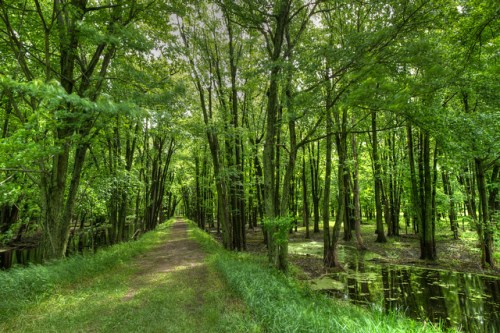
Into the Woods

Into the Woods

Into the Woods, photo by Pumpkin K

Some days the photographers do all the work. Have a wonderful weekend folks!

The way is clear,
The light is good.
I have no fear,
Nor no one should.
The woods are just trees,
The trees are just wood.

Little Red Riding Hood from “Into the Woods”

The photo was taken in BiCentennial Park in Tipton.

Check this out background big and in PumpkinK’s sideshow.

Of Michigan, Mosquitoes & Malaria

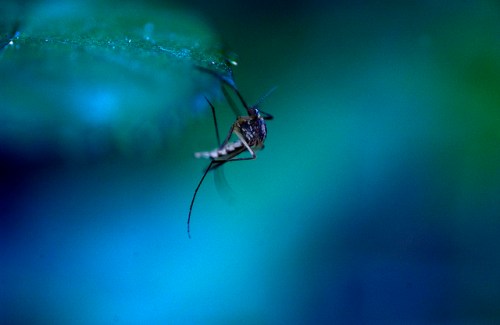
Mosquito

Mosquito, photo by stepponme123456789

If you think you’re too small to have an impact, try going to bed with a mosquito.
~Anita Roddick

Today on Absolute Michigan we posted a weird little cartoon from the early 1900s by Michigan animator Winsor McCay who is often known as “The Father of Animation” titled “How a Mosquito Works.” That seemed to me to be good enough reason to take a closer look at these pesky pests.

Wikipedia’s Mosquito entry says that mosquitoes are a family of small, midge-like flies: the Culicidae. The word mosquito is from the Spanish and Portuguese for “little fly”. You can click that link for likely more than you want to know about how they feed. The Michigan Mosquito Control Association claims that:

Mosquitoes are by far the most dangerous animals on earth. It is hard to comprehend the amount of disease and the resulting sickness, death, and economic loss caused by the mosquito. Some scientists estimate between 500 and 700 million people get malaria worldwide each year. That’s more than twice the entire population of the United States each year. Malaria has since been virtually eliminated here in Michigan , but the threat of mosquito-borne disease is still very real. Of the 60 different species of mosquitoes found in Michigan many are known to be vectors (carriers or transporters) of important diseases such as West Nile virus, Eastern Equine Encephalitis, St. Louis Encephalitis, and the California Group of encephalitis.

An interesting thing I learned was that Michigan was once a hotbed of malaria as Daniel Hager from the Mackinac Institute of Public Policy explained:

Willis F. Dunbar in “Michigan: A History of the Wolverine State,” writes that the disease “was so prevalent that it was rather unusual to escape it.” Ruth Hoppin, who grew up in a pioneer family in St. Joseph County near Three Rivers, recalled that “the pale, sallow, bloated faces of that period were the rule; there were no healthy faces except of persons just arrived.” A. D. P. Van Buren, whose family came to Calhoun County near Battle Creek in 1836, noted that the first question asked of new settlers was whether or not they had contracted malaria yet, and “if answered in the negative, the reply would be, `Well, you will have it; everybody has it before they’ve been here long.'”

The settlers’ common word for malaria was ague (pronounced “ag-yew”), which derived from the Latin word acuta, as in febris acuta, or “sharp fever.”

The state of Michigan has a ton of information about mosquito control in Michigan. You might also enjoy an interview with MSU Entomologist Howard Russell about mosquitos and this detailed article on Gallinipper mosquitoes, which are native to Michigan and large enough to bite through canvas shorts.

Check this out background big and see some more great shots in Stephanie’s Bugs slideshow.

Chillin’

Bullfrog

Bullfrog, photo by d charvat

Over on Absolute Michigan this morning we reported that we were taking the summer off as we re-assess things.

I apparently decided to go on vacation as well. Since that photo was such a great one, I decide to share it here!

FYI, despite the name, this is a Northern Green Frog. The Michigan Herps page on Frogs & Toads explains:

Green Frogs are the most common species of frog in Michigan. They are large and are usually brown or green in color, with a very bright green face. However, some individuals may be bronze in color instead of brown. Often confused with the Bullfrog, Green Frogs have a fold of skin running from their eardrum to their back.

Check Diane’s photo out background big and in her Frogs slideshow.

* Don’t worry, Michigan in Pictures will still be published!

Happy Birthday to you, U.S. Coast Guard Icebreaker Mackinaw!

The USCGC Icebreaker Mackinaw at Cheboygan HDR

The USCGC Icebreaker Mackinaw at Cheboygan HDR, photo by hz536n/George Thomas

The United States Coast Guard Cutter Mackinaw (WLBB 30) has its 6th birthday tomorrow. MightyMac.org has this to say about the United States Coast Guard Cutter Mackinaw:

Commissioned June 10, 2006 Mackinaw (WLBB 30) assumed the “Mackinaw” name and heritage and now stands as the largest United States Coast Guard Cutter on the Great Lakes. WLBB 30 is configured to better handle a variety of roles including buoy maintenance, and handling of environmental spills.

The Mackinaw is powered by 3 Caterpillar 3612 Turbocharged V-12 engines – 3360 KW each. Prolusion comes from 2 ABB azimuthing electric propulsion drives where the propulsion motor is installed inside a submerged azimuthing (unlimited 360 degrees) pod and coupled directly to an extremely short propeller shaft.

Click for more including lots of photos, and definitely don’t miss this sweet panoramic tour of the Mackinaw. You can see the Mackinaw every year at the Grand Haven Coast Guard Festival (July 27 – August 5, 2012). Her predecessor is now the Icebreaker Mackinaw Maritime Museum in Mackinaw City.  Michigan in Pictures has more about icebreakers on the Great Lakes and you can also see a video of the Mackinaw at work from Boatnerd on YouTube.

Check this out big as a boat and see more in George’s massive Photomatix HDR slideshow.

More Michigan ships & boats on Michigan in Pictures.

Tunnel of Trees

Tunnel of Trees Ferguson Slough Trail

Tunnel of Trees Ferguson Slough Trail, photo by DTWpuck

Scott wonders who in Michigan doesn’t get weak in the knees when looking down a tree canopied road or trail. This trail is located alongside the Ferguson Slough in the Shiawassee National Wildlife Refuge.

Check it out background bigtacular and see more on his map.

The U.P. is open for business!

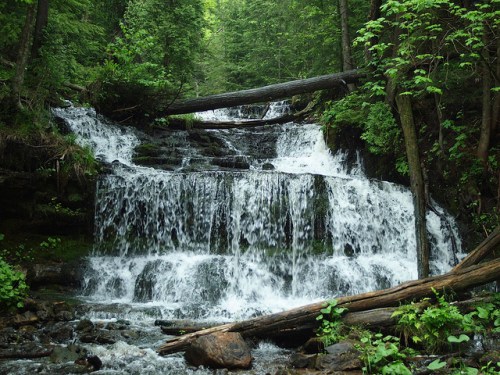
Wagner Falls

Wagner Falls, photo by karstenphoto

The Michigan DNR reports that fire crews are making good progress on the Duck Lake Fire in Luce County and that campgrounds, state parks, resorts and other businesses throughout the region and the Upper Peninsula are ready & waiting to deliver Pure Michigan fun! Tahquamenon Falls State Park was completely untouched and the Upper Falls viewing area and Lower Falls campground and visitor center are open. The fire itself isn’t putting up a smoke plume, it’s in a remote area and there hasn’t been significant activity since Monday.

One of the main businesses of the Upper Peninsula is tourism, and waterfalls like this are one of the draws. GoWaterfalling says that Wagner Falls is located south of Munising. It has its own state scenic site and after a short & pleasant boardwalk, you get to see this pretty waterfall!

Check this out background bigtacular and see more in Steven’s falls slideshow.

Michigan’s Leonard Halladay, Mayfield Pond and the Adams Dry Fly

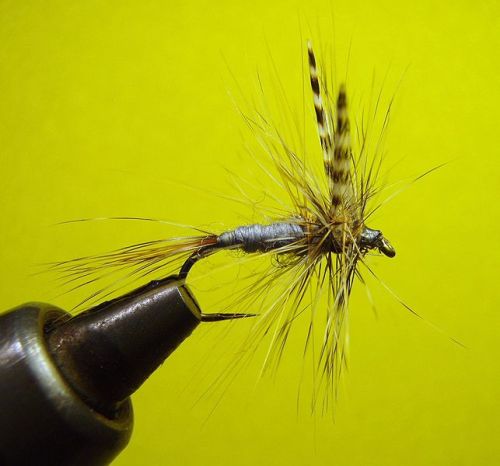
Adams Dry Fly, photo by Mike Cline

This Saturday (June 2, 2012) the Kingsley Library hosts the 1st Annual Adams Fly Festival. They will have northern Michigan fly rod maker R.W. Summers on hand (click for an interview with him on Absolute Michigan today). There will also be fly tying lessons, a silent auction with some great items, music, food and an original Adams fly on display.

In The Adams: History Revisited in Hatches magazine, Tom Deschaine writes that the Adams fly is probably the most famous fly in all of history.

It’s carried in the fly boxes of fishermen in every country where trout are found. It would probably be an understatement to claim that the Adams fly, with all its variations, has collectively caught more trout then any other fly pattern in existence. It can be used in a variety of waters, and, with its brownish-grayish coloration it imitates generally acceptable food items found almost anywhere in trout fishing environments. Most fishermen would agree that if they were allowed to use only one dry fly pattern — it would be the Adams (or some variation there of).

The story of the Adams begins just 12 miles south of Traverse City, Michigan, off County Road 611 in the small township of Mayfield. It was here, in 1922, at the Mayfield Pond where Leonard Halladay created the famous Adams fly.

Leonard Halladay (1872-1952) was originally from New York but his family, lured by the lumber industry, migrated to Mayfield when Leonard was just a young boy. As a growing young man he would see the last of the grayling and brook trout whose demise was brought about by over fishing, and habitat destruction from the logging industry. It was around this time when Michigan began introducing the German brown trout to its rivers.

…The historically accepted story goes on to say that on a summer’s day in 1922 at the impoundment of Swainston Creek known as the Mayfield Pond, Mr. Halladay said: “The first Adams I made I handed to Mr. Adams who was fishing in a small pond in front of my house, to try on the Boardman that evening. When he came back next morning, he wanted to know what I called it. He said it was a ‘knock-out’ and I said we would call it the Adams, since he had made the first good catch on it.”

Mike Cline took the photo and tied the fly. Click through to see it bigger.

You can visit Mayfield Pond in the Boardman Valley Nature Preserve, and you can see how to tie the Adams fly in this video.

Prescription for a great Michigan summer

Flying High

Flying High, photo by Steven White Photographic Art

Get out. Have fun. Repeat as necessary.

See this photo big as the Sulver Lake Dunes or in Steven’s Our World in Color slideshow.

Have a great weekend everyone!!

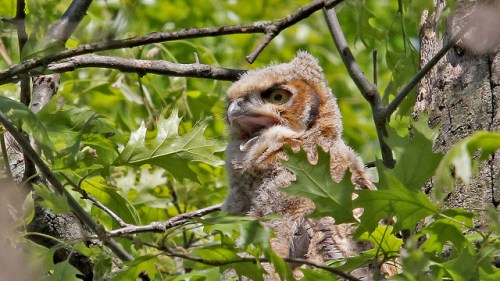
Before we were owls

10

10, photo by Sherri & Dan

The Great Horned Owl article on Michigan in Pictures is stocked with all kinds of information about what this little guy will grow up to be (Sherri & Dan also took that photo). Also see Bubo virginianus (great horned owl) on the University of Michigan Animal Diversity Web and check out this video of three little horned owlets.

See this photo background big and and follow this owl’s growth in  Sherri & Dan’s owls slideshow.