Old Dock

Old dock III (1 of 1)

Old dock III (1 of 1), photo by Todd Bielby

One day’s ruin is another day’s scenery…

View Todd’s photo background bigtacular and see more including a black & white view in his slideshowFYI, he shot this pic at Forrester Park, about 20 miles north of Port Huron.

Blossom Time

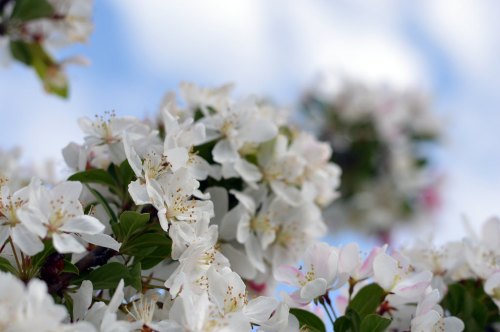
White Blossoms

White Blossoms, photo by cncphotos

In addition to Michigan in Pictures, I run the website Leelanau.com. The most common question this time of year over there is “When will cherry blossoms be out?” Although this year has been slow going, I was out and about yesterday and caught some of the first blooms of the season. Click that link to see them on Leelanau.com and also a pile of morels!

Visit Traverse City’s cherry blossom section says that the blossoms on the trees last on average of four to five days, but because different parts of the region bloom at different times, it’s a safe bet you can see blossoms for one to two weeks on average if you make the rounds.

View CNC’s photo background bigilicious and see more in his Spring slideshow.

Lots more blossoms and more spring wallpaper on Michigan in Pictures.

Find the Trout Lily where and when the trout hide…

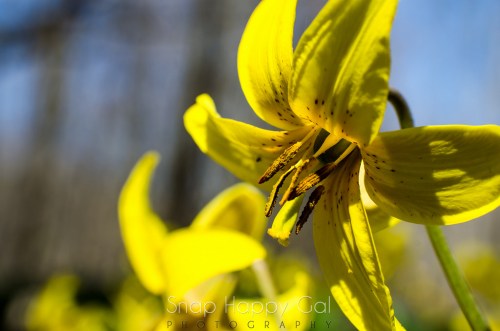
Trout lily (3 of 3)

Trout lily (3 of 3), photo by Heather Higham

I love old books, and was happy to find Wild Flowers Worth Knowing by Neltje Blanchan, a 1917 book that is available online through Project Gutenberg. The entry for Yellow Adder’s Tongue; Trout Lily; Dog-tooth “Violet” (Erythronium americanum) is a good example of the descriptive & endearing turns of phrase you often find in books from another age:

Flower – Solitary, pale russet yellow, rarely tinged with purple, slightly fragrant, 1 to 2 in. long, nodding from the summit of a root-stalk 6 to 12 in, high, or about as tall as the leaves. Perianth bell-shaped, of 6 petal-like, distinct segments, spreading at tips, dark spotted within; 6 stamens; the club-shaped style with 3 short, stigmatic ridges. Leaves: 2, unequal, grayish green, mottled and streaked with brown or all green, oblong, 3 to 8 in. long, narrowing into clasping petioles.

Preferred Habitat – Moist open woods and thickets, brooksides.

Flowering Season – March-May.

Distribution – Nova Scotia to Florida, westward to the Mississippi.

Colonies of these dainty little lilies, that so often grow beside leaping brooks where and when the trout hide, justify at least one of their names; but they have nothing in common with the violet or a dog’s tooth. Their faint fragrance rather suggests a tulip; and as for the bulb, which in some of the lily-kin has toothlike scales, it is in this case a smooth, egg-shaped corm, producing little round offsets from its base. Much fault is also found with another name on the plea that the curiously mottled and delicately pencilled leaves bring to mind, not a snake’s tongue, but its skin, as they surely do. Whoever sees the sharp purplish point of a young plant darting above ground in earliest spring, however, at once sees the fitting application of adder’s tongue. But how few recognize their plant friends at all seasons of the year!

Every one must have noticed the abundance of low-growing spring flowers in deciduous woodlands, where, later in the year, after the leaves overhead cast a heavy shade, so few blossoms are to be found, because their light is seriously diminished. The thrifty adder’s tongue, by laying up nourishment in its storeroom underground through the winter, is ready to send its leaves and flower upward to take advantage of the sunlight the still naked trees do not intercept, just as soon as the ground thaws.


View Heather’s photo background bigtacular and see more in her Up Close slideshow.

Many more Michigan flowers and more Spring wallpaper on Michigan in Pictures!

Chillin’ with the Wood Ducks

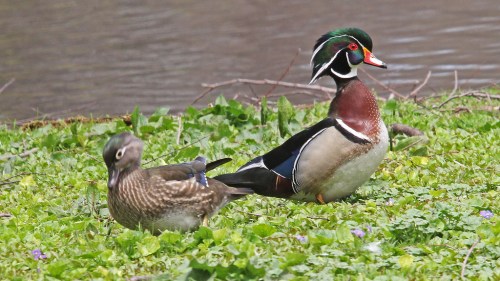
Wood Duck

Wood Duck, photo by Dan Lockard

The All About Birds listing for Aix sponsa (wood duck) says in part:

The Wood Duck is one of the most stunningly pretty of all waterfowl. Males are iridescent chestnut and green, with ornate patterns on nearly every feather; the elegant females have a distinctive profile and delicate white pattern around the eye. These birds live in wooded swamps, where they nest in holes in trees or in nest boxes put up around lake margins. They are one of the few duck species equipped with strong claws that can grip bark and perch on branches.

Wood Ducks thrive in bottomland forests, swamps, freshwater marshes, and beaver ponds. They are also common along streams of all sizes, from creeks to rivers, and the sheer extent of these make them an important habitat. Wood Ducks seem to fare best when open water alternates with 50–75% vegetative cover that the ducks can hide and forage in.

Some wood duck facts:

  • Natural cavities for nesting are scarce, and the Wood Duck readily uses nest boxes provided for it. If nest boxes are placed too close together, many females lay eggs in the nests of other females. (click for info about building a nest box)
  • The Wood Duck nests in trees near water, sometimes directly over water, but other times up to 2 km (1.2 mi) away. After hatching, the ducklings jump down from the nest tree and make their way to water. The mother calls them to her, but does not help them in any way. The ducklings may jump from heights of up to 89 m (290 ft) without injury.
  • Wood Ducks pair up in January, and most birds arriving at the breeding grounds in the spring are already paired. The Wood Duck is the only North American duck that regularly produces two broods in one year.

View Sherri & Dan’s photo background big and see more in their Animals slideshow.

Many (many) more Michigan birds on Michigan in Pictures.

Roses are red, violets are tough

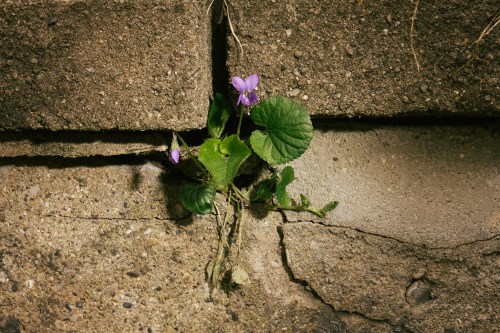
Roses are red, violets are tough

Roses are red, violets are tough, photo by Bill Dolak

View Bill’s photo background bigilicious and see more in his Flowers slideshow.

More Spring wallpaper on Michigan in Pictures.

Winter won’t leave Lake Superior

Wintry Sunrise from Pictured Rocks by Lake Superior Photo

Wintry Sunrise from Pictured Rocks, photo by Lake Superior Photo

Normally ice would be gone or nearly gone from Superior and the other Great Lakes, but as the Freep reported:

Heading into May, the Great Lakes combined remain 26% ice-covered, with Lake Superior still more than half-blanketed in ice. By comparison, at this time last spring the lakes were less than 2% covered with ice.

The remaining levels of ice cover are amazing, said Jia Wang, an ice climatologist at the National Oceanic and Atmospheric Administration’s Great Lakes Environmental Research Laboratory in Ann Arbor.

“This prolonged winter will affect summer temperatures. This summer will be cold, and then a cooler fall,” he said.

In addition to wreaking havoc on the Great Lakes shipping industry and impacting fish and other aquatic species, the miles of ice cover serve as a vast, white reflector.

“All that sunlight that would normally heat up the water is just bouncing back up into space,” said Jay Austin, an associate professor at the University of Minnesota-Duluth’s Large Lakes Observatory, who agrees with Wang about the ice cover’s impacts on this summer, but disagrees about its potential impacts on weather beyond that.

Read on for more. About the photo, Shawn of Lake Superior photo writes:

A wonderful wintry sunrise from Pictured Rocks this morning…. ok I’m going to go cry now

The lake was still (of course, with ice that’s feet thick as far as the eye can see..) but a new sound, you could hear the waterfalls, prob Miners Falls in the distance.. so cool

View Shawn’s photo big as our biggest lake on Facebook, see another shot of the wintry expanse from Miner’s Castle and definitely follow her photos as “spring” unfolds in the North Country at the Lake Superior Photo Facebook along with 30,000+ others and purchase photos at lakesuperiorphoto.com!

Diego Rivera & Frida Kahlo exhibit coming to the DIA

Detroit Institute of Arts: "Detroit Industry" Murals, South Wall--Detroit MI

Detroit Institute of Arts: “Detroit Industry” Murals, South Wall–Detroit MI, photo by pinehurst19475

Michigan Radio Reports that the Detroit Institute of Arts is planning an exhibition that highlights Mexican artists Diego Rivera and Frida Kahlo and the year spent in Detroit. Between April 1932 and March 1933, Rivera created the Detroit Industry murals at the DIA and the museum will also show works created by Kahlo during that time.

The show is scheduled to run from March 15, 2015 to July 12, 2015, and you can click through to Michigan Radio for more including a film of Rivera working on the murals. Also check out photos of the Rivera Court murals at the DIA.

About this photo, pinehurst19475 writes: This section of the South Wall depicts line workers assembling tires, axles and wheels with a factory tour in progress. The Rivera murals were recently named a National Historic Landmark.

View the photo background bigtacular and see more in his Wayne State and the Cultural Center slideshow.

More art and more Detroit on Michigan in Pictures.

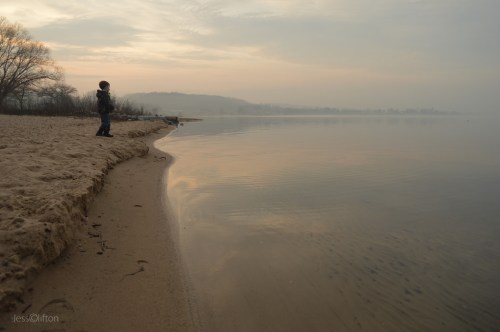
Amongst Lovely Things

The most effective kind of education is that a child should play amongst lovely things. – Plato

The most effective kind of education is that a child should play amongst lovely things.
~Plato (photo by Jess Clifton)

Here’s hoping you have a chance this weekend to spend a little time amongst lovely things.

View Jess’s photo background big and see more in her Fabulous Fog slideshow.


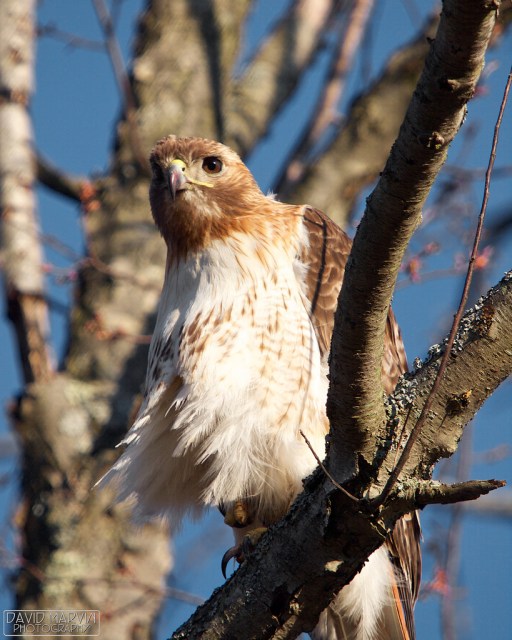
Red-Tailed Hawk (buteo jamaicensis)

Red Tailed Hawk

Red Tailed Hawk, photo by David Marvin

Sometimes the photos I link to go away, so here’s an old post with a new face!

All About Birds page on the Red-tailed Hawk (Buteo jamaicensis) says:

This is probably the most common hawk in North America. If you’ve got sharp eyes you’ll see several individuals on almost any long car ride, anywhere. Red-tailed Hawks soar above open fields, slowly turning circles on their broad, rounded wings. Other times you’ll see them atop telephone poles, eyes fixed on the ground to catch the movements of a vole or a rabbit, or simply waiting out cold weather before climbing a thermal updraft into the sky.

A couple fun facts:

The Red-tailed Hawk has a thrilling, raspy scream that sounds exactly like a raptor should sound. At least, that’s what Hollywood directors seem to think. Whenever a hawk or eagle appears onscreen, no matter what species, the shrill cry on the soundtrack is almost always a Red-tailed Hawk.

The Red-tailed Hawk is one of the largest birds you’ll see in North America, yet even the biggest females weigh in at only about 3 pounds. A similar-sized small dog might weigh 10 times that.

Courting Red-tailed Hawks put on a display in which they soar in wide circles at a great height. The male dives steeply, then shoots up again at an angle nearly as steep. After several of these swoops he approaches the female from above, extends his legs, and touches her briefly. Sometimes, the pair grab onto one other, clasp talons, and plummet in spirals toward the ground before pulling away.

Red-tailed Hawks have been seen hunting as a pair, guarding opposite sides of the same tree to catch tree squirrels.

The oldest known Red-tailed Hawk was 28 years 10 months old.

Click through for more info, photos and hawk sounds. Also see Buteo jamaicensis (red-tailed hawk) from the ADWRed-tailed Hawk on Wikipedia and Red-tailed hawk for Kids (also ADW).

View David’s photo background bigtacular and see more in his Birds slideshow.

More Michigan birds from Michigan in Pictures!

Fancy Feathers, Fashion and the Dawn of Bird Conservation

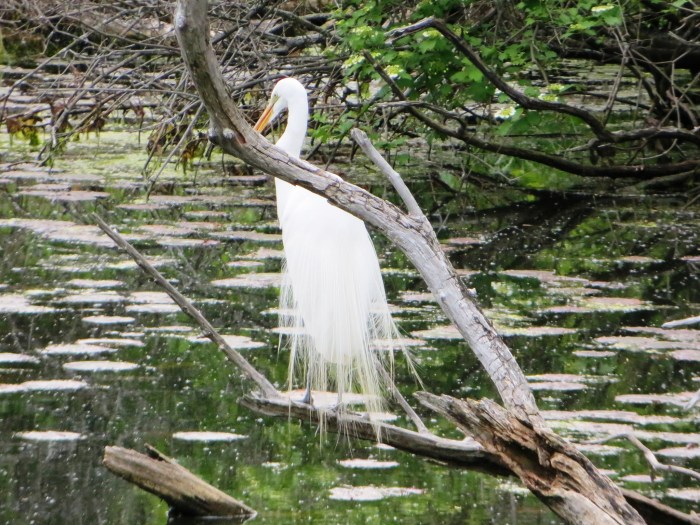
Spring Arrival Egret

Spring Arrival, photo by Cowboy*

How the Great White Egret Inspired Bird Conservation in the Smithsonian says:

One particular group of birds suffered near extermination at the hands of feather hunters, and their plight helped awaken a conservation ethic that still resonates in the modern environmental movement. With striking white plumes and crowded, conspicuous nesting colonies, Great Egrets and Snowy Egrets faced an unfortunate double jeopardy: their feathers fetched a high price, and their breeding habits made them an easy mark.

To make matters worse, both sexes bore the fancy plumage, so hunters didn’t just target the males; they decimated entire rookeries. At the peak of the trade, an ounce of egret plume fetched the modern equivalent of two thousand dollars, and successful hunters could net a cool hundred grand in a single season. But every ounce of breeding plumes represented six dead adults, and each slain pair left behind three to five starving nestlings. Millions of birds died, and by the turn of the century this once common species survived only in the deep Everglades and other remote wetlands.

This slaughter inspired Audubon members to campaign for environmental protections and bird preservation, at the state, national and international levels. The Lacey Act passed Congress in 1900, restricting interstate transport of wild fowl and game. In 1911 New York State outlawed the sale of all native birds and their feathers, and other states soon followed suit. Passage of the Weeks-McLean Act (1913) and the Migratory Bird Act (1918) took the protections nationwide and mirrored legislation in Canada, Britain, and Europe, effectively ending the fancy-feather era.

More about Great Egrets on the UM Animal Diversity Web.

You can view Cowboy’s photo from last May background big and see more in his Animals & Wildlife slideshow.

More birds and more Spring wallpaper on Michigan in Pictures!