Kitch-iti-Kipi: Michigan’s Largest Spring at Palms Book State Park

Big Spring (Kitch-iti-Kipi) Palms Book State Park

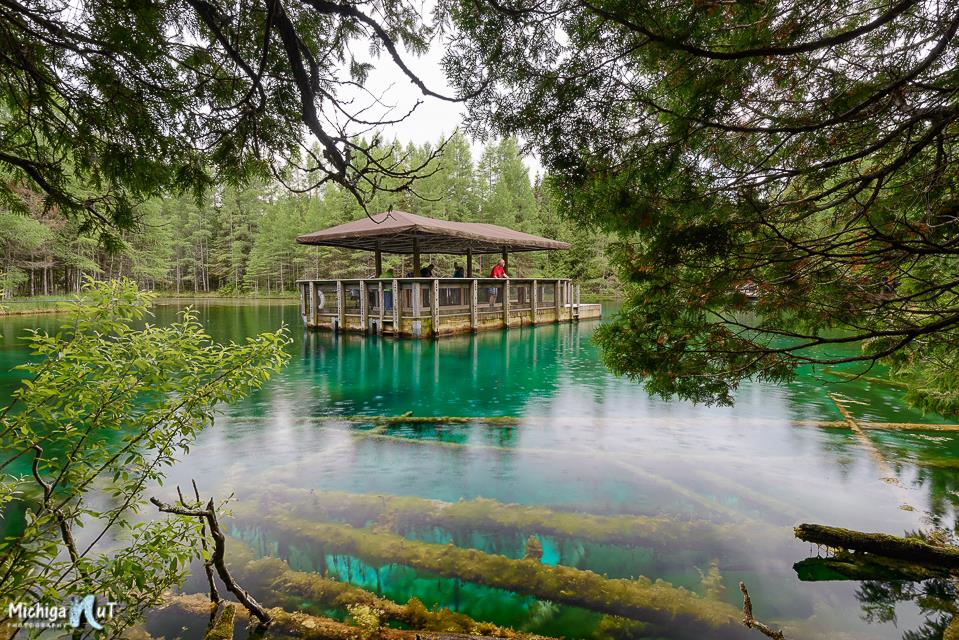
Big Spring (Kitch-iti-Kipi) Palms Book State Park, photo by Michigan Nut Photography

How about a big “way to go!” to the State of Michigan for a complete revamp their previously not very good Michigan Parks & Trails site? The new site is miles better!! The Palms Book State Park page says:

Palms Book is a rewarding side trip for the vacationer touring the Upper Peninsula, for here can be seen one of Michigan’s alluring natural attractions — Kitch-iti-kipi, The Big Spring. Two hundred feet across, the 40-foot deep Kitch-iti-kipi is Michigan’s largest freshwater spring. Over 10,000 gallons a minute gush from fissures in the underlying limestone. The flow continues throughout the year at a constant 45 degree Fahrenheit. By means of a self-operated observation raft, visitors are guided to vantage points overlooking fascinating underwater features and fantasies. Ancient tree trunks, lime-encrusted branches and fat trout appear suspended in nothingness as they slip through crystal waters far below. Clouds of sand kept in constant motion by gushing waters create ever-changing shapes and forms, a challenge to the imagination of young and old alike.

The legend of Kitch-iti-kipi is said to be about a young chieftain whose girlfriend got the best of him. He told her he loved her far above the other dark-haired maidens dancing near his birch bark wigwam. Prove it, she insisted. As a test of his devotion, she declared that he must set sail in his canoe on the pool deep in the conifer swamp. He was to catch her from his canoe as she leaped from an overhanging bough. His canoe overturned in the icy waters and he drowned. It turns out that the maiden was back at the village laughing at his foolish quest. According to legend, the Spring was named Kitch-itikipi in memory of the young chieftain who went to his death in the icy waters in an attempt to satisfy the vain caprice of his ladylove.

Other legends tell of Chippewa parents who came to the pool seeking names for their newborn. They supposedly found names like Satu (darling), Kakushika (big eye), Natukoro (lovely flower) and We-shi (little fish) scribed in the sounds of the rippling water. They attributed healing powers to the waters.

A drop of honey on a piece of birch bark dipped into Kitch-iti-kipi and presented to a loved one was to make them true forever. Another legend concerned the tamarack growing on the banks of Kitch-iti-kipi. A small piece of the bark ground in a mortar and pestle and placed in an individual’s empty pockets would be replaced by glittering gold at exactly midnight. Whatever the legends, visitors to the spring loved them. Kitch-iti-kipi is said to have many meanings in the Chippewa language-The Great Water; The Blue Sky I See; The Roaring, Bubbling Spring. Others called it the Sound of Thunder and Drum Water, even though the quiet is eerie. Whatever its name and legend, Palms Book State Park continues to draw curious visitors.

Although it was a black hole all but hidden in a tangle of fallen trees, John I. Bellaire fell in love with the Big Spring in the early 1920s…

Read on for the story of how it came to be a state park along with maps, photos and park events.

View John’s photo background big, purchase this photo and definitely follow him at Michigan Nut Photography on Facebook.

More Michigan parks on Michigan in Pictures!
June 29th in Holland

Holland - MI

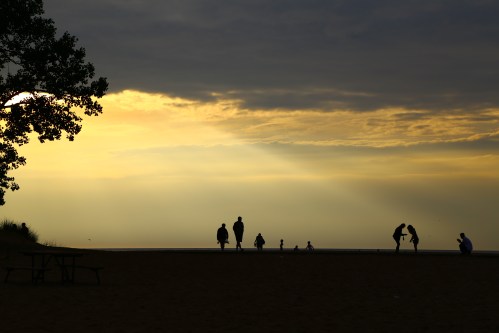
Holland – MI, photo by betopps

View this photo from June 29, 2013 background bigtacular and see more in betopps slideshow.

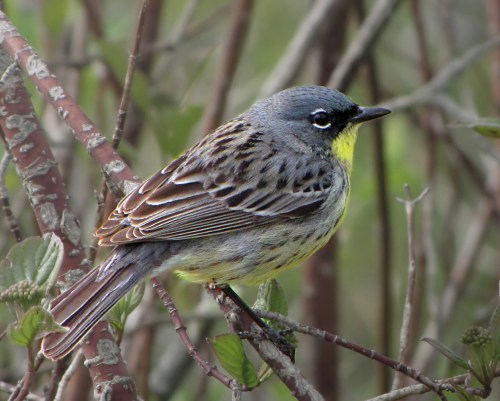
Kirtland’s Warbler on the Rebound

Kirtland Warbler at Tawas Point, 5-15-2010

Kirtland Warbler at Tawas Point, 5-15-2010, photo by John Britt

The Michigan Department of Natural Resources completed their annual June survey of Kirtland’s warbler, one of the rarest members of the wood warbler family that nests almost exclusively in Michigan’s northern Lower and Upper peninsulas, with a few locations in Wisconsin and the province of Ontario. They explain:

“We have a great group of DNR, U.S. Forest Service and U.S. Fish and Wildlife Service staff members, as well as volunteers, who are trudging through young, thick jack pine in the early morning hours,” said Department of Natural Resources wildlife supervisor Keith Kintigh. “The reward is getting to hear that singing male Kirtland’s warbler, which is the way we actually census the population.”

The Kirtland’s warbler census is a tool managers use to compare population numbers relative to recovery goals by listening for the male’s song. Kirtland’s warbler numbers had been very low, under 200 nesting pairs, in the mid-1980s. Michigan became the focus for habitat management, since it has been a primary location for the birds’ reproduction.

Kirtland’s warblers spend eight months wintering in the Bahamas. The males arrive back in Michigan between May 3 and May 20, a few days ahead of the females. The males establish and defend territories and then court the females when they arrive. The males’ song is loud, yet low-pitched, ending with an upward inflection – easily recognized to identify the presence of a Kirtland’s warbler.

Additionally, the presence or absence of Kirtland’s warblers determines if protection of that area is needed and allows evaluation of different habitat management techniques. The habitat requirements for Kirtland’s warbler are very specific; they prefer large blocks of young jack pine, usually hundreds of acres in size. The Kirtland’s warbler is a ground-nester, often using the living branches of 5- to 20-foot-tall jack pine trees to conceal their nests, so jack pine trees must be actively managed. Large areas of sandy soils are planted with jack pine and then cut decades later, on specific intervals, to achieve the perfect-aged stands.

Lots more about this rare songbird, including census results that show a steadily increasing population on the DNR’s Kirtland’s Warbler (Dendroica kirtlandii) page.

View John’s photo from May of 2010 background big and see more in his Animals & Wildlife slideshow.

#TBT: Atop Miners Castle

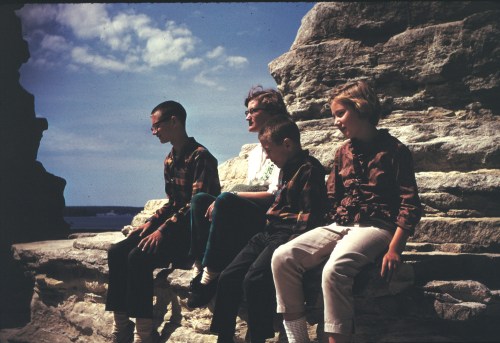
Atop Miners Castle

Atop Miners Castle, photo by Roger Dinda

On April 13, 2006 one of the most recognizable rock formations in the Pictured Rocks National Lakeshore, Miners Castle collapsed. The Lakeshore explains:

On Thursday morning, April 13, 2006, the northeast turret of Miners Castle collapsed. One turret remains on Miners Castle, the best-known feature of Pictured Rocks National Lakeshore. The collapse was reported via cell phone by fisherman in the area, according to chief ranger Larry Hach. Most of the rock fell north and into Lake Superior, and there were no injuries. The lower overlook platform near Miners Castle appears to be unaffected.

While the rockfall at Miners Castle on April 13 was startling, such events are not rare along the Pictured Rocks escarpment. At least five major falls have occurred over the past dozen years: 1) two different portions of Grand Portal Point, 2) the eastern side of Indian Head just east of Grand Portal Point, 3) Miners Falls just below the (now modified) viewing platform, and 4) beneath the lip of Munising Falls (along the former trail that went behind the cascade).

All the rockfalls involved the same rock unit, the Miners Castle Member of the Munising Formation. Rock units are named for places where they were first technically described. The Miners Castle Member consists of crumbly cross-bedded sandstone that is poorly cemented by secondary quartz, according to U.S. Geological Survey Research Ecologist Walter Loope.

Rockfalls along the cliffs typically occur in the spring and fall due to freezing and thawing action of Mother Nature.

Joel says that this photo was taken Roger Dinda in 1961 or ’62 “…before Pictured Rocks was a National Lakeshore, before Miners Castle lost its second turret, before they put up the boardwalks and railings. In this photo I’m just as tense as I look. I am deathly afraid of heights and this was (still is) about the scariest place I’ve ever been.”

View his photo background big more in his Lake Superior slideshow.

There’s more Throwback Thursdays, more Miners Castle & more from the Pictured Rocks National Lakeshore on Michigan in Pictures!

Waterfall (and Wayback) Wednesday: Potawatami Falls & Michigan’s Potawatami Tribe

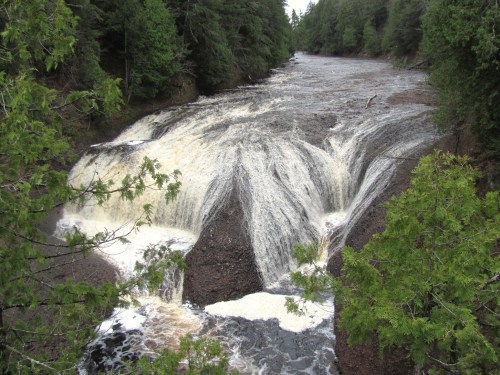
24 Potawatomi Falls

24 Potawatomi Falls, photo by David Hedquist

GoWaterfalling’s page on Potawatomi Falls shares:

A very scenic waterfall along an especially scenic part of the Black River. An added plus is the close proximity of the equally impressive Gorge Falls. These are two of the most impressive falls on the Black River and are also the two easiest to access.

Potawatomi Falls is just upstream of Gorge Falls and is reached from the same parking area. Potawatomi is the name of one of the native tribes. This waterfall is wheelchair accessible. Gorge Falls is just a short walk away.

In low water, the waterfall is segmented, with most of the water going to the right. In high water the river covers the entire rock separating the two segments with a sheet of white water.

Head over to GoWaterfalling for directions and more. In case you were wondering (as I was), here’s a bit of Potawatomi history from Lee Sultzman that explains (in part):

In 1600 the Potawatomi lived in the northern third of lower Michigan. Threatened by the Ontario tribes trading with the French (Neutrals, Tionontati, Ottawa, and Huron) during the late 1630s, the Potawatomi began leaving their homeland in 1641 and moved to the west side of Lake Michigan in northern Wisconsin. This was completed during the 1650s after the Iroquois defeated the French allies and swept into lower Michigan. By 1665 all of the Potawatomi were living on Wisconsin’s Door Peninsula just east of Green Bay. They remained there until 1687 when the French and Great Lakes Algonquin began driving the Iroquois back to New York. As the Iroquois retreated, the Potawatomi moved south along the west shore of Lake Michigan reaching the south end by 1695. At about the same time, one band settled near Jesuit mission on the St. Joseph River in southwest Michigan. Shortly after the French built Fort Ponchartrain at Detroit in 1701, groups of Potawatomi settled nearby. By 1716 most Potawatomi villages were located in an area between Milwaukee to Detroit. During the 1760s they expanded into northern Indiana and central Illinois.

Land cessions to the Americans began in 1807 and during the next 25 years drastically reduced their territory. Removal west of the Mississippi occurred between 1834 and 1842. The Potawatomi were removed in two groups: the Prairie and Forest Bands from northern Illinois and southern Wisconsin went to Council Bluffs in southwest Iowa; and the Potawatomi of the Woods (Michigan and Indian bands) were relocated to eastern Kansas near Osawatomie.

View David’s photo background bigtacular and see many more photos and some videos in his Potawatomi Falls slideshow.

PS: David is the author of Waterfalling in Wisconsin: The Complete Guide to Waterfalls in the Badger State. I’m seeing a bunch of photos of Michigan waterfalls, so (maybe) stay tuned!

Appreciating the Michigan Mayfly (Ephemeroptera)

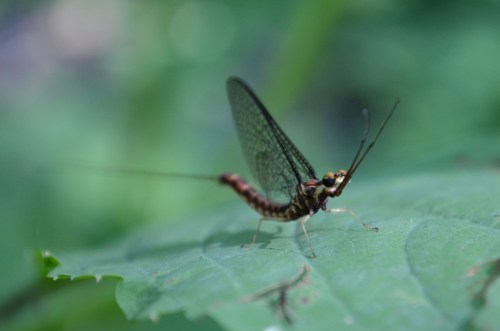
Mayfly (Ephemeroptera)

Mayfly (Ephemeroptera), photo by Todd Marsee, Michigan Sea Grant

Last year Steve Stewart of Michigan State University Extension shared The Mayflies are coming – time to celebrate!:

It’s summer, so it’s time for the mayfly hatch! There are hundreds of species of mayflies (also commonly referred to as fish flies) in North America, representing a number of Families in the Order Ephemeroptera. Ephemeroptera comes from the Greek word for “short-lived” (as in “ephemeral”), and it’s a good name because as winged adults, mayflies only live a few days. The most widespread burrowing mayfly species in the Great Lakes is Hexagenia limbata, the Giant Mayfly.

Mayflies have a very interesting life cycle. They are the only insect to have two “adult” molts, and begin life as eggs laid on the surface of the water that sink to the bottom. The aquatic nymphs of mayflies are called naiads, and creep around rocks and vegetation. After months or years (depending on the species), they float to the surface and molt to a winged, but sexually immature, sub-adult. Often within hours, another molt occurs and the final stage emerges—the winged, reproductive adults, which possess only vestigial mouth parts and cannot eat or drink and, depending on the species, live for only days or, in some cases, mere hours.

One of the most obvious characteristics of the adults is their large numbers. They can emerge in huge numbers from a body of water. So huge, in fact, that their swarms can be seen on Doppler radar! This image is from June 14 showing a mayfly swarm over western Lake Erie, pushed ashore in Monroe County by an easterly breeze. Once ashore, mayflies tend to sit on upright objects and can completely cover the surfaces of posts, sheds, and light poles. At night, they are attracted to lights.

Some people think of mayfly hatches as a nuisance, and they can be a bit annoying when they are swarming. But mayflies are a good thing. Some people think of mayfly hatches as a nuisance, and they can be a bit annoying when they are swarming. But mayflies are a good thing. They are rarely found in degraded bodies of water because their external gills in the nymph stage are very vulnerable to silting and pollution. Mayflies are, therefore, used as an indicator species when testing for environmental quality, and their presence reflects the good quality of the habitat from which they hatched.

Read on for more including photos and school lessons on the Mayfly.

View this photo from the Michigan Sea Grant background bigtacular and see more of their mayfly photos on Flickr.

PS: Thanks to Absolute Michigan pool member Steve Brown for posting the first Mayfly of the season and alerting me.

Yesterday & Today on Mackinac Island

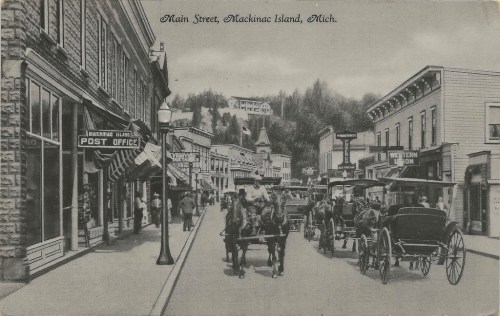
Mainstreet Mackinac Island 1930s

NE Mackinac Mackinaw Island MI 1930s, photo by Don … The UpNorth Memories Guy … Harrison

I think that it’s pretty clear that Mackinac Island, a living museum boasting an intact Colonial era fort along with many exhibition buildings, The Grand Hotel and other historic businesses and NO CARS, is Michigan’s coolest state park. Today (June 11, 2015), Pure Michigan will be presenting Mackinac Island to the world (well, the internet at least) in a whole new way. They explain:

As the first state in the United States to ever conduct a real-time virtual guided tour, Pure Michigan is offering you the opportunity to experience Mackinac Island – virtually! We’re partnering with Georama, a real-time vicarious travel platform, so you can virtually tour the island just by simply logging into michigan.org/live on Thursday, June 11 at 12 noon to 4 pm Eastern. Tom Daldin, host of PBS show Under the Radar, will serve as your travel guide and adventure lead in this digital exploration.

…Begin your journey by taking a ferry ride to Mackinac Island before getting an up-close and personal view of the island.

We’ll take you to downtown Mackinac, home to some of the most lovely shops and art galleries in the state, offering you a chance to peek inside as well as interact with people on the streets to get their thoughts on the island known as America’s fudge capital. We’ll also tour Douds Market, America’s oldest family-owned grocery store for 131 years so you can see some of the store’s specialty items and get a history lesson on the market.

From there we’ll visit Fort Mackinac and round out our journey with a trip to the gloriously-designed Grand Hotel. We’ll give you a new perspective of this landmark and invite you to join us as we sip tea on the Grand’s famous front porch all while surrounded by 2,500 gorgeous geraniums.

Click through for more and tune in!

View the photo background big and see more of Don’s Mackinac Island postcards & photos on Flickr. Be sure to follow him on Facebook as well!

Michigan Ghost Towns: Aral at Otter Creek

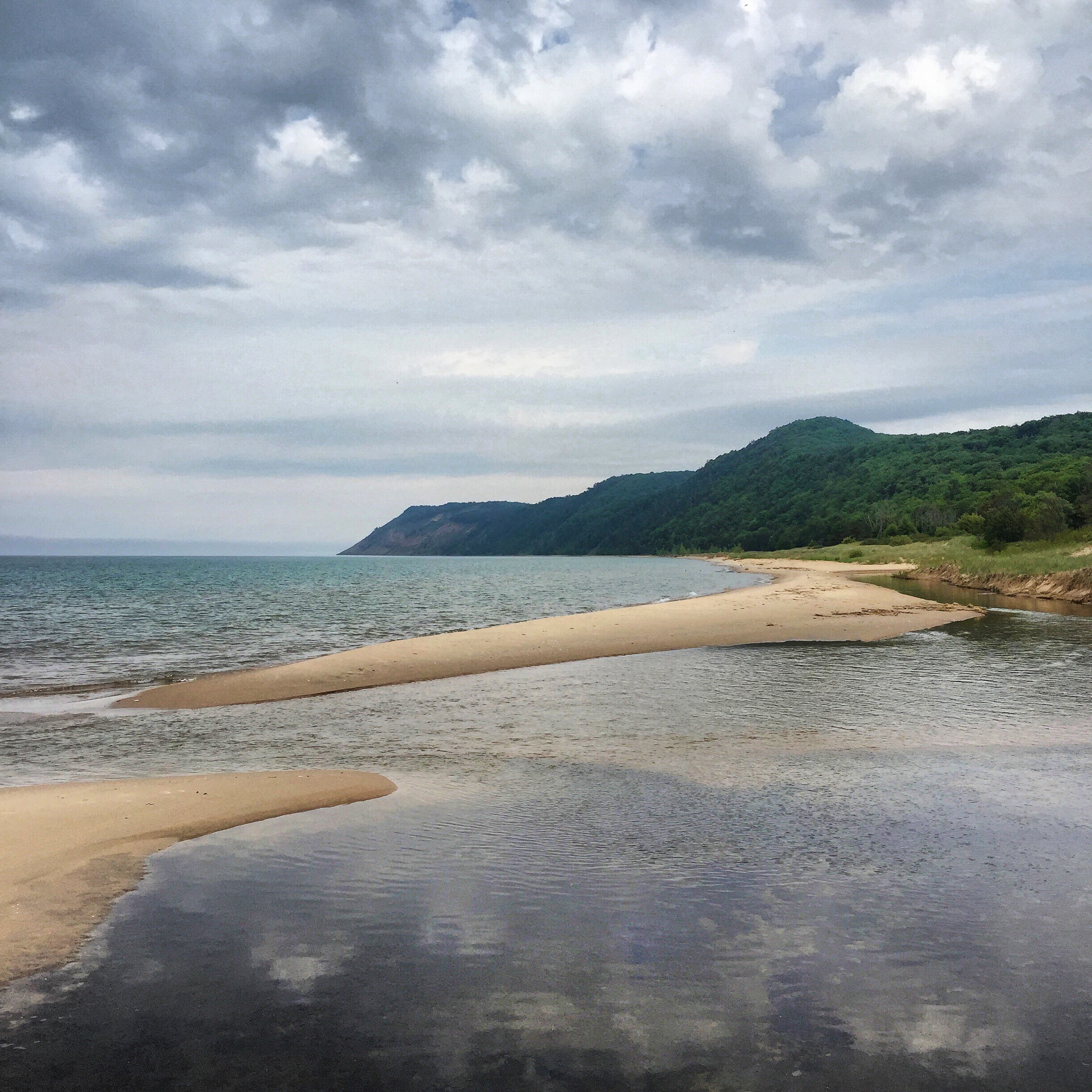
Esch Beach

Esch Beach, Otter Creek, photo by Sara Hunt/oni_one_

The Sleeping Bear Dunes National Lakeshore tells the rich tale of the ghost town Aral:

Aral was located on Lake Michigan where Otter Creek empties into the Lake just south of Esch Road, a few miles south of Empire, MI. Today this is one of the most popular swimming beaches in the Lakeshore, but in the 1880s, Aral was a booming lumber town!

When the United States acquired land, it first had to be surveyed before it was made available to individuals. In the summer of 1849, Orange Risdon was one of the surveyors assigned to the area around Grand Traverse Bay. In 1853 soon after he finished the survey, Risdon and his wife, Sally, bought 122 acres where Otter Creek emptied into Lake Michigan.

The US Civil War began in 1861, and to induce able-bodied men to join the Union forces, the US government offered $100 bounty to men who enlisted. By 1863 the bounty was increased to $300, and finally a draft was instituted. An interesting provision of the draft act allowed drafted men to avoid service by hiring a substitute or by paying $300. One of the men receiving draft notice was Robert F. Bancroft, who was married and 30 years old. He chose to take advantage of this provision by hiring a German immigrant to take his place as a soldier, but interestingly he followed his replacement to the battlefield. Instead of carrying a gun, he brought his camera and became one of the first battlefield photographers.

Following the war, the veterans returned home, and Robert Bancroft settled with his wife Julia and daughter Anna in Traverse City. He began buying land in Platte and Lake townships as investments and in late 1864, he bought the 122 acres from Orange and Sally Risdon of Saline, MI.

Bancroft cleared 20 acres and built a log cabin for his family to live in. Then he planted some black locust trees and an apple orchard around the cabin. Lumber speculators soon arrived looking for stands of white pine. Most of the forest in this area was hardwood, but there were some stands of white pine inland from Otter Lake. By the late 1870s Daniel Thomas bought a 5-acre parcel on Lake Michigan south of Otter Creek, but he decided to build a house across the road from the Bancroft’s. Lumber speculators were on their way north as the forests near Grand Haven and Muskegon were harvested.

…By 1883, the lumber business was booming and the town was growing. A post office was required. The community was known as Otter Creek – the “Krik” by locals. When they applied for a post office, their name was rejected because there was already an “Otter Creek” in Michigan. “Bancroft” was the next suggestion, but again the name had already been used. One of the workers suggested the name “Aral” because of the beautiful Aral Sea in Europe. Locals continued to call it Otter Creek though. Dr. Frank Thurber was named the first postmaster. Keep his name in mind, for he too would play a central role in the murder.

Murder you say? Indeed – read on for lots more…

View Sarah’s photo background bigilicious on Facebook and follow her for lots more at oni_one_ on Instagram.

Chaos & Order: Elberta Breakwall Edition

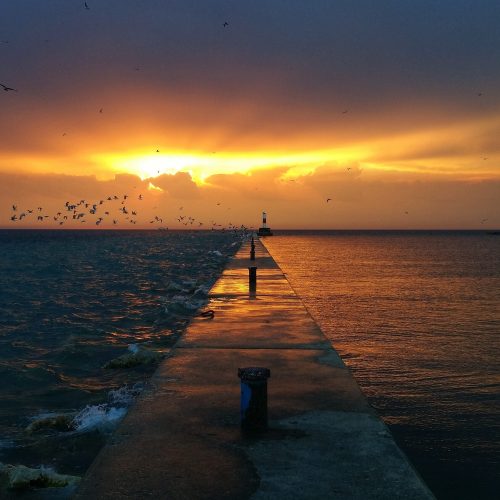
IMG_20150529_122634

Untitled, photo by Noah Sorensen

You really should check out this photo background bigtacular. Lots more in his slideshow and if you do the Instagram thing, Noah is a great follow @mcsorensens.

Fern Friday

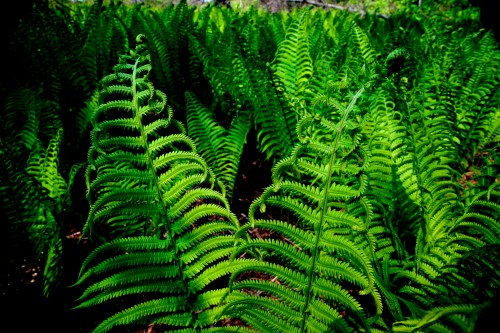
Michigan Ferns

Ferns, photo by Tom Mortenson

The American Fern Society offers A Brief Introduction to Ferns that says (in part):

Ferns have been with us for more than 300 million years and in that time the diversification of their form has been phenomenal. Ferns grow in many different habitats around the world. The ferns were at their height during the Carboniferous Period (the age of ferns) as they were the dominant part of the vegetation at that time. During this era some fern like groups actually evolved seeds (the seed ferns) making up perhaps half of the fern like foliage in Carboniferous forests and much later giving rise to the flowering plants. Most of the ferns of the Carboniferous became extinct but some later evolved into our modern ferns. There are thousands of species in the world today.

…The life cycle of the ferns may seem complicated but it has worked quite successfully for millions of years. Though spores come from fronds of ferns, the fronds do not come directly from the spores. Spores from the parent fall to the ground and with an enormous amount of luck (millions perish for every success) they will find suitable moisture and light. The tiny single-celled organism starts to grow by cell division. Soon orderly arrangements of cells form little green heart shaped plants or Prothallia (gametophytes). These plants go unnoticed by most people as they are only 1/2 inch or less across and lie flat on the ground. This is an independent plant with its own simple “root” system (rhizoids) to provide it with nutrients and water.

Read on for more and you can view native and non-native Michigan ferns at the University of Michigan Herbarium.

Tom took this shot on the Montreal River that forms the Wisconsin/Michigan U.P. border near Superior Falls. Definitely check it out background bigtacular and see more in his slideshow.

You can read more about Superior Falls and check out more  summer wallpaper on Michigan in Pictures!