
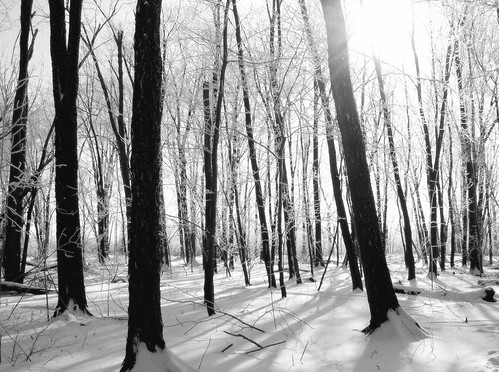
a white christmas, photo by radiospike.
Here’s a photo from Commerce Township on Christmas Eve is one of many in the new Michigan Gallery on Flickr. It’s a group where Michigan photographers can feature their best.
a white christmas, photo by radiospike.
Here’s a photo from Commerce Township on Christmas Eve is one of many in the new Michigan Gallery on Flickr. It’s a group where Michigan photographers can feature their best.
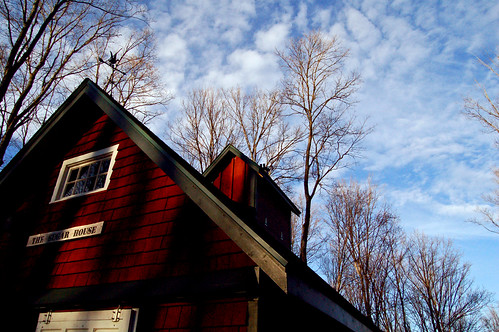
The Sugar House, photo by grodapictures.
Melissa writes “My Dad built this so he could make Maple Syrup every spring. My Mom “loves” making maple syrup.”
This photo is from somewhere around Iron River. Check out Melissa’s films at Groda Pictures.
(Michpics feature on maple syrup)

23 minutes, 39 seconds, photo by aragirn
Kyle writes that this photo was taken on the stamp sand beach right outside of Gay, MI in the Keweenaw Peninsula. He has tagged it on a map of the Keweenaw as well and also sent a link to the history of Gay, Michigan (including the smoke stack in the picture). I’m not sure if it makes me happy or sad to learn that this photo was a result of his first experiment with long-exposure night photography.
Note that although I have tagged this photo with the “wallpaper” tag, you have to be one of Kyle’s contacts on Flickr to view the computer background-sized image – make friends!
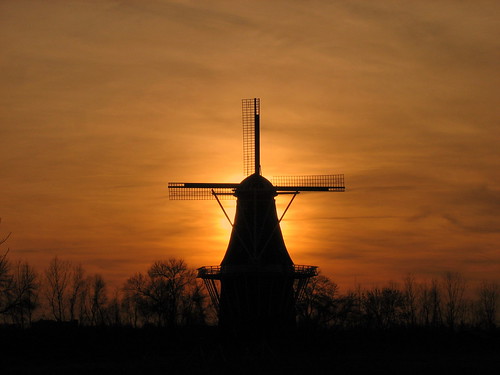
This photo is one of a nice set of Holland, Michigan photos by Norm Hoekstra (makes a nice desktop background too!)
Wikipedia’s entry for Windmill Island says that the the 245-year-old windmill De Zwaan, Dutch for “the swan” or “graceful bird”, is the only authentic, working Dutch windmill in the United States:
In 1964, the City of Holland purchased the windmill De Zwaan from a retired miller in the town of Vinkel in the province of Noord Brabant, the Netherlands. The windmill was shipped from the Netherlands to the port of Muskegon, Michigan on the ship Prins Willem van Oranje. It was brought by truck from Muskegon to its present location on Windmill Island. Reconstruction of the mill began in 1964 and the park opened in April of 1965. The island, formerly farmed by Henry F. Koop, was chosen because of the favorable wind conditions there. Although originally a peninsula, a manmade canal turned the land into an assisted island. Before the arrival of De Zwaan, it was known as Hyma Island.
The Windmill has an article that goes more in-depth on this structure’s history. Flickr offers some pictures of windmills in Zandaam (where this one hails from). More info can be found in the City of Holland’s Windmill Island pages.
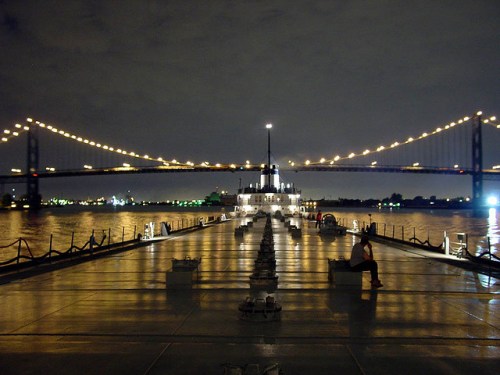
Quiet Night on the Detroit River, photo by theempirebuilder.
The latest entry into the Small World Files is today’s photo of the 100 year old Southdown Challenger upbound on the Detroit River just above the Ambassador Bridge. Mac of Detroit Bike Blog wondered if I’d seen these photos. I hadn’t and spent a good long while poring through this amazing set of Southdown/St. Mary’s Challenger photos that takes you all across the Great Lakes, under the Mackinac Bridge and even belowdecks.

A few recent ones were taken on Leelanau County’s Suttons Bay. I mentioned that the hill in one of them looked like the hill on a site we had designed for a housing development. Wade, the photographer, said “I’m sure you are right. In fact, in the link you sent, the Challenger is in the 5th row from the top on the far left side.”
Anyway, check out this amazing gallery of photos and also head over to Boatnerd.com to read the equally amazing history of the St. Mary’s Challenger, which was built in 1906 in Detroit and has gone through a dizzying array of names and circumstances in the century that followed. Seriously, there should be a movie or something about this ship.

This photo from Kirk Park, Grand Haven, is part of a set of photos of Michigan beaches & shoreline dunes. In addition to the fact that it’s a great photo, we’re featuring it because we have an in-depth article on Absolute Michigan today titled Protecting Lake Michigan’s Sand Dunes that explores the threats facing Lake Michigan’s geologically unique sand dunes.
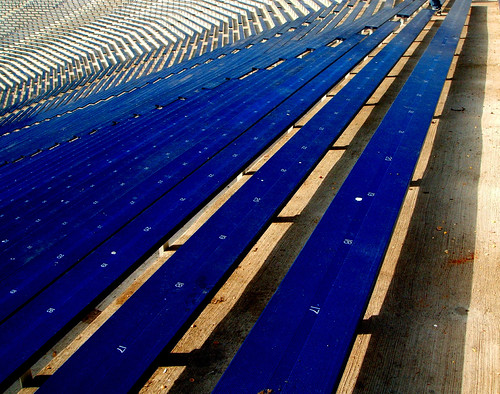
As far as the eye can see…, photo by Trapac.
There will be a ton of stuff all over the place about UM coach Bo Schembechler. I don’t really have anything to add except that he was an illustration of what a person can accomplish if they keep working hard for what they believe in every day, for all their life.
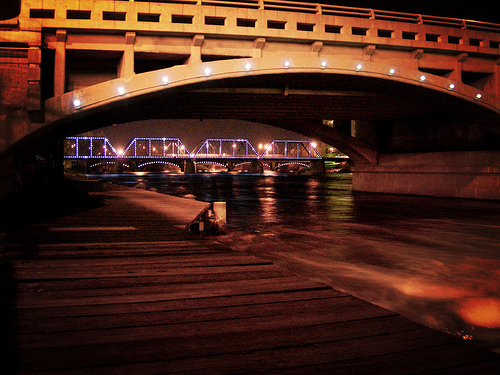
A Little Lomo, photo by docksidepress.
Well, this isn’t actually from a Lomo camera, but it certainly has a Lomo vibe.
What the heck is this Lomo, anyway? The best place to find out is at the Lomographic Society International where you can learn about the Lomo’s birth in the LOMO Russian Arms and Optical factory (where the Lomo Compact Automat was born) and subsequent rise to world domination. Almost at least.
Be sure to click on the 10 Golden Rules, where you learn to Take your camera everywhere you go, to shoot from the hip and generally chuck everything you know about photography out the window.
Reading about lomography really made me smile … maybe it will make you smile too.
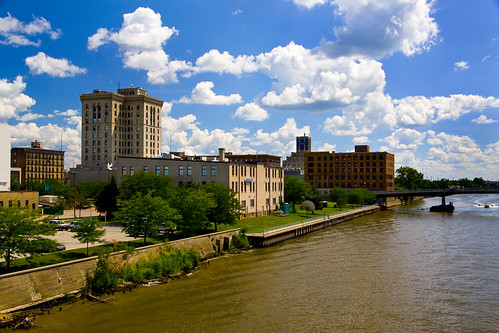
place of the sauk, photo by gsgeorge.
Today’s post springs from a critique by Lawrence Drouillard of a photo of Saginaw that we posted this spring
BLAND, BOARDED AND CRACKED, WITH AN UNCERTAIN BOTTOM LINE WITH NO FOCUS – NOT UNLIKE THE TOWN I’VE LIVED IN ALMOST ALL OF MY LIFE. THIS IS WHAT IT HAS BECOME. -SAGINAW, MICHIGAN
Now, I happen to like that photo quite a lot, but it’s certainly not a photo that shouts “move yourself or your business to Saginaw or just drop by for a visit” as a photo like this one by Geoffrey George does. (view larger). Since the other picture is the first thing that pops up on a search for “saginaw michigan photo”, we probably better address that.
The Saginaw Library details the history of Saginaw and says that there is archaeological evidence Paleo-Indian nomads in the Saginaw Valley from 12,000 years ago (some of the most valuable archaeological sites in Michigan are in the area). Woodland cultures including the mound-building Hopewell Indians settled along the Saginaw River. According to the library, name Saginaw is derived from an Ojibway term “O-Sag-e-non” or “Sag-in-a-we” that means “to flow out” and probably refers to the outflow of the Saginaw River into the Saginaw Bay. However, there are also those who believe that Saginaw is derived from Sagina’we’, signifying ‘the country or place of the Sauk’.
The library’s history goes on to explain how the American Fur Company established a trading post on the west side of the Saginaw River after the War of 1812, and how Saginaw City was founded by Norman Little in 1836. Both the article and Wikipedia’s entry on Saginaw, Michigan detail how Saginaw’s easy access to waterways served to fuel growth as Michigan’s massive white pine forests were felled and shipped around the nation in the 1800s. Soon after the close of the lumbering era, a new industry: the auto industry.
In Saginaw, the Jackson, Wilcox and Church Company produced carriages to be drawn by horses, and later produced components used in motor vehicles. This was eventually acquired by General Motors and formed the basis for its Steering Gear division. Additionally, General Motors established foundries and other manufacturing facilities in Saginaw. The early development of automotive production within Saginaw would set the course for the future economic circumstances of the City. (click for photo from the early automotive industry in Saginaw)
Modern day Saginaw has faced major challenges due to manufacturing job loss, but community leaders are actively seeking new industries through initiatives such as those listed on The Saginaw Valley. You will also want to explore the area through the Saginaw Chamber of Commerce, the Saginaw Valley Convention & Visitors Bureau and the City of Saginaw, Michigan.
You can see where this picture was taken (along with many more) on the Flickr photo map of Saginaw, MI and also see more photos from the past and modern day in the Saginaw, Michigan group on Flickr. Please also feel free to add your own thoughts on Saginaw or links to more information in the comments!
 Michigan in Pictures