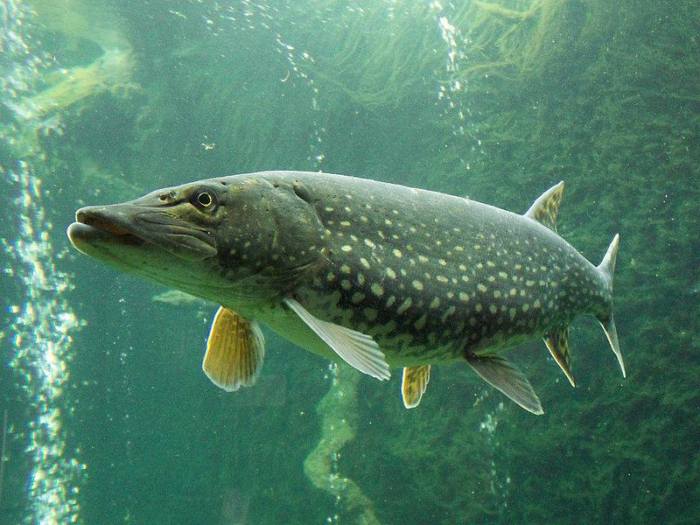
Know Your Michigan Fish: Northern Pike (Esox lucius)

Michigan Northern Pike Esox lucius

Northern Pike (Esox lucius), photo by Isle Royale National Park

The Michigan DNR’s Northern Pike page has this to say about this apex predator of the Great Lakes and Michigan’s inland lakes:

As predators, northern pike can have significant impact on their prey species. As with muskies, pike lurk in the cover of vegetation in the lake’s clear, shallow, warm waters near shore, although they retreat somewhat deeper in midsummer. Pike consume large numbers of smaller fish – about 90 percent of their diet – but seem willing to supplement their diet with any living creature their huge jaws can surround, including frogs, crayfish, waterfowl, rodents, and other small mammals. Their preferred food size is approximately one third to one half the size of the pike itself.

Great Lakes pike spawn in the shallows in April or May, right after the ice leaves, and before muskies reproduce. As a result of their eating habits, young pike grow rapidly in both length and weight. Females become sexually mature at age three or four years, and males at two to three years. Beyond sexual maturity, pike continue to gain weight, although more slowly. Great Lakes pike have an average life span of 10 to 12 years.

Pike eggs and new hatchlings (which stay inactive, attached to vegetation for their first few days of life) fall prey in large numbers to larger pike, perch, minnows, waterfowl, water mammals, and even some insects. Larger pike have two primary enemies – lampreys, and man. Spawning adult northern pike, exposing themselves recklessly in the shallows, are vulnerable to bears, dogs, and other large carnivores.

Northern pike flesh excels in flavor, thus making them a doubly rewarding game fish. Since their skin has heavy pigmentation and an unappetizing mucous coating, most people skin them or scale them carefully.

This photo was one of Isle Royale National Park’s “Wildlife Wonders of the Week.” They noted that a five pound female pike will lay about 60,000 eggs. Two weeks later fertilized eggs hatch, hungry for microscopic morsels. Once to the fingerling stage, food scarcity may force them to eat their own siblings for nourishment.

View it bigger on Facebook and definitely follow their page for the latest from one of Michigan’s coolest parks!

More Michigan fish on Michigan in Pictures.
Red barn with Lilacs

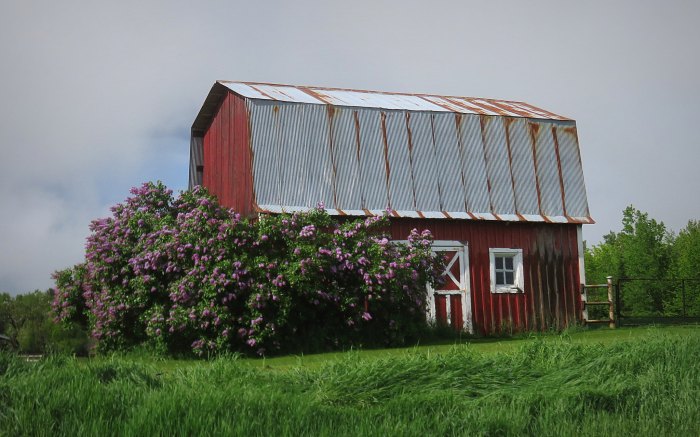
Red barn with Lilacs

Red barn with Lilacs, photo by Ann Fisher

While lilacs are fading in much of the state, they’re just getting going in the Upper Peninsula!

View Ann’s photo background big and see more in her 2016 UP slideshow.

More barns on Michigan in Pictures.

Fiborn Quarry

Fiborn Quarry

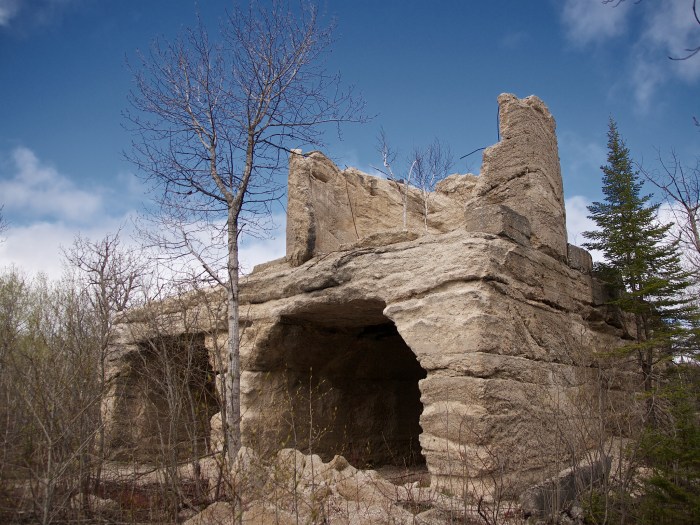
Fiborn Quarry, photo by David Marvin

The Michigan Karst Conservancy’s page on Fiborn Quarry begins:

The unusually pure limestone found in what is now the Fiborn Karst Preserve led to development of Fiborn Quarry, which operated from early 1905 until January 1936. The quarry mined, crushed and shipped limestone for use mostly in steelmaking, but also calcium carbide manufacturing and road building.

A small town grew up next to the quarry, which included an elementary school, a boarding house, a company store and housing for employees and their families.

“You just felt like you were living in a little world all of your own. Just like there was no other place,” recalled one former resident who was 13 years old in 1930. “You had your grocery store. You had your post office. You had your school. You had your minister that came in there and gave services. And it just seemed like it was real private.”

Workers broke up the limestone with dynamite, steam shovels loaded the rock into cars which hauled it to a crusher. Crushed limestone was sorted into different sizes hauled on the railroad spur 3-4 miles north to Fiborn Junction and the main rail line to Sault Ste. Marie.

View David’s photo background big and see more from Fiborn in his slideshow.

20 years of Pasty Central and the Pasty Cam

Upper Peninsula Michigan Miners

Let There Be Light, photo courtesy Pasty Central/Pasty.com

Pasty Central is  celebrating their 20th anniversary and vying for USA Today’s Best Pasty in Michigan. Click through to cast a vote for them or your favorite pasty shop.

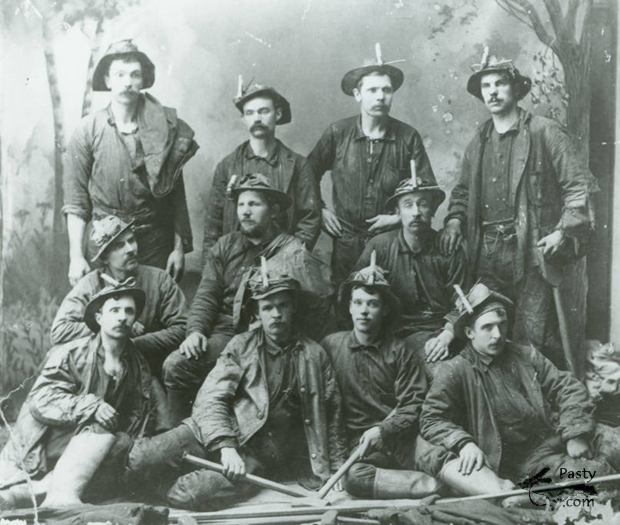
Back in 2008, Charley of Pasty Central wrote about these UP miners who doubtless relied on the pasties in their bellies to survive:

In researching today’s Pasty Cameo I came across these men who had been entombed in Pewabic Mine at Iron Mountain for over 40 hours before they returned to the light of day. They had been trapped on the fourth level of the mine when a level above them collapsed. One of their co-workers didn’t make it out.

This picture is a good illustration of the “Tommy knocker”, a popular hat-candleholder in the 1800’s before carbide and acetylene lamps came along.

A feature of the site since 1998 has been the Pasty Cam, a daily photo that’s paired with a well-researched “This Day in History”. Today’s looks at how on on May 12, 1781 Mackinac Island (valued at 5000 pounds) passed from native tribes to the British – click to check it out!

The pasty, a savory pastry typically filled with meat & vegetables, was brought to the Upper Peninsula by Cornish miners. Check out Real Michigan Food: The Pasty on Absolute Michigan for lots more about this classic UP dish.

May’s Eta Aquariad Meteor Shower

Milky Way over Au Sable Point Lighthouse

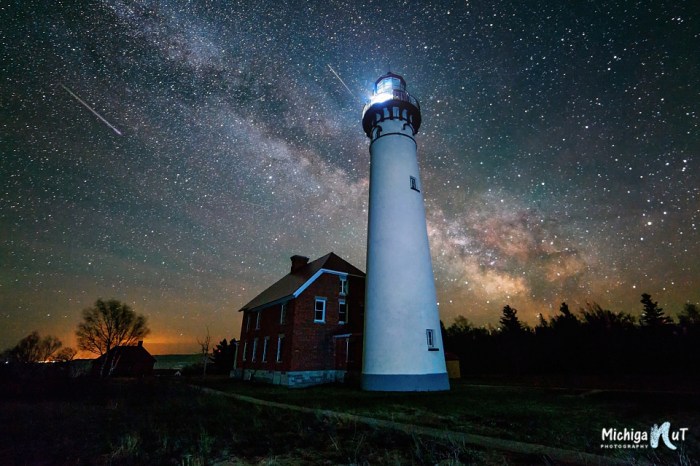
Milky Way over Au Sable Point Lighthouse, photo by Michigan Nut

EarthSky shares details on this week’s Eta Aquarid meteor shower:

In 2016, the forecast calls for the greatest number of Eta Aquarid meteors to light up the predawn darkness on May 5 and 6. It should be a good year for this shower, with the May 6 new moon guaranteeing deliciously dark skies for the 2016 Eta Aquarids. This shower favors the Southern Hemisphere, ranking as one of the finest showers of the year. At mid-northern latitudes, these meteors don’t fall so abundantly, though mid-northern meteor watchers will catch some, too, and might be lucky enough to catch an earthgrazer – a bright, long-lasting meteor that travels horizontally across the sky – before dawn.

Halley’s Comet is the source of the Eta Aquarid meteor shower. Every year, our planet Earth crosses the orbital path of Halley’s Comet in late April and May, so bits and pieces from this comet light up the nighttime as Eta Aquarid meteors. This shower is said to be active from April 19 to May 20, although Earth plows most deeply into this stream of comet debris around May 5 or 6.

The comet dust smashes into Earth’s upper atmosphere at nearly 240,000 kilometers (150,000 miles) per hour. Roughly half of these swift-moving meteors leave persistent trains – ionized gas trails that glow for a few seconds after the meteor has passed.

They add that early morning is the best time to see them and that the broad peak of the Eta Aquarids may present a decent showing of meteors during the predawn hours on May 4 and May 7 as well! Read on for more.

View John’s photo bigger, see more in his Starry Nights slideshow and definitely follow Michigan Nut Photography on Facebook!

More about the Au Sable Lighthouse in the Pictured Rocks National Lakeshore on Michigan in Pictures!

Celebrate Dark Sky Week in Michigan’s Parks

Milky Way & Meteor at Fayette

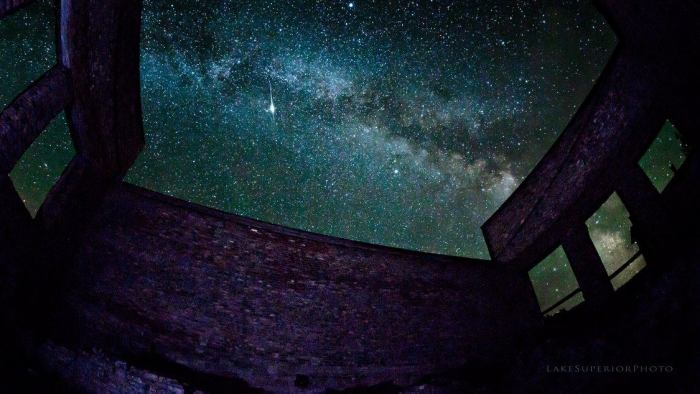
Milky Way and Meteor above Fayette, photo by Lake Superior Photo

This week (April 4-10) is International Dark Sky Week. The State of Michigan has a list of 20 state parks that will be open late all week. One of the parks that will be open late is Fayette State Historic Park, located on the Garden Peninsula of Lake Michigan’s north shore:

Fayette Historic State Park blends nature and history with a Historic Townsite, a representation of a once-bustling industrial community. Visitors can learn about the town through guided tours and information from the Visitor Center, or simply by walking through the townsite and exploring on their own. Walk through restored buildings like the town hotel and a cabin, built to replicate the homes in which residents of Fayette used to live. Interpretive panels provide information to transport visitors back in time and tell the story of the town.

On the second Saturday of August, the park is transformed back to its glory days with period displays, food and music at the annual Heritage Day.

Shawn took this at Fayette a couple of years ago. See it bigger, view & purchase more dark sky pics in her Milky Way & Miscellaneous Night Sky gallery, and definitely follow Lake Superior Photo on Facebook!

More Michigan parks on Michigan in Pictures.

Breaking Free at Tahquamenon Falls

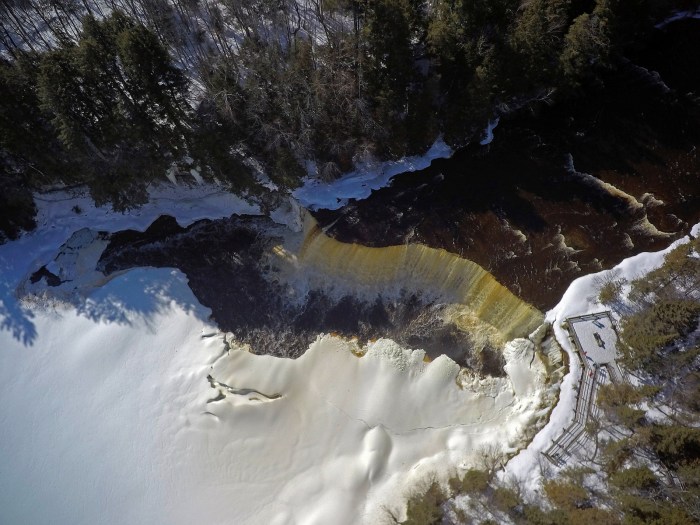
Tahquamenon Falls aerial view

Aerial View, photo by Julie

Julie got this cool shot of the Tahquamenon Falls throwing off winter’s grip at the beginning of the month. Now it looks like winter is going to strike back. Via the Detroit news and Sara Schultz, meteorologist with the National Weather Service in White Lake, a winter storm is arriving today:

“We’re looking at the heaviest snowfall north of Saginaw, in the Thumb area and then to the north and west of that, and then of course the lower northern Michigan areas, where they could see six-plus inches of snow.”

A winter storm watch will be in effect Wednesday morning through early Thursday evening for areas north of Interstate 69, Schultz said.

“We’re looking at areas south of I-69 as mostly rain,” she said. “Between Flint and Saginaw, we’re looking at accumulation of snow and ice; just some light accumulation.”

Schultz cautioned that the forecast remains flexible as the storm enters the state. “That rain/snow line along I-69, if it shifts just a little it could throw off everything,” she said.

View Julie’s photo bigger and see more in her 366/2016 slideshow.

More Tahquamenon Falls on Michigan in Pictures.

Waterfall Wednesday: Michigan Mystery Waterfall Edition

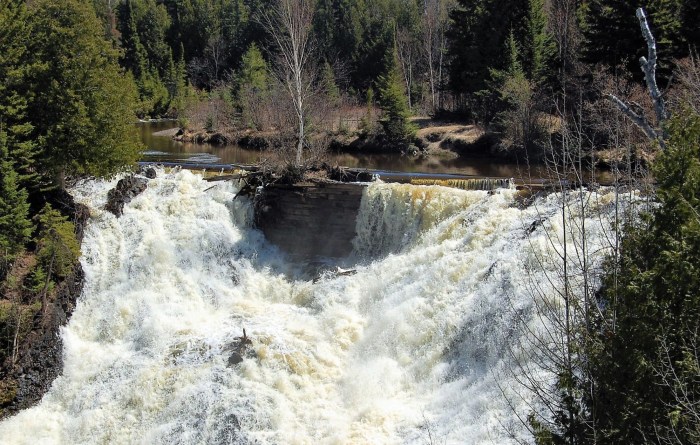
Keweenaw Waterfall

Keweenaw Waterfall, photo by Paula Liimatta

When I come across a waterfall photo that I can’t place, I have three places I turn:

  1. GoWaterfalling.com – hands down the best resource for waterfalls of Michigan and the Great Lakes region (with a few others scattered in for good effect). The author delivers concise descriptions, photos of the falls and accurate directions with maps and tips for hundreds of waterfalls.
  2. Waterfalls of the Keweenaw – this site was created by Jacob Emerick and has information, directions and beautiful photos for 200 Michigan waterfalls, in the Keweenaw and beyond. Sorry for getting  Jacob’s name wrong!!
  3. Waterfalls on Michigan in Pictures – there are over 100 Michigan waterfalls profiled on Michigan in Pictures.

I have my ideas as to which waterfall this is – any guesses? Post them in the comments!

Paula took this last April on the Keweenaw when spring snowmelt in the U.P. pumps the waterfalls up to incredible levels. View her photo background big and see more including some crazy ice-climbing shots in her slideshow.

Michigan Waterfalls: Root Beer Falls

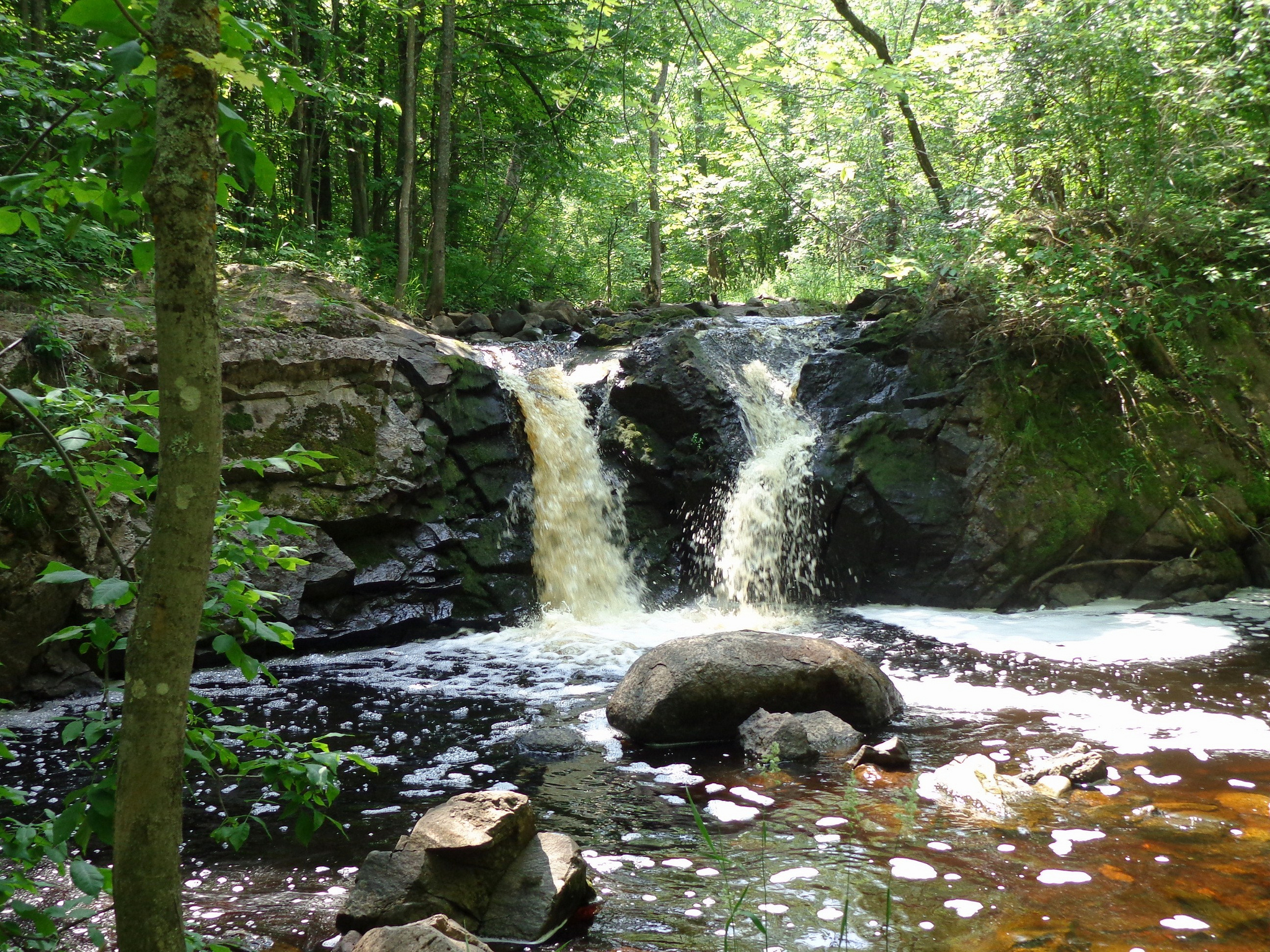
Root Beer Falls

6 Root Beer Falls, photo by David Hedquist

One of the coolest things for me about making Michigan in Pictures is when I come across something in Michigan that there’s little to no information about online.

Such is the case with Root Beer Falls (map), a roughly 8′ waterfall that is located a couple of miles north of Wakefield in Gogebic County. “Rootbeer Falls” is also a name for the Tahquamenon Falls, and one would assume that the same tannins that give Tahquamenon their rich, brown color are at work here.

Douglas Feltman posted this sweet time-lapse video from Root Beer Falls last fall, saying that this small drop on Planter Creek is fed by overflow from Sunday Lake in Wakefield, just a quick walk through the woods from Wertanen Road. He has 49 more Michigan waterfall videos as well!

The photographer, David Hedquist, is the author of Waterfalling in Wisconsin and has told me he’s working on a Michigan book, so stay tuned! Sorry- I misremembered. David is NOT  working on a new book. He did share that Phil Stagg of Waterfalls of Michigan is writing books though!

You can view his photo background bigilicious and see a bunch more in his Root Beer Falls slideshow.

Lots more Michigan waterfalls on Michigan in Pictures!

Support Michigan in Pictures with Patreon

Waterfall Wednesday: Milky Way over Tahquamenon Falls

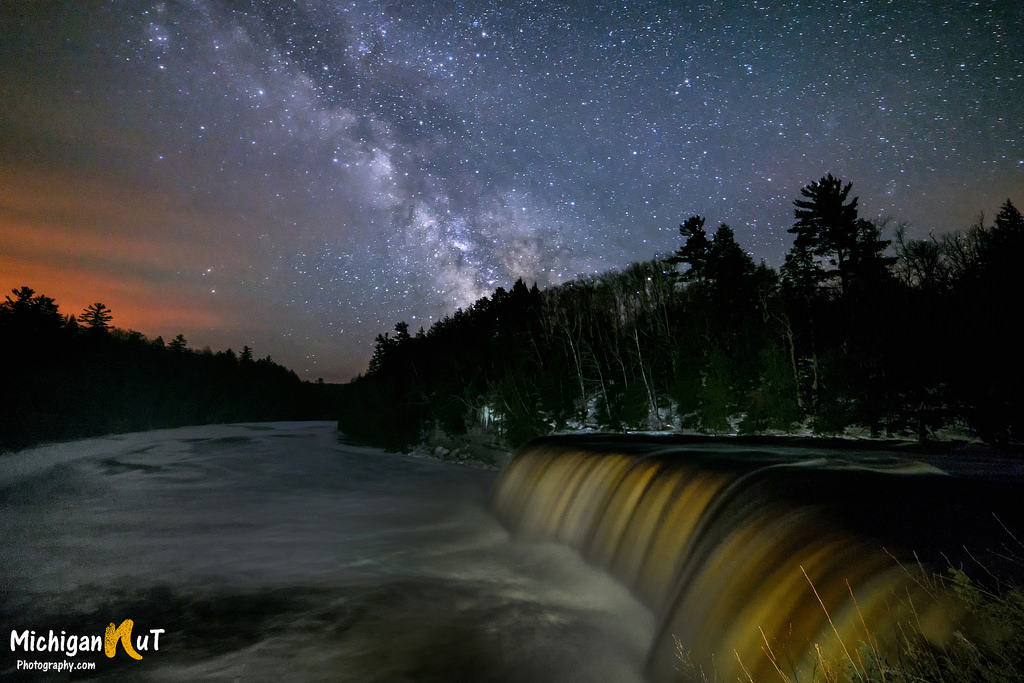
Milky Way over Tahquamenon Falls

Milky Way over Tahquamenon Falls, photo by John McCormick / Michigan Nut Photography

The Tahquamenon Falls State Park says:

Tahquamenon Falls State Park encompasses close to 50,000 acres stretching over 13 miles. Most of this is undeveloped woodland without roads, buildings or power lines. The centerpiece of the park, and the very reason for its existence, is the Tahquamenon River with its waterfalls. The Upper Falls is one the largest waterfalls east of the Mississippi. It has a drop of nearly 50 feet and is more than 200 feet across. A maximum flow of more than 50,000 gallons of water per second has been recorded cascading over these falls.

…This is the land of Longfellow’s Hiawatha – “by the rushing Tahquamenaw” Hiawatha built his canoe. Long before the white man set eyes on the river, the abundance of fish in its waters and animals along its shores attracted the Ojibwa Indians, who camped, farmed, fished and trapped along its banks. In the late 1800’s came the lumber barons and the river carried their logs by the millions to the mills. Lumberjacks, who harvested the tall timber, were among the first permanent white settlers in the area.

Rising from springs north of McMillan, the Tahquamenon River drains the watershed of an area of more than 790 square miles. From its source, it meanders 94 miles before emptying into Whitefish Bay. The amber color of the water is caused by tannins leached from the Cedar, Spruce and Hemlock in the swamps drained by the river. The extremely soft water churned by the action of the falls causes the large amounts of foam, which has been the trademark of the Tahquamenon since the days of the voyager.

Click through for maps and more.

View John’s photo bigger, follow him at Michigan Nut Photography on Facebook, and settle back for his Michigan Waterfalls slideshow.

Lots more Tahquamenon Falls on Michigan in Pictures.