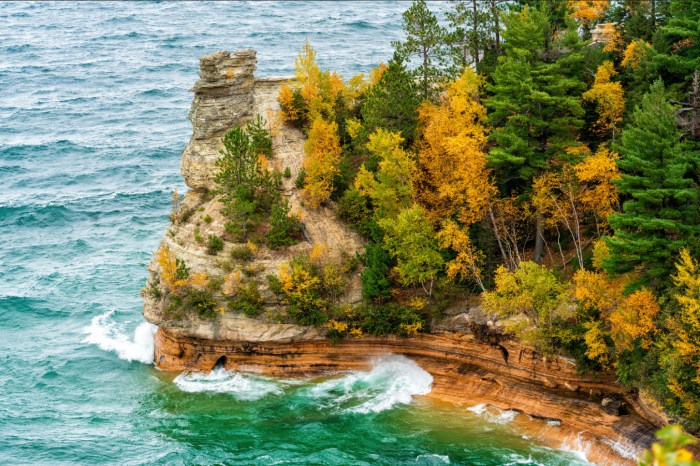
Fall at Miners Castle

Miners Castle by Charles Bonham

Miners Castle by Charles Bonham

I always wondered about the whole “miner” thing with Miners River/Falls/Castle in the Pictured Rocks National Lakeshore.  The Miners Falls Trail Guide explains that:

Visited by passing English geologists in 1771-1772, the nearby Miners River was named by employees of Alexander Henry during one of his exploratory trips on Lake Superior. At that time, indicators or “leaders” were used to locate mineral deposits. Discolored water oozing from bedrock was one such leader found in the Miners Basin, although no minerals were ever extracted from this area.

Charles took took this pic last week. See lots more on his Flickr

Support Michigan in Pictures with Patreon

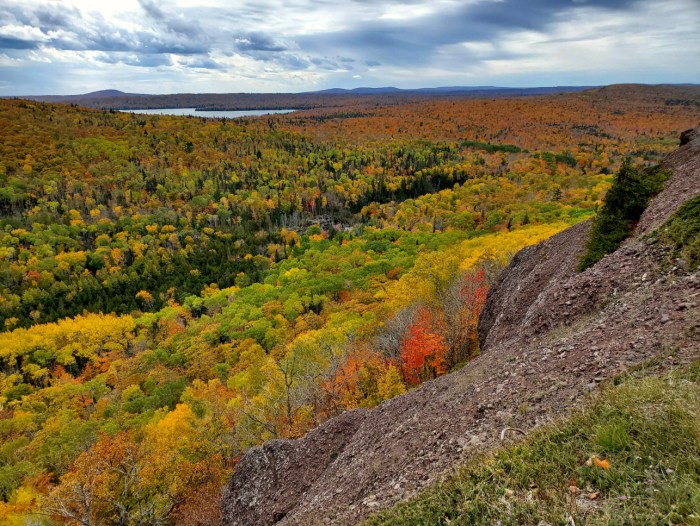
Keweenaw’s Colorful Canvas

Upper Peninsula by troops

Upper Peninsula by troops

Here’s a stunning Upper Peninsula vista taken the other day from Brockway Mountain on the Keweenaw Peninsula which CopperHarbor.org says:

…is the highest paved road between the Rockies and the Alleghenies. The drive is 10 miles long and has many pull-offs enabling visitors to stop and take in the scenery. There are two nature preserves along the drive that are worth visiting too. At the top, 735 feet above Copper Harbor, you will find a breathtaking 360° view of Lake Superior, the surrounding woodlands and inland lakes. On a clear day you can see Isle Royale about 50 miles away!

See more in Troops’ Keweenaw Peninsula gallery on Flickr!

Support Michigan in Pictures with Patreon

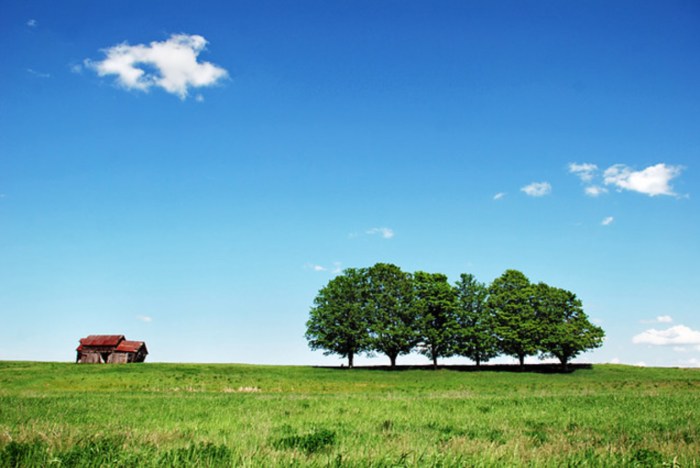
The Boonies: Harrieta & Boon

The Boonies by Jason Rydquist

The Boonies by Jason Rydquist

Today’s post is a shoutout to Dale, a new Michigan in Pictures supporter who grew up in the Boon/Henrietta area. Thank you Dale!!

Boon is located in the northern Lower Peninsula between Manistee and Cadillac. Over half of the town is situated in the Manistee National Forest, which is primarily rural and wooded area.

Harrietta is a village in Wexford County had a population of 143 at the 2010 census, making it the least populous village in Northern Michigan. It was incorporated as a village in 1891 with the name of Gaston. It was named Hariette in 1892 and the present spelling was adopted in 1923. Harrietta is a combination of the names of a railroad official, Harry, and that of his wife, Henrietta.

Jason took took this way back in June of 2011. See more in his Wexford County gallery on Flickr.

Support Michigan in Pictures with Patreon

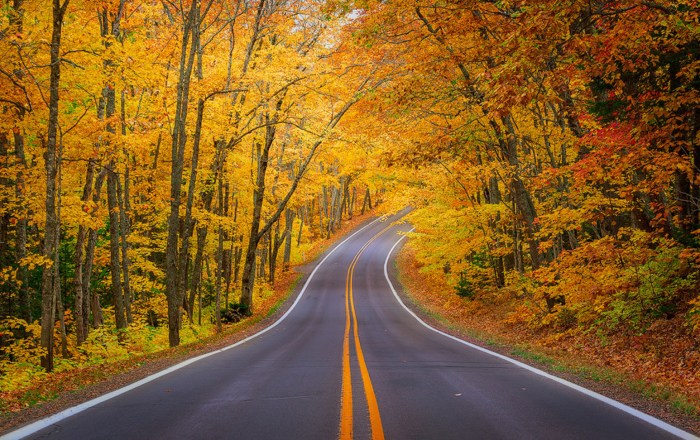
Michigan’s Fall Color is Just Down the Road!

US-41 by Wu Lan

US-41 by Wu Lan

mLive shared an update on Michigan’s fall color progression that says in part:

The frost and freezing temperatures for two or three days in a row last week have sparked the fall colors. A leaf’s nutrition supply is cut off from the main tree with a freeze. The underlying color pigments in the leaf then emerge for our fall splendor.

The western half of the Upper Peninsula has about 50 percent of total fall color. The eastern U.P. is around 25 percent changed now. The northern third of Lower Michigan has 25 percent to 50 percent fall color. The southern half of Lower Michigan runs from 10 percent to just spotty color from north to south.

You can also check out Pure Michigan’s Interactive Fall Foliage Map & definitely check out past fall color on Michigan in Pictures from more cool photos including the science behind fall color!

Wu took this photo back in 2015 on US-41 US-41 near Copper Harbor on the UP’s Keweenaw Peninsula. See more on their Flickr!

Support Michigan in Pictures with Patreon

Trees, Reflected

Trees Reflected by Joel Dinda

Trees Reflected by Joel Dinda

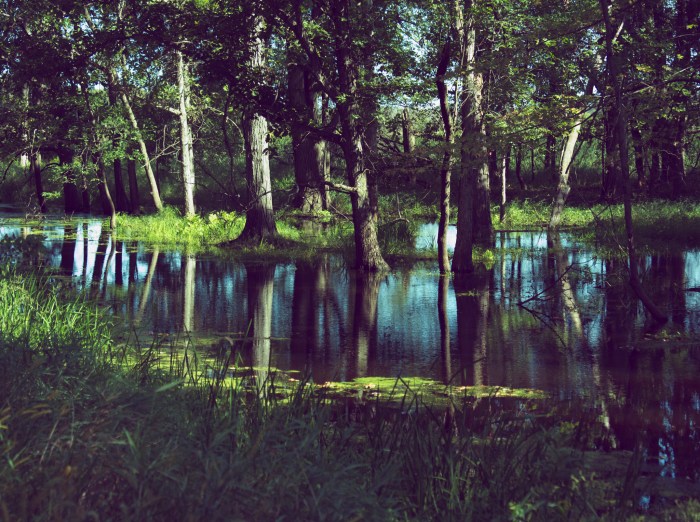
Here’s a lovely shot from the Maple River State Game Area which:

…is mid-Michigan’s largest contiguous wetland complex, an extensive area of floodplains, lowlands, and marshes along the Maple River that begins in Gratiot County and spills into Clinton County … Hiking opportunities are available in the East Unit, however. Straddling US-27, the East Unit features pools and diked-in ponds that serve as the water basin for the Maple River and attract migrating birds. Hiking along dikes is easy and the spectacular congregations of birds among the cattails in the warm glows of a late afternoon sun makes this trail system scenic and interesting for families and anybody who enjoys birding.

…Wildlife can be viewed practically year-round in the game area. Spring viewing from March through May is excellent as thousands of ducks, geese, and swans use the wetlands as a stopover on their migration to northern breeding grounds. Throughout the summer herons are a common sight in the area while the observant or those who pack along binoculars might spot bald eagles or ospreys perched on dead snags.

See more in Joel’s massive Trees photo album on Flickr & have a great week!

Support Michigan in Pictures with Patreon

Altar to Fall

Altar by Bill Dolak

Altar by Bill Dolak

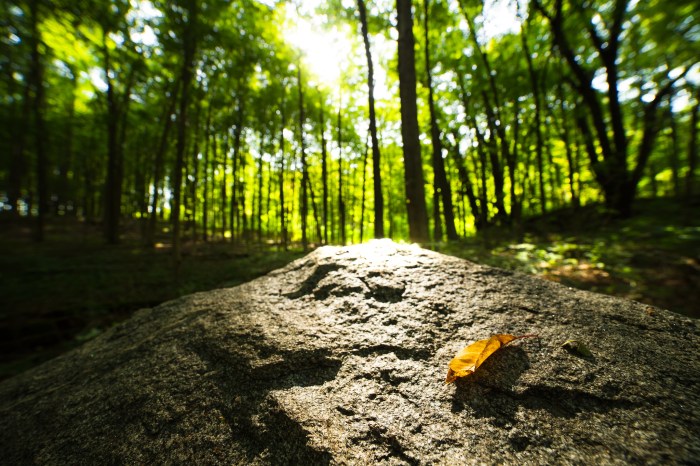
Bill writes “On this, the altar to the last day of summer: the sacrificial leaf that will bring on fall,” so if anyone is sad summer’s over, Bill’s the man to talk to. ;)

Of course if you’re excited for apples, autumn’s colors & of course, pumpkin spice, mad props to Bill! Check out more in Bill’s Kalamazoo River Valley Trail album & enjoy the season!

Support Michigan in Pictures with Patreon

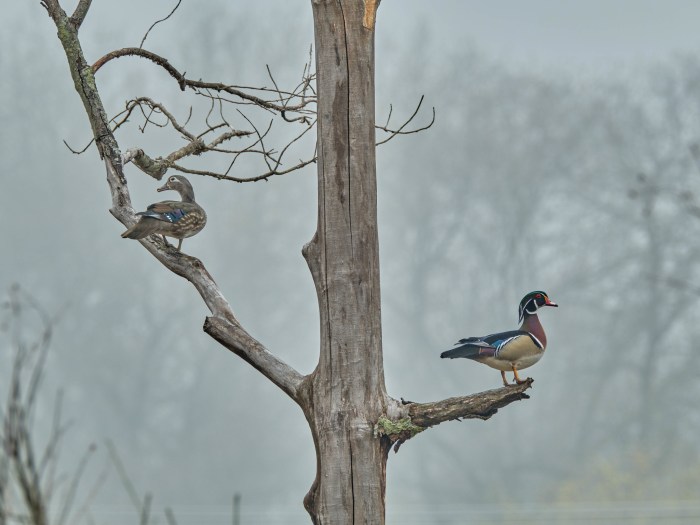
Wood Duck Wednesday

Wood Ducks by Third Son

Wood Ducks by Third Son

The All About Birds listing for Aix sponsa (wood duck) says in part:

The Wood Duck is one of the most stunningly pretty of all waterfowl. Males are iridescent chestnut and green, with ornate patterns on nearly every feather; the elegant females have a distinctive profile and delicate white pattern around the eye. These birds live in wooded swamps, where they nest in holes in trees or in nest boxes put up around lake margins. They are one of the few duck species equipped with strong claws that can grip bark and perch on branches.

Wood Ducks thrive in bottomland forests, swamps, freshwater marshes, and beaver ponds. They are also common along streams of all sizes, from creeks to rivers, and the sheer extent of these make them an important habitat. Wood Ducks seem to fare best when open water alternates with 50–75% vegetative cover that the ducks can hide and forage in.

A few wood duck facts:

  • Natural cavities for nesting are scarce, and the Wood Duck readily uses nest boxes provided for it. If nest boxes are placed too close together, many females lay eggs in the nests of other females. (click for info about building a nest box)
  • The Wood Duck nests in trees near water, sometimes directly over water, but other times up to 2 km (1.2 mi) away. After hatching, the ducklings jump down from the nest tree and make their way to water. The mother calls them to her, but does not help them in any way. The ducklings may jump from heights of up to 89 m (290 ft) without injury.
  • Wood Ducks pair up in January, and most birds arriving at the breeding grounds in the spring are already paired. The Wood Duck is the only North American duck that regularly produces two broods in one year.

More including wood duck calls at All About Birds.

Third Son took this yesterday – see more in his Birds 2020 gallery & definitely do yourself a favor and have a look at his most popular pics!

Many (many) more Michigan birds on Michigan in Pictures.

What’s up everyone?

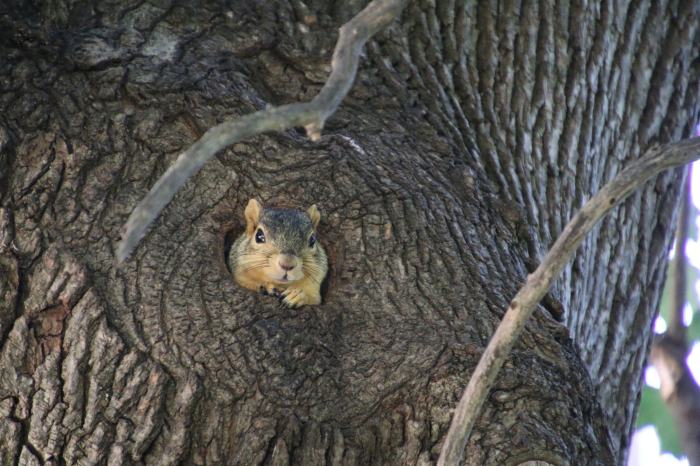
Squirrels in Ann Arbor at the University of Michigan (July 31st, 2017), photo by Corey Seeman

Apologies for the spotty posting over the last week. I’ve been pretty busy on a project.

Corey took this photo yesterday on the University of Michigan campus in Ann Arbor when he was testing out his new Tamron 18mm-400mm lens, which he totally loves. View the photo background bigtacular and see more in Corey’s Project 365: Year 10 slideshow. (spoiler alert – there’s a lot of squirrels in it!)

More summer wallpaper on Michigan in Pictures.

Oak Savannah

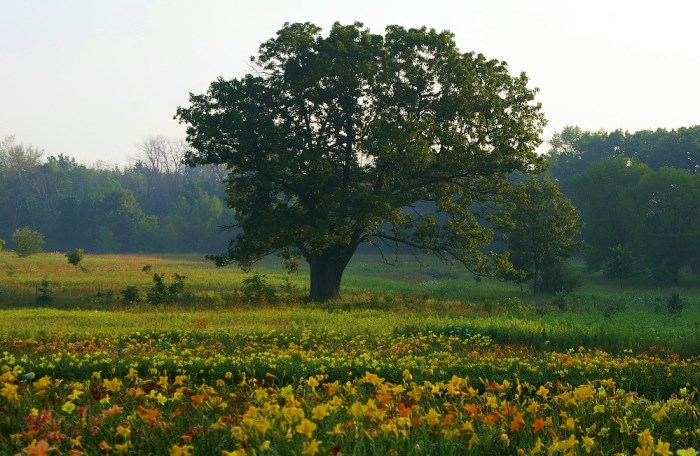
Oak and the Day Lilies, photo by Diane Constable

“Too old to plant trees for my own gratification, I shall do it for my posterity.”
-Thomas Jefferson

Dianna writes:

So glad someone planted THIS Black oak some 200-250 years ago–maybe about the time Mr Jefferson made the above quote!

Do not know who or what planted the acorn–but this tree lived in grasslands just about it’s whole life judging by the spread of the branches.

Local history says Indians lived in the area and would burn the grasslands on occasion to keep the oak-grass savannah in much of southern/central Michigan–may have very well been what this tree witnessed. Slow burning grassfires would not have harmed the tree.

View the photo bigger and see more in Dianna’s Oak slideshow.

PS: Read more about oak savannahs and the flora & fauna they support from the Michigan DNR.

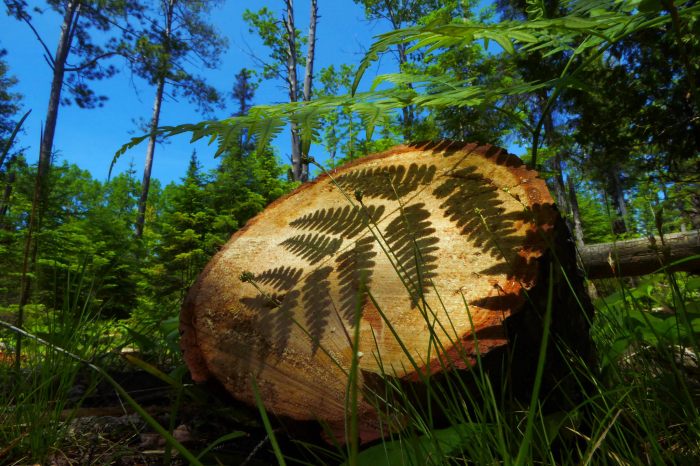
Fern Shadow

Fern Shadow, photo by Jay

Jay writes: While cutting my winter firewood I noticed this fern shadow cast on one of the cuts. So many beautiful things to see.

Indeed! View the photo background bigilicious, see more in his slideshow, and have a wonder-filled weekend!