Portraits Of The Artist As An Awestruck, Foul-Mouthed, Middle-Aged Child

Portraits Of The Artist As An Awestruck, Foul-Mouthed, Middle-Aged Child

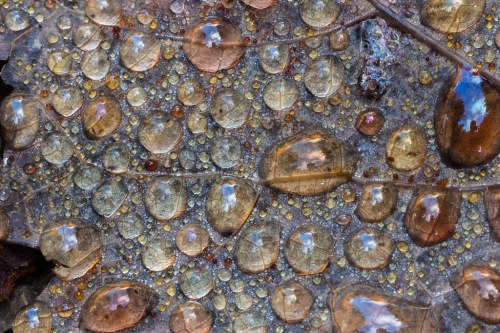
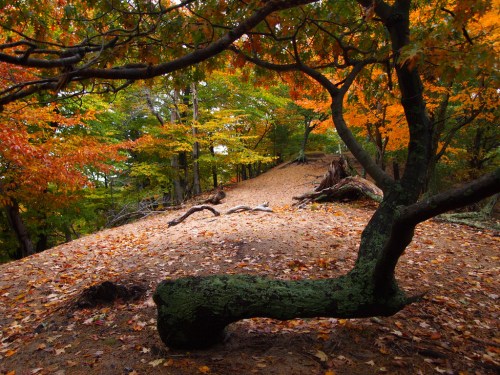
Portraits Of The Artist As An Awestruck, Foul-Mouthed, Middle-Aged Child, photo by Liz Glass

Fall is buried under about 70 feet of snow in northern Michigan right now, but at least the pictures remain. Liz explains the title of her photo:

Because you should have heard me when I got down there and confirmed that yes, not only was that aspen leaf covered in droplets of every size, but apparently each one had a mind of its own when it came to choosing what color to be. If anyone can explain this, please speak up. I’ll be the one sprawled out in my driveway saying things like “No f**king way” and “oh my god, get the f**k out of here.”

View her photo bigger and see more in her Autumn slideshow.

PS: If you’re in Boyne City, be sure to stop into her store, the Lake Street Market!

Life in the Freezer

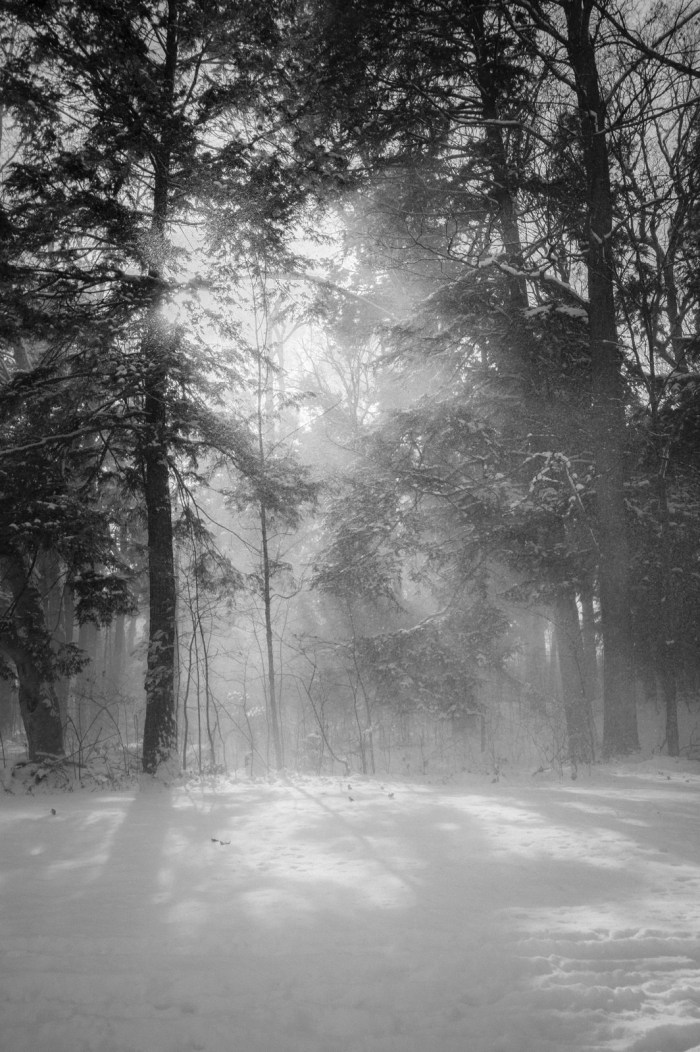
Sunlit Snow Fall IR, photo by Jess Clifton

As anyone with a news feed knows, it was below freezing in all 50 states yesterday. Michigan got whacked with up to 1 1/2 feet of snow and Detroit even tied the 1880 record low for a November 18th. In honor of that momentous event, here’s a picture of that sums up the cold & snow perfectly.

View Jess’s photo background bigtacular and see more in her Winter in Northern Michigan slideshow.

More winter wallpaper and more weather on Michigan in Pictures.


You can see it all from Mission Hill

mission hill overlook, chippewa county, michigan by twurdemann

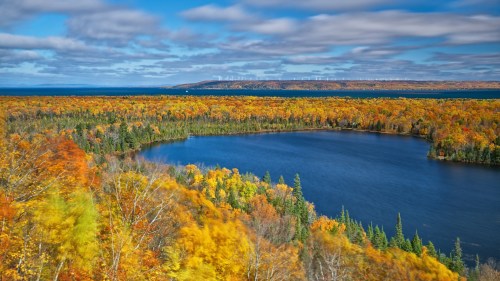
mission hill overlook, chippewa county, michigan, photo by twurdemann

Regarding his photo from the Superior shore a couple weeks ago, twurdemann writes:

Autumn view from the Mission Hill Overlook / Mission Hill Cemetery, Brimley, Michigan- -32 km / 20 miles west of Sault Ste. Marie, Michigan. The overlook rises more the 50m / 165 feet above nearby Spectacle Lake. In the distance, Point Iroquois, St. Marys River / Whitefish Bay / Lake Superior, Gros Cap Crib Lightstation in the middle of the river (Ontario, Canada), Gros Cap Bluffs, Prince Township wind farm turbines (my link), and in the far distance the Batchewana Highlands (upper left)- -over 50 km / 30 miles away.

View this bigger and see more in his Autumn slideshow.

Seeking Ash Survivors

Tall Tall Tree

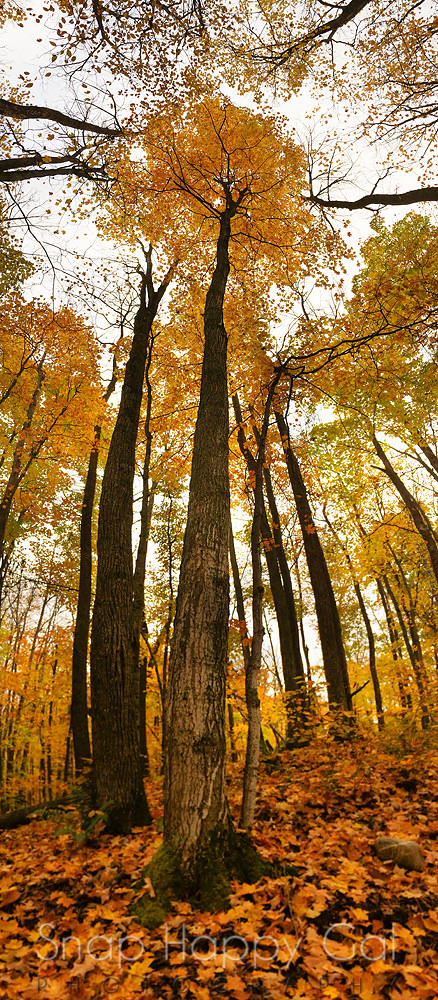
Tall Tall Tree, photo by Heather Higham

The Freep reports that the search is on for survivor ash trees in Ohio & southeastern Michigan:

Researchers studying a tree-killing beetle are asking residents in northwestern Ohio and southeastern Michigan to help them with a scavenger hunt of sorts.

Scientists think there are few ash trees in the wild that have been able to withstand the emerald ash borer and are hoping that they could provide some clues about how they were able to fend off the destructive beetle.

“They just want to understand the mechanism,” said Jane Hodgins, a spokeswoman for the U.S. Forest Service’s Northern Research Station in Minnesota.

Researchers decided to focus on looking for these “survivor” trees in northwestern Ohio and southeastern Michigan, because that’s where the ash borer first took hold in the United States, The Blade reported.

The beetle is native to Asia and arrived in the U.S. around more than a dozen years ago. It has since killed about 50 million ash trees in the Upper Midwest.

Some homeowners have been able to save their ash trees by treating them with insecticides, but the scientists are looking for trees that have survived on their own.

Read on for more.

View Heather’s photo bigger and see more in her Fall slideshow.

Please Note: I can’t see the leaves here so these trees that I think are ash might not be – looks awesome though! Also, if you think you just saw a photo from Heather here, way to pay attention!!

More trees on Michigan in Pictures.

Bikes pumping up Michigan’s economy

Kalamazoo River Valley Trail

Kalamazoo River Valley Trail, photo by Bill Dolak

This pic reminded me of an article I read a couple weeks ago in the Detroit News on the economic impact of bicycles in Michigan:

Bicycling pumps an estimated $668 million per year into Michigan’s economy, according to a recent report from the Michigan Department of Transportation. That figure factors in the nearly 800 people employed in bicycle-related jobs, along with retail revenue, tourism expenses, lower health care costs and a boost in productivity.

The study, “Community and Economic Benefits of Bicycling in Michigan,” put the spotlight on five communities to gauge how the sport affects their bottom line.

Michigan’s second-largest city, Grand Rapids, benefited most from cycling. It earned $39.1 million, nearly double the $20.7 million Detroit brings in. Ann Arbor easily grabbed second place with a $25.4 million boost.

…Grand Rapids began adding bike lanes on city streets in 2010 and now has 55 miles of bike lanes with more planned. It has a cycle track, hundreds of bike racks and an extensive trail network in the suburbs, said Suzanne Schulz, Grand Rapids’ managing director of design, development and community engagement.

“We are really trying to take a more holistic view of transportation infrastructure for the entire community because a lot of people don’t have cars,” Schulz said.

Read on for more or dig into the full study from MDOT.

Bill took this shot on the Kalamazoo River Valley Trail. View it background bigtacular and see more in his Michigan: Kalamazoo County slideshow.

More bikes and bicycles and more fall wallpaper on Michigan in Pictures!

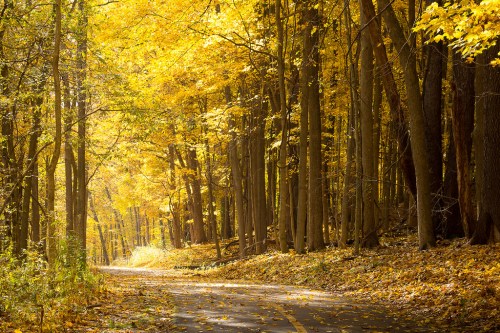
Fall on the Ludington State Park Ridge Trail

Ludington State Park Ridge Trail

Ludington State Park, Ridge Trail, photo by otisourcat

If it seems to you that fall colors are more erratic this year than usual, it’s not all in your head! The Great Lakes Echo feature by Juliana Moxley titled Last winter’s cold legacy: Fall colors slower to peak explains (in part) that last winter’s extreme cold is the culprit:

The harsh 2014 winter is partly to blame, said Bert Cregg, a professor in the department of horticulture at Michigan State University.

We are still having a good fall color season in Michigan, but we are likely to see some trees in full color while others are just beginning to turn, he said.

“As you’ll recall, last winter was extremely cold — one of the coldest winters on record,” Cregg said. “The winter stress delayed leaf-out for many trees, and then the tree’s timing was further delayed by a cold rather than normal spring.”

A warming climate can also affect fall color, said Howard Neufeld, a professor in the department of biology at Appalachian State University in North Carolina. Higher temperatures, altered timing and/or amounts of precipitation, changes in humidity, changes in cloud cover, increases in the length of the growing season and higher levels of nitrogen inputs in the ecosystem can all affect fall color variance.

“Increased precipitation means that light levels are most likely lower, and trees will do less photosynthesis,” Neufeld said. “With less photosynthesis, there are fewer sugars in the leaves. Warmer temperatures mean higher respiration rates, and more sugars will be metabolized.”

You can read on for lots more including an explanation of the scientific processes that impact color change.

The photo above by otisourcat shows that patchy color well. See it bigger and see more in their slideshow. More about the trail and park in the Ludington State Park guide.

More Michigan trails and more science on Michigan in Pictures!

Foggy Morning on Portage Lake and the Tyndall Effect

Foggy morning, photo by Jiqing Fan

Wikipedia says that Portage Lake is part of the Keweenaw Waterway, a partly natural, partly artificial waterway that cuts across the Keweenaw Peninsula to provide access for shipping from Lake Superior. If you click the link you can get an aerial view.

View Jiqing Fan’s photo bigger and see more in his massive Houghton & UP MI slideshow. He writes:

Saw the fog on Lake Portage from my apartment window after I woke up today. I knew the potential this fog can bring so I darted down to the lake shore. But the fog was so heavy that the foliage on the other bank were completely blocked. Just when I was about to give up and head back for school, the fog started to break as the sun rises. And then the magic started to unfold before my eyes. Soon the fog lifted and fill the campus uphill, the entire campus was bathed in soft morning light and there were Tyndall effect everywhere! I can not think of a better way to start a day of work.

What’s the Tyndall effect you ask? The UC Davis ChemWiki explains that the Tyndall effect was identified by 19th Century Irish scientist John Tyndall.

Because a colloidal solution or substance (like fog) is made up of scattered particles (like dust and water in air), light cannot travel straight through. Rather, it collides with these micro-particles and scatters causing the effect of a visible light beam. This effect was observed and described by John Tyndall as the Tyndall Effect.

The Tyndall effect is an easy way of determining whether a mixture is colloidal or not. When light is shined through a true solution, the light passes cleanly through the solution, however when light is passed through a colloidal solution, the substance in the dispersed phases scatters the light in all directions, making it readily seen.

For example, light is not reflected when passing through water because it is not a colloid. It is however reflected in all directions when it passes through milk, which is colloidal. A second example is shining a flashlight into fog or smog; the beam of light can be easily seen because the fog is a colloid.

Yay science!

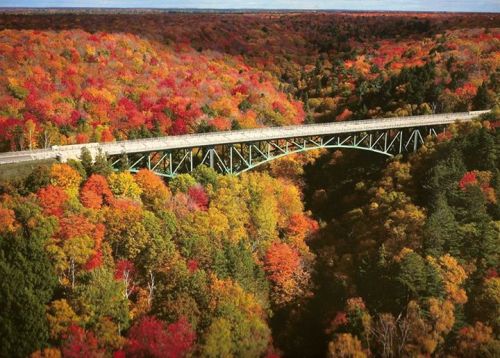
Fall Color at the Cut River Bridge

Cut River Bridge

Cut River Bridge and Fall Color, photo by Manistique Michigan

The page on the Cut River Bridge at Historic Bridges begins:

Among Michigan’s largest and most well-known historic bridges is the iconic Cut River Bridge, which is listed on the National Register of Historic Places. This bridge is large enough that MDOT actually has maintained this bridge as an area attraction. Surrounding the bridge is a roadside park and a series of trails around the bridge. The intent to make this bridge something more than just a crossing goes back before this bridge’s status as a historic bridge to its initial construction. The bridge was designed as an attraction even when it was built, since sidewalks above the bridge in this rural area are present. Also, a set of stairways, part of the original design, take pedestrians under the bridge where they can view the supporting trusses. The abutments and piers were also given unusually exceptional detail, in particular the use of decorative stone facing. The two main piers give the appearance are attractive cut stone arches.

The bridge includes a total of 888 tons of steel and its height over the Cut River is 147 feet. It offers views of Lake Michigan from its deck. The bridge was originally painted a silver color, but is today painted green. This bridge is a steel deck cantilever truss bridge. This structure type is much more common in more hilly states like Pennsylvania, but is extremely rare in Michigan. The structure has visual complexity as a result of the extensive lattice and v-lacing on its riveted, built-up members, which are all very massive, typical for both a bridge of its size and its age. The bridge retains original standard-plan metal guardrails (Michigan’s “signature” type R4 railings) on the sidewalks that flank the roadway on each side. It also retains standard Michigan State Highway Department plaques.

Read on for lots more about this bridge that was constructed in the early 1940s. If you do make it to Cut River, do yourself a favor and hike down – it’s very cool!

View the photo bigger and see lots more autumn splendor at the Manistique Facebook page. and learn about the community at Manistique.com.

More bridges on Michigan in Pictures!


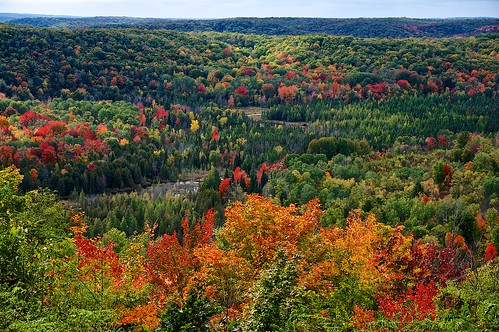
Jordan River Valley color from Deadman’s Hill Overlook

Deadman's Hill Overlook

Deadman’s Hill Overlook, photo by Frank Wulfers

The Michigan DNR’s page on the Jordan River Valley in Northwest Lower Michigan says:

The Jordan River Valley is an 18,000-acre block of state-owned forest land in northeast Antrim County. Good wildlife watching and beautiful scenery are common along the Jordan River, Michigan’s first waterway to be officially designated as a Wild and Scenic River. Much of the area has been proposed as an old growth forest area. Access to the river valley is provided by local county roads and an 18-mile hiking trail, the Jordan Valley Pathway, that winds through this portion of the Mackinaw State Forest. The Pathway contains several loops of varying lengths. One loop begins at Deadman’s Hill, which offers a spectacular vista of the surrounding countryside and river floodplain. A second breathtaking and popular vista is Landslide Overlook. Part of this Pathway is the North Country National Scenic Trail, that when finished, will extend 4,000 miles from New York to North Dakota.

…Fall colors are noteworthy in early October due to the hardwood forests throughout the valley.

Indeed! Click to read more about wildlife in the Jordan Valley and get directions.

Frank took this shot on Saturday so you can see that color is coming along nicely. View it background bigtacular and see more in his Michigan – Northwest slideshow.

Lots more fall wallpaper on Michigan in Pictures!

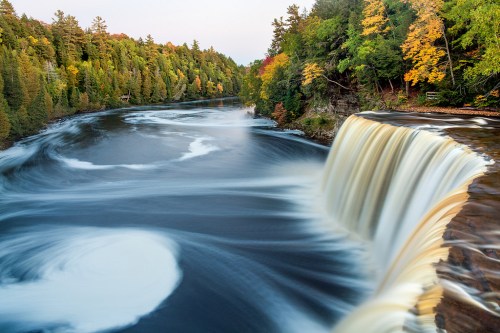
Fall Color at Upper Tahquamenon Falls

Upper Tahquamenon Falls

Upper Tahquamenon Falls, photo by Ashley Williams

If you’re wondering what fall color looks like in the northeastern Upper Peninsula, wonder no more! Ashley took this shot at Michigan’s largest waterfall, the Tahquamenon Falls last week. As you can see, it’s shaping up nicely.

If you’re wondering about statewide color, the Freep shared a NASA photo of Michigan’s fall color from space that’s pretty cool!

View her photo background bigtacular and see more in her Michigan’s Upper Peninsula slideshow.

There’s lots more fall wallpaper and more Tahquamenon Falls on Michigan in Pictures!