A Snowflake’s Life: How Snowflakes Get Their Shape

A Snowflakes Life

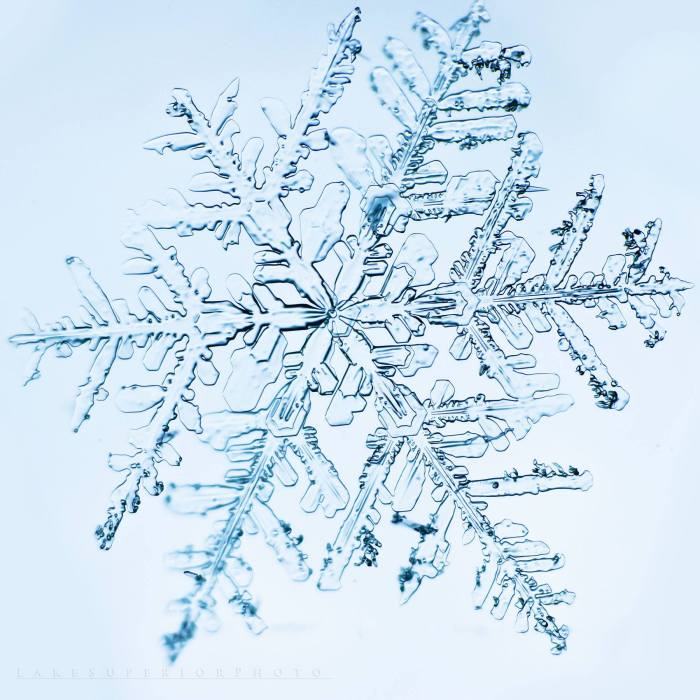
A Snowflake’s Life, photo by Shawn Malone/Lake Superior Photo

“Lives are snowflakes – unique in detail, forming patterns we have seen before, but as like one another as peas in a pod (and have you ever looked at peas in a pod? I mean, really looked at them? There’s not a chance you’d mistake one for another, after a minute’s close inspection.)”
Neil Gaiman, American Gods

One of my favorite websites is EarthSky, and they explain how snowflakes get their shape:

The shape of snowflakes is influenced by the temperature and humidity of the atmosphere. Snowflakes form in the atmosphere when cold water droplets freeze onto dust particles. Depending on the temperature and humidity of the air where the snowflakes form, the resulting ice crystals will grow into a myriad of different shapes.

…Kenneth Libbrecht, Professor of Physics at the California Institute of Technology, has made extensive observations of how water molecules get incorporated into snow crystals. In his research, he has observed that the most intricate snowflake patterns are formed when there is moisture in the air. Snowflakes produced in drier conditions tend to have simpler shapes.

Temperature also has a large effect on the formation of snowflakes according to Libbrecht’s research. Snowflakes formed in temperatures below – 22 degrees Celsius (- 7.6 degrees Fahrenheit) consist primarily of simple crystal plates and columns whereas snowflakes with extensive branching patterns are formed in warmer temperatures.

Bottom line: Temperature and humidity influence snowflake formation. The most intricate snowflake patterns are typically formed during warm and wet conditions.

Read on for more including some links & photos!

Shawn writes that she can totally relate to this snowflake’s imperfect life. View it background big on Facebook, check out more including a kickin’ video of the Northern Lights at the Mackinac Bridge on her Lake Superior Photo page, and view and purchase photos from LakeSuperiorPhoto.com.

More winter wallpaper and more snow on Michigan in Pictures.

PS: Congrats to Shawn for passing 200,000 subscribers on her Facebook page – wowzas!!

PPS: Neil Gaiman‘s American Gods is an incredible work of modern day fantasy.
Groundhog Warning!

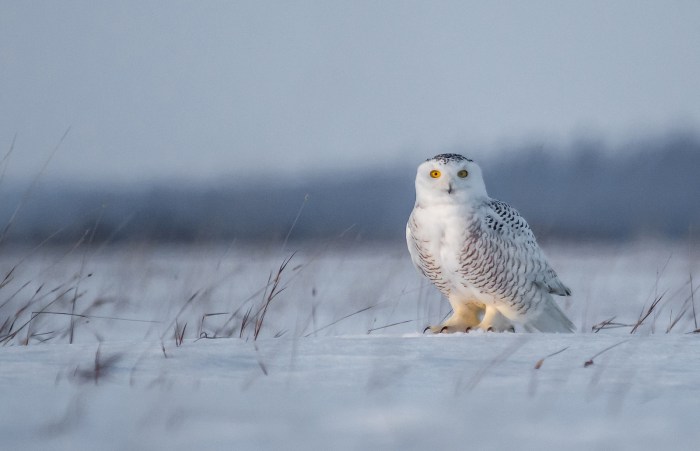
Snowy Owl

Snowy Owl, photo by Kevin Povenz

Any Michigan groundhogs out there probably better just stay inside and check to see what Woody the Woodchuck from the Howell Nature Center predicts. Word is already in from Punxsutawney Phil that we’re in for an early Spring!

You can learn all about Michigan groundhogs/woodchucks and Woody, Michigan’s official groundhog and snowy owls on Michigan in Pictures. One thing about snowy owls that you may not know is that due to their remote existence, they typically don’t have the same fear of humans that other owls exhibit.

Kevin took this gorgeous photo on Saturday near Sault Ste Marie and writes:

Yes I was laying down on my belly in the snow to get this shot. Not the sharpest of shots as there were weeds between me and this snowy and was hard to focus. Should of used manual focus, but I loved the moment. He just kept looking at me probably thinking “what the…?”

View his photo bigger and see more in his Birds of Prey slideshow.

Remembering the Michigan Blizzard of 1978

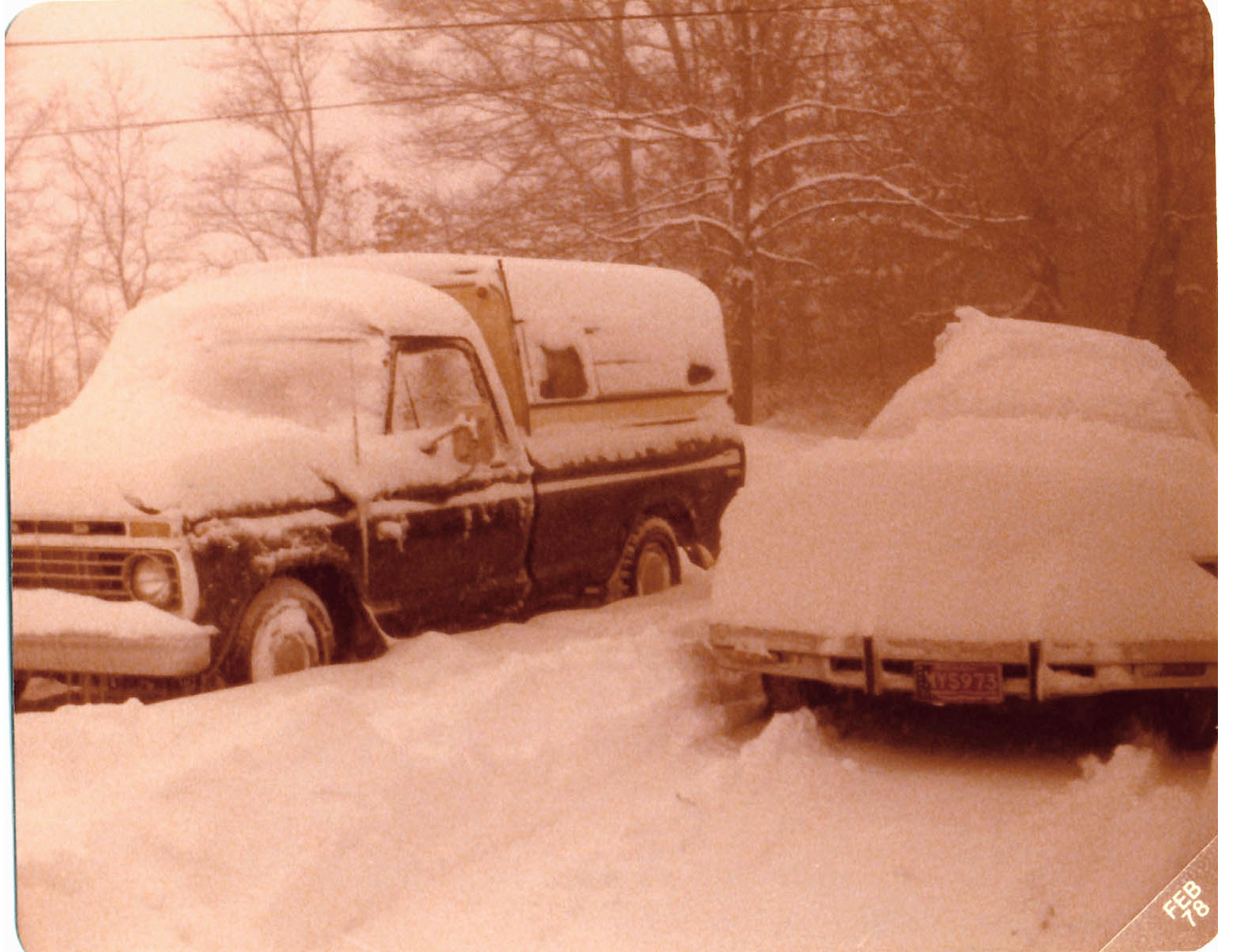
Michigan Blizzard 1978

Blizzard of ’78 – Somerset, MI, photo by Bill

The most extensive and very nearly the most severe blizzard in Michigan history raged January 26, 1978 and into part of Friday January 27. About 20 people died as a direct or indirect result of the storm, most due to heart attacks or traffic accidents. At least one person died of exposure in a stranded automobile. Many were hospitalized for exposure, mostly from homes that lost power and heat. About 100,000 cars were abandoned on Michigan highways, most of them in the southeast part of the state.
~C. R. Snider, National Weather Service Meteorologist in Ann Arbor, Michigan

Today is Michigan’s 179th birthday, but it’s also the anniversary of one of the most significant storms to ever hit the state, the Great Blizzard of 1978. William Deedler’s article A Great Storm is Upon Michigan says in part:

While there are several contenders for the worst blizzard ever to hit the Great Lakes in relatively modern times (since 1870 when records began in Detroit), the immense and intense Blizzard of January 26-27th 1978 must rank at or near the top along with the Great White Hurricane of 1913 (my link) with its similar track and powerfulness.

…As the Arctic air circulated throughout the storm while it made its way over Lake Huron, the lowest pressure was reached around 950 millibars or a hurricane-like 28.05 inches! “A Great Storm is Upon Michigan” read the headline of the 800 AM EST Special Weather Statement issued by the National Weather Service Forecast Office in Ann Arbor that Thursday /26th/ morning. Heavy snow and blizzard conditions were extensive as wind gusts in excess of 35 mph whipped the snow into huge drifts across much of Southeast Lower Michigan. Other areas of Eastern Michigan, Indiana and Ohio reported near hurricane-force winds, heavy snow and temperatures hovering between zero and 10 above, resulting in extreme blizzard conditions. These conditions later expanded further east into Pennsylvania and West Virginia and prevailed into the night (26-27th) across much of the Eastern Great Lakes, Southern Ontario and the Upper Ohio Valley. With the storm generating copious amounts of snow and very strong winds, whiteout conditions were widespread. All land and air traffic came to a stand still in the affected regions. Several major roads were closed for at least two to three days, if not longer, while clean up got underway. Numerous NWS employees were stranded at work, home, or on the road somewhere between the two. Several employees worked double shifts into at least Friday (some longer) because of the impassable roads with others simply unable to get to work.

The Blizzard Warnings were allowed to die across Michigan during the forenoon hours of Friday, the 27th. Record 24 hour snowfall totals from the storm included, 16.1 inches at Grand Rapids, 15.4 inches at Houghton Lake and 12.2 at Dayton, OH. Snowfalls for the entire storm (25-27th) included a whopping 30.0 inches at Muskegon (some of which was Lake Michigan enhanced), 19.3 inches at Lansing and 19.2 at Grand Rapids. Snowfalls were less over Southeast Lower Michigan (mainly because of the rain that fell for a period) and included 9.9 inches at Flint and 8.2 inches at Detroit.

Read on for more about the storm.

View Bill’s photo background big and see more in his Kelso: The Wonder Years slideshow.

Support Michigan in Pictures with Patreon


Baltimore River Ice Curtains

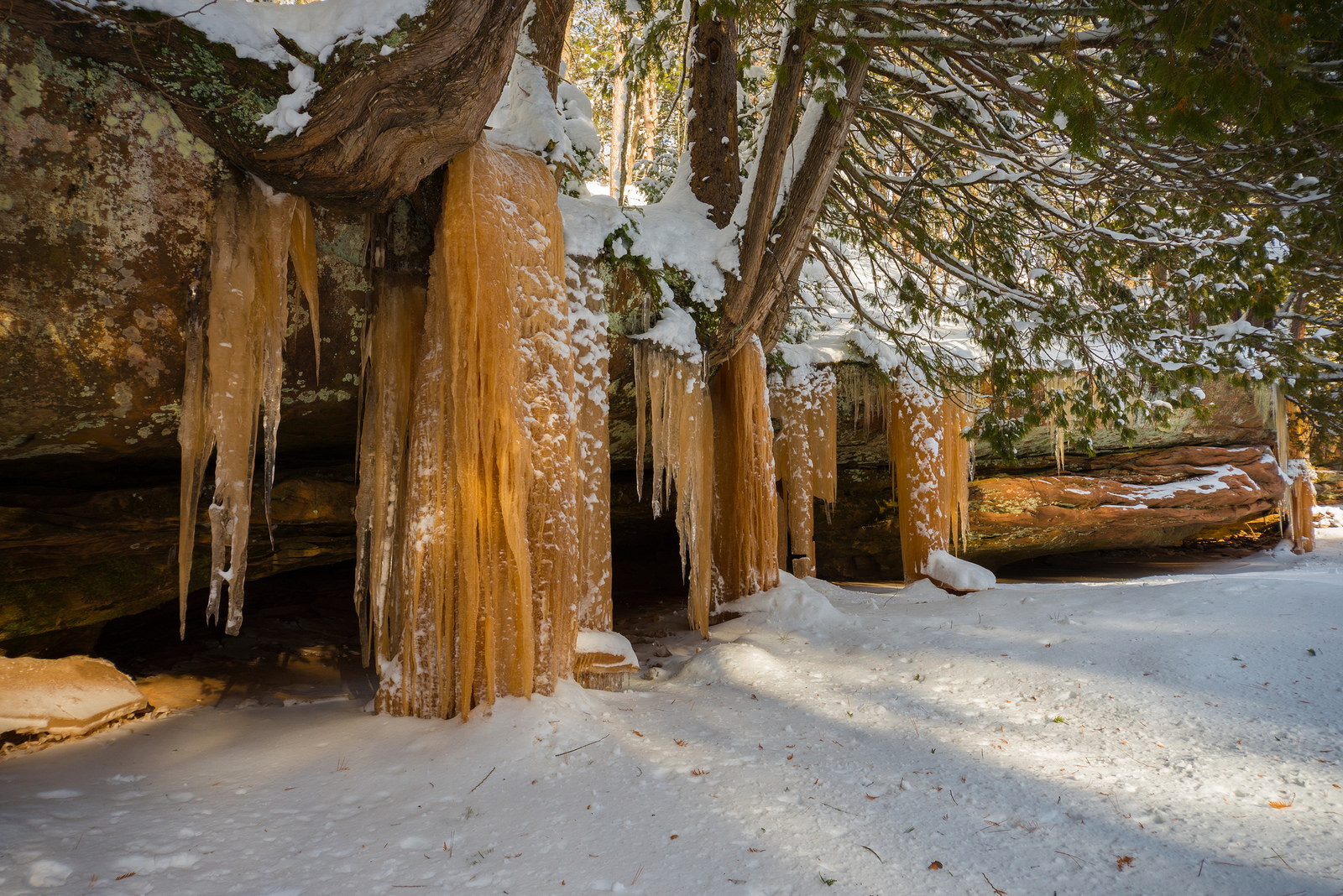
Ice Curtains on the Baltimore River

Baltimore River Ice Curtains, photo by Eric Hackney

Eric took this photo on the Baltimore River, just upriver from O Kun De Kun Falls. Although it takes place about 6 miles away in Munising, this is a good opportunity to remind you about the upcoming Michigan Ice Fest (Feb 10-14, 2016). Climbers & climbing enthusiasts from around the world converge to climb, socialize and learn about this winter sport. There’s plenty of fun for newbies too including guided climbs!

View his photo bigger, check out more in his Ontanogon County Adventures III slideshow, and follow Eric Hackney Photography on Facebook.

More about O Kun De Kun Falls on Michigan in Pictures.

Niciclez

Nicicles

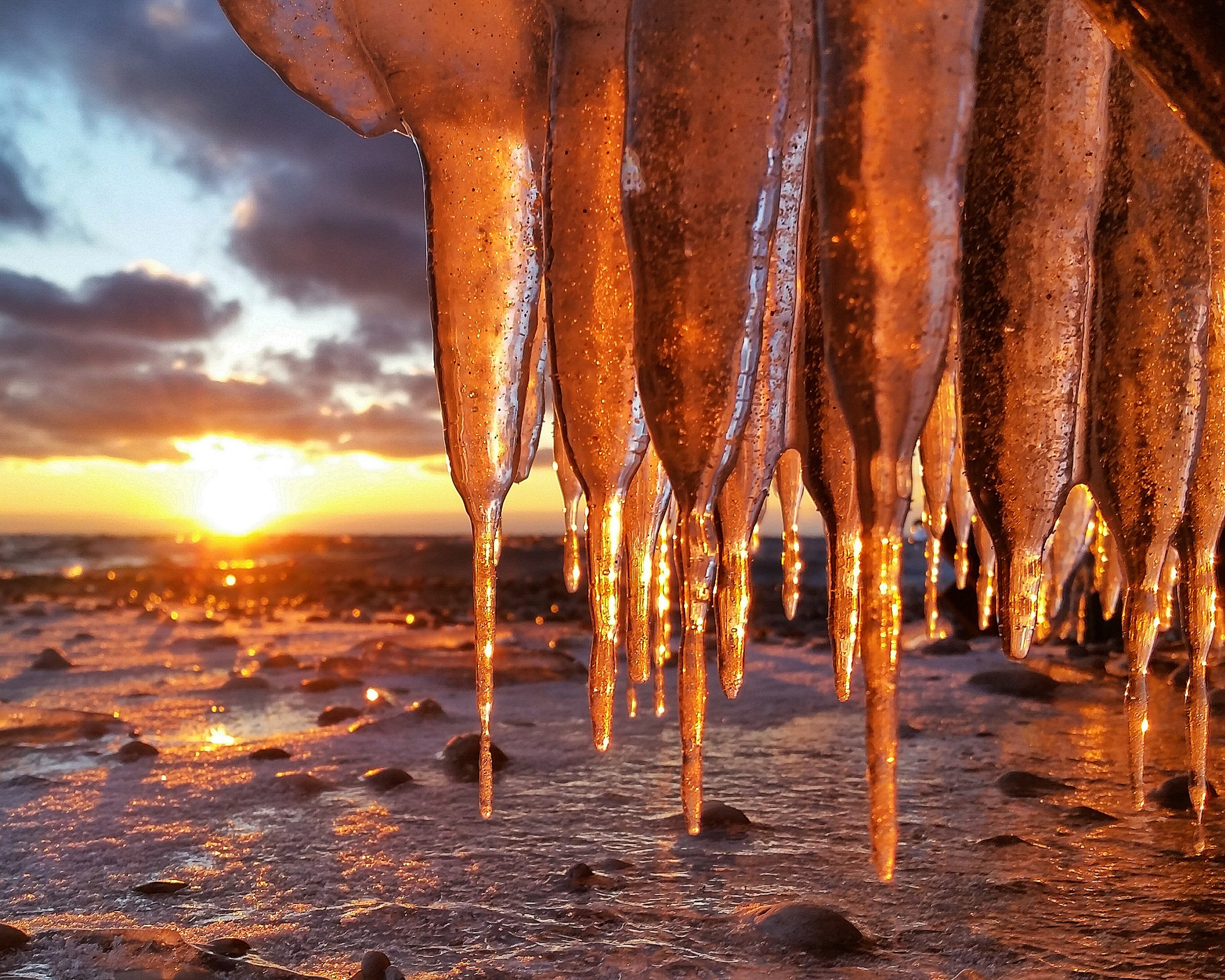
Niciclez, photo by Noah Soreson

Beautiful scene on the Lake Michigan shore. Here’s hoping you have a chance to get out there and have some fun this weekend!

View Noah’s photo background bigilicious, see more in his slideshow. and be sure to follow him on Instagram.

More winter wallpaper on Michigan in Pictures.

Winter at Bond Falls

Winter at Bond Falls

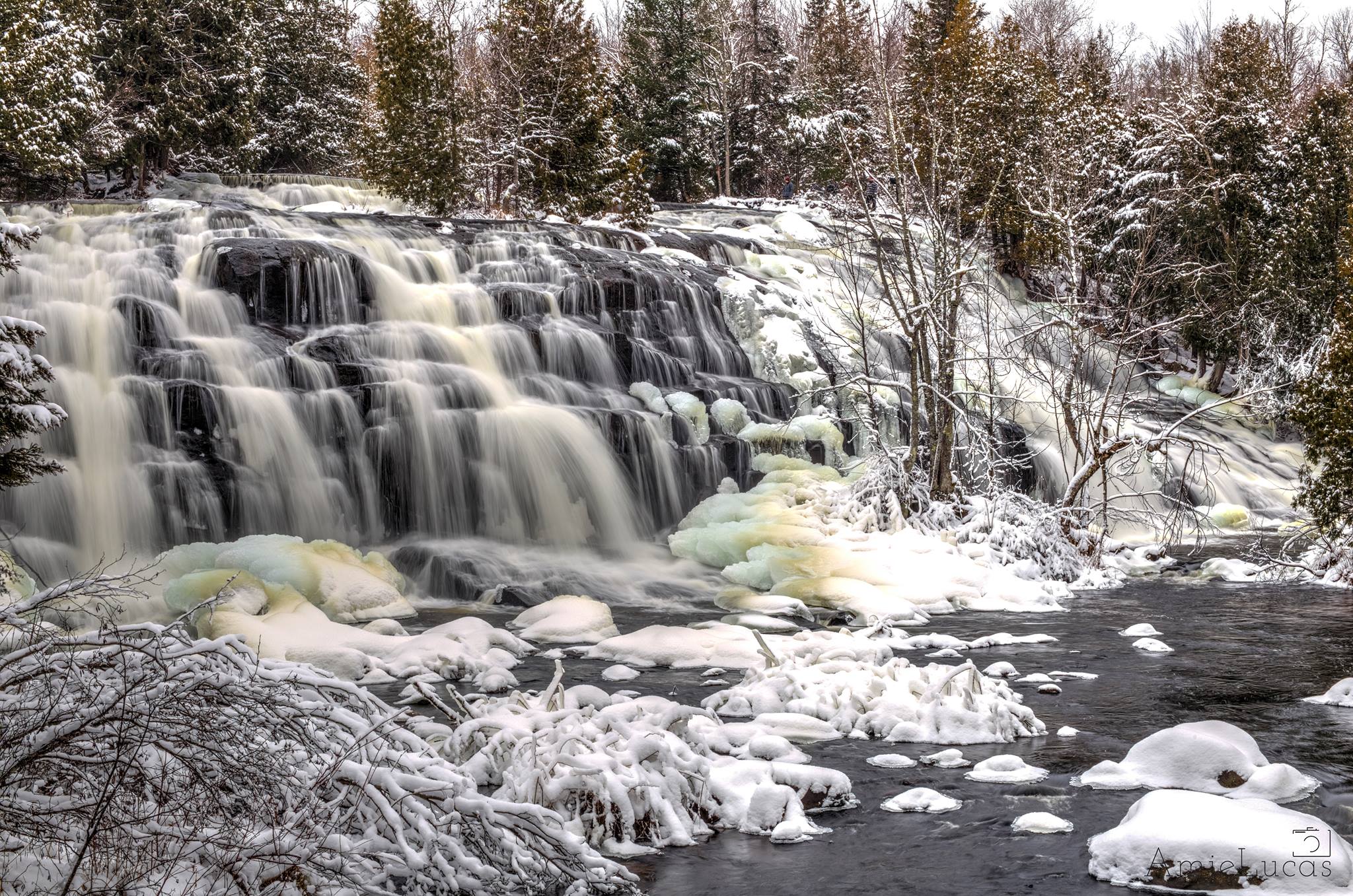
Winter at Bond Falls, photo by Aime Lucas Photography

The Bond Falls entry at GoWaterfalling.com says:

Bond Falls is in the western U.P. on Bond Falls Rd, east of Pauding MI. This is the most impressive waterfall in Michigan with the possible exception of Tahquamenon Falls. The main drop is 40 feet high and 100+ feet wide. Above the main falls are a series of cascades and rapids that must drop a total of 20 feet.

The water level is controlled by a dam, and a steady flow over the falls is maintained for scenic reasons. Of course during the spring melt the flow is much higher.

Bond Fall is a Michigan State Scenic Site. The site was renovated around 2003. The old parking area was upstream of the falls, and a steep concrete stairway led to the base of the falls. The new parking area is near the base of the falls, and a level boardwalk leads you to prime views of the falls.

Read on for more including directions to the falls.

Aime writes: The majestic Bond Falls. Normally a short, easy walk but in the winter a very hazardous one. The steep steps were covered with a few layers of ice and the path was extremely slippery. It was totally worth it.

View her photo bigger, follow her on Facebook, and purchase prints and see more work on her website!

Many more Michigan waterfalls on Michigan in Pictures.

Support Michigan in Pictures with Patreon

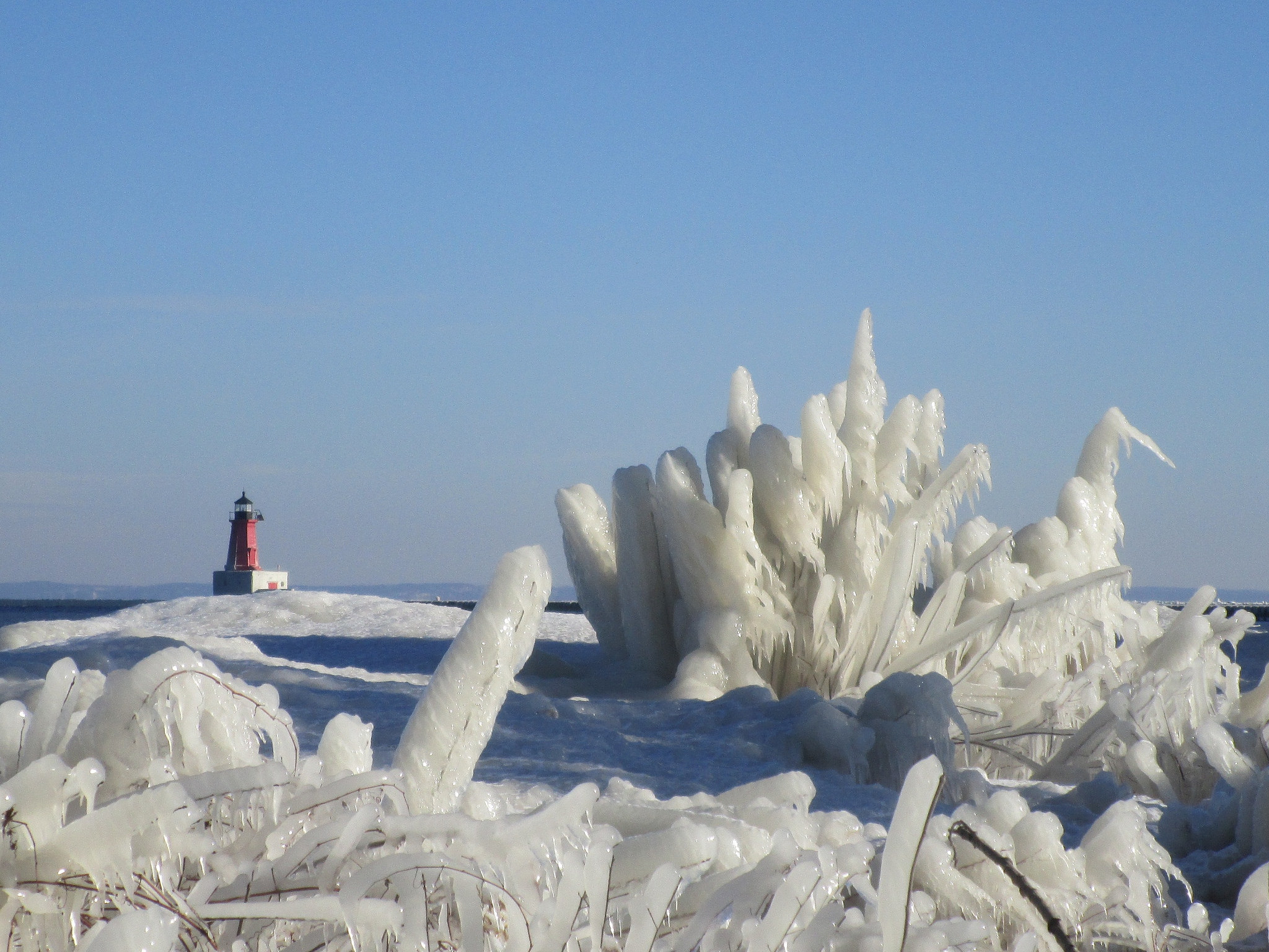
Ice is Nice at the Menominee Light Lighthouse

Ice is Nice Menominee Light Lighthouse

Ice is Nice, photo by cohodas208c

I’ll never miss a chance to tout Terry Pepper’s Seeing the Light as one of the premier resources for information about Michigan’s lighthouses, as well as others on the Great Lakes. He packs them full of the history including the political maneuverings and economic reasons for lighthouse development and closure and peppers in (sorry – couldn’t resist) historical photos and pictures from his own visits.

The entry on the Menominee North Pier Light details the lumber boom that led to the construction of the first lighthouse in 1877 and the development of the iron ore rich Menominee Range. He continues:

The town of Menominee continued to reap the benefits of the Range, and as a result significant harbor improvements were undertaken in the 1920’s, At their completion in 1927, a prefabricated octagonal cast iron tower was delivered by vessel, and lowered onto the pier.

The thirty-four foot tower was painted white, and integrated with an attached fog signal building. An elevated wooden catwalk stretched along the wooden pier to provide the keepers with safe access to the light during periods when waves crashed across the surface of the pier. The octagonal cast iron lantern room was outfitted with a Fourth Order Fresnel lens of unknown manufacture.

At some point thereafter, the wooden pier was replaced by a concrete structure with a forty-foot diameter circular crib at its offshore end. At this time, the fog signal was eliminated with the inclusion of an automated electrically operated signal in the tower. With automation of the light in 1972, the need for daily maintenance of the light was also eliminated, and the iron catwalk was removed from the pier.

The tower was painted bright red, and relocated to a white painted concrete platform in the center of the crib. Its elevated position on the pier provided a focal plane of forty-six feet.

While the catwalk no longer snakes its way along the pier, the iron tower still stands guard over the harbor entrance, its jewel-like Fresnel lens replaced by a stark modern 300mm plastic lens.

Read on for more at Seeing the Light.

View the photo background bigilicious and see more in cohodas208c’s Big City Breakout – Dec 2015 slideshow.

Lots more Michigan lighthouses and more winter wallpaper on Michigan in Pictures!

Put it all on red

RED cardinal in fence

RED, photo by Sandy Hansen Photography

What an awesome capture. View Sandy’s photo bigger and see more in her Traverse City Area slideshow.

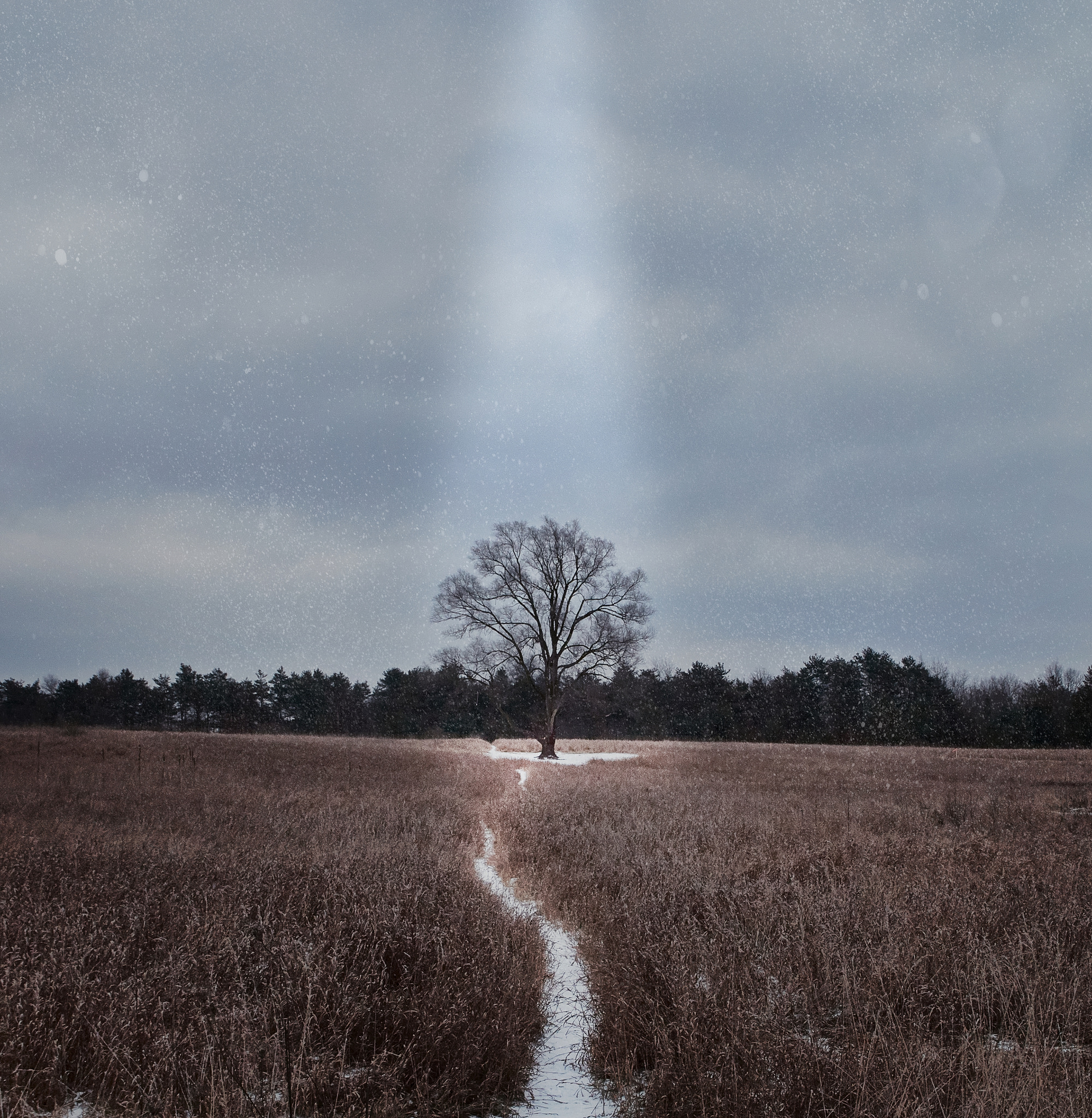
O Tree, Live Forever

Kalamazoo Tree

O, tree, live forever, photo by Bill Dolak

Bill writes:

This tree in the Al Sabo Preserve in Kalamazoo County is a frequent subject and accessory for local photographers. I have images of it from the days I was still putting film into my SLR.

Regarding the Al Sabo Preserve, the Texas Charter Township Parks & Rec page says:

The Al Sabo Land Preserve was established in the early 1970’s in order to protect the groundwater supply of the Atwater wellfield. The 741 acres were purchased in the late 1960’s and a master plan was developed for its use as a passive recreation nature preserve. The City of Kalamazoo passed an ordinance that would ensure its protection as a water resource. The wetlands and sandy soils serve as a recharge area for the area’s groundwater.

View Bill’s photo background big and see more in his Al Sabo, Michigan slideshow.

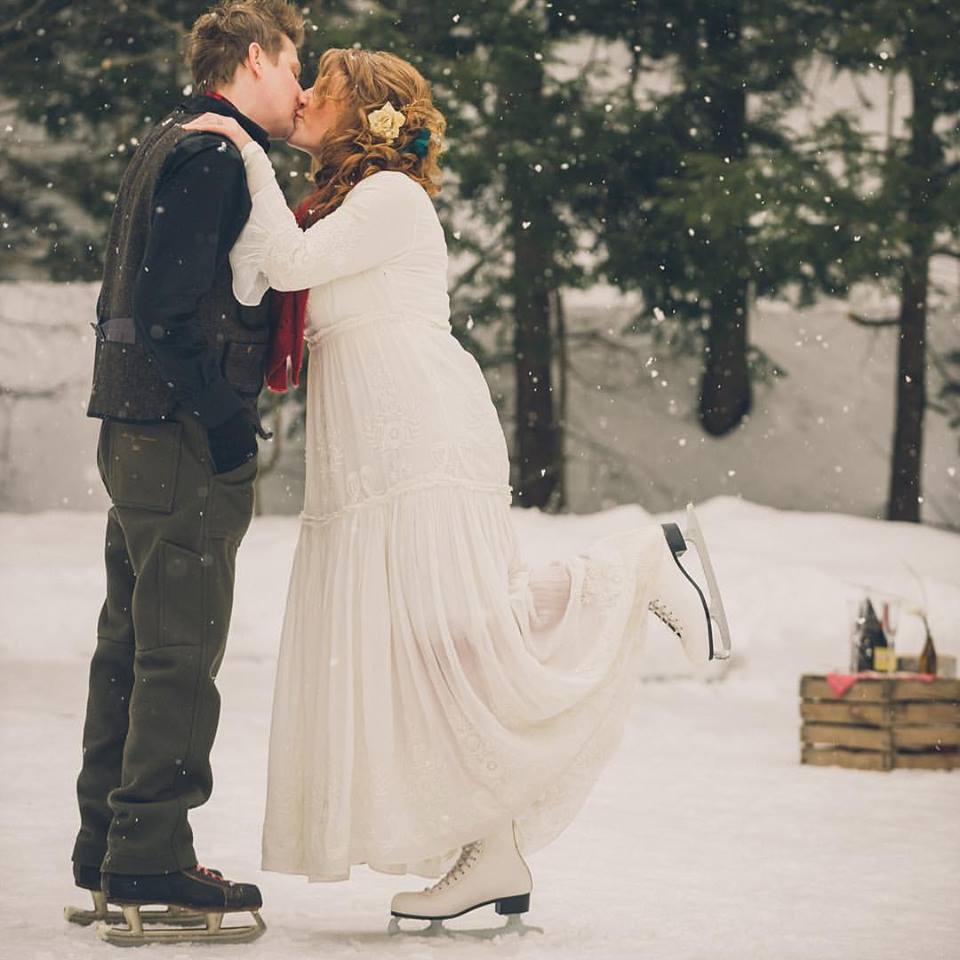
Let it snow … please

Brockit Holiday

But if you really hold me tight, all the way home I’ll be warm, photo by brockit inc

Still looking for some of that frightful weather so we can enjoy the delightful parts of winter!

View the photo bigger and tune into brockit’s Facebook for lots more creative portraits (that sometimes wander into the NSFW realm).