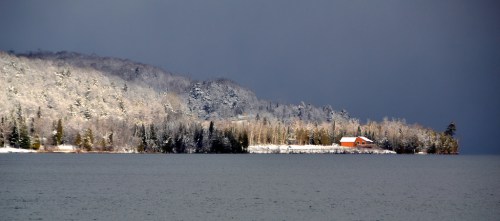
Storm over Munising

Munising, Mi. Lake effect clouds just off shore today.

Munising, Mi. Lake effect clouds just off shore today, photo by Thom Skelding

Winter has arrived across the state, just in time for 2015.

View Tom’s photo bigger and see more in his slideshow.

More weather and more Lake Superior on Michigan in Pictures!

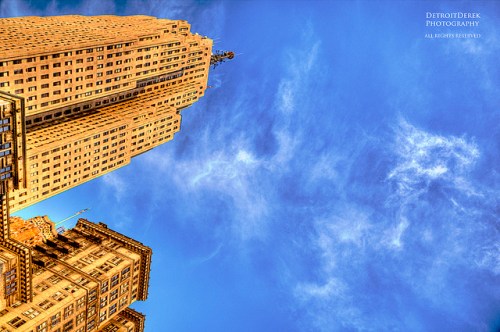
Don’t Fall On Me

Don't. Fall. On. Me.

Don’t. Fall. On. Me., photo by DetroitDerek Photography

I think I have some days like this too.

Check it out bigger and see more in Derek’s massive Detroit slideshow. If you’re interested in purchasing this or another photo, email Derek.

For another perspective, try flying above the Penobscot Building in Google Earth!

Ross’s Goose

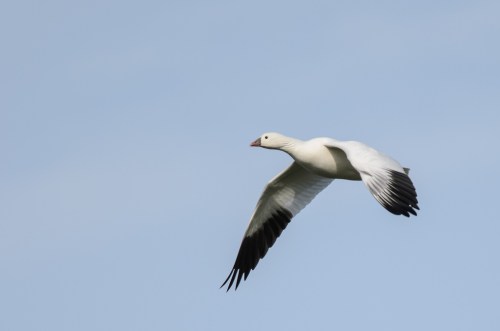
Ross's Goose

Ross’s Goose, photo by jsommer2

A few weeks ago there was a bit of a question as to the duckishness of a sleeping duck I posted, so I spent a lot of time looking at ducks & duck-like birds. One of them showed up in the photo group so without further delay…

The All About Birds entry for Ross’s Goose (Chen rossii) says:

A tiny white goose with black wingtips, the Ross’s Goose is like a miniature version of the more abundant Snow Goose. It breeds in the central Arctic and winters primarily in central California, but it is becoming more frequent farther east.

Prior to the 1950s the Ross’s Goose was confined to well-defined breeding and wintering areas, with few seen as strays. Since that time the species has been expanding eastward, both on the breeding and wintering grounds. The change in breeding distribution has resulted in more contact and subsequent hybridization with the Snow Goose.

The female Ross’s Goose does all of the incubation of the eggs. The male stays nearby and guards her the whole time. The female covers the eggs with down when she leaves the nest. The down keeps the eggs warm while she is away and may help hide them from predators.

More including photos and identification tips at All About Birds.

Check jsommer’s photo out background big and view the slideshow for more photos including a shot of this goose with some much bigger Canadian geese!

Many more Michigan birds on Michigan in Pictures!

Geminid Meteor Showers this weekend!

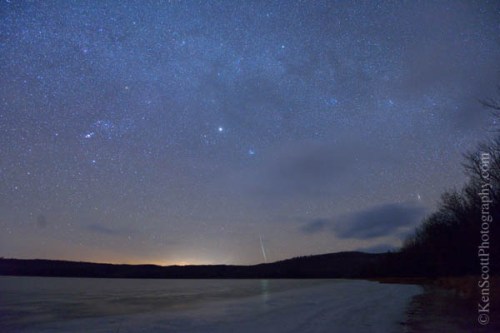
Geminid Meteor ...

Geminid Meteor…, photo by Ken Scott

As you’re making plans for this weekend, consider including some offbeat nightlife. EarthSky has everything you need to know about this weekends Geminid Meteor Shower:

The peak night of the 2014 Geminid meteor shower will probably occur on the night of December 13 (morning of December 14). The night before (December 12-13) may offer a decent sprinkling of meteors as well. Geminid meteors tend to be few and far between at early evening, but intensify in number as evening deepens into late night. A last quarter moon will rise around midnight, but Geminid meteors are bright! This shower favors Earth’s Northern Hemisphere.

…In a year when moonlight doesn’t obscure the view, you can easily see 50 or more Geminid meteors per hour on the peak night. However, in 2014, the waning moon will dampen the display in the peak viewing hours. Don’t let the moonlight discourage you. A good percentage of these yellow-colored Geminid meteors are quite bright and will overcome the moonlit skies.

The moon will rise quite late on December 13 and 14, creating a window of darkness for watching the Geminid shower in the evening. Keep in mind that the moon will rise about an hour earlier on December 13 than it will on December 14. Click here for custom sunrise/set calendar. Check boxes for moonrise/set times..

Even as the moon rises, however, it will be sitting low in the east. If possible, find a hedgerow of trees, a barn or some such thing to block out the moon. Sit in a moon shadow but at the same time, find an expansive view of sky. Or simply look away from the moon.

Read on for all kinds of viewing tips and all kinds of info about about this December meteor shower including the chance of seeing an earthgrazer meteor, a slow-moving, long-lasting meteor that travels horizontally across the sky.

View Ken’s photo from December 14, 2012 bigger and see more in his massive Skies Above slideshow.

More meteors on Michigan in Pictures!

Space Weather and Starbreeze

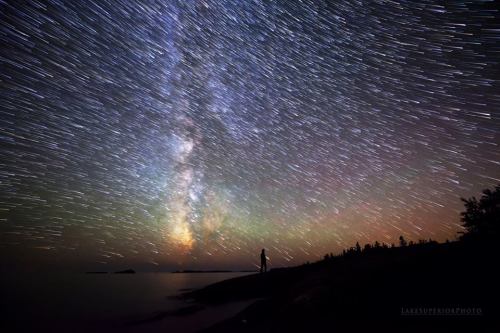
Isle Royale Star Breeze

Isle Royale starbreeze, photo by Shawn Malone/Lake Superior Photo

If you’re a watcher of the northern lights or want to be, NOAA’s Space Weather Projection Center at spaceweather.gov is a resource you should be aware of. It’s packed full of all kinds of data on what’s happening on the sun and how that impacts us here on earth.

Yesterday they updated to an all-new site that I encourage you to check out. The coolest things I found so far are the Space Weather Enthusiast Dashboard and the 30 minute aurora forecast, a seriously awesome visualization of aurora potential. Be sure to subscribe to their space weather alerts for tips on when the aurora borealis might be visible!

Shawn says that the stars were screaming that night at Isle Royale National Park. View her photo bigger on the Lake Superior Photo Facebook, and if you like you can purchase the photo right here. And speaking of northern lights, be sure to click for a time-lapse of the aurora over Isle Royale with a very cool soundtrack she recorded of loons on the island.

More northern lights and more Isle Royale on Michigan in Pictures.

Sunny skies at Pine Bend

Pine Bend Natural Area

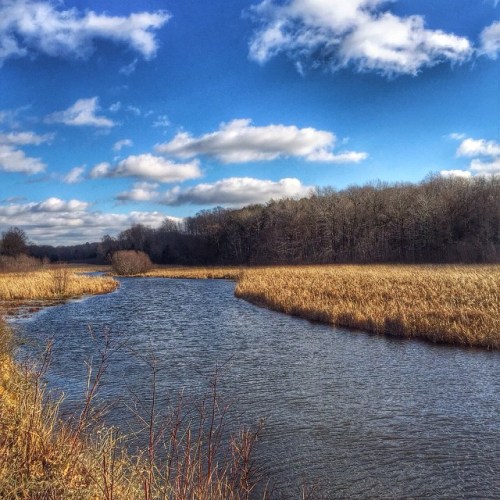
Winding River, photo by paisleyrainboots

Sarah took this last week at Pine Bend County Park and says that it was a beautiful day despite the 30 degree temperatures.

View her photo bigger and follow her on Instagram. You can also tune into her blog.

The Solar Eclipse of October 23, 2014

Solar Eclipse - October 23, 2014

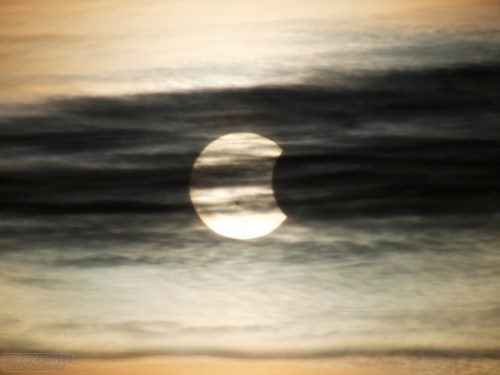
Solar Eclipse – October 23, 2014, photo by David Marvin

Although the clouds didn’t want to cooperate, David got a few shots of yesterday’s solar eclipse. See this one background big and click to his slideshow for more.

More eclipse photos on Michigan in Pictures. And speaking of eclipses, check out this awesome time lapse of the October 8 Blood Moon eclipse by Central Michigan University astronomy prof Axel Mellinger!

The Lunar Express

Something Special in the Air

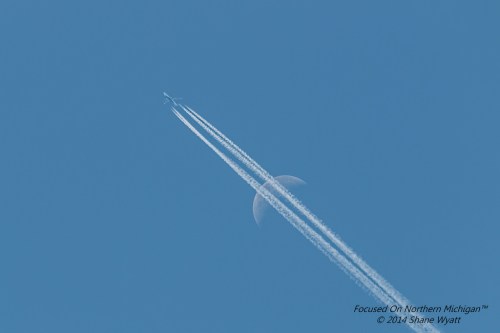
Something Special in the Air, photo by Shane Wyatt

A reminder that The Lunar Express boards early tomorrow morning for a total eclipse of the October full moon. The partial umbral eclipse begins at 5:15 AM EDT on October 8, with the total eclipse starting at 6:25 AM, peaking at 6:55 and ending at 7:24.

Get all the details on the Super Hunter’s Blood Moon in eclipse from Michigan in Pictures!

View Shane’s photo bigger and see more of Shane’s moon photos right here.


Zodiacal Light on Isle Royale

Zodiacal Light by Shawn Malone

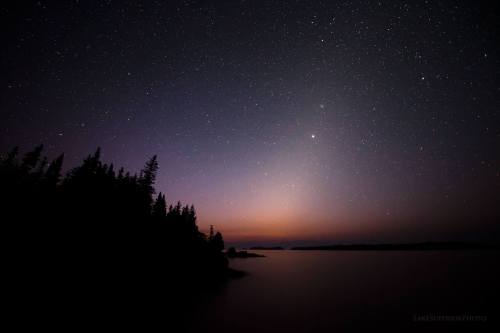
Zodiacal Light on Isle Royale, photo by Shawn Stockman Lightseeker/Lake Superior Photo

The Earth Science Picture of the Day is pretty much my favorite photo blog. Regarding the Zodiacal Light, Rudi Dobesberger and blog curator Jim Foster wrote:

Zodiacal light is now thought to be caused by dust particles scattering sunlight in the orbits of comets. In both hemispheres it’s best observed in late winter/early spring after sunset and late summer/early fall before sunrise. However, it can be detected before astronomical twilight (morning) or after astronomical twilight (evening) at other times of the year as well, providing that the sky is quite dark.

Head over to the EPOD for more and definitely subscribe!

The photo above is from Shawn’s recent journey to Isle Royale. Follow her at Lake Superior Photo on Facebook and view and purchase many more photos – including a gallery of Isle Royale pictures –  on her website.

October’s Full Moon: a super Hunter’s Blood Moon in eclipse

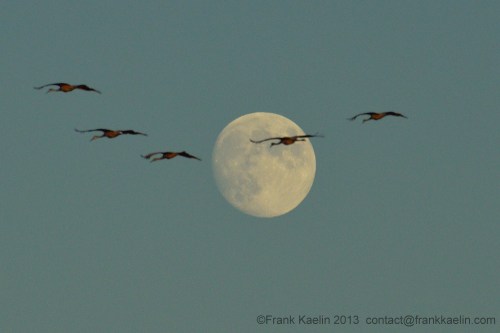
sandhill moon

sandhill moon, photo by Frank Kaelin

EarthSky reports that for the full moon on October 8th, there’s a whole lot going on!

In skylore, the Northern Hemisphere’s Hunter’s Moon on October 7-8 will be called a Blood Moon. Plus the October 7-8 total lunar eclipse – the second of four total lunar eclipses in the ongoing lunar tetrad – has been widely called a Blood Moon. Voila. Double Blood Moon.

Hunter’s Moon the name for the full moon after the Harvest Moon, which is the full moon nearest the September 23 autumnal equinox. This year, the Harvest Moon came on September 9. That’s why tonight’s moon bears the name Hunter’s Moon.

…In 2014 and 2015, a new usage of the term Blood Moon sprang up. Surely you heard about it at the total lunar eclipse in April 2014. It’s the name being used for the four eclipses of the ongoing lunar tetrad – four total lunar eclipses in a row, each separated from the other by six lunar months. (more on this on Michigan in Pictures)

The partial umbral eclipse begins at 5:15 AM EDT on October 8, with the total eclipse starting at 6:25 AM, peaking at 6:55 and ending at 7:24.  On top of all that is the question as to whether or not October 8th’s moon is a supermoon:

At least two commentators – Richard Nolle and Fred Espenak – disagree on whether the October 8, 2014 full moon should be called a supermoon. Is it? You’re likely to see all sorts of conflicting information in October, 2014. If you define a supermoon based on the year’s closest perigee and farthest apogee, then the October 8 moon is not a supermoon. If you define a supermoon based on the perigee and apogee for a given monthly orbit, then it is a supermoon. And not just any supermoon, but a super Hunter’s Blood Moon in eclipse!

I guess with Frank’s photo from October 2013, we could add “Sandhill Moon” to the list! He writes that he took this at the Phyllis Haehnle Memorial Sanctuary where counts were as high as eight thousand sandhill cranes a day during last fall’s migration! View his photo bigger and see more in his Landscape slideshow.

Lots more full moon magic on Michigan in Pictures!