Tiger Stadium: At the corner of Michigan & Trumbull

At the corner of Michigan & Trumbull

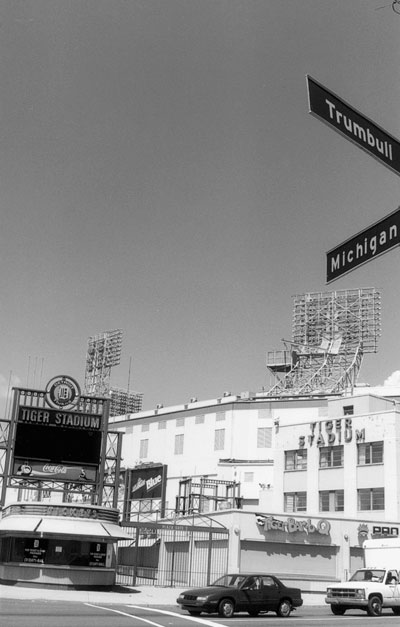
Michigan and Trumbull was the address for professional baseball in Detroit for 104 seasons. From 1896 when Bennett Park opened, until the last game at Tiger Stadium in 1999, Michigan and Trumbull was the most famous street corner in Michigan. Tiger Stadium by Irwin J. Cohen takes you on a visual tour of baseball in the Motor City from the beginning of the Tigers franchise to the historic final game played at Tiger Stadium. The pages are filled with photos (some never before published) of the stadium and Tiger legends from Cobb, Gehringer and Greenberg right up to Kaline, Lolich, Trammell, Gibson and others.
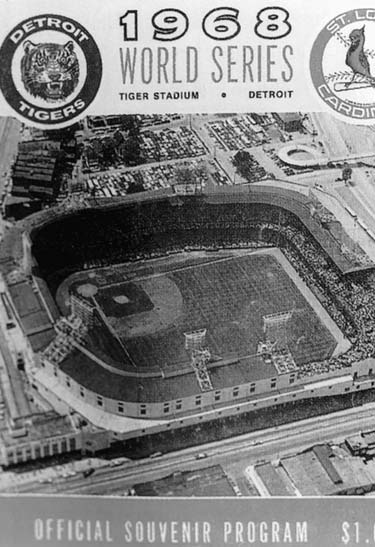
1968 Detroit Tigers / St. Louis Cardinals World Series program cover
The World Series went a full seven games and games three, four, and five were played in Detroit. Each game attracted the same 53,634 attendance numbers. (Author’s collection.)Click above photos for a larger view!
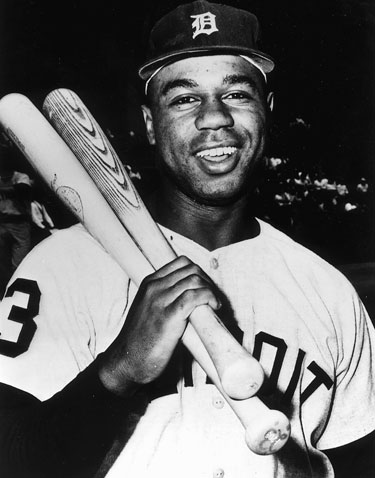
Willie Horton of the Detroit Tigers
Affable slugger left fielder Willie Horton hit 36 home runs in 1968. In game five with St. Louis ahead three games to one, Horton made the most memorable defensive play in the history of the ballpark when he threw out speedster Lou Brock trying to score from second on a single. (Courtesy B&W Photos.)

Tiger Stadium by Irwin J. Cohen is available from the publisher online at www.arcadiapublishing.com or by calling 888-313-2665.

View other excerpts from Arcadia Publishing’s Michigan books at Michigan in Pictures!

On a more editorial note, I had originally thought when I requested these photos that this would be part of a requiem for this grand old ballpark. It still may, but with Tiger icon Ernie Harwell pushing a plan to redevelop Tiger Stadium as a smaller ballpark and museum complex, maybe not!

You can follow Tiger Stadium news at Absolute Michigan.
Cruisin’ the Original: Woodward Avenue

Cruising Woodward Avenue in Detroit Michigan

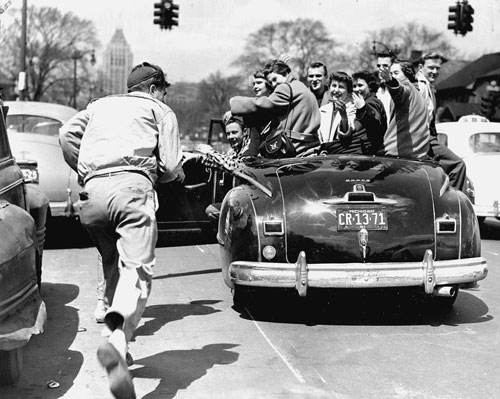
Cruising Woodward, 1951 (above) …the seriousness of the times (1950s) did not dampen a growing love of cars and the freedom experienced by driving them. These young Detroiters found their cars especially useful during the longest transportation strike in the city’s history. In April 1951, the folks here piled into a car not far from the Fisher Building, in the distance, which is across from the General Motors Building in Detroit’s New Center area. After the strike, Detroit mayor Albert Cobo urged the city council to sell Detroit’s streetcars to a willing buyer, Mexico City, for $1 million. The streetcars remained in service there until the 1980s. Detroit soon dismantled its trolley tracks, and only buses ran after that. Cars became the city’s major means of transportation.

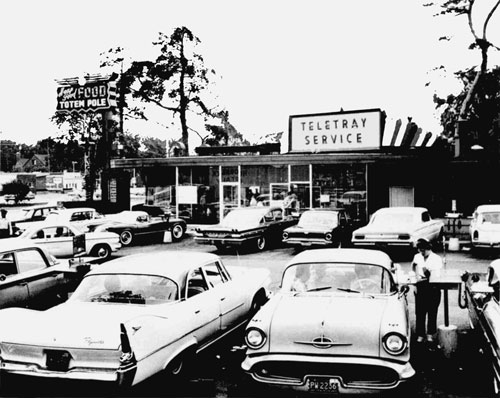
Cruisin’ the Original: Woodward Avenue by Anthony Ambrogio and Sharon Luckerman begins: In the 1950s, cruising swept the nation. American streets became impromptu racetracks as soon as the police turned their backs. Young people piled into friends’ cars and cruised their main streets with a new sense of freedom. The Totem Pole on Detroit’s Woodward AvePent-up desires after the hardships of World War II plus a booming economy fueled a car-buying frenzy. To lure buyers to their particular makes and models, automobile companies targeted the youth market by focusing on design and performance. No place was that more relevant than on metro Detroit’s Woodward Avenue, the city’s number-one cruising destination and home of the world’s automobile industry. Barely 50 years earlier, Henry Ford rolled his first Model T off the assembly line at Piquette and Woodward, just south of where cruisers, dragsters, and automobile engineers ignited each other’s excitement over cars. This unique relationship extended into the muscle car era of the 1960s, as Woodward Avenue continued to reflect the triumphs and downturns of the industry that made Detroit known throughout the world.

The Totem Pole (right) was the cruisers’ unofficial starting point on Woodward Avenue at Lafayette Street, kitty-corner from the zoo. This 1957 photograph demonstrates the “proper” way cruisers parked—to see and be seen, backed in, like the finned Plymouth in the lower-left corner. (click photo for larger view!)

Funded in part by a grant from the Federal Highway Administration’s National Scenic Byway program and with guidance from the Woodward Heritage Team, Detroit writers Anthony Ambrogio and Sharon Luckerman interviewed numerous local historians, automobile engineers, automobile museum directors, and Detroiters who cruised during these extraordinary decades.

The Images of America series celebrates the history of neighborhoods, towns, and cities across the country. Using archival photographs, each title presents the distinctive stories from the past that shape the character of the community today. Arcadia is proud to play a part in the preservation of local heritage, making history available to all.

Cruisin’ the Original: Woodward Avenue is available from the publisher online at www.arcadiapublishing.com or by calling 888-313-2665.

View other excerpts from Arcadia Publishing’s Michigan books at Michigan in Pictures!

Here’s an action-packed feature on the Woodward Dream Cruise from Absolute Michigan!

Big Boy Graveyard

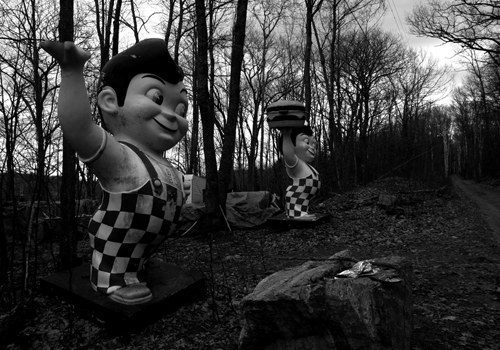
Big Boy Graveyard

Big Boy Graveyard, photo by Charles Peace

I think that the only thing that is more disturbing than the knowledge that there is a Big Boy Graveyard to someone who grew up yelling “Big Boy! Big Boy!” every time we drove past one is the knowledge that there are (at least) TWO Big Boy graveyards in Michigan. (Detroit area Big Boy Graveyard from dETROITfUNK)

They never tell you about this when you’re in line at the buffet or evaluating which of the menu’s full-color desserts will most make you resemble the smiling icon of Big Boy Restaurants. Even Bob Wian who started Bob’s Big Boy in California in 1936 probably kept quiet about where the Big Boys go when they’re too old to huck hamburgers.

And Fred, Louis, and John Elias, the Elias Brothers who started their mainly Michigan-based Big Boy franchise in 1951? Well, the less said about where they wound up, the better.

Charles is a graduate of Lake Fenton High School (south of Flint) and just received his BFA in Photography from Northern Michigan University. You can check out his portfolio right here.

UPDATE: The Ultimate Upper Peninsula Blog has some photos from the mysterious Big Boy Graveyard.