Winter Solstice: Ten seconds at Tahquamenon edition

winter-solstice-at-tahquamenon-falls

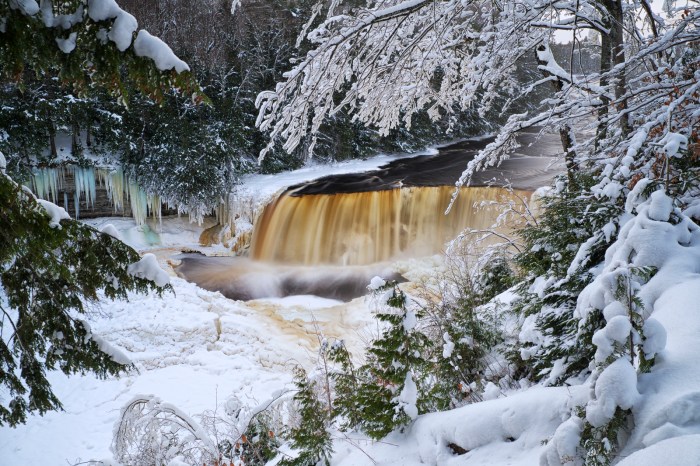
winter solstice, upper tahquamenon falls, michigan, photo by twurdemann

I wrote that the actual moment of the solstice was 11:48 PM last night, but it’s actually TONIGHT!  Anyway, here’s a simply gorgeous photo from the 2013 winter solstice at Tahquamenon Falls to kick off the shortest day of the year. I hope you can fit everything in and get a great start to your week!

View twurdemann’s incredible ten-second exposure bigger and see more including some more shots of the dramatically different scene at the Falls in 2013 in his winter slideshow.

Lots more Tahquamenon Falls and more about the winter solstice on Michigan in Pictures!

Doing nothing about Asian carp probably isn’t going to work

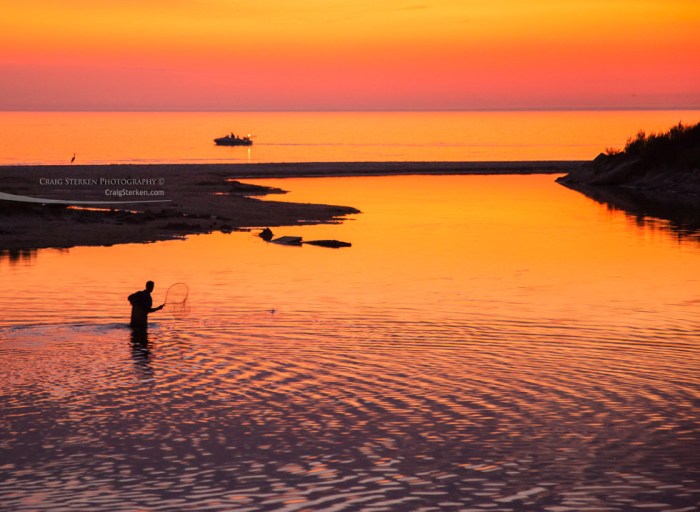
Salmon Fishing on the Sable River Outlet

Salmon Fishing on the Sable River Outlet, Ludington Michigan, photo by Craig Sterken

Traverse City based AP Environmental Writer John Flesher is (for my money) one of the best reporting on Great Lakes issues. His latest piece Effort to keep Asian carp from Great Lakes appears stymied begins:

When scientists discovered six years ago that aggressive Asian carp had made their way up the Mississippi River’s tributaries toward the Chicago area, the Obama administration and alarmed state officials pledged swift action to head off an invasion they feared could devastate fishing and boating on the vital Great Lakes.

Since then, federal agencies have spent more than $300 million on stopgap measures, including placing electric barriers on one likely route, a shipping canal that leads to Lake Michigan. But as the carp get closer_some are within 80 miles of the lake— the quest for a surefire deterrent seems to be coming up empty.

An advisory panel that has debated solutions for several years is scheduled to hold what may be its final meeting Thursday, with no sign of a consensus plan, several members said in interviews.

Even if talks continue, chances are growing that the carp will arrive before anything conclusive is done to stop them. At their recent pace, the first young carp could reach Lake Michigan within two years, although a number of obstacles could slow them considerably.

“It’s one of the things that keep me up at night,” said U.S. Sen. Debbie Stabenow, a Michigan Democrat whose state borders four of the five Great Lakes. “Asian carp could devastate our Great Lakes and the hundreds of thousands of jobs that depend on them.”

…Environmental groups and the region’s fishing and boating industries, which generate $23 billion annually on the lakes, are most worried about two varieties of Asian carp: bighead and silver, which weigh dozens of pounds and gorge on the same tiny plant and animal life that feeds the lakes’ other fish. Scientists are still measuring their impact in rivers, but under worst-case scenarios, the large carp could leave popular sport fish to go hungry and suffer population drop-offs. Asian carp are edible but bony, and most Great Lakes fish connoisseurs regard them as a poor substitute for the walleye and whitefish.

Additionally, silver carp are notorious for springing from the water when startled, sometimes ramming boaters with bone-cracking force — a hazard that some fear could damage the Great Lakes’ tourism industry.

Read on for much more, and be sure to follow John on Twitter for more of the story. And please, make it clear to every elected official you interact with how important the health of the Great Lakes is to Michigan!

View Craig’s photo bigger, see lots more Great Lakes goodness in his slideshow and view & purchase photos from him on his website.(this one is in the Ludington collection)

More about the threat of Asian carp on Michigan in Pictures.


Forecasting sunsets through Sunset WX

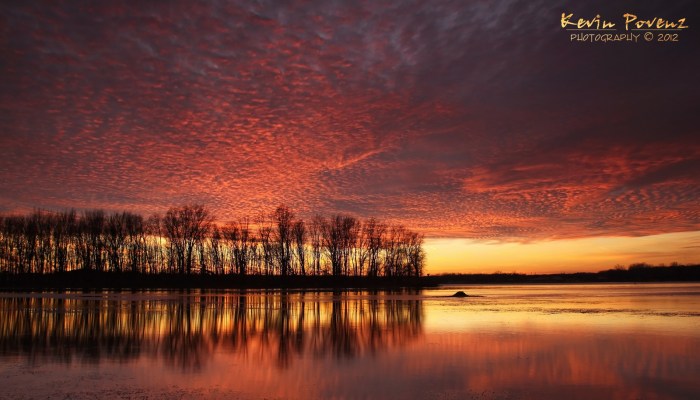
Sunset at the Bend Area

Sunset, photo by Kevin Povenz

If you’re looking to get the perfect sunset, you might want to check out the sunset forecast from Sunset WX. They explain (in part) their model for sunset forecasts:

…we understand there are numerous definitions for the criteria: Vivid, average, and poor. However, as a landscape photographer, there are certain variables I look for each evening before making the decision to take time out of my day and photograph the sunset. The most important factor I look for is sky cover, and more specifically, the existence of high clouds over the area. High clouds not only provide moisture to refract the sunlight, their ‘wispy’ formation also provides “texture” to the sky and are high enough in the atmosphere for the sun to scatter light below. Think of these as a movie theatre screen, in which light can be projected upon.

Because of this, we weighted high clouds the most as stated before, and consider this necessary for a “Vivid” sunset. In general, regions that are displayed “Poor” in the model, are areas of near 100% of total cloud cover, and also areas that are projected to experience precipitation around sunset time. The ‘hard to define’ area comes in between the two. To some, a clear sky at the time of sunset may be the definition of a great one. In this model, it is our intent to weight a clear sky sunset as average, and therefore it would show up as green or light yellow. The oranges and reds are really the areas where we are trying to show that the sunset will be one of those that makes you go ‘Wow’.

Click through to check out the live sunset forecast map – it’s pretty cool!

Kevin took this photo back in December of 2012 at “The Bend Area” in Ottawa County on the Grand River near Jenison. View it bigger and see lots more in his Sunrise/Sunset slideshow.

Lots more great Michigan sunsets on Michigan in Pictures!

Michigan Wild & Scenic Rivers: Over the (Pine) River

HDRtist Pro Rendering - http://www.ohanaware.com/hdrtistpro/

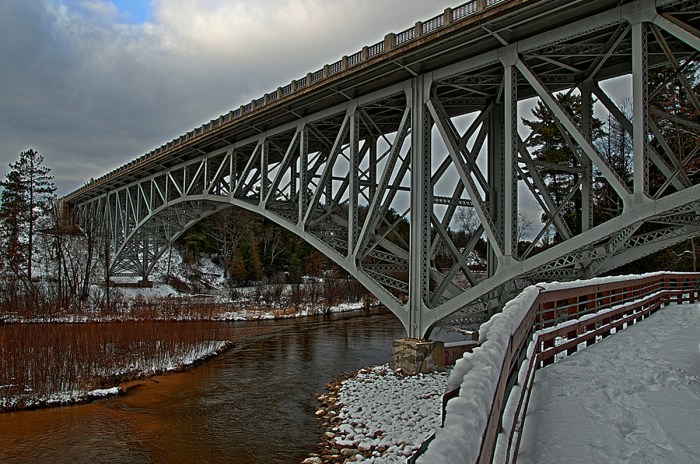
Pine River Bridge Wellston, Michigan, photo by John Mickevich

It is hereby declared to be the policy of the United States that certain selected rivers of the Nation which, with their immediate environments, possess outstandingly remarkable scenic, recreational, geologic, fish and wildlife, historic, cultural or other similar values, shall be preserved in free-flowing condition, and that they and their immediate environments shall be protected for the benefit and enjoyment of present and future generations.
~Wild & Scenic Rivers Act, October 2, 1968

Michigan has 16 nationally designated Wild & Scenic Rivers, and one of these is the Pine River. The Pine River Management Plan says (in part):

Visitors to the Pine River Corridor continue to enjoy a variety of recreation experiences in natural appearing settings. Visitors may encounter both non-motorized and motorized recreation on land within the Pine River corridor (such as hiking, mountain biking, hunting, and auto touring) while only non-motorized recreation is encountered in the river channel. High quality commercial services are available for recreation activities, particularly for boating and fishing.

Watercraft use, particularly canoeing, is an important recreation activity on the Pine River. The river character provides watercraft users with a moderate challenge in practicing boating and water safety skills and a high degree of interaction with the natural environment.

…Fishing on the Pine River is another popular recreation activity. The Pine River is considered a “blue ribbon” trout fishery and many anglers take advantage of the early morning and evening hours and weekdays to fish with some degree of solitude.

Click to view it on a map!

View John’s photo background big and see more in his Manistee County slideshow.

More Michigan Wild & Scenic Rivers on Michigan in Pictures – safe travels everyone!

PS: Marilyn Wilkie shared that this is the Mortimer E Cooley Bridge on M-55. It’s a Metal Cantilever 12 Panel Rivet-Connected Pratt Deck Truss bridge built in 1935.

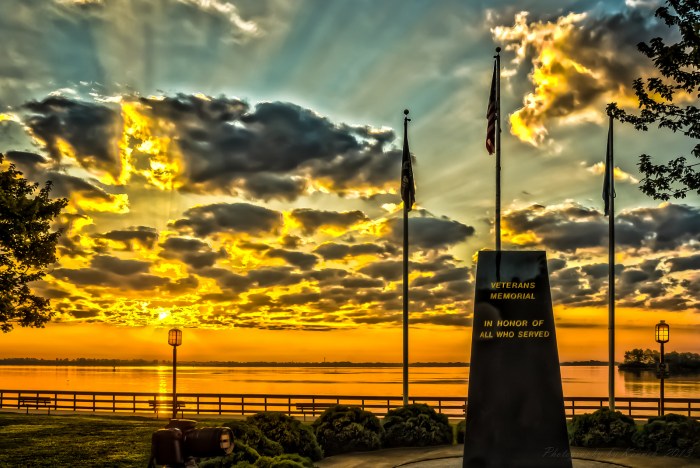
In honor of all who served

Veterans Memorial Wyandotte

Thank You for Keeping Us Safe…, photo by Kenneth Raymond

Thanks to all of you veterans and your families in Michigan and elsewhere for your service and sacrifice.

View Kenneth’s photo bigger and see more in his slideshow.


Fantastic Friday: Tahquamenon Falls, take two

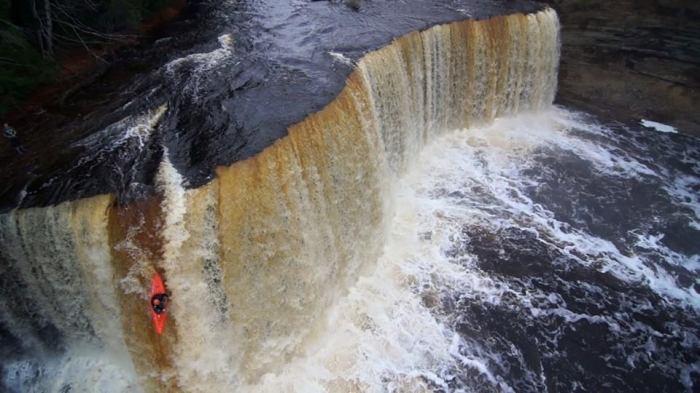
I had no idea on Wednesday that we’d be back at Tahquamenon Falls so soon. I guess I have to add a safety warning that if you’re not a crazy amazing kayaking legend like Marcelo Galizio, you probably shouldn’t do this. Also it might be illegal. Also if you tell me I shouldn’t post photos like this, I will probably tell you you shouldn’t follow my blog because I am 100% in favor of people being amazing.

Tahquamenon Falls revisited with Marcelo Galizio

Tahquamenon Falls revisited, photo by Aerial Vantage Productions

Here’s an aerial photo of Marcelo Galizio’s drop over Tahquamenon Falls yesterday!!  Look for a link to a video soon in the comments or at Aerial Vantage Productions on Facebook. Also be sure to check out their work at aerialvantageproductions.com and follow Dan Englund on Instagram!

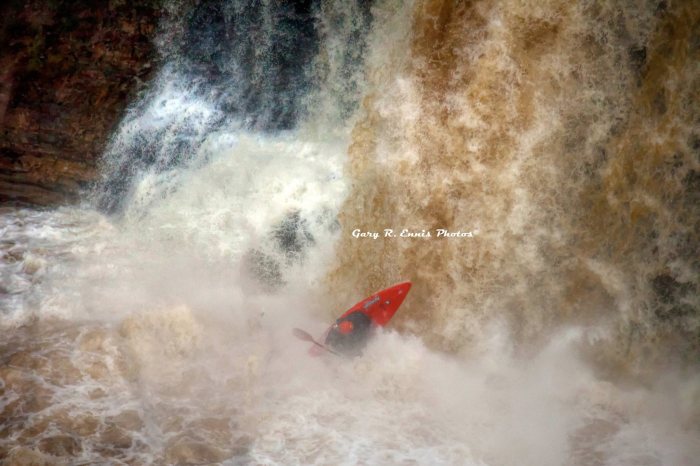
Because this is so awesome, and also because I learned about it through Gary Ennis, here’s another photo from Marcelo’s Tahquamenon Falls adventure:

Into the Falls Marcelo Galizio a

Be sure to click to check out Gary’s photos of Marcelo’s entire drop!

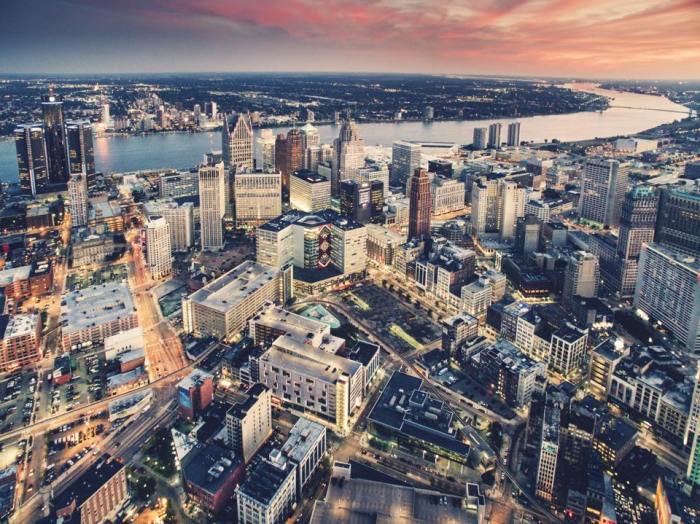
October Vibes in le détroit du Lac Érie

October Vibes by Camera Jesus

October Vibes, photo by Camera Jesus

Simply spectacular view of the city of Detroit.

The name of Detroit comes from “le détroit du Lac Érie” – French for the Straits of Lake Erie and referring to the St. Clair River and Lake St. Clair that link Erie with Lake Huron. Wikipedia has a pretty nice writeup on the Detroit River:

The Detroit River flows for 24 nautical miles (44 km; 28 mi) from Lake St. Clair to Lake Erie. By definition, this classifies it as both a river and a strait — a strait being a narrow passageway connecting two large bodies of water, which is how the river earned its name from early French settlers. However, today, the Detroit River is rarely referred to as a strait, because bodies of water referred to as straits are typically much wider.

The Detroit River is only 0.5 to 2.5 miles (0.80 to 4.02 km) wide. The Detroit River starts on an east to west flow but then bends and runs north to south. The deepest portion of the Detroit River is 53 feet (16 m) deep in the northern portion of the river. At its source, the river is at an elevation of 574 feet (175 m) above sea level. The river drops only three feet before entering into Lake Erie at 571 feet (174 m). As the river contains no dams and no locks, it is easily navigable by even the smallest of vessels. The watershed basin for the Detroit River is approximately 700 square miles (1,800 km2).

Since the river is fairly short, it has few tributaries. Its largest tributary is the River Rouge in Michigan, which is actually four times longer than the Detroit River and contains most of the basin. The only other major American tributary to the Detroit River is the much smaller Ecorse River. Tributaries on the Canadian side include Little Creek and the River Canard. The discharge for the Detroit River is relatively high for a river of its size. The river’s average discharge is approximately 188,000 cubic feet per second (5,324 m³/s), and the river’s flow is constant.

Check out Detroit 1701 for a bit of the river’s history and also be sure to support the Friends of the Detroit River who are doing great work to restore this corridor.

View the photo background bigiliciousfollow Camera Jesus on Facebook for lots more and view & purchase Joe’s Detroit photos (and others) from his website.

More Michigan rivers on Michigan in Pictures!

Winter Is Coming … apparently tonight

North Country Girls

North Country Girls, photo by Michael

While El Niño is predicted to bring a milder winter for Michigan in 2016, it looks like things will kick off early with a chance of a dusting of snow tonight & tomorrow:

The coldest air of the season will pour into state on Friday and into the weekend. The cold air will bring widespread lake-effect rain showers to West Michigan. The rain may mix with some wet snow over parts of the state late Friday into Saturday afternoon.

A better chance of accumulating snow will be over the higher terrain of Norther Lower Michigan and parts of the Upper Peninsula.

I should add that although you may want to see it from your car with the heater cranked, color around the state is still really nice!

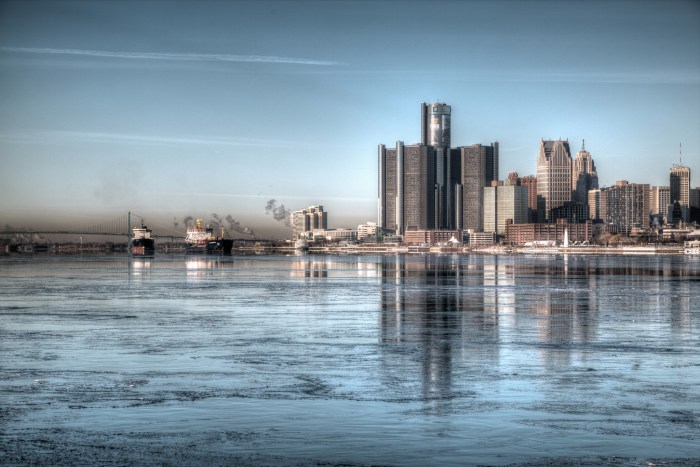
Michael took this last January when Detroit was locked in the grip of the White Walkers. View it background bigtacular and see more in his slideshow.

More Detroit and more winter on Michigan in Pictures!

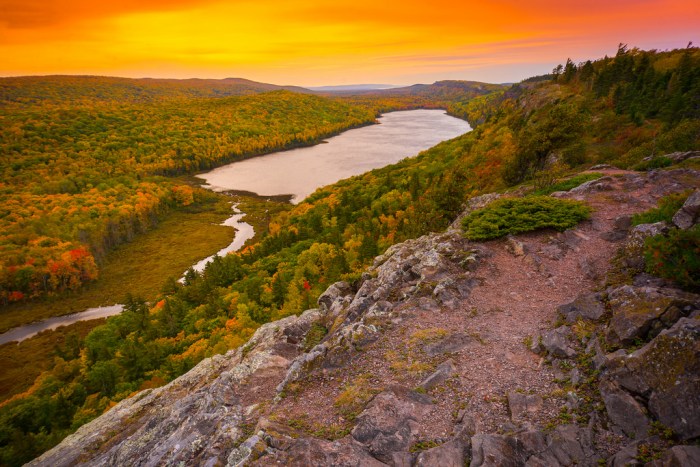
Autumnal Splendor at Lake of the Clouds

Autumnal Splendor

Autumnal Splendor, photo by Eric Hackney

True confession: I was asked to share less from northern Michigan and the Upper Peninsula. True answer: It’s really hard to turn my back on incredible visions like this! I will try and do better tomorrow. Promise. 

Also – new design for the blog. Not finished, but at least the pics are bigger. Thoughts & comments are appreciated.

Lake of the Clouds is one of the main attractions in the Porcupine Mountains State Park. Be sure to check out this interactive map & photo presentation from the Park that includes a 360-degree panorama from the spot atop Cuyahoga Peak where this photo was taken!

View Eric’s photo bigger and see more in his Landmarks & Landscapes slideshow.

PS: There’s more photos from Eric on Michigan in Pictures


Fall reflections at Black River Harbor

Fall Reflections at Black River

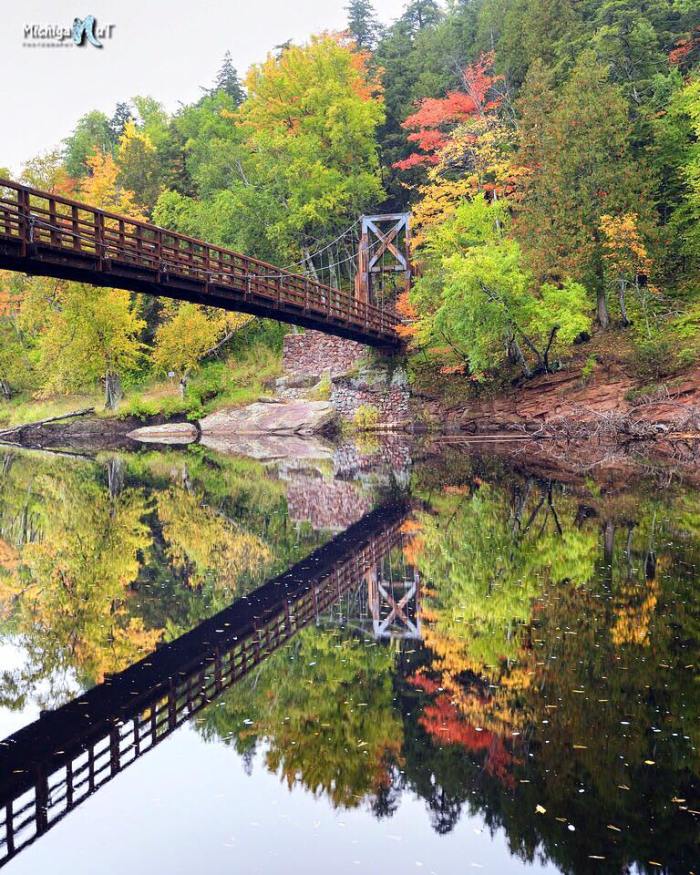
Fall reflections at Black River Harbor, photo by Michigan Nut Photography

The Ottawa National Forest page on Black River Harbor Recreation Area explains:

Known for its spectacular waterfalls, idyllic beaches, scenic hiking trails and tranquil campground, the Black River Harbor Recreation Area is a popular destination throughout the year. Originating in Wisconsin, the Black River flows through forested areas of large pine, hemlock and hardwood trees. The River has a series of scenic waterfalls as it drops in elevation to meet Lake Superior. Tannin (tannic acids) from hemlock trees is what gives it its unique color.

The Harbor offers one of the area’s few access points to Lake Superior, with boating being a major summer time activity. The boat ramp can accommodate almost any craft trailered in. There is no launching fee. Boat fuel and snacks are available through the concessionaire. Parking for trucks and boat trailers is ample.

Read on more more information including a map.

John took this photo a few days ago. Check it out bigger and definitely follow Michigan Nut Photography on Facebook for more great fall color and lots more of Michigan at its best!