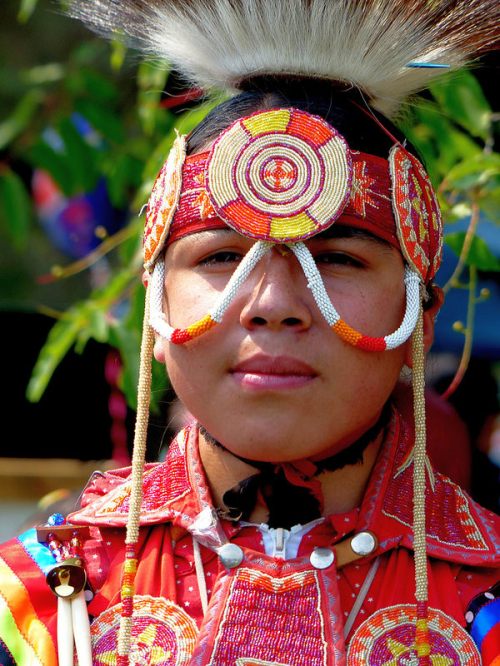
Happy Michigan Indian (Anishinaabek) Day

Odawa Indian Boy

Odawa Indian Boy, photo by Sharon

Michigan Indian Day was established as the 4th Friday in September by the State of Michigan in 1974.

The Little River Band of Ottawa Indians & Kenny Pheasant, Director of their Anishinaabemowin Program created a cool site to help people learn Anishinaabemowin, the language of the Anishinaabe nation. The history page begins:

In the beginning, Gizhemanidoo created the universe as we know it today. He created Grandfather Sun and Grandmother Moon, Mother Earth and Father Sky. And on the earth he created all things, living and nonliving. He created life in the earth, on the earth, in the sky and in the water. He created the plants, rivers, four-legged and winged creatures, and the swimmers. After this was done, he created one of the greatest mysteries of all – the four seasons – to bring harmony and balance to all.

After all creation was complete, he created man. After he created the first Anishinaabe, he came to him in a dream and instructed him that he was to name all things in the language that he gave him, Anishinaabemowin. So the first man went about on his journey and named all things he saw – all the animals, insects, birds and fish – however long this took. Afterward, he spoke to the Creator Gizhemanidoo in his dream and said, “I have finished what you have told me to do.” Then the Creator Gizhemanidoo spoke back to him and said, “Yes, you have indeed done so, and now it is time for me to give you your name. Your name shall be Nanabozho, and whenever your people meet and greet one another, they will say a part of your name. That is why whenever the Anishinaabe people greet one another, they say the word Bozhoo.

Our creation story tells us that we originally migrated to the Great Lakes region from the East Coast. There are many settlements of our original homes that still exist to this day, like Manitoulin Island, the Island of the Great Spirit.

We have always been a nation, and we knew one another as the Anishinaabek. It was not until the French and European settlers arrived on this part of the continent that we became known as the tribes now called Ojibwe, Odawa and Bodwe’aadamiinh.

Read on for more.

Sharon took this at the 2014 Odawa Homecoming Pow Wow in Harbor Springs. View it bigger and see more in her slideshow.

More portraits on Michigan in Pictures.
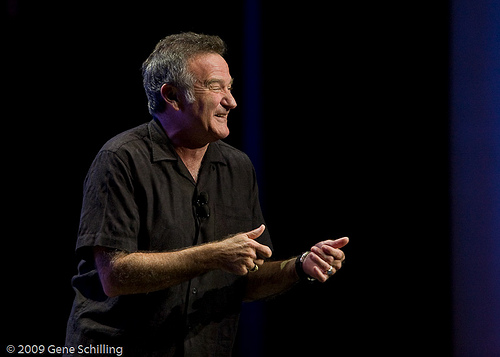


Farewell Robin Williams

Robin Williams

Robin Williams, photo by Gene Schilling

“Comedy is acting out optimism.”
~Robin Williams

Like many who have enjoyed the zany & genuine wit of Robin Williams, I was saddened to hear that he lost his lifelong battle with depression.

View Gene’s photo bigger, see more from this show in his Robin Williams @ The Sound Board, Detroit, MI (assignment for MotorCityBlog.net) slideshow and check out musicimagesbygene.com for some great concert photography.

PS: I found this quote in a Huffington Post article with some really great shots of Williams.

Apocalyptic Spring

Apocalyptic Spring.

Apocalyptic Spring., photo by jonathan_brandt

View Jonathan’s photo bigger, see more in his Panoramas slideshow and check it out giant-sized on Gigapan where (if you go full screen) you can zoom in for an incredible amount of detail.

Sweetheart Splash

Rockford Sweetheart Splash 2014

Rockford Sweetheart Splash 2014, photo by DJ Wolfman

I solemnly swear that I will never get tired of looking at polar bear plunge photos. They are Michigan’s Mardi Gras which I think is awesome.

DJ Wolfman captured some great fun at Rockford’s Sweetheart Splash. Check this photo out bigger and see more in his Rockford Sweetheart Splash slideshow.

A Dream Begins in Detroit: Remembering Martin Luther King

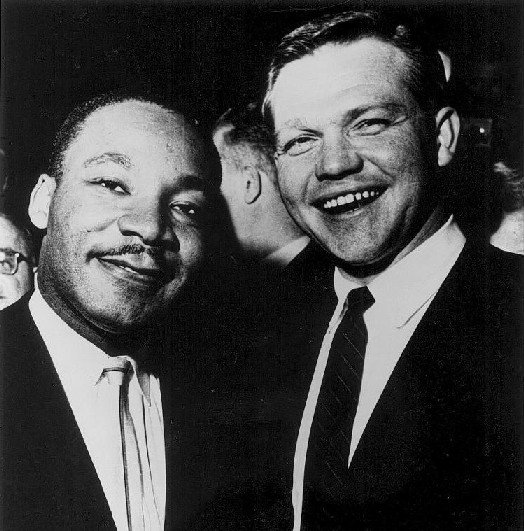
John Swainson and Martin Luther King

John Swainson and Martin Luther King, photo courtesy Archives of Michigan

Today’s post is by Bob Garrett of Seeking Michigan and the Archives of Michigan…

A Dream Begins in Detroit

In the above photo, Dr. Martin Luther King, Jr. appears with John Swainson, Michigan governor of 1961-1962. The photo is undated but was most likely taken on Sunday, June 23, 1963. On that date, Dr. King and former governor Swainson both participated in the Detroit “Walk to Freedom.”

The Detroit Walk to Freedom

Dr. King was then in the midst of a tour (begun that spring) from California to New York. His Detroit stop proved the tour’s biggest success. Police estimated the Freedom Walk crowd at 125,000. The day after the event, The Detroit Free Press labeled it “the largest civil rights demonstration in the nation’s history.” The walk began at Woodward and Adelaide and continued down Woodward to Cobo Hall. It lasted about an hour and a half, as marchers carried signs and sang songs (Songs included “We Shall Overcome” and “The Battle Hymn of the Republic.”).

The Detroit Council for Human Rights organized the Walk. The Council’s director, Benjamin McFall, and its Chairman, Rev. Clarence L. Franklin, marched in a line with King and Swainson. That line also included Detroit Mayor Jerome Cavanaugh, United Auto Workers President Walter P. Reuther and State Auditor General Billie S. Farnum. (Then-current governor George Romney, a Mormon who avoided public appearances on Sundays, did not directly participate. He did, however, proclaim the day “Freedom March Day in Michigan.”)

Speech at Cobo Hall (“I Have a Dream…”)

At the walk’s conclusion, King gave a speech at Cobo Hall. According to the contemporary Detroit Free Press report, approximately twenty-five thousand people sat in attendance, with African Americans comprising about ninety-five percent of that total. They listened as King spoke of non-violence and an end to racial segregation. The June 24, 1963 Free Press report notes that King “ended his speech by telling of a dream.” According to the Free Press, King described his dream of whites and blacks “walking together hand in hand, free at last.”

In his book King: A Biography, David Levering Lewis states that King repeated the phrase “I have a dream” several times during that Cobo Hall speech. Lewis notes that when King addressed a crowd in Washington, D.C. two months later, he “kept the refrain from the Detroit speech: I have a dream.” (See Lewis’ King: A Biography, second edition, Urbana: University of Illinois, 1978, pg. 227).

Conclusion

King’s Washington speech of August 28, 1963 became famous as his “I have a dream speech.” It was a defining moment in the American civil rights movement. In one sense, however, the seeds of Dr. Martin Luther King, Jr.’s dream were planted in Michigan – in Detroit’s Cobo Hall.

Editor’s Note: You can click to read the full text of Dr. King’s speech in Detroit and see a photo from the walk on Michigan in Pictures. Interestingly enough, Gov. Swainson had a harder road than many to participate in the walk – he lost both his legs in a land mine explosion in Alsace-Lorraine in WW II and had to learn to walk again on artificial legs. More on the Wikipedia entry for Governor John Burley Swainson.

An Hour of Code could be good for Michigan!

Screen Head

Screen Head, photo by Chancellor Monnette

If there’s a front page of the internet, it’s probably Google. They manage to pack quite a lot into a spare layout. Today would have been computer science pioneer Grace Hopper’s 107th birthday, and in addition to a tribute doodle, Google is featuring a ridiculously star-packed video about An Hour of Code.

An Hour of Code is a project of Code.org, a non-profit dedicated to expanding participation in computer science education by making it available in more schools, and increasing participation by women and under-represented students of color. The state of Michigan has 13,484 open computing jobs (growing at 4.1x the state job growth average), 1,930 annual computer science graduates and just 78 schools teach computer science. You can get all the details on how you can help encourage schools to require more computer programming from code.org!

Check Chance’s photo our background big and see more in his Portrait slideshow.

Goodbye, Sweet Prince.

Prince Fielder

Prince Fielder, photo by Keith Allison

John Heyman of CBS Sports reports that the trade of Detroit Tiger superstar Prince Fielder for second baseman Ian Kinsler is official.

The Rangers and Tigers have agreed on a blockbuster deal to send Prince Fielder to Texas for Ian Kinsler, pending physicals and the approval of at least Fielder, CBSSports.com has learned.

There was no word yet of any other players being involved, so it may just be a one-for-one swap of stars. Fielder’s salary is much larger, and it is believed Texas will get money in the deal but it wasn’t certain how much. (note: $30 million is the reported figure)

…The Tigers would free up some money in the trade plus fill their second-base hole created by Omar Infante’s free agency. Detroit could use big prospect Nick Castellanos at third base, and move two-time defending A.L. MVP Miguel Cabrera to first base.

The Tigers had been floating Max Scherzer as a trade possibility. But a deal of Fielder could possibly free up extra cash to try to sign Scherzer, the 2013 Cy Young winner, long-term. The Tigers also will aim to lock up Cabrera this winter, and that will take a lot of money, as well.

Read on for more, see what the Tigers have to say and also check out the discussion over on Bless You Boys. Also see Roar of the Tigers take on the trade via the talented pen of Sam. Here’s a summary of Price Fielder’s career via Wikipedia.

Fielder, a first baseman, is the son of former Detroit Tiger first baseman Cecil Fielder. He was selected in the first round of the 2002 draft by the Milwaukee Brewers in 2002 out of Eau Gallie High School in Melbourne, Florida. He spent the first seven years of his career with the Brewers before signing with the Detroit Tigers in January 2012. Fielder is a five-time All-Star and is the active iron man leader for consecutive games played. 

He holds the Brewers’ team record for home runs in a season,  is the league’s youngest player to hit 50 home runs in a season, and is one of only two players to win more than one derby. Fun fact: Prince and Cecil Fielder are the only father-son combination to each hit 50 MLB home runs in a season!

Keith has contributed some great shots to Michigan in Pictures. View this photo as big as Fielder and see more in his Detroit Tigers slideshow.

There’s more Detroit Tigers and also more portraits on Michigan in Pictures.

PS: My dad Al McFarlane used to always say “Goodnight, sweet Prince” when he would drop the hammer on me in a game. I love Prince’s play, hustle and heart but I think I would have tried to make this deal if I were Dombrowski.

know these things: Cities & Rain

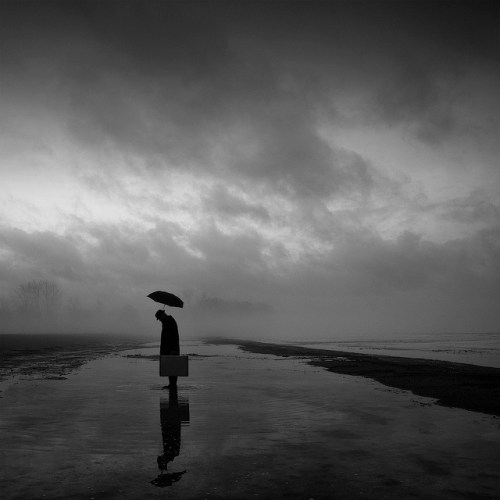
know these things

know these things, photo by .brianday

Michigan Radio’s Stateside program interviewed Dr. Larissa Larsen of the Urban and Regional Planning Program at the University of Michigan about how our warming climate & heavier rains impacts how we plan & manage cities. It’s an interesting concept and another financial eventuality we’ll need to include in our long-term planning … assuming we ever do any of that.

This photo is from Brian’s fantastic Time Traveler Series. See it bigger and see more in the time traveler slideshow.

More weather on Michigan in Pictures.

Remembering Michigan author Elmore Leonard

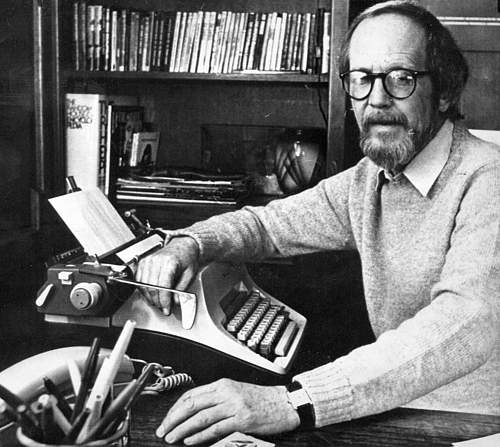
Detroit-Author-Elmore-Leonard

Elmore Leonard, The Dickens of Detroit, photo courtesy Archives of Michigan

“After 58 years you’d think writing would get easier. It doesn’t. If you’re lucky, you become harder to please. That’s all right, it’s still a pleasure.”
~Elmore Leonard

Legendary Michigan author Elmore “Dutch” Leonard passed away Tuesday at the age of 87. Leonard was the author of many best-selling crime novels including Get Shorty, Freaky Deaky and Killshot. Another great Michigan author, Jim Harrison, wrote:

“Elmore was the opposite of the loudmouthed, big shot novelist. He was graceful, fairly quiet and poignantly intelligent. We have lost our best. No one wrote better dialogue in America.”

The photo above appeared in The Dickens of Detroit from Seeking Michigan on Leonard’s birthday (October 11, 2011). They do a nice job of hitting the highlights of an illustrious career:

Leonard was born in New Orleans in 1925. He has made the Detroit area his home since 1934, when his family moved there. The city of Detroit often serves as the main character in his novels. As a result, fans often refer to Elmore Leonard as the ‘Dickens of Detroit.”

Leonard graduated from University of Detroit Jesuit High School in 1943. He then immediately joined the Navy, where he served with the Seabees. After his service, he enrolled at the University of Detroit and graduated in 1950 with a degree in English and Philosophy. Leonard started his writing career as a copywriter at the Campbell-Ewald Advertising Agency. Writing on the side, he was able to publish his first novel, The Bounty Hunters in 1953. In his early career, he focused on writing pulp Westerns, because that was what was selling at the time. Leonard eventually moved on to specialize in crime fiction and suspense thrillers. A large number of his books have been turned into movies or television programs.

Critics praise Leonard for his effective use of dialogue and the gritty realism in his books. His unique ear for dialogue and the ability to capture it on the page is rarely matched. Concise and plot driven, his stories are stuffed with colorful characters and tricky, often humorous plot twists.

Read on for more. Here are a few of the best features I found – please feel free to post more in the comments:

When is innocence lost?

Joseph_Crachiola_Mt Clemens 1973

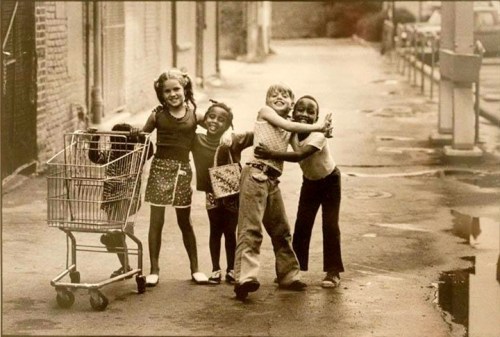
Mt. Clemens Friends, photo by Joseph Crachiola Photography

Photographer Asks: Recognize Anyone in Mt. Clemens Photo From ’73 That’s Going Viral? from Deadline Detroit says:

Former Detroit-area photographer Joseph Crachiola is thinking about race relations more than usual, a common reaction to the Trayvon Martin case verdict.

The musing led him to share personal reflections on Facebook with a photo he snapped July 31, 1973 for The Macomb Daily. It shows five youngsters, three black and two white, posing playfully after a rain shower in Mt. Clemens – a moment of childhood innocence that moved Crachiola 40 years ago and still does.

He’s not alone. Though Crachiola has only 411 followers on the business page where he displayed it Sunday with a 160-word post, he tells Deadline Detroit the black-and-white image has been viewed nearly 20,000 times by Monday afternoon. It has more than 600 “likes,” was shared 260 times and has about five dozen comments.

On the Facebook photo – now up over 50,000 views, 4000 likes, 2000 shares with a bunch of great comments – he wrote:

I shot this photograph forty years ago in Mt. Clemens, Michigan – July 31, 1973 – while working for a suburban Detroit newspaper. It was a seemingly insignificant moment. I was walking down a side street and saw some children playing. They saw me and said, “Hey mister, take our picture!” The pose was completely spontaneous. I shot several frames and moved on. The picture ran somewhere inside the paper and was probably forgotten about, but for me it still stands as one of my most meaningful pictures.

It makes me wonder. When is innocence lost? At what point do we begin to mistrust one another? When do we begin to judge one another based on gender or race? I have always wondered what happened to these children. I wonder if they are still friends. In light of the current state of affairs in this country I can’t help but wonder if we couldn’t all learn something from them.

I bet we could! If you have any tips or knowledge as to who is in the pic or thoughts about the photo, share them with Joseph on Facebook and see more of Joseph’s work on his Facebook page.

More portraits on Michigan in Pictures.