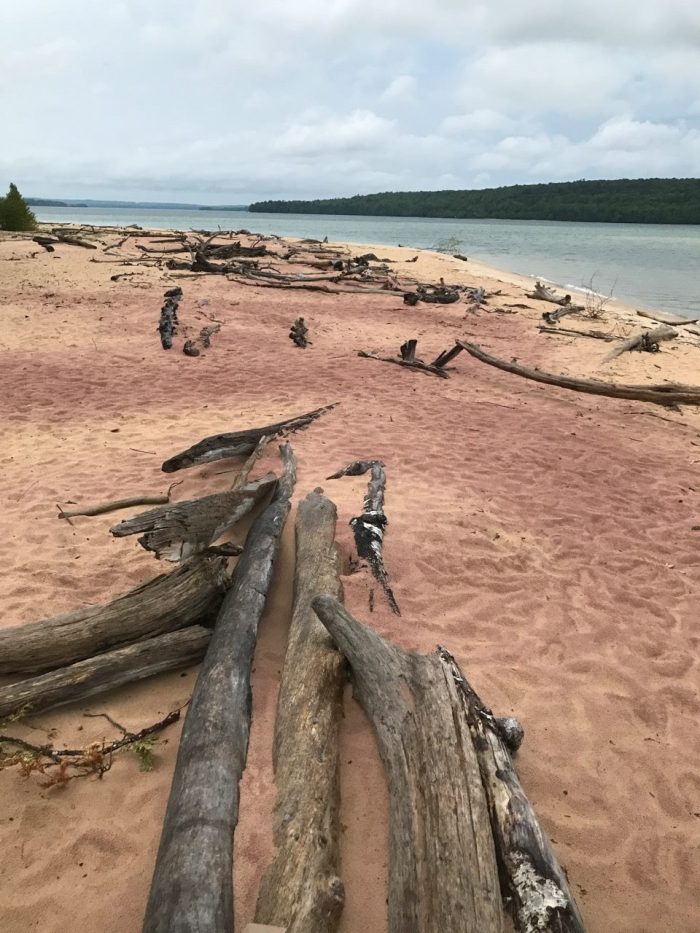
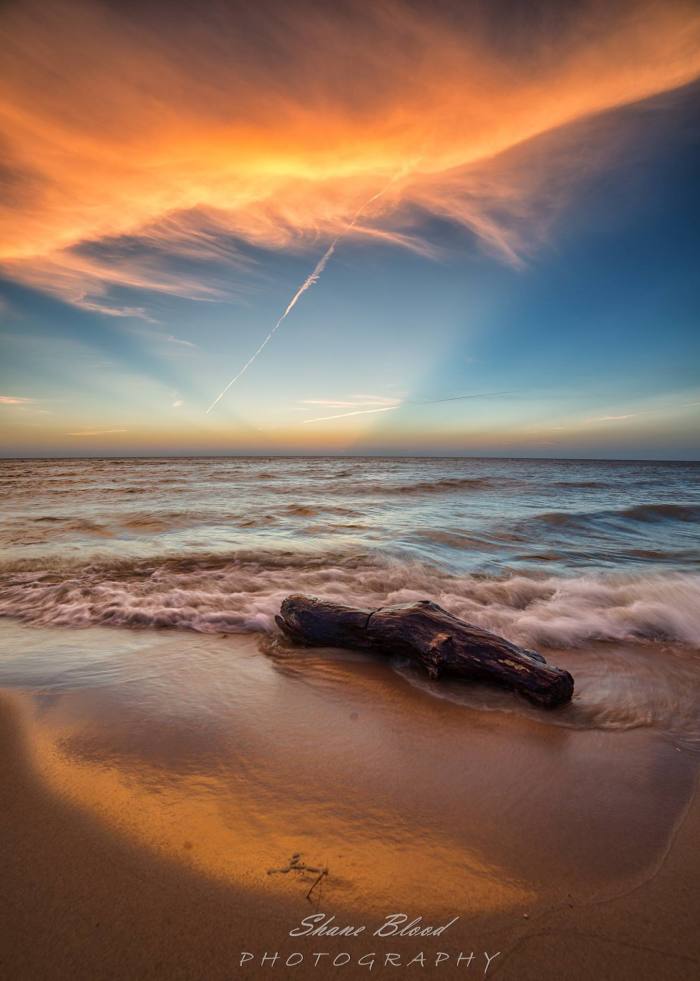
The Pictured Rocks National Lakeshore shared this photo yesterday saying:
Is this sand pink? Yes it Is! The pink sand on the beach can be found on the northeast corner of Sand Point at the very end of Sand Point Rd. The pink sand is actually garnet that has eroded from one of the sandstone layers of the Pictured Rock cliffs. The garnet then washed up at Sand Point and makes a unique pink sand beach.
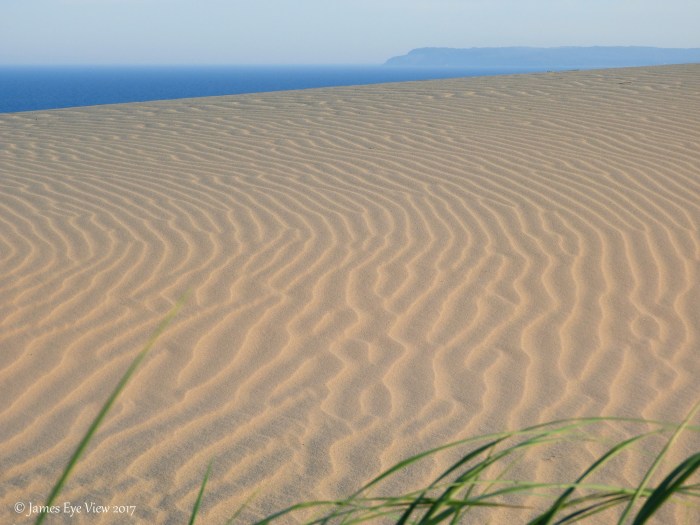
…is a Federally designated wilderness in Michigan’s lower peninsula and encompasses 3,450 acres of National Forest. Nordhouse Dunes is part of the Ludington Dune Ecosystem, which also includes Lake Michigan Recreation Area, and Ludington State Park. The dunes were formed 3,500 to 4,000 years ago and stand up to 140 feet high. Ludington Dune Ecosystem has the largest area of fresh water interdunal ponds in the world. The interdunal ponds, small water holes and marshes, decorate the area. Dune grass covers many of the dunes and provides habitat for a variety of wildlife species.
The Nordhouse Dunes are interspersed with woody vegetation such as juniper, jack pine and hemlock. Plant life is varied and includes the Federally Endangered Pitcher’s Thistle. The sand beach along the lake varies from narrow to wide and is home to the Federally Endangered Piping Plover, a shore bird that nests on the ground in small cobbles.
The wilderness area is popular for hiking, camping, hunting, nature study and wildlife viewing. There are approximately 10-miles of trail that can be accessed from 2 developed trailheads at the end of Nurnberg Road and Lake Michigan Recreation Area.
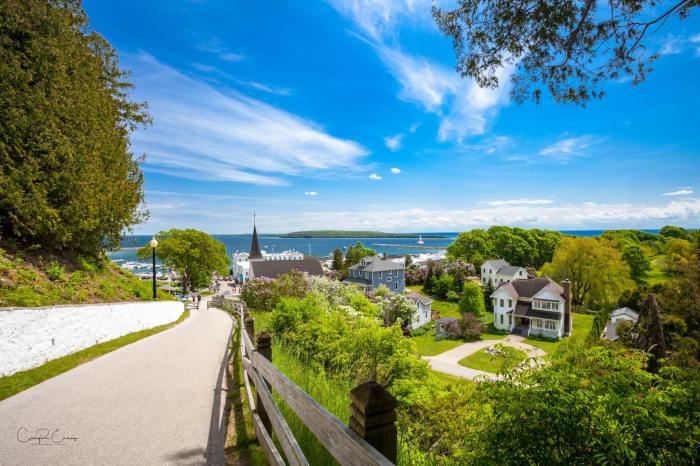
While lilacs have faded in much of Michigan, they’re still going strong on Mackinac Island as we head into the final weekend of the annual Mackinac Island Lilac Festival. The Northern Express’s writeup on the Lilac Festival says in part:
There are over 100 varieties of lilac on the island, the most recognizable being the common lilac or the French lilac, which ranges in color from white and pink to blue and several shades of purple. Many of the island’s lilacs were planted in the Victorian age, and some have lived for over 150 years, thanks to the island’s nurturing microclimate.
“Mackinac Island has some of the largest specimens of the common lilac in the country,” said Tim Hygh, executive director of Mackinac Island Tourism Bureau. “Also found here, but more rare, are the Himalayan lilac, which are lavender, and the Japanese tree lilac, which are typically white.”
View the photo from the walkway at Fort Mackinac bigger and follow Gary on Facebook for more!
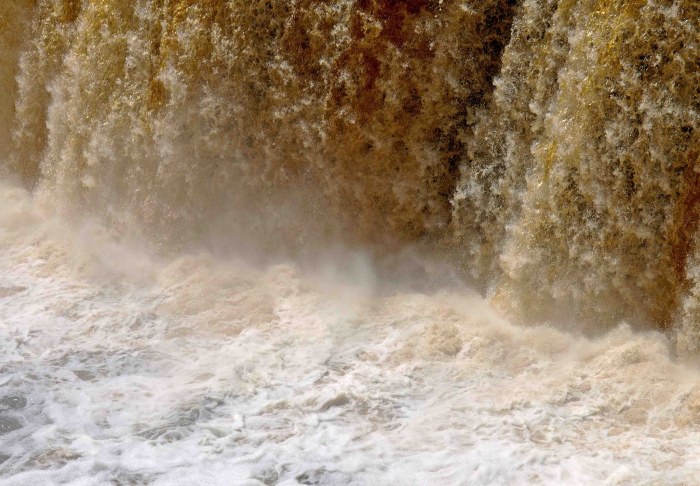
The Tahquamenon Falls State Park page says that the Upper Tahquamenon Falls are one of the largest waterfalls east of the Mississippi. At more than 200 feet across with a drop of nearly 50 feet, the falls have a flow rate that can exceed 50,000 gallons per second!
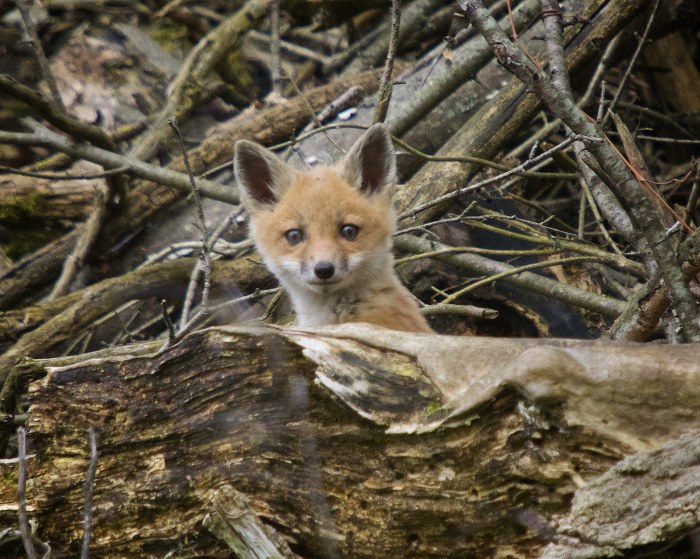
There are two species of fox in Michigan, the Red and the Gray. The Red prefer meadow areas and the Gray favor woods.
As with most wildlife, the kits are born in early spring. The vixen (female fox) chooses a hollow log, an empty woodchuck hole or a roadside culvert for the nursery. This nest site provides her young protection from predators, especially coyotes. The male fox helps with the rearing by bringing the vixen food while she nurses their young and keeps the kits warm. Then later in the kits development both parents teach them how to forage for food.
The foxes diet consists mainly of small rodents, moles and bugs. The benefits that foxes afford farmland, orchards and the general public is their consumption of these invasive pests. It is an absolute miss conception that fox eat cats, dogs or small children.They are very curious creatures but avoid contact with domestic animals and humans.
When fox kits are first born, their eyes and ears are closed, they remain secluded in their den with their mother. As they develop, at about one month, they start venturing out to play, attacking twigs, leaves and their siblings, but never far from the protection of the den.
If you do find an infant fox, please contact them for further instructions and see their website for information about other species!
PS: David has a video too. He writes: “Please note that the video was taken from quiet a distance away with a high power lens so as to avoid as much human contact with the kits.”
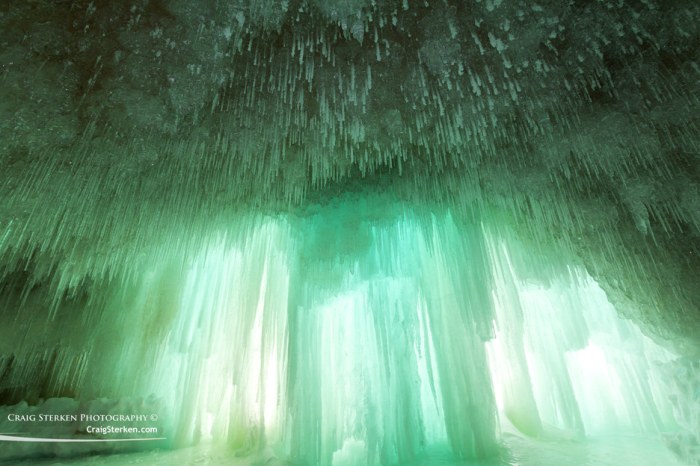
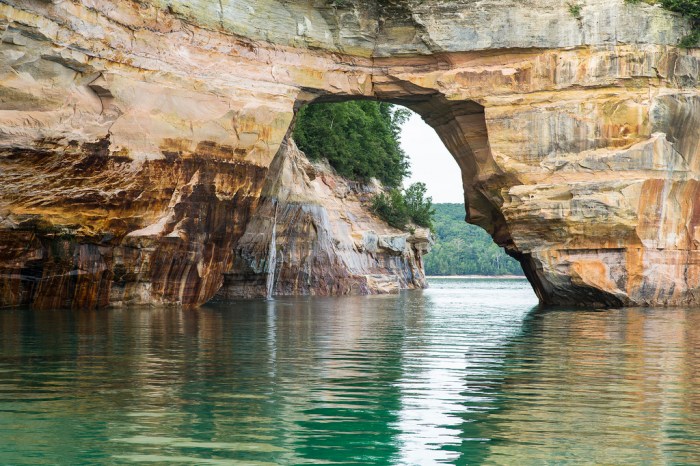
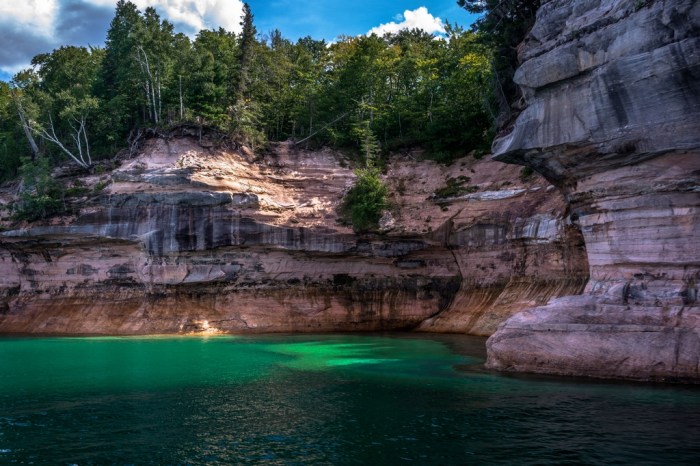
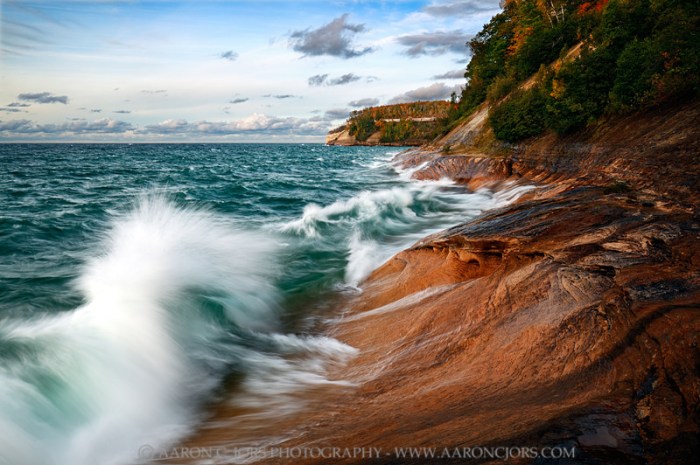
It’s hard to convey the unique beauty of the Pictured Rocks National Lakeshore in a single photo, but the stunning green of this picture really triggered memories for me of some of my best and brightest days in one of Michigan’s crown jewels.

 Michigan in Pictures