Requiem for a Spruce: Spruce Budworm in Michigan

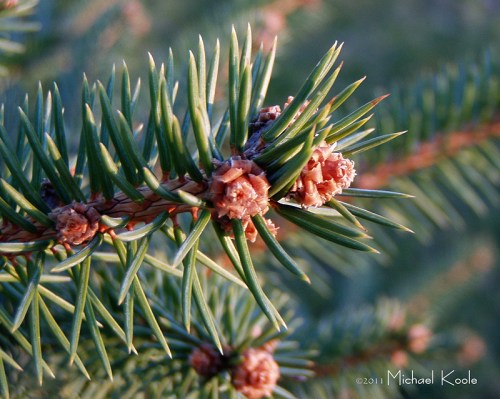
April 11, photo by Michael Koole

April 11, photo by Michael Koole

Garret Ellison of the Grand Rapids Press & mLive writes that the Michigan Department of Natural Resources expects spruce budworm to inflict heavy damage on white spruce and balsam fir trees across the Upper and northern Lower Peninsulas this year:

The budworm is “one of the most destructive native insects” in the northern spruce and fir forests of the eastern U.S. and Canada. The worms drop as caterpillars from treetops on webs and feed on tree growth in the spring.

Repeated budworm defoliation can cause top-kill and death in older and stressed trees. Balsam fir older than 60 and spruce over 70 years are prime targets. Younger trees infested with budworms lose much new growth but generally survive.

Read on for more, including how to protect your trees. The U.S. Forest Service has more about the spruce budworm:

The spruce budworm Choristoneura fumiferana (Clemens) is one of the most destructive native insects in the northern spruce and fir forests of the Eastern United States and Canada. Periodic outbreaks of the spruce budworm are a part of the natural cycle of events associated with the maturing of balsam fir.

The first recorded outbreak of the spruce budworm in the United States occurred in Maine about 1807. Another outbreak followed in 1878. Since 1909 there have been waves of budworm out breaks throughout the Eastern United States and Canada. The States most often affected are Maine, New Hampshire, New York, Michigan, Minnesota, and Wisconsin. These outbreaks have resulted in the loss of millions of cords of spruce and fir.

Balsam fir is the species most severely damaged by the bud-worm in the Eastern United States. White, red, and black spruce are suitable host trees and some feeding may occur on tamarack, pine, and hemlock. Spruce mixed with balsam fir is more likely to suffer budworm damage than spruce in pure stands.

If you’re intrigued by the “natural cycle” as I was, head over to Wikipedia’s entry on Choristoneura fumiferana, the Eastern Spruce Budworm for an explanation and some pics of these (for a change) native pests.

View Michael’s photo bigger and see more (including lots of tasty macro) in his Around the Yard slideshow.

PS: Sorry about the Monday morning novel … sometimes I over share. ;)
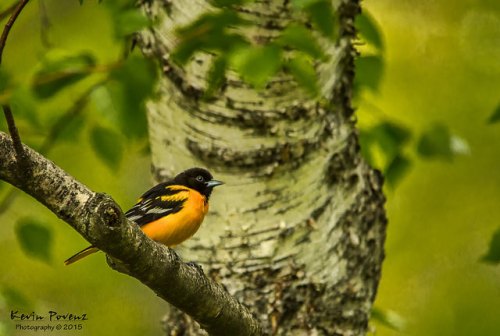
Know Your Michigan Birds: Baltimore Oriole (Icterus galbula)

baltimore oriole

Baltimore Oriole, photo by Kevin Povenz

The Baltimore Oriole (Icterus galbula) entry from All About Birds says (in part):

The rich, whistling song of the Baltimore Oriole, echoing from treetops near homes and parks, is a sweet herald of spring in eastern North America. Look way up to find these singers: the male’s brilliant orange plumage blazes from high branches like a torch. Nearby, you might spot the female weaving her remarkable hanging nest from slender fibers. Fond of fruit and nectar as well as insects, Baltimore Orioles are easily lured to backyard feeders.

…Baltimore Orioles are more often heard than seen as they feed high in trees, searching leaves and small branches for insects, flowers, and fruit. You may also spot them lower down, plucking fruit from vines and bushes or sipping from hummingbird feeders. Watch for the male’s slow, fluttering flights between tree tops and listen for their characteristic wink or chatter calls. Look for Baltimore Orioles high in leafy deciduous trees, but not in deep forests: they’re found in open woodland, forest edge, orchards, and stands of trees along rivers, in parks, and in backyards.

Baltimore Orioles seek out ripe fruit. Cut oranges in half and hang them from trees to invite orioles into your yard. Special oriole feeders filled with sugar water supplement the flower nectar that Baltimore Orioles gather. You can even put out small amounts of jelly to attract these nectar-eaters (just don’t put out so much that it risks soiling their feathers). Planting bright fruits and nectar-bearing flowers, such as raspberries, crab apples, and trumpet vines, can attract Baltimore Orioles year after year.

Read on for more and to see pictures and hear the distinctive song of the oriole.

View Kevin’s photo bigger and see more in his Birds slideshow.

Many (many) more Michigan birds on Michigan in Pictures.

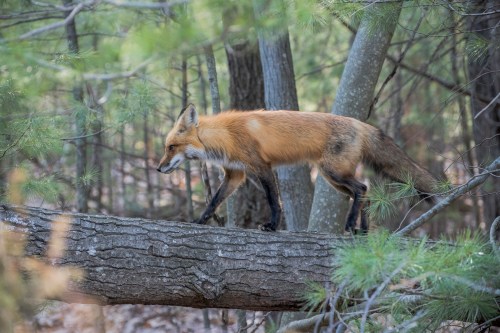
Foxy Friday

Fox Crossing

Fox Crossing, photo by Mark Miller

What an incredible catch by Mark!

View his photo bigger and see more of this little lady in his slideshow.

PS: More about red fox in Michigan from Michigan in Pictures.

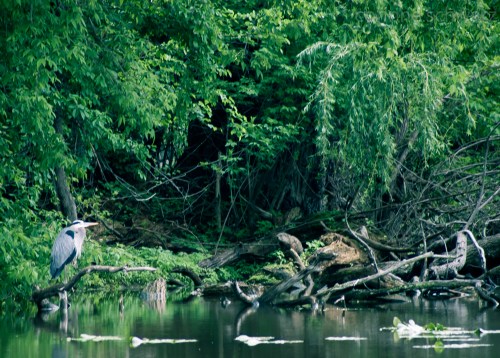
Best Friends in Nature: Heron & Beaver Edition

Heron & Beaver

Heron & Beaver, photo by Corinne Schwarz

Here’s a cool photo from May of 20111 that I never featured for some reason. That reason might have been so I could link to this article from the Birdwatchers General Store in Cape Cod about the symbiotic relationship between beavers & blue herons. It says in part:

It is thought that the Bay State’s famed naturalist, Henry David Thoreau, never saw a Great Blue Heron nest in Massachusetts. Why? It’s partly because there were no beavers living in MA during Hank’s lifetime. Way back in the 1700s, unregulated cutting eliminated the trees beavers needed for survival.

…Today, beavers are once again thriving in MA. That’s not only great news for anyone who enjoys seeing beavers, but it’s great news for Great Blue Herons as well.

I think we all know how beavers operate. They find a secluded stream, cut down a few trees and dam it up. The area behind the dam becomes flooded and turns into a beaver pond. Why do beavers need to go through all the work to build their very own pond? The beavers create a pond so they can have underwater access to their lodge, even when everything is frozen in the winter. However, the newly built pond often entraps large trees, which eventually drown and die. Dead trees growing out of the center of a pond may look eerie to us, but they are magnets to herons. The dead trees provide excellent platforms for the birds to build their nests on. In addition, the water prevents terrestrial predators from munching on the eggs and babies. Between the swampy setting, the dead trees, the bulky stick nests and the gangly herons, the whole scene looks a Gothic nursery, but the birds love it.

Read on for lots more, and for more about these two species, see Know Your Michigan Birds: Great Blue Heron and Castor canadensis, the American beaver on Michigan in Pictures.

View Corrine’s photo background bigtacular and see more in her Water Wheel slideshow.

More spring wallpaper and more “Best Friends in Nature” on Michigan in Pictures.

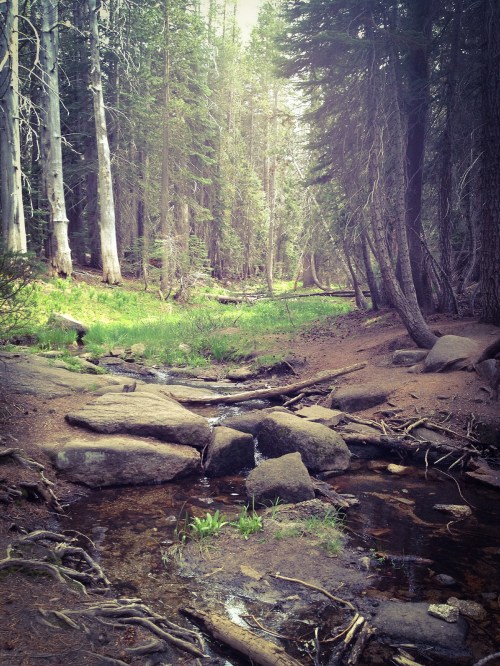
Welcome to May

Untitled

Untitled, photo by Amy Holley

Hope your May brings you promise and new growth.

Amy took this photo on May 1st last year. View it background big and see more wide-ranging goodness in her Outdoors slideshow.

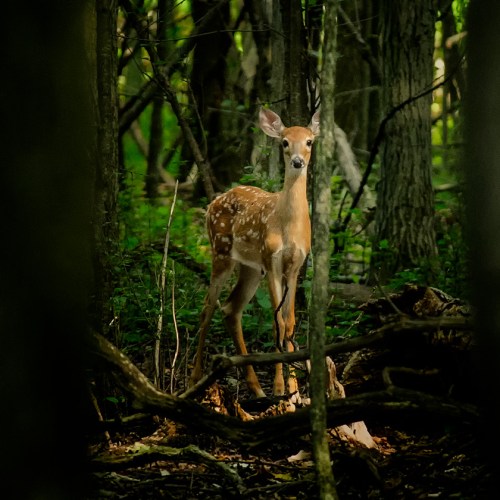
Almost Too Curious: Fawn Facts

Almost Too Curious

Almost Too Curious, photo by MichaelinA2

In honor of this great shot of a curious Whitetail fawn, here are some fawn facts gathered from the the UM Animal Diversity Web and the Michigan DNR and two hunting sites, The Whitetail Deer and Tinks.

  • The whitetail fawn loses its spots by the end of October of the same year it was born, or within 3 to 4 months after birth.
  • As the spots disappear, the fawn’s coat also changes from its reddish color to a grayish winter coat. The buck fawn’s face grows a bit darker in color but the belly remains white.
  • Deer tend to live in female-led family groups of up to 25 deer and may live to ten years or more.
  • When playing together, fawn games are suggestive of children’s games like tag. Mock fighting, aggressive postures, and scent marking helps fawns refine social behaviors.
  • Young males leave their mother after one year, but young females usually stay with their mother for two years.
  • The area where the fawn is born normally becomes its adult habitat.
  • Male fawns grow pedicles (the attachment point for antlers) that are typically about one inch in length.
  • Fawns that live past the first week have a good chance of surviving to adulthood.

Check it out bigger and see more in Michael’s 2013 Animals slideshow.

More nature on Michigan in Pictures.

Wolves almost gone from Isle Royale

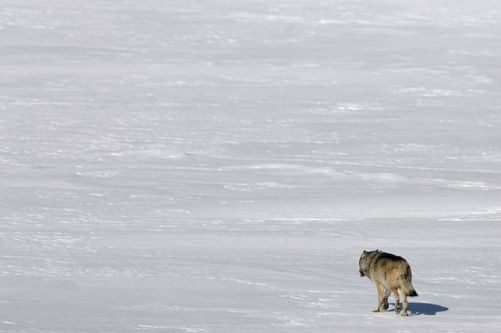
Isle Royale Wolf

The Urge, photo by isleroyalewolf.org

Last weekend the Freep reported that the delicate biosphere that characterized Isle Royale National Park is about to fall apart. The wolf count is down from nine last year to only three, and Michigan Tech ecologist John Vucetich says he wouldn’t be surprised if none remain next winter.

“What’s really important here is not the presence of wolves, per se,” Vucetich said. “But the wolves need to be able to perform their ecological function — predation. Predation has been essentially nil for the past four years now.”

That’s led to a 22% increase in the moose population for each of the past four years, he said, taking the island population from 500 to 1,200 moose. An individual moose consumes up to 40 pounds of vegetation a day.

“One of the most basic lessons we know in ecology, wherever creatures like moose live, you have to have a top predator,” he said. “If you don’t, the herbivore can cause a great deal of harm to the vegetation.”

… Vucetich and his colleague at Michigan Tech, Rolf Peterson, both support a “genetic rescue” of the island’s wolf population — bringing in wolves from elsewhere to bolster island wolves and help facilitate breeding. The U.S. Forest Service is studying the concept, but that process may take years. If the remaining wolf population doesn’t survive, and the Forest Service ultimately approves of the plan, it may mean creating a whole new pack on the island.

I think that this poses very interesting questions about our role in the ecosystems we seek to preserve. Are we to watch what happens and not interfere like a kid watching an ant farm or a Star Fleet team, or do we accept the responsibility of our decision to preserve and seek to maintain the natural balances and populations? As our climate changes, we will no doubt be called to make these decisions more and more frequently as flora and fauna lose the ability to survive in the places we have set aside for them.

This photo was the first in a series of 40 shared last fall in “Thinking Like an Island” from the Wolves & Moose of Isle Royale. They wrote:

THE URGE. Walk 40 miles in two days searching for a lover that may not even exist. Return home to parents and siblings the next day. The life of a dispersing wolf, unsatisfied.

It’s a great series featuring images by George Desort, Rolf Peterson, John Vucetich, and Brian Rajdl along with text by John Vucetich and Michael Paul Nelson. Click to see this photo bigger on Facebook and then use your left arrow to page through them.

Definitely visit isleroyalewolf.org for lots more about the predator/prey balance of one of Michigan’s most fascinating places.

Testament of a Fisherman

Testament of a Fisherman by Aaron Peterson

Testament of a Fisherman, photo by Aaron Peterson Photography

My friend Aaron Peterson shared this on Facebook last night. It’s built around the words of one my very favorite writers, Michigander John Voelker (aka Robert Traver). I hope you enjoy it – Aaron writes:

Please enjoy this new video I did for Travel Marquette.

In 1964 Ishpeming native John Voelker published his essay “Testament of a Fisherman” summarizing in just 200 words the power of rivers and the solace one finds in trout fishing. When I came to Marquette in 2001 I didn’t have much, but I had a fly rod and a library card. In the library I found the words of John Voelker, and on the rivers of the Upper Peninsula I found a purpose. To be able to do this project and adapt Voelker’s words, with permission from his family, was very important to me on many different levels.

A lot has changed in the 50 years since he wrote this, but the health of our water, wild fish and time spent away from phones and crowds is more important than ever. Enjoy, share, then get the hell off your computer and get in the woods. Maybe to Marquette, because they paid the bill for this inspiration smile emoticon Thanks to Fly Fishing Michigan’s U.P. Nick from Ore Dock Brewing Company and all those who fight for the sanctity of our water. –AP

(the video is beautiful – view it full screen if you can!)

View Aaron’s photo bigger on Facebook and follow his page for the latest. Definitely check out his website too. He has some crazy photos of the U.P.’s incredible adventure offerings!

Michigan Morel Alert: Morels in Honor Edition

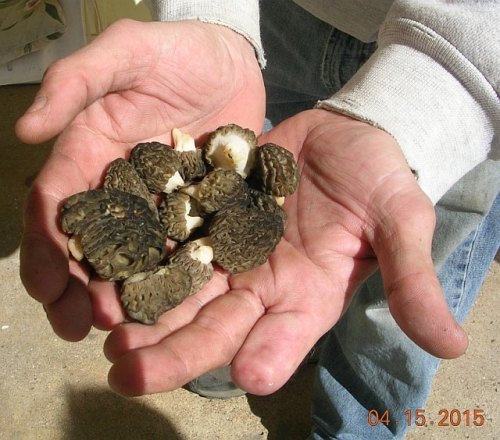
Morels at the Honor Hotel

Morels at the Honor Motel, photo by Honor Motel

In spring, a young Michigander’s fancies turn to … morels! Here’s a shot from Honor in the northwest Lower Peninsula showing a handful of black morels found on Tax Day. It’s earlier than I would have expected but hopefully it signals a good, long season for these woodland treasures.

Lots more Michigan morel photos and information on Michigan in Pictures!

View the photo bigger on Facebook and follow the Honor Motel for more.

PS: If you’re finding morels anywhere, post a comment here or two our Facebook.

Michigan Moose Numbers Declining

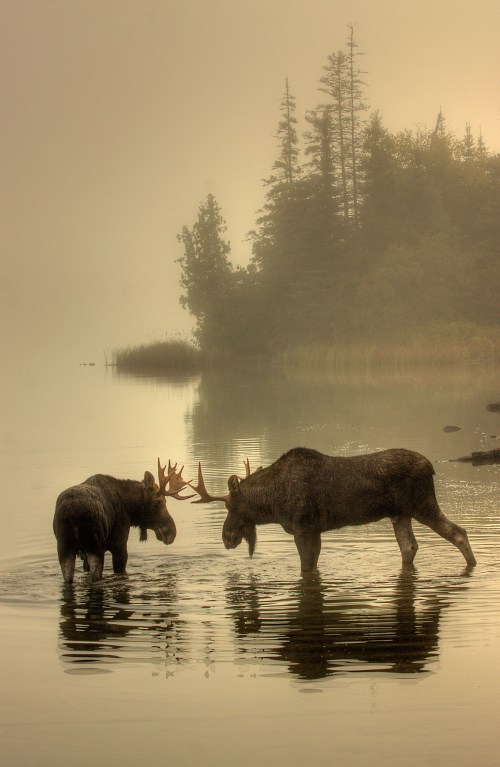
Moose Point Face-off

Moose Point Face-off, photo by Carl TerHaar

The Detroit Free Press reported that Michigan moose numbers are down:

The moose population in Michigan’s western Upper Peninsula appears to have dropped over the past two years and experts warn that a warming climate could be cause for concern for the species’ future in the state.

The latest biennial survey by the Department of Natural Resources produced an estimate of 323 moose in their primary Michigan range, which includes Baraga, Iron and Marquette counties. If correct, that would be a decline there of about 28 percent from 2013, when the estimate was 451.

…Even so, surveys since 1997 turned up regular population increases of about 10 percent. Beginning in 2009, the growth rate slowed to about 2 percent.

Now it appears to be dropping.

“It might not happen in our lifetime, or our children’s, but we have to face the possibility that there might not be a wild moose population in Michigan,” Chad Stewart (deer, elk and moose management specialist with the DNR) said.

Scientists are not certain what caused the apparent decline over the past two years, he said. Bitter cold and heavy snow the past two winters is one possible culprit. Also, wolves increasingly may be targeting moose because of falling deer numbers, although Stewart said there’s no hard evidence of that.

But in the long term, a warming climate may be the moose’s biggest enemy. Blood-sucking ticks thrive under such conditions. Thousands can attach themselves to a single moose and weaken the hulking beast.

More at the Freep.

View Carl’s photo big as a moose and see more in his massive Isle Royale National Park slideshow.

More Michigan moose information & photos on Michigan in Pictures