Yellow-bellied Sapsucker in Michigan

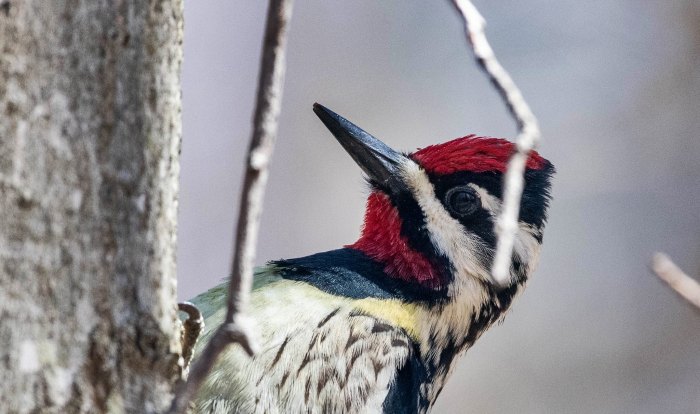
Eye of Reflection by Joshua DuPuis

Eye of Reflection by Joshua DuPuis

I’ve always thought of this bird as an insult from Looney Tunes, but All About Birds from Cornell University explains that Yellow-bellied Sapsuckers:

…are fairly small woodpeckers with stout, straight bills. The long wings extend about halfway to the tip of the stiff, pointed tail at rest. Often, sapsuckers hold their crown feathers up to form a peak at the back of the head.

Yellow-bellied Sapsuckers are mostly black and white with boldly patterned faces. Both sexes have red foreheads, and males also have red throats. Look for a long white stripe along the folded wing. Bold black-and-white stripes curve from the face toward a black chest shield and white or yellowish underparts.

You can click through to All About Birds for more including videos & audio! Lansing-based Feed the Birds (who shares my Looney memories) adds:

Yellow-bellied Sapsuckers arrive back in mid-Michigan in April from their wintering grounds in the southern U.S., Mexico, West Indies, and Central America.

I’ve seen evidence of their presence before on the trunks of the pine trees. Sapsuckers tap for sap as their main food source. On my trees the sapsucker seems to like to drill patches of several shallow rows across and several shallow rows down. These neatly organized patches of holes well up with sap that the sapsucker laps up with their brush-like tongue (not sucks). He also eats any bugs that happen to get trapped in the sticky stuff.

These predrilled sweet sap sources benefit hummingbirds, waxwings, and warblers as well when they need a quick, sweet bite while traveling.

Joshua took this photo of a Yellow-bellied Sapsucker in Antrim County. Click to visit Joshua’s Flickr and use the > at the right of the photo to see several more shots of this lovely bird!

Support Michigan in Pictures with Patreon

Wood Duck Wednesday

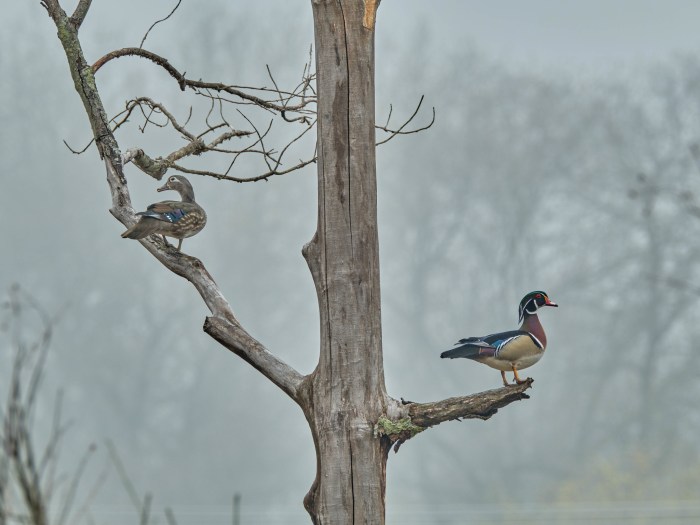
Wood Ducks by Third Son

Wood Ducks by Third Son

The All About Birds listing for Aix sponsa (wood duck) says in part:

The Wood Duck is one of the most stunningly pretty of all waterfowl. Males are iridescent chestnut and green, with ornate patterns on nearly every feather; the elegant females have a distinctive profile and delicate white pattern around the eye. These birds live in wooded swamps, where they nest in holes in trees or in nest boxes put up around lake margins. They are one of the few duck species equipped with strong claws that can grip bark and perch on branches.

Wood Ducks thrive in bottomland forests, swamps, freshwater marshes, and beaver ponds. They are also common along streams of all sizes, from creeks to rivers, and the sheer extent of these make them an important habitat. Wood Ducks seem to fare best when open water alternates with 50–75% vegetative cover that the ducks can hide and forage in.

A few wood duck facts:

  • Natural cavities for nesting are scarce, and the Wood Duck readily uses nest boxes provided for it. If nest boxes are placed too close together, many females lay eggs in the nests of other females. (click for info about building a nest box)
  • The Wood Duck nests in trees near water, sometimes directly over water, but other times up to 2 km (1.2 mi) away. After hatching, the ducklings jump down from the nest tree and make their way to water. The mother calls them to her, but does not help them in any way. The ducklings may jump from heights of up to 89 m (290 ft) without injury.
  • Wood Ducks pair up in January, and most birds arriving at the breeding grounds in the spring are already paired. The Wood Duck is the only North American duck that regularly produces two broods in one year.

More including wood duck calls at All About Birds.

Third Son took this yesterday – see more in his Birds 2020 gallery & definitely do yourself a favor and have a look at his most popular pics!

Many (many) more Michigan birds on Michigan in Pictures.

The 2020 Michigan Morel Season is Underway!

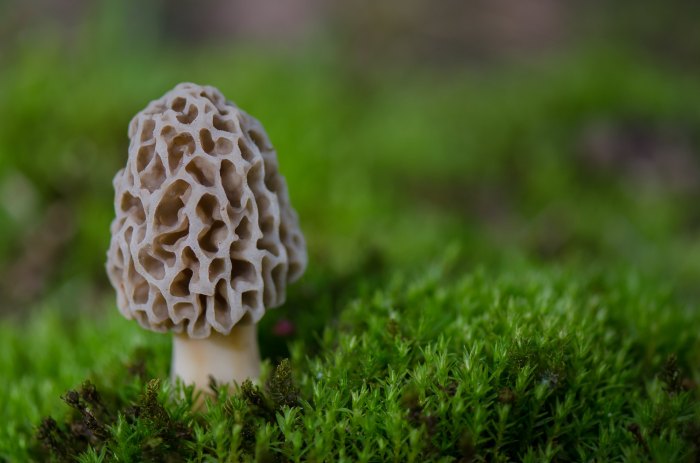
Yellow Morel (Morchella esculenta) by J Sommer

Yellow Morel (Morchella esculenta) by J Sommer

The online mushroom groups I’m in are already filling up with photos of happy people & their hauls of a popular Michigan springtime delicacy – morel mushrooms! The Michigan Department of Natural Resources  offers a Morel Mushroom Hunting page that features information about morels & morel identification, hunting tips, recipes, and also a map of the large burn sites in forested areas are ideal for morel mushroom hunting, especially in burned areas where jack, white or red pine once grew. Grassy and other non forest areas are not as likely to produce morels:

May is morel month in Michigan, but the actual fruiting period is from late April until mid-June, depending on where you are and what species you are hunting. Contrary to common belief, morels are not confined to the northern part of the state – some of the best picking is in southern Michigan.

MOREL HUNTING TIPS

  • Make your first several mushroom hunts, whether for morels or other edible mushroom species, with someone who knows mushrooms.
  • Buy or download a mushroom guide. A good guidebook is “The Mushroom Hunter’s Field Guide” by Alexander H. Smith, recognized as America’s foremost authority on mushroom identification, and Nancy Smith Weber. There also is a very good mushroom identification booklet available on the U.S. Department of Agriculture website.
  • Be prepared to cover a lot of ground and to experience disappointments when searching for morels. Some spots yield mushrooms year after year, while others skip several seasons between crops.
  • Don’t expect to find morels easily if you are new to the pastime. Because they blend into their background of last fall’s leaves and dead grass, they are hard to see even if you are looking right at them. Your “eye” for morels will sharpen with practice, and you will need to retrain it every spring.
  • Most important of all – know what you are eating! You will need to know the difference between a “true” morel and the “false morels,” such as beefsteak mushrooms, which are poisonous. (See morel identification information.)
  • For more information on morel mushroom hunting in Michigan, visit Pure Michigan or Midwest American Mycological Information.

J Sommer took this photo back in May of 2017 near Saginaw. See this photo and more in their Fungi gallery on Flickr.

There is a bunch more information about morels at the morel tag on Michigan in Pictures.

Trout lilies flash their colors

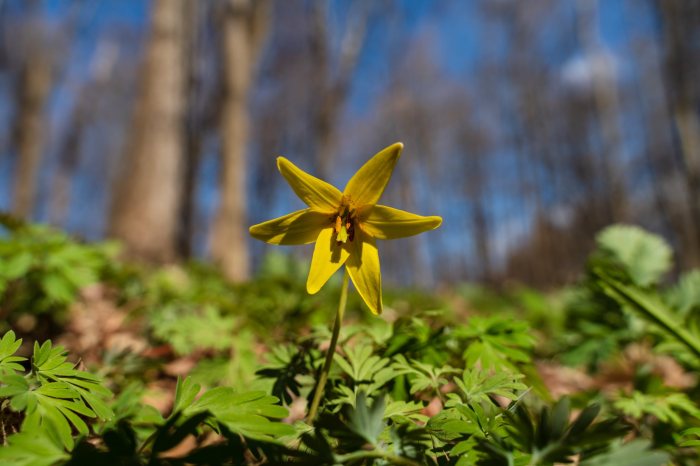
Trout Lily by William Dolak

Trout Lily by William Dolak

The trout lily derives its name due to the resemblance of its mottled leaves to the coloring on brook trout. This 4-10″ tall wildflower is one of the earliest to bloom in Michigan and is also known as Adder’s Tongue and Dogtooth Violet. Edible Wild Food’s entry for trout lily (Erythronium americanum) says:

Trout Lily grows in huge colonies that can completely cover a forest floor. The colonies can be hundreds of years old and takes a long time to grow to such a size. Its bulbs are sterile up to about the seventh year and then it produces only one leaf and no flowers. When they mature one plant will grow two leaves and one, beautiful yellow flower. The colony spreads mostly by runners and less importantly by seed. Trout lilies have a symbiotic relationship with ants known as myrmecochory. This means that they exchange a lipid-rich appendage on their seeds in return for an ant seed dispersal that spreads the colony and protects the seeds from predation. This plant is a beautiful spring ephemeral meaning it is short-lived in the spring only.

You can see this photo & more from Bill in our Michigan in Pictures group on Facebook.

Support Michigan in Pictures with Patreon

Be Yourself!

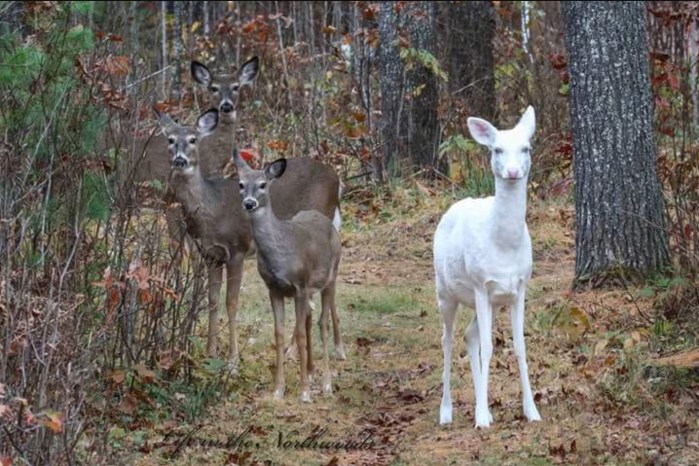
Albino Deer by Chryz Love

Albino Deer by Chryz Love

Just a little reminder from the natural world that it’s OK to be yourself & also to check out the new Michigan in Pictures Group on Facebook!! I created it so people can share photos with other readers for possible inclusion in Michigan in Pictures, and this was the first pic shared.

Chryz took it near Davidson. Click through to see it on Facebook & to check out other photos she’s shared in the group!!

Support Michigan in Pictures with Patreon

The Corgi & the Cataract

The Corgi & the Cataract by Taylor Nicole Featherstone

This photo from one of the many waterfalls in the Upper Peninsula was sent in by a fan last March. I’m hoping that those of you with furry friends are finding ways to keep them (and yourself!) happy & fit.

You can check out more at Featherstone Fotography on Facebook & keep up with the Adventures of Darwin + Charles on Facebook. And definitely follow her on Instagram @oureveolvingadventure!

New Wolves Released at Isle Royale

Little Hawk Island Sunset, photo by Carl TerHaar

mLive reports that a pair of new wolves have been released on Isle Royale in an effort to control a exploding moose population that threatens to overwhelm one of Michigan’s most unique ecosystems.

Late Wednesday, two gray wolves were taken from the Grand Portage Indian Reservation in Minnesota and taken aboard a U.S. Fish and Wildlife Service plane to the island.

The wolves, a 4-year-old female and a 5-year-old male, were taken to separate release sites, and well away from the island’s two remaining wolves.

“It did not take long for the female to leave the crate and begin exploring her new home on the island. The male left his crate after dark,” the NPS said in a release.

“Other wolves will join the two in the coming weeks.”

Up to 30 wolves are expected to be caught in Minnesota, Michigan’s U.P. and even Ontario, Canada as part of this relocation effort.

Click through for more and their awesome video of the release!

Carl took this in late September of 2009. View it background big and see more in his massive Isle Royale album.

PS: Get an idea of the sheer amazingness of Isle Royale with 350+ more photos from Isle Royale in the Absolute Michigan group on Flickr at the Isle Royale tag on Michigan in Pictures, and at the  Isle Royale National Park website!

Happy May Day from a Dutchman!

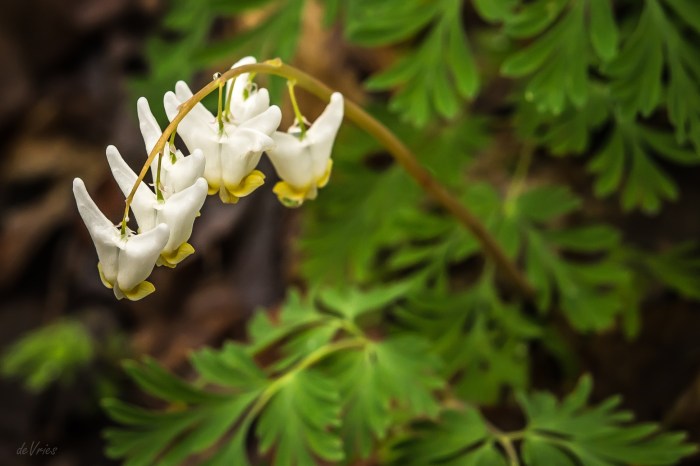
Happy May Day from a Dutchman, photo by Dale Devries

Happy May Day everyone!

Dale took this on May 1, 2017 after a much warmer spring and writes: Took a walk to the Rosy Mound (sand dune) just south of Grand Haven this morning, and found many Dutchman’s Breeches along the trail! I was looking for red trillium, but found none of them. The anatomy of this flower is quite amazing, with the stamens and pistil hanging down.

View Dale’s photo background big and and see more in his massive The Best of West Lake album.

Get your desktop ready with lots more Spring wallpaper on Michigan in Pictures!

Good News for Michigan Honeybees

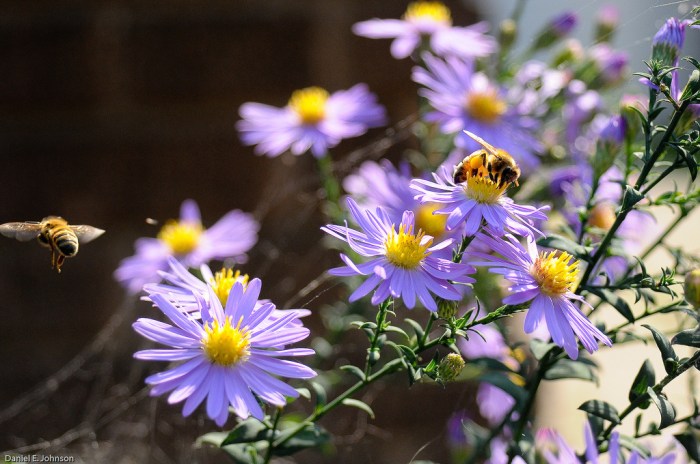
Around the Bend, photo by Daniel E. Johnson

The Traverse City Record-Eagle reports that the number of Michigan honey bee colonies is on the rise:

The number of honey bee colonies in Michigan rose about 16 percent over the last year. About 25,000 colonies existed at the beginning of 2016 in a census of operations with five or more colonies, according to the National Statistics Service of the United States Department of Agriculture. The comparable number on Jan. 1, 2017, was 29,000 colonies.

Varroa mites were the primary stressor of Michigan colonies over the last five quarters. They affected only 5.9 percent of the state’s bee colonies in the first quarter of 2016, but 64.1 percent of colonies in the third quarter of 2016. The Varroa mite is an external parasite that attaches to bees and weakens them.

The total number of bee colonies in the U.S. sank slightly during 2016, but held relatively steady at about 2.62 million colonies.

Colony Collapse Disorder symptoms were observed in more than 84,000 bee colonies in the U.S. from January through March 2017, a 27% increase from the same quarter of 2016.

View Daniel’s photo bigger and see more in his slideshow.

Oak Savannah

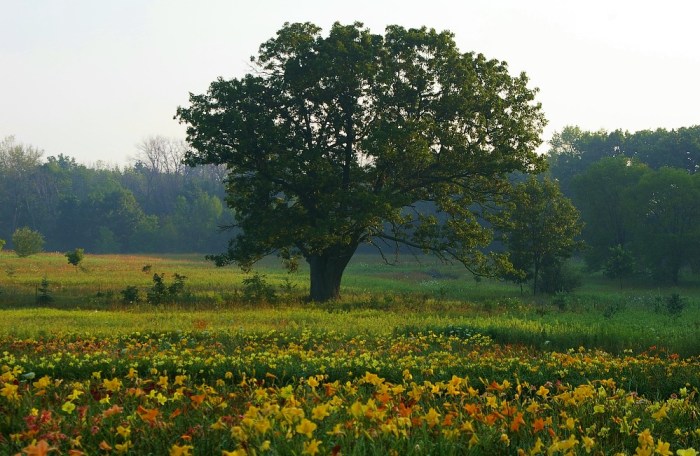
Oak and the Day Lilies, photo by Diane Constable

“Too old to plant trees for my own gratification, I shall do it for my posterity.”
-Thomas Jefferson

Dianna writes:

So glad someone planted THIS Black oak some 200-250 years ago–maybe about the time Mr Jefferson made the above quote!

Do not know who or what planted the acorn–but this tree lived in grasslands just about it’s whole life judging by the spread of the branches.

Local history says Indians lived in the area and would burn the grasslands on occasion to keep the oak-grass savannah in much of southern/central Michigan–may have very well been what this tree witnessed. Slow burning grassfires would not have harmed the tree.

View the photo bigger and see more in Dianna’s Oak slideshow.

PS: Read more about oak savannahs and the flora & fauna they support from the Michigan DNR.