Job Shadowing: Glen Haven Canning Company

Job Shadowing

Job Shadowing, photo by Happyhiker4.

Looks like the old cannery at the Sleeping Bear Dunes National Lakeshore is getting a fresh coat of paint as part of a renovation this fall. The Cannery Boathouse Museum is the largest public exhibit of Great Lakes small craft and features all kinds of historic boats used around Glen Haven and the Manitou Islands.

360 Michigan has a cool 360 degree panorama of the cannery and the beach at Glen Haven that you’ll want to check out.

Check this out bigger in Mark’s slideshow which features some outstanding fall photos!!

ArtPrize 2010 Flickr Contest

Prizing the art

Prizing the art, photo by tinney.

ArtPrize is holding a photo contest for photos added to the ArtPrize Flickr group. Click that link for the details and submit your photos to any or all of the following categories for a chance to win prizes!

  • installed art
  • public reactions/interaction with art
  • venues
  • artists
  • events (any ArtPrize related event)
  • voting (all forms)

Check Dustin’s photo out bigger and check out the ArtPrize 2010 slideshow on Flickr.

Much more ArtPrize on Absolute Michigan!

Step back in time at Greenfield Village

Greenfield Village
Greenfield Village, photo by Michael Lavander

“I am collecting the history of our people as written into things their hands made and used…. When we are through, we shall have reproduced American life as lived, and that, I think, is the best way of preserving at least a part of our history and tradition.”
~Henry Ford on his museum

Greenfield Village in Dearborn (satellite map) is part of The Henry Ford, dubbed America’s Greatest History Attraction. If you’ve ever been to either, you know that’s not just a marketing slogan. Greenfield Village has seven historic districts that are jam packed with historical buildings & artifacts from all over:

Entering Greenfield Village is like stepping into an 80-acre time machine. It takes you back to the sights, sounds and sensations of America’s past. There are 83 authentic, historic structures, from Noah Webster’s home, where he wrote the first American dictionary, to Thomas Edison’s Menlo Park laboratory, to the courthouse where Abraham Lincoln practiced law. The buildings and the things to see are only the beginning. There’s the fun stuff, too. In Greenfield Village, you can ride in a genuine Model T or “pull” glass with world-class artisans; you can watch 1867 baseball or ride a train with a 19th-century steam engine. It’s a place where you can choose your lunch from an 1850s menu or spend a quiet moment pondering the home and workshop where the Wright brothers invented the airplane. Greenfield Village is a celebration of people — people whose unbridled optimism came to define modern-day America.

Michael took this photo at the museum’s opening day and you can see it bigger in his Greenfield Village 041510 slideshow.

Need more? Check out the Greenfield Village slideshow from the Absolute Michigan pool and more posts about Greenfield Village on Michigan in Pictures.

Enjoy your weekend and remember that Michigan’s museums need your patronage more than ever!

US Coast Guard Cutter Bramble: A Ramblin’ Gal

USCGC Bramble

USCGC Bramble, photo by k.l.macke.

Wikipedia says that the USCGC Bramble (WLB-392) is one of the 39 original 180-foot  seagoing buoy tenders built between 1942-1944 for the United States Coast Guard. Bramble is currently a museum ship, part of Port Huron Museum. The museum’s page on the USCG Cutter Bramble says:

The Coast Guard Cutter Bramble was commissioned in 1944 at a cost of just over $925,000. Following World War II, the Bramble participated in “Operation Crossroads,” the first test of an atomic bomb’s effect on surface ships, at Bikini Island. In 1957, along with the cutters Spar and Storis, it headed for the Northwest Passage, traveling through the Bering Straits and Arctic Ocean. Traveling for 64 days through 4,500 miles of partially uncharted waters, the vessels finally reached the Atlantic Ocean. These three surface vessels were the first to circumnavigate the North American Continent, an ambition mariners have had for more than 400 years.

In 1962, the Bramble transferred to Detroit to perform the missions of search and rescue, icebreaking, and law enforcement throughout the Great Lakes, in addition to aids to navigation. In 1975, the Bramble reported to Port Huron. The cutter’s areas of responsibility included eastern Lake Erie, southern Lake Huron and Saginaw Bay, and maintaining 187 buoys, one NOAA weather buoy, and three fog signals. During winter months, its capabilities as an icebreaker enabled it to escort ships through ice and assist ships in distress. The Bramble was decommissioned in 2003 to be used as a museum.

Check this out bigger and in Keith’s Ships, Boats & Water Toys set (slideshow).

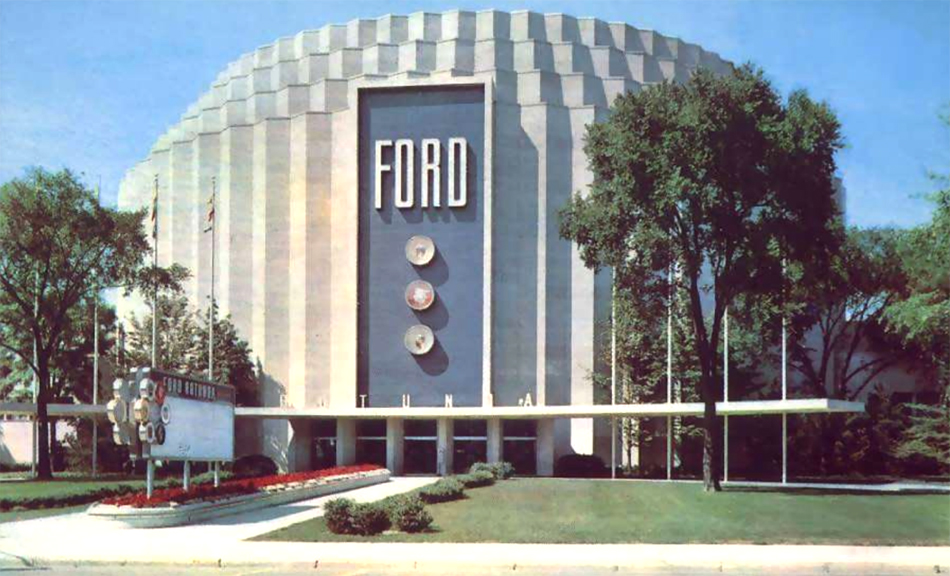
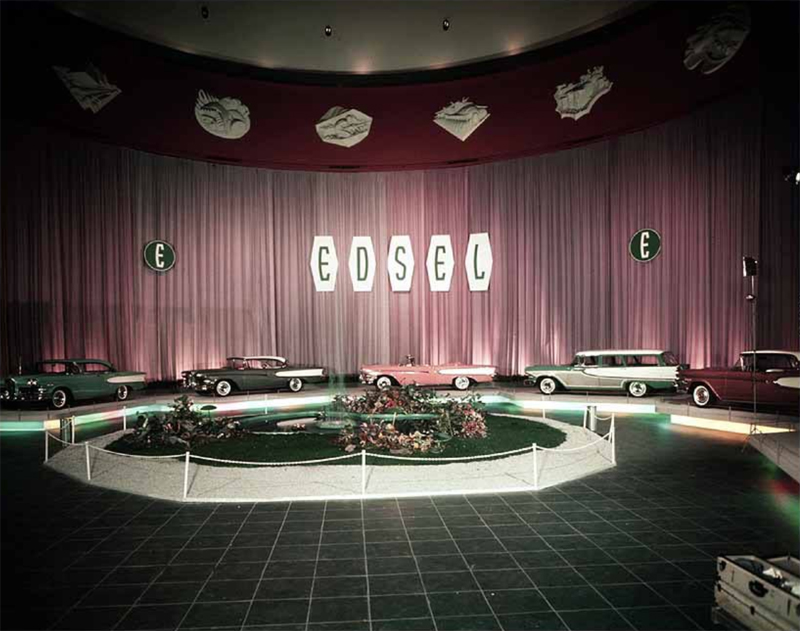
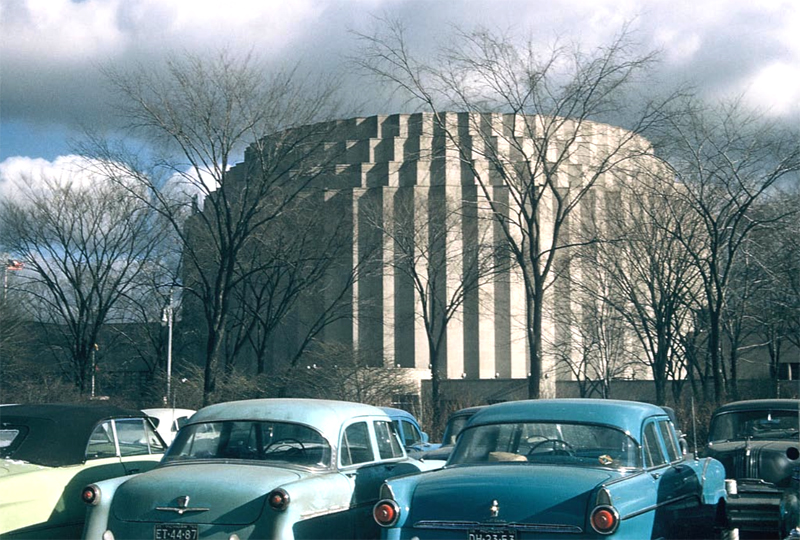
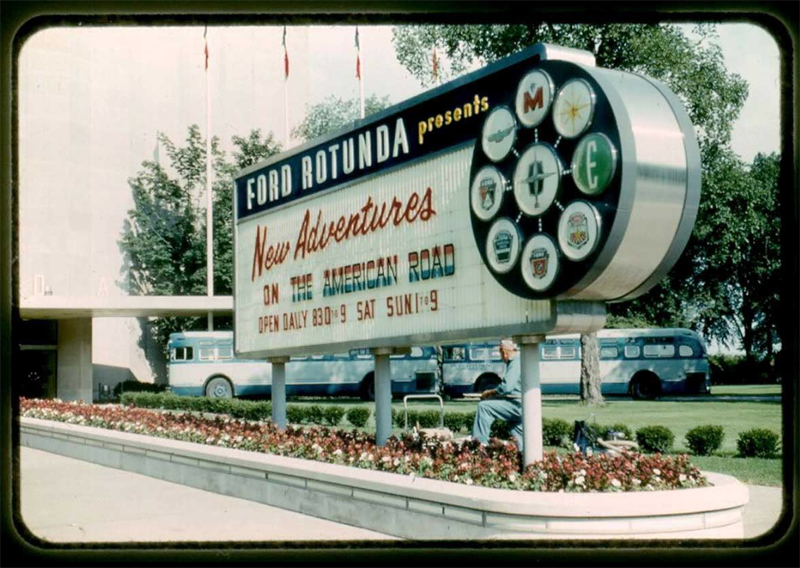
The Ford Rotunda

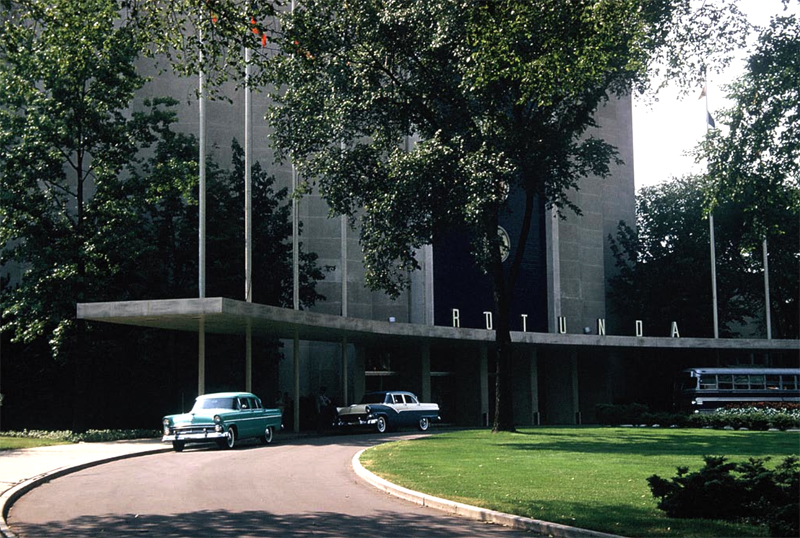
The Ford Rotunda – Dearborn, Michigan, photographer unknown

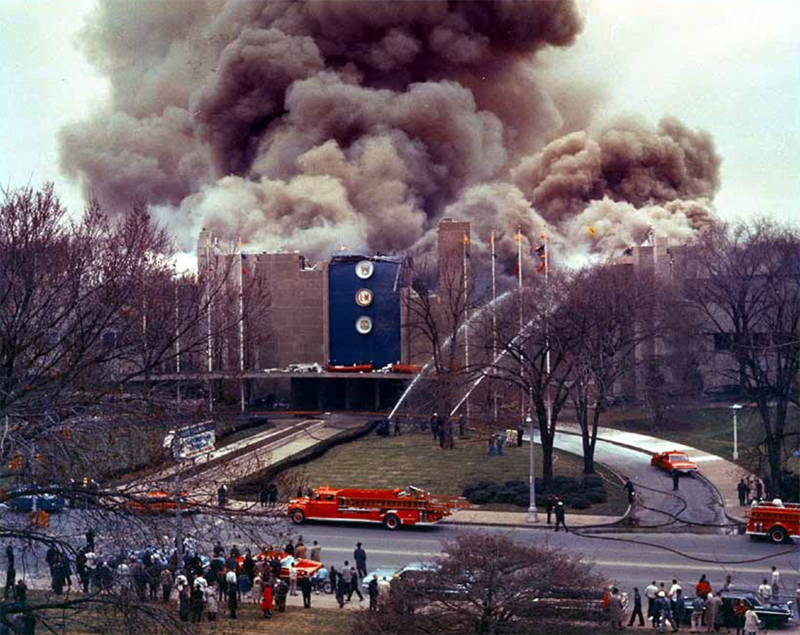
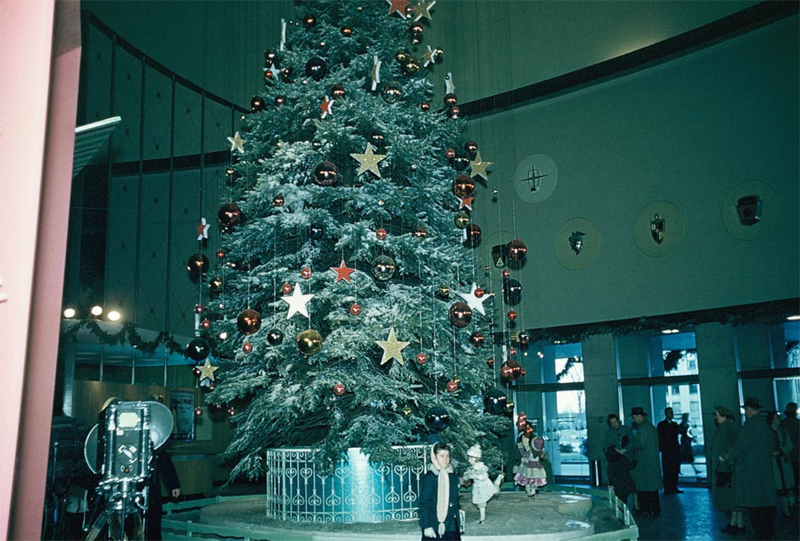
Michigan in Pictures regular Matt passed an email about the Ford Rotunda along that had some cool pictures I thought folks would like to see. When flames consumed a Christmas fantasy from the Detroit News Rearview Mirror begins:

From 1936 to 1962, the gear-shaped Ford Rotunda attracted visitors from around the world. It was the fifth most popular tourist destination in the United States in the 1950s.

The building had its roots in the 1933 Chicago World’s Fair, known as the Century of Progress Exposition, which opened in May of 1933 and attracted more than 40 million visitors over its two-year run. One of the major attractions at the fair was Ford Motor Company’s Rotunda, which was disassembled after the fair and brought back to Dearborn, where it was reconstructed using more permanent materials. Designed to be the showcase of the auto industry, the Ford Rotunda was opened to the public on May 14, 1936.

…In 1960, the Rotunda ranked behind only Niagara Falls, the Great Smoky Mountains National Park, The Smithsonian Institution and the Lincoln Memorial as a national tourist destination. It was more popular than Yellowstone, Mount Vernon, the Washington Monument and the Statue of Liberty.

Read on for the sad tale of how it burned to the ground on November 9, 1962.

Television History – The First 75 Years might be the photographer – there’s some of the same shots there and they write about their parents taking them to see Santa during the Christmas Season at the Rotunda. They also have a nice aerial of how the Ford Rotunda was located in relation to the Rouge Plant.

Driving off in a Chrysler

Chrysler 300 – Walter P. Chrysler Museum, photo by MikeRyu

And then there were two…

Yesterday the Chrysler Corporation announced a plan for their acquisition by Fiat and filed for bankruptcy. Wikipedia’s Chrysler entry has a good overview of the company from its founding in 1924 by Walter P. Chrysler as a result of his reorganization of the Maxwell Motor Company through the building of the company into a global powerhouse, the Lee Iaccoca led rescue of Chrysler to the stumbling Daimler-Benz & Cerebus era.

The Walter P Chrysler Museum has a much more detailed timeline and all the Chrysler brands (Hudson, Valiant, Nash, Chalmers, Plymouth, Dodge, DeSoto, Imperial, Jeep, etc).

See this picture bigger in Mike’s slideshow of photos from Mike’s visit to the Chrysler Museum and see thousands more photos of Chryslers right here.

Set Sail on the SS Keewatin in Saugatuck / Douglas

Set Sail

Set Sail, photo by chicagokristi.

The Keewatin Maritime Museum is located in Saugatuck / Douglas and offers folks a chance to tour this 350′, wooden frame steamship:

The Keewatin was built for the Canadian Pacific Railway, in Scotland. Delivered to the Great Lakes in 1907, this lovely steamer was destined to make history. For over 50 years she served as a railway link, connecting the Georgian Bay and upper Lake Superior railheads. She is the last of the Classic Great Lakes Passenger Steamships still afloat.

Take a quick tour right here.There’s some cool views of this steamship in the Keewatin slideshow including a postcard of the Keewatin steaming along.

Be sure to view this photo larger

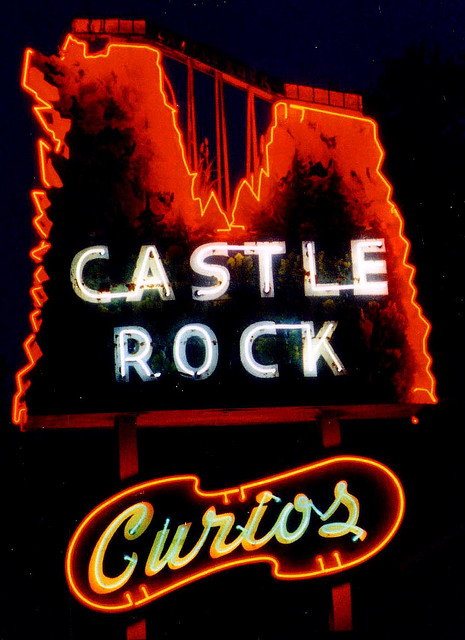
Castle Rock: Another (Michigan) Roadside Attraction

Castel Rock Curios

Castle Rock Curios, photos by Alan C of Marion,IN

This photo is just one of very many in Alan ‘s Roadside Finds set (slideshow) and you’ll also want to wander through his Michigan pics!

Michigan’s Roadside Tourist Attractions will be showcased in a special exhibit opening at the Michigan Historical Museum in Lansing on January 10, 2009.

Michigan’s Roadside Attractions, set to run through Sept. 14, 2009, features more than 50 roadside attractions that grew up as Michigan expanded its highway system from the 1930s through the 1970s. Many of these attractions still provide fun and excitement for millions of tourists each year.

“Deer parks and dinosaur gardens are just a couple travel experiences that take center stage again in this exhibit. Places like Castle Rock in St. Ignace, the Soo Locks Boat Tours and the multiple locations where Paul Bunyan has been spotted are also featured through photos, artifacts and souvenirs,” said Phillip C. Kwiatkowski, director of the Michigan Historical Museum System. ” Michigan’s Roadside Attractions is about treasured mementoes, from miniature Paul Bunyan statues and plastic purses to dinosaurs, seashells and even ceramic doll dish sets.”

Learn more about the exhibit from the Michigan Historical Museum.

I know you’re all wondering about Castle Rock – here’s what Roadside America has to say:

Castle Rock is an abrupt, geologic protuberance just north of the Mackinac Bridge on Michigan’s Upper Peninsula. The nearly 200-ft. column of rock was long ago augmented with a man-made ramp and walkway to provide tourists a climb for an unparalleled view of Lake Huron and distant Mackinac Island.

At the base of the Castle Rock lookout is an amusing Paul Bunyan statue accompanied by his mythical sidekick, Babe the Blue Ox. This Bunyan is rare. Instead of standing, ready to deforest Michigan, Paul sits, staring googly-eyed towards the lake. With a newspaper in his hands, we’d complete the visual that Paul is halfway through one of his mighty bowel movements.

OK, probably should have cut that one sentence earlier. Read more about Castle Rock from Hunt’s UP Guide (I learned that it only costs 50¢ to climb – definitely stopping next time!)

Piquette Plant sunset … or is that a sunrise?

Piquette Plant sunset

Piquette Plant sunset, photo by LindaB..

Yesterday on Absolute Michigan we featured an article from Michigan History Magazine titled Where the Model T began and I found this photo while looking for a picture to pair with it. I decided to find another and feature this one here!

Jerald Mitchell calls the Ford Motor Company’s Piquette Avenue Plant in Detroit “a fulcrum point of human history [where] the balance of history shifted.” It was at this factory in Detroit that Henry Ford and his cohorts conceived the Model T automobile. For nine months, these men labored through fifteen-hour days, scrawled rough diagrams on the blackboards, fiddled with auto parts and patterns, argued and probably repeated the words “what if” a thousand times. When they were done, they had created the design for one of the most revolutionary automobiles ever built.

Read the rest on Absolute Michigan and learn much more about the museum that Jerald and others have created at tplex.org – the Model T Automotive Heritage Complex.

Linda writes she and her husband took a tour of the Ford Model T Piquette plant where restoration is underway. She says that the plant has special meaning for them as her husband’s great great grandfather was the winning bid for the plumbing of the building with a bid of $2,035! She also notes that these are the original windows to the plant.

You can see her other photos from the Piquette Plant, check out these Piquette photos from Miz Jelly Bean and dive into the Piquette slideshow on Flickr.

Art goes green – the Grand Rapids Art Museum

GRAM, photo by numstead

View this photo larger right here and see many more in Nathan’s architectural photography set (slideshow). The Grand Rapids Art Museum (GRAM) was the world’s first LEED gold certified art museum complex. The case study of the museum from GreenSource Magazine observes:

This handsome temple of art is, in many respects, a myth-buster. Art museums are widely believed to be “sustainability-proof” because they expend enormous amounts of energy maintaining constant temperature and humidity levels to protect their precious contents. Yet this building reveals that a balance between art and environmentalism is possible if architects, clients, and contractors pursue an integrated approach and factor energy savings into every aspect of the design equation. Sometimes that means borrowing green strategies from conventional structures; sometimes it means using new techniques to satisfy the needs of this demanding building type.

“Typical green solutions are often not best,” says a LEED case study of the museum, prepared by the design and construction team and submitted to the U.S. Green Building Council as part of the museum’s LEED submission.

Designed by Thai-born architect Kulapat Yantrasast of Los Angeles-based wHY Architecture and open since last October, the $75 million, 125,000-square-foot museum fronts on a vibrant, Maya Lin-designed public plaza in the heart of downtown Grand Rapids, western Michigan’s largest city. Home to renowned furniture makers Steelcase, Herman Miller, Knoll, and Haworth, the region already has a rich lode of LEED projects. This one owes its green streak to former Steelcase executive Peter Wege. In 2001, he pledged $20 million, with one string attached: The building would have to be LEED-certified.

The Christian Science Monitor notes that there’s a trend for museums across the country to use green design & construction practices. Also check out this feature from the New York Times about the construction of the museum, the excellent Grand Rapids Art Museum: LEED Gold Certified / wHY Architecture in Arch Daily and this article on the GRAM from Greenline blog (who uses Nathan’s photo).

Here’s a slideshow of views of the GRAM on Flickr and some photography by Kevin Beswick on YouTube.