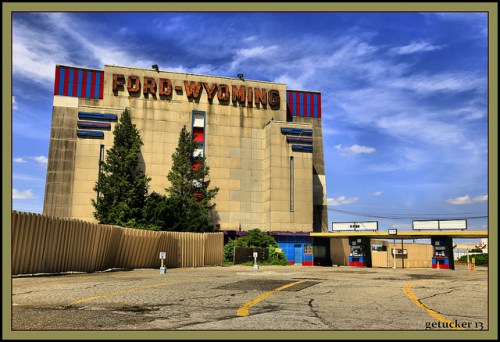
Ford-Wyoming Drive-in Theater in Dearborn

_MG_2576 tmlF

Ford-Wyoming Drive-in, photo by Gallopping Geezer

When I first saw this pic I thought it was yet another abandoned drive-in, but it turns out that the Ford Drive-in in Dearborn is open nightly with 5 screens! Their website just lists movies, but the Ford Drive-in entry at Cinema Treasures explains:

Opened in 1950, as a single-screener, with a colossal, late Streamline-style screen, the Ford-Wyoming could originally accommodate around 750 cars. It also once advertised a kiddie playground and boat rides for children.

The drive-in was acquired by Wayne Amusements in 1981, and by 1990, and grown to five screens. Another four screens were built during the early-1990’s.

Today, the still-very popular drive-in is the largest in the United States, parking-wise, with space for over 3,000 cars. (The largest drive-in screen-wise is the Thunderbird in Fort Lauderdale, Florida with 13 screens).

The Ford-Wyoming is open year-round, a rarity for drive-ins, and supplies car heaters along with speakers during the winter season.

Screens 6-9 were closed and demolished in May 2010, and in June 2010 it was renamed Ford Drive-In

WaterWinterWonderland has an entry with tons more information and photos  of the Ford-Wyoming Drive-in including some nice aerial views.

Check Gary’s photo out big as a drive-in screen and see more in his Ford-Wyoming slideshow.

More Michigan movie pics on Michigan in Pictures including a feature on another metro Detroit drive-in, the Wayne Drive-in.


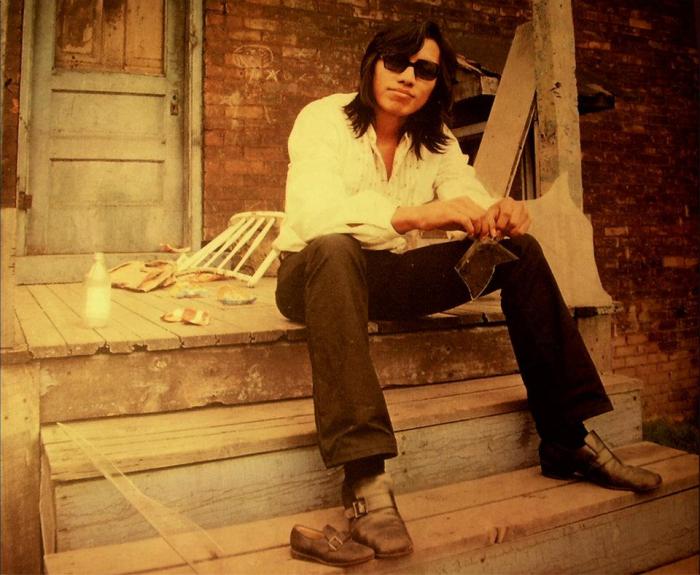
Sugar Man: Detroit’s Own Sixto Rodriguez

Sugarman Sixto Rodriguez

Next Saturday (June 22nd) I get to be part of a neat moment in the annals of Michigan music when I work with my partner Laura, the wineries of Traverse City and a fantastic team of workers & volunteers to host Sixto Diaz Rodriguez at the 5th annual Traverse City Wine & Art Festival.

Thanks to the global stardom of Rodriguez, hero of the Academy Award winning documentary Searching for Sugar Man, our festival sold out easily. You still have a chance to see this beautiful film though:

In 1968, two producers went to a downtown Detroit bar to see an unknown recording artist – a charismatic Mexican-American singer/songwriter named Rodriguez, who had attracted a local following with his mysterious presence, soulful melodies and prophetic lyrics. They were immediately bewitched by the singer, and thought they had found a musical folk hero in the purest sense – an artist who reminded them of a Chicano Bob Dylan, perhaps even greater. They had worked with the likes of Marvin Gaye and Stevie Wonder, but they believed the album they subsequently produced with Rodriguez – Cold Fact – was the masterpiece of their producing careers. Despite good reviews, Cold Fact was a commercial disaster and marked the end of Rodriguez’s recording career…

A bootleg recording of Cold Fact somehow found its way to South Africa in the early 1970s, a time when South Africa was becoming increasingly isolated as the Apartheid regime tightened its grip. Rodriguez’s anti-establishment lyrics and observations as an outsider in urban America felt particularly resonant for a whole generation of disaffected Afrikaners. The album quickly developed an avid following through word-of-mouth among the white liberal youth, with local pressings made. In typical response, the reactionary government banned the record, ensuring no radio play, which only served to further fuel its cult status.

The film tells the story of the search and rediscovery of Rodriguez. He’s now in the midst of a world tour that has seen him appear on 60 Minutes (great piece), Letterman & Leno and legendary concert venues as the Montreaux Jazz Festival, the Orpheum Theatre in LA, the Hammersmith Apollo in London, Radio City Music Hall  … and our festival in Traverse City.

Con Foster and the Bijou By the Bay

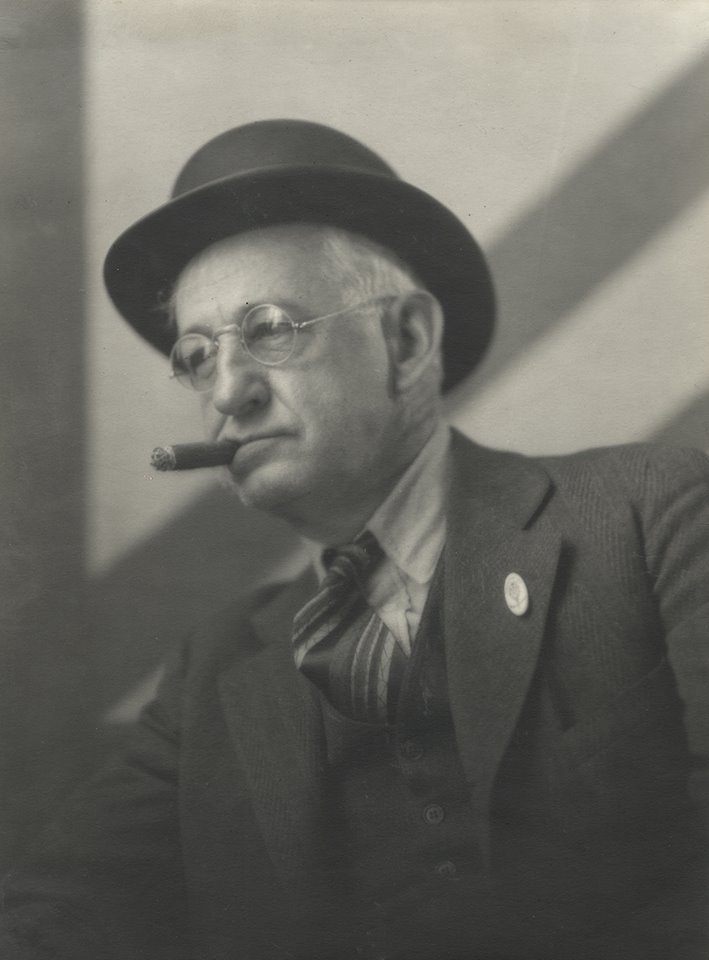
Con Foster

I have to confess: I am a huge fan of Michael Moore. One of the reasons has nothing to do with politics or his films. Almost 10 years ago, Michael did something that I didn’t think possible. He galvanized support, spent and raised money and brainstormed to lead a vast & diverse army of volunteers to restore the theater of my childhood, the State Theatre in Traverse City. While the successful and wildly entertaining Traverse City Film Festival has been a huge driver of the theater’s comeback, many overlook how his dedication to the movie-going experience created a theater that hundreds of people every day enjoy as part of a vibrant downtown experience. Of course after the Motion Picture Association of America tapped the State as #1 on their list of the best theaters in America, that number has probably gone down.

All this is a rather long-winded way of introducing Michael’s latest Traverse City cause, restoring the empty Con Foster Museum as a new theater – the Bijou By the Bay.  The story starts with Conrad “Con” Foster:

Manager of the State Theatre when it was originally known at the Lyric Theatre, he first arrived in Traverse City in July of 1917 as an employee of Fitzpatrick-McElroy Company to run and operate the Lyric. A true showman with a passion for the movies, one of the first things he did upon arrival was install a “newer and brighter” screen as part of his commitment to make the Lyric “equal to any motion picture house in the state.” It is this commitment to presentation the State Theatre continues today.

Born in Boston, Massachusetts on March 21, 1875, Foster was not a Traverse City native, but the community embraced him and he quickly made the area his home. After less than a year in Traverse City, Fitzpatrick-McElroy transferred him to a new theater post in Wisconsin, and Foster spent the next six years heartsick, petitioning the company to bring him back.

Foster’s pleas were answered in April 1924 when he returned to Traverse City to resume his post at the Lyric. He placed an ad in the Record Eagle expressing his delight, writing:

“My ambition has been to return to Traverse City, since they made me leave, to operate what I think is the most beautiful theater in our circuit. I have come to love the city, its good natured folks, and have often told my wife that Traverse City is the place to make a home. So it is with great pleasure that I can announce that my longings have been realized and I have again been transferred to the best little city in the world.”

Over the course of the next sixteen years, Foster worked tirelessly to make the Lyric the best theater in Michigan. Ahead of his time, in the spring of 1929 Foster had the foresight to bring “talkies” to the Lyric, installing the latest state-of-the-art sound technology and film projectors in Traverse City. At that time, sound technician Walter Beck claimed this was the smallest city in the country, to his knowledge, to have installed this modern equipment.

Foster’s impact extended far beyond his movie house and into all aspects of civic life. He encouraged and promoted Cherry Festival programs, patriotic presentations and educational speakers. He knew the Lyric was more than a just movie theater, but an important gathering space for the community. Serving as head of the Chamber of Commerce, City Commissioner and even Mayor, Foster was committed to serving his community.

Foster managed the Lyric until he died suddenly of a heart attack in 1940. The city mourned his loss, with a tribute in the Record Eagle claiming, “When Con Foster died this morning a part of Traverse City died with him, not a physical part, but a spiritual part.” Downtown businesses closed for his funeral and the Lyric reopened afterward to screen Gone with the Wind.

Foster also created Clinch Park, which is home to the proposed theatre. Find out more and how to donate at Bijou By the Bay.

More Traverse City on Michigan in Pictures!

Trees such as these … Happy Birthday Dr. Seuss

Explosions in the sky

Explosions in the sky, photo by MightyBoyBrian.

He was shortish. And oldish. And brownish. And mossy.
And he spoke with a voice that was sharpish and bossy.
“Mister!” he said with a sawdusty sneeze,
“I am the Lorax. I speak for the trees.
~The Once-ler

Today is the birthday of Theodor Seuss Geisel aka Dr. Seuss. Geisel was the author of 46 children’s books and had such an impact on the genre that his birthday has been adopted as National Read Across America Day. Here’s hoping you can read something wonderful to the special young people in your life today!

While the new movie The Lorax based his book is drawing fire from both the right and the left, there’s little doubt that few people have had the kind of impact on children’s literature that he did.

You can see the Lorax trailer at the link above, and you might also want to check out the TV special from 1974 which featured voices of Eddie Albert and Bob Holt and originally included a hummingfish bashing Lake Erie with the line “I hear things are just as dreary down in Lake Erie”. In a nearly Michigan connection, twenty years later two research associates from the Ohio Sea Grant Program wrote to Seuss about the clean-up of Lake Erie and got the line removed from the book. Also see the full text of the Lorax and check out a whole world of Seussian fun at Seussville.com.

About the photo, Brian asks “What does it look like to you?” To me, it was Truffula trees. Check them out background bigtacular and in Brian’s Top 30 slideshow.

The PIX Theatre and the Made in Michigan Film Festival

The PIX!

The PIX!, photo by DarrylW4

The Made-in-Michigan Film Festival (MiMFF) takes place October 21-22 in Lapeer. The festival was created to showcase independent films exclusively from the state of Michigan, thereby enhancing the quality of economic and cultural life in the State of Michigan. They’ll have nearly 50 films this year – click the link above to learn more and also get info from the MiMFF Facebook (MiMFFF?).

The host theatre is the Pix Theatre in Lapeer. Their history page begins:

The PIX Theatre was built by George Smith, who began his “show business” life in a production of Uncle Tom’s Cabin at the White Opera House. When the show went on the road, 18 year-old George went with it. Before long the troupe ended up broke in Chicago and George returned to Lapeer. Next, George began playing in theater orchestras in Flint and Saginaw where he met and married Vera, the band’s pianist. In 1914, the Smiths opened a small movie theater next door to what would become the PIX Theatre. Business was good, with tickets selling for five and ten cents. By 1921, the Smith’s were ready to expand their business, so they built the Lyric Theatre, “the fanciest show house around.” Silent movies reigned supreme, accompanied by Vera on the piano until 1928, when the “talkies” came to town.

Early in 1940, with movies at the peak of popularity, it was rumored that Harry Holboth, owner of the Deluxe Theater in neighboring Imlay City, was planning to build a new theater in Lapeer. George Smith, not to be outdone by the competition, quickly set to work locating a site for a new, modern movie house that he would name The PIX Theatre… (read more)

The PIX closed in 1996 and was purchased by the City of Lapeer Downtown Development Authority. PIX Arts Council now manages the Theatre on behalf of the DDA, offering around fifty live performances per season. FYI, the Made-in-Michigan Film Society that produces the MiMFF shows Michigan films at a monthly gathering, providing a regular opportunity for film-goers to interact with film makers.

Check Darryl’s photo out bigger and in his Lapeer slideshow.

More movies & theaters on Michigan in Pictures.

Traverse City Film Festival: Be Your Dreams

Traverse City Film Festival Opening Night 2011 - 6 by Mark O'Shaughnessy

Traverse City Film Festival Opening Night 2011 – 6 by Mark O’Shaughnessy, photo by tcfilmfest.

All week I’m working on the Traverse City Film Festival (TCFF) through Absolute Michigan. One of the neat features of the festival is nightly free movies on the BIG screen along Grand Traverse Bay. On Tuesday night and thanks to George Lucas, TCFF had an unprecedented showing of The Empire Strikes Back. I say unprecedented because this just doesn’t happen with Star Wars. However, festival co-founder Michael Moore asked, and Lucas said OK. That’s kind of been how TCFF has gone over 7 years. Nothing about it, from convincing the community that a festival celebrating film would fly in Traverse City to producing an almost 100% volunteer run festival, has been likely or easy. It has been fun & exciting though!

You can get a flavor of the action in Traverse City’s thank you to Lucas.

Mark O’Shaughnessy is one of the many photographers working the Traverse City Film Festival. Check out the epic battle that ensued and more shots in the July 26: Opening slideshow.

49th Annual Ann Arbor Film Festival ~ March 22-27, 2011

Untitled, photo by Ann Arbor Film Festival.

The Ann Arbor Film Festival (AAFF) is the longest-running independent film festival in North America. The 6 day festival brings filmmakers and guests from all over the country and the world along with 188 films, videos and live performances in 40 programs, including more than 20 premieres of new work from China, England, Spain, France, Japan, Finland, Croatia, Chile, Netherlands, Korea and throughout North America. Complete details, schedules and trailers on the 49th Ann Arbor Film Festival website.

With a focus on independent cinema, the AAFF has showcased early work from filmmakers & artists including Kenneth Anger, Agnes Varda, Andy Warhol, Yoko Ono, Gus Van Sant, Barbara Hammer, Lawrence Kasdan, Devo and George Lucas. Their history page says that:

The Ann Arbor Film Festival was started in 1963 by University of Michigan School of Art filmmaker/artist George Manupelli. The 1960s sparked rapid changes in cinema, thus challenging the art world to accept fresh ideas and talent. Manupelli took advantage of this shift and envisioned a festival that would serve experimental and pioneering filmmakers with the exposure, feedback and competition they desired. He designed his festival to be open to anyone who saw filmmaking as art.

From a casual group of fascinated students, filmmakers and film enthusiasts crowded into the smoke-filled Lorch Hall auditorium, to the thousands of filmmakers, artists and spectators hosted in the grand Michigan Theater, the Ann Arbor Film Festival has grown to be an internationally celebrated institution. Since 1980, it has been independent of the University of Michigan as an independent non-profit arts organization. In the fall of 2003 the festival broadened its scope to include video and digital formats for competition.

Dive into the AAFF website for much more!

The 48th AAFF Highlights slideshow from the Ann Arbor Film Festival shows one of the coolest things about the AAFF, the up-close access to filmmakers that you get through Q&As and panel discussions. Lots more including opening reception, after parties, fashion and (of course) Giant Animal Badminton.

Manistee’s Vogue Theatre gets some help from Michael Moore

Manistee Bank & Trust and The Vogue Theatre

Manistee Bank & Trust and The Vogue Theatre, photo by Eridony.

The Ludington Daily News reports that Michigan filmmaker Michael Moore was in Manistee yesterday morning announcing that his new State Theatre Project will support a community-driven effort to restore and reopen the 72-year-old theatre located in the heart of the City of Manistee:

“The people of Manistee are about to see what a popular, thriving movie palace can do for their downtown,” said Moore. “They will return the Vogue to being the crown jewel of Manistee. We will turn on the Vogue’s marquee lights, bring in some jobs, pump money into the economy and do it with a nonprofit venture staffed mostly by volunteers. The Vogue will show first-run movies plus documentaries, foreign films, kids movies and classics — something for everyone. The Vogue will be Manistee’s new town square.”

Moore explained that the Vogue perfectly fits the profile for his State Theatre Project, a nonprofit endeavor he’s funding to help replicate throughout the State of Michigan following his success with Traverse City’s State Theatre. Moore said, “It’s a wonderful, iconic theatre in the center of a downtown and the community is behind the revitalization and prosperity of both. This will provide the spark for the continued resurgence of Manistee and will serve as a model for other small, aspiring communities throughout the nation.”

Click through to read more. There’s also an interview with Travis Alden on Interlochen Public Radio about plans for the Vogue.

Water Winter Wonderland’s page on the Vogue Theatre has some great photos and a timeline. Michpics favorite Marjorie O’Brien has a photo in her excellent Michigan Theater Project gallery and writes that the Vogue opened in 1938 and was designed by Pereira & Pereira, architects.

See this bigger and check out more views of the theatre and Manistee’s historic downtown in Brandon’s Manistee slideshow.

Will the Road To Oz wind through Michigan?

The answer is YES!

The Road To Oz

The Road To Oz, photo by DetroitDerek Photography.

In Road to ‘Oz’ may lead Johnny Depp to Michigan, the Freep reports that the Michigan Film Incentive may be about to land a whopper!

Michigan’s biggest Hollywood movie project yet — a $105-million production at a huge new studio in Pontiac — has won approval for a $40-million tax credit that alone comprises more than 60% of all credits for 26 projects approved in the last six months of 2010.

Many signs hint that the movie is “Oz: The Great and Powerful,” a Disney prequel to the classic “Wizard of Oz” with Michigan native Sam Raimi directing and Johnny Depp negotiating for the lead role.

The Disney film would be the first major project for the Raleigh Studios in Pontiac, an $80-million reconstruction of a former General Motors plant. Once completed, the studio is set to have nine sound stages with a total of more than 175,000 square feet and about twice as much office and other space, according to the Raleigh Studios Web site.

Derek’s wife Kerry took this shot – see it bigger and more in his My Faves slideshow.

Michigan Drive-ins and the 75th anniversary of the drive-in

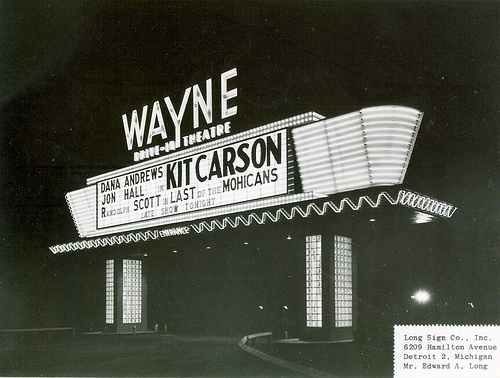
Wayne Drive-In Theatre Marquee - Wayne, Michigan

Wayne Drive-In Theatre Marquee – Wayne, Michigan, photo by michigandriveins.

In recognition of yesterday’s 75th anniversary of the drive-in, WIRED Magazine featured June 6, 1933: A Car, a Movie, Some Popcorn and Thou. You have to check it out, if only for the photo of the reverse side of the world’s first drive-in movie screen (Richard M. Hollingshead, Jr’s Camden NJ theater) advertising the opportunity to SIT IN YOUR CAR – SEE AND HEAR MOVIES for 25¢ per car, 25¢ per person and $1 for 3 or more people.

About the above photo of the marquee of the Wayne Drive-In Theatre, michigandriveins writes:

What an amazing display this must have been to pass through. This giant neon masterpiece was apparently built by the Long Sign Company. Detroit-based Long also constructed the still-standing Commerce Drive-In Marquee, and the long-gone Waterford Drive-In Marquee.

Amazingly, the top portion of this marquee was saved during demolition. A Ford plant now stands on the grave of the Wayne Drive-In. When the Wayne went down in 1990, speakers, projectors, and three of it’s four screens went to the Ford-Wyoming 6-9 Drive-In in Dearborn, they are still in use today.

I’d like to hear from anyone connected with the Long Sign Co.

Much (much) more about Michigan’s drive-ins and drive in history at michigandriveins.com (also see Drive-in theater on Wikipedia).

You can get even more cool old photos, posters and history about drive-ins in general and in Michigan from the Drive-in Theater History page at WaterWinterWonderland.com.

It was in the period of the late 1930’s that the state of Michigan was introduced to the drive-in, with the opening of the so-called “Drive-In”, later known as the Eastside, on May 26, 1938 with the film “The Big Broadcast of 1938.” A Mr. John H. Flancher filed a petition in court in July of that year on behalf of the residents of 3 Detroit suburbs. His contention was that the new Theater could be heard from two miles away and should be deemed a public nuisance. Although the petition contained over 500 signatures, the case was dropped when the Theater agreed to take steps to alleviate the problem which seemed to satisfy the petitioners and the court. This would not be the last time a drive-in Theater operator would run afoul of the local community however.

I’ll leave you with the Michigan Drive-in Theater slideshow on Flickr (just the photos) and say I hope you and yours get a chance to take in a film or three at a Michigan drive-in this summer! (There are 10 open in Michigan today!