Along the Hiawatha Water Trail

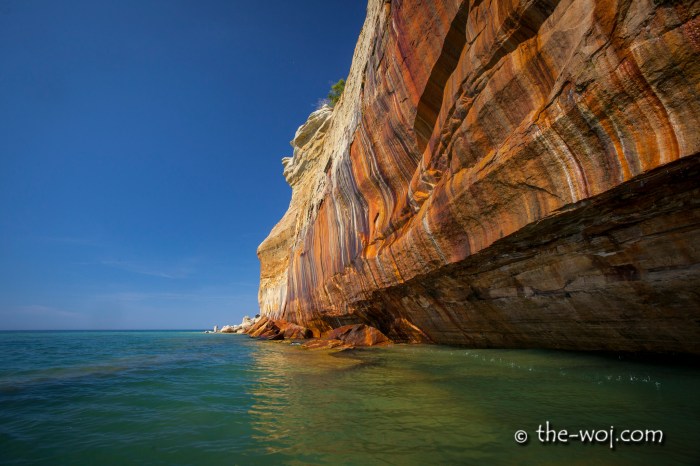
Pictured Rocks National Lakeshore from Water

Pictured Rocks National Lakeshore, photo by Paul Wojtkowski

Sorry this is a little late today and apologies to anyone who’s on Lake Superior/UP overload – today is my birthday and the Pictured Rocks National Lakeshore is my favorite place in Michigan!

One of the items on my Michigan bucket list is to paddleboard or kayak the stretch of the Hiawatha Water Trail that passes through Pictured Rocks – or the whole thing! They say:

Gitche Gumee, the Ojibwa (Native American) name for Lake Superior, has inspired all who have stood on her shore or paddled her waters. Running 120 miles from Big Bay to Grand Marais Michigan on Lake Superior’s south shore, the Hiawatha Water Trail (HWT) follows a shoreline paddled by Native Americans, Voyageurs and early European explorers. Experience some of the most scenic paddling available in the Midwest at places such as Pictured Rocks National Lakeshore, Grand Island National Recreation Area, Hiawatha National Forest and other public lands. Stopping in at the communities of Big Bay, Marquette, Munising and Grand Marais, a paddler finds places filled with history and friendly people.

View Paul’s photo background bigtacular and see more in his slideshow.
Dive in, but look before you leap

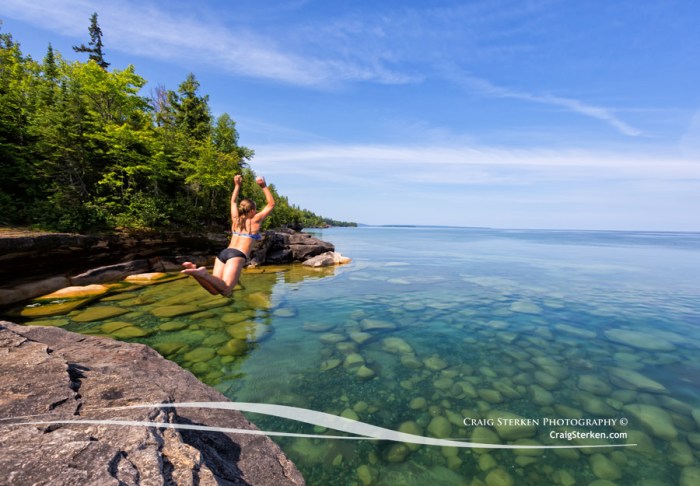
High Dive

High Dive into Lake Superior, photo by Craig

I want to say some things about this photo.

First and foremost, how incredibly awesome is someone to leap into Lake Superior any time of the year? Pretty doggone awesome is the answer, and if you’re wanting to go into Michigan’s coldest lake, August (when this photo was taken) is a pretty good time!

On Michigan in Pictures I post a lot of photos of people doing amazing things in this four-season playground we are blessed with. While summertime is certainly the best season for flamboyant fun, in June especially, the waters of Michigan’s Great Lakes can get very cold. Cold enough to kill as this tragic story from Marquette earlier this month illustrates.

My safety tips would be to really check water you’re leaping into for depth, obstacles, temperature, and whenever possible ASK A LOCAL what they think about whatever ridiculousness you’re considering. Chances are they know a thing or two about currents, weather patterns, or at least a good place to grab a bite and a beverage after your epic stunt.

Remember – having fun is what it’s all about, so figure out how to do it right and then DO IT!

View Craig’s photo bigger, view & purchase work at Craig Sterken Photography, and be sure to follow him on Facebook.

More fun on Michigan in Pictures!

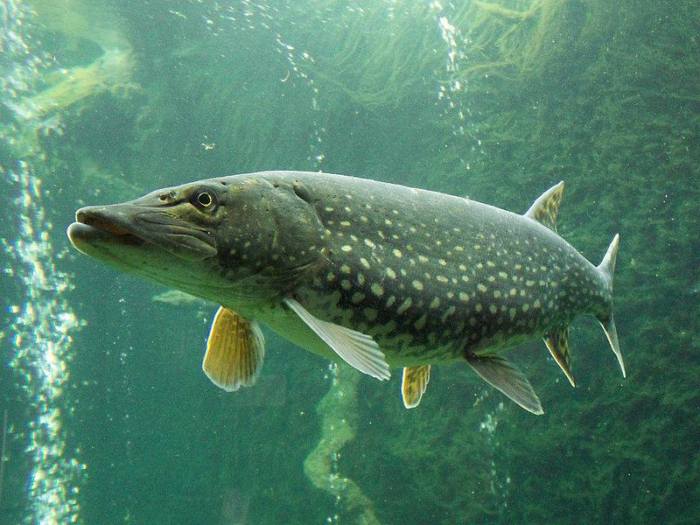
Know Your Michigan Fish: Northern Pike (Esox lucius)

Michigan Northern Pike Esox lucius

Northern Pike (Esox lucius), photo by Isle Royale National Park

The Michigan DNR’s Northern Pike page has this to say about this apex predator of the Great Lakes and Michigan’s inland lakes:

As predators, northern pike can have significant impact on their prey species. As with muskies, pike lurk in the cover of vegetation in the lake’s clear, shallow, warm waters near shore, although they retreat somewhat deeper in midsummer. Pike consume large numbers of smaller fish – about 90 percent of their diet – but seem willing to supplement their diet with any living creature their huge jaws can surround, including frogs, crayfish, waterfowl, rodents, and other small mammals. Their preferred food size is approximately one third to one half the size of the pike itself.

Great Lakes pike spawn in the shallows in April or May, right after the ice leaves, and before muskies reproduce. As a result of their eating habits, young pike grow rapidly in both length and weight. Females become sexually mature at age three or four years, and males at two to three years. Beyond sexual maturity, pike continue to gain weight, although more slowly. Great Lakes pike have an average life span of 10 to 12 years.

Pike eggs and new hatchlings (which stay inactive, attached to vegetation for their first few days of life) fall prey in large numbers to larger pike, perch, minnows, waterfowl, water mammals, and even some insects. Larger pike have two primary enemies – lampreys, and man. Spawning adult northern pike, exposing themselves recklessly in the shallows, are vulnerable to bears, dogs, and other large carnivores.

Northern pike flesh excels in flavor, thus making them a doubly rewarding game fish. Since their skin has heavy pigmentation and an unappetizing mucous coating, most people skin them or scale them carefully.

This photo was one of Isle Royale National Park’s “Wildlife Wonders of the Week.” They noted that a five pound female pike will lay about 60,000 eggs. Two weeks later fertilized eggs hatch, hungry for microscopic morsels. Once to the fingerling stage, food scarcity may force them to eat their own siblings for nourishment.

View it bigger on Facebook and definitely follow their page for the latest from one of Michigan’s coolest parks!

More Michigan fish on Michigan in Pictures.

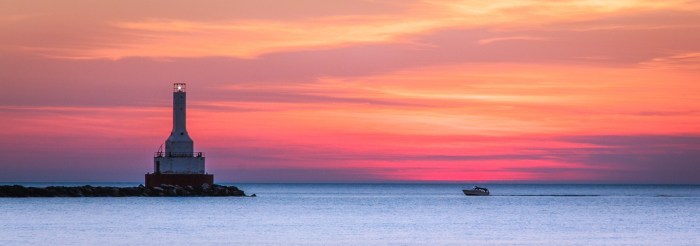
Houghton’s Keweenaw Upper Entrance Lighthouse

Keweenaw Upper Entrance Lighthouse Houghton Michigan

Homeward Bound, photo by Bobby Palosaari

Terry Pepper’s Seeing the Light is my go-to for Michigan lighthouse lore. His entry for the Keweenaw Upper Entrance Lighthouse says in part:

With the meteoric growth of copper mining in the Keweenaw between 1843 and 1968, increased shipping access to the twin cities of Houghton and Hancock became increasingly important. To this end, the Portage River Canal was cut through a tamarack swamp at its western end in 1860, creating a channel 10 feet deep and 80 feet wide, opening full Portage River navigation for the largest vessels of the day from western Lake Superior.

In 1874, to assist in safely guiding ships into this cut, a large gabled two-story brick dwelling with attached square 33 foot high brick tower was constructed on the west bank at the entrance to the canal. With increasing use of the canal, silting became a major problem, and tolls were levied for its use in order to cover the continuing expenses for repairs and dredging.

For reasons as yet undetermined, the original lighthouse was replaced with the existing fifty foot square steel Art Deco style tower at the end of the breakwater in 1950.

View Bobby’s photo background bigtacular and view & purchase more of his photos including this one at palosaariphotography.com.

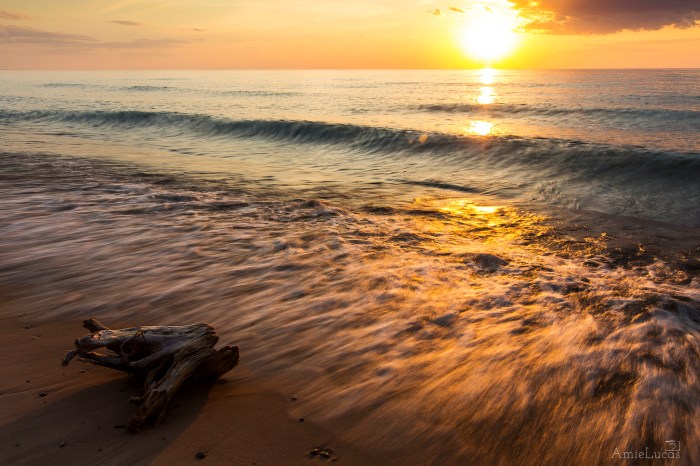
Drifting

Drifting

Drifting, photo by Aime Lucas

Amie took this last year in late May, and I’m posting this to let Mother Nature know that “35 degrees in May” is not what we’re looking for out of the month of May!

View Aime’s photo background bigilicious, see more in her Pictured Rocks National Lakeshore slideshow, and be sure to follow Aime Lucas Photography on Facebook.

More beach photos and lots more summery wallpaper on Michigan in Pictures!

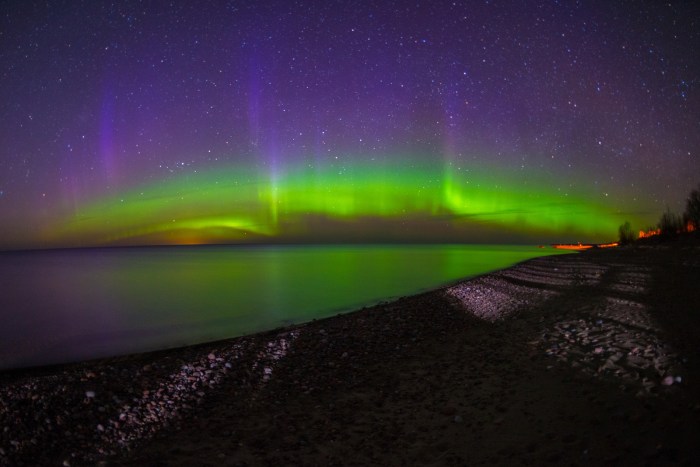
Michigan Northern Lights Alert!

Arc of Green by Eric Hackney

Arc of Green, photo by Eric Hackney

While it’s virtually impossible to predict when the aurora borealis will make an appearance, it’s tied to what’s happening on the sun. NOAA’s Space Weather Prediction Center keeps tabs on what our local star is doing and is my go-to for Northern Lights forecasting. They are reporting strong geo-magnetic storms likely tonight and tomorrow so keep an eye on the skies.

Also, do yourself a favor and sign up for their Aurora Alerts!

Eric took this last night. View the photo bigger and see more from the May 8th aurora on his Facebook page.

Tons more northern lights including the colors of the Northern Lights on Michigan in Pictures

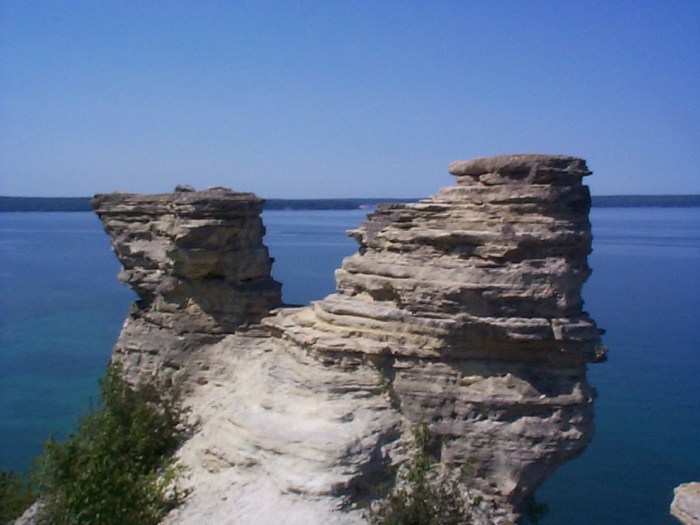
Miner’s Castle, before it fell

Miner's Castle before it fell

Miner’s Castle before it fell, photo by spauldi1

Today is the 10th anniversary of the collapse of one of the turrets on the Miner’s Castle formation in the Pictured Rocks National Lakeshore.

On Thursday morning, April 13, 2006, the northeast turret of Miners Castle collapsed. One turret remains on Miners Castle, the best-known feature of Pictured Rocks National Lakeshore. The collapse was reported via cell phone by fisherman in the area, according to chief ranger Larry Hach. Most of the rock fell north and into Lake Superior, and there were no injuries. The lower overlook platform near Miners Castle appears to be unaffected.

While the rockfall at Miners Castle on April 13 was startling, such events are not rare along the Pictured Rocks escarpment.

Click for the full report on Absolute Michigan.

Sue took this back in 2003. View it background big and jump into her slideshow for more pics from “before the fall”at Miner’s Castle.

Line 5 and the Great Lakes

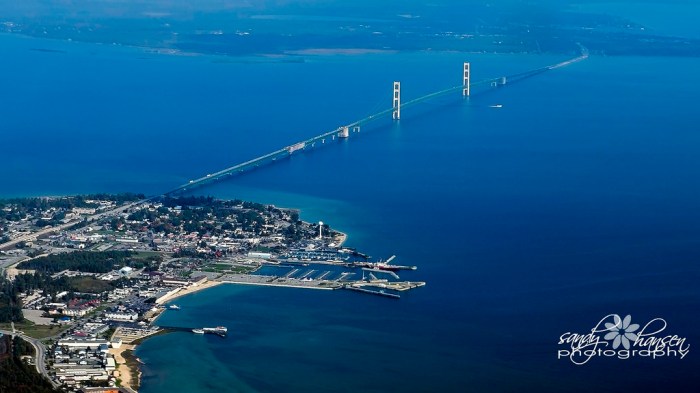
Mackinaw-City-and-Mackinac-Bridge

Mackinaw City and Mackinac Bridge, photo by Sandy Hansen Photography 

“There is a pipeline that‘s sitting at the bottom of the Straits of Mackinac. It was designed for a 50 year life and it’s been down there for 63 years. There’s a risk involved in this.”
-Mark Shriberg, National Wildlife Federation

In Line 5 puts Great Lakes at risk on Absolute Michigan via the University of Michigan (video below):

Up to 152 miles (245 km) of coastline in lakes Huron and Michigan could be fouled by a single oil spill at the straits, according to the simulations. When all 840 simulated spills are plotted on a map, a total of 720 miles (1,162 km) of shoreline in the U.S. and Canada are considered potentially vulnerable to spills that would require cleanup. Seven hundred twenty miles is roughly the distance from Detroit to Atlanta.

Areas at highest risk include Mackinac and Bois Blanc islands, as well as locations directly east and west of Mackinaw City. Communities also at risk include Beaver Island, Cross Village, Harbor Springs, Cheboygan and other places along the lakes Huron-Michigan shoreline.

…”Until now, no one knew exactly how much shoreline was vulnerable to spills in the Straits of Mackinac,” said Schwab, a research scientist at the U-M Water Center. “These findings show that under the right conditions, a spill in the Straits of Mackinac could affect a significant amount of shoreline and open-water areas in either Lake Michigan or Lake Huron, or both, very quickly.”

View Sandy’s photo bigger, see more in her aerial slideshow, and follow her on at Sandy Hansen Photography on Facebook.


A year ago on Grand Island

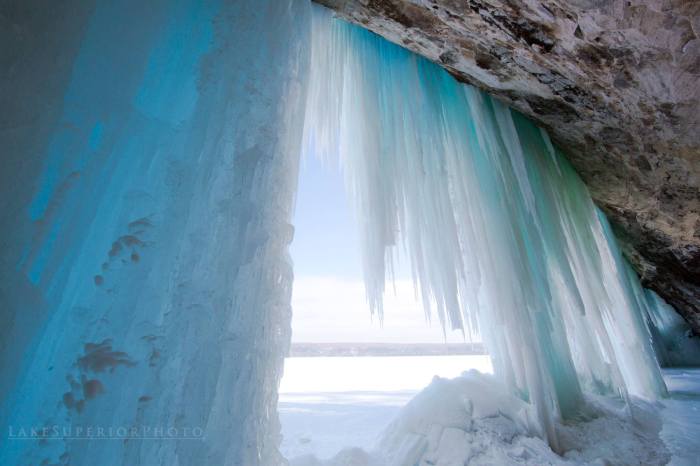
Ice Pillars on Grand Island

unbelievable colors in the ice pillars, Grand Island, photo by Lake Superior Photo

On March 1st, Shawn shared this shot from last March on Grand Island. We’ve had nowhere near the ice buildup this year – a year can really make a difference.

Also, I’d like to congratulate her on having (as far as I know) the most popular Facebook page for a Michigan photographer – 201,000+ fans for Lake Superior Photo! If you’re not one of those, I urge you to change that right now.

View the photo bigger and view & purchase her photos at LakeSuperiorPhoto.com.

PS: Just in case you missed it, Michigan in Pictures has a good explanation of what gives ice difference colors.

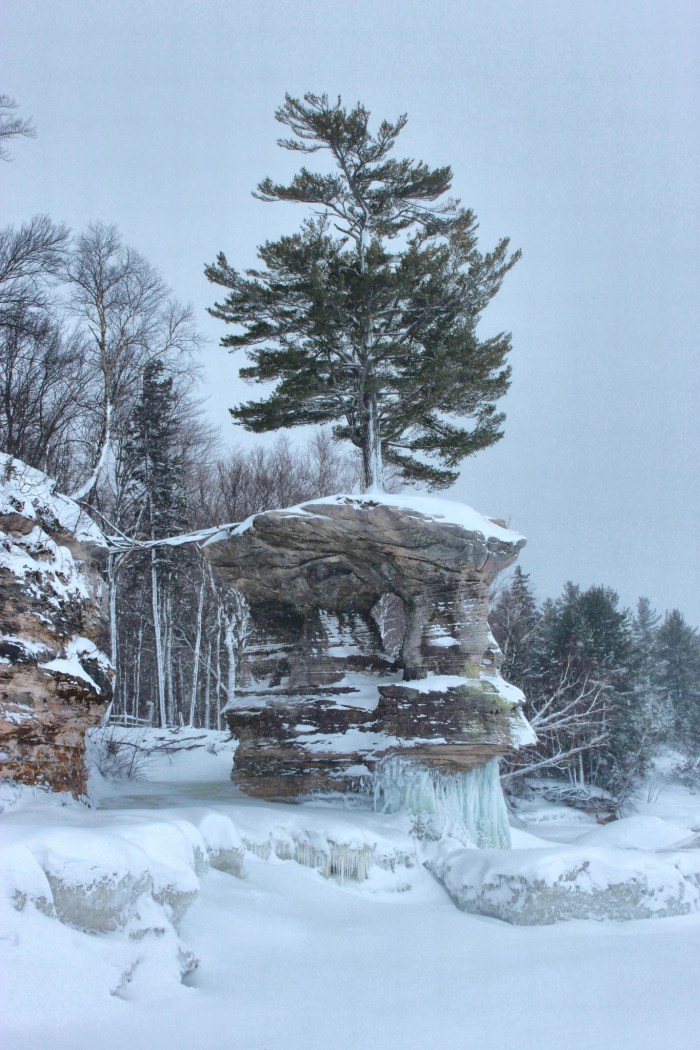
Chapel Rock in Winter

Chapel Rock in Winter

Live Anywhere, photo by Jay

When you think about it, it’s not only miraculous that the white pine on Chapel Rock in the Pictured Rocks National Lakeshore survives with barely any soil, but also that it endures winter after winter in the teeth of Lake Superior.

Jay took this shot on February 20th last year. View it background bigtacular and jump into his slideshow for some more spectacular winter photos from the Pictured Rocks.