The Salmon Trout River on the Yellow Dog Plains

The Salmon Trout River on the Yellow Dog Plains

The Salmon Trout River on the Yellow Dog Plains, photo by savethewildup.

Somewhere there are lines, and I’m pretty sure that today I will cross a few. Over the life of this blog, I have stayed away from things that have sides, because sides too often divide us and this blog is really all about loving Michigan.

In my day job, I build web sites. A short while ago, I and some really talented people put together a new site for some people that have spent the last few years at a hard and lonely task: speaking up and standing up for Michigan’s rivers and lakes against the terrible risks posed by metallic sulfide mining and acid mine drainage.

They have been focused on the Salmon Trout River on the Yellow Dog Plains, but that is just the first of many that will follow. To be very clear: There has never been a metallic sulfide mine that has failed to pollute its watershed. You can read more from Save the Wild UP … and scroll down for a special treat featuring tons more photos and music from Greg Brown’s upcoming CD, Yellow Dog.

More photos of the beauty of the Yellow Dog Plains and Salmon Trout River can be seen at Save the Wild UP’s web site.

If you are a photographer who loves Michigan’s water and wild, please consider making them available to be used in fighting metallic sulfide mining and other threats to Michigan’s legacy of unspoiled water and add them to the Save the Wild UP photo pool.

Greg Brown, Yellow Dog slide show (or new window)

Trying to stop time

Trying to stop time

Trying to stop time, photo by Robin of Loxley.

Robin of Loxley writes: The recent drab fall days have made me wish that it was just as simple as holding back the summer sun from setting.

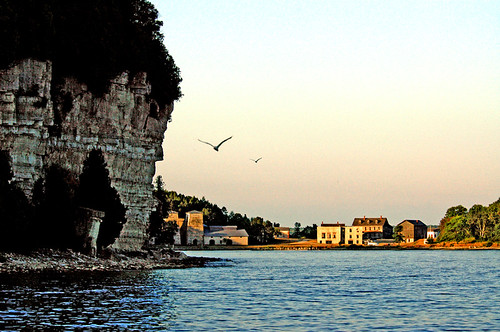
Fayette Historic State Park

Fayette Historic State Park photo

that cliff by whitewave

This photo of the ghost town of Fayette by Paul Rose is one of many that appears in Absolute Michigan’s profile of Fayette Historic State Park. The Fayette Townsite is located on the UP’s Lake Michigan shore and is an excellent restoration of a historic village that features 20 historic buildings against the beautiful background of Big Bay De Noc.

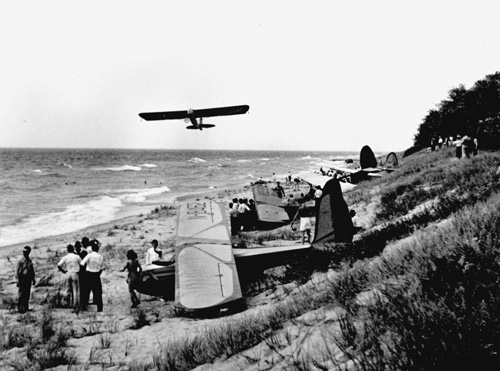
Sailplanes on the Frankfort Beach

Sailplanes on the Frankfort Beach
This photo shows a sailplane being winch-launched from the beach near Frankfort in the 1930s. It is one of many photos that appears in Soaring and Gliding: The Sleeping Bear Dunes National Lakeshore Area by Jeffery P. Sandman and Peter R. Sandman. The 127 page, oversized softcover uses archival photographs from the 1920s to the present day along with brief text passages to tell the story of the rise of the Sleeping Bear Dunes area in northwest Michigan as a soaring and gliding mecca.

Reprinted with permission from Soaring and Gliding: The Sleeping Bear Dunes National Lakeshore Area by Jeffery P. Sandman and Peter R. Sandman. Available from the publisher online at www.arcadiapublishing.com or by calling 888-313-2665.

South Manitou Island

South Manitou Island by rdmegr

South Manitou Island by rdmegr

When I logged on briefly last night to see what photos had been added during the day. Just about the first thing I saw was this amazing photo of South Manitou Island from the air. In addition to the freighter, the photo clearly shows the beautiful natural harbor that made South Manitou an early Great Lakes settlement and the North Manitou Shoal lighthouse (aka “the Crib”). As much as I love the maritime history of the Manitou Passage, the coolest thing for me is that I very clearly recall hearing the plane fly past just after 6 PM on Sunday evening.

The photo is part of Daytrip to Mackinac Island, a set of photos that also includes photos of the Island, Straits of Mackinac, the Mackinac Bridge and Sleeping Bear Dunes.

Waugoshance Shoal Lighthouse

Waugoshance Shoal, Lake Michigan

Waugoshance Shoal, Lake Michigan, photo by katbailey718.

The Waugoshance Shoal Lighthouse is one of only three remaining “birdcage” lanterns left on the lakes and is considered one of the most endangered lighthouses in the world. It marks the western entrance to the Straits of Mackinac and in 1832 was the site of the first Lightship. In 1851, the Lighthouse Board ordered the construction of the Waugoshance Lighthouse. In 1912 the light was superceded by the White Shoals Lighthouse. During WWII, the abandonded lighthouse was used as a practice bombing target, hastening the light’s decay.

Check out Waugoshance Shoal Lighthouse at Terry Pepper’s Seeing the Light for much more history and some photos. Also see the Waugoshance Lighthouse Preservation Society for information about what is being done to preserve this lighthouse (and a ghost story).

If you are interested in lighthouses and their preservation, be sure to check out out latest Michigan Site of the Week, the Michigan Lighthouse Fund.

Wind Surfer

Wind Sufer

Wind Surfer, photo by The Real Ferg.

Ferg says I did use a filter on this pic, the filter was my sunglasses and that the photo was taken near Betsie Point on Lake Michigan.

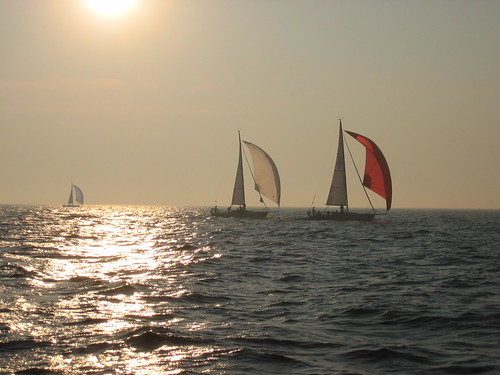
Chicago to Mackinac Yacht Race

IMG_0155.JPG

Check out the whole set of Chicago to Mac photos by biggunner.

The 98th annual Race to Mackinac starts tomorrow morning (Sat, July 22, 2006) from the Chicago Yacht Club. The race is sponsored by the Chicago club and they have a ton of race-related photos, videos and information.

You can watch the race online via t2p.tv. If you want to watch the boats pass, Torreson Marine lists some of the best locations on Michigan’s western shore to see them (and also has tons of info and photos from past years all the way back to 1995). The fastest boats typically finish at 30-40 hours and Sunday morning is a great time to see them in northern Michigan.

The online history of the race is scant, but Wikipedia’s entry on the Chicago to Mackinac Boat Race says:

It is one of the longest fresh-water races in the world with hundreds of boats entering the race each year. It starts at Chicago and finishes at Mackinac Island, Michigan crossing Lake Michigan and just entering Lake Huron. The race course runs 333 miles (536 km). 294 boats completed the 2005 race with finishes ranging from 33 to 69 elapsed hours. Steve Fossett set the overall race record, 18 hours, 50 minutes, in 1998 with the yacht, the Stars and Stripes. Roy E. Disney set the monohull record, 23 hours, 30 minutes, in Pyewacket in 2002.

The first race was run in 1898, with the sloop Vanenna winning against four boats. Racers who have completed 25 of the annual races are called “Island Goats”.

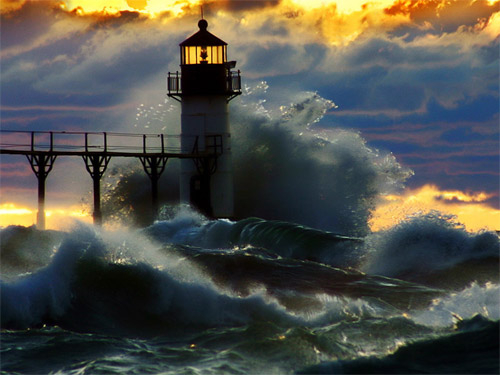
Dancing Waves

Dancing Waves by Tom McCall

Dancing Waves, photo by Tom McCall

Tom McCall is a member of the 73+ year-old Twin City Camera Club (of St. Joseph & Benton Harbor). I met Tom over the weekend, and even though the St. Joe North Pier Light is disproportionally featured in our lighthouse photos (I promise to address this!), I think it’s a great shot to use introduce you to both Tom and the TCCC.

So, visit club, view their many galleries and learn more about them. You’ll see a link on the right bar to the TCCC – we’re also going to be linking to other clubs (Michigan only) and representatives may want to send a note to michpics@absolutemichigan.com.

along the dock at lake michigan

untitled, photo by puja.

This picture wasn't exactly what I expected when I went looking for the most popular "michigan beach" picture on Flickr from the summer 2005.

Perhaps there's a message in there about respecting the power of the Great Lakes when enjoying them in the summer. It's always sad for me when I hear about someone who got caught in a riptide and drowned while enjoying swimming in the waves.

Water Safety & Rip Currents from Michigan Sea Grant has some great advice for how to avoid rip currents (which apparently grab 40,000 swimmers a year from US beaches and are deadlier than lightning or tornados). They also tell you how to handle yourself if you do get caught in one of these powerful currents: stay calm, don’t fight the current and swim parallel to the shoreline.