

Brian Day has a spectacular series of photos he calls the time traveler series.
Check this one out bigger and see many more in the time traveler slideshow.
Brian Day has a spectacular series of photos he calls the time traveler series.
Check this one out bigger and see many more in the time traveler slideshow.

Zug Island, photo by Airplane Lane.
Over on Absolute Michigan a little while back we had a feature from one of my favorite blogs, Bootstrap Analysis. It’s titled Urban Birding: Touring the Rouge River. For a look at what the Rouge looks like and a sense of how that happened, click over!
If you’re interested in the preservation efforts on the river, check out Friends of the Rouge River.
Check it out background bigtacular and in Matt’s awesome Aerial Photography slideshow.
Lots more Michigan aerial photographs on Michigan in Pictures.
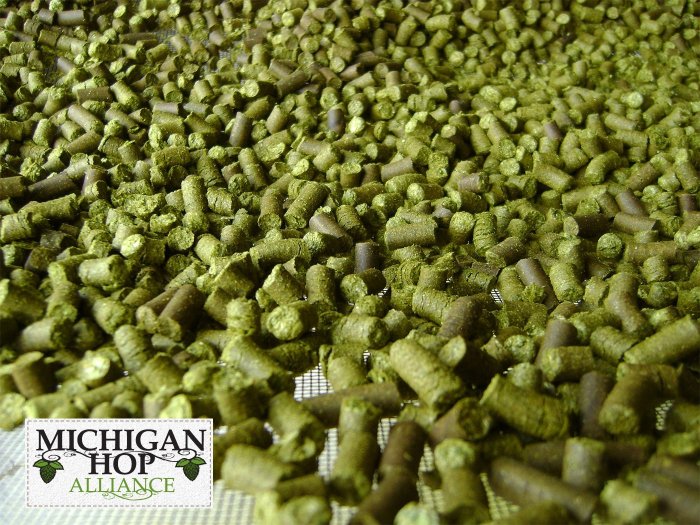
michigan hop pellets, photo by the Michigan Hop Alliance
The Michigan Hop Alliance posted this photo of some hop pellets they made at their processing plant to their Facebook last Friday. It is the first certified organic hop processing facility in Michigan and one of the few in the country. Their Michigan grown organic hops are available in Traverse City at Diversions and in Grand Rapids at Siciliano’s. Read more about the ins and outs of growing organic hops in Michigan in the Grand Traverse Insider.
While I know it looks like the rabbit got loose again, but for a former craft brewer , this photo of Michigan-made organic hop pellets told me that the booming craft beer & brewing industry in Michigan had taken another leap forward! The aromatic ale additives also make a great companion to the latest Driving Michigan video we posted this morning to Absolute Michigan, a visit with Founder’s Brewing Company’s head brewer Jeremy Kosmicki!
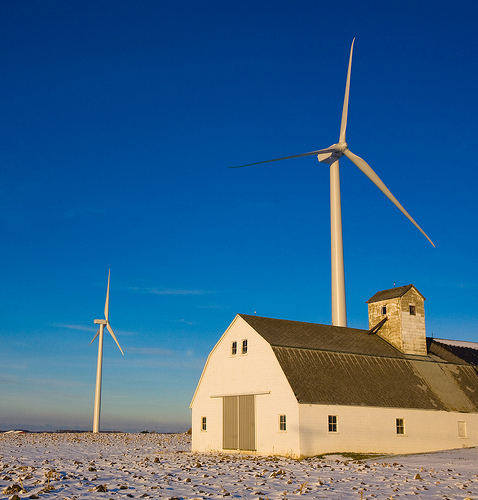
Wind farm in Ubly Michigan, photo by Ray Dumas RTD Photography
An in-depth article on the cost of renewable energy in Michigan in the Muskegon Chronicle notes that although a common argument from wind turbine opponents is that wind farms will significantly increase our electric bills, the State of Michigan reports initial contracts show significantly lower costs than the power generated from new coal plants. This excellent feature on the hard numbers and debate on renewable energy is well worth a read.
State regulators find the current cost of a new coal power plant over the life of the facility is $133 per mega watt hour of production.
Based on more than two dozen actual renewable energy contracts for solar, wind and bio-gas generated electricity, the average price is about $100 per mega watt hour of production. Bio-mass incineration is at $98, wind $101, landfill gas $113, digesters $128 and several small-scale solar installations at approximately $500.
“Wind is competitive with coal and natural gas on cost as long as you find the best winds,” said Paul Isely, the head of Grand Valley State University’s economic department.
See this photo and others from the wind farm in Ubly bigger in Ray’s alternative energy slideshow.

Welcome to Detroit, photo by mi_kirk
There were a lot of great snapshots from the Motor City in Chrysler’s 2 minute Super Bowl homage to Detroit (and itself) with Eminem, but to me, the most powerful image in this daring ad was the Joe Louis Memorial.
Click above to watch it the ad on Absolute Michigan.
See this photo bigger in Kirk’s Detroit slideshow and tell us what you think on the Absolute Michigan Facebook.
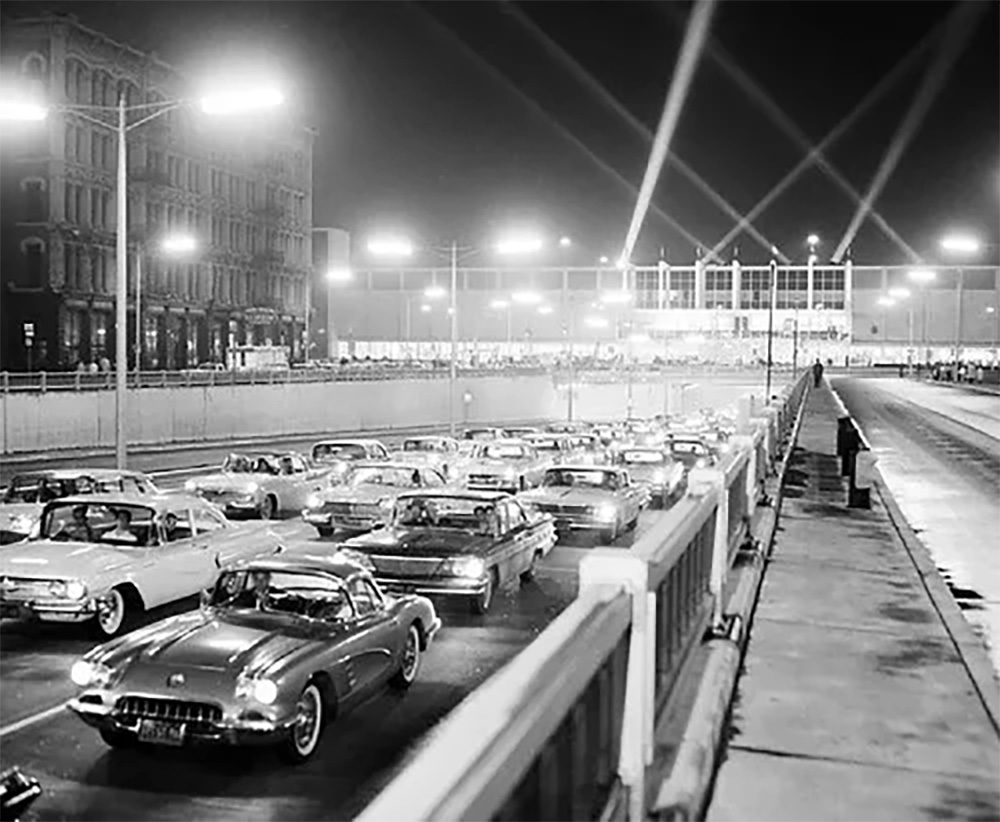
Traffic at the 1960 Auto Show by Hugo90
“You know what? We’re going to prove one thing. That this is the Motor City, the motor capital of the world. And we’re going to bring it back, in the esteem of the world, to where it should be.”
~Ken Meade, International Auto Show, 1989
It’s time again for the North American International Auto Show aka the Detroit Auto Show. The world’s premier celebration of cars and car culture has lost some of its luster but is still an amazing event.
The NAIAS runs from January 15-25 at the Cobo Center in Detroit and you can get all the details including photos and video at 2011 Detroit Auto Show on Absolute Michigan. An article we link to from the Detroit News is the source of the quotation above and says that 1960 was the first year at Cobo Hall.
Check this out bigger and in Hugo’s THE OTHER CAR PICTURES slideshow.


wind_farm_pigeon 002, photo by eXtension Ag Energy.
Yesterday on Absolute Michigan we posted an article from Great Lakes Echo wondering if Michigan will harness offshore wind and pass the bill in the House to regulate wind farms in Michigan’s Great Lakes waters.
Land based wind farms around the state are already tapping this resource. The largest of these is the Harvest Wind Farm that spans 3,200 acres between Elkton and Pigeon, Michigan, in Huron County. Each of the wind farm’s 32 turbines stand 262 ft tall (393 with the 131′ blades) and is capable of producing 1.65 megawatts of electricity, for a total project capacity of 52.8 megawatts.
You can get a sense of the scale of the farm in these cool aerial shots. Something to consider is that 52.8 megawatts is enough to power 15,000 or so homes. When you think about the total population of Michigan and the space available to site wind turbines, it’s hard to see how we will be able to meet our energy demands without using the Great Lakes.
MSU Extension Bioenergy Educator Dennis Pennington took the shot above in July of 2009. Check it out background big and also in his wind slideshow (some of the shots show construction and give a sense of the scale of these massive machines).
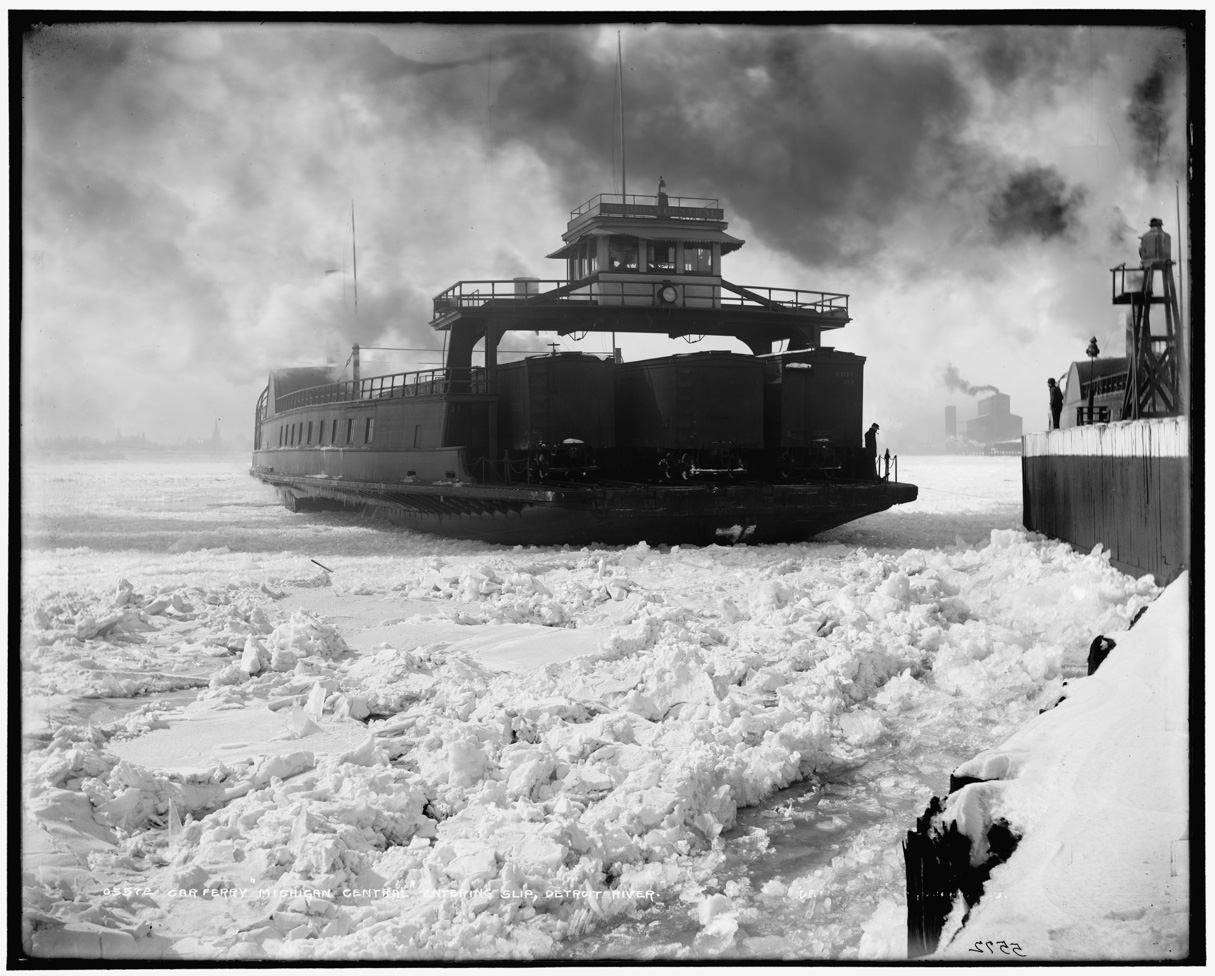
Car ferry, Michigan Central, entering slip, Detroit River, photo by Detroit Publishing Co.
It’s kind of cruel to post a photo like this while it’s still November. I think we all know what’s coming though…
I spent some time learning about this photo I found in the Library of Congress aka maybe the coolest place on the internet. (You probably paid 3 cents for it last year, so check it out sometime). I finally found the same photo on the fantastic photo blog Shorpy. One of the commentors writes:
This is the Detroit side. The river flows extremely fast, and the ferry docks were set up so the boats always entered dock facing upstream. Michigan Central was built in 1884 by Detroit Dry Dock in Wyandotte, while Transport was built there in 1880. Both were cut down to barges by the 1930’s. A nearly identical boat, Lansdowne of 1884, survived in steam until 1970 for CN/Grand Trunk, until she blew a cylinder head (I remember the shock among the Detroit trainwatching community at the time).
You can see the Lansdowne of Windsor on Michigan in Pictures and check the comments at Shorpy for more including a shot of this location from the Ambassador Bridge in 1957.
See the photo background bigtacular at Shorpy.

2011 Chevrolet Volt in Production, photo by ibmphoto24
A a lot of the sound and fury that has surrounded the Volt’s launch has tended to obscure a simple truth: This automobile is a game-changer.
~Motor Trend Magazine
Motor Trend magazine has named the Chevrolet Volt its 2011 Car of the Year. The criteria for Car of the Year are design advancement, engineering excellence, intended function, efficiency, safety and value. After reading passages like the one below, you get the sense that when the Motor Trend Editor in Chief Angus MacKenzie says that the Chevy Volt is one of the most groundbreaking vehicles they’ve tested in 60 years, he means it:
The Volt’s unique powertrain not only defies established labels; it also defies established methods of determining fuel economy. After all, this is a vehicle that will complete the standard EPA fuel economy test in full EV mode, making conventional mileage calculations impossible.
Read more at Motor Trend, visit the official Chevrolet Volt web site and see a video, more about the award and GM’s IPO this week on Absolute Michigan.
The photo above is the first pre-production Chevrolet Volt on the assembly line at the Detroit-Hamtramck manufacturing plant. It was posted by IBM. Check it out bigger and read about how IBM software played a role in the development of the vehicle.
Here’s the Chevy Volt slideshow on Flickr.

In some new pics of the Edmund Fitzgerald on the floor of Lake Superior that someone sent my way yesterday you can see some of the taconite that was its last cargo. According to SSEdmundFitzgerald.com, the Fitz was carrying about 26,116 long tons of National Taconite Pellets to Zug Island in Detroit in her 860,950-cubic-foot cargo hold.
Wikipedia’s entry on Taconite says that taconite is an iron-bearing sedimentary rock in which the iron minerals are interlayered with quartz, chert, or carbonate.
The term was coined by Minnesota State Geologist Newton Horace Winchell during his pioneering investigations of the Precambrian Biwabik Iron Formation of northeastern Minnesota due to its superficial resemblance to iron-bearing rocks he was familiar with in the Taconic Mountains of New York. The iron content of taconite, commonly present as finely dispersed magnetite, is generally 25 to 30%. In the late 19th and early 20th centuries, available iron ore was of such high quality that taconite was considered an uneconomic waste product. After World War II, much of the high grade iron ore in the United States had been mined, and taconite became a new source of iron.
Check this out bigger in Cory’s Random slideshow.
 Michigan in Pictures