The Argus Camera Company of Ann Arbor, Michigan

Hey Argus fans – here’s a post with information about the Argus Museum and an event they are having!
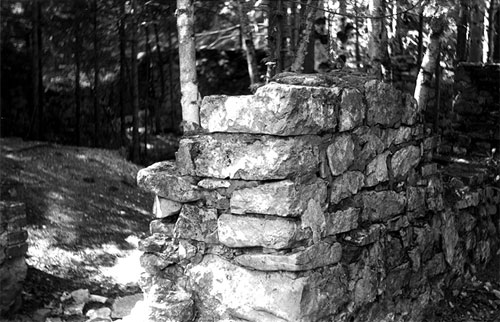
Old Foundation by Mark O’Brien

Lighthouse ruins at Cheboygan State Park, MI, taken with Argus C3 by Mark O’Brien

It’s apparently O’Brien week here on Michigan in Pictures. Yesterday we had a photo from Marjorie and then I received an unrelated email from her dad. He was passing along a request from Bob and Mary Kay Berg of Palindrome Productions:

Our production company, Palindrome Productions, is working on a short film about the Argus Camera Company, originally based in Ann Arbor, MI. To supplement our video footage, we are currently looking for still photos taken by Argus cameras models from 1936 to 1960.

If you have family photos (everyday events, family vacations, recitals, holidays) or photos of Ann Arbor, please contact us no later than Friday, April 13, 2007 at palindromevideo@aol.com.

I’ve never been one to look a gift blog post in the mouth, so without further delay – and with copious thanks to Mark for the links – I bring you:

About the Argus Camera Company of Ann Arbor, Michigan

Argus C3 by Luke HWikipedia’s very much incomplete entry on the Argus Camera Company says:

Argus is an American maker of cameras and photographic products, founded in 1936 in Ann Arbor, Michigan. Argus originated as a subsidiary of the International Radio Corporation (IRC), founded by Charles Verschoor. Its best-known product was the C3 rangefinder camera, which enjoyed a 27-year production run and became one of the top-selling cameras in history. The company’s Model A was the first low-cost 35 mm camera in the United States.

The link above for the Argus C3 (aka “The Brick”) is much more complete and says the simple design and ready availability of the C3 makes it widely used even today. While that entry says the C3 was responsible for establishing 35mm, Stephen Gandy of CameraQuest hands that title to the first camera Argus made – the Argus A, declaring:

Argus SS Notches by ReyGuyIn MY always not so objective mind at least, the Argus A is undoubtedly the 2nd most important 35mm camera of all time– second only to the Leica A. If you think about it, that’s a pretty amazing legacy for a simple little Bakelite camera from a Michigan USA radio factory. It really is.

How does Argus deserve this impressive ranking? Easy, they bribed me. Unfortunately, not with money. Argus paid me off in Photographic Heritage. Building on the astounding sellout success of the Argus A, Argus sold MILLIONS of Argi, thereby establishing 35mm as the serious Amateur’s film format of choice in the largest photography market in the world, America.

If you are interested in repairing, collecting or just learning more about any of the Argus camera models and their accessories, look no further than the Argus Collectors Group. You can get a quicker overview of the Argus line over at Mark’s Argus Cameras Page. Mark also took visit to the Argus Museum located at the old Argus Factory in Ann Arbor and (go figure) he took some photos.

There are a TON of very cool Argus camera advertisements (I learned that Galileo was a 17th century Argus and am definitely going to get an Argus A to take to the next World’s Fair), some detail shots of the cameras on his projects page and the results of a Spring Fever Argus photo contest over at Alexander Rawles argoflex.com. Speaking of photos , you can see some shots of the camera and from the cameras in the Argus Rangefinders Group on Flickr.End of the gumshoe's day by Olivander

You might also want to check the local bookstore for a copy of Argomania: A Look At Argus Cameras And The Company That Made Them by Henry Gambino. The promotional copy explains:

Argus’ founder, Charles Verschoor, did not establish an empire, as did George Eastman. Nor did he enjoy a particularly long tenure as the head of the company he founded. Unlike Oscar Barnack, he did not invent anything particularly new, yet he had a tremendous impact on the photographic industry. He revolutionized the scope of the industry, not only from a technical standpoint, but even more so from a marketing perspective.

Additional photo credits:

Argus C3 by Luke H

Argus SS Notches by ReyGuy (part of a great set of detail shots of Argus cameras)

End of the gumshoe’s day by Olivander

Paying tribute to Michigan’s architecture

Mason County Courthouse, Ludington, MI

Mason County Courthouse, Ludington, MI, photo by I am Jacques Strappe.

Michpics regulars may remember Marjorie O’Brien from her profile last year.

Given her passion for architecture and wandering the state of Michigan, it should come as little surprise that she has developed the Michigan Architecture Blog where she photographs and discusses everything from the red sandstone of Marquette to the fantastic details of the UM Law Quad.

Be sure to check out the above photo bigger!

Kalamazoo Fire Department: Truck 17 in front of Old Central

Truck 17 In front of Old Central

Truck 17 In front of Old Central, photo by Stoney06.

Joel Dinda knows old photos, so it’s not at all surprising that he found this great collection of historical photos from Brian Stone of the fire stations, fire trucks and the men of the Kalamazoo.

An added plus are his informative captions such as the one for the above: Old Central Station Kalamazoo Michigan. Truck is a 1936 Seagrave City Service Ladder. “Pride of the Department”.

Indeed. View the photo large and you can see that’s true.

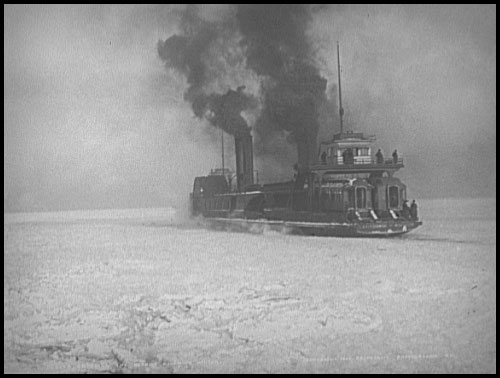
Lansdowne of Windsor, a Detroit River ferry boat

Steamer Lansdowne of Windsor

Crossing the Detroit River in winter c. 1904, LC-D4-22154

Under the headline of “Things I found when looking for something else” comes this photo from the massive Detroit Publishing Co. collection in the Library of Congress.

The ferry is identified as the steamer Lansdowne of Windsor, a vessel mentioned briefly in The Detroit River ferryboats in the Detroit News’ Rearview Mirror:

The old paddle-wheeled steamer, the Lansdowne, which by its retirement in 1956 was one of the oldest vessels still operating on the lakes, once carried passenger train cars across the Detroit River. It was resurrected briefly during the 1980s as a floating restaurant off downtown Detroit.

If you click the “More Photos” button at the top left of the article, you can see another (clearer) shot of the Lansdowne. The March 1970 edition of the Toronto Marine Historical Society’s Scanner  had this to say:

For well over one hundred years there have been carferries operating across the Detroit River between Windsor and Detroit, and a large portion of this period, 87 years in fact, could well be called “The Lansdowne Era.” For exactly this long, a major item on the Detroit River scene has been the paddle-driven railway ferry, LANSDOWNE.

This veteran, 294 feet in length, was completed in 1884 by the Detroit Dry Dock Co. at Wyandotte, where her iron hull was known as Hull 66. Her horizontal, low-pressure engines were built in 1872 by E.E. Gilbert & Sons at Montreal for the wooden carferry MICHIGAN (I) and they were placed in LANSDOWNE at the time of her completion. Originally equipped with four stacks and two pilothouses, the ferry now carries but two stacks and one bridge and looks somewhat gaudy in the Canadian National Railway’s new livery. Nevertheless, she is the last sidewheeler operating on the Great Lakes and holds a great charm known to anyone who has observed her or made a crossing in her.

Recent photos of the “somewhat gaudy” Lansdowne can be found at the amazing Boatnerd.com.

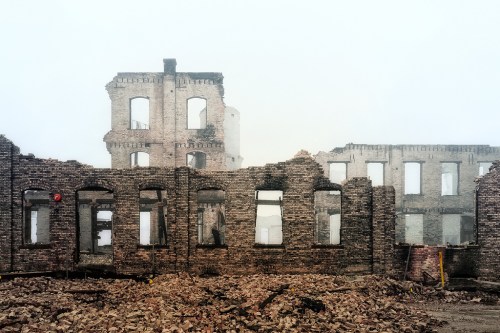
Grand Rapids Bicycle Factory Ruins

Grand Rapids Bicycle Factory fire

Former Grand Rapids Bicycle Factory Fire | Smoldering Ruins 2, photo by Mr. Gillette & His Image-Making Apparatus.

A fire destroyed the former Grand Rapids Bicycle Factory last week, leaving a nothing but a burned out hulk that looks like something you’d have seen in London during the blitz. Brad also took some photos during the massive fire.

According to a story from WOOD-TV:

At one time the city had six factories making bicycles and Grand Rapids Cycle Company was the first and largest. The company put out 30,000 bicycles and the factory employed 200 people in its prime in the late 1800s.

Bicycle manufacturing in Grand Rapids was abruptly halted in 1899 as most of the bike makers were bought out and shut down by the bicycle trust out of New York. By 1903 the bicycle industry was completely gone.

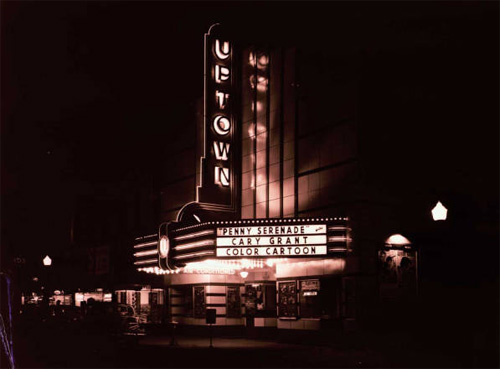
Kalamazoo’s Uptown Theater – September 1, 1941

Uptown Theater, photo by John Todd

Uptown Theater, photo by John Todd

I found this photo via the revamped Michigan eLibrary. It’s from the John Todd Photographic Collection at the Portage District Library. The collection contains over thirteen-thousand negatives of Kalamazoo, Kalamazoo County communities and southwest Michigan taken from 1940 to 1981. It includes all manner of pictures including aerial photos of Kalamazoo and the surrounding area.

The description might give you an idea of the breadth of the collection and the degree to which it’s indexed. Go ahead, click…

Night view of the Uptown Theater located at 247 North Burdick Street in downtown Kalamazoo, Michigan with the camera looking towards the southwest. As of 2006 this theater has been demolished and replaced with the Kalamazoo Valley Public Museum. North Burdick Street in this block no longer functions as a roadway but has been converted into a pedestrian mall.
CATEGORY: Entertainment

Shaft entrance at the abandoned Hiawatha Iron Ore Mine, U.P. Michigan

Shaft entrance at the abandoned Hiawatha Iron Ore Mine, U.P. Michigan

Shaft entrance at the abandoned Hiawatha Iron Ore Mine, U.P. Michigan, photo by dietrichlawrenz.

Dietrich writes that the cement is stained from iron ore dust that came out from the shaft.

This photo is part of a great set rusty/snowy photos of Upper Michigan and you absolutely must view it large.

Magic: Ice boating in Michigan

2006_01_20icebt042

2006_01_20icebt042, photo by gretchdorian.

Gretchen Dorian has a great set of photos from a day of DN ice boating at Indian Lake State Park near Manistique. – makes a great slideshow!

Michigan has a long history of iceboating. The Detroit News’ excellent Rearview Mirror series includes Sailing on Lake St. Clair’s icy winter winds. They write that ice boating or ice yachting began over 4000 years ago in Northern Europe and was a source of entertainment in Michigan lumber camps. DN IceboatThe article also relates what the “DN” you see on so many ice boat sails stands for:
During the winter of 1936-37, in the sawdust covered hobby shop of the Detroit News, master craftsman Archie Arroll along with ice boaters Joseph Lodge and Norman Jarrait designed a racing ice boat they called the Blue Streak 60. Later the craft would come to be called the DN 60, the DN standing for the Detroit News, and the 60 referring to the size of the sail. Howard Boston, whose family remains in the sailing business, helped construct the first sails. (Doyle Boston Sailmakers of Holland)

Ice Boating Timeline reminds us not to forget about the other side of the state and Gull Lake and (as usual) Wikipedia can tell you more about iceboats & iceboating.

Update: I was just sent a nice video featuring Jack Jacobs (owner of Magic) talking about ice boating.

Detroit Tigers Spring Training in Lakeland, Historical Photos

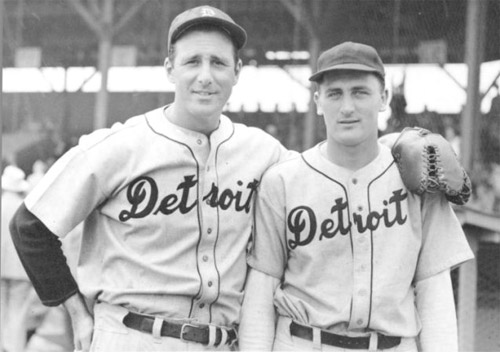
Hank Greenberg and unidentified teammate, spring training 1936

Hank Greenberg and unidentified teammate, spring training 1936*

The above photo is one of many in Play Ball: The Detroit Tigers in Lakeland, an online exhibit of photos from the Dan Sanborn Photo Collection at the City of Lakeland Public Library (they say “be sure to stop by if you’re in Lakeland!”)

The Tigers score!The Detroit Tigers and Lakeland, Florida have had a longer continuous relationship than any other major league baseball team and its spring training home … As the Tigers were moving their spring training headquarters to Lakeland, Dan Sanborn was beginning his career with The Ledger

Over the next seven years, Sanborn brought his camera to Henley Field every spring and captured on film the Tiger teams of Mickey Cochrane, Charlie Gehringer, Hank Greenberg, Tommy Bridges, Barney McCosky, and Schoolboy Rowe as they got in to shape for the American League season. (he returned in the 50s to shoot Harvey Kuenn, Hal Newhouser and others)

Sanborn’s photos of the Tigers evoke memories of a simpler time for baseball before television and big contracts, a time when fans really believed every team had an equal chance to get to the World Series and the cry of “Play Ball!” was still louder than that of “Wait ’till next year.”

Turn on to a tremendous ton of Tiger training tales at Absolute Michigan.

* The Library would love it if some Tiger scholar could identify the ball player with Greenberg.

Back in time on the Fallasburg Bridge

Vintage bridge

Vintage bridge, photo by pnygirl1.

BJ writes Playing around with some techniques – liked how this effect captured the old wooden bridge…like it was captured back in time. She has more views of this and other bridges (and a ton more photos).

The Michigan Historical Markers page on the Fallasburg Bridge (includes map) has the text of the marker:

John W. and Silas S. Fallas settled here in 1837, founded a village which soon boasted a chair factory, sawmill, and gristmill. About 1840 the first of several wooden bridges was placed across the Flat River, but all succumbed in a short time to high water and massive spring ice jams. Bridge builder Jared N. Bresee of Ada was given a contract in 1871 to build the present structure. Constructed at a cost of $1500, the bridge has lattice work trusses made of white pine timbers. As in all covered bridges, the roof and siding serve to protect the bridge timbers from rot. Repairs in 1905 and 1945 have kept the bridge safe for traffic for one hundred years.

You can learn a bunch more about the bridge from Michael Frazier’s Covered Bridges of Michigan, get a surprising amount of information and links from Wikipedia’s entry on the Fallasburg Bridge and get details on Fallasburg Park from Kent County Parks.