I don’t know if you’re old enough to remember the July 4, 1976 but boy oh boy did my bike have SO MANY STREAMERS 😅
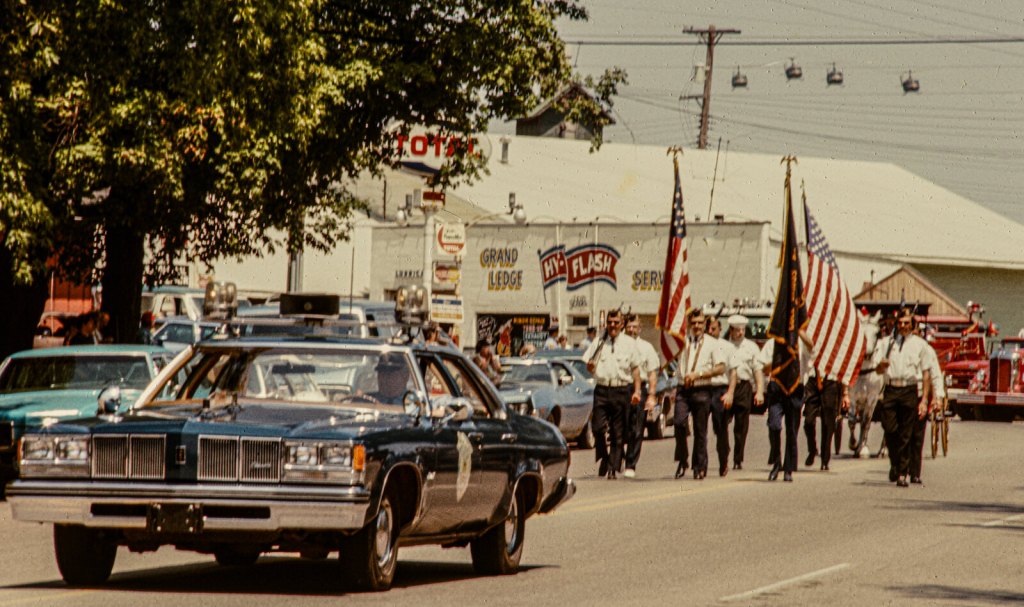
Robb shares “This was the 4th of July parade in my hometown of Grand Ledge, Michigan, commemorating the Bicentennial. I was standing at the north end ot the town’s main drag, Bridge Street, and I got lucky when I shot this photo, showing four Hueys about to do a flyover of the parade. The Air National Guard field was a few miles down the road, to the left of the photo.”
In July of 2023 the State of Michigan joined the wide majority of US states in declaring Juneteenth National Independence Day an official state holiday. The Michigan Advance writes:
Juneteenth recognizes the date, June 19, 1865, that Union Army Gen. Gordon Granger landed in Galveston, Texas, and read General Order No. 3, stating that all enslaved people were free, and that former masters and enslaved people were absolutely equal in personal and property rights.
Its importance has long been celebrated in the African-American community as the country’s second Independence Day, marking the last place in the former Confederacy that experienced emancipation. Although as the National Museum of African American History and Culture has noted, it was only through passage of the Thirteenth Amendment that slavery was truly abolished throughout the United States.
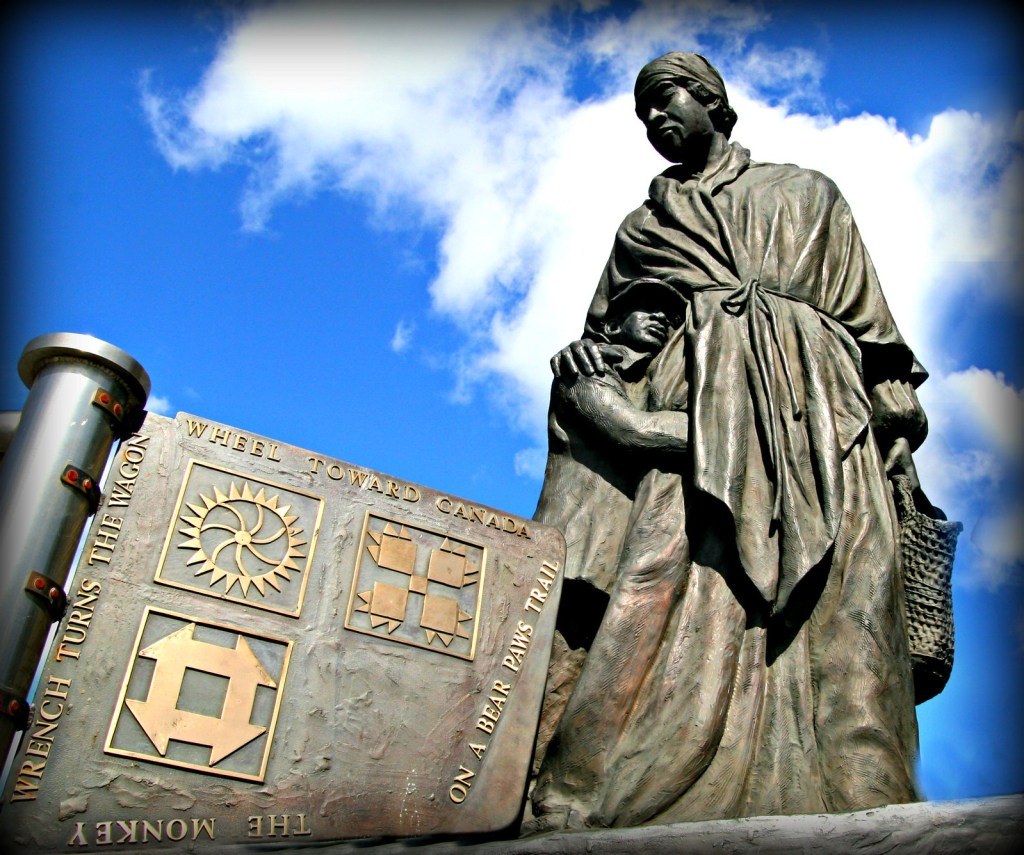
I selected this photo to share because for a long time, I believed as many others did that slavery ended at the end of the Underground Railroad or with the end of the Civil War. It certainly didn’t end there, and many of the structures remain firmly entrenched to this day. If you’re angry about this celebration, I encourage you to read this excellent piece in The Smithsonian’s National Museum of African American History and Culture on the historical legacy of Juneteenth.
About 20 years ago, Rose Petoskey shared this story about her name. As a lot of you head to the beaches seeking Michigan’s state stone, I thought it was an excellent time to re-share this essay from Rose about her name and the importance of names in Native culture:
My name is Noozeen (Rose) Nimkiins (Little Thunder) Petoskey (Rising Sun) and I am Anishinaabek.
Many people would associate the word Petoskey with the souvenir stone found on the northern Lake Michigan shorelines. However, to my family, the word Petoskey represents much more than a souvenir.
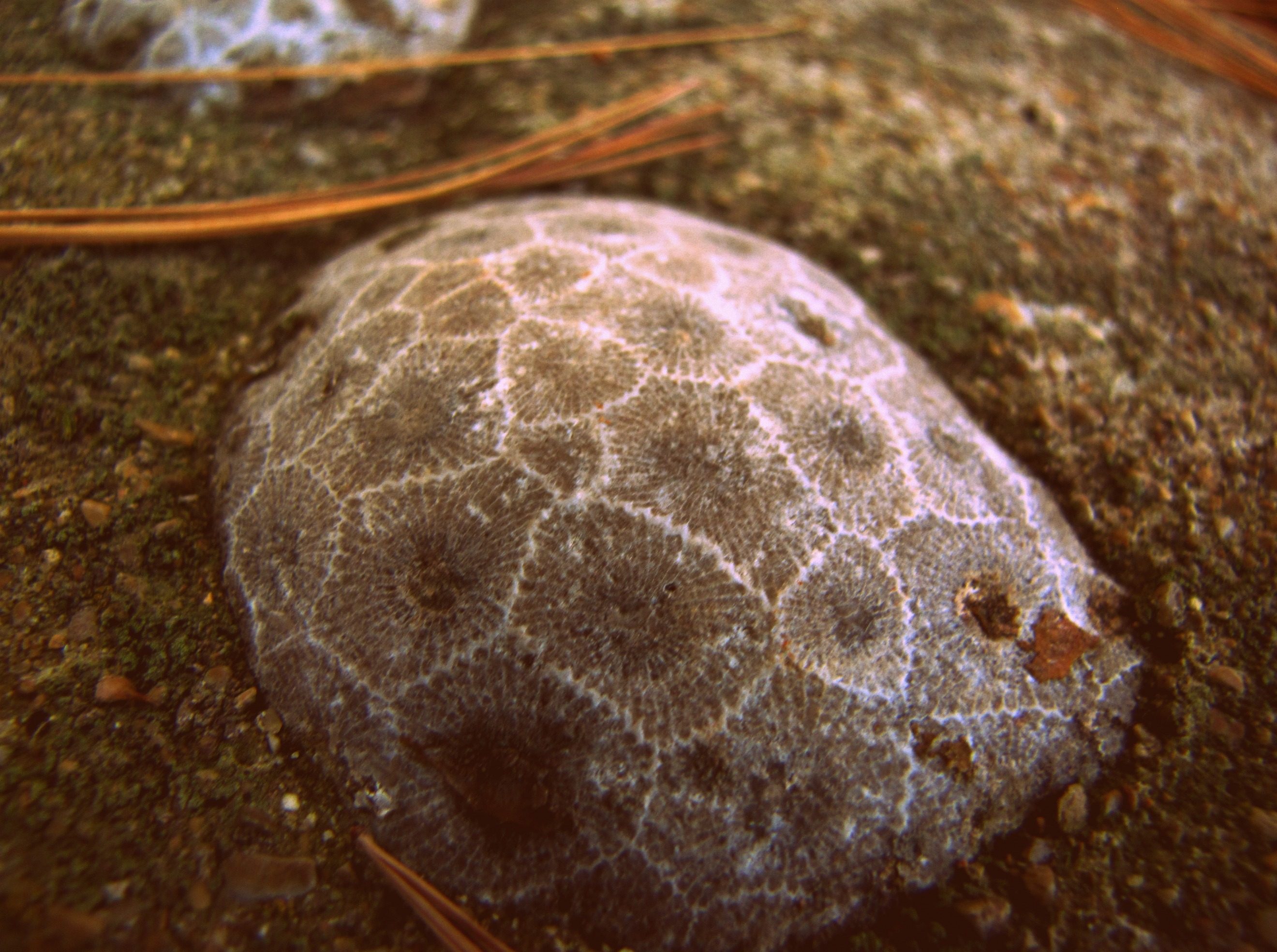
In the Odawa language, the word Petoskey (Bii-daa-si-ga) means the rising sun, the day’s first light, or the sun’s first rays moving across the water. The Petoskey stone is a fossilized coral created by impressions made in limestone during the last Michigan ice age. These stones were named “Petoskey” because the impressions resembled the rising sun coming up over the water. Just as the image of the rising sun is implanted within the Petoskey stone, the archaeology of a person’s names is implanted within. All names within our Anishinaabek culture reflect an individual’s personal history. Rocks go deep, but names go much deeper to reveal the stories of the past.
As an update, Rose Nimkiins Petoskey is now Senior Advisor to the White House Office of Intergovernmental Affairs and Director of Tribal Affairs for the Biden-Harris Administration which is pretty darned cool!!
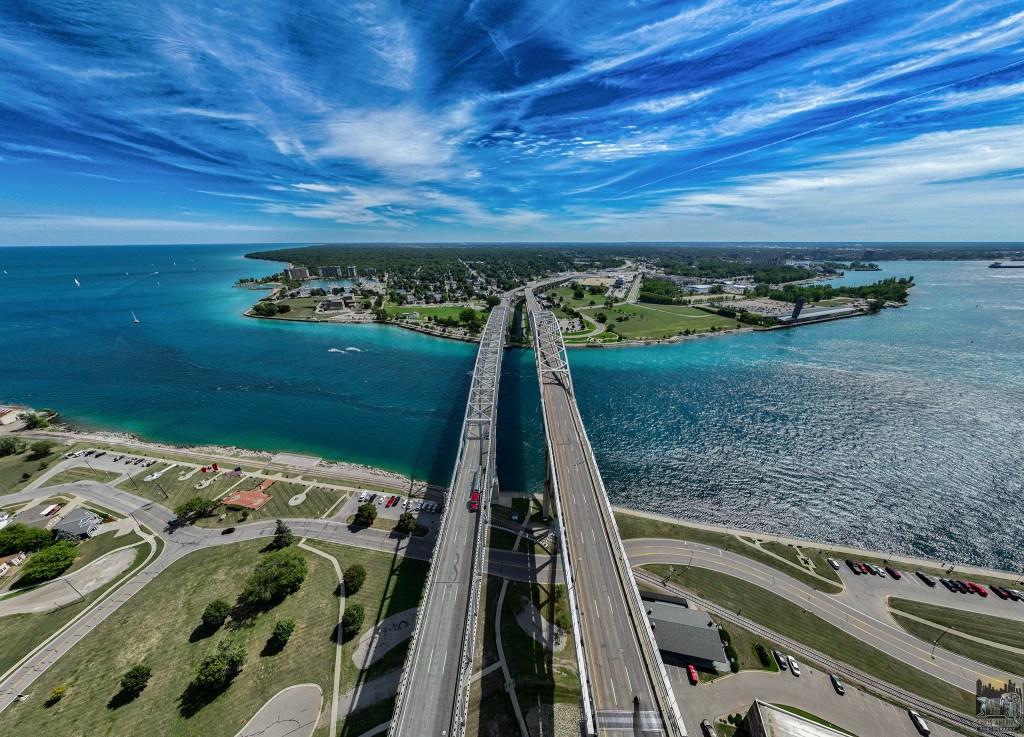
The Gordie Howe Bridge is (rightfully) getting a lot of attention these days, but another beautiful span connwcting Michigan with Canada is the Blue Water Bridge across the St. Clair River at the southern end of Lake Huron from Port Huron to Sarnia, Ontario. The Blue Water Bridge Authority shares:
The first bridge was opened to traffic on October 10, 1938. The lead engineer was Ralph Modjeski. This bridge originally had two lanes for vehicles as well as sidewalks; the latter were removed in the 1980s to make room for a third lane for automobiles. The third lane for each direction started from the apex of the bridge in order to accommodate long lineups entering each sides’ respective border crossings.
…In the early 1990s, bridge authorities decided to add a second arch in order to accommodate the high traffic. During the debate over the form of the second span, five possible designs were purposed from 1994-95. Over half of public opinion had mostly favored a duplicate of the first bridge, while the cable-stayed bridge came in second with around 21%. The Blue Water Bridge Authority had rejected both designs, due to the duplicate creating a false sense of history, while the cable-stayed option was feared to overshadow the existing bridge. Another cost-effective but unpopular design was the parallel truss. The continuous-tied arch design, which was a distant third place in polls, was chosen for two reasons. One was that it blends in with the original span yet stands out on its own, and the other is lower maintenance costs because fewer spans are involved.
Chris Ahern is a professional photographer & licensed commercial drone pilot who works in and around Detroit. Follow him on Facebook or Instagram & for sure check out his website.
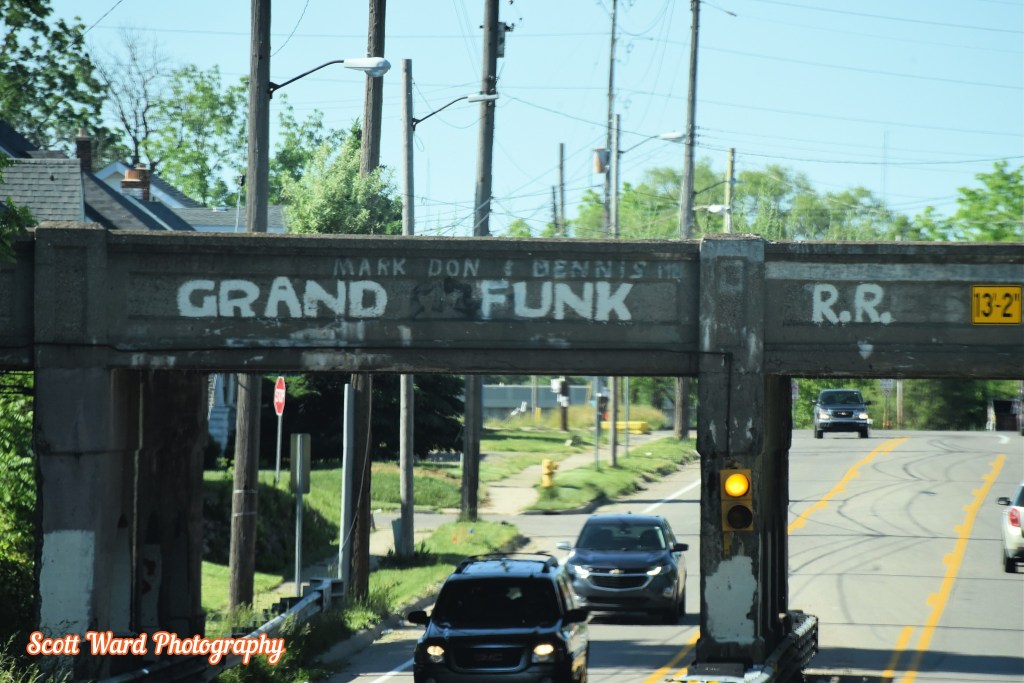
Scott shared this photo on Monday writing “Bet you can’t guess where we were visiting. At one point these guys were outselling The Beatles! One of the true Michigan iconic bands. Glad to see that this homage to them is still there.”
If you guessed “Flint” you are correct! The band Grand Funk Railroad was one of the biggest bands to come out of Michigan in the seventies, scoring Grand Funk six platinum and seven gold-certified albums between their 1969 debut and first breakup in 1976. The power trio of Mark Farner (vocals, guitar, keyboards, harmonica), Don Brewer (drums, vocals) & Mel Schacher (bass) originally came together in 1969 as “Grand Trunk Railroad”. The Grand Trunk Western Railroad objected, and the band (fortunately) had to change the name to Grand Funk Railroad.
Two of the three original members – Brewer & Schacher – are currently on tour as Grand Funk Railroad while lead singer & primary songwriter Farner tours as Mark Farner’s American Band.
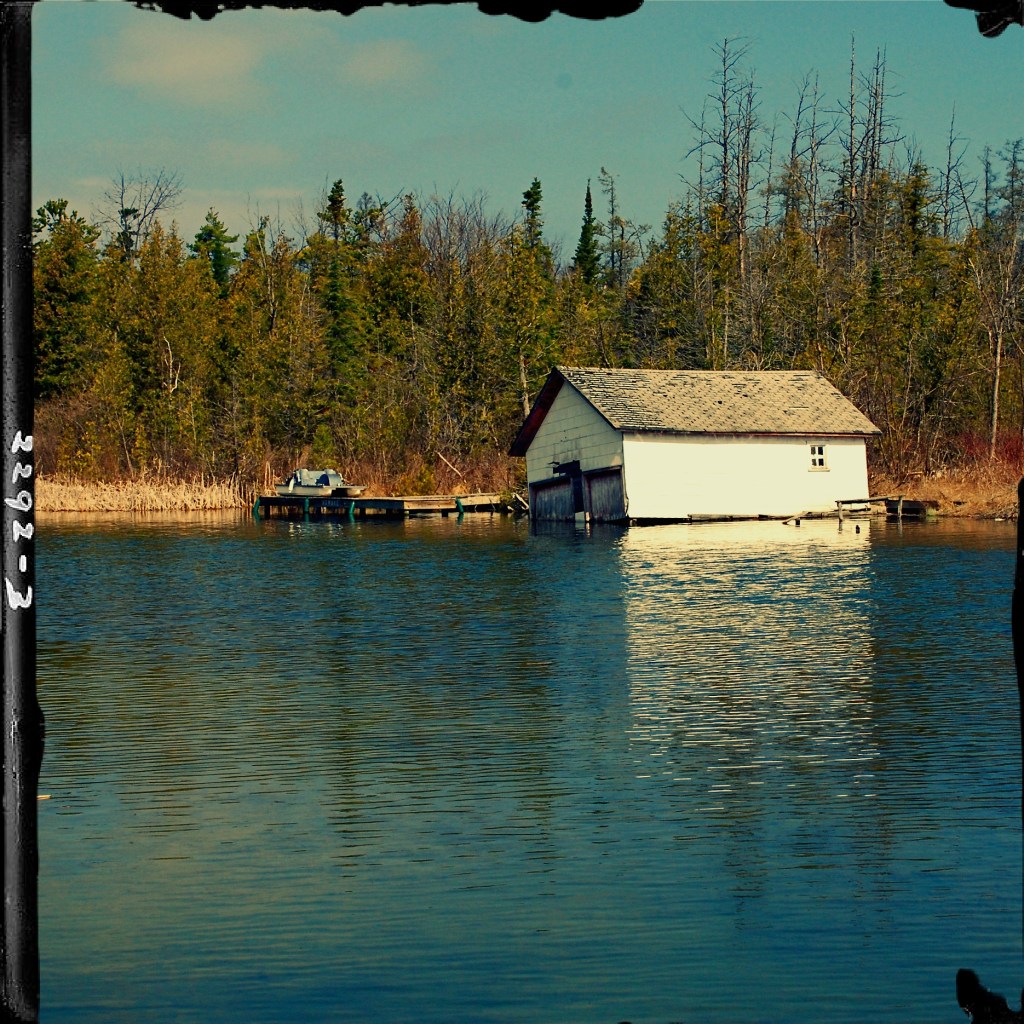
Back in the day, I used to feature excerpts by Linda S. Godfrey from the definitive book of Michigan mysteries: Weird Michigan. A good story to share when you’re floating around this weekend is the tale of the Lake Leelanau Monster.
The story of an early 20th Century sea monster sighting was sent to The Shadowlands Web site by a reader whose great-grandfather was the witness. The boy was fishing for perch one day in 1910 in the shallows of Lake Leelanau in Leelanau County. The lake had been dammed in the late 1800’s to provide water power for the local mill and to enable logging. The dam also flooded much surrounding area, turning it into swamps and bogs punctuated by dead, standing trees.
On that particular day, the young great-grandfather, William Gauthier, rowed out to a new fishing spot near the town of Lake Leelanau. Looking for good perch habitat, he paddled up close to a tree that he estimated to stand about five feet tall above the water, with a six-inch trunk. He was in about seven feet of water, and after deciding this would be a good place to stop and cast a line, began tying the boat to the tree.
That’s when young William discovered the tree had eyes. They were staring him dead in the face at about four feet above water level. The boy and serpent exchanged a long gaze, then the creature went, “Bloop” into the water. Gauthier said later that the creature’s head passed one end of the boat while the tail was still at the other end, though it was undulating very quickly through the water. The writer noted that Gauthier always admitted to having been thoroughly frightened by his encounter, and that the event caused him to stay off that lake for many years.
The writer added that his great-grandfather came from a prominent area family and was very well-educated, and that he knew others who would admit privately but not publicly that they, too, had seen the creature. No sightings have been reported in recent times, but who knows how many people have believed they were passing by a rotting old cedar when in fact they had just grazed the Leelanau lake monster?
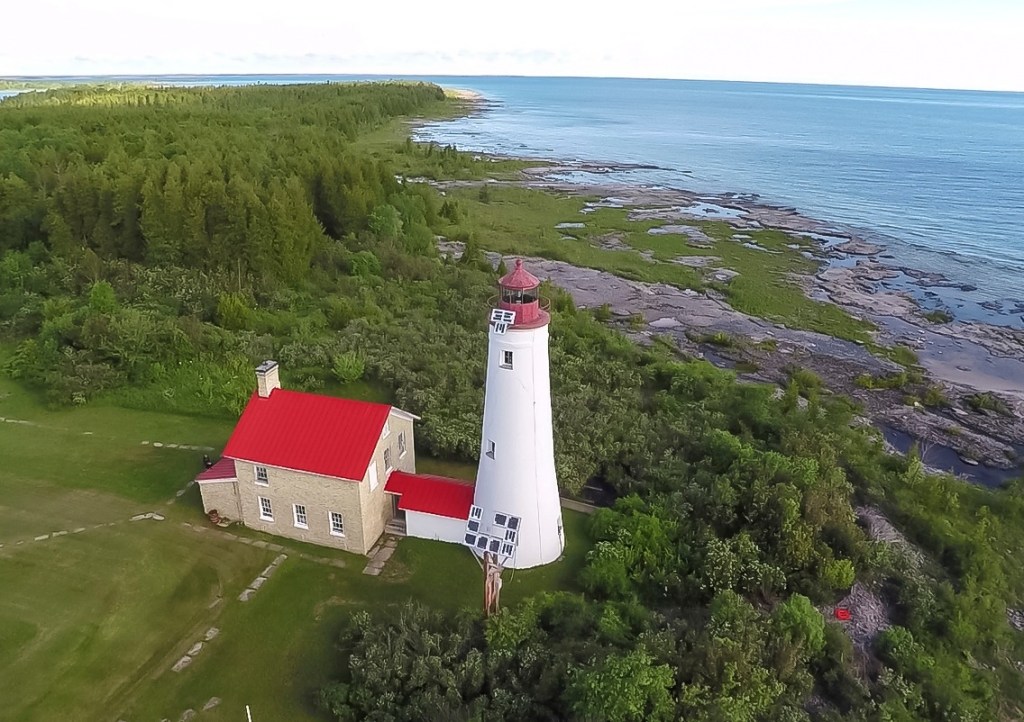
The Presque Isle Township Museum Society reminds you that it’s never too early to start planning your summer Michigan Lighthouse Tour! The drive from Tawas to Mackinaw City along Heritage Route 23 will let you explore the lighthouses of the Sunrise Side. Click that link for a map & much more!!
Lighthouse historian Terry Pepper is no longer with us, but his words still illuminate the rich history of Michigan lighthouses at Seeing the Light. His entry on the Thunder Bay Island Lighthouse says (in part):
Thunder Bay Island sits just three miles East-northeast of the north point of Thunder Bay, and thirteen miles from the harbor at Alpena. This 215-acre limestone island is the outermost of a group of islands connected to the shore by a shallow rocky shoal. As such, it represented both a significant marker for Northbound vessels making the turn toward the Straits, and stood ready to chew the wooden hulls of vessels unlucky enough to stray too close to its rocky shores.
…With rapidly increasing maritime traffic through the 1850’s, the Lighthouse Board determined that the combination of inefficient Lewis lamps and the diminutive 40-foot height of the tower provided a less than effective aid to mariners relying on this important station. To rectify the situation, plans were formulated to increase the height of the tower and to install an improved French Fresnel lenses of the type currently being installed throughout the system. Over 1857, the upper 14 feet of the tower was encased in brick and continued above the upper limits of the old structure to a height of 50 feet, effectively increasing the total height of the tower by 10 feet. The entire exterior of the tower was then given a veneer of Cream City brick to provide a smooth, weather-proof surface. At completion of the masonry work, the renewed walls at the base of the tower stood a massive 79 inches thick, and tapered to a thickness of 20 inches at their uppermost.
Atop this renovated tower, a new gallery with a cast iron hand railing was installed, and a ten-sided prefabricated cast iron lantern installed at its center. Within this new lantern, a Fourth Order Fresnel lens manufactured by Sautter of Paris equipped with six bulls-eye flash panels was installed on a cast iron pedestal and equipped with a clockwork rotating mechanism. This new improved illuminating apparatus provided a characteristic fixed white light varied by flashes, and its enhanced focal plane of 59 feet provided an increased range of visibility of 14 miles at sea.
Read on for much more! Also, a very big thank you to the Great Lakes Lighthouse Keepers Association who have been sharing some great pics in our Michigan in Pictures group on Facebook! They do so much to preserve Michigan’s lighthouse and maritime legacy!!
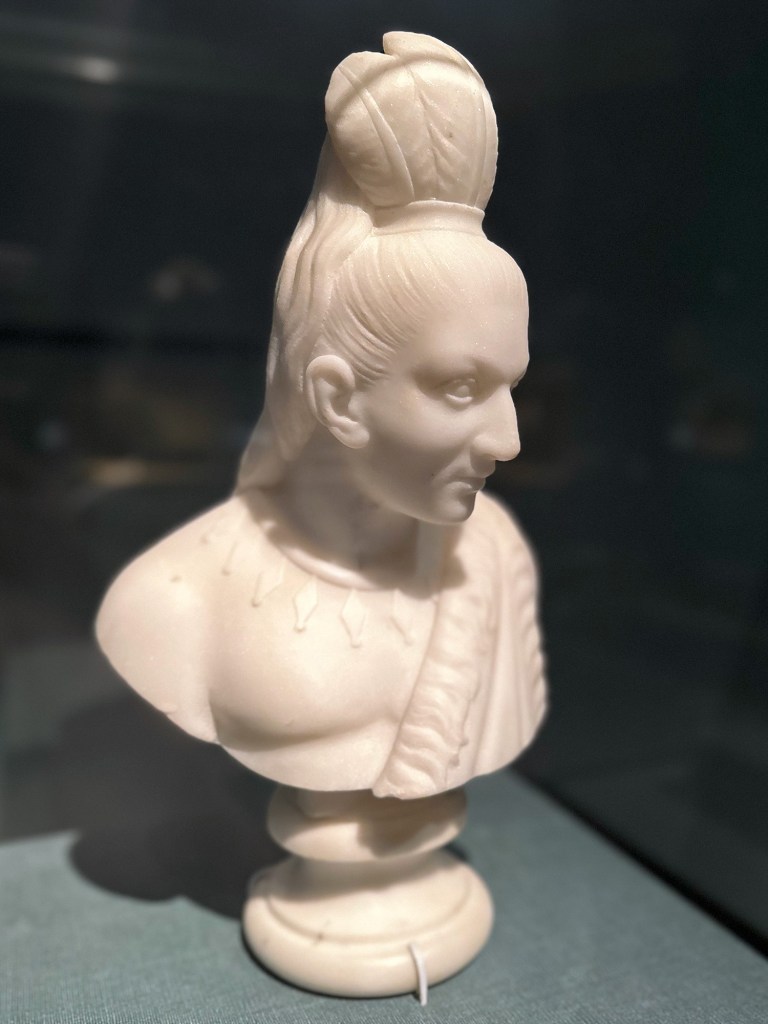
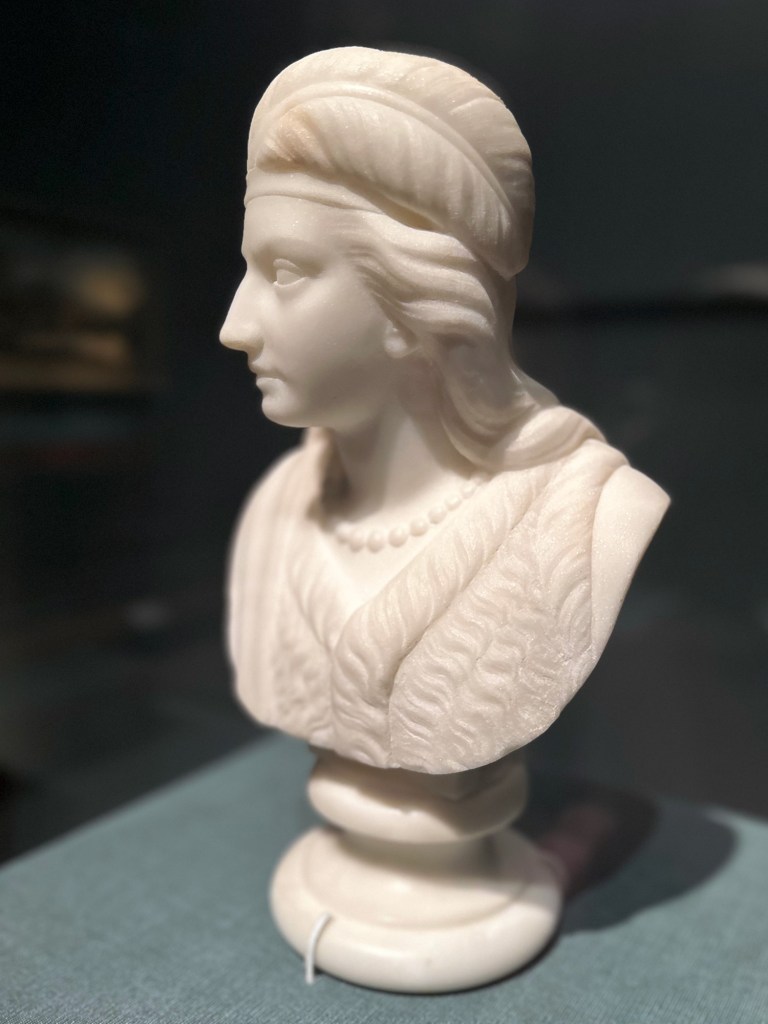
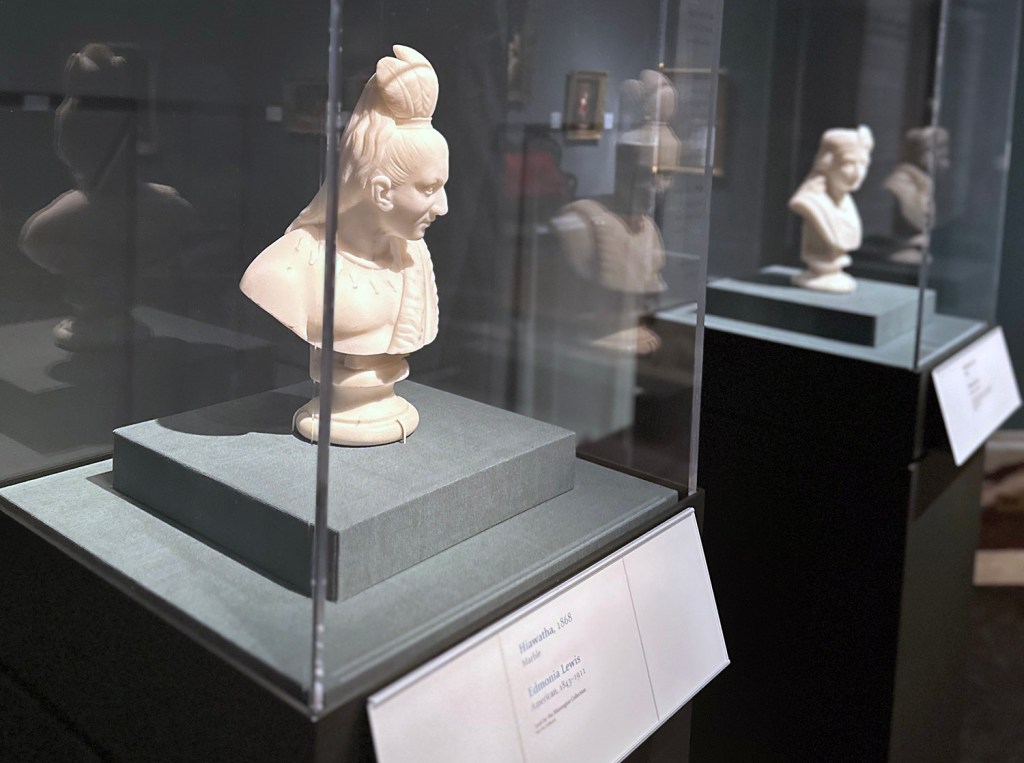
Hiawatha & Minnehaha Sculptures by Edmonia Lewis from the Detroit Institute of Arts
WARNING: Novella incoming ;)
The Northern Express shares that the Interlochen Center for the Arts is getting ready for the May 3-4 world premier of Edmonia, the story of 19th-century Black and Ojibwe sculptor Edmonia Lewis who carved out an artistic identity against all odds (click for tickets!). Here are a few highlights but read the whole because WOW this is a huge deal for Interlochen and the whole state of Michigan:
The two-act opera was originally commissioned in 2000 by prize-winning novelist Toni Morrison and composed by acclaimed musician and education Dr. Bill Banfield. The tale follows Lewis’ life, travel, and career at Oberlin College, Boston, Florence, Italy, Chicago, San Francisco, and Philadelphia at a time when travel, a career, and life itself was difficult for many women.
The driving force behind the Edmonia opera is Dr. Bill Banfield, a native Detroiter, whose wide-ranging resume includes musician, composer, guitarist, professor, educator, author, and record company owner.
…Banfield has twice served as a Pulitzer Prize judge in American Music (2010 and 2016). He’s an award-winning composer whose symphonies, operas, and chamber works have been performed and recorded by major symphonies across the nation. Dr. Cornel West has called him “one of the last grand Renaissance men in our time, a towering artist, exemplary educator, rigorous scholar, courageous freedom fighter.”
With all those impressive credentials, what was it like working with the young people at the academy? “Young people jump into the music and they make the music jump,” he says with a smile. “They bring the soul, the imagination, and energy.”
…Patrice Rushen, Broadway actor Sydney James Harcourt of Hamilton fame, and emerging opera performer Amber Merritt star alongside Arts Academy students in the production.
Auditions began in December under co-directors Laura Osgood Brown and Justin Lee Miller. In a nutshell, Brown deems the cast “an explosion of talent. There are 65 in the cast, the largest cast ever on campus,” says Brown. “The first few days were overwhelming. And we were practicing from 4:00 to 6:30 [pm], four or five days a week, in three different locations.”
…One of the highlights of Edmonia is a high-tech rotating stage that carries a $70,000 price tag.
“We received a generous donation which allowed us to purchase a motor-controlled scenery system,” explains Wrobel. “This system moves scenery ‘magically’ on the stage. For the production of Edmonia, we are using the system in two ways. We will have a 20-foot diameter turntable that is in the middle of the stage. This allows us to move other pieces of scenery or performers magically during the show.”
…So why should a northern Michigan audience come to see Edmonia? Wrobel is quick to offer three reasons.
“First, the story is important,” he says. “Edmonia Lewis was an African American and Native American marble sculptor in the late 1800s. The story spans Lewis’ courageous life from her birth in upstate New York through her turbulent days at Oberlin College and formative studio days in Boston, to her astonishing move to Rome, Italy. In 1876, at the age of 32, Lewis captivated the world with her larger-than-life marble statue The Death of Cleopatra that now stands in the Smithsonian.
The photographer of this pair of marble busts is me (Andy McFarlane). I went looking at the Detroit Institute of Arts that is an actual city block from my apartment & F-R-E-E for all Wayne, Oakland & Macomb county residents. It wasn’t in the African American section as it says on the DIA website, but in the much more appropriate American Art before 1950 section. There I found a bonus – Hiawatha! Both sculptures are about a foot tall and STUNNING.
The credit for Minnehaha is: Mary Edmonia Lewis, Minnehaha, 1868, marble. Detroit Institute of Arts, Gift of the Centennial Planning Committee for Sharing Traditions and Romare Bearden Exhibitions with a major contribution from Founders Junior Council, 1986.33.
I have emailed the DIA asking them for information about Hiawatha. They may think it’s still at the MET because the MET does!! And while the website is out of date, the card indicates Hiawatha is on loan from the Detroit-based Manoogian Collection which must have loaned it the the MET.
Here’s a bonus pic of Hiawatha & Minnehaha by Edmonia Lewis on display at the DIA by yours truly.
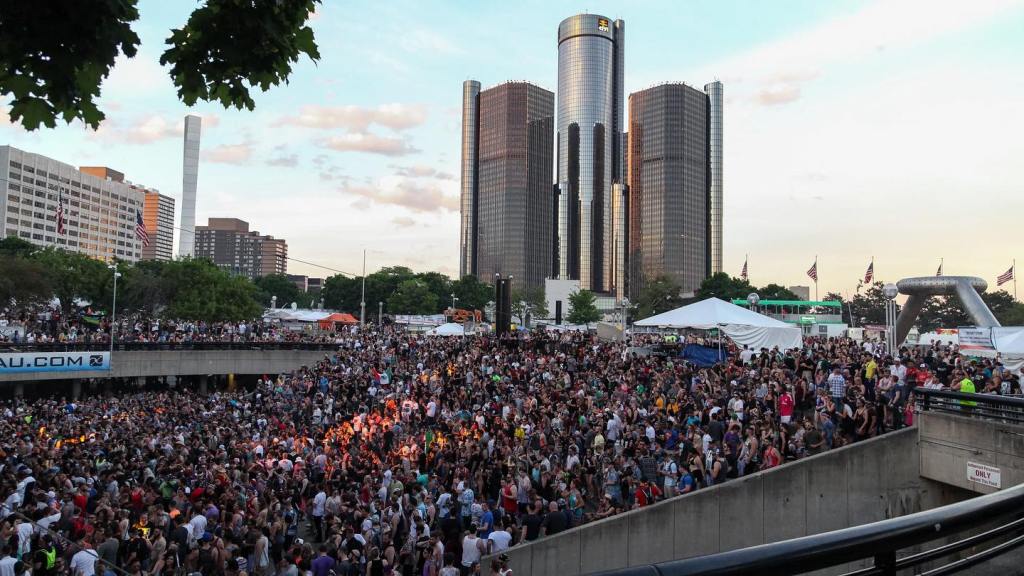
I’m still recovering from the MASSIVE event that was the 2024 NFL Draft in Detroit which hosted over 3/4 of a million people. There will be more posts, but I thought this post that Jamon Jordan of Black Scroll Network History & Tours shared on Facebook gives some great perspective on some of the massive events the Motor City has hosted over the years:
I’m sure everyone is aware that the crowds at the NFL Draft in Detroit are so large that no one else is being allowed into the 3 entry points. About 275,000 people are right here at, in or near Campus Martius, and Cadillac Square plus another 100,000 people in other venues downtown – Greektown, Hart Plaza, Grand Circus Park.
But Detroit has hosted large crowds before. Take a look at some of the large crowds – 100,000 or above – in Detroit’s history:
June 23, 1963 – Detroit Walk to Freedom – 125,000-250,000 people marched with Dr. Martin Luther King, Jr. & Rev. CL Franklin and heard Dr. King’s “Dream” 2 months before Washington DC.
August 19 – September 5, 1966 – Michigan State Fair – 1.2 Million people (our record attendance) The Temptations was one of the acts performing that year on Woodward between 7 & 8 Mile.
June 6, 1997 – Detroit Red Wings Stanley Cup Victory Parade – 1.4 Million people came down to celebrate with the Wings. And they threw an octopus on the streets too.
July 21, 2001 – 300th Birthday of Detroit/Free Stevie Wonder concert – 500,000-1 Million people listened to Stevie Wonder at Hart Plaza and watched the fireworks.
May 24-27, 2002 – Detroit Electronic Music Festival – 1.7 Million people. The Techno Festival surpassed a million people each of it’s 1st 3 years – 2000, 2001 & 2002 (2002 DEMF is pictured).
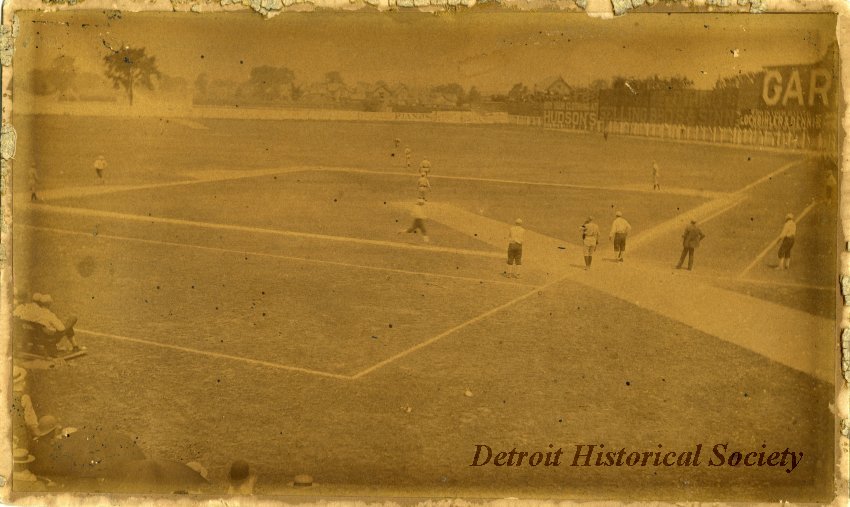
The Detroit Historical Society shared: The Detroit Tiger’s Opening Day has always been cause for celebration! While baseball’s return and renewed championship hopes are enough to excite sports fans, the promise of the long summer days baseball brings with it never fails to put the rest of the city in a celebratory mood.
The caption of the photo is: Photo: c. 1886, from the Detroit Historical Society collection. Black and white photographic print depicting the Detroit Wolverines playing at Recreation Park, as seen from behind home plate. Mounted on board.
Definitely our red hot Tigers being THE ONLY undefeated team in baseball & in first place in the AL Central has the city extra fired up for the home opener against the Gonna Be in Vegas Next Year A’s.


 Michigan in Pictures