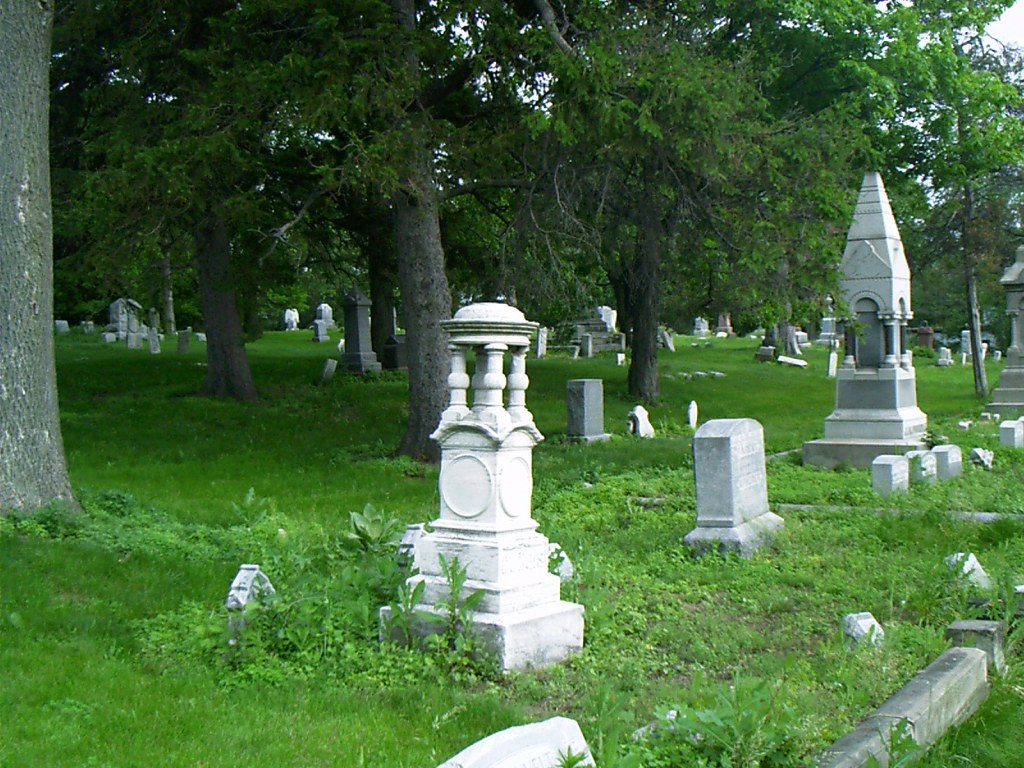
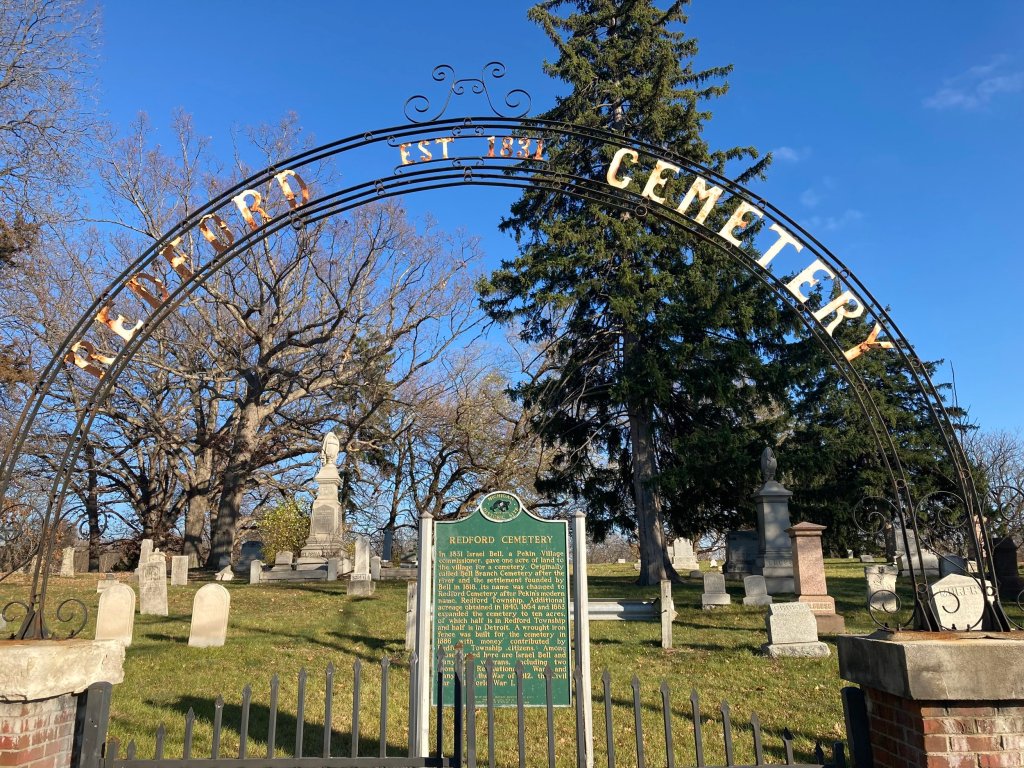
The grave is said to be immediately to the left of the entrance; if you stand in the vicinity long enough, the stench of death will reach you. This smell is followed by the appearance of the gardener, whose ghost will appear coming over the hill towards you. Be alert, because his apparition only lasts for a few seconds before he decides to disappear.
The Gardener is not the only ghost that makes its presence known here. The disembodied sobbing of a woman can be heard; but when trying to pinpoint the exact location, she can never be found…but the sound of the sobbing will continue.Apparitions, shadow people, and dark figures are seen in the surrounding forests, and the ground has been known to rumble and shake from time to time.
Back in the day there was a great site of spooky stories by someone who went by the name of “Amber Rose Bierce”. She doesn’t seem to be online anymore, but one of my favorite of the spooky stories she shared is that of the Lake Superior ghost ship Hudson:
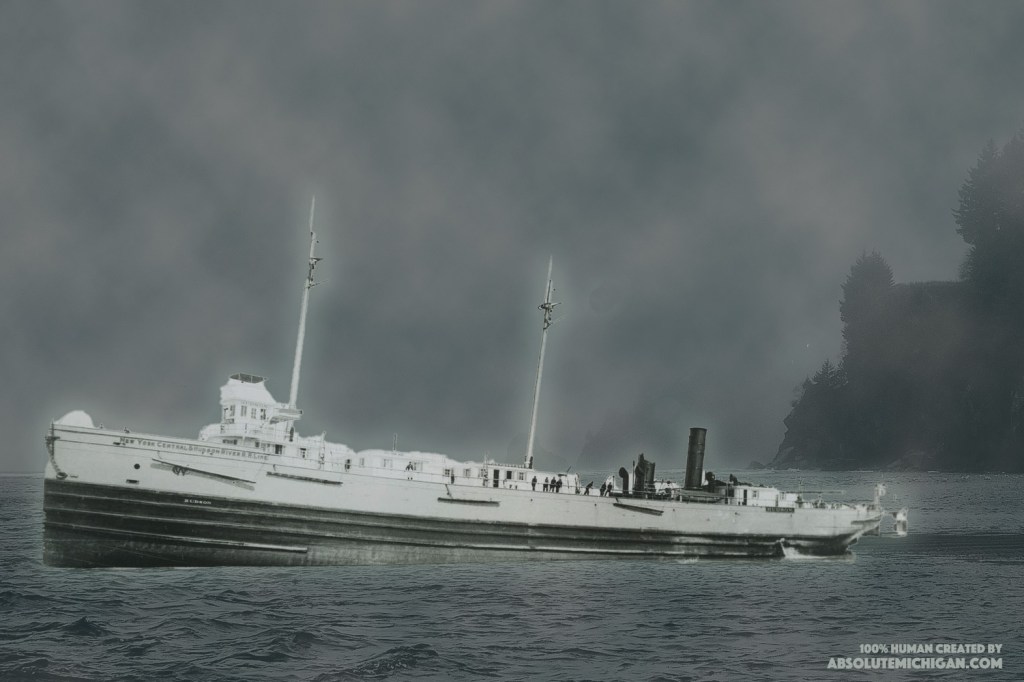
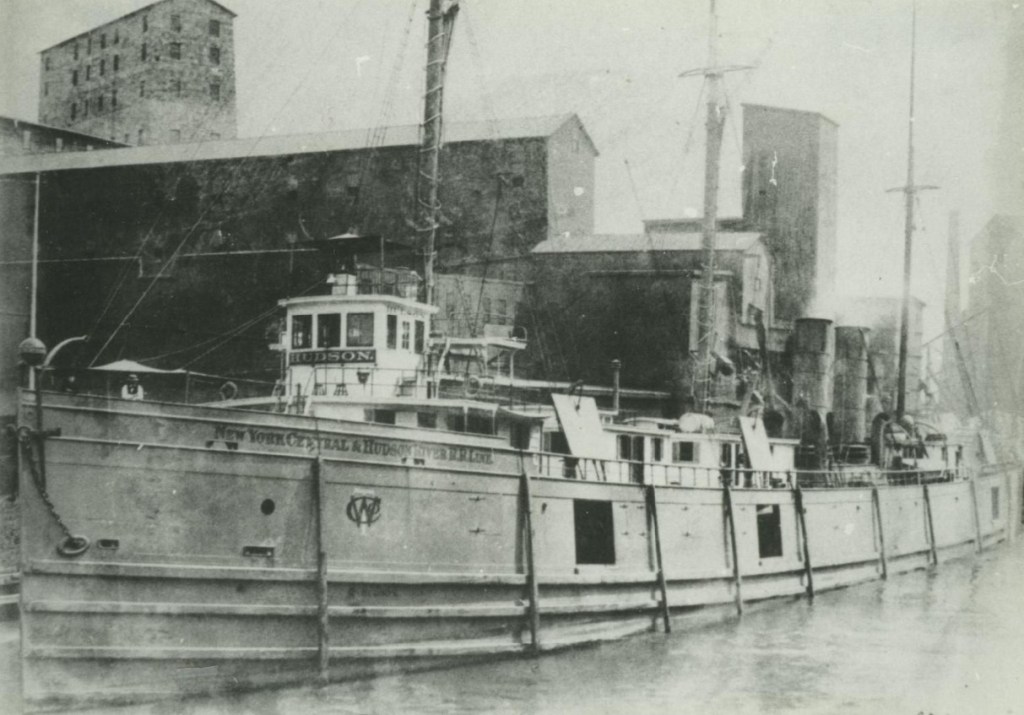
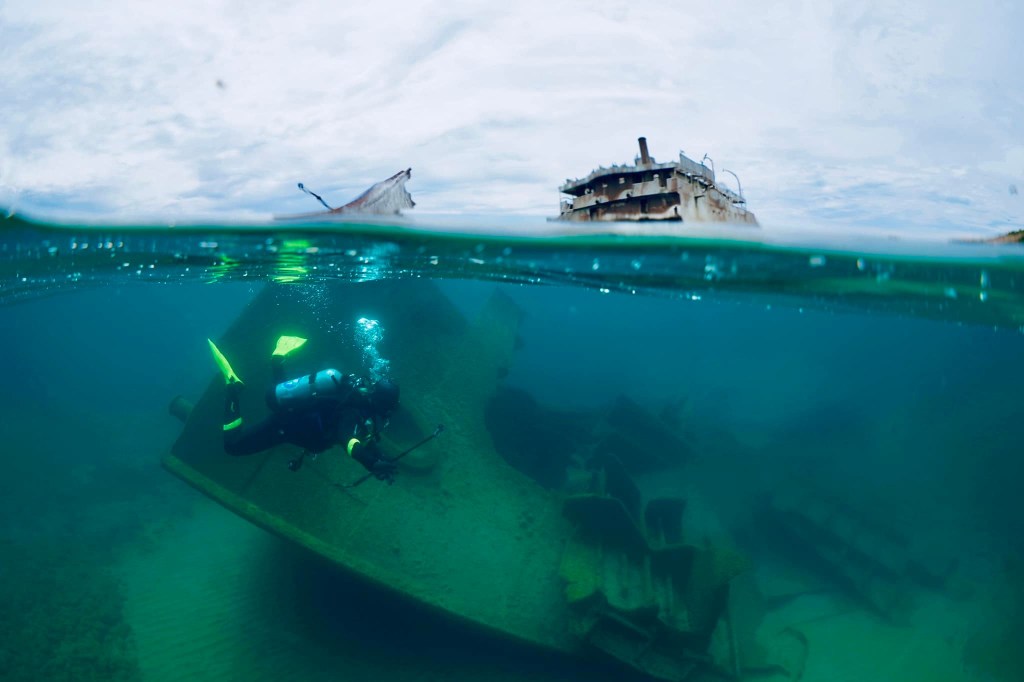
Perhaps the eeriest tale of a ghost ship is the story of the lost steamer Hudson. This took place right on the Keeweenaw Peninsula, which I have visited several times…the last and loneliest outpost of Upper Michigan before land gives way to the rolling waves of Lake Superior. I can picture this story unfolding in the area I have visited…it doesn’t take much imagination to envisage a ghost ship off Keeweenaw.
The tale was first told in the 1940’s and has all the elements of a bone-freezing beauty of a folk tale. But many sailors take it as the gospel truth.
A refitted tugboat now used for fishing was sailing past the tip of the Keeweenaw Peninsula. A thick, clinging fog was impeding visibility but the boat was making good time when the cloying mist became dangerously dense. There was barely five feet of visibility in front of the vessel when the captain saw in shock that his ship was closing in on a much larger vessel. In a panic, the tug just barely avoided hitting the ship.
The crusty old skipper of the tug was furious at the other boat for not signalling its position in some way. He pulled up alongside the vessel and noticed that it was very old and in poor condition. He could hear no motors…the vessel was floating dead in the water without engines. The skipper was determined to board the strange boat and confront its crew.
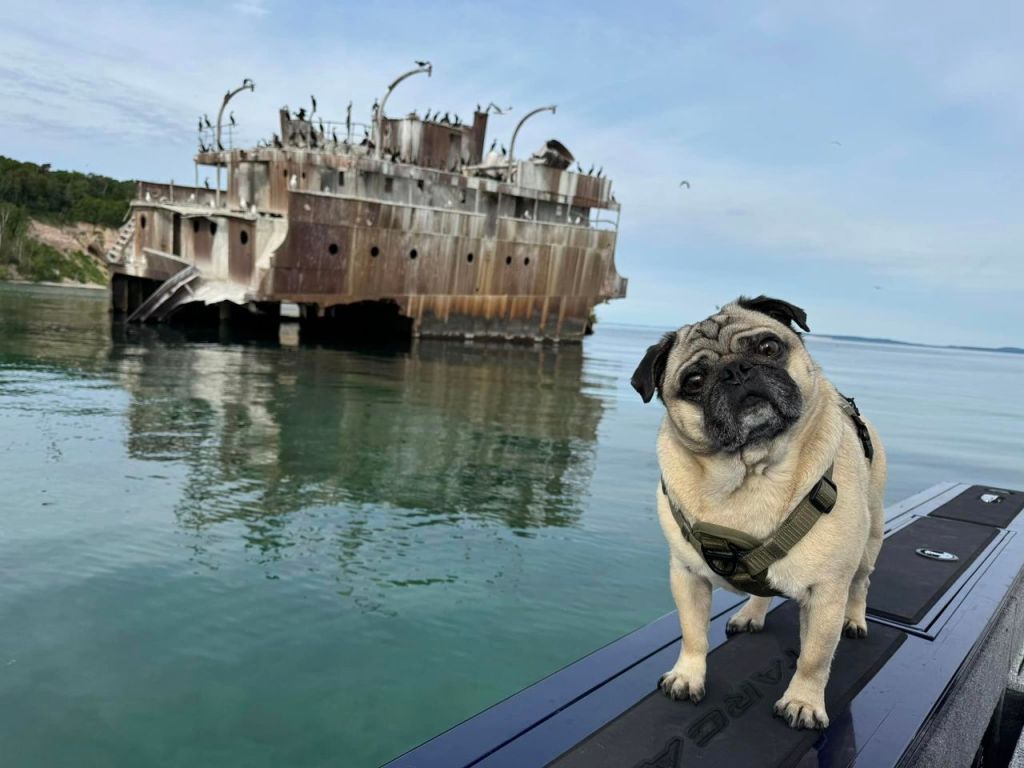
This ship was a wreck that barely looked like it should be on the water. A steamer, one of its twin smokestacks was broken in half. Boarding the ship, the captain saw most of the vessel was covered in either rust or what looked like slimy mud. An uneasy chill fell upon the skipper. The ship looked almost abandoned…but then he spied a silent figure wearing the long oilskin coat of a lake sailor standing a little ways up the deck.
“What’s the matter with you?” yelled the skipper. “You almost cut my ship in two!”
There was no spoken reply, but the silent figure pointed further up the deck, where the decrepit boathouse was located. The skipper stomped towards the boathouse, ready to curse out the big steamer’s captain. At this point, anger won out over fear, even though the skipper knew something was terribly wrong.
When he opened the door of the boathouse, he froze. Two emaciated figures manned the boathouse, staring straight ahead with dead black eyes, their skin the color of a fish’s belly. They seemed locked in position, with one manning the wheel as if he were the captain.
“Your ship is a wreck, I don’t know what’s keeping her afloat.” stammered the captain. “You almost slammed into my tug! What the hell’s the matter? What can I do?”
“Nothing,” came a cold, hollow voice from the man at the wheel. The tug’s skipper felt his guts go ice cold at that voice. “There is no help for us. We are the wreck of the Hudson and we’ve been at the bottom since the ship sank in 1901. 24 of us have stayed with the ship on bottom but for us, there is no rest. The devil has cursed us to rise each year on the anniversary of our sinking, until the end of time. Leave…leave quickly, we must soon return to the bottom and any who are with us must remain. Pray for us, shipmate! Pray for us!”
With a scream of terror, the skipper…a man who feared no earthly fate…ran from the boathouse and virtually threw himself back into his own ship. His crew saw immediately that he had suffered a horrible fright. Word was that he never again sailed on the Lakes…that he shuddered to even see the vast watery expanse he once spent all his waking hours on.
A good ghost story for a chilly night? Almost certainly. But the Hudson was indeed a real ship, which sank with all hands on September 16, 1901!
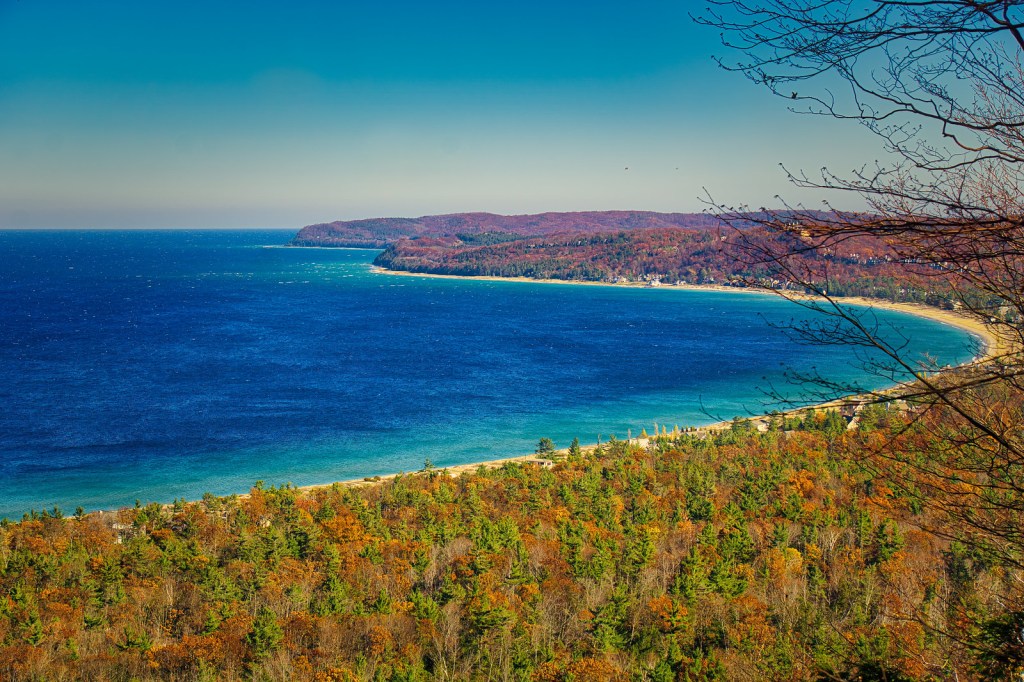
Every time I see this view of the Sleeping Bear shoreline, I think about what might have happened if Senator Phillip Hart & countless others hadn’t fought as hard and as long to protect this globally unique treasure. Almost anywhere else in Michigan or America with this mix of clear water & sandy shoreline is lined with the homes of the wealthy. Although the same trend was overtaking Sleeping Bear’s Lake Michigan shoreline, 54 years ago today preservation was victorious and the Sleeping Bear Dunes National Lakeshore became the third US National Lakeshore:
Beginning in 1919 a small portion of what is now the national lakeshore was set aside as a state park. The idea of a national park in northwestern Michigan did not surface until the National Park Service’s Great Lakes Shoreline Survey visited the area in 1958. Between 1959 and 1970 there was a continuous and controversial effort in Congress to create a park unit around the Sleeping Bear Dune. The legislative leader of the Sleeping Bear park proposal was United States. The senator’s persistence and patience in the end led to the creation of Sleeping Bear Dunes National Lakeshore on October 21, 1970.
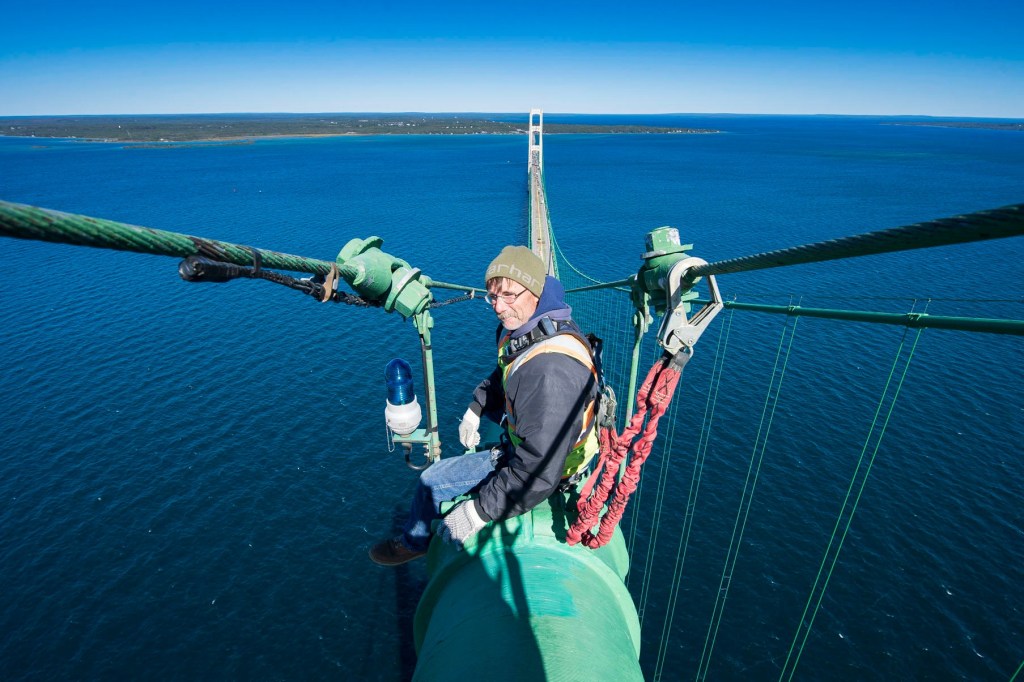
During the 20th century, expanding cities, new technologies, and changing lifestyles generated demand for new housing, offices and infrastructure—increasingly built to towering proportions. The booming construction industry depended on skilled workers capable of navigating great heights … Named for their historical role maintaining ecclesiastical buildings, ‘steeplejacks’ are the skilled tradespeople who assess, maintain and construct tall buildings, structures and towers.
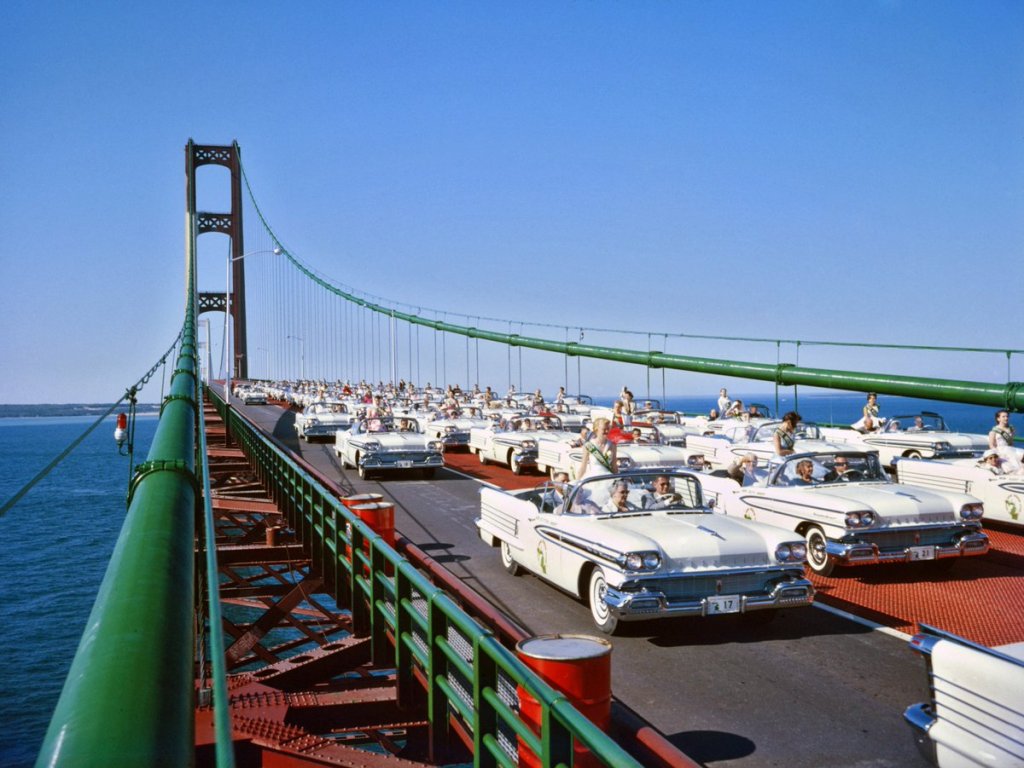
“Michigan at last is to be one state geographically, economically and culturally, as well as politically. Where nature divided us, we have bound ourselves together with this web of steel. This mighty bridge, the world’s greatest, is a symbol of our strength.” Michigan Governor G. Mennen Williams, June 1958
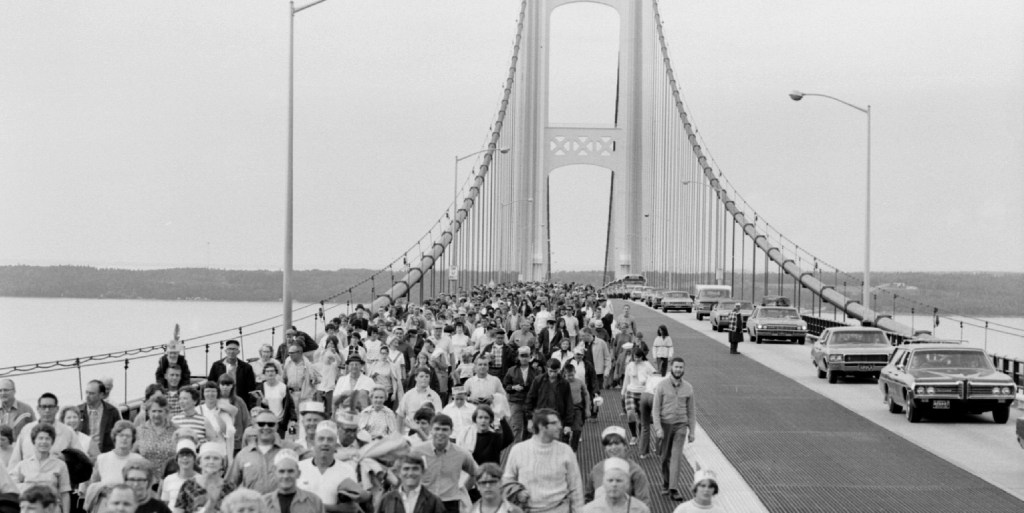
Yesterday’s Mackinac Bridge walk post was so popular I had to bring you a little more! Mighty Mac shares that although the Mackinac Bridge opened to vehicle traffic on November 1, 1957, the official Mackinac Bridge dedication didn’t take place until June of 1958 when only 68 people walked the Bridge. The walk was moved to Labor Day in 1959, and it has been held every Labor Day since then! Much more at Mighty Mac’s Mackinac Bridge Walk page.
Also if you can’t make it, you can check out the Bridge Walk live through the Mackinac Bridge Web Cams!
If you love the Great Lakes and aren’t yet following the exploits of Milo’s owner, Great Lakes shipwreck explorer Chris Roxburgh, then today is your lucky day!! Follow Chris on Facebook and view & purchase his work including some awesome coffee table books on his website!
On the night of November 28, 1960, Lake Michigan would claim one of her most recent victims. The steamship Francisco Morazan ended a 38-year career when she ran aground on South Manitou Island. She had sailed for eleven owners, under six flags, with eight names.
…The Morazan was Captain Eduardo Trivizas’ first command. Onboard were 12 crew, and the captain’s pregnant wife, Anastasia. Fog slowed the ship and a bad feeder pump for the boiler forced the crew to stop and drift in Lake Michigan for eight hours to replace it. The Morazan passed Point Betsie in a blinding snowstorm at about 7:15 pm on the 28th. She was pushed off course and ran aground just 300 yards from the beach on South Manitou Island.
Three Coast Guard vessels and a civilian tug responded to the Morazan’s mayday. On December 4, the crew was removed from the ship after it was determined that she couldn’t be salvaged. Attempts were made to salvage the cargo but were ultimately abandoned. In the years afterward, the wreck became a popular hangout for island residents. They helped themselves to the cargo of canned chicken and toys. The wreck is now protected as a part of the Manitou Passage State Underwater Preserve.
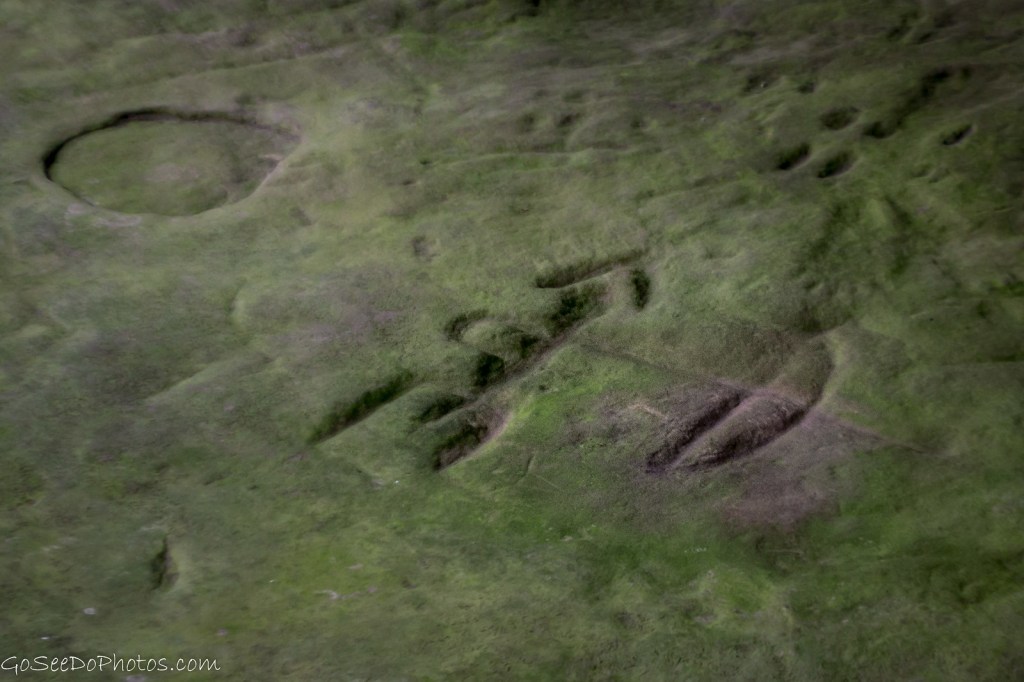
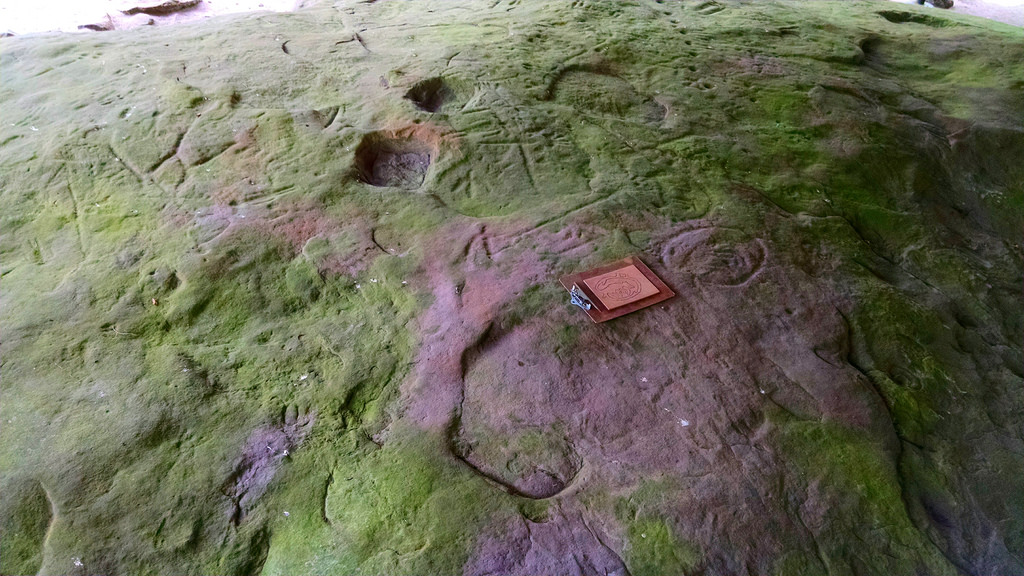
One of the most popular petroglyphs in the park is a figure of an archer, known in Anishinaabemowin as ebmodaakowet. The figure’s body is an arrow, as is his hat, and he holds a bow and arrow in his hands.
“Early on, when archeologists who were not consulting with tribes, you know, saw that, they thought, oh, surely this must be a hunting magic. They took it very literally. ” explained Tchorzynski. “But actually, this ebmodaakowet is actually shooting the arrow of knowledge seven generations into the future. And this was a carving that was left with great love and great affection for descendants in the future, to remind people of our responsibilities to be good ancestors, to preserve and remember, and our obligation to shoot the arrow of knowledge into the future as well. We all must be good ancestors.”
The fragile carvings are easily affected by natural forces. The Marshall sandstone is a very soft rock, and so many of the petroglyphs have faded naturally throughout the centuries. Over the years, the petroglyphs have also been damaged by human hands. Parts of them have been vandalized, and pieces of the stone have been chipped away and taken. In order to protect the carvings from degrading over time, a wooden pavilion was erected over the site. A rope now separates visitors from the rock.
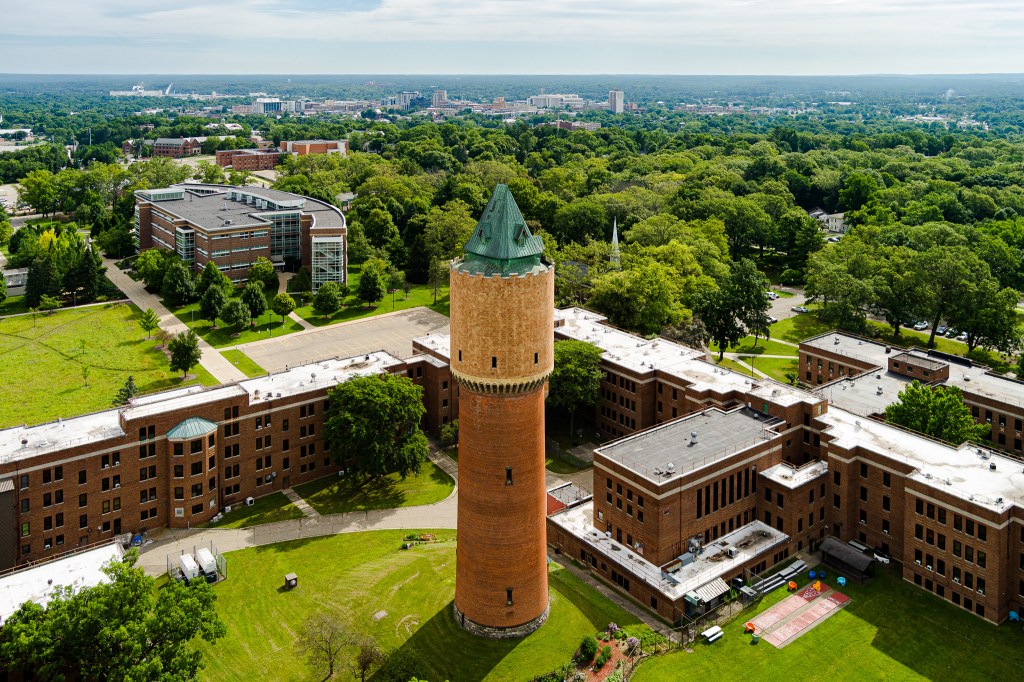
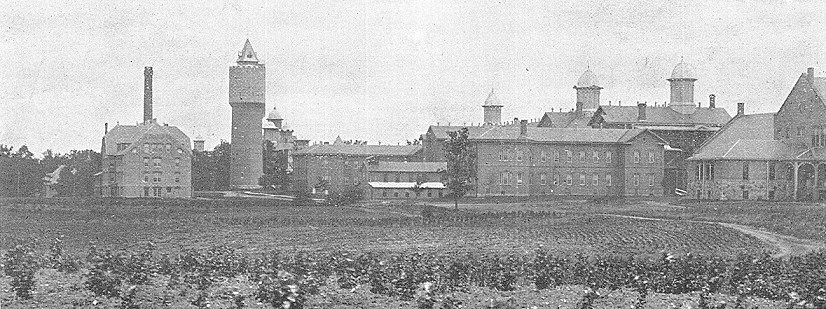
They built the “Kalamazoo State Hospital Water Tower” for the Michigan Asylum for the Insane in 1895. They instructed the architect to design something with a medieval feeling to complement the existing buildings – it looks creepy because it was meant to look creepy. It is no longer used as a water tower; its only function now is a landmark. They planned to demolish it in 1974 (almost none of the original asylum buildings remain), but “The Committee to Save the Tower” raised funds to save it. The National Register of Historic Places added the tower to its list in 1972.
The tower soars 175 feet into the air, rising from a base of cut stone blocks five feet high. The brick begins above this base. Approximately 50 feet wide at its widest point, it contains three water storage tanks inside. The main tank is 40 feet high and 40 feet in diameter and has a capacity to hold more than 200,000 gallons of hard water … The structure is really a tower within a tower. The outer shell tapers from six feet thick at the base to four feet at the top. Enclosed is an inner shell, which is also about six feet thick. Between the inner and outer shells is a wooden circular stairway, which winds upwards until it reaches 100 feet. Then a series of ladders leads to the top of the tower. At the top is a little room, gothic in appearance, that has a window facing in each direction. Four enormous wooden beams meet in the center of the room. They are etched with dozens of sets of initials carved by visitors, the oldest by one W. E. DeLong dated 1898.
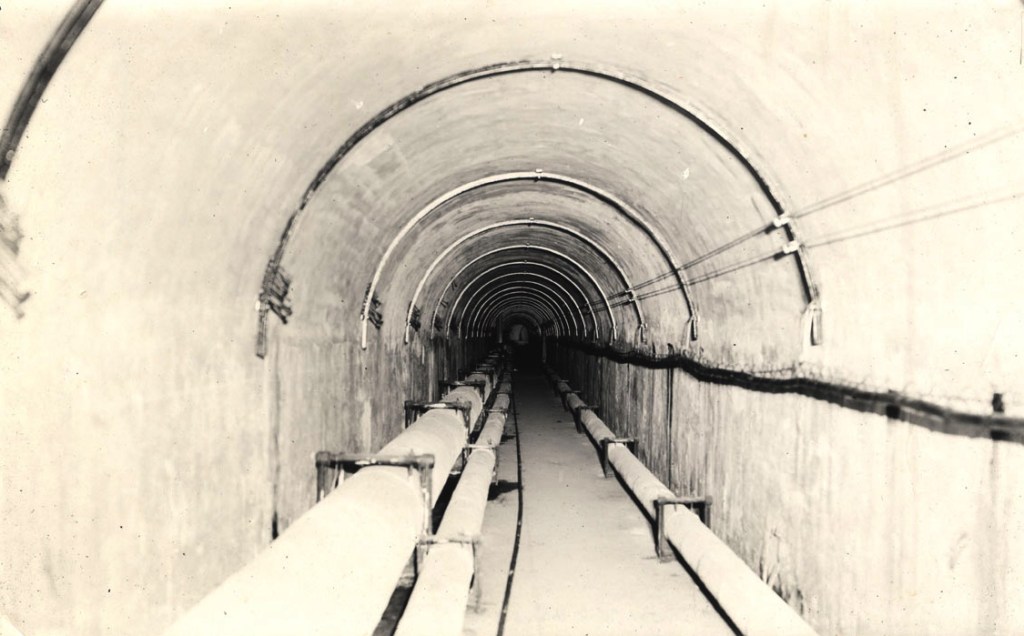
Set in 1979, the series gives listeners a behind-the-curtain look into the world of Dungeons & Dragons, told through the lenses of private investigator William Dear (Hamm), a swashbuckling style tough guy and creator of the game Gary Gygax (Wil Wheaton). The series follows Dear on his quest to find Dallas Egbert, a Michigan State student, who supposedly disappeared in the steam tunnels under his University while enacting a real-life version of D&D.
…Kushner said: “I’ve been obsessed with the disappearance of Dallas Egbert since I was a kid playing D&D. When I was interviewing the game’s co-creator Gary Gygax for Wired, he told me how influential Dallas’s disappearance was on the game. I always thought the real story of William Dear’s search for Dallas would be an amazing way to immerse people into the world of the game and the gamers who play it. And since the game is built on storytelling, it felt perfect for a podcast.”
I have no idea what this will be like, but as a person who played D&D at Michigan State University, you know I’ll be tuning in!
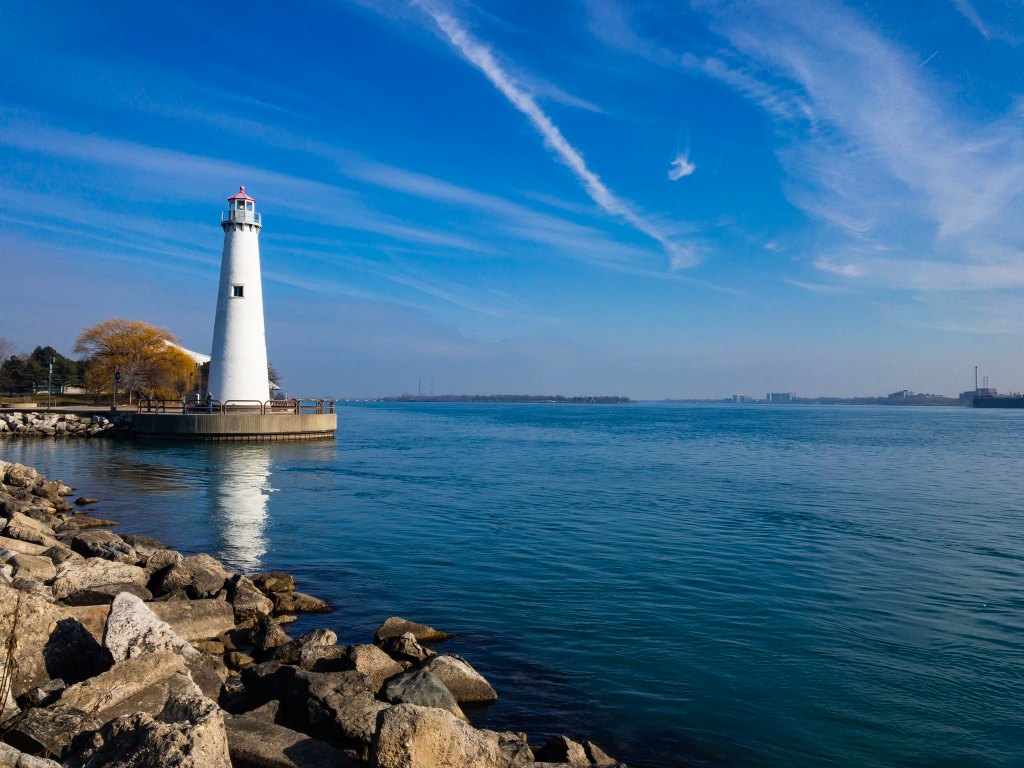
Antoine de la Mothe, Sieur de Cadillac petitioned King Louis of France to found a settlement at the south of Lake Huron in the fertile region known as le détroit to provide a secure foothold on the Great Lakes. Three hundred and twenty-three years ago, Cadillac, his men, and their Native guides traveled from Montreal and on July 24, 1701, Cadillac founded the settlement Fort Ponchartrain du Detroit in honor of King Louis’s Minister of Marine. Read more about the founding of Detroit by Antoine de la Mothe Cadillac on Michigan in Pictures.
While the buildings, sports & of course the people of Detroit are all vital components, I think nothing speaks more to the three plus centuries of the City on the Strait than the river. It brought the rich soil & trade that enabled early growth, brought raw materials & carried away finished goods in later years, and it remains central to the city’s life through a gorgeous riverfront park system that hosts incredible musical & cultural events.


 Michigan in Pictures