Mendota Channel Light aka Bete Grise Lighthouse

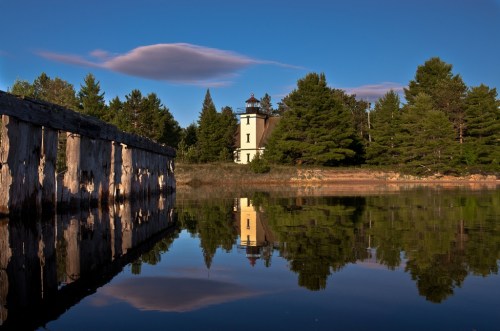
Bete Grise Lighthouse by Steve Nowakowski

Bete Grise Lighthouse, photo by Steve Nowakowski

Terry Pepper’s Seeing the Light page for the Medota Channel Light says that in response to increasing industrialization around Lac LaBelle, a cut was created from the Lake Superior into Lac LaBelle to allow access to the big ships that plied the Great Lakes.

As a result, the construction of the Mendota Light was first considered by the US Congress in 1867, when an appropriation of $14,000 for the construction of a light station was approved on March 2, with the terms of the contract called for construction of the structure to begin in 1869, with final completion no later than November 1870.

Later that year, it was realized that declining industrial development in the area would no longer support the planned deepening of the cut into Lac Labelle, and it was deemed that the light would serve no purpose. Decommission was ordered, and instructions to dismantle the structure were issued to the crew of the steamer “Haze,” with all equipment to be returned to USLHS headquarters in St. Joseph for eventual reuse. (The lens and mechanics were later reused in the Marquette Breakwater light.)

Thus, the Mendota light station was decommissioned before it saw real service, and the structure sat idle and blinded for the following twenty two years.

In the following years, Great Lakes shipping increased dramatically, and many ships rounding the Keweenaw began using Bete Grise Bay as a shelter during rough seas. In 1892 it was determined that a reactivation of the Mendota light, along with relocation closer to the bay would make bay entry a far safer proposition for such ships seeking shelter. Authorization for reactivation was issued on February 15, 1893, and $7,500 was appropriated to cover the expenses.

Read on for more about this light.

Check Steve’s photo out background bigtacular and see more in his Bete Grise Lighthouse slideshow.

There’s lots more lighthouses on Michigan in Pictures and you might also want to check out the vantage from Bare Bluff on Bete Gris Bay!
Sunshine on the Stott: Detroit’s David Stott Building Purchased

Untitled
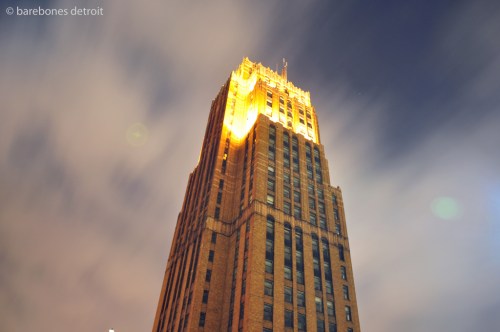
Untitled, photo by BareBonesDetroit

Last week the David Stott Building, Detroit’s 13th tallest skyscraper, sold at auction for just under $9 million. Historic Detroit’s page on the David Stott Building begins:

A towering Art Deco structure honoring Detroit’s flour king, the David Stott Building stretches 38 stories above Capitol Park at the corner of State and Griswold streets.

Construction began on June 1, 1928. The tower cost $3.5 million to build – the equivalent of $46.3 million today, when adjusted for inflation, according to the Bureau of Labor Statistics.

The Stott opened on June 17, 1929, on what had been the sites of the Garrick Theatre, Hodges Building and the Whitney Office Building. It was designed by the architectural firm of Donaldson & Meier, though Henry Meier had died more than a decade earlier. The general contractor was the Martin & Krausmann Co.

The 436-foot tower was first conceived in 1921, and 22 sets of plans were drawn up before a winner was picked. The property was not particularly wide considering the building’s height, which created headaches for Donaldson and led him to go with a tall, slender design.

The tower is made of reddish-orange brick – faced on the first three floors with marble — and limestone, and has several setbacks that taper as the building climbs. “As the new David Stott Building rises a tall, slender but substantial mass of old rose colored brick, it makes a spectacle that arrests the attention and causes the spectator to view it in detail from the sidewalk to the uppermost of its 38 stories,” the Detroit News wrote in June 1929. “The tendency of architectural style in office buildings the country over is toward more lively colors — more lively, but still dignified, warm, pleasing to the eye.”

Read on for more of the history of this hard-luck structure and DEFINITELY click through to view their gallery of historic photos of the David Stott Building – it’s great! You can also follow the listing and sale of the Stott Building at Curbed Detroit.

Check it out bigger and see more in BareBones Detroit’s Rooftops slideshow.

More architecture on Michigan in Pictures.

Charlevoix, the Beautiful

Charlevoix the Beautiful

Charlevoix the Beautiful, photo by GLASman1

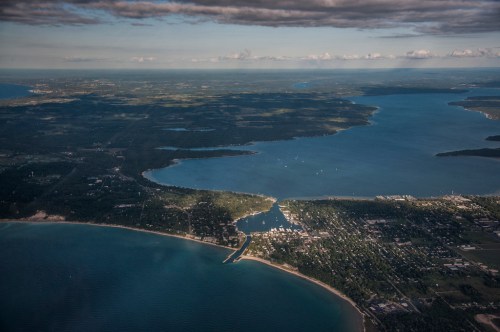
Wikipedia entry for Charlevoix (pronounced shar-le-voy) says:

The city is situated between Lake Michigan and the western end of Lake Charlevoix, which drains into Lake Michigan through the short Round Lake/Pine River complex in the heart of downtown Charlevoix. Charlevoix’s Round Lake has been called the best natural harbor on Lake Michigan.

Charlevoix is named after Pierre François Xavier de Charlevoix, a French explorer who travelled the Great Lakes and was said to have stayed the night on Fisherman’s Island one night during a harsh storm. It was during this time that Native Americans were thought to have lived in the Pine River valley.

The City of Charlevoix website adds that Charlevoix first became a village in 1871 and was later established as a city in 1905. The city has a year round population of roughly 3,000 people. FYI, Round Lake is the little lake right off Lake Michigan whick opens into the much larger Lake Charlevoix – here’s a map of Charlevoix!

View Mark’s gorgeous aerial photo bigger and see more in his Aerials slideshow.

There’s more aerial photography and more about Charlevoix on Michigan in Pictures!

We have met the enemy and they are ours: The Battle of Lake Erie

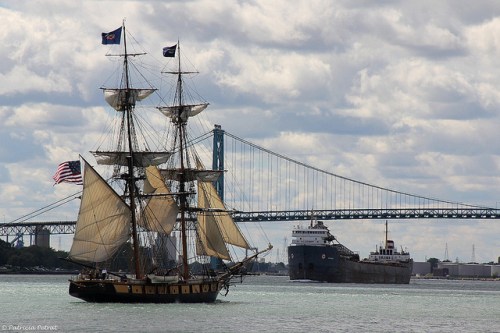
Flagship Niagara

Flagship Niagara, photo by Trish P. – K1000 Gal

“We have met the enemy and they are ours; two ships, two brigs, one schooner, and one sloop.”
~Commodore Oliver Hazard Perry

September 10, 2013 is the Bicentennial of the Battle of Lake Erie, a critical battle that helped turn the tide of the War of 1812. The Flagship Niagara page on the Battle of Lake Erie relates:

On September 10, 1813, nine small ships – six of them, including Niagara, constructed at Erie – defeated a British squadron of six vessels in the Battle of Lake Erie. A pivotal event in the War of 1812, it led to regaining Detroit, lost at the war’s outset, and lifted the nation’s morale.

The U.S. Brig Niagara is a two-masted, square-rigged sailing vessel. In 1813, she had a crew of 155 men and boys who manned her sails, 18 carronades and two long guns. The crew was organized into two watch sections (port and starboard) for routine duties while underway. More experienced sailors were stationed aloft, while others under the direction of petty officers manned the rigging which controlled the sails from deck. In battle, men also manned the guns and carronades. Boys carried the black powder charges from the magazine to the guns. Marines and soldiers were assigned to the fighting tops on the masts where they could fire their muskets on the enemy ships. Officers directed setting sails, firing cannon, and maneuvering the brig in response to orders from the captain.

…On September 10th, 1813, the British under Commodore Robert Heriot Barclay and the Americans under Perry met in battle near Put-in-Bay, Ohio. Perry’s flagship, Lawrence, engaged the British ships Detroit and Queen Charlotte, while the Niagara, for unknown reasons, did not close the enemy.

After the Lawrence was completely disabled, with most of her crew wounded or killed, Perry transferred by boat to the undamaged Niagara, hoisted his battle flag – “DONT GIVE UP THE SHIP” – sailed her into close action, broke the British battle line, and forced Barclay to surrender. In the aftermath, Commodore Perry wrote his famous report to General William Henry Harrison, “We have met the enemy and they are ours; two ships, two brigs, one schooner, and one sloop.”

You can…

Trish wrote that the Flagship Niagara was in Detroit a year ago for Navy Week to commemorate the bicentennial of the War of 1812. Detroit was chosen as a host city because of its direct link to the War of 1812. The city was an important military outpost in the war — but mainly for the British, who tricked the commander of Fort Detroit into surrendering the city without a shot and occupied it for more than a year. She also says to note the authentic 1812 U.S. flag!

Check her photo out bigger and see more in her Detroit slideshow.

More ships & boats on Michigan in Pictures.

September 6, 1920: When Jack Dempsey came to Benton Harbor

Jack-Dempsey-in-Benton-Harbor

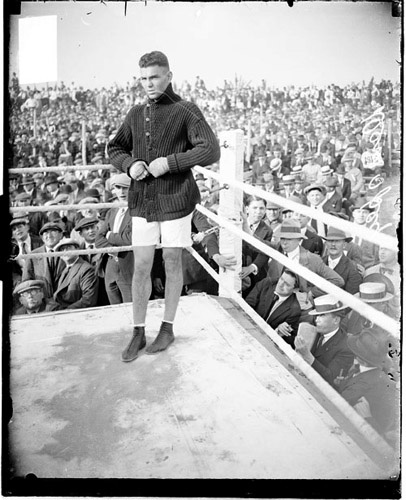
Pugilist, Jack Dempsey leaning against ring ropes, standing in a corner of a boxing ring outdoors

My first defense of the world heavyweight championship title was on Labor Day, 1920, against a dying friend of mine. I knocked him out because I loved the guy.
~Jack Dempsey

On September 6, 1920, over a year since he took the title from Jess Willard, heavyweight boxing champion Jack Dempsey met challenger Billy Miske at the Floyd Fitzsimmons Arena in Benton Harbor to defend his title for the first time. Referee Jimmy Dougherty awarded Dempsey a win by knockout at 1:13 in the 3rd round. Here are a few facts from BoxRec where they also have photos:

  • Attendance was reported to be 11,346 with total receipts at $134,904 according to promoter Floyd Fitzsimmons.
  • Dempsey received $50,000 cash plus a share of the gate receipts.
  • This was the first bout broadcast on radio.
  • This was the only time in over 100 bouts that Miske was knocked out. To quote boxing historian Eric Jorgensen from the FOX Sports biopic Billy Miske: Dead Man Fighting: “Any way you look at heart, toughness and determination–sheer guts–he (Miske) definitely had it. The fact that it took a Jack Dempsey to knock him out–that tells you what a tough guy he was.”

Miske was later revealed to have been dying of Bright’s Disease, and you can read a good account of this and the fight from The Art of Manliness.

You can’t view this photo any bigger but you can check out a series of photos from the fight at the Library of Congress and also see an incredible panorama of the crowd at the Library of Congress!

The Great Thumb Fire and the Birth of the Red Cross

Eaton County Courthouse 089.jpg

Eaton County Courthouse, photo by joshames

In 1871, the Thumb area of Michigan was ravaged by The Great Michigan Fire, part of a series of fires across the Midwest that included the Chicago Fire.  The Michigan DNR’s History & Ecology of Fire in Michigan explains that 10 years later on September 5, 1881, another devastating fire rolled through the Thumb area.

…the fire of September 1881, commonly known as the Thumb fire, was more severe and did more damage since settlers had begun pouring into the region and logging had gotten underway. As a result, more people were rendered homeless and the loss was greater. It is estimated that this fire burned well over one million acres, cost 282 lives, and did more than $2,250,000 worth of damage. ($55,834,321 adjusted for inflation)

Like the 1871 fire, the fire of 1881 came at the end of an extremely severe drought and was the result of hundreds of land-clearing fires whipped into a seething cauldron of flame by high winds. It was worse in the Saginaw Valley and Thumb region where it burned over much of the same territory that had burned ten years before.

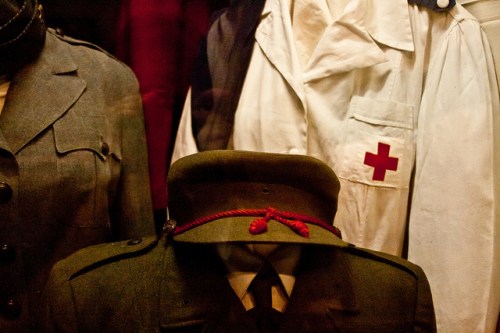
In 1881 Clara Barton founded the American Red Cross. The organization’s first meeting had taken place in Washington DC  at the home of Sen. Omar D. Conger of Michigan. Their first official disaster relief operation was the response to the Thumb Fire, and the Red Cross provided money, clothes and household items to victims of the fire.

Check Josh’s photo out bigger and see more in his slideshow.


Labor Day traditions in Detroit

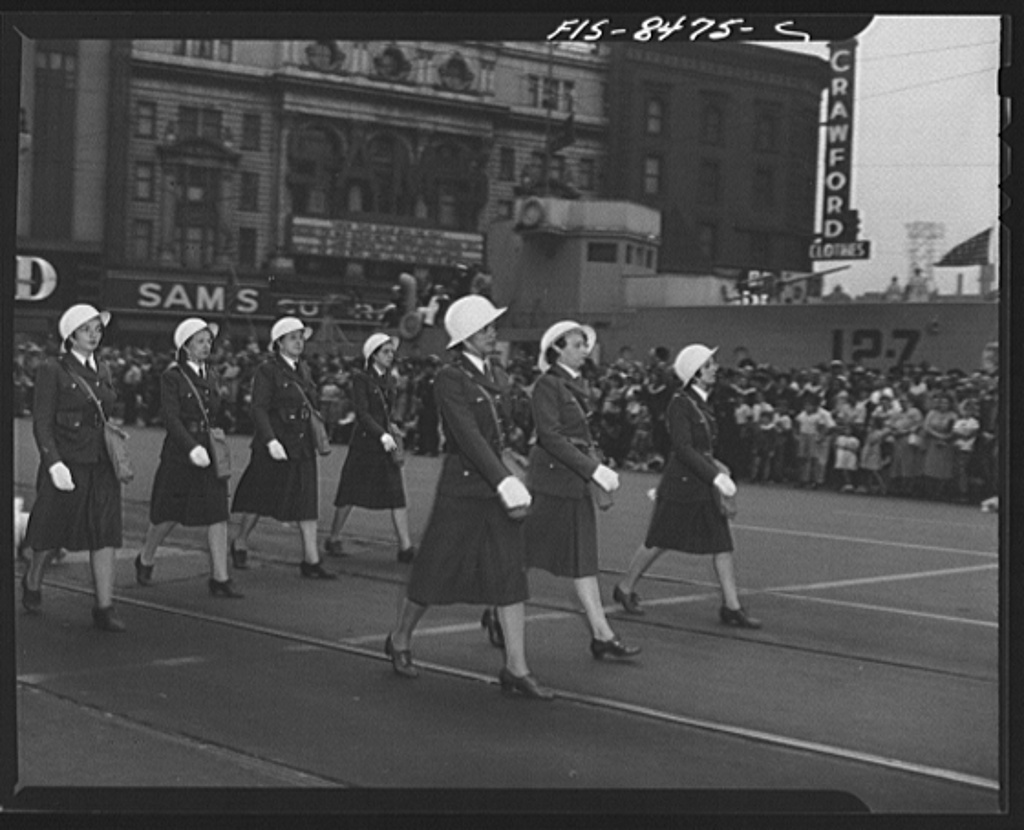
Labor Day 1942

The Detroit News Feature “Holiday for Labor” that provides an excellent look at the traditions of labor and labor day parades in Detroit:

The Detroit Trade Assembly’s labor parades in 1865 formed a part of established parades and gatherings on national holidays, such as the Fourth of July or Washington’s birthday. The unions gathered at Campus Martius, each carrying a banner with a name and symbol of their occupation. Many wore all white with matched hats or aprons. The names of their unions sound a bit quaint today: blacksmiths, iron molders, ship carpenters, caulkers, joiners, coopers, cigar packers, tailors, broommakers, stovemounters, bricklayers, shoemakers, painters, bakers, tinsmiths, cabinet makers, and saddle, trunk and harness makers.

In all about 9,000 people were involved and ended up having parties “gypsy-style” in the Bella Hubbard Grove at Vinewood and 25th Street, with shuttle trips to Belle Isle and Grosse Ile and moonlight excursions to Lake Erie on the ship T.F. Park.

…At that time, almost everyone worked at least 10 hours a day and, for many, 12 hours. Huge strikes for eight-hour work days shook the nation, and independent labor political parties surfaced in community after community. Many of the strikes and parades drew thousands and ended in violence.

…In those years, Labor Day was seen as a welcome holiday for working men and women who labored before the concept of sick days, paid leave, weekends and paid vacations. A Detroit News editorial from Sept. 5, 1927 put it this way:

“In America no man need be apologetic because he works; he needs to explain if he does not. Accordingly, Labor Day is not the peculiar property of some group, but is the holiday which recognizes that this great country of ours with all its glorious achievements, ideals and purposes is a vindication of a whole people’s pride in labor.”

Read on more MUCH more!

This is part of a series of photos taken at the 1942 Labor Day Parade in Detroit by Arthur S. Siegel. Check them all out at the Library of Congress.

Lots more Labor Day on Michigan in Pictures.

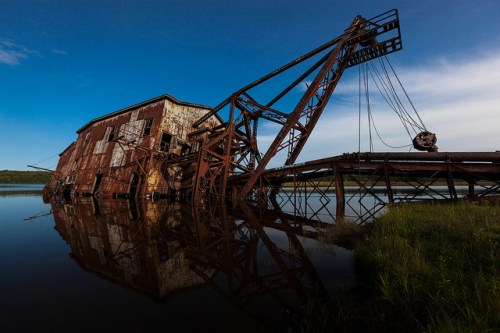
Quincy Dredge No. 2 is actually C&H Dredge No. 1

signature

signature, photo by Marty Hogan

The Copper Country Explorer has an excellent feature on The Mining of Torch Lake begins:

Early stamp methodology was a very simple and archaic one – nothing more than a simple process of smashing rock down into small pieces and sorting out the copper. Everything that remained would then be dumped into tailing ponds as waste. In the Copper Country the largest of these tailing ponds was Torch Lake, where no less than five mines dumped millions of tons of waste rock into its depths. Unfortunately, these waste tailings often contained a great deal of copper which the jigs and wash tables of the mills failed to remove. Copper that ended up in Torch Lake.

As copper prices dropped and milling technology improved, mine companies began to take a second look at these copper bearing deposits in Torch Lake. It was now possible – and economically advantageous – for mines to retrieve those tailings and remove the copper that they still contained. The process was known as reclamation, and was first undertaken in earnest by C&H around 1920. Towards that end C&H built itself a dredge that could suck up those sands from the lake bottom and send them out to the reclamation plant on shore. This first dredge – known as C&H Dredge No. 1 – would be responsible for retrieving over 48 million tons of C&H sands in its lifetime, yielding over 423 million pounds of copper for the company.

The Quincy Mine got into the reclamation game several decades later – in 1943 – after failing to make a profit on its underground operation. In 1953 the C&H Dredge No. 1 was bought by Quincy to supplement its own dredge. It turned out to be exceptional foresight, as Quincy’s first dredge ended up sinking in Torch Lake in 1956. Its roof top can still be seen sticking up from the center of the lake. As for Quincy Dredge No. 2, it continued to mine Torch Lake for several more decades until it too sank in 1967.

Read on for a detailed account of the workings of the dredge, lots of views of the dredge and some great historical photos.

Check Marty’s photo out background big and see more in his 2012 August Road Trip slideshow.

More Michigan industry on Michigan in Pictures.

Manabozho and His Toe … and his waterfall

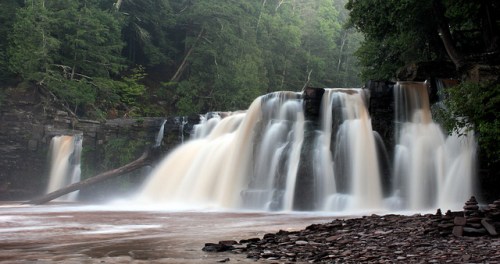
Manabezo Falls.

Manabezo Falls., photo by one lost backpacker

The stories of the people native to Michigan are among my favorite. One reason is for the pervasive humor that enriches them. Manabozho was definitely a trickster, one of four divine brothers in Algonquin tales. Via the Literature Network, here’s Manabozho and His Toe:

Manabozho was so powerful that he began to think there was nothing he could not do. Very wonderful were many of his feats, and he grew more conceited day by day. Now it chanced that one day he was walking about amusing himself by exercising his extraordinary powers, and at length he came to an encampment where one of the first things he noticed was a child lying in the sunshine, curled up with its toe in its mouth.

Manabozho looked at the child for some time, and wondered at its extraordinary posture.

“I have never seen a child before lie like that,” said he to himself, “but I could lie like it.”

So saying, he put himself down beside the child, and, taking his right foot in his hand, drew it towards his mouth. When he had brought it as near as he could it was yet a considerable distance away from his lips.

“I will try the left foot,” said Manabozho. He did so and found that he was no better off, neither of his feet could he get to his mouth. He curled and twisted, and bent his large limbs, and gnashed his teeth in rage to find that he could not get his toe to his mouth. All, however, was vain.

At length he rose, worn out with his exertions and passion, and walked slowly away in a very ill humour, which was not lessened by the sound of the child’s laughter, for Manabozho’s efforts had awakened it.

“Ah, ah!” said Manabozho, “shall I be mocked by a child?”

He did not, however, revenge himself on his victor, but on his way homeward, meeting a boy who did not treat him with proper respect, he transformed him into a cedar-tree.

“At least,” said Manabozho, “I can do something.”

If you’d like more of Manabohzo, check out Manabohzo and the Ultimate Fish Story which might make you a bit more kindly disposed to seagulls.

Check out Randy’s photo background bigtacular and see more in his amazing Michigan Upepr Peninsula 2013 slideshow.

More about Manabezho Falls on Michigan in Pictures.

Remembering Michigan author Elmore Leonard

Detroit-Author-Elmore-Leonard

Elmore Leonard, The Dickens of Detroit, photo courtesy Archives of Michigan

“After 58 years you’d think writing would get easier. It doesn’t. If you’re lucky, you become harder to please. That’s all right, it’s still a pleasure.”
~Elmore Leonard

Legendary Michigan author Elmore “Dutch” Leonard passed away Tuesday at the age of 87. Leonard was the author of many best-selling crime novels including Get Shorty, Freaky Deaky and Killshot. Another great Michigan author, Jim Harrison, wrote:

“Elmore was the opposite of the loudmouthed, big shot novelist. He was graceful, fairly quiet and poignantly intelligent. We have lost our best. No one wrote better dialogue in America.”

The photo above appeared in The Dickens of Detroit from Seeking Michigan on Leonard’s birthday (October 11, 2011). They do a nice job of hitting the highlights of an illustrious career:

Leonard was born in New Orleans in 1925. He has made the Detroit area his home since 1934, when his family moved there. The city of Detroit often serves as the main character in his novels. As a result, fans often refer to Elmore Leonard as the ‘Dickens of Detroit.”

Leonard graduated from University of Detroit Jesuit High School in 1943. He then immediately joined the Navy, where he served with the Seabees. After his service, he enrolled at the University of Detroit and graduated in 1950 with a degree in English and Philosophy. Leonard started his writing career as a copywriter at the Campbell-Ewald Advertising Agency. Writing on the side, he was able to publish his first novel, The Bounty Hunters in 1953. In his early career, he focused on writing pulp Westerns, because that was what was selling at the time. Leonard eventually moved on to specialize in crime fiction and suspense thrillers. A large number of his books have been turned into movies or television programs.

Critics praise Leonard for his effective use of dialogue and the gritty realism in his books. His unique ear for dialogue and the ability to capture it on the page is rarely matched. Concise and plot driven, his stories are stuffed with colorful characters and tricky, often humorous plot twists.

Read on for more. Here are a few of the best features I found – please feel free to post more in the comments: