Even Wally Pipp didn’t get Wally Pipped!

via “Everything You Know About Wally Pipp Is Wrong” on Absolute Michigan…
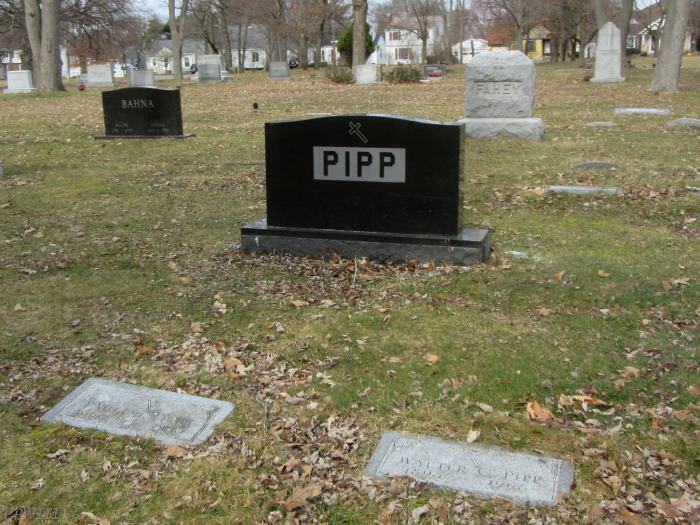
wally-pipps-final-resting-spot

Wally Pipp’s Final Resting Spot, photo by PPWWIII

True confession: My father was a veritable baseball encyclopedia good enough for a scholarship at Yale whose love of the game kept him around baseball and me steeped in it. That said, though I learned the story of Wally Pipp at a young age, it was all wrong.

The name of Wally Pipp conjures visions of shirkers, slackers and layabouts and the stars who get a chance to shine when they take the inevitable day off. Most sports fans know the story of how on June 2, 1925 New York Yankee first baseman Wally Pipp was given the day off for a headache, and Lou Gherig played 1st for the next 2,130 consecutive games until “The Iron Horse” retired due to ALS (amyotrophic lateral sclerosis) also commonly known as “Lou Gehrig’s disease. Tom Brady “pipped” Drew Bledsoe years ago, and Dak Prescott did the same to Tony Romo last season.

I read a whole lot about this confusing tale, but the article Wally Pipp’s Career-Ending ‘Headache’ by Snopes founder David Mikkelson is quite simple a tour de force of the twists and turns in one of our biggest American sports legends that has been told and retold in print and screen. There’s a ton to read including the newspaper clippings and I recommend you do so, but let’s skip to Mikkelson’s conclusion:

After winning three straight American League pennants between 1921-23, the Yankees finished a couple of games off the pace in 1924 as the Washington Senators captured their first flag ever. New York expected to regain the top spot in 1925, but that was the year Babe Ruth’s excesses finally caught up with him.

…With Ruth either missing or too weak to play effectively, and some key players slumping … New York tumbled to a dismal seventh-place finish (in an eight-team league) in 1925. With his team already near the bottom of the standings and eleven games under the .500 mark at the beginning of June, manager Miller Huggins decided to shake up his line-up and replace some of his slumping veterans with younger players. Contemporaneous news accounts leave no doubt that Wally Pipp did not sit out the game on 2 June 1925 with a headache; he was deliberately benched by a manager who had charge of a team that was playing poorly and who opted to sit down some of his older players to give others a try.

In the case of Wally Pipp there was no inopportune headache, no “delightful and romantic story” — just a case of a slumping player who lost his job to an up-and-comer and never got it back. But his replacement was the stuff of legend (the indestructible ballplayer finally felled by a fatal disease), and so he became part of a legend that mixed fact and fiction and grew so large even some of the participants came to believe in its fictional aspects.

Via Mental FlossBleacher Report, and Wikipedia, I can report that Pipp was raised in Grand Rapids, was hit in the head with a hockey puck as a child that he attributed his headaches to, and played his first pro baseball for (seriously) the Kalamazoo Celery Champs. Pipp was one of the best first basemen of his era, hitting .281 with 90 HRs, 997 RBI and 1,941 hits. After retiring in 1928, Pipp played the market, wrote some radio scripts and books including as Babe Ruth’s ghostwriter, and did a pregame baseball show for the Detroit Tigers. He worked in a Michigan plant that made B-24 bombers during WWII and worked as a sales exec for the Rockford Screw Products Corporation. Mental floss concludes: Pipp went from playing first for the Yankees to peddling screws and bolts—and he loved it. Armed with the gift of gab and endless baseball stories, Pipp spent the rest of his life selling wares to Detroit’s auto hotshots. He passed away in 1965. (at the age of 71)

View the photo from Woodlawn Cemetery in Grand Rapids background big and see more in PPWWIII’s slideshow.
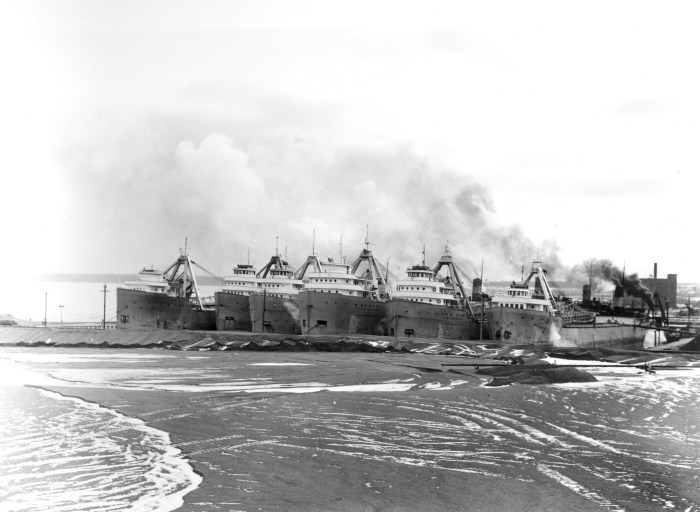
Bradley Fleet in “the Frog Pond”

Bradley Fleet in the Frog Pond

Layed-up in the Frog Pond, photo courtesy Presque Isle County Historical Museum

This would be where I would tell you the fascinating history of why the winter harbor at Rogers City was referred to as the Frog Pond, but I’m unable to find much except for that’s what everyone calls it. There’s one in Toledo too.

The Presque Isle County Historical Museum is located in the historic home of Carl D. Bradley, general manager of Michigan Limestone and subsidiary Calcite Transportation. About the photo, they write:

The Bradley fleet layed-up in the “frog pond” at Calcite in 1949. From left to right are the W. F. White, B. H. Taylor, John G. Munson, Carl D. Bradley, T. W. Robinson, and Calcite.

View it big as the Bradley and see more in their Bradley Transportation Fleet slideshow including this aerial shot of the Frog Pond.

Click for more about the Carl D Bradley which ultimately became one of Michigan’s most tragic wrecks.


Hard Luck Lights: Grand Island East Channel Lighthouse

grand-island-east-channel-lighthouse

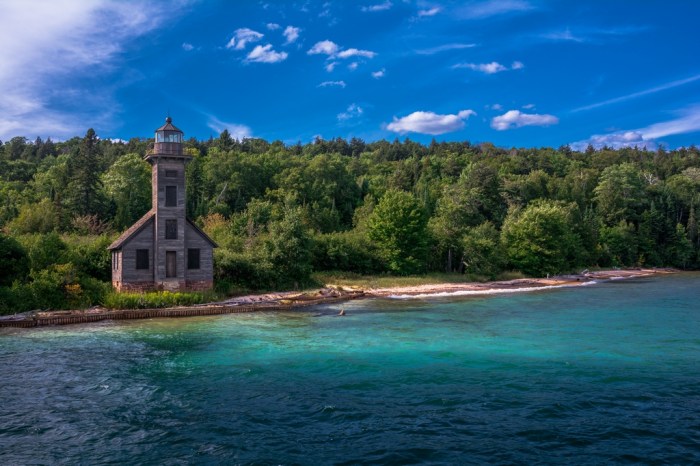
Grand Island Lighthouse, photo by Steve Nowakowski

Terry Pepper’s Seeing the Light shares the story of one of Michigan’s hard-luck lighthouses, the Grand Island East Channel LightWork began in 1867 with the the clearing of a sandy peninsula on the southeast shore of the island:

As a result of the chosen site being both on low ground and close to the water’s edge, a considerable amount of cribbing was installed along the shore line to help stave-off erosion and undermining of the station’s foundation. Plans for the station building called-out a typical “schoolhouse” style combination dwelling and tower similar to that used frequently throughout the lakes. However, in order to minimize cost the building was to be of timber frame construction with wood siding, as opposed to the more common brick or stone materials used in such structures elsewhere. Painted white to increase its value as a daymark, the 1 ½ story dwelling incorporated a forty-five foot tower its southern end, and was outfitted with an oil-fired steamer lens with a focal plane of 49 feet.

…The combination of a wooden structure in such an exposed location, and its location on the low sandy area close to the water’s edge created an ongoing maintenance nightmare for the district engineers, with the station listed as one at which considerable repairs were taken every year for the following thirty years.

…Without any care throughout the years, the structure deteriorated rapidly. Without regular scraping and repainting, the once bright white structure had turned a dismal driftwood gray, and the cribs installed a hundred years previously had disintegrated completely, with the waters of Munising Bay lapping directly at the stones of the structure’s foundation.

Read on for much more including efforts that stabilized this structure and the lighthouses that replaced it after decommissioning in 1908.

View Steve’s photo background big and see more in his 2016 Grand Island East Channel Lighthouse slideshow.

More Michigan lighthouses on Michigan in Pictures!

After the Blizzard of 1967 on Kalamazoo’s March Street Hill

march-street-hill-kalamazoo-january-blizzard

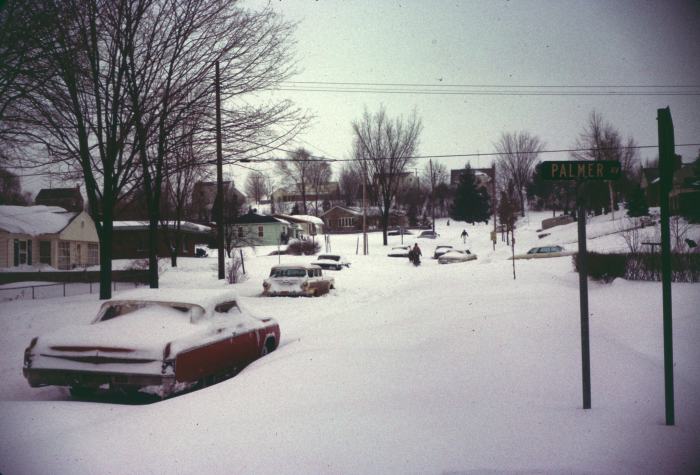
March Street Hill, Kalamazoo, photo by Joel Dinda

Joel shared these 50-year-old photographs from Michigan’s January 1967 blizzard. They were taken by his father after the snow stopped falling on January 27th. Seeking Michigan has a feature that looks back on two late January blizzards in 1967 & 1978:

The 1967 blizzard fell on January 26 and 27, and dumped twenty-four inches of snow on Lansing. Lansing State Journal articles from the days after the storm tell stories of stranded bus passengers, a mother who picked her children up on horseback, and neighbors who built a human-sized Snoopy snow sculpture. Rachel Clark, an education specialist at the Michigan Historical Center, remembers growing up and hearing stories about the time her father got a ride to work from the National Guard, because he had to abandon his car during the storm. He was a reporter for the WJIM television station in 1967, and the station needed him to read the news and help keep Lansing residents informed about the storm.

Read on for more. Also see this mLive series of photos from the Blizzard of ’67 and scroll down for a video from MSU’s Brody Hall taken during the blizzard.

View Joel’s photo background bigilicious and see more great old photos in his Roger’s slides slideshow.

More history, more Kalamazoo, and more blizzards on Michigan in Pictures!

Walking with Martin Luther King

Martin Luther King Park Kalamazoo
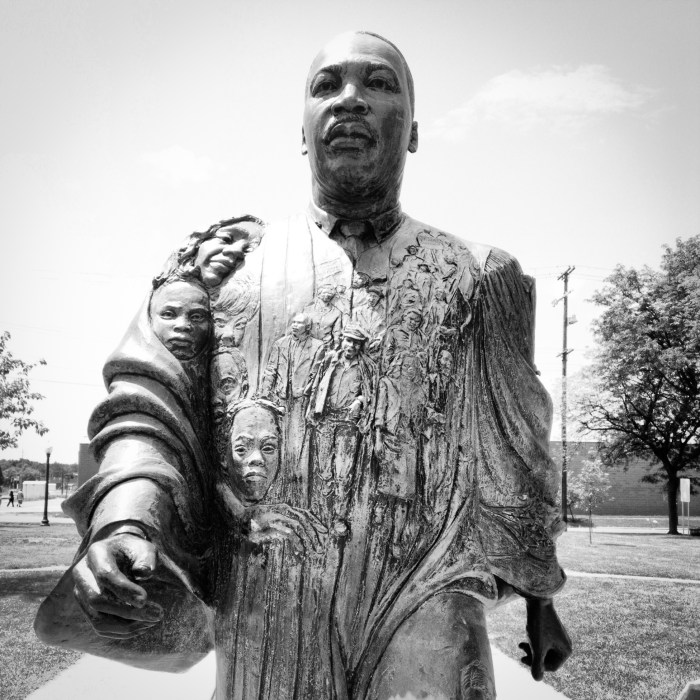
Martin Luther King Park, photo by Bill Dolak

“Injustice anywhere is a threat to justice everywhere.”
-Martin Luther King

The sculpture is “Martin Luther King” by Lisa Reinertson and her site includes an article about the sculpture:

A bronze portrait figure of Dr. Martin Luther King, Jr. strides forward confidently in a small park in Kalamazoo, Michigan. The statue, created by sculptor Lisa Reinertson, is only slightly larger than real life, but its presence is monumental.

Seen from a distance, the clerical robe worn by Reverend King strengthens the tall, pyramidal composition, while the robe’s flowing contours both animate the design and echo the character of this restless minister who was constantly on the march for freedom and justice.

Upon approaching the sculpture, which the viewer is drawn to do by its placement on a simple low pedestal, one sees that the robe is embellished with scenes from the civil rights struggle rendered in low relief. A black slave labors in a field near the hem of the robe, while a dark fold of the garment reveals the lynching of a man by the Ku Klux Klan. A Montgomery city bus and a portrait of Rosa Parks adorn the lower left side. The Selma to Montgomery march and King’s I Have a Dream speech are depicted elsewhere. One also finds images of voter registration, school desegregation, the Greensboro, North Carolina lunch counter sit in, and the use of firehoses to break up the peaceful 1963 Birmingham demonstrations. Down King’s broad back the vertical folds of the cloth evolve into the bars of the Birmingham Jail with a pensive King seated behind them. Above him is the image of Mahatma Gandhi, who inspired King’s use of non-violent civil disobedience.

View Bill’s photo from MLK Park in Kalamazoo background big and see more in his MASSIVE Kalamazoo slideshow.

More about Martin Luther King on Michigan in Pictures.

Below Au Train Falls

below-au-trail-falls

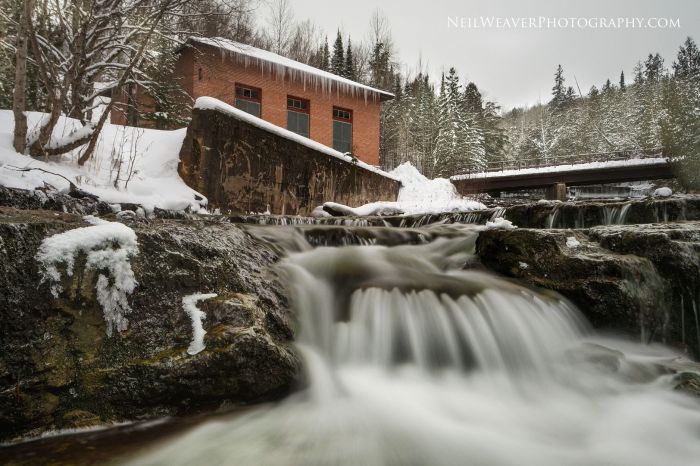
Below Au Train Falls, photo by Neil Weaver Photography

The Au Train Falls information page from Chatham, MI says (in part):

The AuTrain Falls are part of the AuTrain River. A major reason why the falls were created is because of the large power dam located about a mile south of the falls site, in close proximity to highway M-94. The Forest Lake Dam, run by the Upper Peninsula Power Company, is the main source of water for the falls. When water levels are high on the AuTrain Basin, an increased flow of water is released via the dam and down the river. The AuTrain River actually flows from South to North. When more water is released via the dam, the more volume of water that flows through the falls.

…A short distance from the bridge, where the view is the most spectacular, is where an old brick building is located. As you approach the building, you will hear a humming noise and as you approach, the humming noise gets louder and louder. As you peak inside the building, you will notice these large lime-green mechanical devices. These are power generators. These generators create enough power to supply 600 homes in the area. The water to supply the generators also comes AuTrain Basin, but travels through large metal piping running from the Forest Lake Dam to the generator site. Once the water runs through the generator, it is released in the back of the building and back into the river. It is a unique facility, and one that is still an important part of the area.

Read on for more.

View Neil’s photo bigger, follow him on Facebook, and be sure to check out the Michigan Waterfalls gallery on his website!

USS Edson at the Saginaw Valley Naval Ship Museum

uss-edson-frozen-in-the-saginaw-river

USS Edson frozen in the Saginaw river, photo by Tom Clark

The USS Edson is located at the Saginaw Valley Naval Ship Museum in Bay City. The say (in part):

The keel for the Forrest Sherman class destroyer USS EDSON (DD-946) was laid at Bath Iron Works in Bath, Maine, on 3 December 1956. EDSON is one of the relatively few ships of the U.S. Navy named for a United States Marine, in this case Major General Merritt Austin Edson.

Edson was launched on 4 January 1958 by General Edson’s widow, Ethel Robbins Edson, who broke the traditional bottle of champagne over the ship’s bow. EDSON’S final fitting out and sea trials occupied the next ten months, and on 7 November 1958, EDSON was commissioned under the command of CDR Thomas J. Moriarty, USN. She then sailed in early 1959 to the Caribbean and through the Panama Canal to reach her original homeport of Long Beach, California, on 2 March 1959.

For the next two decades, EDSON served as a valuable member of the U.S. Pacific Fleet, earning a reputation as a Top Gun ship and the nickname, “The Destroyer.” Her ship’s crest included a skull copied from the shoulder patch worn by then Colonel Edson’s First Marine Raider Battalion.

Note that the Museum itself is closed for the winter until March!

View Tom’s photo bigger and see more in his Ships & Boats slideshow.

More ships & boats on Michigan in Pictures!


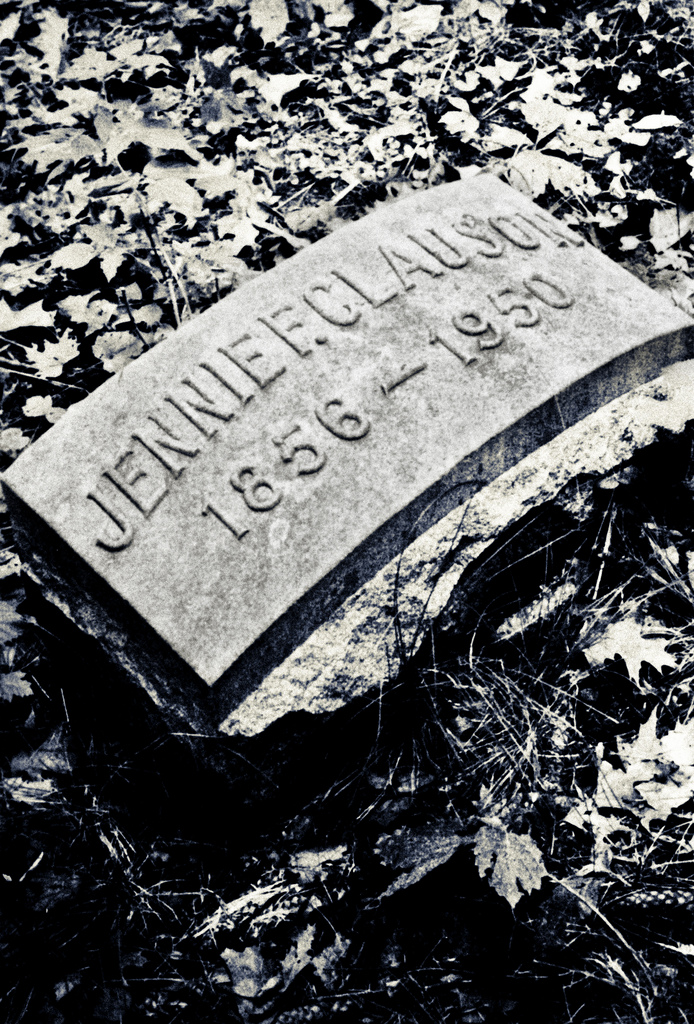
Jennie F. Clauson saw the world change

jennie-f-clauson-grand-rapids

Jennie F. Clausen, photo by Marty Hogan

View Marty’s photo background big and see more in his Michigan Burying Grounds slideshow.

The December 7th anniversary of Pearl Harbor is one of the sign posts in American history. Marty writes that in nearly a century, Jennie F. Clauson from Grand Rapids, Michigan saw a world change. Here’s the entirety of his post:

Continue reading Jennie F. Clauson saw the world change

The Smitty and Detroit’s University Club

the-smitty-detroit-mi

the.smitty // Detroit, MI, photo by Brian Day

Historic Detroit says that the University Club:

…was a fraternal organization where the city’s educated men could go to hang out and network.

The organization was founded in 1899 in Swan’s Chop House at the northwest corner of Woodward and Larned. To be a member, you had to have graduated from a university or college. George P. Codd, a congressman and mayor, was the group’s first president. The group would move several times before it would move into this structure on East Jefferson in 1931. It was designed by William Kapp of the architectural firm Smith, Hinchman & Grylls in the Collegiate Gothic style. Among its features were underground 4 Singles and 1 Doubles Squash Courts, and 1 Racquets Court, and a grand two-story great hall. There were also 24 bedrooms on the third floor. This building was for only the boys, and women were forced to use a side entrance on Jefferson.

…At 4:30 a.m. on June 15, 2013, a massive fire ripped through the club’s dining hall and destroyed other parts of the building. “It took fire crews nearly six hours to completely extinguish the blaze, which continued to flare up into the evening,” DetroitUrbex.com notes.

Click the pic to view it bigger and see more of Brian’s work at BrianDay.org.

Anchors Aweigh: S.S. Greater Detroit Anchor Recovered

ss-greater-detroit

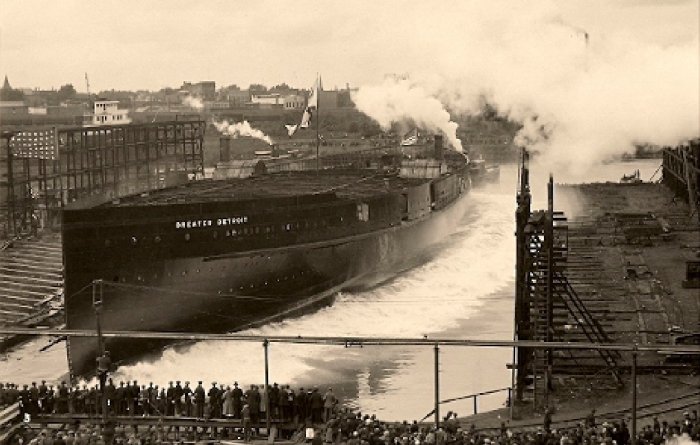
Launch of the SS Greater Detroit,  courtesy Great Lakes Maritime Institute

Thanks to an alert reader who let me know that the dredge in yesterday’s photo was on the way back from a mission to retrieve a 6000-pound anchor from the Detroit River for the Great Lakes Maritime Institute. There’s a video below and you can get the story via mLive:

The anchor emerged from the river just before the sun set behind the Ambassador Bridge, catching its first glimpse of daylight for the first time in 60 years.It once belonged to the luxury steamer Greater Detroit, one of the two largest side-wheel steamers ever built, which ferried passengers around the Great Lakes in style from the mid-1920’s through the mid-1950’s.

The Great Lakes Maritime Institute has a nice history of the SS Greater Detroit aka “Leviathan of the Great Lakes” that says in part:

The Detroit & Cleveland Navigation Company was planning on expanding after World War I by providing more daily commercial traffic on Lake Erie between Buffalo, New York and Detroit, Michigan.

…In 1922 the naval architect Frank E. Kirby provided the Detroit & Cleveland Navigation Company with a architectural drawing for a massive side wheel steamer that would carry passengers and freight on the Buffalo to Detroit route. The plan called for the Detroit & Cleveland Navigation company to construct two vessels, the S.S. GREATER DETROIT and the S.S. GREATER BUFFALO which would provide continual service across Lake Erie.  The length overall of the vessels was 536 feet and with the side paddle wheels the overall width of the vessel was ninety six feet.

…The Detroit & Cleveland Navigation Company was so proud of the Steamer GREATER DETROIT that when they issued new stock certificates in 1925 the image of this vessel was engraved at the top of the certificates. The vessel could not only carry some 2,127 passengers, but provided 625 staterooms and made allowances for the storing of 103 automobiles on the main deck.

There were excellent accommodations provided for the passengers and the crew. In the pilothouse there was a separate steering wheel for the bow rudder to help navigate the narrow rivers and harbors. The bow rudder also helped when the steamer left the Detroit dock. At 5:30 P.M. the captain would ring the telegraph to the engine room and request the engineer to start the engines and to back away from the dock. Using the Detroit River current and the bow rudder the vessel would swing out into the current and turn around headed downriver to Lake Erie.

Read on for lots more including some cool old brochures and click to their homepage for more in the recovery!