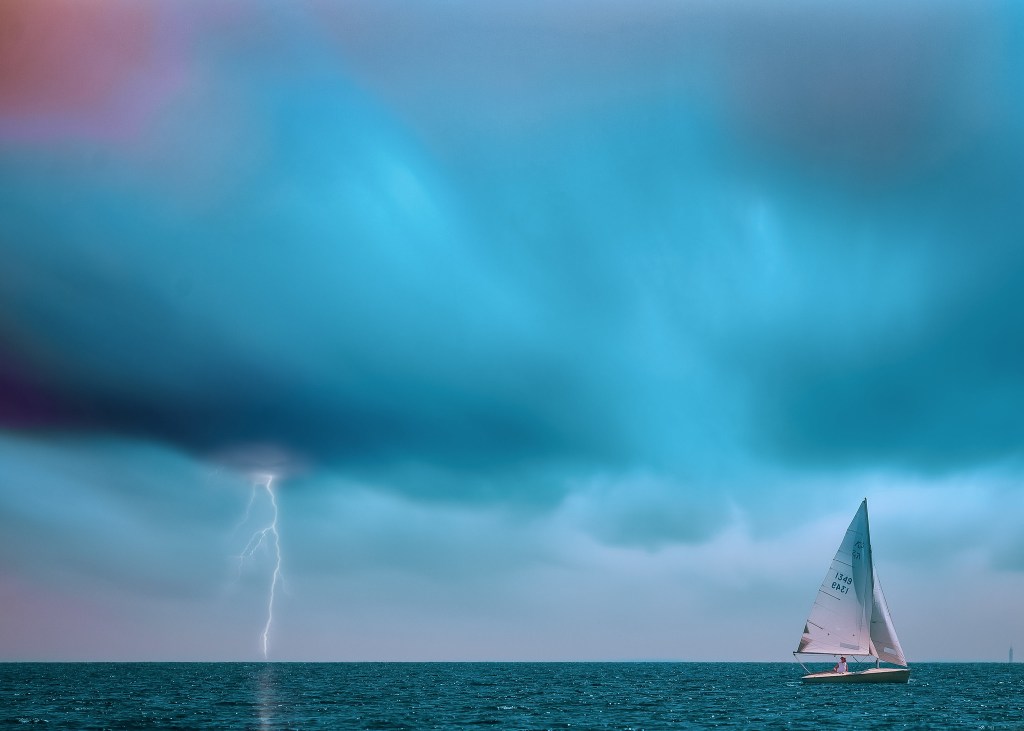
I’m not afraid of storms, for I am learning how to sail my ship. -Louisa May Alcott
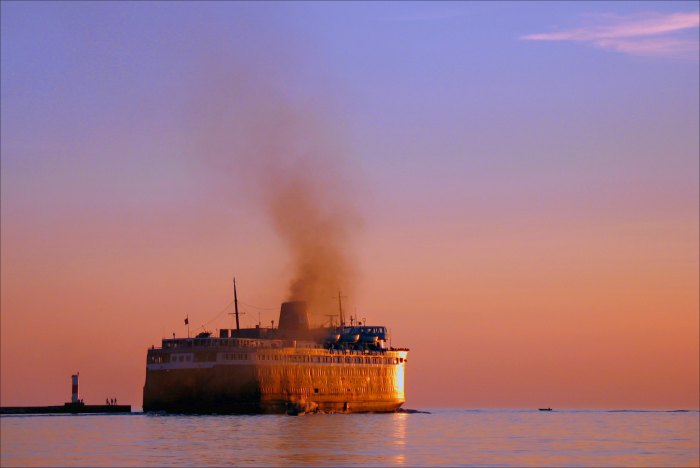
It’s been too long since I shared a photo from Beth. I just love her work!! See more in her Waterscapes / Nautical gallery on Flickr & safe (but interesting) voyages.
If you’ve been following Michigan in Pictures for any length of time, you are almost certainly familiar with the work of Michigan Nut aka John McCormick. He just announced that his 2025 Michigan Calendars are available so what are you waiting for??
You don’t take a photograph. You make it. ~ Ansel Adams
Great photography is not easy! Karl shares “Laying practically under my tripod and up against a prickly picker bush, I’m narrowly able to cram in this craggily white birch with a few remaining autumn leaves that are just barely hanging. In the crisp and cold October morning air, I caught one of the nicest and richest sunrises I’ve ever experienced over Lake Superior. This was a good morning.“
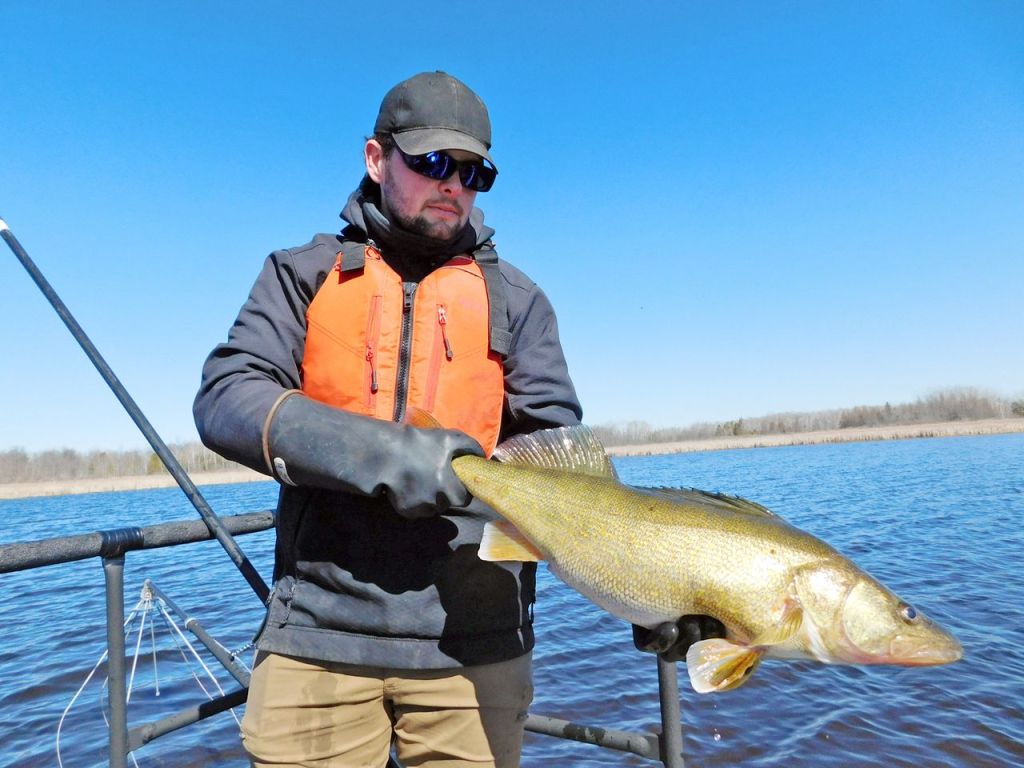
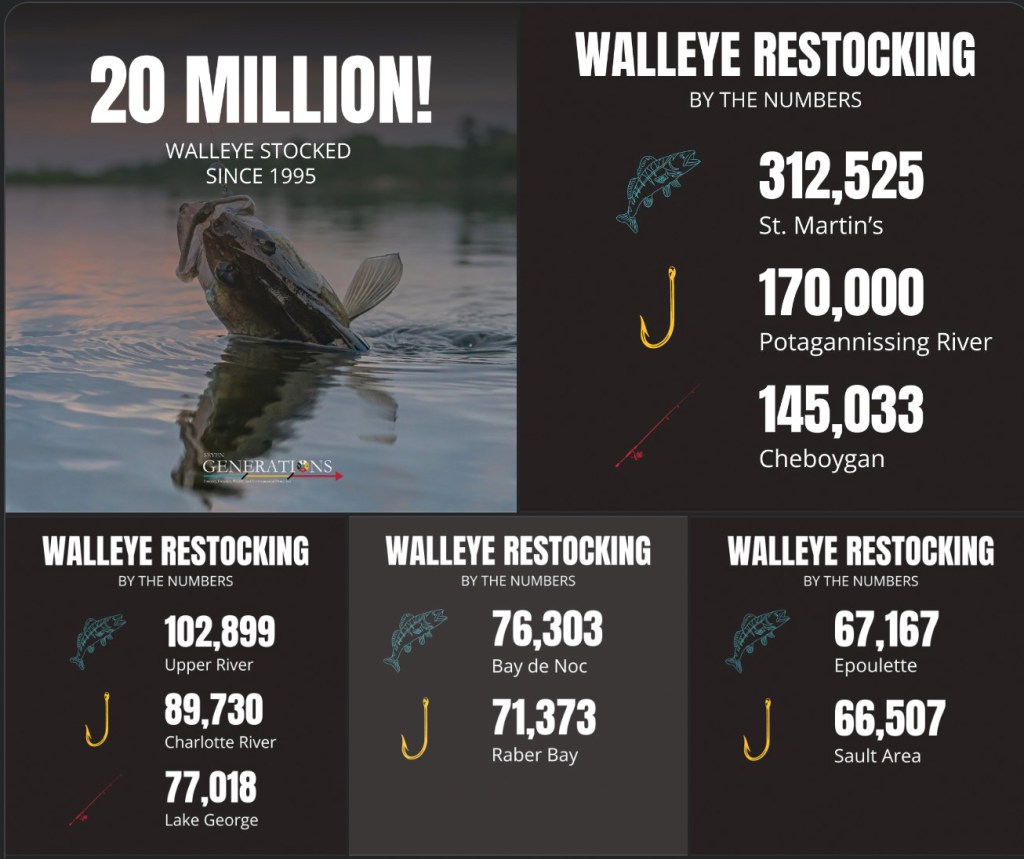
This year we recorded our 20 MILLIONTH walleye stocked since our walleye hatchery program began in 1995! Last month we are very proud to have released more than 1 million walleye fingerlings into Northern Michigan waters. These fish contribute to a sustainable fishery while eventually providing meals for families and recreation for fishers.
Every year, our work contributes about 1/3 of all walleye fingerlings released into 1836 Ceded Territory waters!
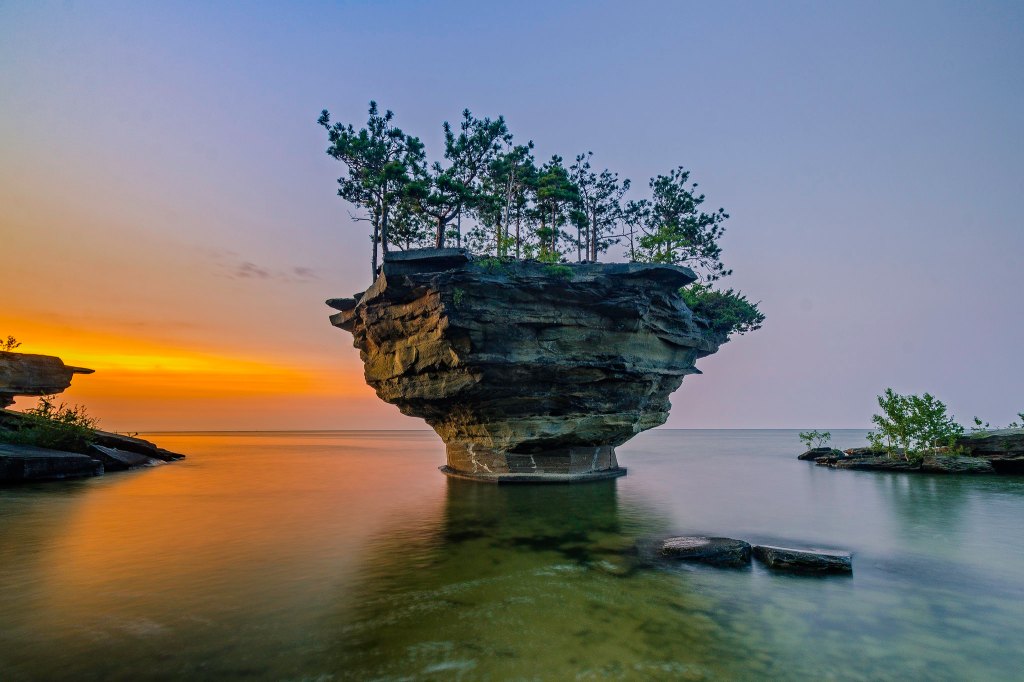
Tom shares that Turnip Rock is a beautiful, wondrous land formation off the coast near Port Austin:
The gigantic stone developed its signature look after millennium of being worn away by waves thumping across its bow. After being separated from the mainland in prehistoric times, Turnip Rock is an island inhabited by some trees and very little else.
Turnip Rock was one of twenty finalists in the 2013 “Seven Wonders of Michigan” contest sponsored by the Detroit Free Press and the Lansing State Journal, but it wasn’t selected as one of the final ten.
John Muir and Theodore Roosevelt. Everett Townsend and Walter Fry. Franklin Delano Roosevelt, Richard Proenneke, and Ansel Adams. Since the inception of the national parks in the late 1800s, the men who carried the banner of wilderness preservation also wrote the history of their movement, often missing the crucial role women played in protecting America’s wilderness from the Industrial Revolution and the raw material extraction that revolution demanded.
At Isle Royale National Park, the lower 48’s least visited but most revisited national park, an all-women team of park rangers reminds us that all it takes to work in nature is a passion for conservation and a love for the outdoors.
“It wasn’t intentional at all,” says Katie Keller, lead ranger at Isle Royale, when we inquired about how the team came to be. “Hiring for the parks is different every year. So we were just as surprised as the visitors when we had all-women rangers two years in a row.”
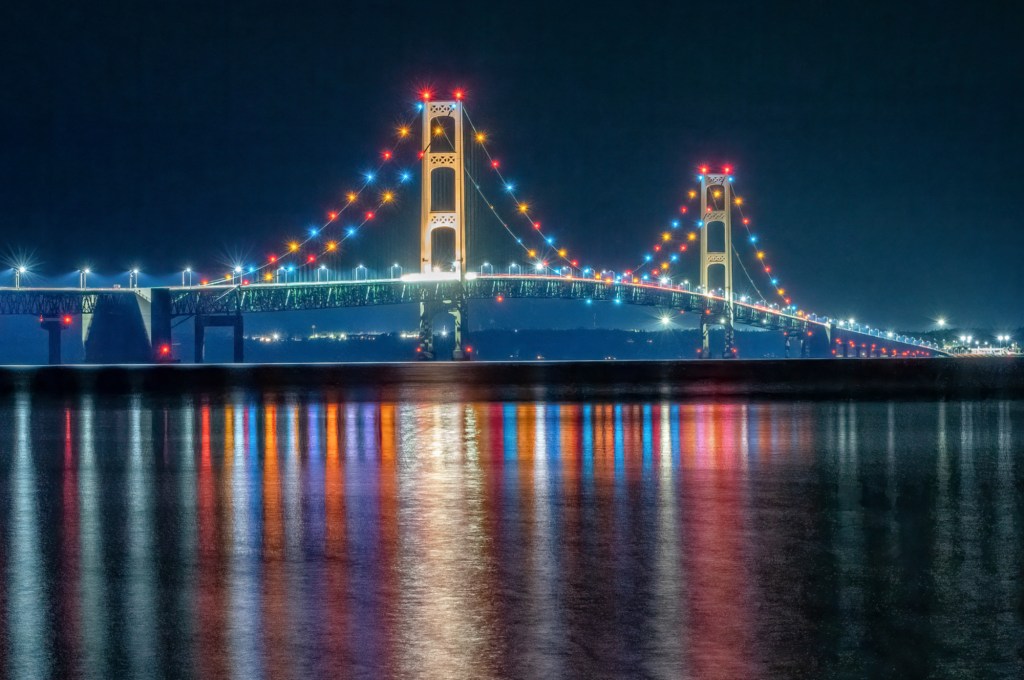
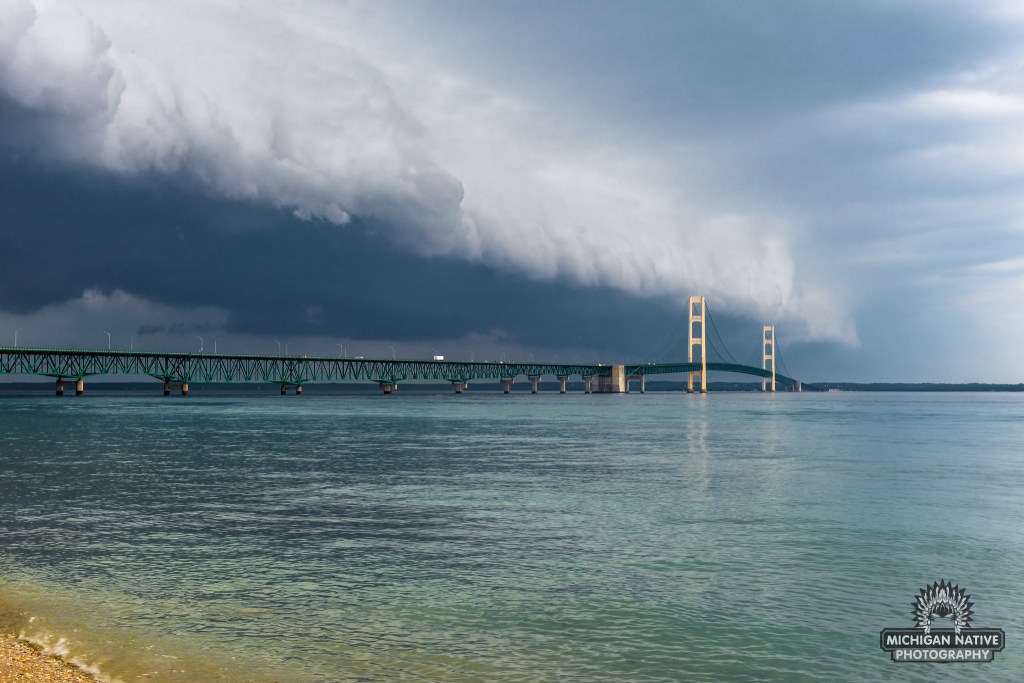
I saw a couple other photos of this cloud as it rolled across the Straits of Mackinac & northeast Michigan the other day but wowzas – the Mighty Mac takes it!! Our friends at the Earth Science Picture of the Day have an excellent post on the difference between roll clouds & shelf clouds:
Roll clouds and shelf clouds are found near the leading edge of thunderstorms and form when relatively cool air, from the storm’s downdraft, forges ahead into the warm, moist air that’s feeding the storm. The main difference between roll clouds and shelf clouds (both are called arcus clouds) is that a roll cloud is detached from the parent thunderstorm, whereas a shelf cloud (right) is affixed to the base of a cumulonimbus cloud.
NOTE: Just learned that this picture is from 2018 – still love it! (buy it here)
Sixty years ago this week a person standing next to Michigan’s Mackinac Bridge might have been witness to an amazing sight: a six engine U.S. Air Force nuclear bomber flying between the spans of the bridge, barely clearing the structure. The stunt was roasted in the local press, which declared the incident “capricious” and “foolish”, and ended the military pilot’s flying career.
The incident, which took place on April 28th, 1959, involved Air Force Captain John S. Lappo, a native of Muskegon, Michigan. Lappo flew his B-47 nuclear bomber under the Mackinac Bridge.
The Mackinac Bridge is five miles long but there is only 155 feet maximum clearance between the bottom of the deck and the waters of the Great Lakes (Lake Huron and Lake Michigan) below. The B-47 bomber is 28 feet high, meaning there wasn’t much margin for error in Lappo’s flying.
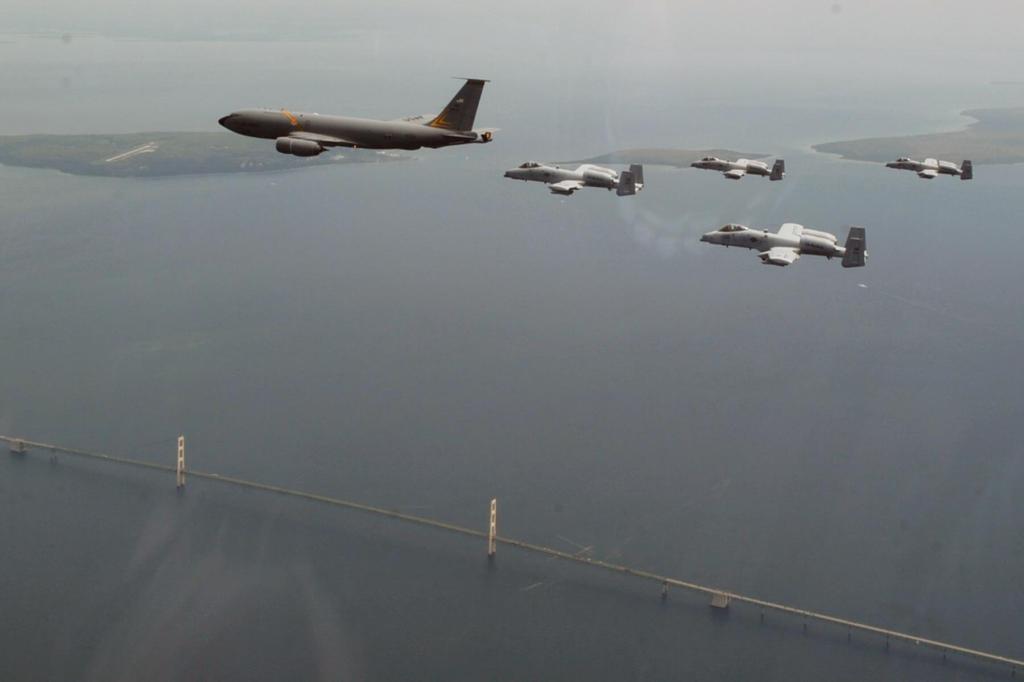
The Michigan National Guard shared this this is a pic of four A-10 Thunderbolt IIs and a KC-135 Stratotanker flying (safely) over Michigan’s iconic Mackinac Bridge back in 2016. The aircraft were based at Selfridge Air National Guard Base in Macomb County, Mich. (U.S. Air National Guard photo by Master Sgt. Elizabeth Hollicker) You can see their latest pics on Flickr.
Good morning everyone. Regrettably, I need to take a break which (fingers crossed) won’t be too terribly long to deal with some health issues. In the meantime, I hope all of you are able to enjoy the bounteous offerings of Michigan summertime!
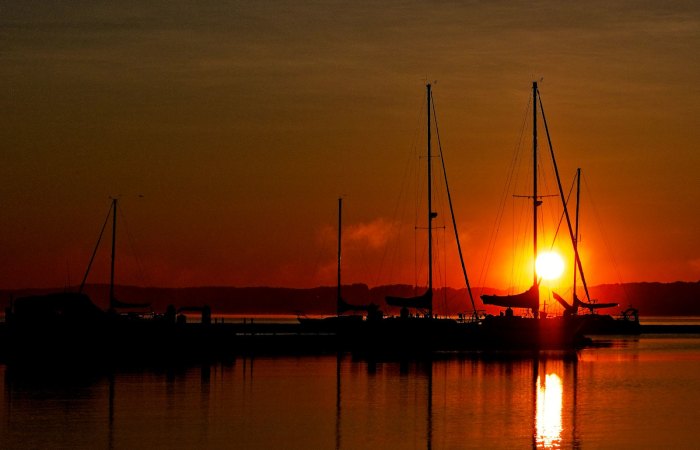
Jeff took this photo two years ago at sunrise on June 29th (my birthday) in Traverse City (where I currently live), so I thought it would be a perfect placeholder while I’m gone. See more from Jeff in his Most Faved (Best of) gallery on Flickr.
Lake Michigan Carferry, Inc. is in the early phases of looking for ways to ditch the coal that currently propels the 410-foot historic ship across Lake Michigan.
“We are just in the early phases at looking at what other options could be viable for the Badger,” said Sara Spore, general manager of Lake Michigan Carferry. “There are not any definite plans, but we know that coal isn’t the long-term solution. We really are starting from scratch and looking at all of our options.”




 Michigan in Pictures