Drink deep of milk of spring: Snowdrops

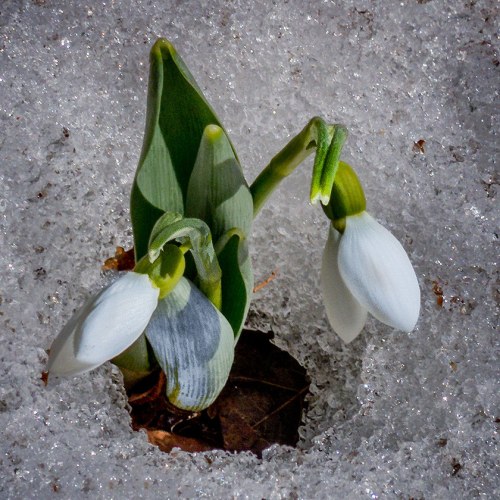
Push Up

Push Up, photo by Michael in A2

Michigan Gardener’s plant focus on Snowdrops begins:

The very first bulb to cheerfully announce spring is the snowdrop. As the last winter snow melts, carpets of delicate white flowers emerge through last year’s fallen leaves. Snowdrops will reliably return year after year despite Mother Nature’s most challenging winters. The botanical name, Galanthus, comes from the Greek words Gala meaning “milk” and anthos meaning “flower.” They will thrive in the rich, moist soil usually found in the shade provided by deciduous trees. Few bulbs can tolerate shade, but snowdrops develop in the winter sun well before the leaves of trees and shrubs have expanded. Their flowers last for several weeks beginning in early March and persisting through the cool days of spring in early April. Once planted, Galanthus require no maintenance.

Read on at Michigan Gardener and bring on the spring!

View Michael’s photo background big and see more in his 2014: Flowers slideshow.

More flowers and more spring wallpaper on Michigan in Pictures.

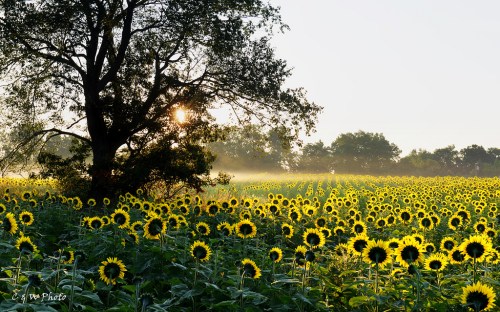
Sunflower in Fog

Sunflower in Fog

Sunflower in Fog, photo by guizhou2012

I know that lots of you are wishing for summer and 70 degrees.

View this photo background big and see more in Yonghui Chen’s Sunflower slideshow.

If you want to fight the power, there’s more summer wallpaper on Michigan in Pictures.

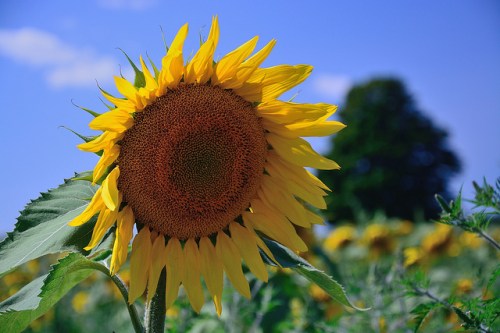
Mr. Sunshine: Sunflowers in Michigan

Mr. Sunshine . . .

Mr. Sunshine…, photo by Dr. Farnsworth

Michigan Gardener is a fantastic site that can give you all kinds of help with what to put in your garden and how to make it grow. They have a nice article about sunflowers featuring Bob Koenders, owner of the Backyard Bouquet Farm. It begins:

According to the Michigan Department of Agriculture, in 1997 there were 32 farms growing sunflowers on 1,522 acres, and by 2002 there were 91 farms with 2,275 acres. Most of the fields of open sunflowers are oil seed type, grown for oil or seed (for birds or humans). Their heads were bred to hang down, making it more difficult for birds to eat the seeds and rain to ruin the harvest.

…According to the National Sunflower Association, the wild sunflower is native to North America, but commercialization of the plant was done by Russia. It was only somewhat recently that the sunflower plant “returned” to America. Native Americans first developed the wild sunflower into a single-headed plant with a variety of seed colors including black, red, white, and striped black and white. Some archeologists suggest that sunflowers may have been domesticated before corn. The Native Americans used the sunflower seed for grinding into flour, trail snacks, purple dyes, body painting, ceremonial, and medicinal uses. Sunflower oil was used for making bread, as well as on skin and hair. The dried stalks were even used for building materials.

They add some fun facts about sunflowers:

  • Sunflower’s scientific name is Helianthus; Helios meaning “sun” and anthos meaning “flower.”
  • Sunflower heads track the sun’s movement; this phenomenon is called heliotropism.
  • Sunflowers can grow up to 12 inches a day during the peak of the growing season. They are more photosynthetic than many other plants and better utilize the sun for growth.
  • Sunflower stems were used as filling for life jackets.
  • Sunflower leaves are cupped to channel the water down the stem.
  • Sunflower heads consist of 1,000 to 2,000 individual flowers joined by a receptacle base. The large petals around the edge of the sunflower head are individual ray flowers which do not develop into seed.
  • The world record sunflower with the most heads (837) was grown in Michigan in 2001.

Read on for lots more including tips about growing sunflowers and get tons more sunflower info from the National Sunflower Association.

Check Dale’s photo out background bigtacular and see more in his Flower slideshow.

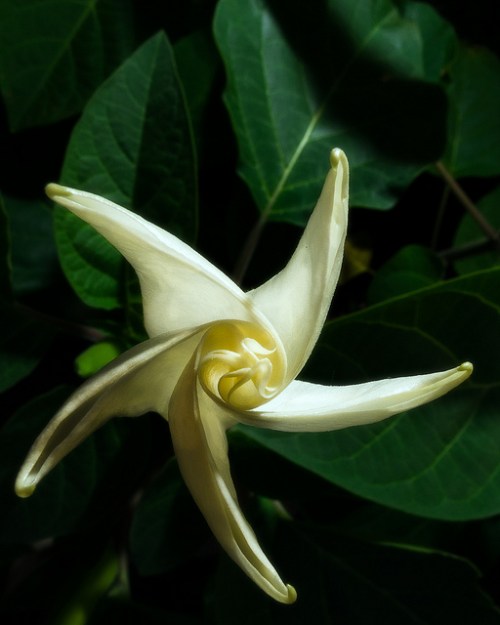
Moonflower

Moonflower

Moonflower, photo by bill.d

WiseGeek’s page on growing moonflowers explains:

For a gardener who doesn’t keep a normal nine-to-five schedule, growing moonflowers may be the perfect hobby. Ipomoea alba, or the common moonflower, is a night-blooming vine from the same family as the morning glory. Growing moonflowers requires very little effort, and the gardener is rewarded with a climbing vine that can reach a height of 10 to 20 feet (3.05 to 6.1 meters) in one season. In its natural habitat of tropical and sub-tropical climates, this vine is considered a perennial, but in colder climates it must be replanted every year.

…As with their daytime cousins, the morning glories, growing moonflowers requires full or partial sun. The plant will begin to bloom in late afternoon and into the early evening hours, and continue to remain open until sunrise. The vines are voracious climbers, and should be planted in a spot where they may spread as needed, such as near a trellis or patio support beam.

Moonflowers produce large white flowers. Some gardeners like to grow them alongside various colors of morning glories, especially the “heavenly blue” strain. This commingling results in an abundance of flowers both day and night in one garden spot, blue in daylight and white by moonlight. The fragrant moonflowers are often considered ornamental, and each flower remains open no longer than one night.

Also see Everything You Wanted to Know About Moonflowers from Local Harvest check out this video of a moonflower opening.

Bill took this shot in his garden and suggests you  check out “moon flower moth” on Flickr. See his photo bigger and see  more great shots of these ephemeral beauties in his Flowers slideshow!

Many (many) more Michigan flowers on Michigan in Pictures!

These are a few of my favorite things

May 30, 2013

May 30, 2013, photo by rickrjw

As you can see from Rick’s photo taken yesterday, 2013 has blessed Northern Michigan with a strong morel season that is still going strong while lilacs are out! Doesn’t get much better than this!

Check this out on black and see more in Rick’s giant Boyne City, Michigan slideshow.

Of course there are morels & lilacs aplenty on Michigan in Pictures!

Sign of spring #77: Trillium in the Woods!

Trillium

Trillium, photo by karstenphoto

One of the many signs of spring in Michigan is the appearance of the endangered trillium flower in the woods. In Plant Focus: Trillium, George Papadelis of the Michigan Gardener writes that for hundreds of years, this plant and its name have been used to symbolize purity, simplicity, elegance, and beauty.

In Ohio, where all 88 counties have masses of wild trillium, it was selected as the state’s official wildflower. Its flowers have twice graced a U.S. postage stamp. Even our Canadian friends across the bridge have declared white trillium (Trillium grandiflorum) the official provincial flower of Ontario. Other parts of the world share our passionate admiration for this plant. In Europe, where trilliums are not found in nature, gardeners dedicate vast amounts of time and money acquiring them, especially rare species. In Japan, a cult-like interest has developed towards trillium.

The most readily available species is Trillium grandiflorum or white wake-robin. This has large, pure white flowers up to 5 inches across. These develop in great abundance throughout the northeastern U.S. Its flowers usually fade to a dull pink and sometimes red. Trillium erectum is a much more diverse species with flowers ranging from red to purple to yellow-green and beige. It also grows wild in the Northeast and Michigan. Trillium luteum is the most common yellow species. It originates from areas around eastern Tennessee. One of its most notable features is the beautiful dark green leaves decorated with pale green markings. The flowers are relatively small. Trillium recurvatum bears maroon-purple to clear yellow flowers with strongly curved petals.

Read on for information about how to legally grow trillium.

Check this out background bigtacular, check out his Spring slideshow and see more from Steve on Michigan in Pictures.

More spring wallpaper

Tulip Time in Holland

Yellow Tulips
Yellow Tulips, photo by srab44_2000

Holland’s annual celebration of Dutch heritage and culture, the Tulip Time Festival, starts Friday May 4th and runs through May 11th. While last year’s crazy March heatwave had tulips blooming in mid-April, tulips have been in the slow lane in 2013 due to a cool spring. The good news according to meteorologist Bill Steffen is that a well-timed warmup should have tulips in near perfect bloom this year.

Check this photo out background bigtacular and see more in E. Benson’s Tulip Time Festival 05/2009 slideshow.

More tulips and more Holland on Michigan in Pictures.

Spring Bokeh

Untitled

Untitled, photo by Brooke Pennington

I refuse to give the ice storm that’s outside my door any power.

Brooke takes some great shots of flowers – check this out on black, see more in his slideshow or here on Michigan in Pictures.

More about bokeh.

Crocus kind of mood

DSC08382

DSC08382, photo by ansonredford

Crocuses have to be one of my favorite flowers. In addition to being beautiful, they are also one of the leading harbingers of spring in Michigan!

Check this out background bigtacular, get yourself in a springtime mood with Donald’s Flowers slideshow and see more of his photos on Michigan in Pictures.

More flowers on Michigan in Pictures, and if you want to be particular, here’s just the crocuses!

Spring Return: Eastern Redbud

I'll Return With Spring

I’ll Return With Spring, photo by MightyBoyBrian

On AnnArbor.com Rick Meader writes:

When you think about popular, colorful ornamentals, Eastern Redbud (Cercis canadensis) often comes to mind. It’s a real crowd-pleaser, with a graceful, ornamental shape that puts out a “bouquet on a stem” look, with thousands of tiny pink/purple flowers lining its branches in early spring before its leaves emerge.

And, the best thing about it is, it’s native to southern Michigan, as well as most of the eastern half of the United States south of here. Furthermore, as a member of the Pea family (Fabaceae) it’s a cousin to the previous pod-producers we’ve learned about, Honeylocust (Gleditsia triacanthos) and Kentucky Coffeetree (Gymnocladus dioica).

As mentioned before, Eastern redbud is native to southern Michigan, occurring naturally up to a line across the lower peninsula from Kent County to Genesee County.

…If you want to use it in your landscape, it is fairly flexible in terms of where it will grow. It naturally occurs in rich soil along stream and river banks but is tolerant of a wider range of conditions. It likes sun or partial shade and can do well in most soils except waterlogged soils and dry, sandy soils.

Read on for more including Rick’s advice to make sure your tree comes from a northern nursery because trees from southern nurseries often are killed off by Michigan’s cold winters.

Brian’s photo is the first background we selected for the new Absolute Michigan, and  as you can see from past features of his work on Michigan in Pictures, he’s a really talented photographer who uploads big enough for backgrounds. See this shot from April of last year background bigilicious and see more in his Nature slideshow.

More spring wallpaper on Michigan in Pictures!