Michigan in Petoskey stones in the Final 20 for ArtPrize 7

michigan petoskey stone

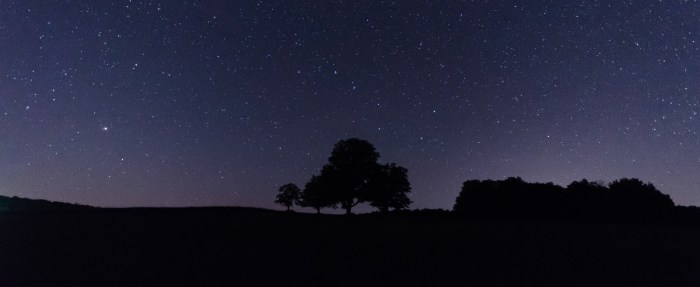
michigan petoskey stone, photo by Jacob Vanderheyden

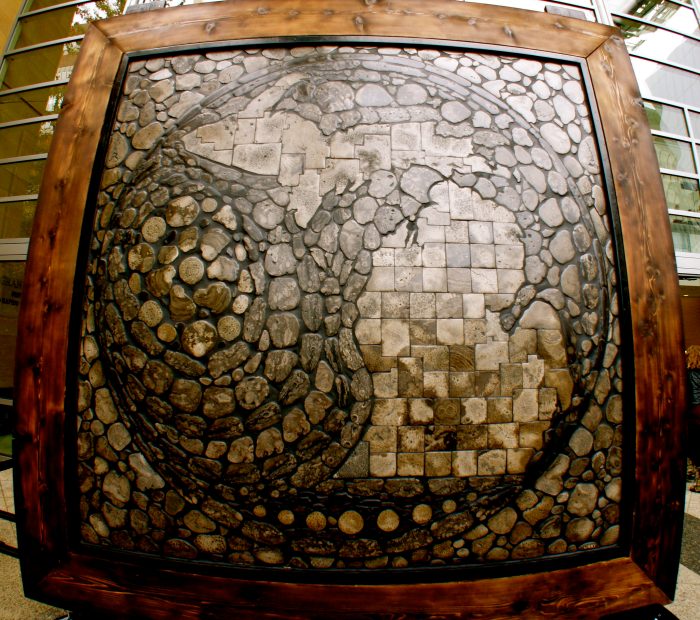
The ArtPrize Seven Final 20 has been announced with 3 of the top entries from 2013 once again in the running. Click the link to see them all, incuding this one: michigan petoskey stone by Randall Libby from Manistee. It’s on display at the DeVos Center – here’s the scoop:

WORLDS LARGEST PETOSKEY STONE DISPLAY Using petoskey stone and fossil, a framed two-dimensional display with a square shape that measures approximately nine feet (9ft.) tall by nine feet (9ft.) wide / a depth of approximately 4 inches and a weight near 700lbs. Subject matter- State of Michigan map with all 83 counties. One of a kind Hundreds of hours of labor with hundreds of individual slices of semi-precious stone- this item is sure to compete for top placement in art prize. To see examples of earlier work go to petoskeystoneart.com

View Jacob’s photo background bigtacular and see lots more in his ArtPrize 2015 slideshow.

More of ArtPrize through the years on Michigan in Pictures.

Under An Autumn Sunbeam: Fall Color Explained

Fall Color 2015 in Michigan

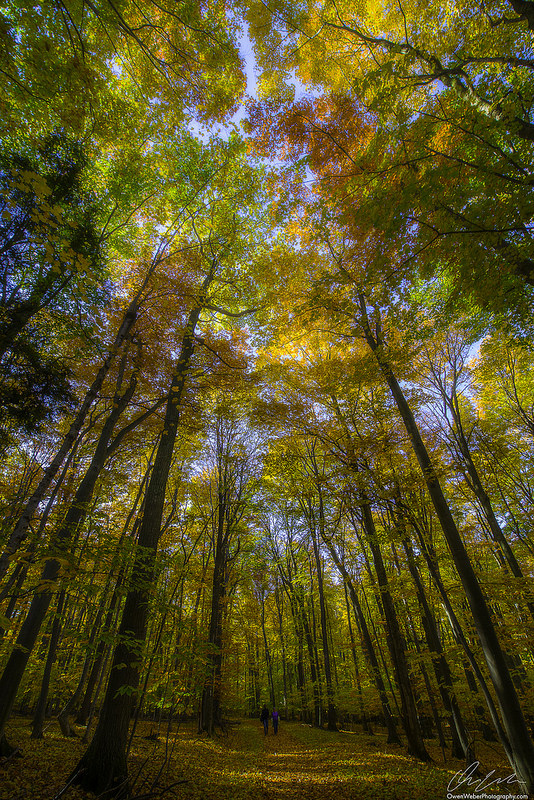
Under An Autumn Sunbeam, photo by Owen Weber

As we wait for the fall color season in Michigan to kick off, here’s a look back to last October and my annual rework of one of the most popular posts on Michigan in Pictures, the Science of Fall Color. If you already know the words you can sing along – have a great weekend folks!

The Science of Color in Autumn Leaves from the United States National Arboretum says (in part):

Many think that cool weather or frost cause the leaves to change color. While temperature may dictate the color and its intensity, it is only one of many environmental factors that play a part in painting deciduous woodlands in glorious fall colors.

…The process that starts the cascade of events that result in fall color is actually a growth process. In late summer or early autumn, the days begin to get shorter, and nights are longer. Like most plants, deciduous trees and shrubs are rather sensitive to length of the dark period each day. When nights reach a threshold value and are long enough, the cells near the juncture of the leaf and the stem divide rapidly, but they do not expand. This abscission layer is a corky layer of cells that slowly begins to block transport of materials such as carbohydrates from the leaf to the branch. It also blocks the flow of minerals from the roots into the leaves. Because the starting time of the whole process is dependent on night length, fall colors appear at about the same time each year in a given location, whether temperatures are cooler or warmer than normal.

During the growing season, chlorophyll is replaced constantly in the leaves. Chlorophyll breaks down with exposure to light in the same way that colored paper fades in sunlight. The leaves must manufacture new chlorophyll to replace chlorophyll that is lost in this way. In autumn, when the connection between the leaf and the rest of the plant begins to be blocked off, the production of chlorophyll slows and then stops. In a relatively short time period, the chlorophyll disappears completely.

This is when autumn colors are revealed. Chlorophyll normally masks the yellow pigments known as xanthophylls and the orange pigments called carotenoids — both then become visible when the green chlorophyll is gone. These colors are present in the leaf throughout the growing season. Red and purple pigments come from anthocyanins. In the fall anthocyanins are manufactured from the sugars that are trapped in the leaf. In most plants anthocyanins are typically not present during the growing season.

As autumn progresses, the cells in the abscission layer become more dry and corky. The connections between cells become weakened, and the leaves break off with time. Many trees and shrubs lose their leaves when they are still very colorful. Some plants retain a great deal of their foliage through much of the winter, but the leaves do not retain their color for long. Like chlorophyll, the other pigments eventually break down in light or when they are frozen. The only pigments that remain are tannins, which are brown.

Temperature, sunlight, and soil moisture greatly influence the quality of the fall foliage display. Abundant sunlight and low temperatures after the time the abscission layer forms cause the chlorophyll to be destroyed more rapidly. Cool temperatures, particularly at night, combined with abundant sunlight, promote the formation of more anthocyanins. Freezing conditions destroy the machinery responsible for manufacturing anthocyanins, so early frost means an early end to colorful foliage. Drought stress during the growing season can sometimes trigger the early formation of the abscission layer, and leaves may drop before they have a chance to develop fall coloration. A growing season with ample moisture that is followed by a rather dry, cool, sunny autumn that is marked by warm days and cool but frostless nights provides the best weather conditions for development of the brightest fall colors. Lack of wind and rain in the autumn prolongs the display; wind or heavy rain may cause the leaves to be lost before they develop their full color potential.

OK, sorry to share a novel with you. Might have to change the name of the blog to “Michigan in a Whole Bunch of Words with a Picture.”

Owen took this last October in Glen Arbor. View it bigger and see more in his Michigan slideshow.

PS: I have to think that it doesn’t look the same there this year due to the crazy storm they are still recovering from.

Tons more fall photos on Michigan in Pictures.

Dipping into October … and October’s Full Moon

Dipping into October

Dipping into October, photo by Aaron Springer

Keith’s Moon Names page says that the October full moon was known as the Hunter’s Moon by Colonial Americans, the Harvest Moon by the Cherokee and ancient Celts and the Blood Moon in Medieval England.

The Farmer’s Almanac says that October’s moon is full on the 27th at 8:05 AM and adds:

Many moons ago, Native Americans named this bright moon for obvious reasons. The leaves are falling from trees, the deer are fattened, and it’s time to begin storing up meat for the long winter ahead. Because the fields were traditionally reaped in late September or early October, hunters could easily see fox and other animals that come out to glean from the fallen grains. Probably because of the threat of winter looming close, the Hunter’s Moon is generally accorded with special honor, historically serving as an important feast day in both Western Europe and among many Native American tribes.

View Aaron’s photo bigger and see more in his slideshow.

Lots more moon lore on Michigan in Pictures!

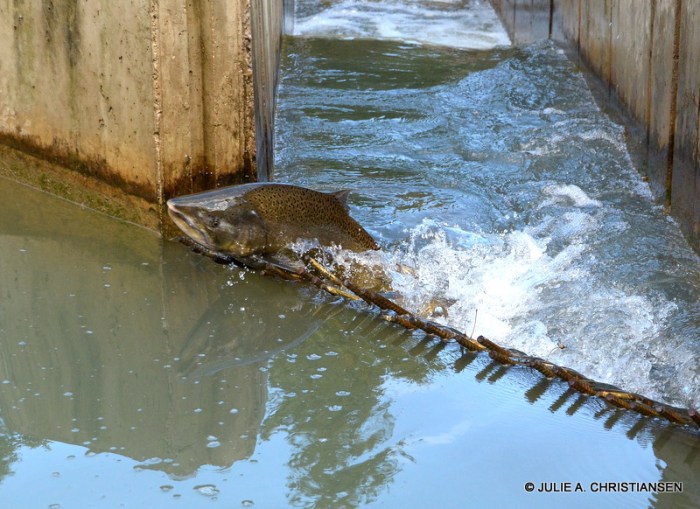
This salmon is going up. The salmon population in Lake Michigan is headed the other way!

EDITOR’S NOTE: It looked for a minute that we had another Turtlegate brewing and that this might not be a Chinook but a brown trout. Read more in the comments on Facebook.

Salmon up and over the dam

Up & Over……….., photo by Julie

The Detroit Free Press reports that the salmon population is plummeting in Lake Michigan. The article begins:

They are the king of the Great Lakes sport fish, luring thousands of anglers to Michigan waters every year for a chance to try to land them — and helping fuel a multibillion-dollar fishing and boating tourism industry.

But the Chinook salmon’s numbers are plummeting in Lake Michigan due to a combination of natural forces, unnatural invasive species, and the state Department of Natural Resources’ own efforts to dial back the population and prevent a more permanent population crash as happened in Lake Huron about a decade ago.

The salmon population on Lake Michigan is down 75% from its 2012 peak, said Randy Claramunt, a DNR Great Lakes fishery biologist based in Charlevoix.

A leading cause is a reduction in alewives, a silvery fish up to 10 inches long that is the salmon’s primary prey on the Great Lakes. The alewife population has been decimated by invasive zebra and quagga mussels that have changed the nutrient dynamics of the lakes.

Read on for more at the Freep.

View Julie’s photo of a salmon jumping up into the weir at Charlevoix bigger and see more in her Wildlife slideshow.

More about Chinook salmon and more fish on Michigan in Pictures.

Bond Falls in Autumn

Bond Falls in Autumn

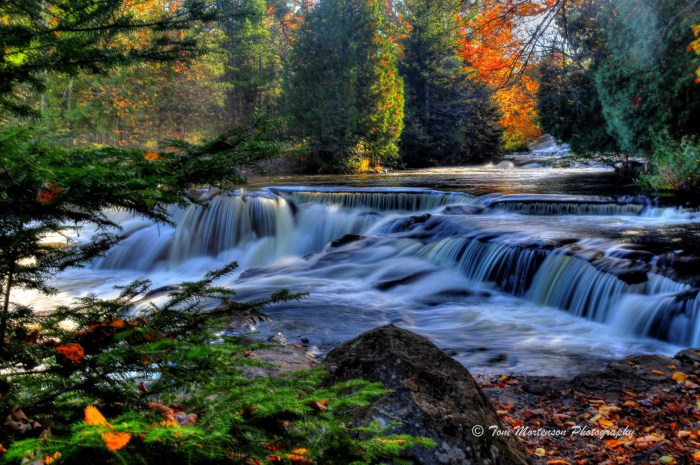
Bond Falls in Autumn, photo by Tom Mortenson

Here’s the latest cover photo for Michigan in Pictures, one of many in the Michigan Cover Photos group on Flickr!

It’s from early October of 2013, and while it looks like our color season could be pretty darned good, it’s probably a little late this year. Via the Freep, it looks like the recent run of “Indian summer” is pushing color back:

The Upper Peninsula, which usually has plenty of fall color by this time in September, is still lolling around in green, reports Pure Michigan and the Foliage Network, which monitor fall color in the state.The very western Upper Peninsula as of Thursday was showing between 12% to 30% color, but the rest of the state had none.

Things seem to be about two weeks or more behind schedule.

Still, “cooler weather has taken hold and should help to get things going,” reports Market Rzonca, who runs The Foliage Network.

Pure Michigan’s fall color blog (Michigan.org/fall) predicted that peak fall color in the U.P., including Mackinac Island, is not expected to hit for about three weeks. Same with Alpena, Charlevoix and Ludington. Farther south, the show will come even later.

View Tom’s photo background bigtacular and check out more of Tom’s Michigan waterfall photos.

There’s more fall wallpaper, more about fall color, and more on Bond Falls on Michigan in Pictures.


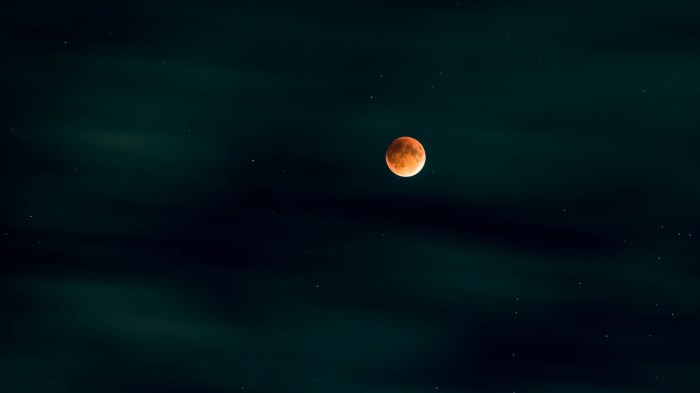
Super Blood Moon Eclipse

Super Blood Moon Eclipse

Super Blood Moon 09/27/2015, photo by Alex Thorpe

While clouds marred much of this rare total eclipse of a perigee moon aka super moon, there were places & times that worked.

Check out this gallery of eclipse photos from Fox 17 viewers and definitely share yours and others you find on the Michigan in Pictures Facebook!

View Alex’s photo background bigtacular and see more in his slideshow. It looks like he got a little hint of the northern lights in the long exposure too!

More eclipses on Michigan in Pictures!

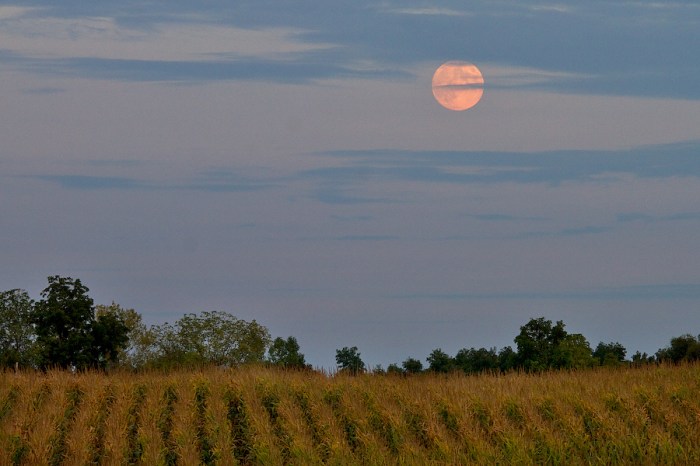
Harvest Moon Eclipse Sunday Night

Harvest Moon over Michigan Cornfield

Harvest Moon over Cornfield, photo by Kevin

NASA Science reminds us that this Sunday night (Sep 27) and into the early hours of Monday, the full Harvest Moon will glide through the shadow of Earth, turning the Harvest Moon a golden-red color akin to autumn leaves:

The action begins at 9:07 PM Eastern Time on the evening of Sept 27th when the edge of the Moon first enters the amber core of Earth’s shadow. For the next three hours and 18 minutes, Earth’s shadow will move across the lunar disk.

Totality begins at 10:11 PM Eastern Time. That’s when the Moon is completely enveloped by the shadow of our planet. Totality lasts for an hour and 12 minutes so there is plenty of time to soak up the suddenly-red moonlight.

The reason the Moon turns red may be found on the surface of the Moon itself. Using your imagination, fly to the Moon and stand inside a dusty lunar crater. Look up. Overhead hangs Earth, nightside facing you, completely hiding the sun behind it. The eclipse is underway.

You might suppose that the Earth overhead would be completely dark. After all, you’re looking at the nightside of our planet. Instead, something amazing happens. When the sun is located directly behind Earth, the rim of the planet seems to catch fire! The darkened terrestrial disk is ringed by every sunrise and every sunset in the world, all at once. This light filters into the heart of Earth’s shadow, suffusing it with a coppery glow.

Click through for more including a video Science Cast of how it all works.

Kevin is the go-to moon-and-astronomy guy on Michigan in Pictures, delivering great photos and info. He shares this about the Harvest Moon:

The “Harvest Moon” is the name traditionally given to the full moon that occurs closest to the autumnal (fall) equinox. The Harvest Moon usually comes in September, but (on average) once or twice a decade it will fall in early October. At the peak of the harvest, farmers can work into the night by the light of this moon.

At this time of the year also occurs the “Harvest Moon Effect”. Usually the moon rises an average of 50 minutes later each night, but for the few nights around the Harvest Moon, the moon seems to rise at nearly the same time each night: just 25 to 30 minutes later across the U.S., and only 10 to 20 minutes later for much of Canada and Europe. Corn, pumpkins, squash, beans and wild rice are now ready for gathering.

View his photo bigger and see more of moon photos including this cool one of the harvest moon over Grand Rapids taken a little earlier in his The Moon slideshow.

There’s more about the Harvest moon and more eclipses on Michigan in Pictures!

Best Friends in Nature: Crayfish & Green Frog Edition

Best Friends Crayfish & Green Frog

Crayfish & Green Frog, photo by John Heintz Jr.

The next installment of the critically acclaimed Michigan in Pictures exclusive “Best Friends in Nature” series. I believe what these two have in common is a long list of shared predators, so this could well be a pond-side support group meeting. ;)

View John’s photo bigger and see more of his cool wildlife photos. Seriously, I feel like he’s the long-lost nephew of Doctor Doolittle when I look at his photos!

More animals on Michigan in Pictures, and also more about the Northern Green Frog.

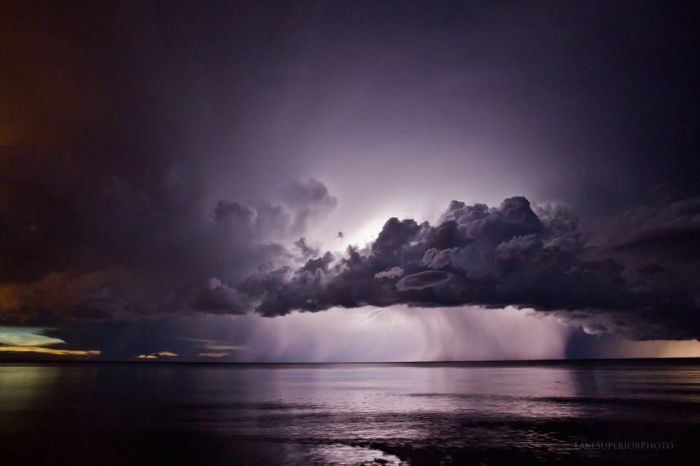
(U.P.) Weather Gone Viral

Lake Superior Weather Channel Thunderstorm

Thunderhead over Superior, photo by Lake Superior Photo

Regular Michigan in Pictures contributor Shawn Malone of Lake Superior Photo created the official music video for David Helpling’s “As The World Falls Away.” It features her latest cinematic time-lapse work filmed entirely in the Upper Peninsula of Michigan merged with sequences from NASA’s ISS to form a stunning visual & auditory journey.

It will appear on the The Weather Channel in their “Weather Gone Viral” episode that airs tonight on The Weather Channel. She says they’ve told her 10 PM EST, but check your local listings.

View Shawn’s photo bigger on Facebook and see more of her work at Lake Superior Photo!

Here’s the full video:

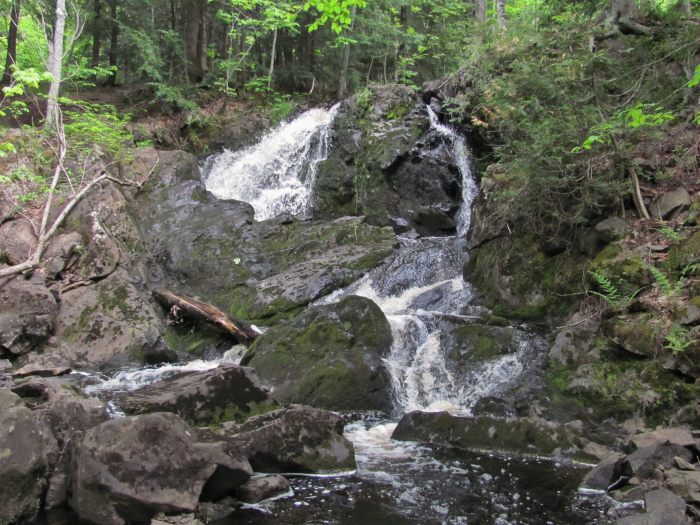
Waterfall Wednesday: Wyandotte Falls on the Misery River

Wyandotte Falls Upper Peninsula

Wyandotte Falls, photo by David Hedquist

Waterfalls of the Keweenaw has this to say about Wyandotte Falls on the Misery River:

Misery River drains Lake Roland and Gerald (aka the Twin Lakes) westwards out to Lake Superior, passing over the small Wyandotte Falls along an otherwise twisted and swampy route. This waterfall is just downstream of a set of ponds next to a small set of cabins and the Wyandotte Hills Golf Course. Nestled in an older grouping of huge cedar trees and surrounded by smooth, moss-covered rocks, this waterfall seems ancient compared to the nearby golf course and state park. Also, due to the twin lakes upstream, Wyandotte Falls is susceptible to a rather large influx of spring melt.

You can click for more including photos and a map.

View David’s photo background big and see more in his Wyandotte Falls slideshow.

Many (many) more Michigan waterfalls on Michigan in Pictures.