Exposure.Detroit November 2008 Exhibition

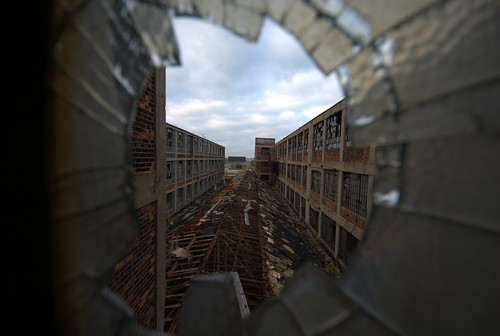
Broken Alley

Broken Alley, photo by Kcjacoby.

The photo is part of Ken’s Packard Plant set (slideshow) and you should check it out bigger right here. Please feel free to deluge him with comments asking him to post the other photos from his trip to the plant faster. ;)

The next Exposure.Detroit show opens next Friday (November 14) from 7-10 PM at the Bean and Leaf Cafe in Royal Oak. In addition to Ken Jacoby, the photographers are:


Brett Lawrence

Niki Collis (Luna.Nik)

Aaron Fortin

Rebecca Gutierrez (Luna’s Eyes)

Poster designed by Ajit.

A War Worth Waging and A Vote Worth Casting

A War Worth Waging – HFM, photo by MikeRyu

View it bigger on black and see more photos in Mike’s Henry Ford Museum set (slideshow).

Seeing this photo and realizing it’s been less than 100 years that women have enjoyed the right to vote made me think about how tirelessly they worked to secure the right to vote. Here’s a snapshot of women’s suffrage in Michigan courtesy the H-Net Chronology of Michigan Women’s History:

1849 A Senate committee, led by Senator Rix Robinson of Ada, proposes a universal suffrage amendment but it is not acted upon because of the “unusualness” and “needlessness” of the franchise for women.

1866 The state’s first bill on woman suffrage is defeated by one vote.

1867 The Michigan Legislature grants women taxpayers the right to vote for school trustees but rejects total woman suffrage.

1912 Governor Charles S. Osborn successfully urges the Michigan State Legislature to put the suffrage question before the all-male electorate in November. Clara B. Arthur of Detroit leads the campaign and the proposal appears to win. However, the opposition steals the election under suspicious circumstances.

1917 Governor Albert E. Sleeper signs a bill on May 8, granting Michigan women the right to vote in presidential elections.

1918 Michigan male voters approve a state constitutional amendment granting suffrage to Michigan women.

1919 Michigan women vote for statewide offices for the first time.

1920 The 19th Amendment to the Constitution, granting the vote to women, becomes law on August 26. Women vote for the first time in the presidential election on November 2.

It also made me wonder how something (each of our rights to vote) that has been bought and paid for time and again with far, far too much blood, sweat and tears can be treated with such disdain by many.

Your vote is your voice, please speak up today.

More about voting in Michigan from Absolute Michigan.

Winners

https://www.flickr.com/photos/sscherbinski/2997631578/

Winners, photo by scherbis.

Here’s hoping you feel like a winner this week.

Be sure to check it out bigger

Support Michigan in Pictures with Patreon

National Mine, old shed

fullshedinrain600

fullshedinrain600, photo by TheDailies.

This photo is part of Kim’s National Mine set (slideshow). She has posts about her place in National Mine on her blog. She took this shot in the rain, so it probably makes sense to share the Weather Underground page for National Mine.

Wikipedia’s National Mine, Michigan entry says that National Mine is an unincorporated community in Tilden Township (Marquette County), located just south of the city of Ishpeming.
Michigan Place Names by Walter Romig

The village was founded in 1878 as part of the estate of the Lake Superior Iron Company, in the Winthrop Range. It was given a post office on December 5, 1879, with Richard F. Ellis as its first postmaster.

For Paul Harvey, this is Andy McFarlane saying have a great weekend!

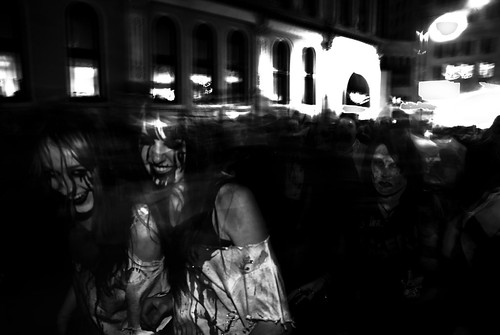
Happy Zombies at the World Record Grand Rapids Zombie Walk

Untitled, photo by chad℠.

Chad captured this cool view of the likely world record Grand Rapids Zombie Walk. GR based Spout writes:

Thursday, October 30, Grand Rapids, Michigan. A seemingly average midwestern city. Until the zombies invade. A throng of at least 3,370 zombies flowed through the downtown streets (it’s very likely it was over 4,000) to try and break the world record for the largest zombie walk. The event, organized by college sophomore Rob Bliss, shattered the previous record of 1,375, set just a few days earlier in the Pittsburgh suburb of Monroeville. If Monroeville sounds familiar to zombie fans, it should. The Monroeville Mall was the setting of George Romero’s Dawn of the Dead.

View a Grand Rapids Zombie Walk slideshow and share your GR Zombie Walk photos right here on Flickr. Much more Halloween fun at Absolute Michigan!

Update: Chad has a Zombie Walk set up now (slideshow).

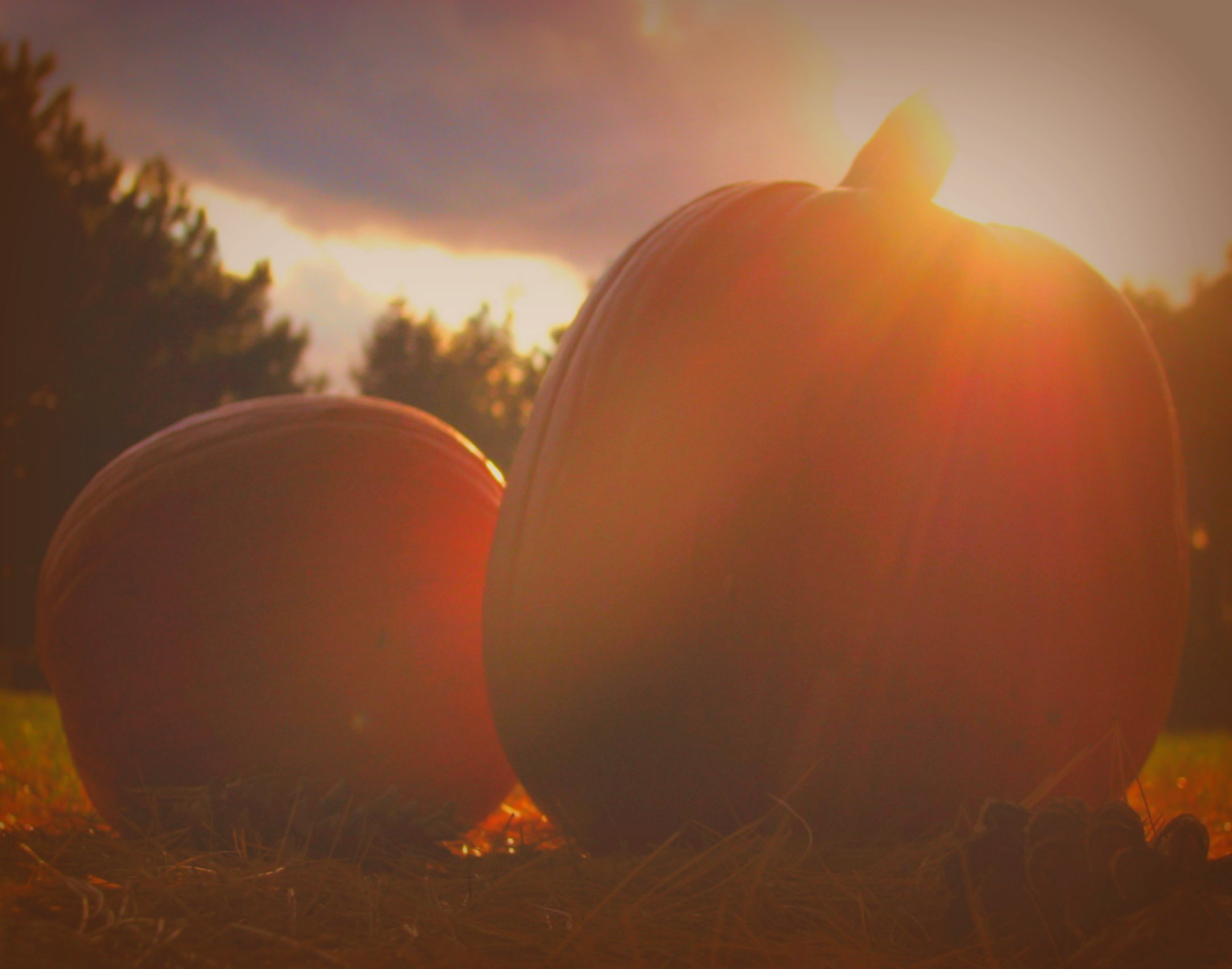
Pre-Jack-O-Lanterns-Sun-Kist

Jock o Lantern Sunset

Pre-Jack-O-Lanterns-Sun-Kist, photo by mdprovost

Wikipedia’s pumpkin entry says:

The word pumpkin originates from the word pepon, which is Greek for “large melon.” The French adapted this word to pompon, which the British changed to pompion and later American colonists changed that to the word we use today, “pumpkin.” The origin of pumpkins is not known, although pumpkins are thought to have originated in North America.

…Pumpkins are commonly carved into decorative lanterns called jack-o’-lanterns for the Halloween season in North America. Throughout Britain and Ireland, there is a long tradition of carving lanterns from vegetables, particularly the turnip, mangelwurzel, or swede. Not until 1837, however, does jack-o’-lantern appear as a term for a carved vegetable lantern, and the carved lantern does not become associated specifically with Halloween until 1866.

You can read more about Michigan pumpkins from Absolute Michigan and also view a pumpkin slideshow from the Absolute Michigan pool!

Click for more fall wallpaper on Michigan in Pictures!

A Haunting at Historic Fort Wayne

A Haunting at Historic Fort Wayne

A Haunting at Historic Fort Wayne, photo by milminedesign.

On the last Wednesday of every month, Absolute Michigan has a “Weird Wednesday” – a day dedicated to sharing creepy tales and strange photos from all across Michigan. Today is no exception and you can click over to read the legend of Dog Lady Island, a special excerpt from the great book Weird Michigan by Linda S. Godfrey.

Linda doesn’t have a corner on the unexplained though – here’s a photo from the Absolute Michigan pool by Karen who writes:

I took this photo on a sunny spring day in early April. Late afternoon at Historic Fort Wayne in Detroit. No one was in front of me when the photo was taken, nor did I see this apparition until reviewing my photos. I am an investigator with Metro Paranormal Investigations here in Michigan and we were preparing for an investigation. Notice that the figure does not have a head. Pictures taken immediately before and after this one show normal lighting and look nothing like this one. This photo has been analyzed many times by several individuals and the current conclusion is that it is unexplained.

At the Metro Paranormal Investigations you can check out paranormal reports and more photos in their gallery.

The Wikipedia entry for Fort Wayne in Detroit doesn’t mention any hauntings, but you should probably go there to check! One thing I do know about Fort Wayne is that the whole facility is in peril due to a lack of funding for historic preservation. You can learn more about that from the Historic Fort Wayne Coalition and at Save Fort Wayne.

100 years of Lake Michigan at South Haven Pier Lighthouse

Late October on Lake Michigan

Late October on Lake Michigan, photo by micstolz.

Michael notes that even 100 years of Lake Michigan waves can’t put out the South Haven Light. He has several more in his South Haven Oct 26 2008 set (slideshow) – all uploaded “background big”. You might also want to check out the South Haven Light slideshow from the Absolute Michigan pool.

Terry Pepper’s Seeing the Light relates the history (with photos) of the South Haven Pier Lighthouse. He writes that a Fifth Order Fresnel lens from Parisian glass makers Barbier and Fenestre was installed in the lantern in 1902:

While the light was new, the old wooden beacon had withstood thirty years of Lake Michigan’s worst, and as a result of increasing deterioration, Eleventh District engineer James G. Warren laid-out plans to replace the venerable structure with a new cylindrical metal tower.

Contracts for the metalwork and required materials were awarded and delivered to the lighthouse depot in St. Joseph. On October 6, 1903, the tender Hyacinth delivered the prefabricated steel tower and a work crew on the pier, and erection of the new structure continued through the remainder of the month. The thirty-five foot structure was given a gleaming coat of white paint, and the district lampist carefully removed the Fifth-order lens from the old beacon and installed it in the new octagonal lantern. Captain Donahue proudly climbed the spiral stairs within the new tower to exhibit the South Haven light from atop the new tower for the first time on the evening of November 13.

Light and tower remain an active aid to navigation maintained by the Coast Guard and while you’re in South Haven, be sure to visit the Michigan Maritime Museum.

Fall light at Holloway Reservoir

Sunlight Dark Clouds, photo by Sentrawoods.

Holloway Reservoir Regional Park is a 5500-acre park near Columbiaville in Genesee County. The park includes the 1,975-acre Holloway Reservoir and provides opportunities for fishing, canoeing and other recreation.

This photo is available “background-sized” and is part of Ken’s Holloway Reservoir set (slideshow).

More fall wallpaper on Michigan in Pictures

Michigan is Wine Country

Wine Country, photo by smiles7

Last night I had dinner with a writer from England who is exploring vineyards in Leelanau by bicycle for a story. He was asking me some questions about how Michigan ranks nationally in grape & wine production. I didn’t have all the answers, but fortunately there’s the great Michigan Wines web site from the Michigan Grape & Wine Council.

From their fast facts page, I learned that Michigan has about 1,800 acres of wine vineyards, making Michigan the eighth largest in wine grape producer in the nation (if our juice grapes are factored in, we’re 4th largest). We’ve increased our vineyard area over 60% in the last 10 years. Michigan is 13th in wine production with 56 commercial wineries that produce over 425,000 cases of wine annually. The state’s wineries are also popular tourist destinations, attracting more than 800,000 visitors annually.

Most of Michigan’s quality wine grapes grow within 25 miles of Lake Michigan. Here, the “lake effect” protects the vines with snow in winter, retards bud break in spring helping avoid frost damage, and extends the growing season by up to four weeks.

Michigan has four federally approved viticultural areas (AVAs). In the northwest part of the state, near Traverse City, lie the Leelanau Peninsula and the Old Mission Peninsula. This area has a growing season averaging 145 days and an average heat accumulation of 2,350 growing degree days; 51% of Michigan’s wine grapes grow here. In the southwest part of the state lie the Lake Michigan Shore and Fennville appellations, where 45% of Michigan’s wine grapes are grown. This area has a growing season averaging 160 days and an average heat accumulation of 2,750 growing degree days.

You’ll also want to check out their history page for the very interesting story of Michigan’s winemaking history. Here’s the vineyard slideshow from the Absolute Michigan pool and you can get lots more features and links for Michigan wines from Absolute Michigan.