

“Don’t Forget Why You Have Today Off Work, photo by J.M.Barclay
Indeed. Enjoy your extra weekend day but take some time to remember the incredible sacrifices that have been made for our nation.
View J.M.’s photo bigger and see more in his slideshow.
“Don’t Forget Why You Have Today Off Work, photo by J.M.Barclay
Indeed. Enjoy your extra weekend day but take some time to remember the incredible sacrifices that have been made for our nation.
View J.M.’s photo bigger and see more in his slideshow.
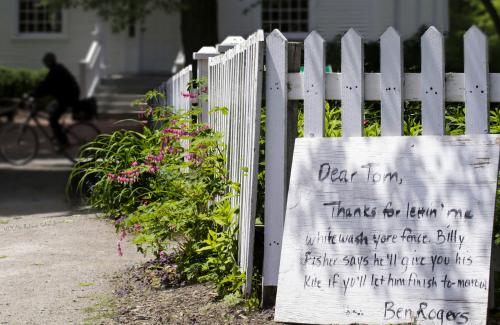
White Washed Fence, photo by RSchmidt Loads
Where would we be without humor?
I hope that everyone who’s traveling this weekend has a safe and pleasant trip and is able to meet any challenges with a smile or a chuckle.
View RSchmidt’s photo of this fence in Northville bigger and see more in their Objects slideshow.
More funny business on Michigan in Pictures.
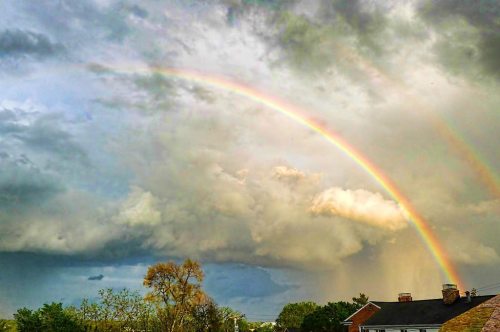
Another Amazing Sky, photo by Ben Thompson
Gotta love Spring!
View Ben’s photo bigger and see more in his Weather/Clouds slideshow.
More Michigan weather fun and more Ann Arbor on Michigan in Pictures.
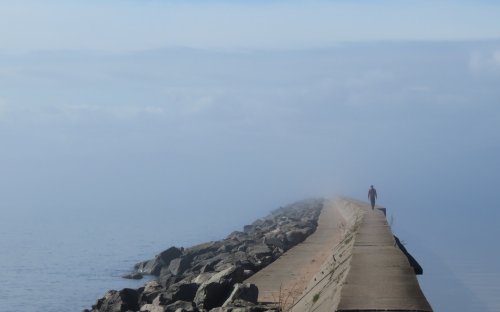
Walking the breakwater in the fog, photo by Ann Fisher
View Ann’s photo of the Marquette breakwater background bigtacular and see more in her 2015 UP slideshow.
There’s more spring wallpaper, fog & mist & Marquette on Michigan in Pictures.
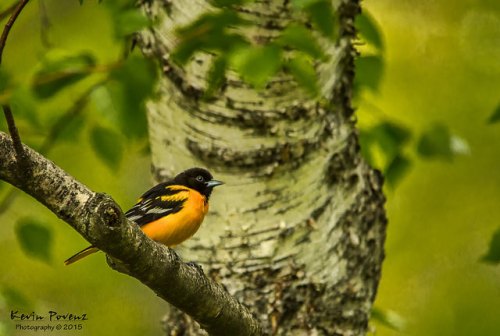
Baltimore Oriole, photo by Kevin Povenz
The Baltimore Oriole (Icterus galbula) entry from All About Birds says (in part):
The rich, whistling song of the Baltimore Oriole, echoing from treetops near homes and parks, is a sweet herald of spring in eastern North America. Look way up to find these singers: the male’s brilliant orange plumage blazes from high branches like a torch. Nearby, you might spot the female weaving her remarkable hanging nest from slender fibers. Fond of fruit and nectar as well as insects, Baltimore Orioles are easily lured to backyard feeders.
…Baltimore Orioles are more often heard than seen as they feed high in trees, searching leaves and small branches for insects, flowers, and fruit. You may also spot them lower down, plucking fruit from vines and bushes or sipping from hummingbird feeders. Watch for the male’s slow, fluttering flights between tree tops and listen for their characteristic wink or chatter calls. Look for Baltimore Orioles high in leafy deciduous trees, but not in deep forests: they’re found in open woodland, forest edge, orchards, and stands of trees along rivers, in parks, and in backyards.
Baltimore Orioles seek out ripe fruit. Cut oranges in half and hang them from trees to invite orioles into your yard. Special oriole feeders filled with sugar water supplement the flower nectar that Baltimore Orioles gather. You can even put out small amounts of jelly to attract these nectar-eaters (just don’t put out so much that it risks soiling their feathers). Planting bright fruits and nectar-bearing flowers, such as raspberries, crab apples, and trumpet vines, can attract Baltimore Orioles year after year.
Read on for more and to see pictures and hear the distinctive song of the oriole.
View Kevin’s photo bigger and see more in his Birds slideshow.
Many (many) more Michigan birds on Michigan in Pictures.
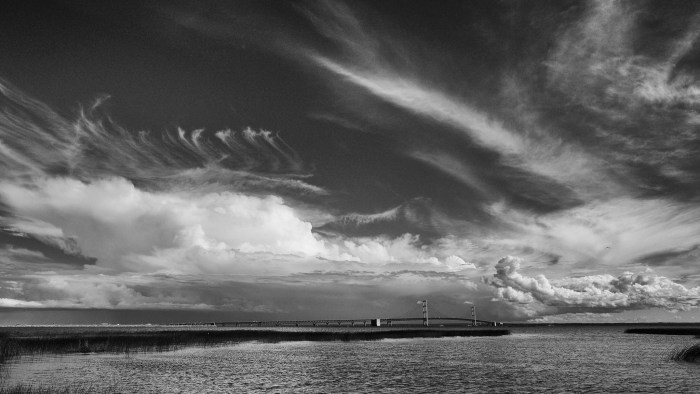
Mackinac Bridge, Michigan by Zack Schindler
Zack says that he shot this in B&W with the red filter turned on in the X-E1.
View it big as the sky and see more in his My Other Stuff slideshow.
More black & white photography on Michigan in Pictures.
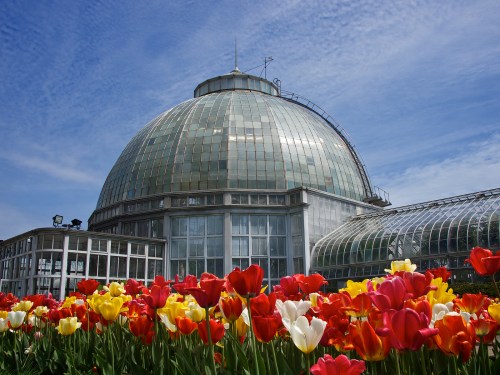
Belle Isle Conservatory – Detroit, Michigan, photo by David Marvin
Dan Austin of Historic Detroit has an excellent article on the Anna Scripps Whitcomb Conservatory on Belle Isle that begins:
If Belle Isle is Detroit’s crown, then the Anna Scripps Whitcomb Conservatory is its brightest emerald, full of brilliant green ferns, palms and cacti and plant life from all over the world.
The conservatory, opened in the center of the island on Aug. 18, 1904, the same day as its next door neighbor, the Belle Isle Aquarium. Both were designed by Albert Kahn, who for the conservatory turned to Thomas Jefferson’s Monticello for inspiration. It sits on 13 acres and features a lily pond on its north side and is fronted by formal perennial gardens on the west. These gardens are home to theLevi L. Barbour Memorial Fountain. For the first 51 years of its existence, the building was known as simply the Conservatory or the Horticulture Building. Today, the Anna Scripps Whitcomb Conservatory is the oldest, continually operating conservatory in the United States.
The building covers about an acre and has five areas, each housing a different climate, and features a north wing and a south wing and a 100,600 cubic feet dome 85 feet high to accommodate soaring palms and other tropical plants. The north wing houses hundreds of cacti and desert plants, and just beyond that is a room packed with ferns from floor to ceiling. The south is home to hundreds of tropical plants and the Children’s Christian Temperance Fountain. The collection also includes perennial gardens and displays of annuals. The show house, remodeled in 1980, features a continuous display of blooming plants.
Definitely read on at Historic Detroit on for how the Conservatory got its name and became home to the largest municipally owned orchid collection in the country. There’s also a great historic photo gallery.
Here’s the official site for Belle Isle Conservatory. The hours are Wednesday-Sunday, 10 AM – 5 PM and the Belle Isle Aquarium is open Saturdays and Sundays as well.
View David’s photo background bigtacular and see more in his slideshow.
More spring wallpaper on Michigan in Pictures.
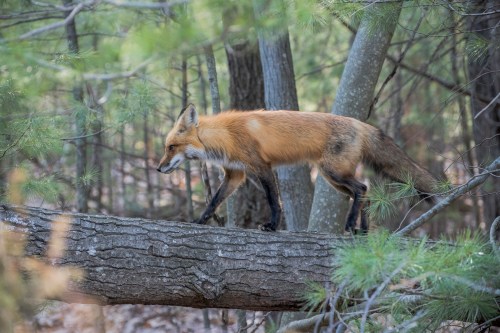
Fox Crossing, photo by Mark Miller
What an incredible catch by Mark!
View his photo bigger and see more of this little lady in his slideshow.
PS: More about red fox in Michigan from Michigan in Pictures.
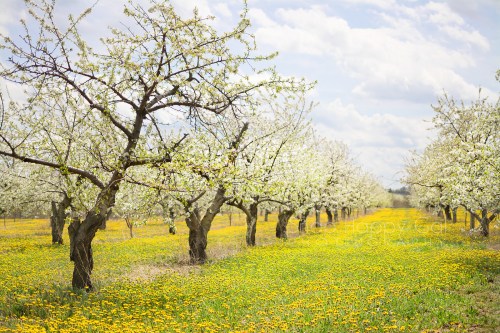
Old Mission Orchard, photo by Heather Higham
The cherry blossoms are out on northwest Michigan’s Old Mission Peninsula. A little over 100 years ago, this annual occurrence gave birth to Traverse City’s National Cherry Festival. The Cherry Festival’s history page shares that sometime around 1910, cherry growers in the Grand Traverse area began to hold informal “blessing of the blossoms” ceremonies each year at blossom time in May. The TC Record-Eagle picks up the story:
Something had to be done to attract tourists to the Grand Traverse area, local resident and community leader Jay P. Smith declared in 1925.
Henry Ford had introduced a new automobile that allowed people to travel long distances with ease, and Hannah, Lay & Co. spurred a growing business atmosphere here, but tourism still lagged. So Smith created the Blessing of the Blossoms festival.
For one day in May area residents and visitors traveled out to the Old Mission Peninsula to view fields of cherry blossoms from the vantage point of two towers, then flocked to a downtown parade that moved east on Front Street from Elmwood Avenue to Railroad Avenue.
“This was kind of a big deal,” said Gary Kaberle, a former National Cherry Festival president. “People really liked this.”
But Smith and his committee quickly realized that a May festival meant children weren’t out of school and tourists were less likely to have time off work, so they moved the festival to July to coincide with the cherry harvest.
You can read on for more about the evolution of the Cherry Festival and if you want to attend, the dates are July 4-11, 2015 and you can get all the details at cherryfestival.org.
Heather writes that she was looking into an orchard from the edges, surrounded by flowers and bees when she took this picture. View her photo bigger on Flickr, see more in her Old Mission Peninsula slideshow and definitely follow her at Snap Happy Gal Photography on Facebook.
PS: If you want to learn about the early days of the Old Mission Peninsula, check out Rev. Peter Dougherty House on Old Mission having one heck of a yard sale from May 2007 on Michigan in Pictures.
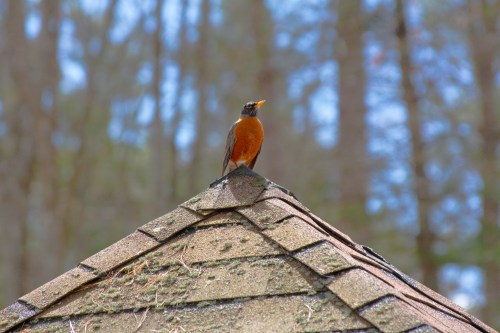
Perched Robin, photo by matt.swope
Top of the morning to you from Michigan’s state bird, the American robin!
View Matt’s photo background big and see more in his Northern Michigan slideshow.
More Michigan birds and more spring wallpaper on Michigan in Pictures.
 Michigan in Pictures