Gagetown – Michigan’s Thumb Octagon Barn

Gagetown - Michigan's Thumb Octagon Barn, photo by coloneljohnbritt

Gagetown – Michigan’s Thumb Octagon Barn, photo by coloneljohnbritt

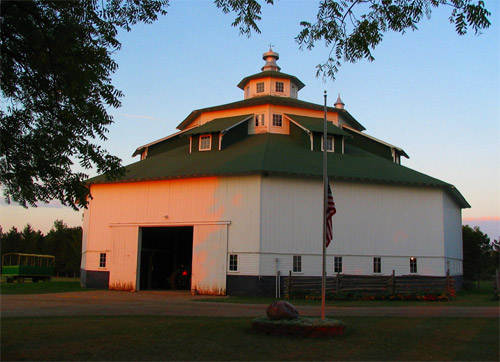
John writes that this enormous, eight-sided barn in Gagetown is an agricultural museum open to the public during the warmer months.

Check out thumboctagonbarn.org for details including the answer to a question: Why an octagon barn?

Besides the fact that Mr. Purdy (the owner of the barn) was taken up by the uniqueness of this shape of barn, it was during this period that the agricultural community was promoting an octagon or round barn as the building of the future for agriculture. It was felt that this shape of building would be handier to work out of and that it would replace three or four buildings on the farm, i.e. hog house, horse barn, grainery, etc.).

At this same time Sears Roebuck & Co. listed a number of different sized octagon barn packages in their catalogue. You could order a barn “kit” and it was loaded on a flat car in Chicago and shipped all over the country.

It is obvious that if an octagon barn was the building of the future for agriculture there would have been more of them dotting our landscape. In talking to men who worked on the Purdy Farm as boys, they said that it was not as handy to work in and it was a more costly building to build.

Their photos page has some neat images including a photo of the Purdy Farm and barn from 1924.

Late July Corn

Late July Corn

Late July Corn, photo by n.weaver.

Hastings … and all over Michigan.

Check out the Michigan Farmer’s Market map on Absolute Michigan and have a couple ears for dinner soon – it’s wonderful!

McClellan School in Mason County

McClellan School.jpg

McClellan School.jpg, photo by smartee_martee.

This photo of the McClellan School in Mason County (near Custer, Michigan) is on of two photos (so far) in Marty’s Mason County set. The other one is a cool old photo of the Pere Marquette Station in Freesoil that I probably would have featured if I didn’t need to see some color so badly!

Summer is a good time to tune into Marty’s photostream as there are a lot of new photos of farms, old homesteads and other forgotten and abandoned structures popping in every week. buckshot.jones writes:

“It is what us folks in Michigan, at least us Detroiters call, “Going Up North.” Most people in MIchigan have a special affinity for the countryside in Northern Michigan. If you you’ve never been, well then you may never know. Here’s my solution. Take a tour of Smartee Martee’s photostream. Click on the sets and read the descriptions of the places he’s been. Then find a set you really like, mine is Osceola County, and watch the slide show. It isn’t quite the same as being there, but damn close. This is the heart and soul of rural Michigan captured on film.”

My own favorite is his massive Broken Souls set (slideshow).

A House on a Hill and the Michigan Film Office

House on a Hill by Richard Thompson

House on a Hill, photo by Richard Thompson

Janet Lockwood, Director of the Michigan Film Office writes:

The Film Office needs your help again…

We need a spooky house VERY remote and stark with open landscape and minimal trees in the way. Needs a big basement, but if no basement, a big attic. Big rooms, open halls, high ceilings, all the usual accoutrements for a haunted house. Nice film, will be shooting later in the year, not a big budget but recognizable actors.

You can contact Janet through the link above. She she says that with Michigan’s new film incentive package, you can expect to hear a lot more calls for location suggestions!

If you’re wondering why Michigan would want to attract movie production, consider that a major picture can provide $150,000 or more per day in economic impact on the local economy and films also generate interest in the region they are set in for tourists and others. Here’s a Detroit News story with some more info.

The Victorian home pictured above is near Chelsea and is part of Richard’s Landscape set (slideshow). I’m not the only one who thinks that Richard’s photos are basically movies waiting to happen

UP in Late Winter

Barn6637

Barn6637, photo by ETCphoto.

This photo of a barn near Paulding is part of Terry’s great Easter UP Trip ’08 set of photos (slideshow).

Terry took the trip to see some places he hadn’t seen in winter like Bond Falls, Houghton, Eagle Harbor, Marquette and Grand Island.

Do the slideshow if you have the time!

Invisible Harvest

Spinners 1

Spinners 1, photo by n8xd.

Keith (n8xd) took this photo at Harvest, Michigan’s first commercial wind farm. The farm is owned by John Deere Wind Energy and located near Elkton in the Thumb.

Read more (and see another photo from Keith) in Harvest, Michigan’s first commercial wind farm starts spinning on Absolute Michigan. You can also check out keithdelong.com andbe sure to click through to the photo to see it bigger!

Native American Maple Sugaring: One Drip at a Time

One Drip at a Time

One Drip at a Time, photo by Graphic Knight.

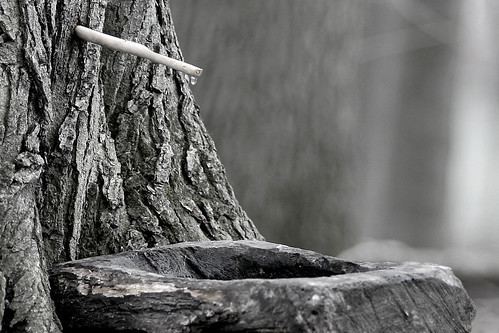
Eric took this photo of an American Indian demonstration on how maple trees were tapped for collecting the sap to make maple syrup at the Kensington Metropark Farm Learning Center. He also has a couple photos of them boiling the say to make maple syrup.

It’s said that there was a time when the sap of the maple tree was as thick and sweet as honey. More practical tales are told of how Nanahboozhoo taught the making of maple sugar:

Then Nanahboozhoo gave the Indians a bucket made of Birch bark, and a stone tapping-gouge with which to make holes in the tree-trunks; and he shaped for them some Cedar spiles or little spouts, to put in the holes, and through which the sap might run from the trees into buckets. He told them, too, that they must build great fireplaces in the woods near the Maple groves, and when the buckets were full of sap, they must pour it into their kettles, and boil it down. And the amount of Sugar they might boil each Spring would depend on the number of Cedar spiles and Birch bark buckets they made during the Winter.

You can learn about a traditional Native American sugarbush from NativeTech and take a look inside the book Ininatig’s Gift of Sugar: Traditional Native Sugarmaking.

Also be sure to check out The Cycle of Sweetness: From Sap to Maple Syrup on Michigan in Pictures for more photos of this fascinating process.

Corunna, Michigan beet farmers and the photography of Lewis Wickes Hine

Corunna, Michigan beet farmers by Lewis Wickes Hine

Corunna, Michigan beet farmers, photo by Lewis Wickes Hine

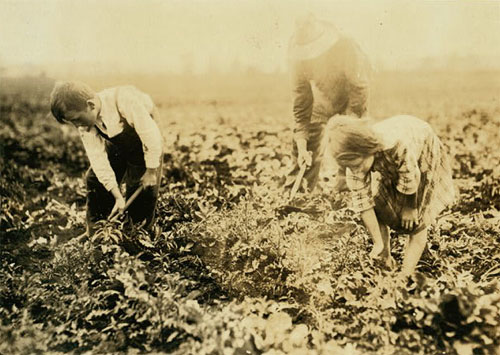
This photo from the Library of Congress from July 17, 1917 is captioned: Jo Durco. This man, his wife and two children, Mary 8 years, Tony 10 years, do all the work on a large plot of beets. They are blocking and thinning now. Location: Corunna, Michigan / L.W. Hine. Here are several more from Hine’s visit to Corunna.

Not too many of Hine’s 5000 photos in the Library of Congress (hit “Preview” to see thumbnails) are from Michigan, but I figured a tiny opening was all that was required to introduce the work of one of this country’s truly legendary portrait photographers.

You can read more about Hine in Wikipedia, search the National Child Labor Committee’s collection at the Library of Congress and view some selected photos of child laborers from the collection at The History Place. There’s a few videos on YouTube – I thought this one titled Lewis Hine: Taking a Stand Against Child Labor was by far the most informative, relating details of how Hine gained access to closed factories and other aspects of his “sociological photography”.

eclipsed

eclipse

eclipse, photo by mfophotos.

Well, this was SUPPOSED to be a photo of the moon in honor of tonight’s total eclipse of the moon.

What can I say? I’m easily distracted.

Mark took this photo in Saline with a Diana camera and it’s just one of many in his outstanding alternative cameras set (slideshow) featuring images from Polaroids, 110 cameras, toy cameras, and Holgas.

Here are some ACTUAL Michigan photos from the lunar eclipse of February 20, 2008!

Michigan Cherries

Michigan Cherries

Michigan Cherries, photo by david_s_carter.

Although I managed to deftly overlook the first ever National Eat Red Week (Feb 4-10), there’s still time for me to save face here in the Cherry Capital of the World by reminding you that February is National Cherry Month and asking you to eat (or drink) as many of these red beauties as you can find!

Why red? Why cherries? Choose Cherries explains:

Cherries’ RED color comes from powerful antioxidant compounds called anthocyanins that studies suggest may reduce risk factors for heart disease. Recent research conducted by the University of Michigan found that a cherry-rich diet significantly lowered blood cholesterol levels and reduced triglycerides, major risk factors for heart disease.

They list a whole lot more potential benefits of eating cherries including relief of arthritis and gout, diabetes and cancer prevention and better sleep.

To those I’d add the benefits of purchasing cherries and cherry products to Michigan’s farmers who who produce 75% of our nation’s tart cherries.