First Day of Fall Puffballs

first-day-of-fall-puffballs

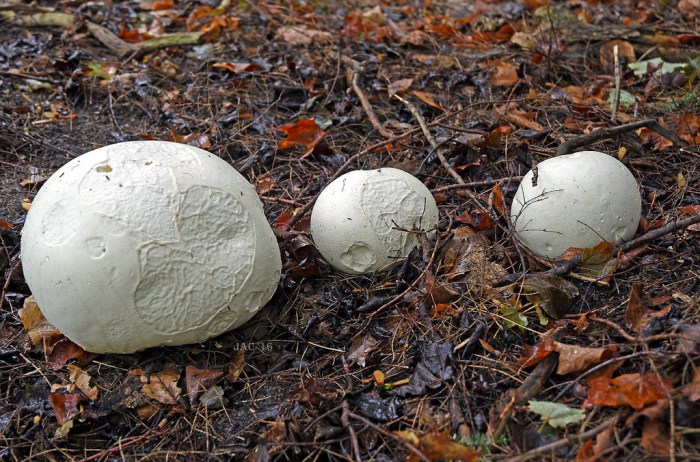
Happy First Day of Autumn, photo by Julie

The spring, summer, is quite a hectic time for people in their lives, but then it comes to autumn, and to winter, and you can’t but help think back to the year that was, and then hopefully looking forward to the year that is approaching.
-Enya

Happy second day of fall everyone. I’m usually pretty good about marking that seasonal stuff, but in my defense, I DID eat some puffballs the day before yesterday and marked a few today.

In case you’re interested in exploring edible, wild mushrooms, the giant puffball is considered one of the “Foolproof Four” – widespread and easy to identify mushrooms. Mushroom Appreciation’s page on Giant Puffball mushrooms has lots of pictures, puffball facts, and identification tips and says (in part):

Giant puffballs are saprotrophs, meaning they feed on dead organic matter. They’re more likely found in meadows and grasslands than in the forest. They are always found growing on the ground rather than up in trees.

Giant puffballs are aptly named. They are usually quite large, reaching soccer ball size or bigger. They usually have a circumference (distance around) of 4 to 30 inches, although larger ones are not uncommon. There is no distinct cap and stem with these mushrooms; instead they exist as just large, white globes. They may not be perfectly round. Giant puffballs are white with firm white flesh inside. If they appear yellowish or brown is means that the mushroom is about to/has gone to spore, and is not edible anymore.

…Correct identification is crucial. If you think you’ve found a giant puffball the first thing to do is cut it open. It should have thick, hard, white flesh inside. Don’t eat anything with a brown, black, purple, or yellow interior. It may be an earthball (Scleroderma citrinum) or some other gastric distress inducing mushroom.

This white flesh should be solid with no gills. If you see any evidence of gills disregard immediately. Some species, including the deadly Amanita, have a “universal veil” of tissue that surrounds the mushroom when young. This can make it look like a puffball.

Inexperienced hunters should check with someone knowledgeable if they think they’ve found a giant puffball. An incorrect guess can kill if it turns out to be an Aminita! Please be careful.

Julie shared the Enya quote above, and she shares a ton of great photos in the Absolute Michigan pool. Check her photo out bigger and get yourself in the spirit of the season with her Fall slideshow!

If you do find a giant puffball, here’s a recipe from the Mycological Society of San Francisco’s excellent page on Puffballs from Hope Miller, coauthor of the book Mushrooms in Color.

  • 1 teaspoon salt
  • 1 cup flour
  • About 1 pound puffballs, peeled and cut into 1/2-inch slices
  • 1 egg, slightly beaten with 2 tablespoons water
  • 1 cup freshly grated Parmesan cheese
  • 4 tablespoons butter or more if needed
  • 2 tablespoons oil or more if needed

Mix the salt with the flour. Dip the mushroom slices in the flour, then in the egg, and last, in the cheese. Melt the butter and oil in a sauté pan or skillet and sauté the mushrooms slowly until golden brown. Drain on paper towels. Serve at once.

OK. I can do that.
July Blueberries

july-blueberries-by-mark-obrien

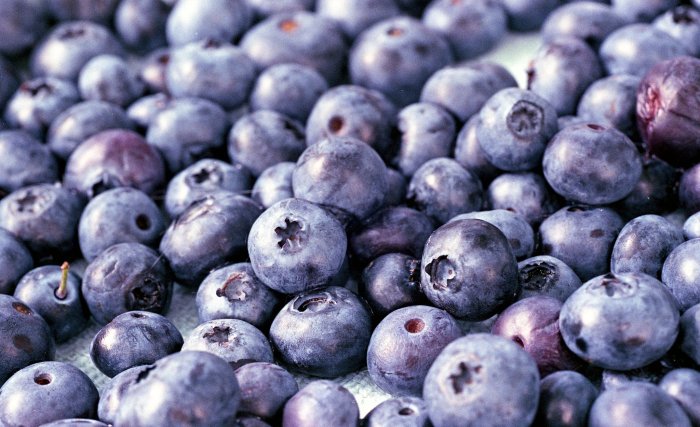
July Blueberries, photo by Mark O’Brien

Mark took this back in July with Fuji Superia 400 color film. He says these blueberries have gone on to a better place … a blueberry pie to be precise.

View it background bigilicious and follow Mark on Twitter @nikonfm2n for lots more!!

Round Island Run

Ferry & lighthouse

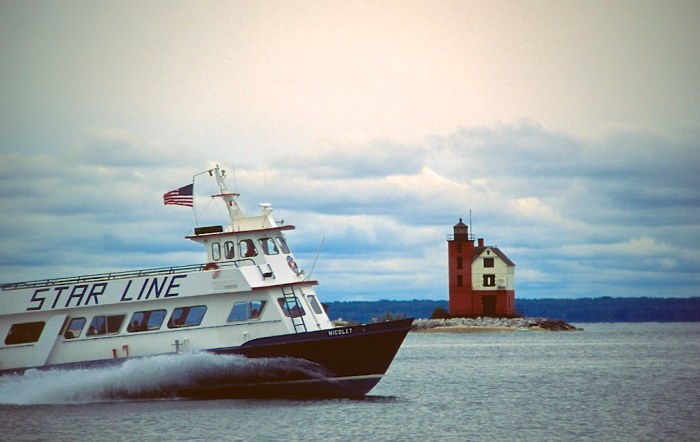
Round Island, MI, photo by Bill Johnson

Bill took this photo 21 years ago on September 21, 1995! It shows the Star Line Ferry’s Nicolet speeding past the Round Island Lighthouse. Star Line explains:

Star Line Ferry was started by Tom Pfeiffelmann, Sam McIntire, and others in the late 1970s. They purchased Argosy Boat Line. The company was then renamed Star Line after the 5 original stockholders making up a 5 pointed star. At that time they operated slower ferries including the Nicolet, Treasure Islander and Flamingo.

In 1979 Star Line bought their first fast ferry, Marquette. Over the next few years the old LaSalle and Nicolet were replaced with sisters to the Marquette. In 1987 Star Line decided to take it up a notch with Radisson, an 85-foot fast ferry which was modeled after a luxury yacht.

View Bob’s photo background big and see more in his Lighthouses slideshow.

PS: Check out this cool yesterday and today at Round Island Lighthouse on Michigan in Pictures!

Marquette’s Fresh Coast Film Festival – October 13-16, 2016

kayaking-lake-superior

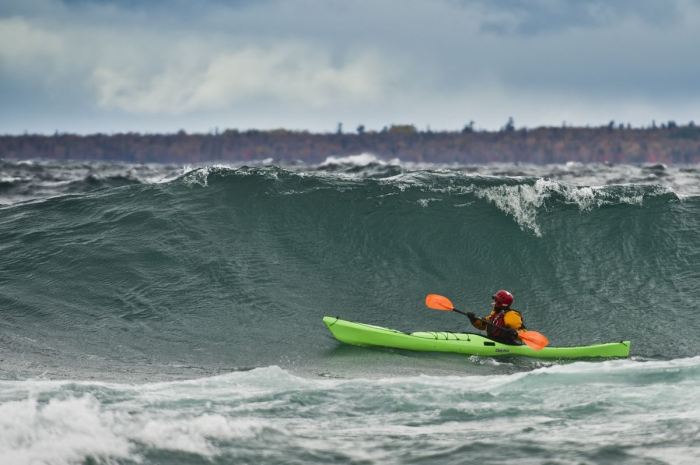
Kayaking Lake Superior, photo by Aaron Peterson

Travel Marquette shared Aaron’s photo as “A casual day of kayaking the great waters of Lake Superior.” While it’s not kayaking over the Tahquamenon Falls crazy, I confess that “casual” is not the first work that comes to mind!!

In one of the cool twists that I’ve come to expect from Michigan in Pictures, it turns out that Aaron is behind something that I’ve wanted to feature from Marquette, the upcoming Fresh Coast Film Festival (Oct 13-16, 2016)!

The Fresh Coast Film Festival is the first of its kind: a documentary film festival celebrating the outdoor lifestyle, water-rich environment and resilient spirit of the Great Lakes and Upper Midwest. The festival will gather the best in adventure cinema from around the world while creating a venue for, and building a culture of, Great Lakes storytelling.

Fresh Coast will be held annually in October during the height of fall color season in the Lake Superior harbor town of Marquette, Michigan.

…A key component of the Fresh Coast experience will be guided outdoor activities to introduce visitors to the outdoor playground of the Marquette area. Rock climbing, fly fishing, sea kayaking, waterfall hikes and mountain bike rides will all be offered as part of the Fresh Coast weekend.

Click for the full schedule!

View Aaron’s photo bigger, follow him on Facebook, and view & purchase his work at www.aaronpeterson.net.

Harvest Moon on Harvest Gathering

harvest-moon-at-harvest-gathering

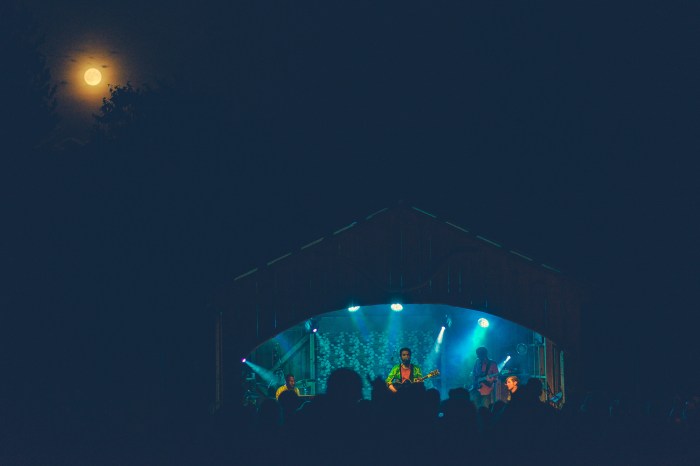
Harvest Moon on Harvest Gathering, photo by Adam Johnson / Brockit, inc

This weekend I’m where I am this weekend every year, helping out at the Earthwork Harvest Gathering. One of the photographers who’s helping out is Michigan in Pictures contributor Adam Johnson of Brockit, inc.

Follow his work for Harvest on Instagram and also on the Earthwork Harvest Gathering Facebook.

Hello … is it me you’re looking for?

hello-is-it-me-youre-looking-for

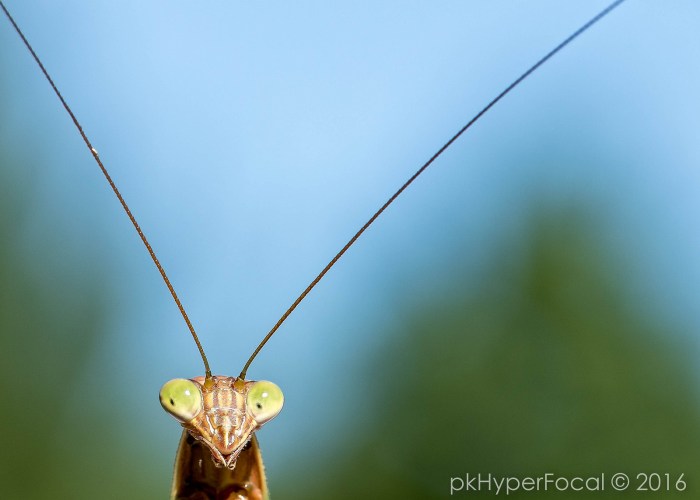
Hello … is it me you’re looking for?, photo by pkHyperFocal

Happy Friday everyone! Check the photo out bigger and see more in pk’s Macro slideshow.

Today & Yesterday at Point Iroquois Lighthouse

point-iroquois-lighthouse-fall-michigan

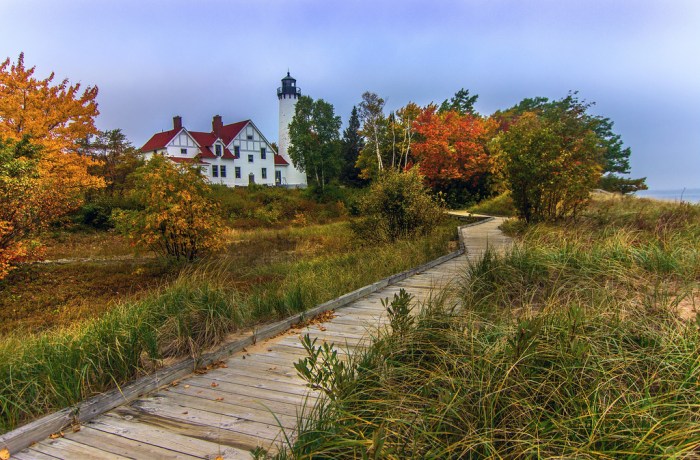
Point Iroquois Lighthouse on Whitefish Bay, photo by Cole Chase Photography

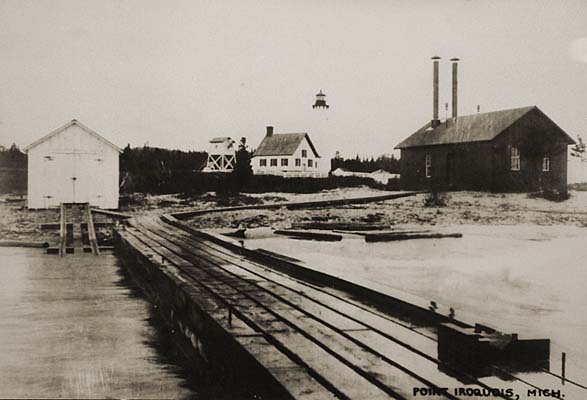
The Point Iroquois Lighthouse page at Terry Pepper’s Seeing the Light has a 100+ hear old photo of the light taken from almost exactly the same angle as Cole’s! View his bigger and see more great shots from fall of 2014 in his Autumn in Upper Michigan slideshow.

port-iroquis-lighthouse-1905

Point Iroquois Light Station in 1905, showing the fog signal building constructed in 1890. Note that the 1885 bell tower is still in place to the immediate left of the dwelling.

The photo is courtesy of the Point Iroquois Lighthouse and Historical Museum, and you can click the link for more about the museum!

Bringing the Busy Bee back to Michigan

the-busy-couple-of-bees

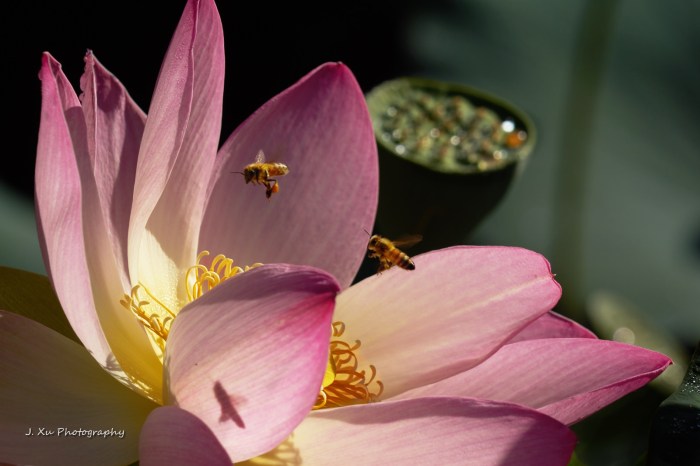
The busy couple, photo by Jiafan (John) Xu

John writes that this photo was taken at a small pond with pink lotus and some other water plants at the Michigan State University farm in Novi, Michigan. That segues nicely to this Greening of the Great Lakes interview with Dr. Rufus Isaacs, bee researcher and professor in the Department of Entomology at MSU about what we can do to make our farms and gardens better for bees.

He (Dr. Isaacs) believes the use of pesticides, disease and reduced natural habitat from the development of land for residential and agricultural purposes have made it difficult for the over 400 different bee species native to Michigan to survive and pollinate.

Among other things, Isaacs and his colleagues hope to expand spaces for wild bees to thrive close to farmland. His strategy to improve pollination sustainability involves luring wild bees to farms so producers don’t have to rent commercial honey bees. By planting wildflowers and using bee-safe pesticides, farmers can become less dependent on high-cost and out-of-state honey bees to pollinate their crops.

“We’re supporting those bees with pollen, nectar and a place to nest, “ he says. “That’s boosting those wild bee numbers to help honey bees when it’s bloom time in the Spring.”

Similar procedures can also be done on a smaller scale to increase pollination and mitigate bee decline. Isaacs explains that home gardeners can look to resources like MSU’s Smart Gardening program to attract pollinators to their fruit and vegetable plantings.

Click through to listen!

View Jiafan’s photo bigger and see more in his slideshow.

scott memorial fountain | belle isle | detroit, michigan | by s o u t h e n

scott-memorial-fountain-belle-isle-detroit-michigan-by-s-o-u-t-h-e-n

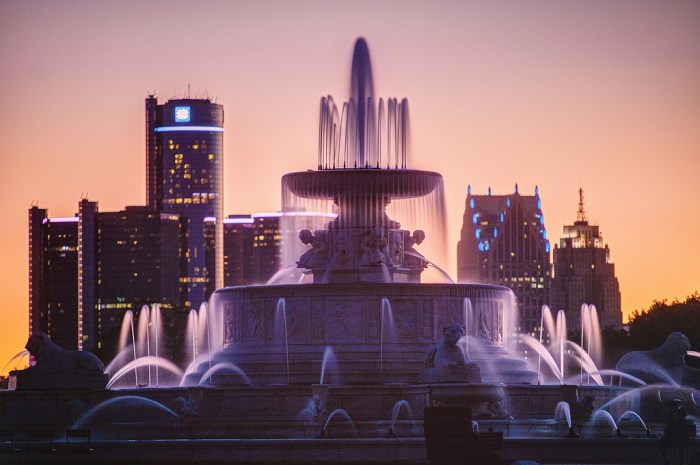
scott memorial fountain | belle isle | detroit, michigan, photo by s o u t h e n

View Ryan’s stunning shot of the Detroit Skyline from Belle Isle bigger on Facebook, see more in his Nights in Detroit slideshow, and if you’d like him to apply his mad photography skills for your wedding or engagement, head over to ryansouthen.com.

Sunrise on McCarty’s Cove & Marquette Harbor Lighthouse

%22mccartys-cove%22-marquette-harbor-lighthouse-marquette-michigan

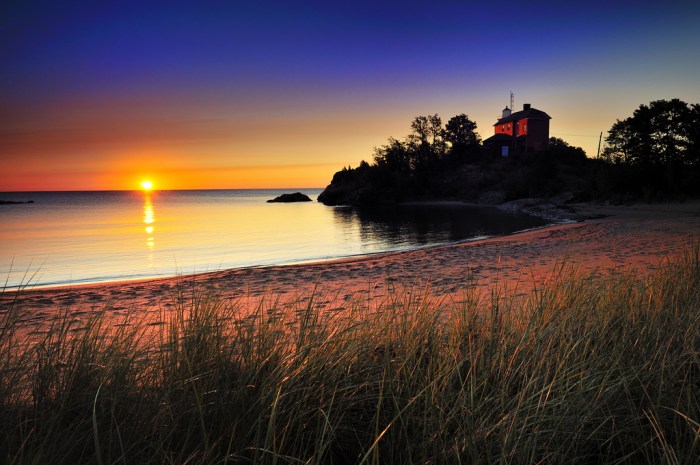
“McCarty’s Cove” Marquette Harbor Lighthouse, photo by John McCormick

Just got back from Marquette, and I have to say, this is one cool city!!

John took this photo back in August of 2011 at sunrise at McCarty’s Cove, one of Marquette’s best beaches according to Travel Marquette. I really had to dig (seriously, a Mining Journal history quiz was all I had to go on) to learn that McCarty’s Cove is named after Mike McCarty whose business, Lake Superior Ice, operated at that location. I’m not sure how long, but in 1919 they took over the Marquette Ice Company. Know more? Post it in the comments!

UPDATE:  Ann Fisher (who is a contributing photographer to Michigan in Pictures) shares:

“McCarty’s ice business lasted at least into my childhood (late 50’s, early 60’s). I remember going there to buy ice when we were making homemade ice cream in our hand-cranked ice cream maker.”

The Marquette Harbor Lighthouse is now a museum – click for more.

View John’s photo bigger, see more in his Sunsets/Sunrises slideshow, and view and purchase his work at michigannutphotography.com (FYI you can buy this photo right here).