Waterfall Wednesday: Gabbro Falls on the Black River

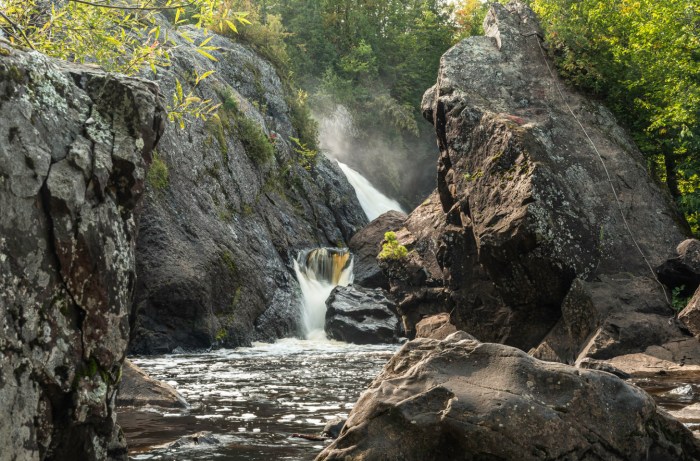
Gabbro Falls on the Black River in Gogebic County Michigan by Tom Clark

Gabbro Falls on the Black River in Gogebic County Michigan by Tom Clark

Tom took this photo last week & writes:

Gabbro Falls is on the Black River and is as impressive, if not more impressive, than its more celebrated neighbors downstream along the Black River Scenic Byway. This is a largely wild waterfall with no fences or barriers of any kind. It consists of three separate drops. When the water is high there is a fourth drop that is the height of the other three combined that can only be seen from the east side of the river. The main drop falls into a narrow crevice between two large rock formations.

See more in Tom’s North Shore Waterfalls Trip album on Flickr.

You can read more about Gabbro Falls & more about the Black River Scenic Byway on Michigan in Pictures!

Support Michigan in Pictures with Patreon

Monarchs, Milkweed & Michigan

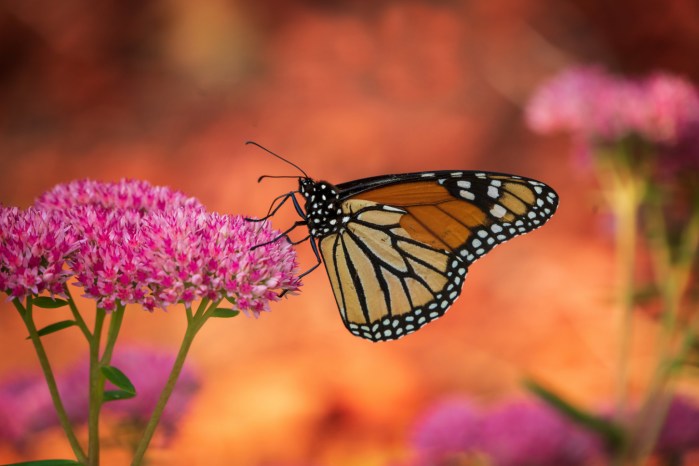
Monarch with Red Mulch Background by Charles Bonham

Monarch with Red Mulch Background by Charles Bonham

The GT Pulse has an in-depth interview with Cyndie Roach if the GT Butterfly House and Zoo in Williamsburg outlining the generation spanning migration of the monarch butterfly from the Oyamel fir forests of Mexico to Michigan:

…They fly over the Gulf with their first stop being in the Texas panhandle area.

“They land there, take a break, and breed by the millions, lay eggs, and then they die. That super generation has lived all winter and is now ready to make that trip to Texas. So that first generation born in the United States will know to start flying north when they’re born.”

The entire butterfly birthing process takes 30 days. Part of the inherent will to go north has to do with milkweed. It’s the plant that signals them home.

“It’s the single host plant, meaning the caterpillar needs to eat it to become a butterfly. They’re looking for milkweed to lay their eggs on. We don’t even have Milkweed growing yet in the early parts of spring. It doesn’t come up until May and June, so what’s great is that as our spring comes on and things start to get warmer, that’s what’s welcoming the monarch to the area.”

The second generation of monarchs that were born in Texas makes it to the midline of the States, roughly around the Rocky Mountains where their babies will be born, and like their parents and grandparents before them – they’ll know to keep flying north.

“By the time they reach us we’re looking at the third generation typically. So it’s their grandchildren we’re now seeing arrive in Michigan.”

Remember that milkweed Cyndie was talking about? Northern Michigan provides milkweed that some of those third-generation monarchs will use to lay their own eggs. So the butterflies that are going back down to Mexico are the fourth generation of those first butterflies coming from the Oyamel fir forests.

“That’s why it’s so important that we as Michiganders, specifically up here in Northern Michigan, provide as much milkweed habitat as we can for these amazing creatures. We play such an important role, because not only are we the ones who see them come in in the spring, but we help them create a lifecycle.”

Milkweed plays an important role in aiding the monarchs in their generational journey, but also, being cautious with fertilizer and lawn care products. The monarch butterfly population has declined 90 percent over the past two decades, which is directly related to the milkweed population being destroyed.

Read on for lots more, check out the Michigan DNR page on Monarch butterflies & for sure plant milkweed if you can!

Charles took this last week. Head over to his Flickr for lots more!

Support Michigan in Pictures with Patreon

Goodbye Summer

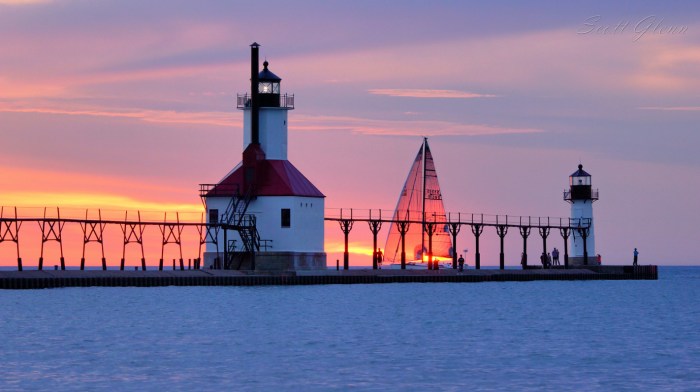
Goodbye Summer 2016 by Scott Glenn

The Old Farmer’s Almanac says that the autumnal equinox arrives tomorrow, Tuesday, September 22 at 9:31 AM:

The word “equinox” comes from Latin aequus, meaning “equal,” and nox, “night.” On the equinox, day and night are roughly equal in length. (See more about this below.)

During the equinox, the Sun crosses what we call the “celestial equator”—an imaginary extension of Earth’s equator line into space. The equinox occurs precisely when the Sun’s center passes through this line. When the Sun crosses the equator from north to south, this marks the autumnal equinox; when it crosses from south to north, this marks the vernal equinox.

Scott took this photo on the final day of the summer of 2016 at the St. Joseph Lighthouse. See more in his massive Lighthouses gallery on Flickr.

Support Michigan in Pictures with Patreon

La Niña is coming for a winter visit

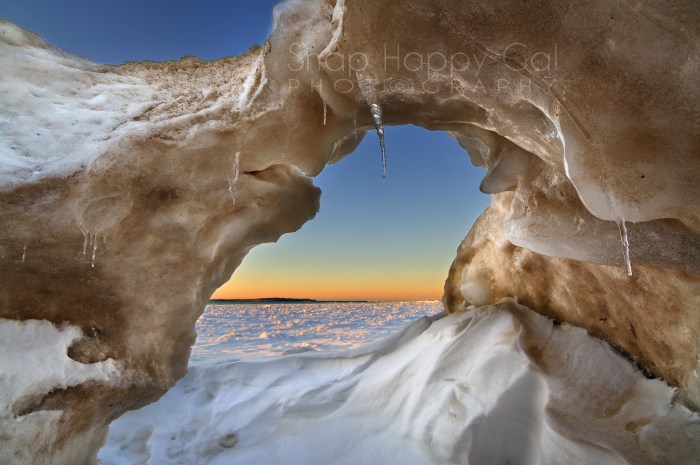
Ice Cave Sunset by Heather Higham

Ice Cave Sunset by Heather Higham

mLive reports that a La Niña weather system has officially developed & is likely to continue through winter:

La Niña is when the equatorial Pacific waters turn cooler than normal. If the cooler than normal water continues into the northern hemisphere winter, there can be some alteration to normal jetstream patterns.

…an average jetstream position south of Michigan with the center of an upper-level through over the Great Lakes brings an area of wetter than normal conditions to the Ohio Valley and southern Great Lakes. This area of wetter weather includes the southern part of Michigan.

So in looking at the general effects of La Niña on Michigan’s winter, we have in the past leaned toward colder than normal with some increase in snow amounts.

…Lower Michigan as averaging four to 12 inches above normal on snowfall during La Niña winters. The western half of the U.P. also shows a slightly above normal snowfall pattern during La Niña. The lake-effect snowbelts of northwest and southwest Lower don’t show an increase in snow, but do show normal amounts. Normal amounts of snow in the snowbelts is plenty of snow for snow-lovers.

More at mLive.

Heather took this shot of an ice formation on Lake Michigan at Elk Rapids back in January of 2015. See more in her ice formations gallery & definitely follow Heather on Facebook & @SnapHappyMichigan on Instagram!

More ice caves on Michigan in Pictures! <–trust me – some more awesome pics there!

Support Michigan in Pictures with Patreon

Remembering Greg Reisig, a champion of the Great Lakes

A Changeable Day on the Lake by Mark Smith

A Changeable Day on the Lake by Mark Smith

This week I lost a friend & mentor, Greg Reisig. Greg was my publisher back in the 90s when I wrote for his Lake Country Gazette out of Elk Rapids. He was a man with an amazingly gentle soul who could nonetheless be fierce & determined in defense of Michigan’s environment. Bill Latka of Oil & Water Don’t Mix penned a great tribute to Greg, who was a  board member of that organization & the co-chair of the Northern Michigan Environmental Action Council (NMEAC):

Since his early days as an environmental journalist and then for decades as a key protector of trees, water, and air for all of northern Michigan with NMEAC, Greg was a fearless yet gentle champion for the environment.

NMEAC has set up an endowment fund to create The Greg Reisig Prize for Environmental Journalism to celebrate his accomplishments. If you value the work that Oil & Water Don’t Mix is doing, you should know that Greg was a key part of it. I invite you to contribute to fund the award so that future generations will know how much he made a difference every day.

His support of the campaign to shut down Line 5 brought a kind focus and keen sense of optimism for the work that kept us all going. He will be dearly missed.

Amen.

Mark took this photo last October at the the Wilcox-Palmer-Shah Preserve just north of Elk Rapids. More from Mark at downstreamer on Flickr.

Waterfall Wednesday: Bond Falls

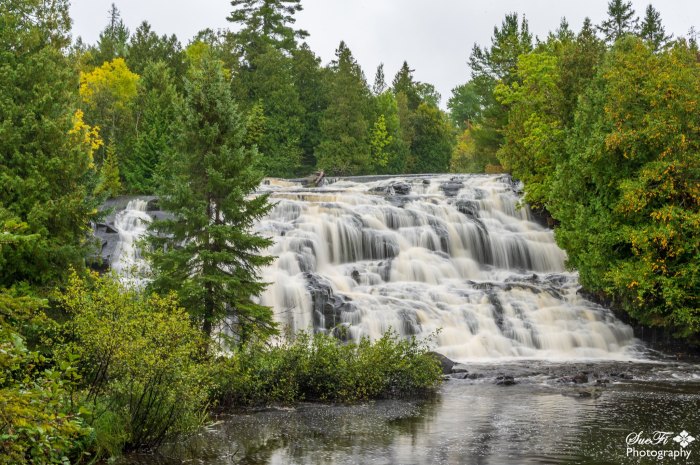
Bond Falls - Paulding MI by SueFi Photography

Bond Falls – Paulding MI by SueFi Photography

GoWaterfalling should be your go-to site for exploring Michigan waterfalls. Their entry for one of Michigan’s most beautiful waterfalls, Bond Falls near Paulding in the Upper Peninsula, says (in part):

Bond Falls is in the western U.P. on Bond Falls Rd, east of Pauding MI. This is the most impressive waterfall in Michigan with the possible exception of Tahquamenon Falls. The main drop is 40 feet high and 100+ feet wide. Above the main falls are a series of cascades and rapids that must drop a total of 20 feet.

The water level is controlled by a dam, and a steady flow over the falls is maintained for scenic reasons. Of course during the spring melt the flow is much higher.

Bond Fall is a Michigan State Scenic Site. The site was renovated around 2003. The old parking area was upstream of the falls, and a steep concrete stairway led to the base of the falls. The new parking area is near the base of the falls, and a level boardwalk leads you to prime views of the falls. The area is not quite as wild looking as it once was, but it is accessible to everyone. The trail on the east side of the falls is still wild with some steep rocky climbs. There are other trails that go off into the woods, and there are campsites nearby.

In addition to being very picturesque, this is a very popular waterfall, and unless you visit early in the morning or in winter, you are going to have a lot of company.

Sue took this last weekend. See more on her Flickr & definitely follow SueFi Photography on Facebook for more!

Tons more Michigan waterfalls on Michigan in Pictures!

Support Michigan in Pictures with Patreon

Seney Reflections

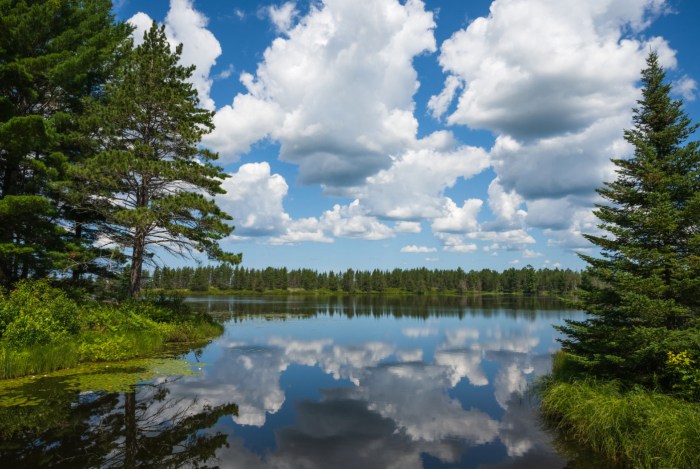
Reflections by Ayman Haykal

Reflections by Ayman Haykal

The Seney National Wildlife Refuge:

…was established in 1935 as a refuge and breeding ground for migratory birds and other wildlife. The wild land that today is the refuge has not always appeared so wild. This is a land that was once heavily logged, burned, ditched, drained and cultivated. Despite repeated attempts, the soils and harsh conditions of this country would not provide a hospitable environment for sustained settlement and agriculture. So, nature claimed it once again. What was viewed as a loss by early 20th century entrepreneurs became a huge gain for the wildlife, natural resources and the people of Michigan’s eastern Upper Peninsula.

Seney National Wildlife Refuge is located in the east-central portion of Michigan’s Upper Peninsula, halfway between Lake Superior and Lake Michigan. The 95,238 acre refuge encompasses the 25,150 acre Seney Wilderness Area, which contains the Strangmoor Bog National Natural Landmark.

Lots more information at the Seney Refuge website. Ayman took this back in early August. See more on his Flickr!

Support Michigan in Pictures with Patreon

Trees, Reflected

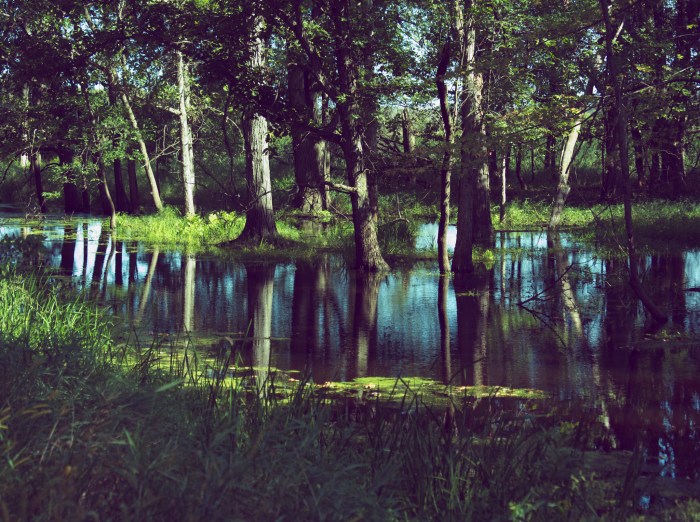
Trees Reflected by Joel Dinda

Trees Reflected by Joel Dinda

Here’s a lovely shot from the Maple River State Game Area which:

…is mid-Michigan’s largest contiguous wetland complex, an extensive area of floodplains, lowlands, and marshes along the Maple River that begins in Gratiot County and spills into Clinton County … Hiking opportunities are available in the East Unit, however. Straddling US-27, the East Unit features pools and diked-in ponds that serve as the water basin for the Maple River and attract migrating birds. Hiking along dikes is easy and the spectacular congregations of birds among the cattails in the warm glows of a late afternoon sun makes this trail system scenic and interesting for families and anybody who enjoys birding.

…Wildlife can be viewed practically year-round in the game area. Spring viewing from March through May is excellent as thousands of ducks, geese, and swans use the wetlands as a stopover on their migration to northern breeding grounds. Throughout the summer herons are a common sight in the area while the observant or those who pack along binoculars might spot bald eagles or ospreys perched on dead snags.

See more in Joel’s massive Trees photo album on Flickr & have a great week!

Support Michigan in Pictures with Patreon

The Swamp Angel of Leo Creek

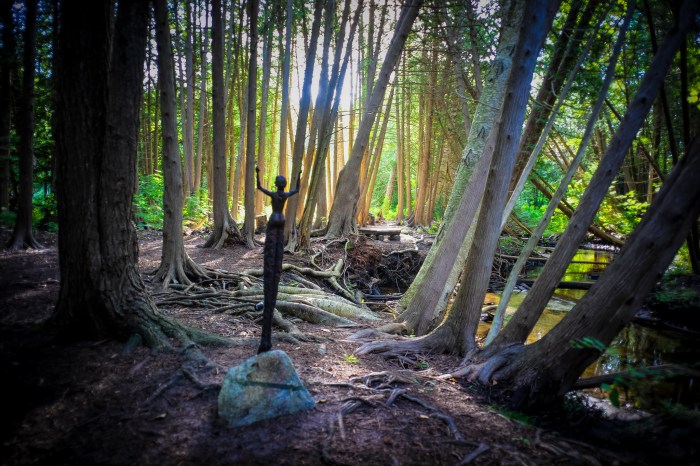
Swamp Angel by Mark Smith

Swamp Angel by Mark Smith

Mark writes that the nave, altar and the stained glass windows are all in alignment in his photo from the Leo Creek Preserve, a pretty cool outdoor learning laboratory & permaculture garden in Suttons Bay. The mission of Leo Creek Preserve is:

…to use its unique creek, forest, and agricultural spaces to provide, for all people, an outdoor learning laboratory to investigate water and woodland ecology, intensive soil regenerating practices, and to bring art into the garden gathering spaces. We value strengthening our connection to the natural world and bringing people together to work towards a beautiful, healthy, productive and regenerating environment, and sharing its abundance.

Pretty cool! Follow Mark at downstreamer on Flickr for more great photos!

Support Michigan in Pictures with Patreon

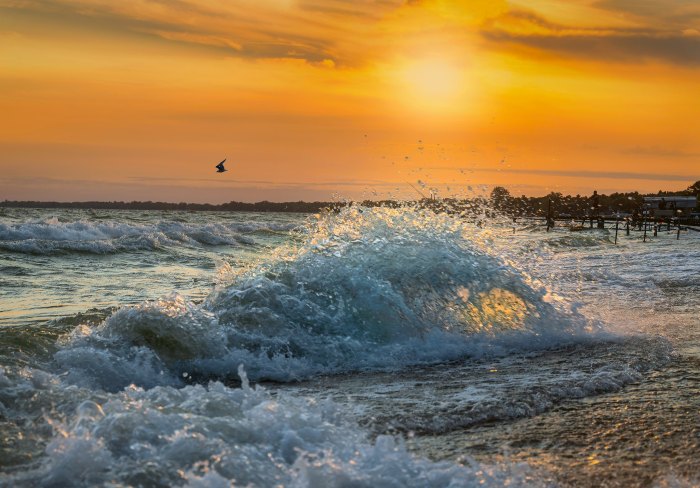
A Wave from Lake Huron

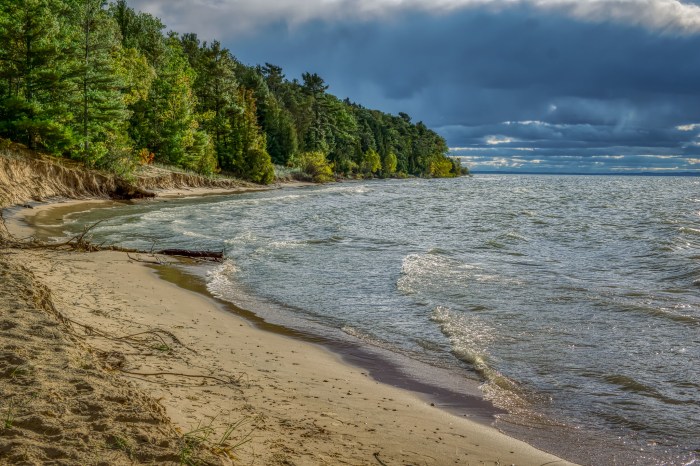
Lake Huron by Kare Hav

Lake Huron by Kare Hav

Gorgeous shot from the other day on Michigan’s east coast. See more in Karen’s dynamite Pt. Lookout/Au Gres gallery on Flickr & have a wonderful weekend!

More from Lake Huron on Michigan in Pictures.

Support Michigan in Pictures with Patreon